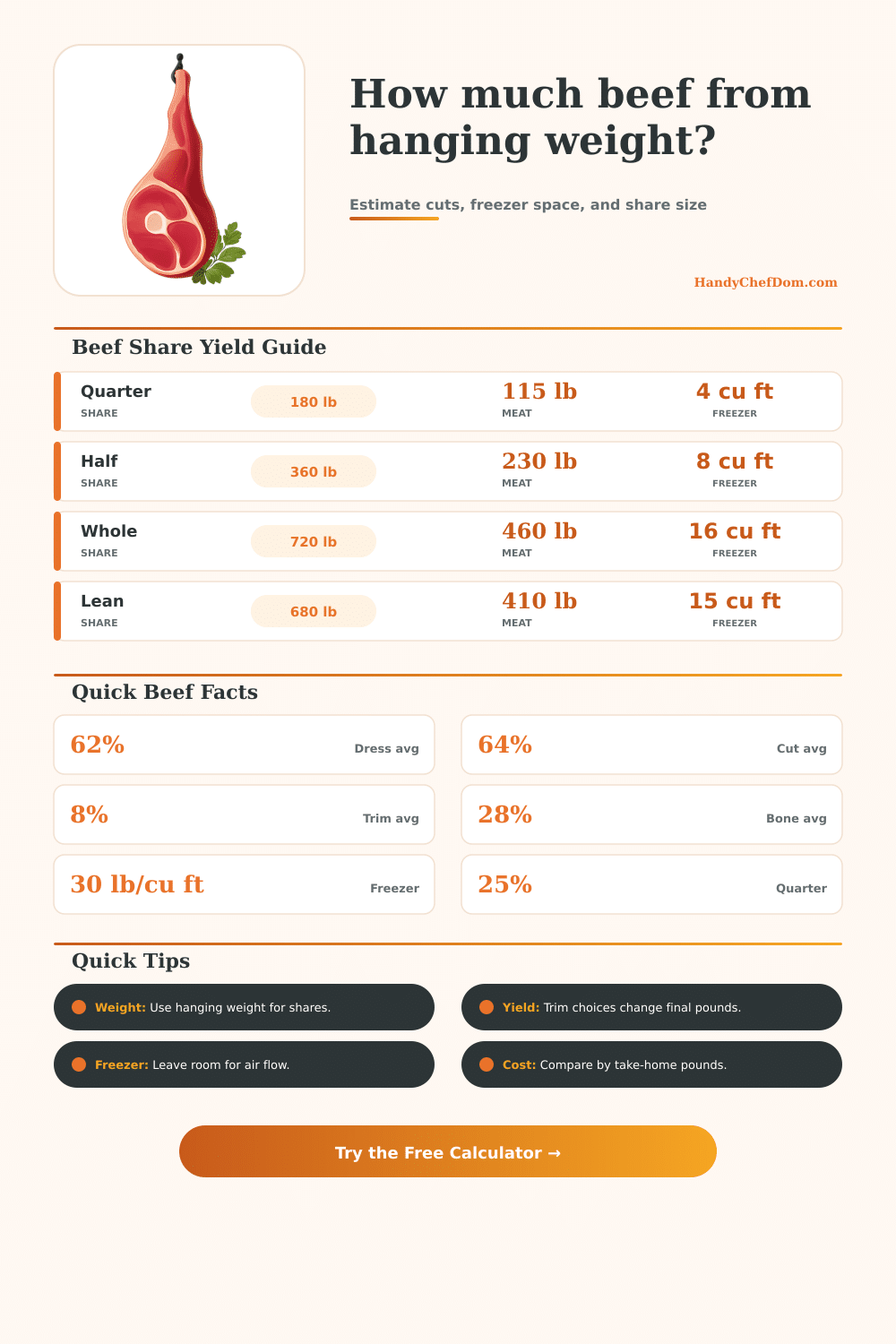
When you purchase beef from a ranch or an local processor, you must understand the difference between the hanging weight and the packaged weight of the beef. The hanging weight of the beef is the weight of the carcass after the animal are slaughtered but before it is cut into beef. The packaged weight of the beef is the weight of that beef after it is processed but before it is packaged for retail.
The hanging weight will almost always be higher than the packaged weight because the hanging weight include the bone, fat, and moisture of the carcass that will be removed during processing. The hanging weight will decrease during several different processing step. For example, the hanging weight will decrease if the beef is dried aged.
How Hanging Weight and Packaged Weight Are Different
Additionally, the hanging weight will decrease if the butcher removes the bone from the beef, and the hanging weight will decrease during the trimming of the beef. Since the trimmed and ground beef will not include the fat and bone of the original carcass, the packaged weight will always be lower than the hanging weight. A calculator can help you to determine the packaged weight of the beef that will arrive at your home based off the hanging weight that was quoted to you.
The weight of the beef that is lost during processing will not be a set number. For example, grass fed beef will often have a lower dressing percentage then grain-fed beef because grass-fed beef has less fat. Additionally, the cuts of beef that are requested will change the final weight of the beef.
For example, if you request that your beef include extra-trimmed cuts, you will lose some of the surface fat of the beef. Similarly, if you request bone-in cut of steak, the weight of the beef will be higher than if you ordered boneless steaks. A calculator will provide you with several different piece of information about your beef.
For instance, the calculator can show you the packaged weight of the beef, the freezer space that the beef will take up in your home, and the cost of the beef per pound based on the take-home weight. The cost of the beef per pound should be based upon the take-home weight, not the hanging weight, because the hanging weight include the bone and fat of the beef that you wont eat. A low cost of beef per pound based upon the hanging weight could indicate that the cost per pound of packaged beef will actualy be higher.
In determining the amount of beef that you would like to purchase, you must also consider the capacity of your freezer. For example, a quarter share of beef may require different amount of freezer space than another quarter share of beef. Some quarters of beef will fit well in your upright freezer, while other quarters of beef may require more space to fit into your freezer.
You can use Reference table to determine how much space each eighth, quarter, half, or whole beef will take up in your freezer. The various cut of beef that you select will also impact the numbers that appear on the calculator. For instance, beef that is aged for a longer period will often have more weight lost in that aging process.
Similarly, beef that includes thicker steak will take up more space in your freezer. Finally, if you request that the beef includes bone-in cuts, your beef will weigh more than beef that dont include bone-in cuts, as the bone will require the beef to lose some of its weight. When considering the value of the beef, you must consider the total cost of the beef that will arrive in your kitchen.
Factors like the processing fee, the deposit that you will recieve when you return the beef, and the weight of the final packaged beef will all impact the true cost of the beef. The calculator can help to show you the yield of the beef so that you can determine the true cost of the beef per pound. Knowing the actual yield will allow you to understand what you are paying for the beef that you will eat.
In addition to the information that the calculator can provide to you, there are also logistical consideration that you should make prior to your purchase of the beef. For example, you will have to ensure that your freezer is empty and cold before you recieve your beef. Additionally, you will have to determine how you will use the beef that you receive.
A quarter share of beef may last a small household, while a half share of beef may require that you cook more frequent. By understanding the relationship between the hanging weight and packaged weight of the beef, you can better plan your budget and your freezer space at your home.