Beef Nutrition Calculator
Estimate calories, protein, fat, iron, and sodium from practical beef portions with cut-level data, cooking losses, and doneness shifts in one clean view.
?? Beef Presets
?? Portion Inputs
Start with a beef cut profile, then refine portion size, cooking style, and trim level. Results use cooked 100 g density values with practical kitchen adjustments.
Full Nutrition Breakdown
?? Beef Comparison Grid
?? USDA-Style Reference Tables
| Cut (cooked) | kcal/100g | Protein g | Fat g | Iron mg |
|---|---|---|---|---|
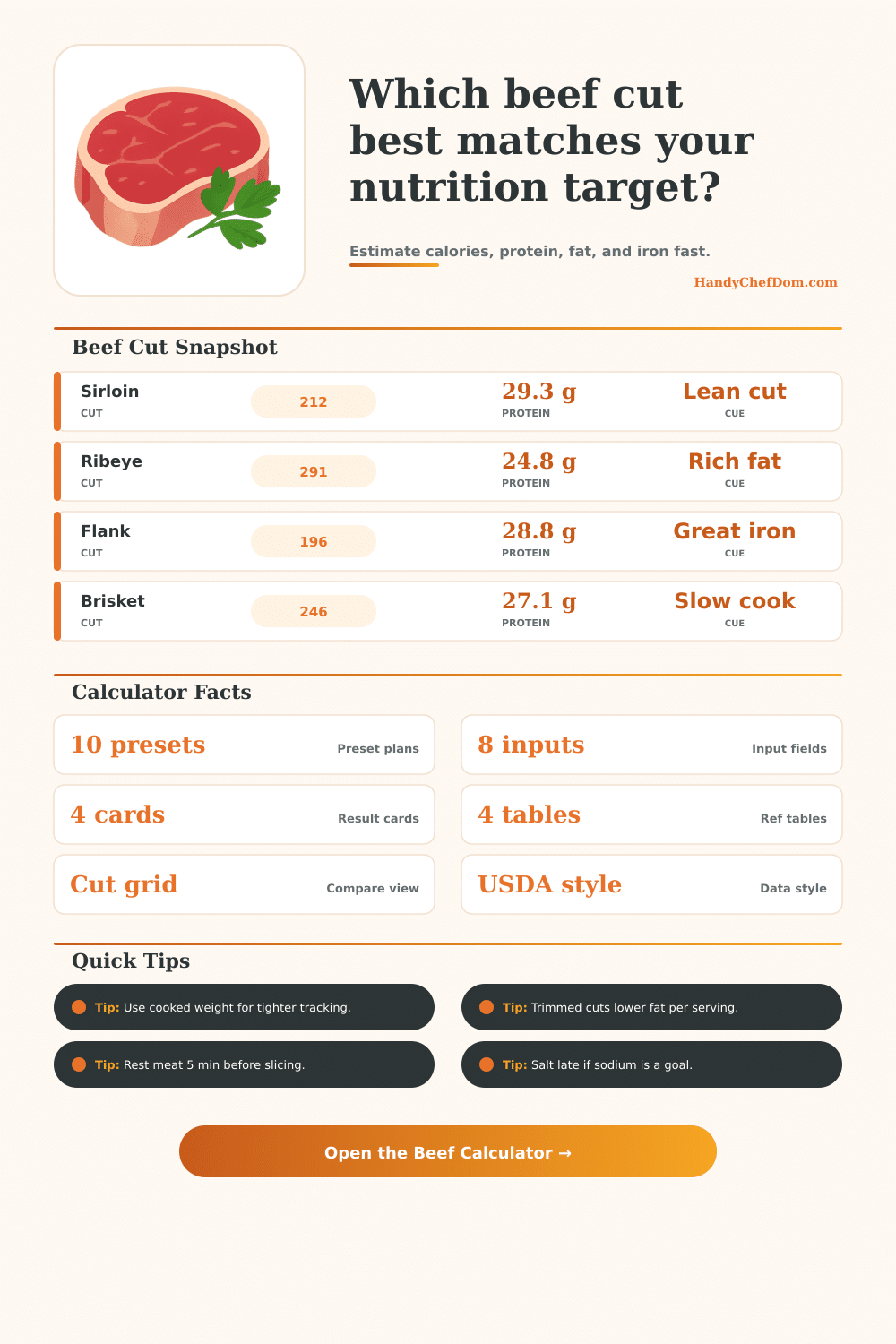
| Top sirloin | 212 | 29.3 | 9.7 | 1.9 |
| Ribeye | 291 | 24.8 | 21.8 | 2.4 |
| Tenderloin | 217 | 30.8 | 10.6 | 3.1 |
| Ground beef 90% | 217 | 26.1 | 11.8 | 2.6 |
| Brisket | 246 | 27.1 | 15.3 | 2.2 |
| Flank steak | 196 | 28.8 | 8.2 | 2.7 |
| Top round | 193 | 31.0 | 7.1 | 2.4 |
| Beef liver | 191 | 29.1 | 5.3 | 6.2 |
| Cut | Zinc mg | B12 mcg | Selenium mcg | Sodium mg |
|---|---|---|---|---|
| Top sirloin | 4.5 | 1.9 | 31.8 | 58 |
| Ribeye | 5.1 | 2.2 | 29.4 | 61 |
| Tenderloin | 4.1 | 2.0 | 32.1 | 55 |
| Ground beef 90% | 4.8 | 2.4 | 27.6 | 72 |
| Brisket | 5.3 | 2.0 | 26.8 | 63 |
| Flank steak | 4.4 | 2.3 | 36.0 | 62 |
| Top round | 4.7 | 2.1 | 35.2 | 57 |
| Beef liver | 5.0 | 70.6 | 39.7 | 69 |
| Method | Yield | Fat change | Texture cue | Best cuts |
|---|---|---|---|---|
| Grill high heat | 75% | Medium loss | Char edge | Flank, sirloin |
| Pan sear | 72% | Low-medium | Crust first | Ribeye, strip |
| Oven roast | 70% | Steady loss | Even center | Round, tender |
| Braise moist heat | 80% | Rendered mix | Fork soft | Brisket, shank |
| Smoke low and slow | 68% | Long render | Bark crust | Brisket, chuck |
| Doneness | Center temp F | Center temp C | Moisture trend | Density shift |
|---|---|---|---|---|
| Rare | 125-130 | 52-54 | Higher moisture | -5% |
| Medium | 140-145 | 60-63 | Balanced | 0% |
| Well done | 155-160 | 68-71 | Lower moisture | +7% |
?? Two Practical Tips
This beef nutrition calculator helps you compare realistic cooked portions, balance fat and protein goals, and estimate key minerals like iron and zinc before meal prep or menu planning.
Beef is an food that contains proteins, iron, and zinc. Because beef contains these nutrients, many peoples include beef in their diet. The nutritional values of beef changes with how the beef is trimmed, cooked, and portioned.
Because the nutritional value of the beef change with these factors, it is important for individuals to use a reliable method for comparing the nutritional values of different servings of beef. The calculator provided above will calculate the nutritional value of beef for you based off the cut of beef that you chooses, the cooked weight of the beef, the cooking method of the beef, and the trim level of the beef. Each of these factors will impact the nutritional value of the beef; for instance, trimmed sirloin will have less fat removed during high heat grilling compared to ribeye beef, and braised beef will have more moisture compared to grilled beef.
How to Use the Beef Nutrition Calculator
Thus, the calculator accounts for these differences in nutritional values so that the information that is presented to the consumers are accurate. Many individual use the raw weight of beef purchased from the butcher. However, the raw weight is often not the same than the cooked weight of the beef, and using raw weight for cooking calculations can lead to errors in nutritional calculations.
Thus, it is best to use the cooked weight of the beef rather than the raw weight. For instance, 200 gram of raw steak may weigh 150 grams when grilled; the different weights change the nutritional calculations for the beef. Additionally, the doneness of the beef will impact the nutritional content of the beef.
If the beef is rare, it will contain more moisture than beef that is well-done; thus, the nutrient density of the beef will be lower. The same is true of well-done beef having a higher concentration of nutrient than rare beef. Such difference in nutritional content are reflected in the calculator.
Medium doneness is the default setting for beefs in the calculator. Next is the trim level of the beef. If an individual removes fat from the edge of the beef prior to cooking, the fat content of the beef will be lower than if the beef was trimmed of fat.
The difference in fat grams between full trim and lean trim ribeye portions is over 20%. Thus, if an individual desires more protein relative to fat, lean trim beef is the preferred choice in the calculator. The cooking method of the beef will change the weight of the beef.
High heat cooking methods like grilling will remove fat from the beef as well as moisture, while braised cook methods will retain the fat of the beef. Smoking beef will result in the most weight loss due to the long cooking time required to smoke the beef. The reference tables include on the calculator will help individuals to understanding these differences in weight loss.
Another factor to consider before consuming beef is the amount of sodium. Sodium content is separated from the total beef content; the sodium content within the beef versus that which is added to the beef before cooking. The reason for this separation is for individuals to understand the sodium content of the beef if they are required to limit their sodium content (for instance, for blood pressure related health issues).
A small amount of salt added to lean beef may have less sodium content than deli roast beef due to the sodium content of the curing process for deli roast beef. The iron and zinc content of beef changes with the cut of the beef. Beef liver contains high amounts of iron, zinc, and vitamin B12. Thus, a small portion of beef liver will provide all of the nutrients that an individual may require without consuming a high amount of calories from the beef.
Muscle cuts of beef have a solid amount of iron and zinc, but not as much as beef liver. The calculator allows individuals to compare the nutritional content of a 90 gram portion of beef liver to a 140 gram portion of sirloin beef. The calculator calculates the nutritional content that can allow individuals to make decisions regarding the beef that they intend to consume.
For instance, if an individual desires to maximize the protein content of the beef that they consume, tenderloin and top round are the best choices. If an individual desires to maximize the iron content of the beef that they consume, beef liver is the best choice. Finally, if an individual desires to consume a steak that contains the proper amount of calories for their diet, trimmed sirloin and flank steak cooked to medium are the best choices.
While a variety of factor will impact the amount of beef that an individual actualy consumes, the calculator will allow individuals to know the nutritional content of the amount of beef that they will eat. Individuals should calculate the nutritional content of the beef that they plan to purchase prior to going to the store to purchase the beef. For instance, if an individual calculates that 160 grams of cooked tenderloin will contain 30 grams of protein, that individual can make a decision as to if that protein content of tenderloin is acceptable to their daily goals.
Thus, using the calculator regularly will allow individuals to ensure that their cooking methods contains the nutritional content that they require.