🍳 Sous Vide Thickness Calculator
Dial in bath time from the thickest point of the cut, then compare start state, finish style, and protein type in one thickness calculator.
Use the thickest spot, then var the calculator adjust for protein, start state, and bag load. Thickness drives the clock more than weight.
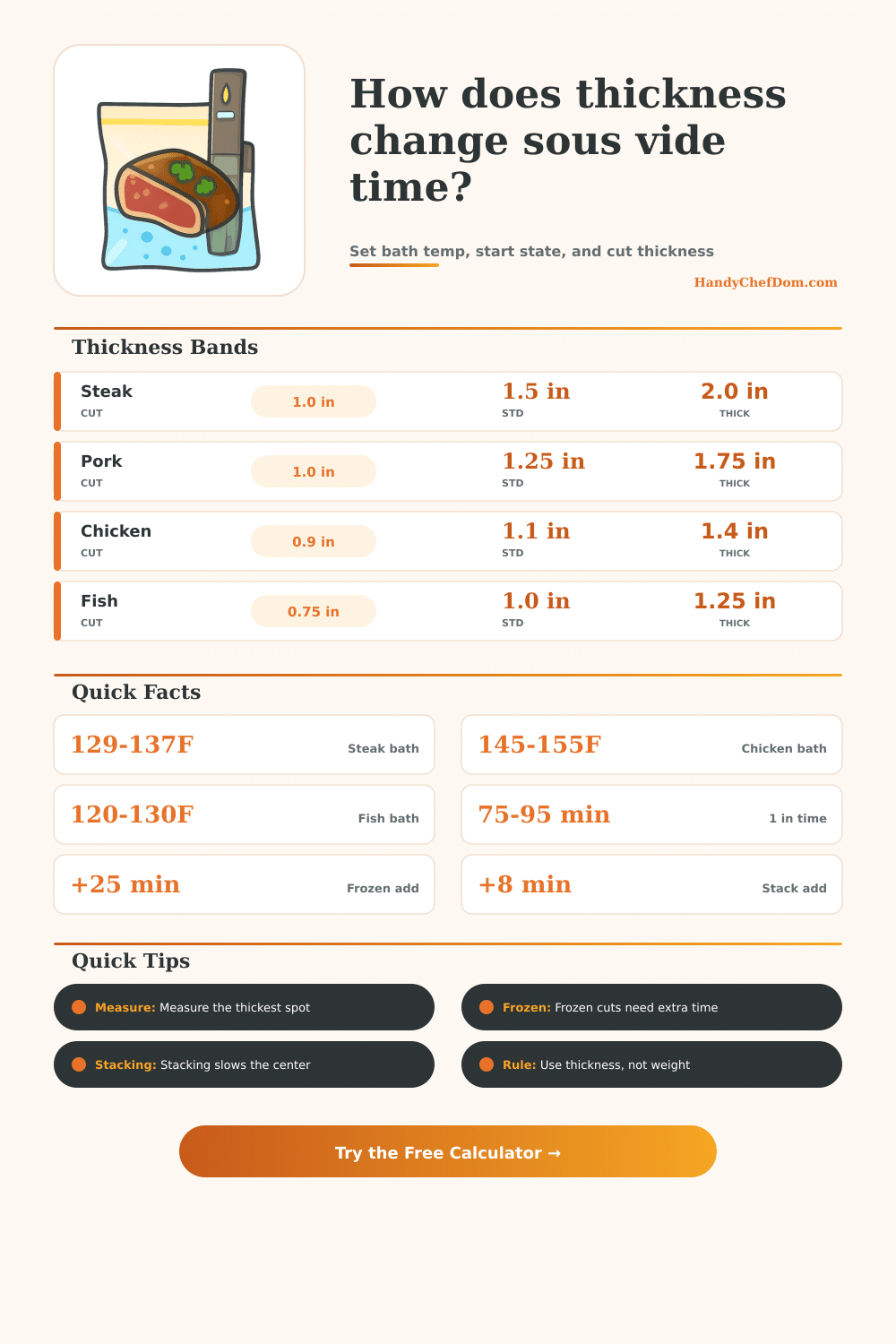
| Cut | Thin | Standard | Thick |
|---|---|---|---|
| Steak / beef | 1.0-1.25 in | 1.5-2.0 in | 2.25 in+ |
| Pork chop | 0.9-1.1 in | 1.25-1.5 in | 1.75 in+ |
| Chicken breast | 0.8-1.0 in | 1.1-1.3 in | 1.5 in+ |
| Salmon fillet | 0.6-0.8 in | 1.0-1.1 in | 1.25 in+ |
| Duck breast | 0.9-1.0 in | 1.15-1.3 in | 1.5 in+ |
| Protein | Style | Target | Time note |
|---|---|---|---|
| Steak | Medium-rare | 134F | Juicy center, fast sear |
| Chicken | Classic | 150F | Clean slice, firm set |
| Salmon | Flaky | 126F | Gentle set, soft core |
| Pork | Firm | 140F | Sliceable edge, juicy core |
| Eggs | Jammy | 149F | Soft gel, tidy spoonful |
| State | Add Min | Core Effect | Best Use |
|---|---|---|---|
| Fridge cold | +0-4 | Baseline start | Fresh bag, short rest |
| Deep chilled | +8-12 | Slight lag | Thick cuts, extra safety |
| Cool room | -4-0 | Quick center rise | Tempered steak, quick drop |
| Frozen | +25-35 | Slow center heat | Straight from freezer |
| Partly frozen | +18-28 | Mixed core temp | Ends and center differ |
| Load | Add Min | Why | Watch For |
|---|---|---|---|
| Single layer | +0 | Best water contact | Flat bag with room |
| Double bag | +8 | More mass in the pouch | Flip once if needed |
| Crowded bag | +15 | Flow slows around center | Keep pieces apart |
| Bone-in cut | +12 | Dense edge heats slower | Use thicker timing |
| Shallow rack | -2 | Better bath circulation | Open channel helps flow |
| Example | Thickness | Bath | Time |
|---|---|---|---|
| Ribeye | 1.5 in | 134F | 2h 10m |
| Chicken breast | 1.1 in | 150F | 1h 50m |
| Salmon fillet | 1.0 in | 124F | 48m |
| Pork chop | 1.25 in | 140F | 1h 45m |
| Duck breast | 1.15 in | 136F | 1h 38m |
When employing the sous vide cooking method, the thickness of the meat is the most important factor to consider when determining the cooking times for the meat. Many peoples feel that the weight of the meat is the most important factor in determining cooking time. However, the weight of the meat dont factor into how long it takes for the heat to reach the center of the meat.
The thickness of the meat is the most important factor in determining how long it will take for the heat from the water bath to travel to the center of the meat. If you dont measure the thickness of the meat before cooking, the meat may end up undercooked in the center or overcooked on the side of the meat. Therefore, measuring the thickness of the meat will allow for better control of the cooking process to ensure the center of the meat reach the required temperature.
Measure Meat Thickness Before Sous Vide
Because not all protein are the same, there are different considerations for each type of protein. For instance, chicken breast has loose fiber in the meat, which allow the heat to travel quickly to the center of the chicken breast. Additionally, fish fillets are typically thinner than steak cuts, which means the fish fillet will require less time in the water bath than meat cut.
Similarly, steak comes in many different thicknesses. Whether the cut of steak is thin or thick will change the cooking time for the steak. The thickness of the steak will determine how long it will take for the heat to penetrate the dense protein in the steak.
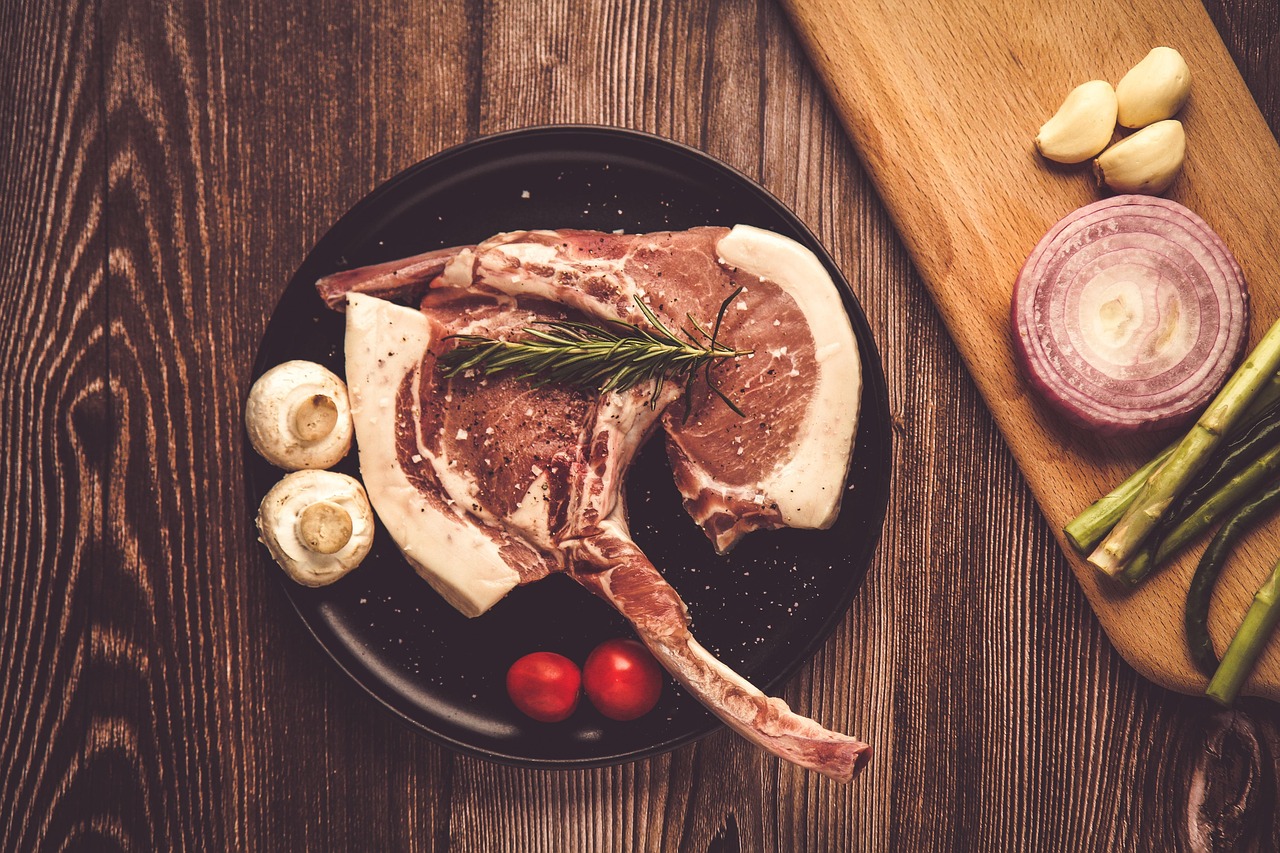
The starting temperature that the meat is cooked at will also change the cooking time required to reach the target temperature for the protein. If you take the meat out of the refrigerator, it is at its baseline starting temperature. However, if the meat is taken out of the freezer, more time must be added to the cooking process.
If the meat is still frozen, 25 to 35 minutes of added time must be cooked into the recipe to allow the water bath to first thaw the meat. If the meat is partially frozen, 20 minute of added time should of been accounted for in the recipe. Lastly, if the meat is at room temperature, it will reach the target temperature in the water bath more quicker, meaning less time in the water bath will be required.
Lastly, the way that the meat is placed into the water bath will also change the cooking time for the sous vide process. If you place the meat into a single layer in the cooking bag, the water will circulate around the meat efficient. However, if the meat is double-bagged or crowded into the cooking bag, the water will not circulate around the meat as efficiently.
In this situation, 8 to 15 minutes of additional cooking time will be required. Lastly, bone insulate the edges of the meat. Therefore, any cut of meat that contain bones will likely require more time to cook than meats without bones.
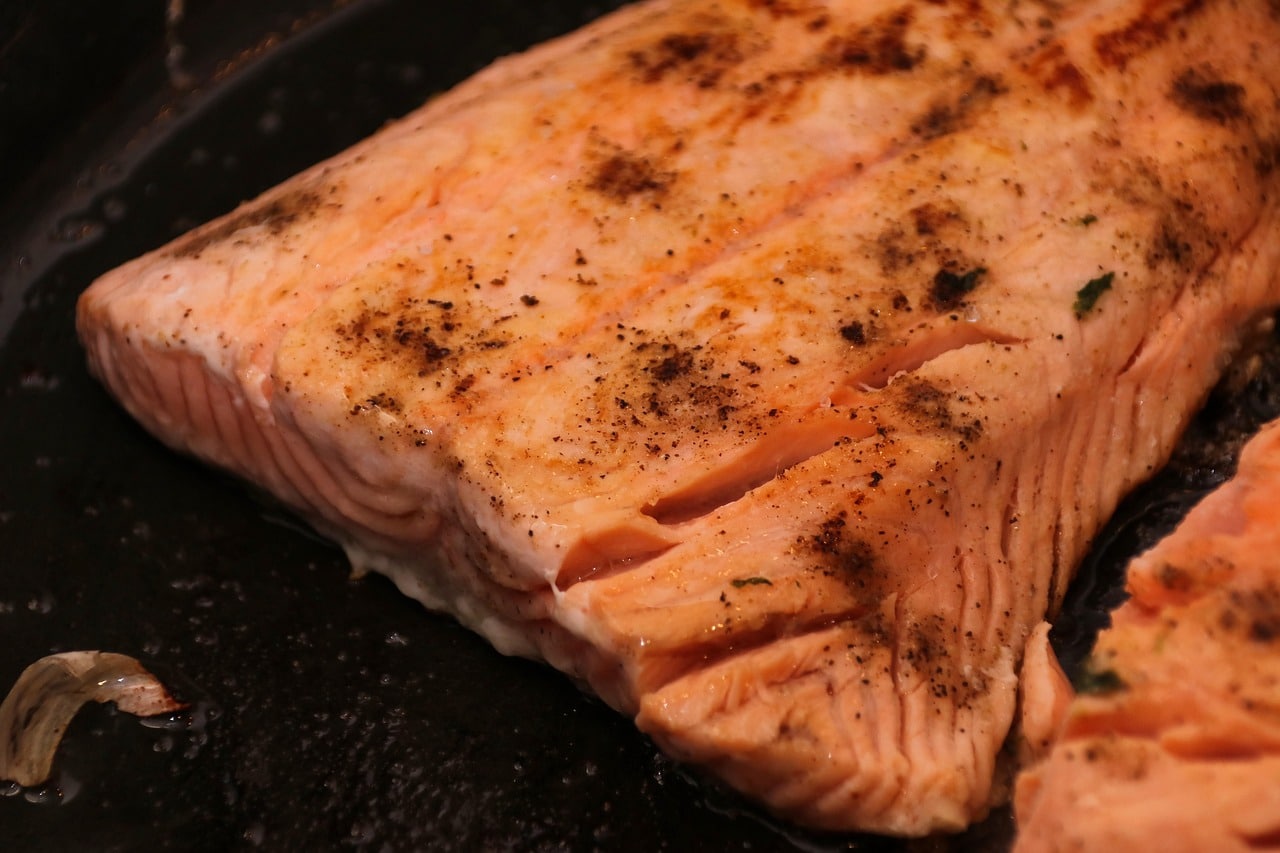
The temperature that is set for the water bath will also influence the cooking times for the sous vide recipe. For instance, medium-rare steak will cook at 134F, while salmon fillets will cook at 126F. The higher the temperature of the water bath, the faster the protein will cook. However, there is a smaller window of time where the protein will be at the perfect texture at higher temperatures.
Lastly, cooking at lower temperatures will allow the protein to remain in the water bath for a longer time. However, more time will be required at the beginning of the sous vide cooking process to reach the target temperature of the protein. In order to avoid mistakes in the cooking process, it is essential to use a thermometer to measure the thickness of the thickest part of the meat.
Measuring the thinnest part of the meat will result in the center of the protein not reach the correct temperature. Additionally, another important step is to pat the meat dry after the sous vide cooking process. If you do not pat the meat dry after cooking, the meat will not sear properly.
The steam from the meat will prevent the searing process of the steak or protein. By measuring the thickness of the thickest part of the protein and patting the protein dry after cooking, the cooks will ensure that the cooking process is successful. Therefore, measuring the thickness of the meat will allow chefs to control the cooking process of the meat accurate.