Broccoli Calcium Calculator
Estimate calcium, percent daily value, serving totals, and nutrition context for raw, cooked, and frozen broccoli portions.
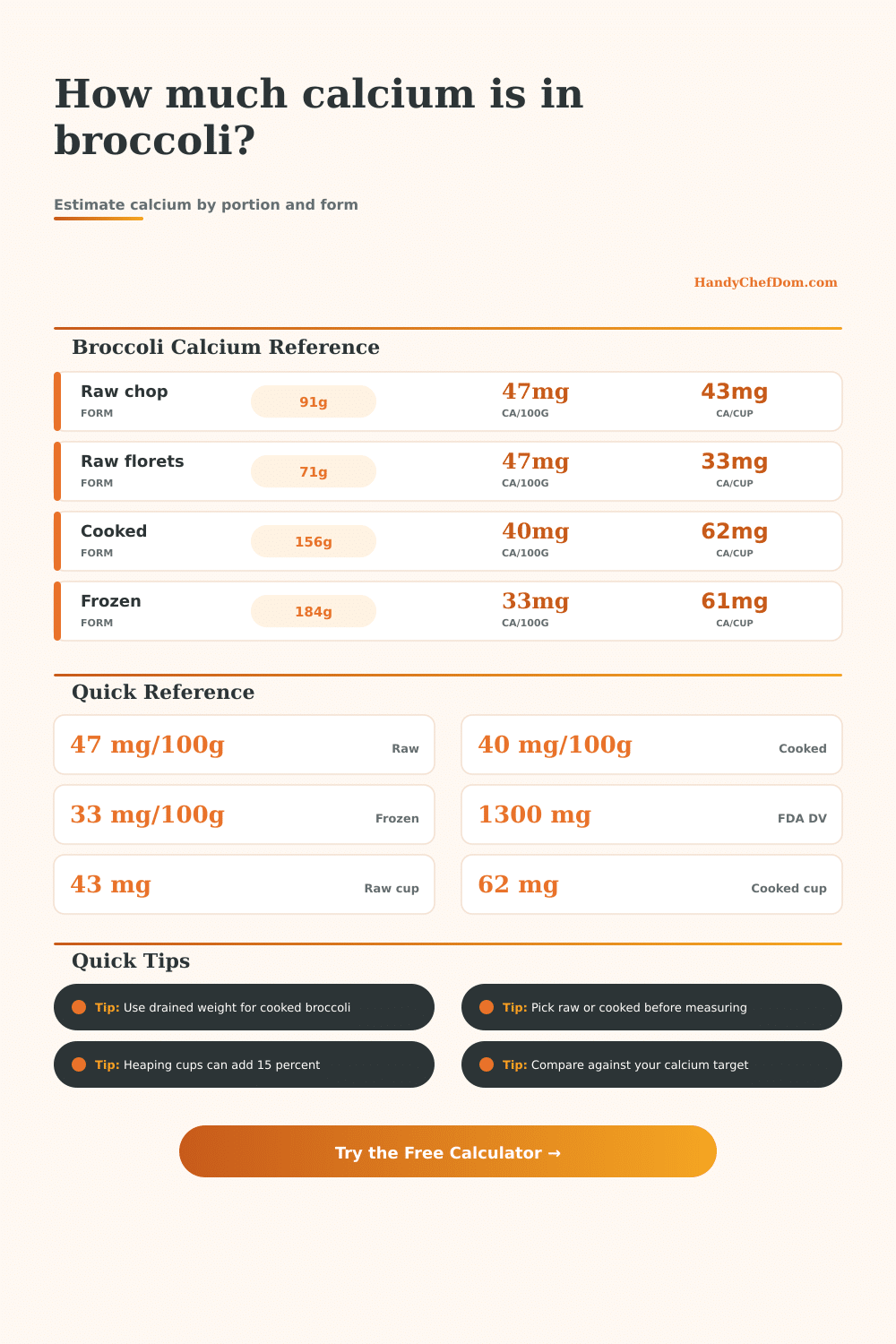
| Form | Calcium/100 g | Typical Cup | Calcium/Cup | Use In Calculator |
|---|---|---|---|---|
| Raw chopped broccoli | 47 mg | 91 g | 43 mg | Salads, raw snacks |
| Raw broccoli florets | 47 mg | 71 g | 33 mg | Floret trays |
| Raw broccoli spears | 47 mg | 151 g stalk | 71 mg | Whole stalk portions |
| Cooked chopped, drained | 40 mg | 156 g | 62 mg | Cooked side dishes |
| Cooked medium stalk | 40 mg | 180 g stalk | 72 mg | Large cooked portions |
| Frozen chopped, cooked | 33 mg | 184 g | 61 mg | Frozen bags after draining |
| Frozen spears, cooked | 33 mg | 180 g | 59 mg | Frozen spear portions |
| Broccoli leaves, raw | 48 mg | 76 g | 36 mg | Leafy broccoli bunches |
| Portion | Raw Chopped | Raw Florets | Cooked Chopped | Frozen Cooked |
|---|---|---|---|---|
| 1/2 cup | 46 g | 36 g | 78 g | 92 g |
| 1 cup | 91 g | 71 g | 156 g | 184 g |
| 2 cups | 182 g | 142 g | 312 g | 368 g |
| 3 cups | 273 g | 213 g | 468 g | 552 g |
| 4 servings | 364 g | 284 g | 624 g | 736 g |
| 8 servings | 728 g | 568 g | 1248 g | 1472 g |
| Target Group | Daily Target | Cooked Cups To 10% | Raw Cups To 10% | Calculator Setting |
|---|---|---|---|---|
| FDA Daily Value | 1300 mg | 2.1 cups | 3.0 cups | FDA DV |
| Adults 19-50 | 1000 mg | 1.6 cups | 2.3 cups | Adults |
| Children 1-3 | 700 mg | 1.1 cups | 1.6 cups | Children 1-3 |
| Older Adults | 1200 mg | 1.9 cups | 2.8 cups | Older adults |
| Teens 9-18 | 1300 mg | 2.1 cups | 3.0 cups | Teens |
| Adults 51-70 men | 1000 mg | 1.6 cups | 2.3 cups | Adults |
| Amount | Best Form | Weight | Calcium | % FDA DV | Notes |
|---|---|---|---|---|---|
| 1 cup raw chopped | Raw chopped | 91 g | 43 mg | 3% | Light raw portion |
| 2 cups raw florets | Raw florets | 142 g | 67 mg | 5% | Large tray serving |
| 1 cup cooked chopped | Cooked drained | 156 g | 62 mg | 5% | Dense cooked cup |
| 1 medium cooked stalk | Cooked stalk | 180 g | 72 mg | 6% | Large side portion |
| 1 cup frozen cooked | Frozen chopped | 184 g | 61 mg | 5% | After draining |
| 250 g raw | Raw chopped | 250 g | 118 mg | 9% | Metric batch |
| 1 lb cooked | Cooked drained | 454 g | 181 mg | 14% | Family batch |
| 2 lb frozen cooked | Frozen chopped | 907 g | 299 mg | 23% | Party tray base |
When we talk about nutrition, we tend to focus on dairy products when it comes to calcium. But broccoli also high in calcium (and yes, I said broccoli). If you take into account that cooking methods makes broccoli denser and heavier, think of this veggie as another option for your mineral needs.
For example, one cup of raw florets appears generous, but cooked broccoli will be significanly heavier because it’s all wilted. That’s why knowing the weight of what you are eating make such a big difference, literally. In terms of milligrams of calcium you’re getting. Whether the broccoli was cooked, frozen, or raw, the calculator translates your serving size into precise figures.
Why Broccoli Has Calcium
You probably wouldn’t know this: depending on whether broccoli is raw or cooked, a single cup will weigh very different. While one cup of raw, chopped broccoli is only around ninety grams, when you cook it and drain water off, a single cup is more than one-hundred-fifty grams. What happens? Well, structure collapses and pushes out water (making broccoli shrink), concentrating the nutrients in each gram.
Choose your desired format in the tool and it’ll adjust for baseline density accordingly, otherwise, if you ate some cooked broccoli but used the raw metric, you’d be off by half! Once you pick the right preparation style from the menu, the rest gets taken care of automaticly.
However, frozen produce is sometimes criticized as having fewer nutrients than there fresh counterparts (with exceptions). Regarding calcium, there’s no difference than fresh. Freezing captures whatever nutrition existed at the point of harvesting. Although certain vitamins like water-solubles can be lost through cooking, minerals such as calcium won’t break down over time. Frozen cooked broccoli contain about 60 mg of calcium per cup, which is roughly the same amount found in fresh vegetables that have been boiled and drained, according to reference data. This means you can meal prep with either kind knowing you’re getting consistent nutrients.
Just plug each into the calculator to view changes to your overall total based off the form. And that’s not all: How you prepare the vegetable makes a difference too. When you boil broccoli (for example) in plenty of water, some of its calcium will leak into the boiling water, reducing the amount of minerals it contains when you consume it. By contrast, cooking methods such as steaming or even microwaving retains more minerals because they involve less exposure to excess water.
If you’re keeping very tight tabs on how many minerals you’re consuming, then preparing it more gently ensures fewer minerals goes down the drain and more stay in the bowl. So the tool enables you to opt for gentle-cooked versions (like boiled vs. Steamed, say), reflecting this fact more accurately. It also lets you account for level cups versus heaping cups, since most people tend to be pretty casual about serving their food.
How much is enough? It depends: A teen building bone density will require far more calcium than an older person does during certain years of life. The calculator allows you to select your demographic to see what your target should of been, and then compare that with how much broccoli you’re getting. Two cups (cooked) or three cups (raw) may sound like not much at all, about 10 percent of the day’s worth. But that’s nothing compared to filling up on something else. Treat broccoli as a normal accompaniment (not just a garnish), and you’ll find that amount doable.
Broccoli is higher in oxalates and similar compounds that might slightly limit calcium absorption vs. Dairy sources. That’s not to say broccoli isn’t useful; just that perhaps you’ll have to eat a bit more for equal net benefits. Preparing it with healthy fats, or pairing it with vitamin C rich food, will further help boost total nutrient absorption from the meal, too.
Remember: Think of vegetables like broccoli as part of your overall diet, instead of as a single magic bullet. It’s the context that’ll decide what gets used by your body, and the math will help put that into numbers. It doesn’t have to be boring or require planning meals around specific numbers. All you do is get an idea of how much you typically eat (your own personal baseline) and go from there.
Do you know that you eat 1.5 cups of steamed broccoli over dinner? Plug it in once and now you know precisely how far off track (or on!) you are compared to your daily goal. This helps build awareness over time instead of having to think about it all day long. Get the number right and you’ll start meeting your nutrition targets consistenly, the app’s job is to take the guesswork out of estimating portions so you can just enjoy your food.