🥜 Fiber in Chia Seeds Calculator
Convert chia tablespoons, grams, ounces, or soaked gel into fiber per serving, daily fiber percentage, and hydration water for batches.
Enter the chia you have in dry tablespoons, dry grams, dry ounces, soaked gel grams, or soaked gel cups. Soaked entries are converted back to dry seed with the selected water-to-seed gel ratio.
| Chia Measure | Dry Seed Weight | Fiber Estimate | Standard Gel Water |
|---|---|---|---|
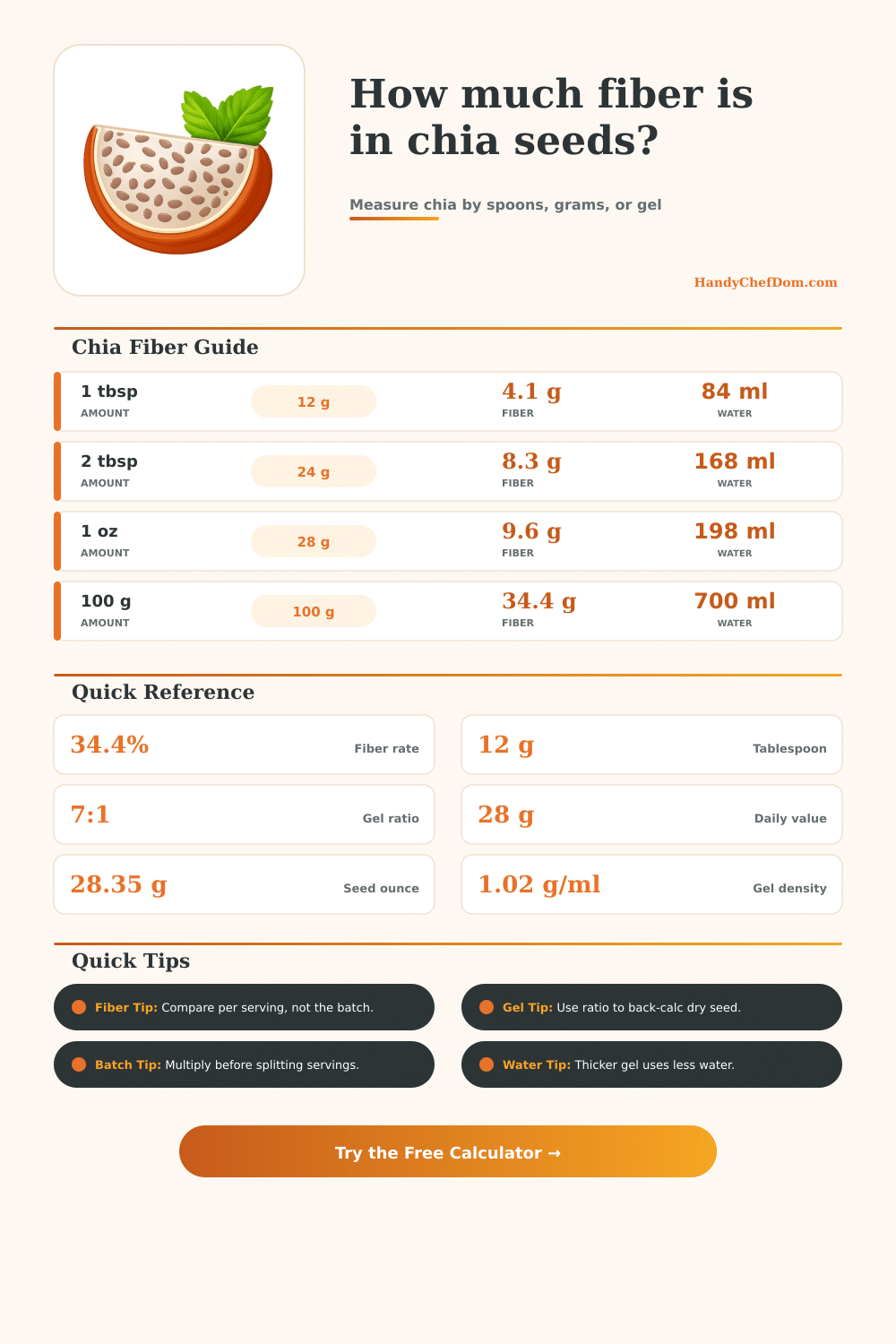
| 1 level tablespoon | 12 g | 4.1 g | 84 ml at 7:1 |
| 2 tablespoons | 24 g | 8.3 g | 168 ml at 7:1 |
| 1 dry ounce | 28.35 g | 9.8 g | 198 ml at 7:1 |
| 1/4 cup dry seeds | 48 g | 16.5 g | 336 ml at 7:1 |
| 100 g dry seeds | 100 g | 34.4 g | 700 ml at 7:1 |
| Recipe Use | Typical Dry Chia | Fiber Per Serving | Ratio Note |
|---|---|---|---|
| Overnight oats jar | 1 tbsp | 4.1 g | 6:1 to 7:1 |
| Smoothie boost | 1 tbsp | 4.1 g | Drink or blend |
| Chia pudding cup | 2 tbsp | 8.3 g | 5:1 to 6:1 |
| Salad topper | 1/2 tbsp | 2.1 g | Dry sprinkle |
| Muffin mix-in | 1 tbsp | 4.1 g | Batch divided |
| Chia drink gel | 1 tbsp | 4.1 g | 10:1 to 12:1 |
| Daily Fiber Reference | Target Fiber | 1 Tbsp Chia Share | 2 Tbsp Chia Share |
|---|---|---|---|
| Daily Value label | 28 g | 15% | 30% |
| Common adult target | 25 g | 17% | 33% |
| Higher adult target | 38 g | 11% | 22% |
| Light snack target | 14 g | 29% | 59% |
| Custom calculator target | User set | Varies | Varies |
| Dry Chia Amount | Calories | Protein | Fat |
|---|---|---|---|
| 1 tablespoon / 12 g | 58 | 2.0 g | 3.7 g |
| 2 tablespoons / 24 g | 117 | 4.0 g | 7.4 g |
| 1 ounce / 28.35 g | 138 | 4.7 g | 8.7 g |
| 1/4 cup / 48 g | 233 | 7.9 g | 14.7 g |
| 100 g reference | 486 | 16.5 g | 30.7 g |
Chia seeds is a source of fiber, and chia seeds provide a significant amount of fiber for the body. One level tablespoon of dry chia seeds contain approximately four gram of fiber. Because one tablespoon of dry chia seeds contains four grams of fiber, using chia seeds will increase an amount of fiber that the body consumes during that day.
However, the amount of fiber that the body consume from chia seeds ultimatly depends on the amount of chia seeds that are use and on the way in which those chia seeds is hydrated. When you add water to chia seeds, the chia seeds will expand to create chia seed gel. The volume of chia seed gel will be more larger than the volume of the dry chia seeds that were used to create that chia seed gel.
How to Measure Fiber in Chia Seeds and Chia Gel
Because the volume of chia seed gel is larger than the volume of the dry chia seeds, it may be difficult for an individual to calculate the fiber content of the chia seeds if the individual only measures the amount of chia seed gel that has been create. The calculator for determining the fiber content of chia seeds take the measurements of the chia seed gel and converts that measurement into the amount of dry chia seeds that were used to create that chia seed gel. The calculator will then be able to divide the amount of fiber that come from that dry chia seed into the number of servings of chia seed gel that were created.
The settings for the ratio of water to chia seeds will allow the calculator to determine the thickness of the chia seed gel that is create. Using a seven to one ratio of water to chia seeds will create a thick chia seed gel that is suitable for incorporating into overnight oats. However, using a ten to one or a twelve to one ratio of water to chia seeds will create a thinner chia seed gel that is suitable for creating a drinkable beverage.
The ratio of water to chia seeds will not impact the amount of fiber that the chia seeds contain, but it will impact the total volume of chia seed gel that is created. Since the ratio of water to chia seeds can change the total volume, you must use the correct ratio if you want to make sure that each serving of the mixture contains the correct amount of chia seeds and the correct amount of fiber. The way in which you use the chia seeds can also play a role in the way in which you portion the chia seeds.
For instance, if you sprinkle one tablespoon of chia seeds into a salad, you consume one tablespoon of dry chia seeds. If you stir one tablespoon of chia seeds into a pudding, however, you also consume one tablespoon of dry chia seeds. Both of these different uses of the same amount of dry chia seeds has the same fiber content.
The calculator allows you to select the type of use of the chia seeds to provide the correct fiber number for the portion size of the chia seeds that you use. This is especially important to know when meal prepping, as you want to ensure that each serving of your meal contain the same amount of fiber. Finally, the calculator also allows you to compare the amount of fiber that the chia seeds contain to your daily target for fiber intake.
The comparison grid within the chia seed fiber calculator allows you to compare the fiber content of chia seeds to other type of seeds. For instance, the comparison grid include flax seeds, sesame seeds, and hemp hearts. As shown in the comparison grid, chia seeds contain a high amount of fiber compared then these other types of seeds, which is one of the reasons that recipes often include chia seeds.
In order to use the calculator to accurately determine the amount of fiber that the chia seeds will contain, you should first measure the dry chia seeds that you will use. For instance, if you measure the dry chia seeds before you add the water to the seeds, you will know the amount of chia seeds that you are use. If you do not measure the dry chia seeds first, however, and you only measure the amount of chia seed gel that you will make with the water, you will have to manually calculate the amount of fiber that the chia seed gel will contain.
The chia seed fiber calculator makes this manual math unnecessary so that you can focus on the texture of the chia seeds and the amount of servings of chia seed gel that you prepares. It is actualy helpful for anyone who want to track nutrition based off the gel volume. You should of measured the seeds first to avoid any confusion with your nutrition goals.