🐔 Chicken Broth Protein Calculator
Estimate total protein, grams per serving, and final protein per cup after broth type, label values, reduction, dilution, shredded chicken, and collagen add-ins.
Use the label protein per cup when your carton or jar lists it. Leave it at 0 to use the default estimate for the broth type.
| Broth Type | Default Protein | Typical Range | Best Calculator Use |
|---|---|---|---|
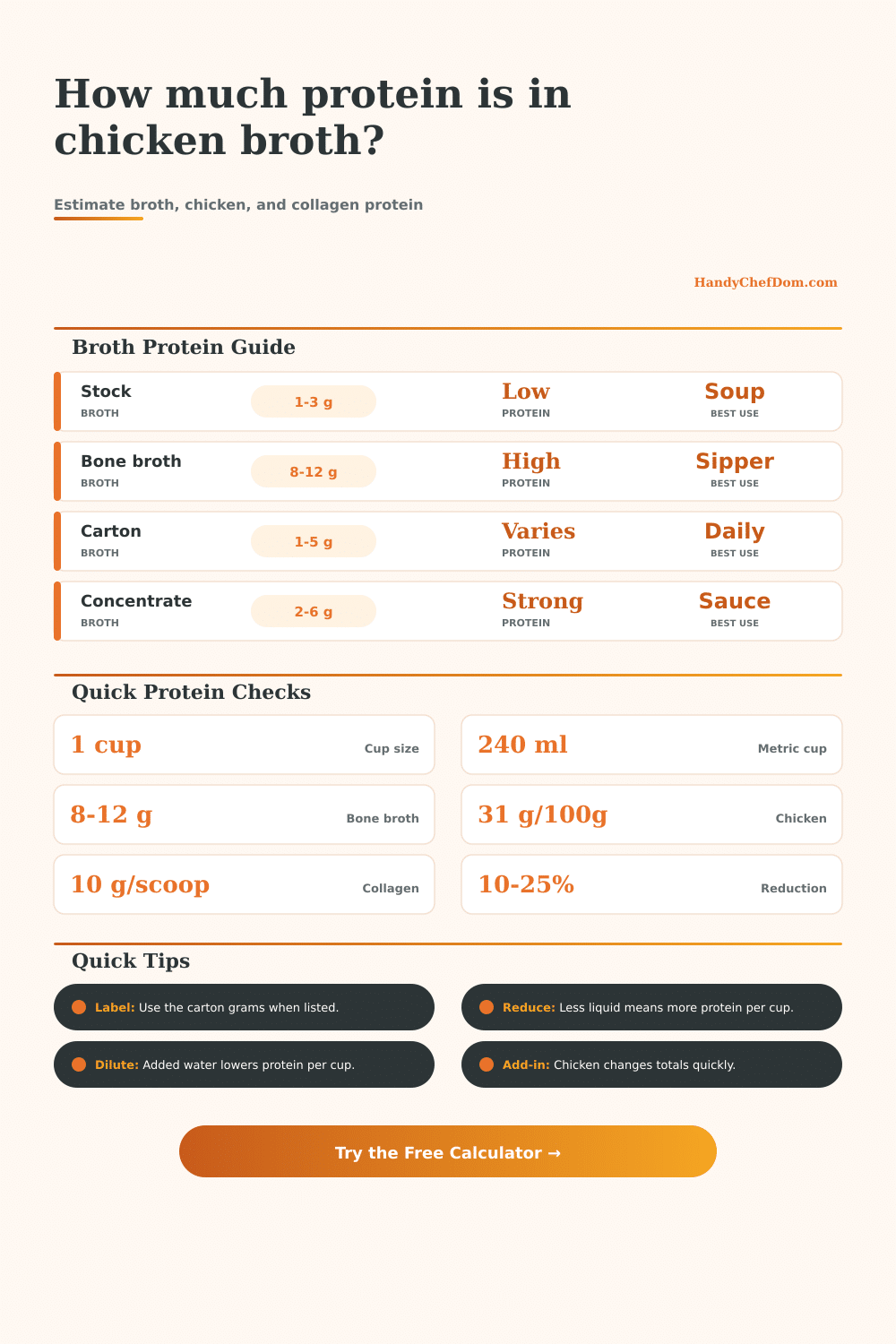
| Chicken stock | 2 g per cup | 1 to 3 g | Soup, rice, braise base |
| Chicken bone broth | 10 g per cup | 8 to 12 g | Sipping mugs and ramen |
| Carton chicken broth | 3 g per cup | 1 to 5 g | Use label when available |
| Homemade broth | 4 g per cup | 2 to 8 g | Depends on bones and meat |
| Broth concentrate | 6 g per cup | 2 to 10 g | Calculate after mixing |
| Low sodium broth | 2 g per cup | 1 to 4 g | Often lighter protein |
| Gelatin-rich stock | 7 g per cup | 5 to 10 g | Reduced sauces and mugs |
| Volume | Cups | Milliliters | Common Use |
|---|---|---|---|
| Half cup | 0.5 cup | 118 ml | Small sauce serving |
| One cup | 1 cup | 237 ml | Standard label basis |
| One mug | 1.5 cups | 355 ml | Bone broth sipper |
| Ramen bowl | 2 cups | 473 ml | Broth-forward meal |
| Soup pot | 8 cups | 1893 ml | Family batch base |
| Quart | 4 cups | 946 ml | Carton or batch unit |
| Add-in | Amount | Protein Added | Notes |
|---|---|---|---|
| Cooked shredded chicken | 1 oz | 8.8 g | Largest common boost |
| Cooked shredded chicken | 100 g | 31 g | Use for metric batches |
| Collagen peptides | 1 scoop | 10 g | Adjust if label differs |
| Half scoop collagen | 0.5 scoop | 5 g | Good for smaller mugs |
| Plain broth only | 1 cup | 1 to 12 g | Type and label matter |
| Reduced broth | 1 cup | Higher density | Total protein stays fixed |
| Recipe Use | Target Portion | Protein Goal | Calculator Note |
|---|---|---|---|
| Soup base | 1 to 1.5 cups | Moderate | Add chicken for meals |
| Sipping mug | 1 to 1.5 cups | Higher | Bone broth works well |
| Ramen bowl | 1.5 to 2 cups | Medium | Protein often comes from toppings |
| Gravy or pan sauce | 0.25 to 0.5 cup | Dense | Reduction changes per cup |
| Meal prep broth | 1 cup | Repeatable | Keep servings consistent |
| Reduced sauce | 0.25 cup | Concentrated | Small volume, stronger cup |
Estimates are based on common cooked chicken and broth nutrition references. Use your package label for the most specific result.
Most of us treat chicken broth like flavoring agent rather than a food. It’s the stuff that goes on top of noodles, or reduced down into gravy. And then, because you’re adding veggies and noodles too, you figure it must be fine. This works when you’re making a meal quickly. But when you want to plan out your meals for the week, or hit a protein goal, this strategy won’t work.
The broth itself isn’t always the focus, so it’s more important to know what’s in there: it will determine volume and texture of final dish. Knowing what’s in the broth will influence how you assemble your recipe. There is also a difference in time and extraction between carton, stock, and bone broth. Stock are made quickly by boiling to extract flavor, leaving minimal protein behind. Bone broth is simmered for hours to draw out collagen-rich connective tissue into the liquid. The collagen converts to gelatin that gives your broth its body, and also contributes real protein. While a cup of light stock may contain only one gram of protein, rich bone broth could contains 10 grams or more. It makes a big difference if you’re consuming broth every day, or using it as the base for meals.
Why Protein Matters in Your Broth
Add solids and suddenly the math do change. A cup of broth with three ounces of shredded chicken is not the same than three cups of broth. Why? Because there’s a lot more protein in the chicken than there is in the broth it sits in. There’s dense protein here, packed into a small space. And the ratio shifts: Instead of all liquid, now you have a stew (because you’re also eating something, right?). Add-in ingredients like meat shift the formula, and the calculator takes them into account. How much protein come from the meat versus the liquid base? Does this soup contain any protein at all, or is it all flavor carrier?
Home cooks gets confused by those invisible variables, reduction and dilution. If you simmer your stock down by half, you’re concentrating its proteins and flavors. There may be fewer cups of liquid but the grams of protein in the pot remain the same. There’s twice as much protein per cup. Add water to a thin batch, and you’re diluting the density of its proteins. The tool accounts for the change in volume and shows the final grams of protein per cup, whether the liquid has shrunk or grown. It makes a difference for consistency off recipes. Make a sauce that depends on reduction, and the final product will be richer and have more protein: not just for nutrition, but also for texture.
For users seeking more protein but wanting something that doesn’t add bulk, there’s collagen peptides… A popular add-in. And it doesn’t realy alter the taste of a mug of broth; one scoop adds an extra ten grams of protein. Basically, this is a simple way to increase the nutritional value of your lighter soups. Including these types of supplement in the calculator gives you a clear view of your intake and eliminates the guesswork when you mix different batches or brews from each brand.
Broth isn’t standardized like white rice; it comes from different sources, is cooked at varying times, and filtered differently by brands, resulting in wildly different ranges in reference tables. Some are thick and gelatinous; others are thin. Instead of guessing what’s typical or taking the label value at face value (for safety), you enter that value into the tool if provided, it will override the general estimates for a more accurat answer. It fills the gap between generic recommendations and your actual kitchen.
When you know the protein level in your broth, you’re in control. No more winging it and crossing fingers that everything balances out. Whether you’re creating a high-protein recovery soup or reducing a sauce to deepen flavor, the numbers provides an answer: Where do I stand? Where am I at? With the base covered, the rest of the dish falls into place. You no longer guess; you cook on purpose.