🥚 Protein in Eggs Calculator
Estimate protein from whole eggs, extra whites, extra yolks, cooking style, serving goals, meal prep counts, and recipe loss.
Enter the egg mix before cooking. The calculator applies cooking retention and recipe loss, then divides protein across servings and meal prep containers.
| Egg size or type | Edible weight | Whole protein | White protein | Yolk protein |
|---|---|---|---|---|
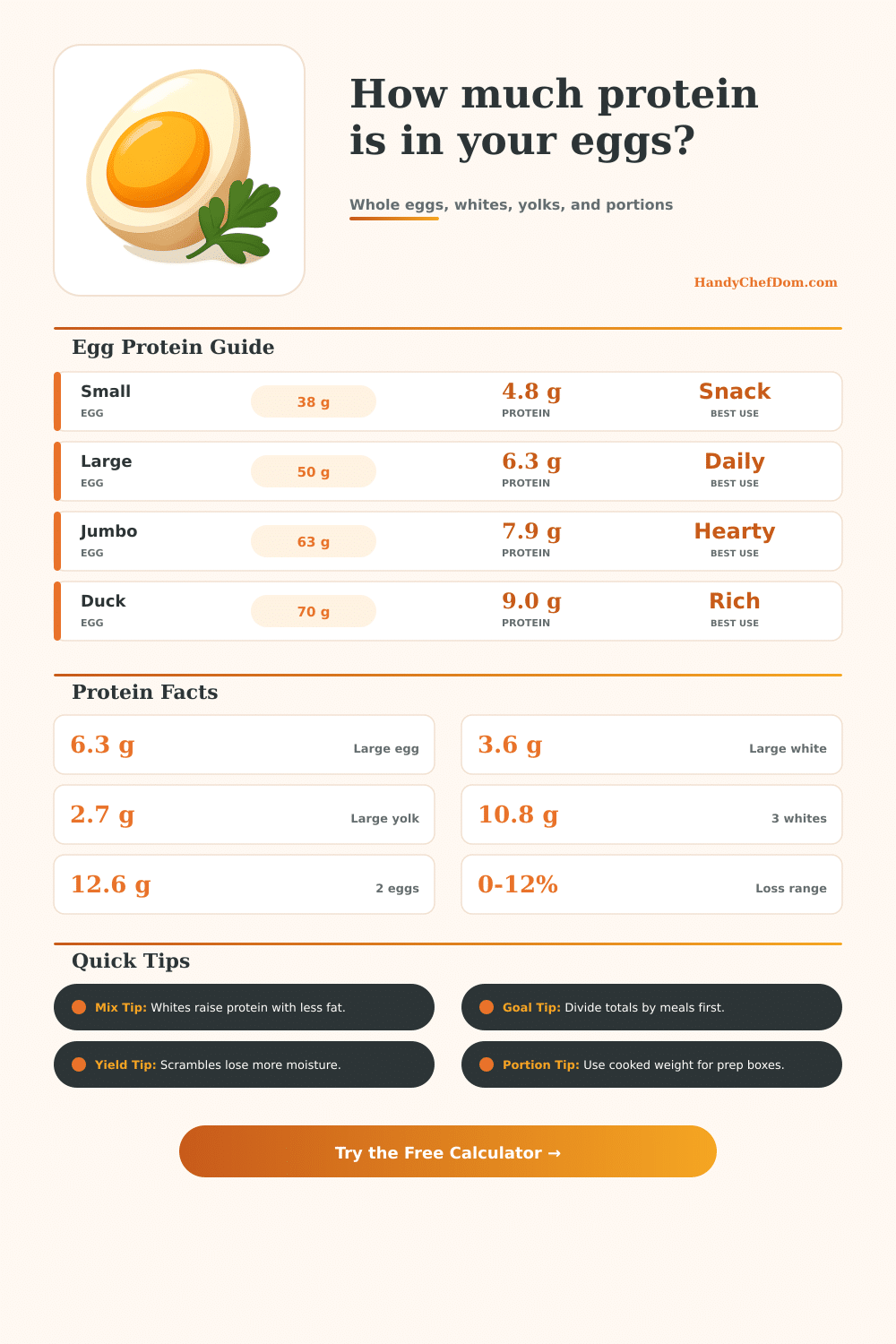
| Small chicken egg | 38 g / 1.34 oz | 4.8 g | 2.8 g | 2.0 g |
| Medium chicken egg | 44 g / 1.55 oz | 5.5 g | 3.2 g | 2.3 g |
| Large chicken egg | 50 g / 1.76 oz | 6.3 g | 3.6 g | 2.7 g |
| Extra-large chicken egg | 56 g / 1.98 oz | 7.0 g | 4.0 g | 3.0 g |
| Jumbo chicken egg | 63 g / 2.22 oz | 7.9 g | 4.5 g | 3.4 g |
| Duck egg | 70 g / 2.47 oz | 9.0 g | 4.0 g | 5.0 g |
| Quail egg | 9 g / 0.32 oz | 1.2 g | 0.7 g | 0.5 g |
| Egg component | Typical amount | Calories | Protein | Fat | Carbs |
|---|---|---|---|---|---|
| Large whole egg | 50 g edible | 72 kcal | 6.3 g | 4.8 g | 0.4 g |
| Large egg white | 33 g | 17 kcal | 3.6 g | 0.1 g | 0.2 g |
| Large egg yolk | 17 g | 55 kcal | 2.7 g | 4.5 g | 0.6 g |
| Two large eggs | 100 g edible | 144 kcal | 12.6 g | 9.6 g | 0.8 g |
| Three large whites | 99 g | 51 kcal | 10.8 g | 0.3 g | 0.6 g |
| One large egg plus three whites | 149 g | 123 kcal | 17.1 g | 5.1 g | 1.0 g |
| Cooked or raw choice | Protein retention | Weight yield | Best planning use | Calculator note |
|---|---|---|---|---|
| Raw shell-free mix | 100% | 100% | Baking formulas | No cooking yield change |
| Boiled or steamed | 100% | 98% | Snack eggs and salads | Small shelling and moisture loss |
| Poached eggs | 99% | 96% | Breakfast portions | Some white may drift away |
| Scrambled eggs | 99% | 90% | Pans and meal prep | Moisture and pan transfer loss |
| Fried eggs | 98% | 88% | Plated eggs | Edges and pan residue vary |
| Baked egg dish | 98% | 85% | Casseroles and cups | More evaporation during baking |
| Protein target | Large egg equivalent | White-heavy option | Meal prep note | Best fit |
|---|---|---|---|---|
| 10 g protein | 1.6 large eggs | 3 large whites | Light snack box | Small appetite |
| 15 g protein | 2.4 large eggs | 4 whites plus 1 yolk | Moderate breakfast | Daily prep |
| 20 g protein | 3.2 large eggs | 4 whites plus 1 egg | High-protein serving | Training day |
| 25 g protein | 4.0 large eggs | 5 whites plus 1 egg | Large breakfast box | Hearty meal |
| 30 g protein | 4.8 large eggs | 6 whites plus 2 eggs | Very high protein | Big bowl |
| 40 g protein | 6.3 large eggs | 8 whites plus 2 eggs | Split across meals | Shared batch |
Nutrition figures are common rounded kitchen values based on standard edible egg weights. Actual eggs vary by brand, flock, and shell size.
Protein in eggs is an importance factor for a person to track if that person is monitoring there intake of egg protein. The protein content of egg can change based upon whether the person choose to separate the eggs or to add extra yolks to a recipe that use eggs. Furthermore, the protein content of eggs can also change based upon the cooking method for the eggs.
The protein content of a cooked meal that contain eggs can change based upon these different cooking methods. Thus, a person who is counting the protein content of their meals must track the egg protein content. The calculator performs the mathematic calculations for you once you enter the type of egg mix and cooking method for the eggs.
How to Use an Egg Protein Calculator
The calculator is very useful in that it account for the protein that is lost during the cooking of the eggs. For example, protein can be lost from the eggs during cooking if the eggs lose moisture, or if the eggs stick to the pan (or oven) in which they are cooked. Thus, recipes like scrambled eggs or baked egg casseroles will not contain the same amount of protein than the amount of protein in the raw eggs that were used to cook those dishes.
Therefore, the calculator provides more accurate result for a person’s meal planning than if they simply used the calculation of the amount of protein in raw eggs. The ingredient field allow a person to decide how to adjust the ingredient in the raw eggs. For example, whole eggs contain protein and fat.
If a person chooses to use only egg whites, they can increase the protein in their recipe without increasing the fat content in the recipe. However, if a person chooses to use extra yolks, they will increase the fat and calorie content of their recipe without increasing the protein content of their recipe as much as they would if they had used egg whites. Furthermore, the field for loss in the recipe is necessary in that batches of eggs can lose some of their mass during the cooking process.
Thus, the loss field allows for a person’s recipe to account for the fact that they will not consume all of the raw eggs that are used in the recipe. The cooking method will change the amount of protein that is contained in the eggs that are consume by a person. For example, boiled eggs retain nearly all of the protein that was contained in the raw eggs.
However, scrambled eggs and fried eggs will contain less protein in the cooked eggs than the raw eggs started with due to the loss of moisture. Furthermore, baked egg dishes will lose the most protein when cooked due to the evaporation of the protein in the eggs during the baking process. Thus, if a person uses the protein calculator, they can easily compare recipes containing various cooking method for how much protein is contained in each type of egg recipe.
A person can plan their meal by considering the amount of protein that they require per serving of food. For example, if a person requires 20 gram of egg protein per serving, the calculator will show how many whole eggs, egg whites, and yolks contain that much protein once cooked and after loss. Furthermore, the calculator also allows for division of the batch of eggs into meal container so that each container will contain the same amount of protein per container.
This feature helps to avoid the common mistake of assuming that the raw weight of the eggs is the same as the cooked weight of the eggs. The same logic can be applied to recipes that contain eggs. For example, a dessert that uses extra yolks will contain more fat than a dessert that use extra egg whites.
Thus, a person can use the calculator to test different combination of eggs before using there ingredient. Thus, they can determine how many egg whites they will need to use to reach the target protein level for their recipe without changing the texture of the food. A person also must consider the size of the eggs that are to be used.
A jumbo egg will contain more protein than a small egg. Many recipes, however, do not specify the size of the eggs that are to be used. Thus, changing the size of the eggs that are used in a recipe will change the amount of protein that is consume and the total volume of the food.
To avoid this issue, the size selector within the recipe calculator allows the person to choose the size of the eggs that they intend to use in their recipe. Although the calculator takes care of many variable in the kitchen, there are still some variables that exist in real kitchens. For example, the thickness of the shell of the eggs may differ from egg to egg.
Furthermore, the diet of the flock from which the eggs were obtained may change the protein content of the eggs. Furthermore, how the eggs are stored can play a role in their protein content. However, these variations are small in effect and rarely have any impact upon the protein content that is required per recipe.
While the calculator accounts for most variables in the kitchen, the result will not be exact. However, the results will be reliable for meal planning purposes. To use this calculator in your kitchen, first decide the amount of egg protein that you require per serving.
Then, enter that amount into the calculator to determine the amount of whole eggs, egg whites, and yolks that you will need to use to reach that protein level. Furthermore, account for the cooking style that you will use for the eggs. Finally, account for the loss of mass that the eggs will suffer during the cooking process.
Once these variables have been accounted for, cooking and meal preparation with eggs will no longer involve guesswork.