☕ Coffee Measurement Calculator
Measure coffee by brew method, cups, grams, tablespoons, scoops, water volume, strength, ratio, and bean density.
Choose a brew method, cup count, target strength, and density style. Leave custom water at 0 to calculate from cups, or enter a water volume to override cup size.
| Brew method | Typical ratio | Water per cup | Coffee per cup | Measure note |
|---|---|---|---|---|
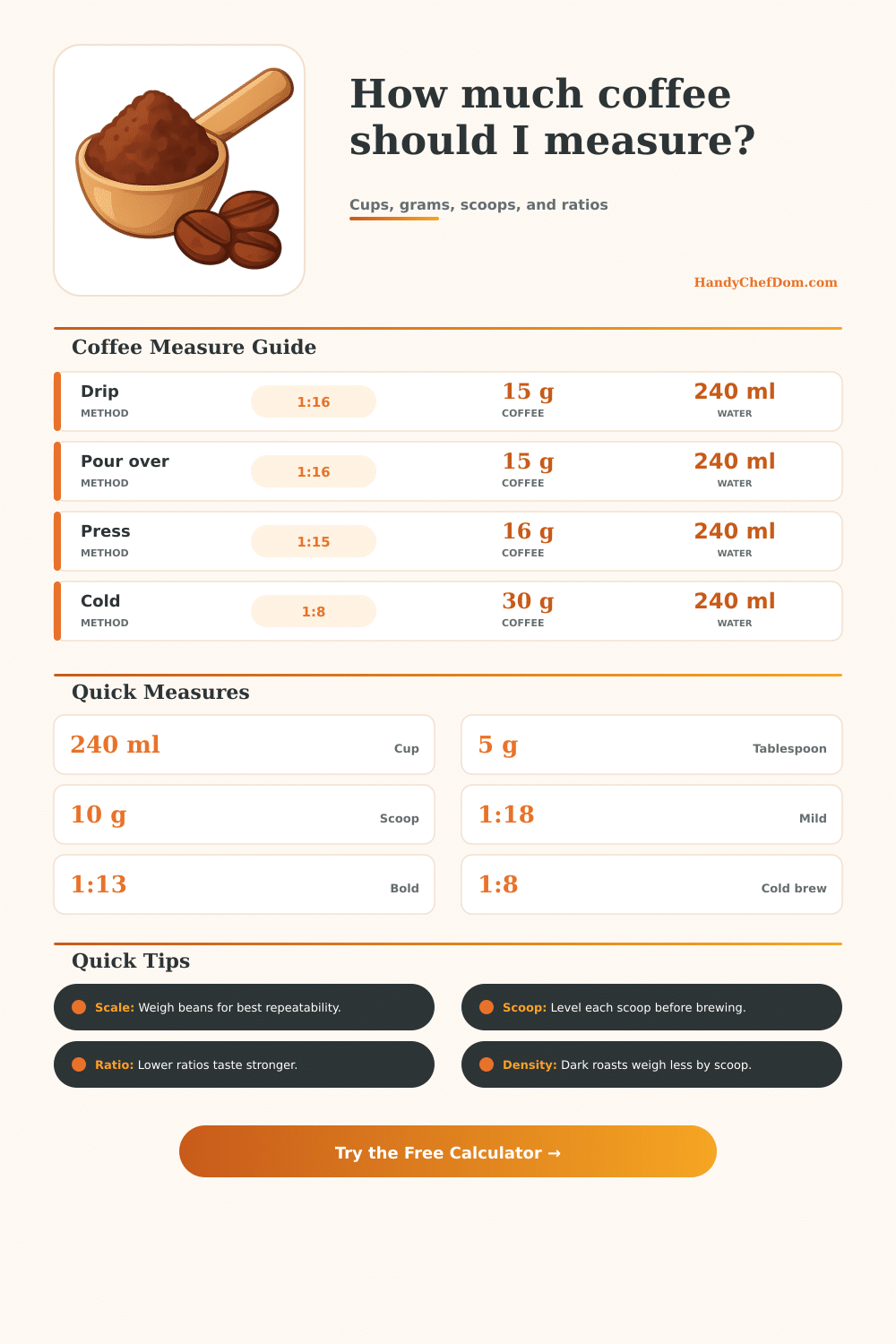
| Drip coffee maker | 1:16 | 240 ml | 15 g | Balanced daily pot |
| Pour over cone | 1:16 | 240 ml | 15 g | Works well for paper filters |
| French press | 1:15 | 240 ml | 16 g | Slightly fuller cup |
| AeroPress style | 1:13 | 220 ml | 17 g | Good for one mug |
| Moka pot | 1:10 | 150 ml | 15 g | Concentrated brew |
| Espresso | 1:2 | 36 ml | 18 g | Shown as beverage out |
| Cold brew concentrate | 1:8 | 960 ml | 120 g | Dilute after brewing |
| Percolator | 1:17 | 240 ml | 14 g | Gentler measured dose |
| Cups brewed | Water at 240 ml cups | Mild 1:18 | Balanced 1:16 | Bold 1:13 |
|---|---|---|---|---|
| 1 cup | 240 ml | 13 g | 15 g | 18 g |
| 2 cups | 480 ml | 27 g | 30 g | 37 g |
| 4 cups | 960 ml | 53 g | 60 g | 74 g |
| 6 cups | 1440 ml | 80 g | 90 g | 111 g |
| 8 cups | 1920 ml | 107 g | 120 g | 148 g |
| 10 cups | 2400 ml | 133 g | 150 g | 185 g |
| Density style | g per tbsp | 2 tbsp scoop | Why it changes | Best use |
|---|---|---|---|---|
| Light roast grounds | 5.3 g | 10.6 g | Denser beans | Pour over and drip |
| Medium roast grounds | 5.0 g | 10.0 g | Middle reference | Daily measuring |
| Dark roast grounds | 4.4 g | 8.8 g | More expanded beans | Bold drip or press |
| Fine espresso grounds | 5.8 g | 11.6 g | Packs more tightly | Espresso dose checks |
| Coarse press grounds | 4.7 g | 9.4 g | More air gaps | French press |
| Whole beans | 6.5 g | 13.0 g | Larger dense pieces | Pre-grind scooping |
| Strength target | Ratio | Taste cue | Tablespoon cue | When to use |
|---|---|---|---|---|
| Mild | 1:18 | Lighter body | Fewer scoops | Long mugs and gentle cups |
| Balanced | 1:16 | Classic cup | Standard scoops | Daily coffee makers |
| Bold | 1:13 | Fuller flavor | More scoops | Milk drinks or strong mugs |
| Extra strong | 1:11 | Heavy body | High dose | Short servings |
| Cold concentrate | 1:8 | Very strong | High batch dose | Dilution after steeping |
| Espresso output | 1:2 | Small yield | Scale preferred | Portafilter dosing |
To achieve a consistent cup of coffee, you must understand how to measuring coffee and water. Many peoples use a scoop or a spoon to measure the amount of coffee they want to use. However, a scoop or a spoon will measure the volume of coffee, not the weight of the ground coffee.
The ratio of the amount of coffee to the amount of water will determine the flavor of the coffee. If you change any of the variable of coffee and water, such as brew method, roast level, or grind size, your coffee will taste differant. The first variable to consider is the brew method for your coffee.
Measure Coffee and Water for the Same Taste Every Time
Brew method will change the way that coffee and water interact with one another. For instance, if you use a drip machine, the machine will allow water to sit on top of the coffee grounds rather than submerging the grounds in water. Because of this, drip machines often use a lighter ratio of coffee to water relative to brewing methods like a French press.
Similarly, because a French press hold coffee grounds in contact with brewing water for a longer period of time, the brew method of a French press allow for more oils to pass from coffee grounds to brewing water. This results in a heavier taste of coffee brew from a French press than using a drip machine. Lastly, cold brew methods requires a much longer brewing time for coffee grounds to extract flavor from brewing water.
This cold brew method results in a coffee concentrate that contains the same ratio of coffee to water as a French press but that must be diluted before drinking. Therefore, you cant have a cold brew coffee concentrate with the same ratio of coffee to water as drip machines or French presses. The brew method you choose will change the ratio of coffee to water that should be use for brewing.
The second variable to consider is the volume of water that you will use to brew the coffee. This is not always a standard measurement. Many people assume that one cup of water is 240 milliliter.
However, travel mugs or espresso cups may not always hold 240 milliliters of water. Depending on the size of your vessel, the total amount of water you will use will change. In order to calculate the exact amount of water for your brew, you can use a coffee recipe calculator.
This coffee recipe calculator will eliminate the guesswork in determining the amount of water for brewing coffee. The third variable that you can adjust in brewing coffee is your preference for how strong your coffee is. Therefore, this third variable is your preference for coffee strength.
The ratio of coffee to water will determine the strength of your brewed coffee. If you prefer your coffee to be light in strength, use a coffee to water ratio of 1-to-18. If you prefer your coffee to be bold in strength, use a coffee to water ratio of 1-to-13.
To adjust the ratio of coffee to water in your brewing process, you can use a coffee recipe calculator with a strength selector. This strength selector will allow you to set the strength of your coffee to your preference for either light or bold coffee. The fourth variable to consider when brewing coffee is the density of the ground coffee.
Coffee density refers to the weight of ground coffee within a certain volume. For instance, a tablespoon measure the volume of ground coffee but does not measure the weight of that coffee. The density of coffee grounds can change with brew method.
The lighter roasts of coffee tend to be denser than darker roasts. Additionally, fine ground espresso beans will be denser than coarser coffee grounds like those that go into a French press brew. These variables affects how much ground coffee you need when you are using volume measurements like tablespoons.
In order to account for these different densities, you must be able to select the correct density of coffee in your coffee recipe calculator to ensure that the tablespoon or scoop of ground coffee that you measure is accurate in weight regardless of the type of coffee beans that you use. The fifth and most reliable variable in brewing coffee is the weight of the ground coffee in grams. The weight of ground coffee in grams will not change based on the grind size of the coffee grounds or the type of roast that you use.
While tablespoons and scoops are common measurements for coffee grounds, the weight of those measured tablespoons or scoops will change according to the density of the coffee grounds. A breakdown of the measurements for brewing coffee will allow you to determine the amount of grams of coffee that are required to brew your coffee and the amount of milliliters of water that is required to brew your coffee. Knowing the amount of grams of ground coffee and the amount of milliliters of water will allow you to scale your coffee recipe to brew as much coffee as you would like.
In addition to the variables described above, there are also environmental factor that could potentially affect brewing recipes for coffee. For instance, the humidity of your area or the age of your coffee beans may affect the density of the ground coffee that you use in brewing. If the density of coffee beans change, a scoop of ground coffee will not always weigh the same amount of grams.
In order to account for this potential change, you can add a percentage to your coffee recipe calculation. Adding a buffer percentage to the amount of ground coffee that you calculate will account for potential changes to the density of your coffee grounds. Additionally, coffee grinders may retain some of the ground coffee within their burrs.
As a result, when you attempt to use all of the ground coffee that was measured in the grinder, some of the coffee grounds may remain within the grinder. To account for this, you may need to add additional gram of ground coffee to ensure that you have used all of the coffee grounds that you intended to brew. Another common mistake with brewing coffee is treating each of the following variable as if they are always the same.
For instance, people may use the same scoop of ground coffee to brew both light roast coffee and dark roast coffee. However, the weight of the coffee within a scoop will be different for each type of roast due to the different densities of each type of coffee bean. Additionally, people may set the ratio of ground coffee to water according to the specifications of the recipe but use a brewing vessel of a different size than the standard size of a coffee cup.
Using a coffee recipe calculator will account for each of these variables so that you can avoid these common mistake. The goal for using each of these variables is to achieve repeatability of your brewed coffee. If you use the same brew method, the same size cup, the same strength preference, and the same density of coffee grounds when brewing coffee, each cup of brewed coffee will provide the same taste to each drinker.
If you measure each of the coffee and water variables consistently, you can go from brewing a single cup of coffee to brewing a large pot of coffee without changing the taste of your brewed coffee. You should of used these tips to make teh perfect cup.