🧀 Protein in Cream Cheese Calculator
Calculate cream cheese protein from tablespoons, ounces, or grams, then adjust for regular, light, whipped, block, spread, recipe use, servings, and target protein.
Choose how the cream cheese was measured. Tablespoons and cups use density, ounces and grams use weight directly, and whipped spread is adjusted for airier scoops.
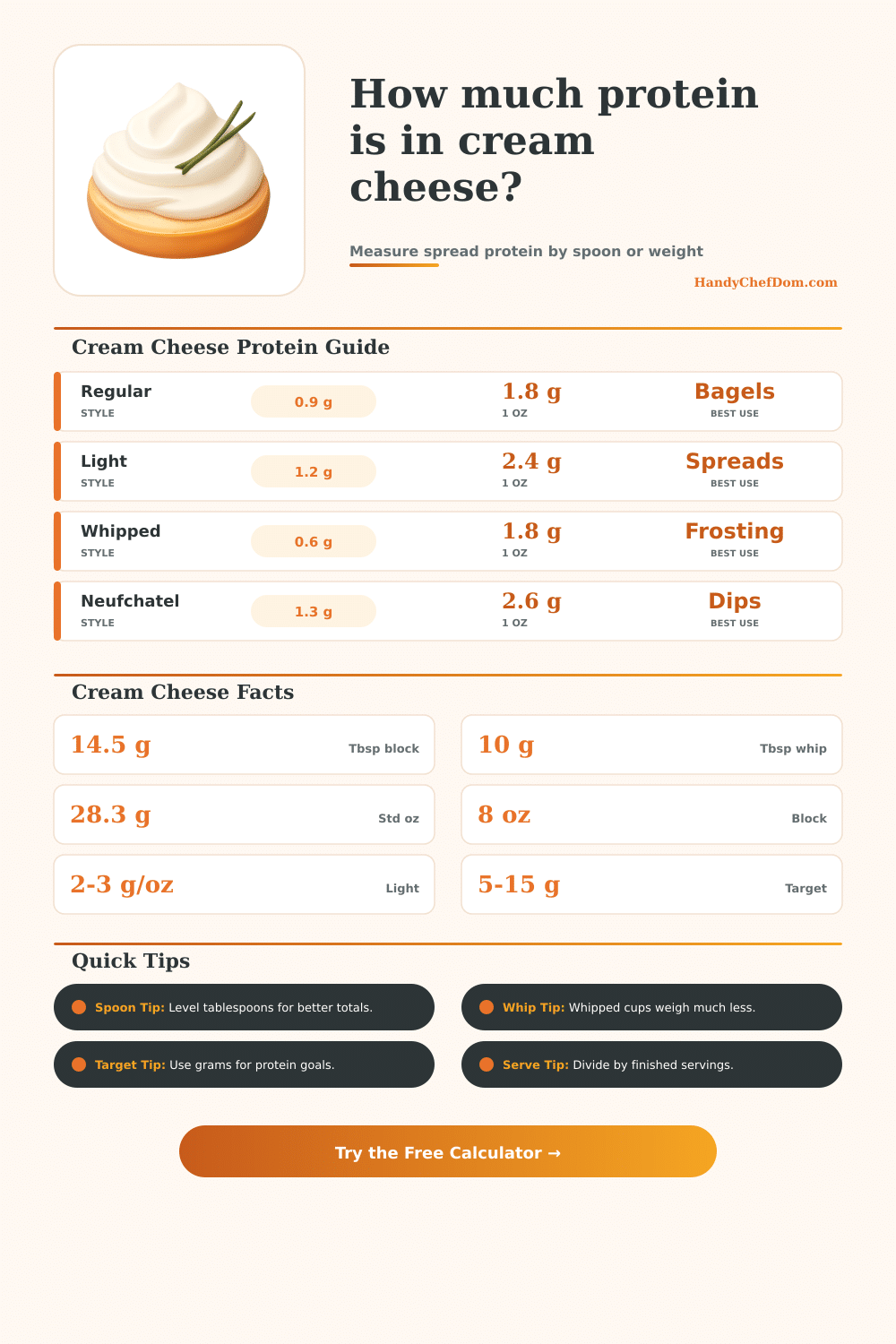
Regular cream cheese: about 6.2 g protein per 100 g.
| Cream Cheese Style | Protein per 100 g | Protein per 1 oz | Calories per 1 oz | Best Calculator Match |
|---|---|---|---|---|
| Regular cream cheese | 6.2 g | 1.8 g | 97 kcal | Classic block, bagel spread, cheesecake base |
| Light cream cheese | 8.5 g | 2.4 g | 70 kcal | Light block, wraps, lighter dips, breakfast plates |
| Whipped cream cheese | 6.2 g | 1.8 g | 97 kcal | Airy tubs, frosting blends, soft bagel spreads |
| Soft spread tub | 6.0 g | 1.7 g | 88 kcal | Ready-to-spread tubs and softer spoon portions |
| Neufchatel style | 9.0 g | 2.6 g | 72 kcal | Lighter spreads, dips, and savory fillings |
| Fat-free cream cheese | 12.0 g | 3.4 g | 32 kcal | Protein-focused spreads with much less fat |
| Savory flavored spread | 5.8 g | 1.6 g | 86 kcal | Herb tubs, veggie spreads, party dips |
| Sweet flavored spread | 5.2 g | 1.5 g | 90 kcal | Fruit spreads, dessert fillings, sweet toast |
| Measured Form | Typical Weight | Regular Protein | Light Protein | Use This When |
|---|---|---|---|---|
| 1 level tablespoon block | 14.5 g | 0.9 g | 1.2 g | Measuring a firm brick with a spoon |
| 1 tablespoon soft spread | 13.0 g | 0.8 g | 1.1 g | Scooping from a ready spread tub |
| 1 tablespoon whipped | 10.0 g | 0.6 g | 0.9 g | Airy whipped tub or fluffy frosting scoop |
| 1 ounce by weight | 28.35 g | 1.8 g | 2.4 g | Best choice when using a kitchen scale |
| 1 cup block packed | 232 g | 14.4 g | 19.7 g | Dense cheesecake, filling, or dip base |
| 1 cup whipped loose | 160 g | 9.9 g | 13.6 g | Whipped frosting or airy party bowl |
| 8 oz block package | 227 g | 14.1 g | 19.3 g | Full block recipes and batch planning |
| 7.5 oz spread tub | 213 g | 12.8 g | 18.1 g | Soft tub spreads or appetizer bowls |
| Recipe Use | Typical Portion | Regular Protein | Light Protein | Planning Note |
|---|---|---|---|---|
| Bagel or toast spread | 2 tbsp | 1.8 g | 2.5 g | Good for breakfast counting, especially with several servings |
| Wrap or sandwich schmear | 1 tbsp | 0.9 g | 1.2 g | Small spread amounts add flavor but modest protein |
| Party dip serving | 2 to 3 tbsp | 1.8 to 2.7 g | 2.5 to 3.7 g | Divide the full bowl by the real number of guests |
| Cheesecake slice | 1 to 2 oz | 1.8 to 3.5 g | 2.4 to 4.8 g | Use recipe weight for the cleanest slice estimate |
| Frosting layer | 1 tbsp | 0.6 to 0.9 g | 0.9 to 1.2 g | Whipped volume can overstate protein if not weighed |
| Breakfast meal prep cup | 1.5 oz | 2.6 g | 3.6 g | Pair with other proteins if aiming for a meal target |
| Protein Target | Regular Cream Cheese | Light Cream Cheese | Fat-Free Cream Cheese | Practical Fit |
|---|---|---|---|---|
| 2 g protein | 2.2 tbsp | 1.7 tbsp | 1.2 tbsp | Small snack spread or toast topping |
| 5 g protein | 5.6 tbsp | 4.1 tbsp | 2.9 tbsp | Better weighed as ounces for accuracy |
| 10 g protein | 11.1 tbsp | 8.1 tbsp | 5.8 tbsp | Large dip share or recipe portion |
| 15 g protein | 1 full block | 12.2 tbsp | 8.6 tbsp | Usually a recipe total, not one spread serving |
| 20 g protein | 11.4 oz | 8.3 oz | 5.9 oz | Use light or fat-free if cream cheese is main protein |
| 30 g recipe total | 17.1 oz | 12.4 oz | 8.8 oz | Batch target for dips, fillings, and meal prep |
Cream cheese is a food that is often used as a part of breakfast, but cream cheese dont contain a large amount of protein. When people thinks of a breakfast of bagel with cream cheese, they may think that the food contains alot of protein. However, a bagel with cream cheese contains less than two gram of protein.
Because cream cheese do not contain a lot of protein, people should use a calculator to determine the exact amount of protein that is contained within the cream cheese that the person will be consuming. The type of cream cheese that is used will affect the protein content of the foods. For instance, regular cream cheese contain about six grams of protein in each hundred gram of cream cheese.
How to Calculate Protein in Cream Cheese
Light cream cheese contains more protein than regular cream cheese because it contains more milk solid. Whipped cream cheese, however, contains less protein per tablespoon than regular cream cheese because the whipped cream cheese contains air within the whipped cream cheese. Lastly, cream cheese that is fat free or Neufchatel cream cheese will contain a different amount of protein because these types of cream cheese have different amount of fat and milk solids than regular cream cheese.
The calculator will ask for the type of cream cheese that the user will use in the recipe so that the calculation can account for the protein content. The way that cream cheese is measured will also affect the amount of protein that will be consume. For instance, a tablespoon of dense cream cheese will contain more protein than a tablespoon of whipped cream cheese.
Similarly, the amount of cream cheese measured in volume may not be the same as if it was measure in weight. For instance, a cup of cream cheese measured in volume may not weigh the same as a cup of cream cheese measure in weight. The calculator will allow the user to convert measurements of volume and weight to the same measurement, which will account for the different density of cream cheese.
The number of people that will eat the cream cheese will also affect the amount of protein that each person will consume. If a large amount of cream cheese is prepared for a group of people, that amount of cream cheese will have to be divide by the number of people that will eat the cream cheese. Additionally, some of the cream cheese may stick to the knife with which someone cut the cream cheese, or the cream cheese may remain inside of the container in which the cream cheese is store.
In these case, the individuals that eat the cream cheese will not consume some of the protein in the amount of cream cheese that was prepared. To account for this, the calculator will ask the individuals that will prepare the cream cheese for the meal to input the percentage of the cream cheese that will be lose to the knife and container. The calculator will account for the loss of cream cheese to calculate the amount of protein that each person will consume.
The way in which cream cheese is used in a recipe will also affect the amount of protein that is consumed by each individual. For instance, cream cheese may be contained within a cheesecake, so the amount of cream cheese consumed by each person may be more than the eating individual realize. In contrast, cream cheese may be spread onto a number of cracker for a party dip, so the amount of cream cheese that is consumed by each individual is less than the amount of cream cheese spread onto the crackers.
In these situations, it may be necessary to use the calculator to determine whether additional cream cheese should of be add to the recipe to help the group reach a goal for the amount of protein that should be consumed by each individual. Additionally, the calculator may be used to determine whether changing the type of cream cheese that the cook uses in a recipe will allow those individuals to reach their goal for the amount of protein that should be consumed by each individual. Because cream cheese can contain different amount of protein depending upon the factor discussed above, individuals should not use cream cheese as a primary source of protein for the body.
Instead, individuals should use the calculator to determine the amount of protein that will be contained within the cream cheese that the individual will be consume. By using this calculator, the individual will account for the amount of protein that is contained within the food that will be prepared, and the individual will not make the mistake of assuming that all cream cheese contain the same amount of protein.