Cooking Temperature Conversion for Fan Ovens
Convert between Celsius, Fahrenheit, and gas mark, then apply fan oven drops, recipe shifts, and bakeware tweaks.
Start with the recipe temperature and var the calculator convert the scale while applying fan, rack, altitude, and browning adjustments.
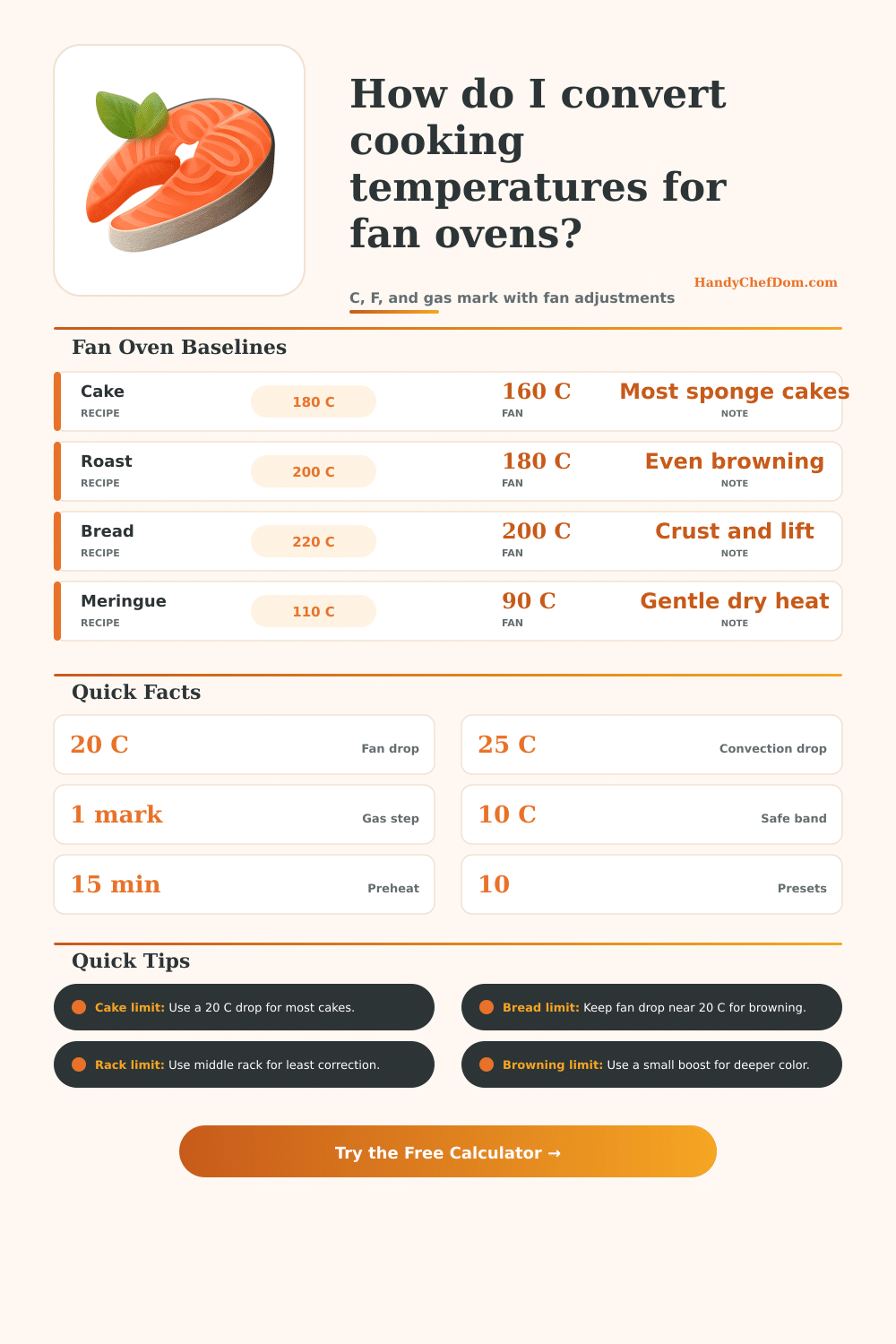
| C | F | Gas | Fan Set |
|---|---|---|---|
| 110 | 230 | 1/4 | 90 C |
| 150 | 300 | 2 | 130 C |
| 180 | 350 | 4 | 160 C |
| 220 | 425 | 7 | 200 C |
| Fan Mode | Shift | When To Use | Limit |
|---|---|---|---|
| Fan oven | -20 C | General baking | Most recipes |
| Convection | -25 C | Strong air movement | Watch edges |
| Fan assist | -15 C | Gentle circulation | Smaller drop |
| Gas oven | 0 C | Direct dial heat | Use chart |
| Recipe | Shift | Why | Limit |
|---|---|---|---|
| Cake | -5 C | Protect crumb | Keep soft rise |
| Bread | +10 C | Boost oven spring | Do not overproof |
| Pastry | -10 C | Reduce burn | Check early |
| Pizza | +20 C | Strong base heat | Use a hot stone |
| Bakeware | Shift | Best For | Limit |
|---|---|---|---|
| Light metal | 0 C | All-round | Baseline |
| Dark metal | -5 C | Cakes | Browns fast |
| Glass dish | -10 C | Casseroles | Look early |
| Stone | +5 C | Pizza | Preheat fully |
This cooking temperature conversion page is built for fan ovens first, then extends to Celsius, Fahrenheit, and gas mark so you can move from recipe language to a real dial setting without guesswork.
A fan oven can perform different than a conventional oven due to moving air in fan ovens. In conventional ovens, hot air rise from a stationary heating element within the oven. However, fan ovens uses a fan to move the hot air within the oven.
Because the moving air can transfer more heat to the food than the still air in conventional ovens, food cook faster in a fan oven. Because of the faster cooking in fan ovens, recipe temperatures has to be adjusted so that the food does not burn on the outside while the inside is still raw. Many recipes instructs cooks to reduce the temperature by 20 degree when using fan ovens instead of conventional ones.
Cooking with a Fan Oven
These fan ovens can speed up the browning reaction on the food; the cooks must lower the temperature so that the exterior of the food does not burn while the interior is still raw. If the recipe call for baking a cake, for example, cooks can set the temperature to the conventional oven to 190 degrees Celsius (instead of 210 degrees) so that the exterior of the cake cook to the same rate as the interior. This will allow the center of the cake to cook at the same time as the exterior reaches the desired browning.
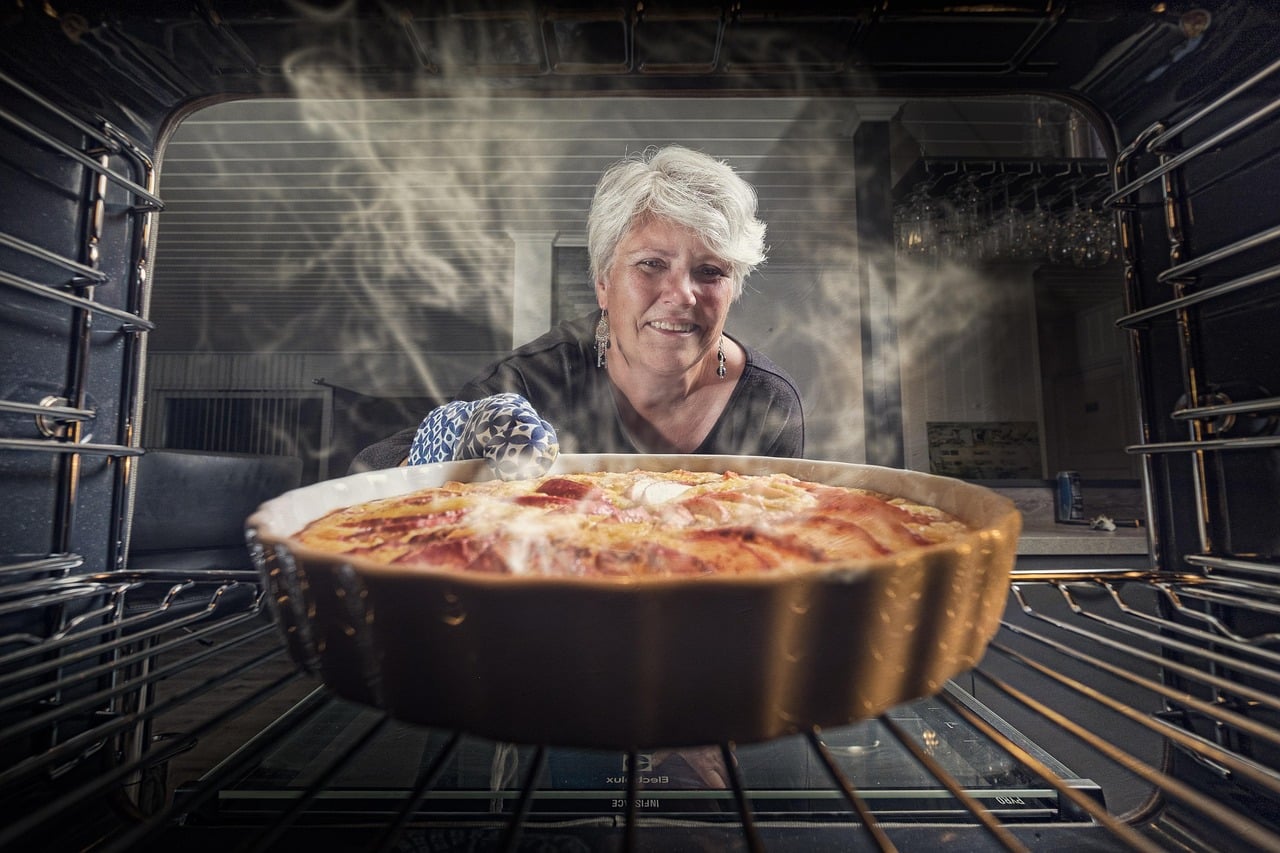
Not all foods requires the same adjustment in the fan oven. Cakes may have to be cooked at a lower temperature to avoid setting the cake structure too firmly; instead, the cake should form a soft structure when it sets. Breads may require a higher cooking temperature than other foods so that the dough will “oven spring,” wherein the steam from the dough cause it to expand as it cooks.
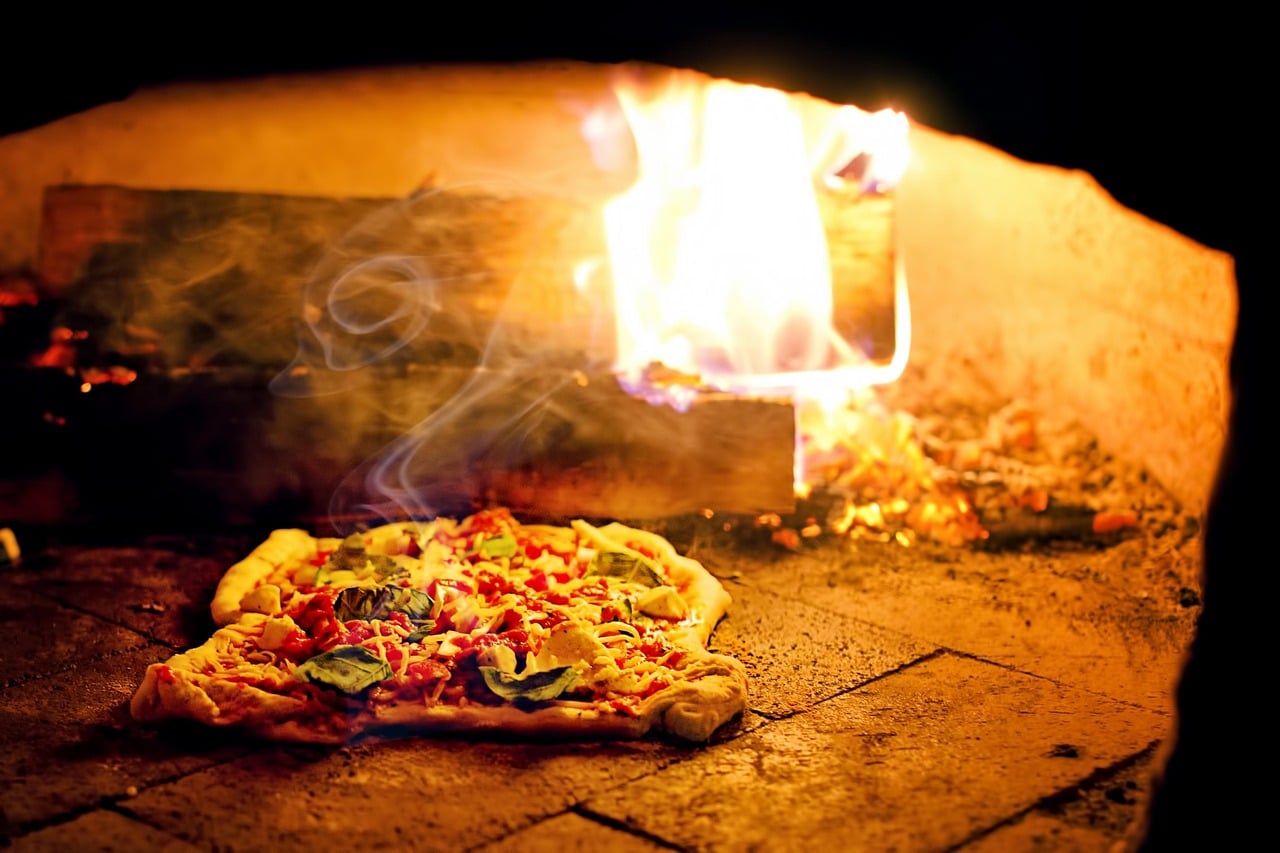
Meringues require a lower temperature because the meringues should dry slowly so that the shell dont crack. Roast chicken may require a reduction in cooking temperature, but pizza may cook best at a higher temperature to allow the crusts to char on the pizza stone. Other factors that impact cooking in a fan oven are the position of the oven rack and the material of the bakeware.
Foods cooked on the top rack of the oven will be exposed to the heat from the grill element, so it is useful to cook foods whose tops will be browned, such as gratins and pies. The bottom rack of the oven is closer to the heat source at the base of the oven; thus, it is useful for baking breads. The middle rack is even with the circulating air within the oven, so it is most even throughout the oven.
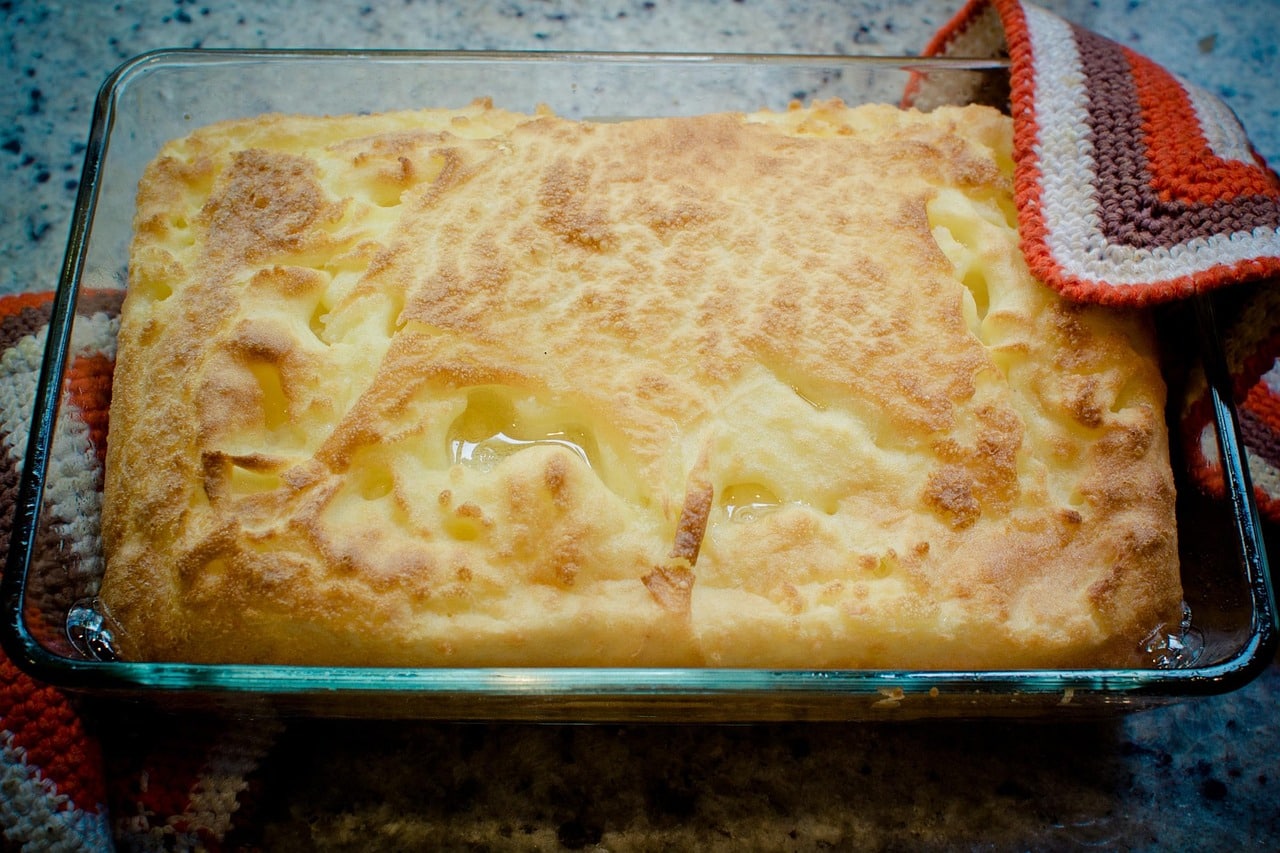
Additionally, bakeware made of aluminum will reflect the heat from the oven, while dark bakeware will absorb the heat; thus, dark bakeware will produce darker food on the bottom. Bakeware made of glass will hold its heat; cooks should check the baking dish early for food cooked in bakeware so that the edge of the food will not cook more than the rest of the food. Other factors to consider are the mode of the fan oven and where it will be used.
If the cook will use the fan oven in fan mode, it will cook the food at a higher rate than if it were used in fan-assisted mode. Additionally, if the recipe is to be made at high altitude, the temperature may have to be adjusted because there is less air and water in those areas. Thin air allows liquids to evaporate at a faster rate; so, cooks may have to increase the temperature so that the structure of the food sets before the liquids within the food can evaporate.
When cooking in the fan oven, cooks should avoid some common mistakes. One of them is to not preheat the oven properly. If cooks dont preheat the oven, the food will not recieve the initial heat need to properly set the structure of the food.
Additionally, cooks should avoid opening the oven door while the food is cooking because this will allow the heat to escape from the oven. Finally, cooks should use an oven thermometer because the dials on the ovens may not be accurate in reflecting the actual temperature of the food being cooked. By understanding how the fan oven move the air and how that air can impact the food being cooked, cooks can adjust the recipes appropriately to achieve the desired results with the food.