🧂 Fermentation Salt Calculator
Calculate the exact salt needed for any vegetable fermentation — dry salt or brine method
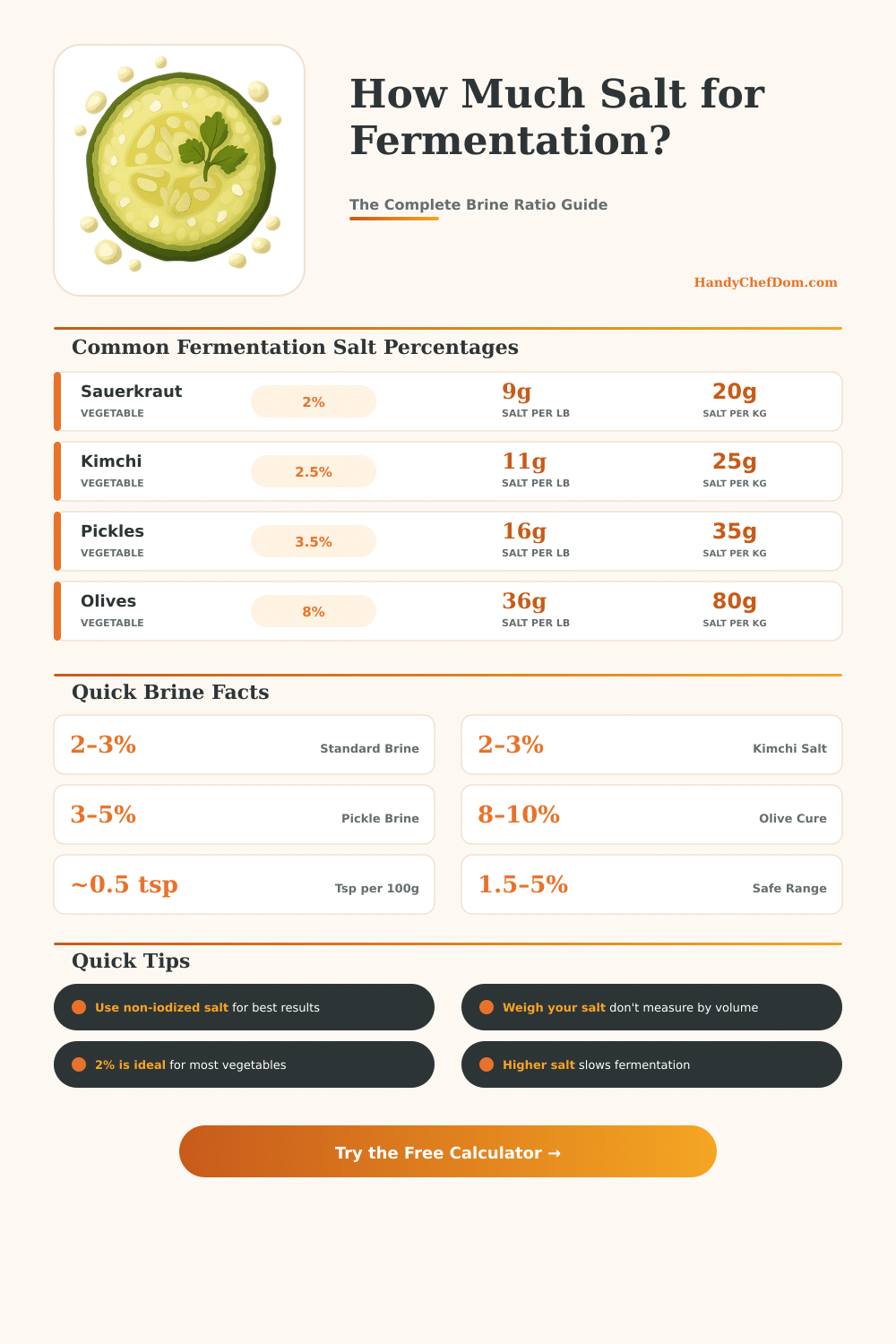
| Ferment | Salt % | Method | Salt per 1kg veg | Salt per 1lb veg |
|---|---|---|---|---|
| Sauerkraut | 2% | Dry | 20g | 9g |
| Kimchi | 2–3% | Dry | 20–30g | 9–14g |
| Fermented Carrots | 2% | Dry or Brine | 20g | 9g |
| Dill Pickles (sliced) | 3–5% | Brine | 30–50g | 14–23g |
| Whole Cucumbers | 4–5% | Brine | 40–50g | 18–23g |
| Hot Pepper Mash | 2–3% | Dry | 20–30g | 9–14g |
| Fermented Garlic | 3% | Brine | 30g | 14g |
| Fermented Beets | 2–3% | Brine | 20–30g | 9–14g |
| Olives (green) | 8–10% | Brine | 80–100g | 36–45g |
| Fermented Salsa | 2% | Dry | 20g | 9g |
| Kvass (beet) | 1.5–2% | Brine | 15–20g | 7–9g |
| Fermented Green Beans | 3–5% | Brine | 30–50g | 14–23g |
| Salt Type | 5g = Approx. Volume | Notes |
|---|---|---|
| Fine Sea Salt | ~1 tsp | Most accurate by weight |
| Kosher Salt (Diamond) | ~1.5 tsp | Lighter, larger crystals |
| Kosher Salt (Morton) | ~0.9 tsp | Denser than Diamond |
| Pickling Salt | ~0.85 tsp | Very fine, no additives |
| Table Salt (iodized) | ~0.85 tsp | Not recommended for ferments |
| Himalayan Pink Salt | ~1 tsp | Fine grain; suitable for ferments |
| Salt % | Salt per 500ml water | Salt per 1L water | Salt per 1qt water |
|---|---|---|---|
| 1.5% | 7.5g (~1.5 tsp) | 15g (~3 tsp) | 14g (~2.8 tsp) |
| 2% | 10g (~2 tsp) | 20g (~4 tsp) | 19g (~3.8 tsp) |
| 2.5% | 12.5g (~2.5 tsp) | 25g (~5 tsp) | 24g (~4.7 tsp) |
| 3% | 15g (~3 tsp) | 30g (~6 tsp) | 28g (~5.7 tsp) |
| 3.5% | 17.5g (~3.5 tsp) | 35g (~7 tsp) | 33g (~6.6 tsp) |
| 5% | 25g (~5 tsp) | 50g (~10 tsp) | 47g (~9.5 tsp) |
| 8% | 40g (~8 tsp) | 80g (~16 tsp) | 75g (~15 tsp) |
| 10% | 50g (~10 tsp) | 100g (~20 tsp) | 94g (~19 tsp) |
The Salt in Fermentation has important part during preparing foods as sauerkraut, kimchi and pickles. It helps to pull water from the vegetables what creates a natural brine that feeds good bacteria. That brine protects the vegetables and blocks entry of oxygen, forming surroundings without oxygen where the right bacteria can act freely.
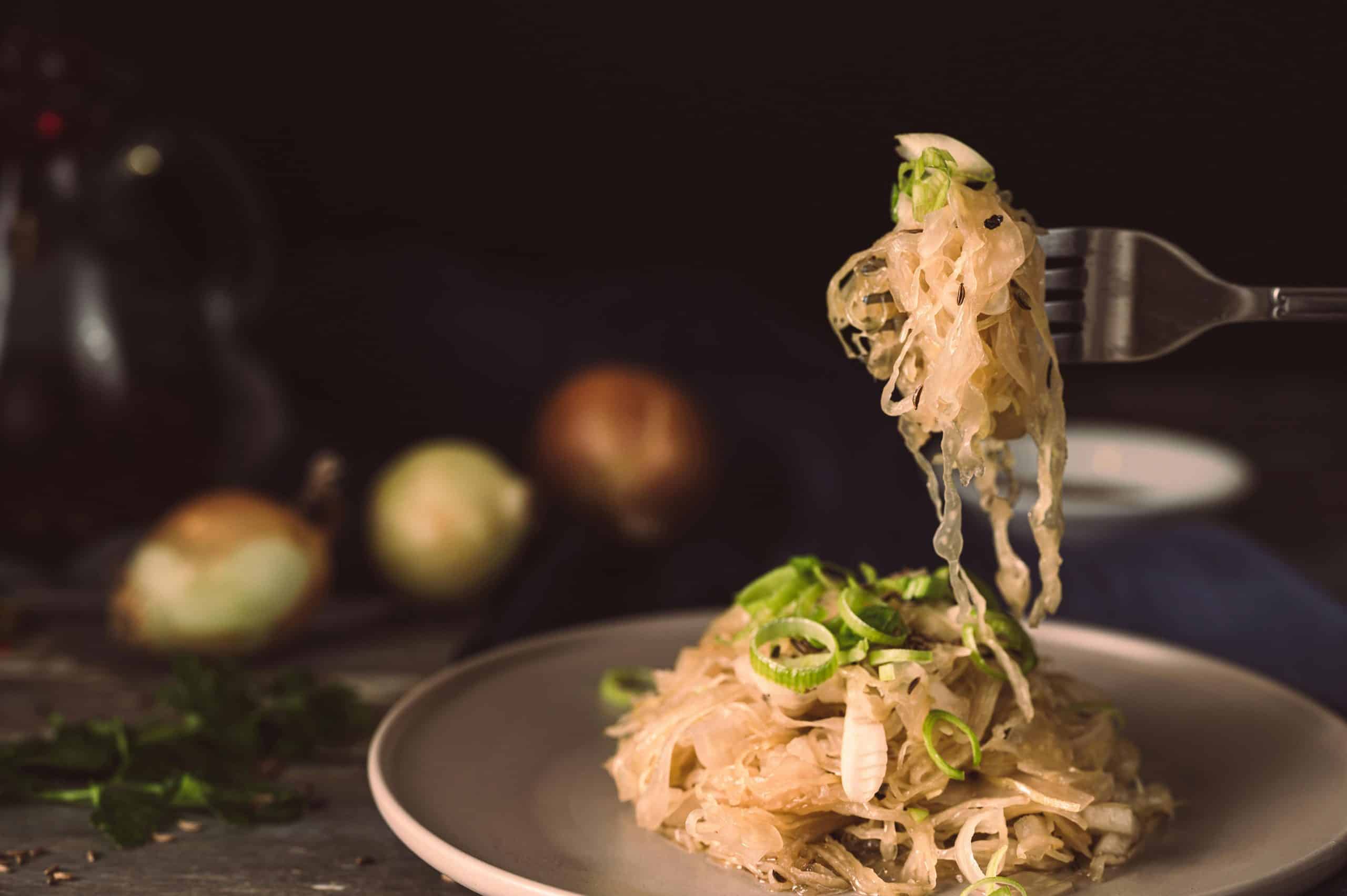
Salt does not start the Fermentation. That do sugar together with yeasts and bacteria. Salt controls the whole process.
How Salt Helps Ferment Vegetables
It creates a space where useful bacteria as lactobacilli can benefit, during harmful ones stay outside. Lactobacilli then take over, kill bad bacteria and form lactic acid, that preserves the food.
The amount of Salt is important. At 1,5% or more, it can block dangerous bacteria as Clostridium botulinum from making toxins during at least 42 days. At around 10%, Fermentation slows a bit, but it gives firmer textures and less risk for decay.
Usually one advises 2 until 2,5% Salt. Vegetables that are firm, for instance carrots and cauliflower, work well with 2% brine. Peppers and cucumbers require stronger brine of 3,5 until 5%, because they easily mould at low levels.
Two main methods exist. The dry Salting works when the vegetables themselves release enough water to stay covered. One uses it for sauerkraut, kimchi and shreds of carrots.
For dry Salting, typical amount is one spoon of Salt for one and half pounds of vegetables. If one uses less Salt, the risk of decay grows slgihtly. The second method uses wet brine, usually one until three spoons of Salt for one quart of water.
Fermented onions well show the procedure. Only with Salt, water and time, the natural bacteria on the onions turn sugar into lactic acid. No vinegar is needed.
About kinds of Salt, pickling Salt is finely ground and is made up of pure sodium chloride without extras. It very commonly is used four Fermentation. Himalayan Salt is rich in minerals, has a pink shade, and also works well.
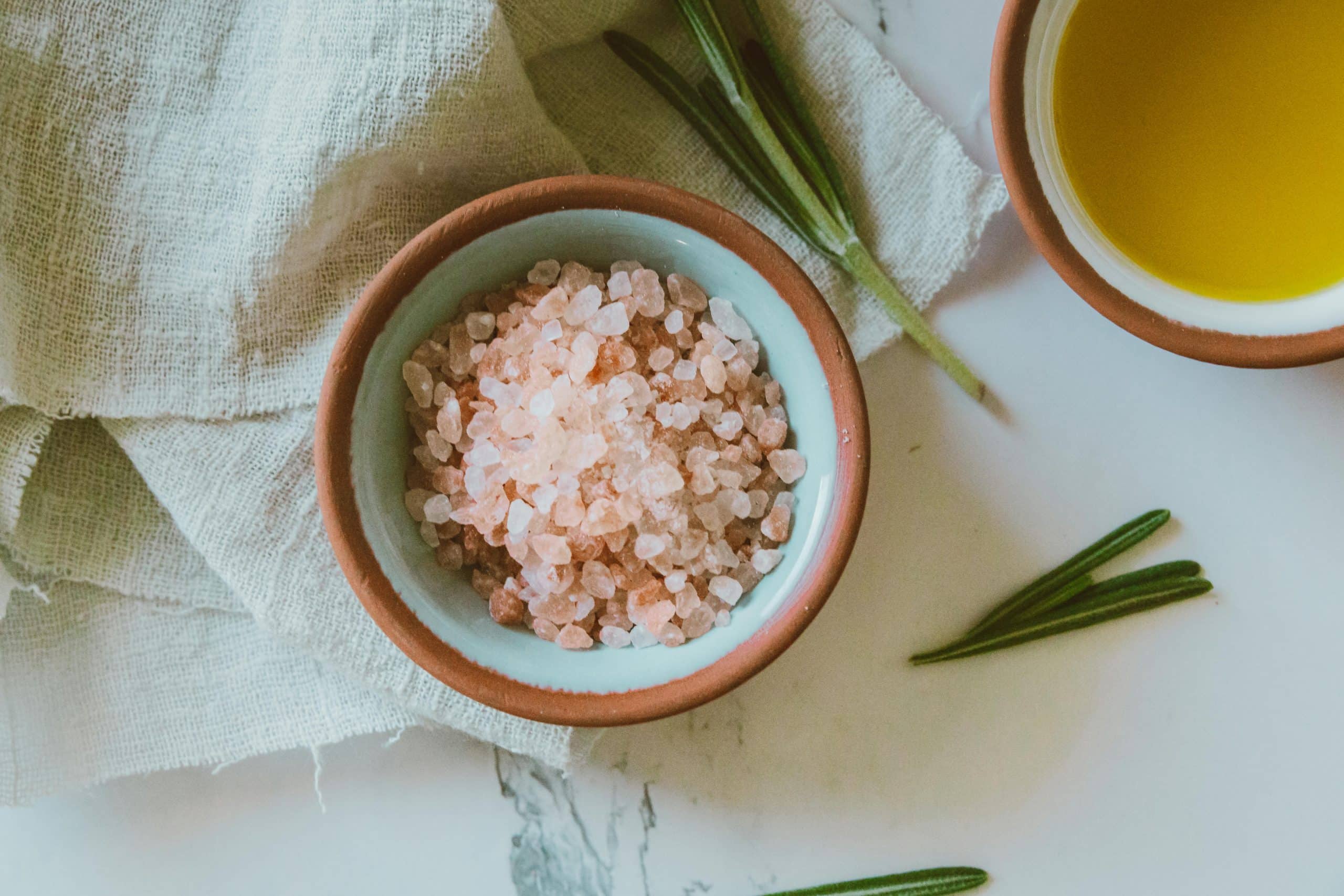
Sea Salt adds tiny nutrients in the Fermentation. Table Salt works too, but it can sometimes cause cabbages to seem gray and the liquid has weird taste.
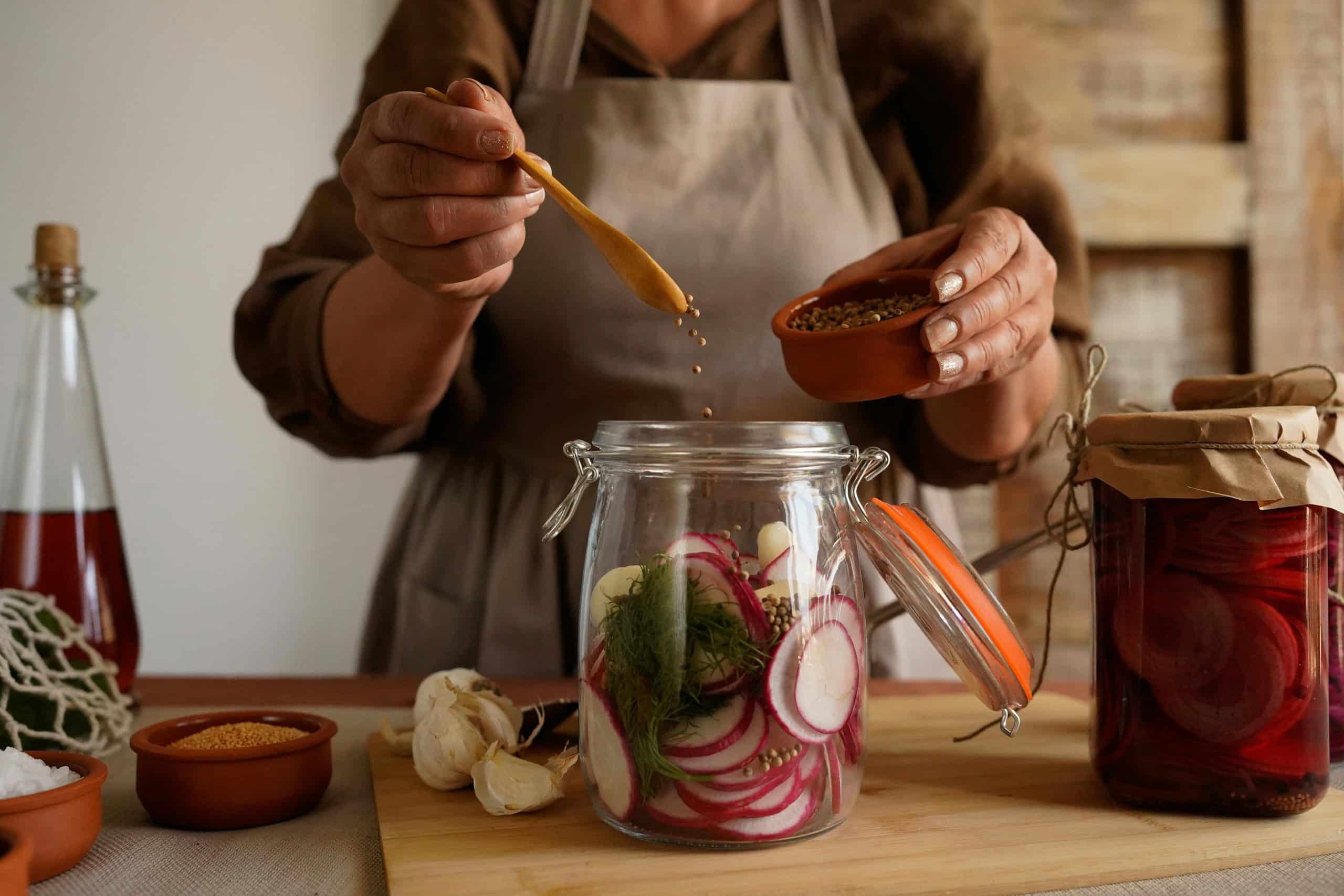
Important is, that everything stays under the brine. Fermentation weights, glass jars or clay jars all work for that. If one needs to add liquid later, mix a 2% brine solution before pouring it in the jar.
Also it is possible to ferment vegetables entirely without Salt, although that can push the process faster or cause mush.
Good amounts of Salt range a lot. One can change the amount according to taste, and different vegetables require differentlevels. Sauerkraut with a lot of Salt can taste well, but that same level will not work for shreds of carrots.