🧀 Protein in Feta Cheese Calculator
Estimate feta protein from crumbled or block measurements, cheese style, brine drain, servings, recipe use, and a per-serving protein target.
Use drained weight when possible. If the feta is still sitting in brine, choose the closest drain level so the calculator estimates edible cheese weight before protein is counted.
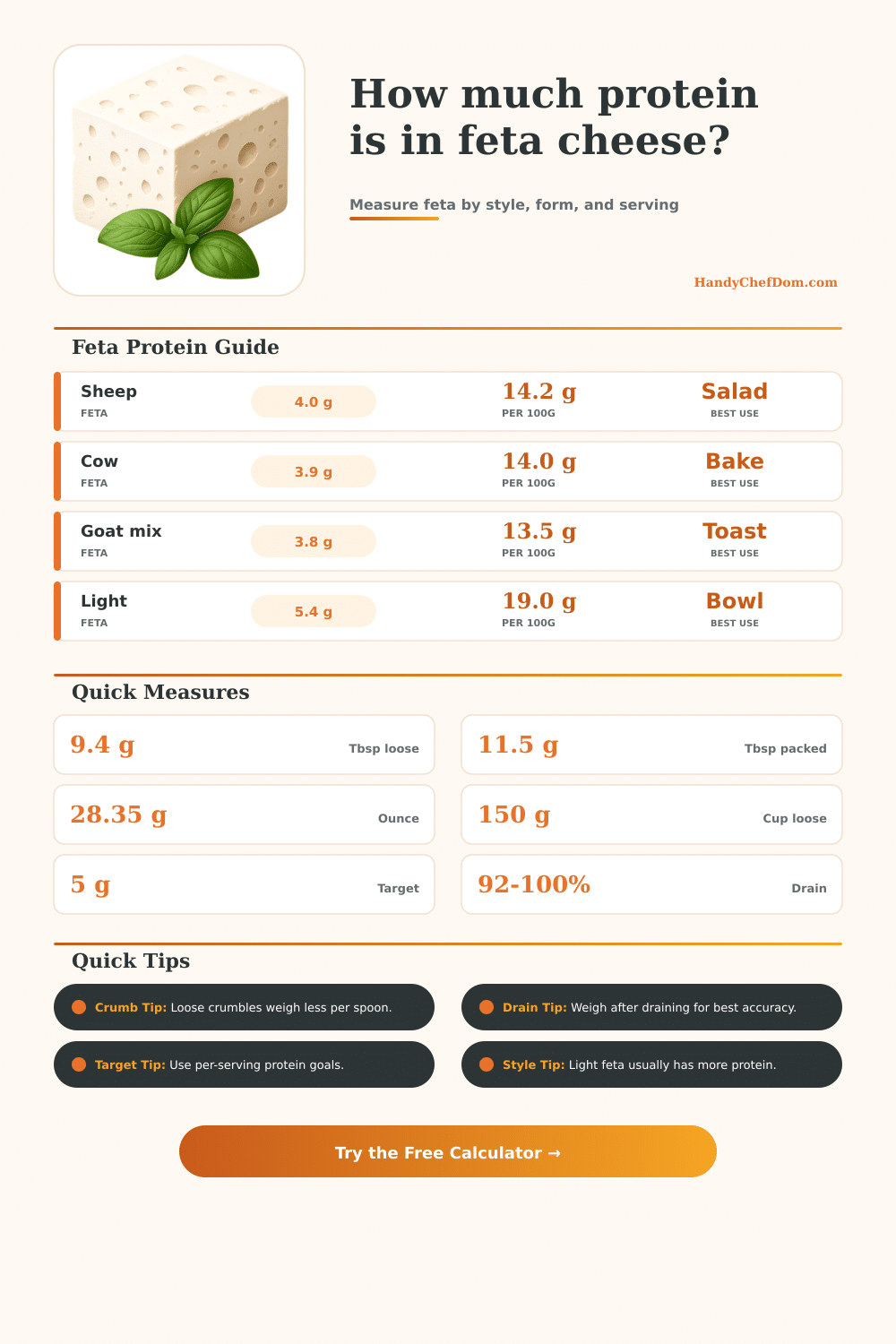
| Feta style | Protein per 100 g | Protein per oz | Best calculator use |
|---|---|---|---|
| Classic sheep milk feta | 14.2 g | 4.0 g | Greek salads and table blocks |
| Domestic cow milk feta | 14.0 g | 3.9 g | Everyday crumbles and baked dishes |
| Sheep and goat blend feta | 13.5 g | 3.8 g | Tangy salad and toast portions |
| Greek PDO sheep-forward feta | 14.3 g | 4.1 g | Brined block portions |
| Creamy Danish-style feta | 12.5 g | 3.5 g | Soft spreads and dips |
| Bulgarian brined sirene-style feta | 15.0 g | 4.3 g | Firm cubes and snack plates |
| Reduced-fat feta crumbles | 19.0 g | 5.4 g | Higher protein salad bowls |
| Herb-seasoned crumbled feta | 13.8 g | 3.9 g | Finishing crumbles with seasoning |
| Feta form | 1 tablespoon | 1/4 cup | 1 cup |
|---|---|---|---|
| Loose salad crumbles | 9.4 g | 37.5 g | 150 g |
| Packed crumbled feta | 11.5 g | 46 g | 184 g |
| Block cut into small cubes | 10.6 g | 42.5 g | 170 g |
| Block slices or slabs | 13.1 g | 52.5 g | 210 g |
| Whipped feta spoonfuls | 7.5 g | 30 g | 120 g |
| Oil-marinated drained cubes | 10.9 g | 43.8 g | 175 g |
| Recipe use | Typical feta per serving | Protein from sheep feta | Planning note |
|---|---|---|---|
| Salad topper | 1 oz | 4.0 g | Good for bright salty finish |
| Grain bowl protein layer | 1.5 oz | 6.0 g | Pairs with beans or chicken |
| Omelet or egg filling | 0.75 oz | 3.0 g | Strong flavor in smaller amounts |
| Baked recipe filling | 1.25 oz | 5.0 g | Use drained block feta |
| Dip or spread base | 1 oz | 4.0 g | Whipped volume looks larger |
| Snack plate portion | 1.5 oz | 6.0 g | Easy to weigh as cubes |
| Pasta finishing crumble | 0.5 oz | 2.0 g | Flavor first, protein second |
| Meal prep jars | 1 oz | 4.0 g | Drain well before packing |
| Drain level | Protein-counted weight | Use this when | Example from 100 g |
|---|---|---|---|
| Still wet from brine | 92% | Block lifted straight from tub | 92 g counted |
| Lightly drained | 96% | Briefly drained over the container | 96 g counted |
| Well drained | 100% | Weight is already drained cheese | 100 g counted |
| Paper-towel dried | 102% | Spoon volume is denser after drying | 102 g counted |
| Oil marinade drained | 94% | Cubes from oil marinade jar | 94 g counted |
Feta cheese is a food that can be utilized in a variety of different meals. Feta cheese can be use in both salads and grain bowls. Additionally, the cook can add cooked feta cheese at the form of loose crumbles of feta cheese or in the form of cubes of feta cheese that are cut from a slab of feta cheese.
Because the shape of the feta cheese change the amount of feta cheese that is contained within a spoon of the cheese, the volume of feta cheese that is measured is not always a consistent measurement of the cheese. The protein calculator must account for the fact that crumbled feta cheese contain air and weighs less than feta cheese that is packed into a spoon. A protein calculator will help a person to determine the amount of protein contained within feta cheese by converting the volume of feta cheese that is used into a measurement of gram, which will allow a person to ensure that the total amount of protein within the meal is accurate.
How to measure protein in feta cheese
The moisture level of the feta cheese can also be alter the protein content. Feta cheese that is stored in brine contains more water than feta cheese that has not been stored in brine. The additional weight of the water increase the total weight of the feta cheese without the addition of any protein to that food.
If the drain level of the feta cheese is not selected correctly in the protein calculator, the total protein that is calculated may be incorrect due to the inclusion of the weight of the water within the calculation. A person can select either a light drain or a heavy drain level for the feta cheese. Each of these levels will change the amount of edible feta cheese that will be contained in a portion of the food.
By selecting the drain level that best describes the feta cheese that will be used in the meal, that the protein content of the meal will be honest and accurate. The style of the feta cheese will also alter the amount of protein that is contained within the feta cheese. Different style of feta cheese contain different amounts of protein due to the fact that the various styles of feta cheese are made from different types of milk or contain different levels of fat than other styles of feta cheese.
For instance, feta cheese that is made from sheeps milk contains 14 gram of protein per 100 grams of feta cheese; however, feta cheese that contains reduced fat levels has more protein than feta cheese that contains more fat. A person can choose the style of feta cheese that is used in their recipe to ensure that they can reach their protein goal. However, choosing a feta cheese that contains higher levels of protein will alter the fat and salt content of the meal that is prepare.
The way in which a person uses feta cheese in their recipe will also change the total amount of protein that a person can consume from that recipe. For instance, a person may use a small amount of feta cheese to add to a pasta meal or they may use a large amount of feta cheese as a component of a grain bowl meal. A protein calculator can account for these different ways in which feta cheese can be use in recipes because the amount of feta cheese that is used will impact the amount of protein that will be provided to each serving of the recipe.
Additionally, if the cook bakes or mixes the feta cheese into the other ingredients in a recipe, some of the feta cheese may be lost. In this case, the protein per serving will be lower than if that portion of feta cheese was not baked or mixed into the dish. However, the protein calculator will provide both the total amount of protein that will be contained in the entire batch of the recipe as well as the amount of protein that will be contained in each individual serving of the recipe.
Finally, a person can use a target protein goal to aid in the creation of the recipe. A protein calculator will allow a person to enter the target amount of protein that they wish to include in their meal. Based on the amount of feta cheese that will be used, the protein calculator will indicate whether the recipe meet that goal or if it falls short of that goal.
If the portion of feta cheese that will be used in the recipe does not meet the protein goal, a person may increase the amount of feta cheese that is to be used in the recipe, or they may increase the amount of some other source of protein. A person should not assume that using a large amount of feta cheese in a recipe will ensure that the meal contains a high amount of protein. However, by understanding how each of these factors can alter the protein content of a recipe, a person can understand exactly how much protein is to be contained within the food that is prepare.