🥝 Figs Fiber Calculator
Estimate fiber from fresh figs, dried figs, chopped cups, fig count, grams, servings, and baking-style scaling in one fig-focused calculator.
Use any one entry method. The calculator converts fig count, grams, chopped cups, or serving count into grams first, then estimates fiber, daily goal coverage, soluble/insoluble context, and snack or baking scale.
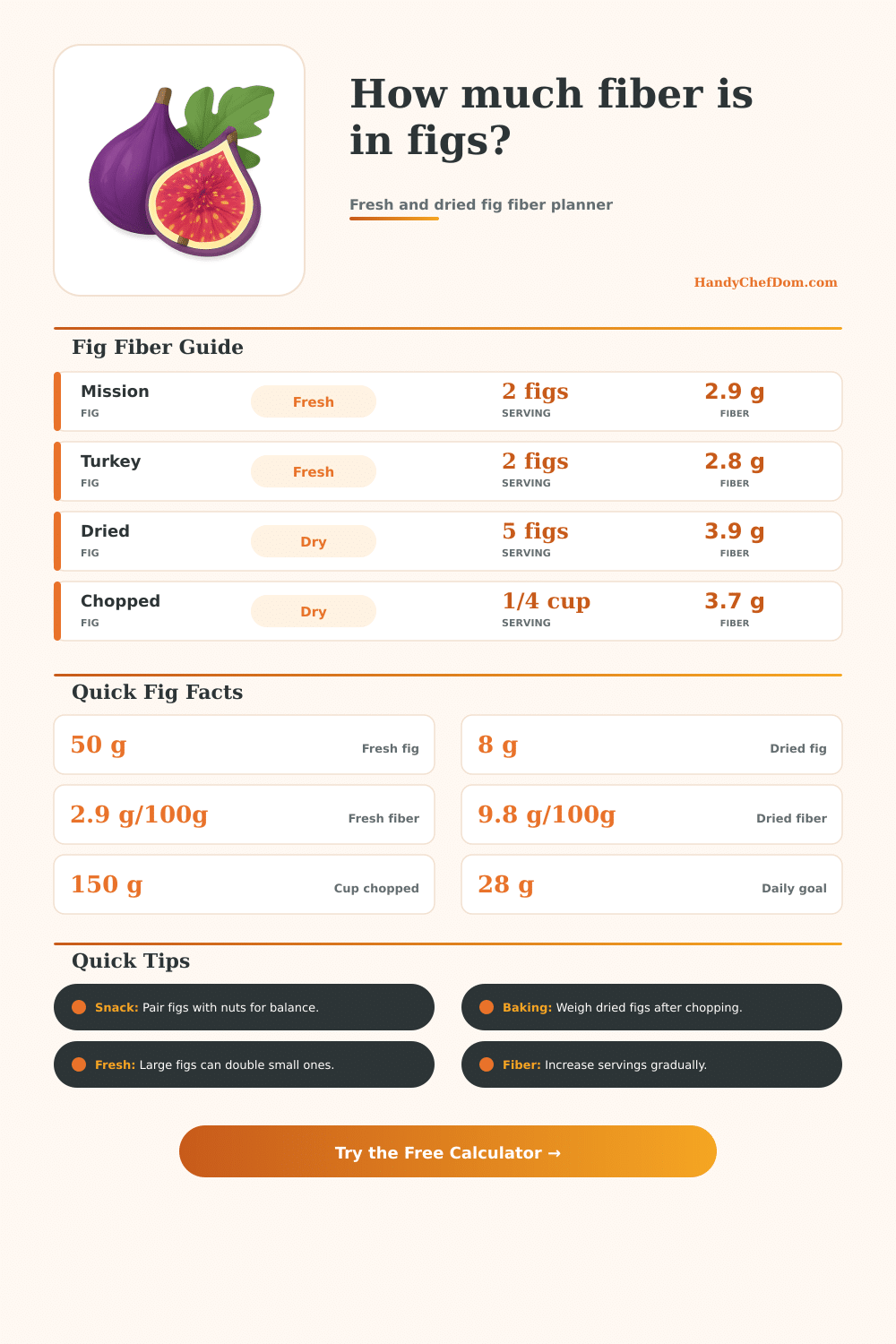
| Fig form | Fiber / 100 g | Calories / 100 g | Carbs / 100 g | Common serving |
|---|---|---|---|---|
| Fresh figs | 2.9 g | 74 kcal | 19.2 g | 2 medium |
| Dried figs | 9.8 g | 249 kcal | 63.9 g | 5 small |
| Fig paste | 8.9 g | 230 kcal | 59.0 g | 1/4 cup |
| Fresh chopped | 2.9 g | 74 kcal | 19.2 g | 1/2 cup |
| Dried chopped | 9.8 g | 249 kcal | 63.9 g | 1/4 cup |
| Measurement | Fresh figs | Dried figs | Best use | Fiber estimate |
|---|---|---|---|---|
| 1 medium fig | 50 g | 8 g | Counting pieces | 1.5 g fresh |
| 1 large fig | 64 g | 12 g | Generous snack | 1.9 g fresh |
| 1/4 cup chopped | 38 g | 38 g | Oats or bars | 1.1 to 3.7 g |
| 1/2 cup chopped | 75 g | 75 g | Baking mix-in | 2.2 to 7.4 g |
| 1 cup chopped | 150 g | 150 g | Recipe batch | 4.4 to 14.7 g |
| Serving plan | Fresh amount | Dried amount | Fiber range | Daily goal share |
|---|---|---|---|---|
| Light snack | 1 medium | 2 dried | 1.5 to 1.6 g | 5 to 6% |
| Standard snack | 2 medium | 5 dried | 2.9 to 3.9 g | 10 to 14% |
| Board serving | 1.5 figs | 3 dried | 2.2 to 2.4 g | 8 to 9% |
| Oatmeal add-in | 1/2 cup | 1/4 cup | 2.2 to 3.7 g | 8 to 13% |
| Baking portion | 75 g | 40 g | 2.2 to 3.9 g | 8 to 14% |
| Baking or snack use | Typical figs | Working weight | Fiber before bake | Scaling note |
|---|---|---|---|---|
| Small snack box | 5 dried | 40 g | 3.9 g | Multiply boxes |
| Oatmeal for 4 | 1/2 cup dried | 75 g | 7.4 g | Split evenly |
| Fig bar tray | 2 cups dried | 300 g | 29.4 g | Divide by bars |
| Fruit board for 8 | 16 fresh | 800 g | 23.2 g | Two figs each |
| Stuffing add-in | 1 cup dried | 150 g | 14.7 g | Fiber stays |
Eating your figs is good for you, but it’s hard to know how much fiber is in a single fig, whether they are fresh and vary in size or dried into smaller, more concentrated portions. The tool up top provide an estimate of the amount of fiber in a selection of fresh or dried figs, in either servings, chopped cups, grams, or pieces. That way, you can easly portion out the right amounts for making baked goods, boards, and snack-size portions.
It accounts for common sources of error, such as when you convert a recipe by weighing chopped dried figs instead of counting individual fresh fig. The form of the food alter the serving size dramatically.
How Much Fiber Is in Your Figs?
What to know: Dried figs pack more nutrition into less space; one reason? Fresh figs are lighter, largely because they’re mostly water. And have less fiber by weight compared to a dried fig. So what’s left is a concentrated package of goodness.” Five small-dried figs contains as much or more fiber as two large fresh figs (despite their apparent size on the plate). That density difference explain why switching between pantry staples and summer harvest can mislead us about our consumption.
There’s also variety selection for some of the types, such as Brown Turkey or Black Mission. That’s helpful when keeping track. It makes the math on the screen match what’s in front of you, even though there isn’t much nutritional difference between fig varieties. If you’re cutting up figs and cooking with them, or eating them straight out of a basket, you can weigh them or count them.
Everything is converted into a common base. This is then used to calculate the total fiber, including both soluble and insoluble fractions, and how much of your daily limit they provide.
Another factor that most folks don’t consider is addition of baked goods, figs give up some of their water weight as they bake into stuffings and bars. Most recipes don’t compensate for this, resulting in incorrect nutrition facts on homemade goods (or just making everything turn out dry!). For baking, the calculator has an option to enter the percent of moisture lost and scale. These adjustments will change the end result based off how much water dissapears in your oven. A little something that can make all the difference, whether you’re hoping to keep your dietary targets accurate or ensure repeatable outcomes from your favorite recipes.
Keep in mind where the food fits into a meal. A few dried figs offer a big hit of insoluble fiber in only a couple of nibbles, while a snack plate with fresh figs might provide a moderate fiber boost without feeling heavy. You can get a decent amount of fiber without feeling weighed down. Soluble fiber assist in regulating blood sugar spikes that come from the fruit’s own sugars; insoluble fiber is great for digestion and adds bulk to the stool. The tool shows these separately, so you know how each will help you digest. Yogurt (or other dairy) and nuts combined with the figs can further slow sugar uptake, making the fiber even more effective for you.
While people tend to think of fiber in terms of “just get me up to X,” the source and type of fiber matters (for example, high-fiber fruits such as figs only function when paired with sufficient water). Jumping up in fiber too quickly, without matching it with extra water? It may be unpleasant different than helpful. The app’s tracker displays what percent of your daily goal you’ve reached, which helps you pace yourself.
Is eating 1/4 cup of chopped figs on top of your oatmeal getting you closer? Or do you want to make adjustments elsewhere? The page’s reference tables compares various serving styles (from a single batch for baking to a snack-sized portion), pointing out that one cup of fresh figs has almost half the fiber than a cup of dried; most kitchen decisions hinge on such differences. If you’re making trail mix for the week, it will help you plan ahead and know what you’re eating: how much are you getting for every gram? How much do those figs contribute nutritionally? Knowing the yield per gram prevents waste and ensures nutritional balence.
Fig Fiber tracking is all about intentionality: It makes the abstract idea of being “healthy” more tangible. Instead of wondering if that handful of dried fruit is a serving, you know exactly where it lands on any given day. No guesswork necessary! The calculator does the math for you, making it easier to make healthy food decisions. Input the numbers accurately and you’ll have a clear picture of just how this fruit supports moddern nutrition needs.
From the initial bite of a freshly picked Mission fig to the final spoonful of baked-in goodness, you’re empowered to make food choices that nourish your body and align with your unique health goals.