🌶 Chili Powder for Chili Calculator
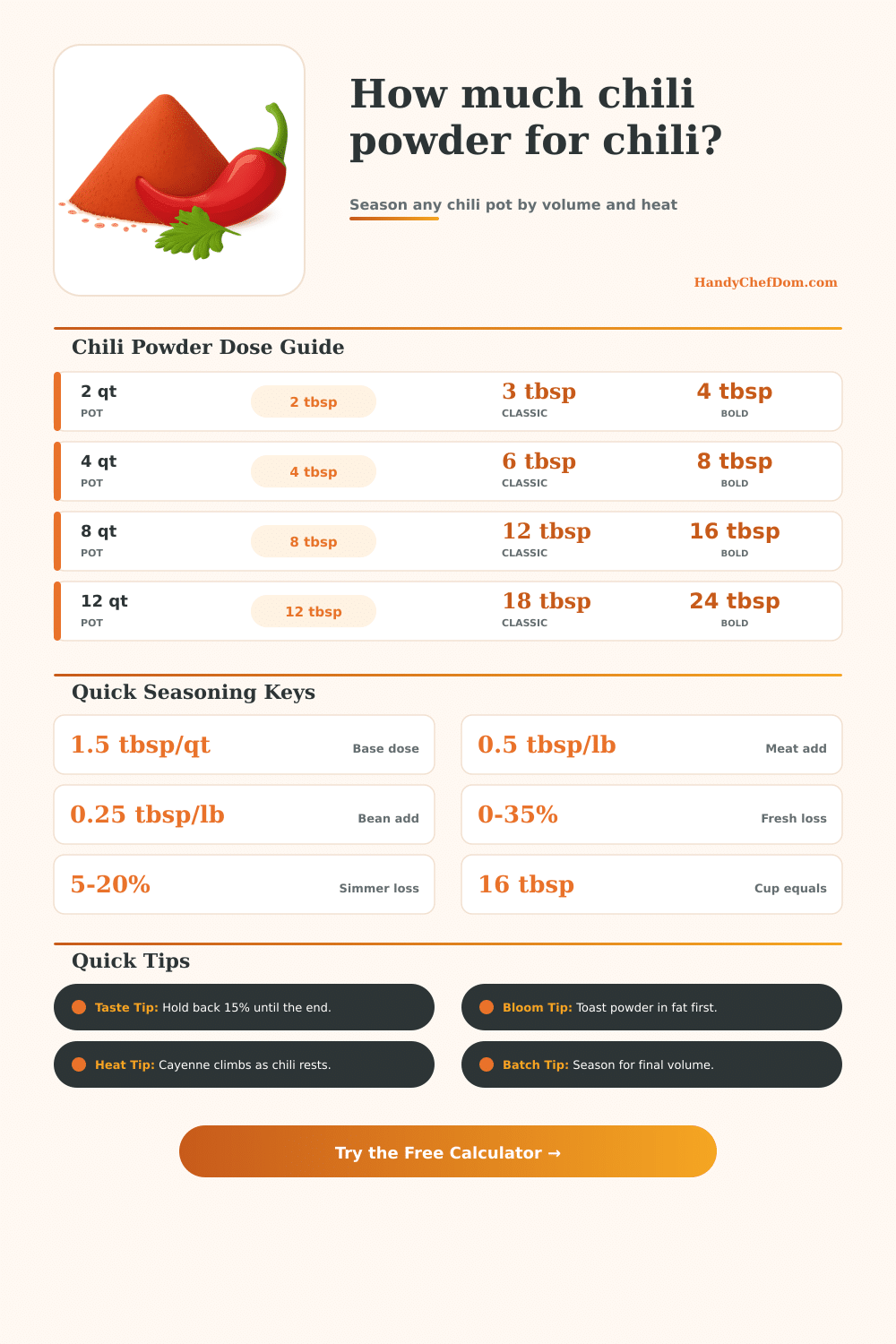
Size the chili powder for a pot of chili by reduced volume, meat, beans, blend strength, heat level, and spice freshness.
Enter the starting pot size before simmering. The calculator seasons for the reduced final chili so the powder stays balanced after evaporation.
Use this reserve for final tasting after simmering.
| Chili Style | Starting Point | Meat/Bean Add | Flavor Aim |
|---|---|---|---|
| Balanced tomato-beef | 1.5 tbsp per final quart | Medium | Round cumin and chile body |
| Texas meat-forward | 1.65 tbsp per final quart | Higher meat add | Deeper chile flavor without bean dilution |
| Bean-heavy potluck | 1.45 tbsp per final quart | Higher bean add | Steady warmth across a thicker pot |
| Lean turkey chili | 1.35 tbsp per final quart | Medium meat add | Clean seasoning that does not overwhelm |
| Vegetarian vegetable | 1.40 tbsp per final quart | Lower protein add | Bright chile flavor for lighter broth |
| Competition tasting | 1.75 tbsp per final quart | Layered finish | Bold first spoon with controlled reserve |
| Blend Component | Mild Ratio | Classic Ratio | Bold Ratio |
|---|---|---|---|
| Ground mild chile or ancho | 55% | 45% | 38% |
| Cumin | 15% | 18% | 18% |
| Paprika or smoked paprika | 15% | 15% | 14% |
| Garlic and onion powder | 10% | 12% | 12% |
| Oregano and coriander | 4% | 6% | 6% |
| Cayenne or hot chile | 1% | 4% | 12% |
| Heat Setting | Multiplier | Best Use | Finish Note |
|---|---|---|---|
| Gentle family heat | 0.78x | Kids and mixed tables | Add hot sauce at serving |
| Mild weeknight warmth | 0.90x | Everyday bowls | Good with cheese toppings |
| Classic chili warmth | 1.00x | Balanced beef chili | Full flavor without sharp burn |
| Bold pepper bite | 1.16x | Tailgates and roasters | Reserve extra for next day |
| Firehouse hot bowl | 1.34x | Heat-loving groups | Check cayenne content first |
| Three-alarm heat | 1.58x | Intentional hot chili | Add in stages, not all at once |
| Pantry Freshness | Adjustment | How It Tastes | Use This When |
|---|---|---|---|
| Opened within 3 months | 1.00x | Bright aroma | The powder smells lively |
| Open 3 to 6 months | 1.08x | Slightly softer | The jar is still fragrant |
| Open 6 to 12 months | 1.18x | Muted chile edge | You need a little more body |
| Faded pantry jar | 1.35x | Flat aroma | Replace soon if flavor is dull |
| Finished Chili | Servings | Classic Powder | Reserve Plan |
|---|---|---|---|
| 2 quarts | 4 hearty bowls | 3 tbsp | Add 2.5 tbsp, finish with 0.5 tbsp |
| 4 quarts | 8 hearty bowls | 6 tbsp | Add 5 tbsp, finish with 1 tbsp |
| 6 quarts | 12 hearty bowls | 9 tbsp | Add 7.5 tbsp, finish with 1.5 tbsp |
| 8 quarts | 16 hearty bowls | 12 tbsp | Add 10 tbsp, finish with 2 tbsp |
| 12 quarts | 24 hearty bowls | 18 tbsp | Add 15 tbsp, finish with 3 tbsp |
| 16 quarts | 32 hearty bowls | 24 tbsp | Add 20 tbsp, finish with 4 tbsp |
Chili powder is a seasoning that must be measured carefuly when preparing chili. The amount of chili powder that cooks add to chili have an effect on the final flavor of the chili. Many cooks add the chili powder to chili based off guesswork rather than calculate how much chili powder should be added to develop the desired flavor in the chili.
Additionally, the flavor of the chili may change during the cooking process, as the liquid in the chili pot reduce during the cooking process. The amount of liquid in which the chili is simmering has the most impact upon the amount of chili powder that need to be added to chili. As the liquid in the chili pot evaporates over time, the chili powder becomes more concentrate.
How Much Chili Powder to Add to Chili
Thus, cooks must account for the amount of simmer loss that may occur during the cooking process when measuring the amount of chili powder that they should add to the chili. Additionally, other ingredient in the chili, such as meat and beans, also has an impact upon the amount of chili powder that needs to be added. Both of these ingredients will absorb some of the chili powder while simmering, and the amount of each of these ingredients will impact the amount of chili powder that is needed to provide the desired flavor to the chili.
Other factor that impact the flavor of the chili include the heat level and the blend of spices that are contained in the chili powder that is to be added to the chili. Most chili powders that are sold in grocery store contain other spices, such as cumin, garlic, and oregano, in addition to the spices that provide the chili powder its heat. Adding more chili powder to chili also add more of these other spices to the chili.
Other factors that impact the flavor of chili include the freshness of the chili powder that is added; old chili powder will have less of the aromatic element of chili then fresh chili powder. Thus, if chili powder is old, more of it will need to be added to chili to obtain the same flavor that can be provided by fresh chili powder. Another factor in the preparation of chili that will impact the flavor of the chili is the decision of at what point during the cooking process that the chili powder should be added to the chili.
One option is to add all of the chili powder to the chili during the beginning of the cooking process. However, because chili powder create heat, adding all of the chili powder during the beginning of the cooking process may create flavor that is too strong and spicy. Instead, it may be better to add some of the chili powder during the beginning of the cooking process, and the remainder of the chili powder at the end of the cooking process.
Another mistake that many cooks make with chili powder is treating it like salt. Salt readily dissolves into the liquid in the chili pot, but chili powder tend to clump together and does not distribute itself even throughout the chili. Thus, dumping all of the chili powder into the chili pot at once may lead to certain area of the chili containing more heat than others.
Therefore, the cook should bloom chili powder in fat prior to adding the chili to the chili pot to ensure that the chili spreads evenly throughout the chili. The chili should not be seasoned based upon the volume of liquid that is added to the chili during the beginning of the cooking process. Instead, the amount of chili powder that is added should be based upon the volume of liquid that will be in the chili when it is served.
As described above, the volume of liquid in the chili will reduce during the cooking process. Thus, the amount of simmer loss for the chili should of been calculated before chili powder is added to the chili. The style in which chili is prepared can also impact the amount of chili powder that need to be added to chili.
For instance, Texas style chili often contains alot of tomato paste, which create a chili with a strong concentration of tomato flavor. Thus, there is less need for chili powder in Texas style chili. Vegetable chili, which contains less fat and beans, will require more chili powder to provide the same depth of flavor as meat based chili.
The calculator that is provided account for these different styles of chili to ensure that the amount of chili powder indicated is appropriate for that type of chili. The chili spice calculator will help to determine the amount of chili powder that should be added to chili. However, it is still necessary to taste the chili during the cooking process to determine if more chili powder should be added.