Hamburgers Per Pound Calculator
Estimate patties per pound, raw ground meat, cooked yield, bun count, and servings for cookouts, family dinners, and larger burger bars.
| Ground Meat Blend | Typical Shrink | Cooked Yield From 1 lb | Cooked 4 oz Patty | Planning Note |
|---|---|---|---|---|
| 93/7 extra lean beef | 18-21% | 12.6-13.1 oz | 3.2 oz | Highest cooked weight, less fat loss |
| 90/10 lean beef | 20-23% | 12.3-12.8 oz | 3.1 oz | Lean cookout burger |
| 85/15 classic beef | 23-27% | 11.7-12.3 oz | 2.9-3.1 oz | Balanced shrink and juiciness |
| 80/20 burger blend | 26-30% | 11.2-11.8 oz | 2.8-3.0 oz | Common burger blend |
| 75/25 rich blend | 29-33% | 10.7-11.4 oz | 2.7-2.8 oz | Plan extra raw beef for yield |
| 93/7 ground turkey | 19-24% | 12.2-13.0 oz | 3.0-3.2 oz | Cook poultry burgers to 165°F |
| Guests | Regular 4 oz Patties | Raw Beef At 10% Extra | Buns | Cooked Yield With 80/20 |
|---|---|---|---|---|
| 4 | 5 patties | 1.25 lb | 5 buns | 0.90 lb cooked |
| 6 | 7 patties | 1.75 lb | 7 buns | 1.26 lb cooked |
| 8 | 9 patties | 2.25 lb | 9 buns | 1.62 lb cooked |
| 12 | 14 patties | 3.50 lb | 14 buns | 2.52 lb cooked |
| 25 | 28 patties | 7.00 lb | 28 buns | 5.04 lb cooked |
| 50 | 55 patties | 13.75 lb | 55 buns | 9.90 lb cooked |
| Raw Meat | 3 oz Patties | 4 oz Patties | 5 oz Patties | 6 oz Patties |
|---|---|---|---|---|
| 1 lb | 5 | 4 | 3 | 2 |
| 2 lb | 10 | 8 | 6 | 5 |
| 3 lb | 16 | 12 | 9 | 8 |
| 5 lb | 26 | 20 | 16 | 13 |
| 10 lb | 53 | 40 | 32 | 26 |
| 20 lb | 106 | 80 | 64 | 53 |
| Serving Style | Patties Per Guest | Good Patty Size | Bun Rule | Raw Meat Per Guest |
|---|---|---|---|---|
| Light lunch | 0.75 | 3-4 oz | Round up buns | 3-4 oz raw |
| Regular meal | 1.00 | 4 oz | 1 bun each | 4 oz raw |
| Hungry cookout | 1.50 | 4-5 oz | 5-10% extra | 6-8 oz raw |
| Feast or buffet | 2.00 | 4 oz | 10% extra | 8 oz raw |
| Slider tray | 2.50 | 2-3 oz | 1 bun per slider | 5-7.5 oz raw |
Ground beef doesn’t look like much. It’s all about volume; and volume changes with heat. The meat that appear hefty in the package shrivels up on the grill as fat drips away. Shrinkage lead to hungry stomachs and empty plates long before your guests has had enough.
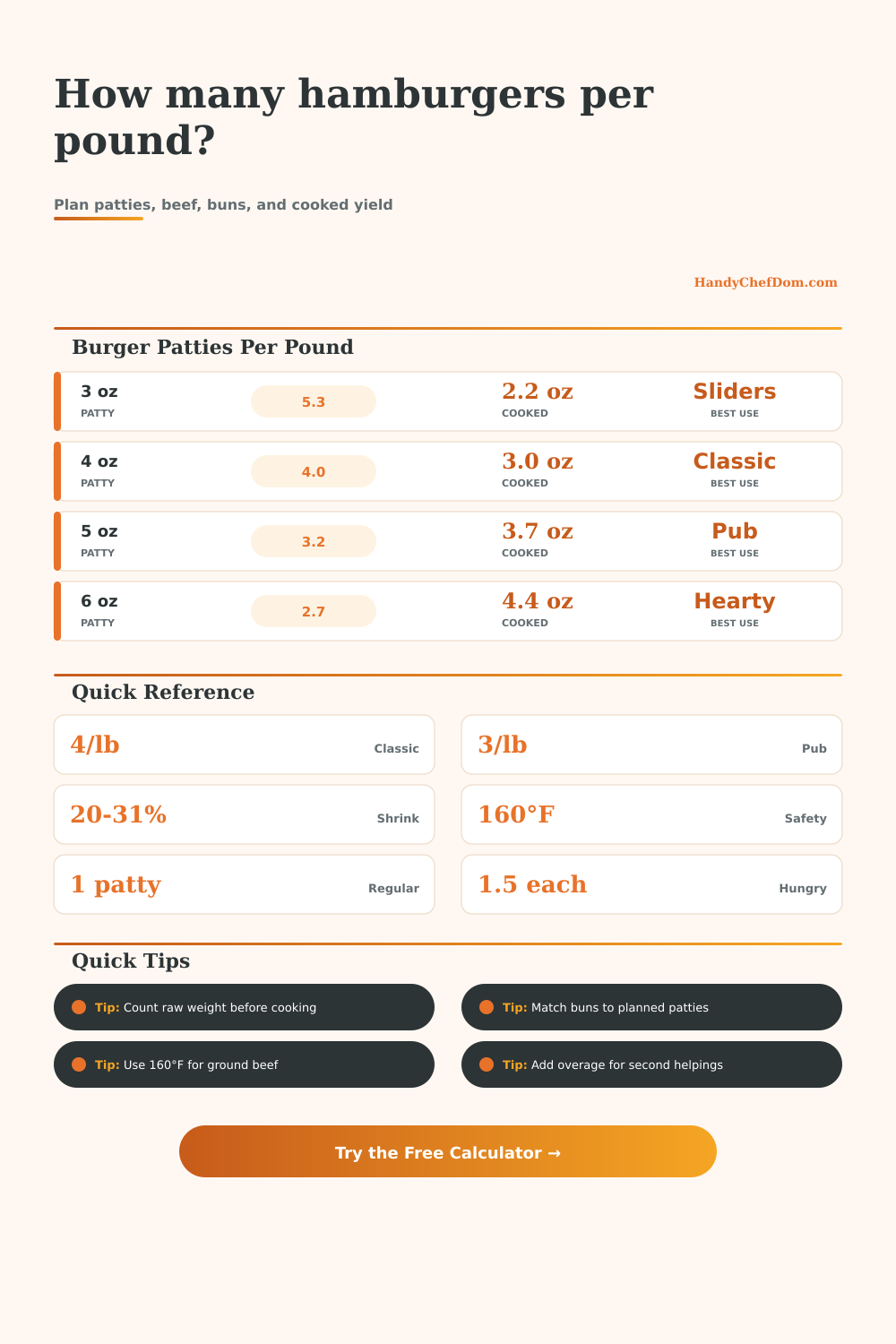
Unless you know where to begin, here’s what you need to know: Ground meat needs to be weighed prior to cooking. Weight is measured for raw product. This means most home cook are planning according to cooked weight (a ¼ pound burger = four ounce burger…right?) Wrong! During the cooking process, the rendered fat and lost moisture result in shrinkage. Depending on the blend, you’ll lose somewhere from twenty to thirty percent of starting weight. What once was a four ounce patty becomes a cooked three ounce patty.
How to Plan Ground Beef for Your Party
For example: If you’re planning an event with 8 friends and only use two pounds of beef (no allowance for shrinkage), you’ll be short. The above calculator takes all those tradeoffs into account: how much yield can I get per pound? Which blend should I choose to feed my gathering?
That leads me to the most important element: The type of meat you use make a big difference. Because lean meats such as 93/7 contain less fat to render out, they shrink less then fattier blends such as 80/20 or 75/25. They holds their shape better and will retain much of their raw weight. If you don’t season them properly, however, the lack of fat will result in a dryer burger.
Fattier blends, on the other hand, will have a deeper flavor and be juicier. But keep in mind, where does all this fat go? It has to renders out onto the grill grates. For the same number of hefty, cooked burgers, you’ll need way more raw meat from the richer blends. Keep this in mind when planning for a party.
Patty size dictates your entire shopping list. Two or three ounce sliders makes a pound of ground beef go further, 5 to 6 patties for each pound. They are good for kids with little stomachs or an appetizer tray. If your guests expects a hearty pub-style burger, you are looking at five or six ounces per patty. That’s only 2 to 3 large patties from one pound of ground beef. Your shopping cart will be a lot fuller: bigger buns, lots more toppings and many more pounds of meat. See the chart below for how fast quantity of meat adds up as the patties gets larger.
When working with ground meat, safety should always come first. The grinding process spread any surface bacteria into every part of the patty. Ground beef should of been cooked to at least 160 degrees Fahrenheit in the middle. That’s a much higher temperature than for roasts and steaks. Medium rare burgers are not safe unless you grind your own meat using high-quality, fresh whole cuts under clean, controlled conditions; they’re just a gamble. With commercially available ground beef, pink is not good, it’s risky. A digital thermometer is your only guarantee.
Bonus tip: Always round up ten to fifteen percent additional meat. This helps with dropped-on-the-coals patties and for those greedy friends who are going back for seconds. Apologizing that there’s no more to eat midway through the meal sucks, having a few extra burgers in the freezer so you can make breakfast tacos next week is better. Similarly, round up on your buns too. Buns don’t shrink when they’re on the grill. They wait around and stay the same size. Count your buns to match how many raw patty you’re making, not how many cooked.
Knowing how much fat comes off will help you plan for a good burger. Raw weight + adjustment for the blend = cooked at correct temp. Get this right and your guests won’t notice the empty plate, only the taste.