⏰ Intermittent Fasting Calculator
Plan your fasting schedule with protocol presets, meal timing, weekly totals, and adherence scoring that fits work, training, and sleep.
Set protocol hours and daily anchors. The calculator compares entered times against target windows, then estimates consistency and weekly fasting load.
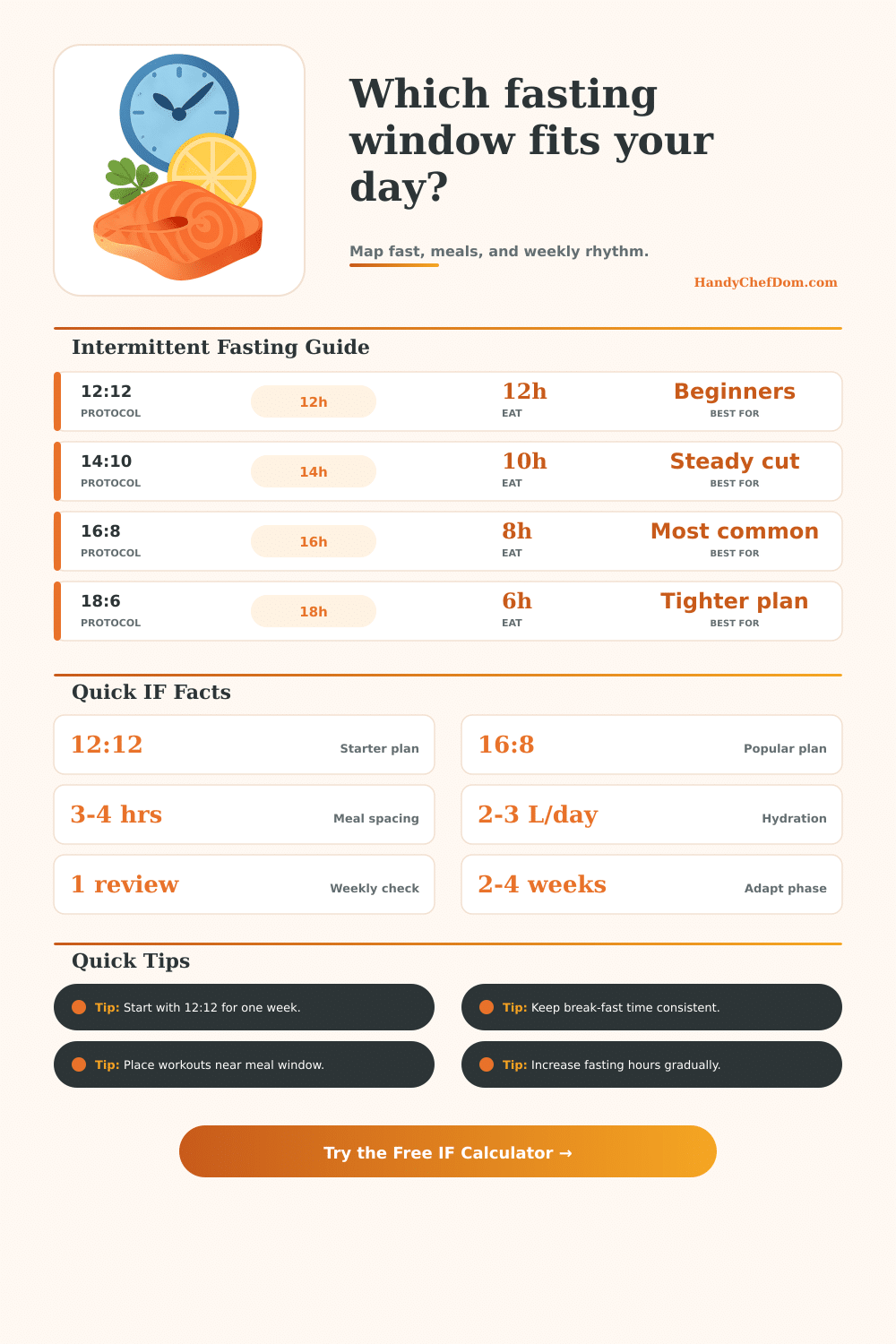
| Protocol | Fast | Window | Use |
|---|---|---|---|
| 12:12 | 12h | 12h | Entry point |
| 14:10 | 14h | 10h | Simple structure |
| 16:8 | 16h | 8h | Common baseline |
| 18:6 | 18h | 6h | Tighter routine |
| 20:4 | 20h | 4h | Advanced only |
| 23:1 | 23h | 1h | OMAD style |
| Stage | Hours fasted | Feel | Action |
|---|---|---|---|
| Fed | 0-4h | Digestion | Hydrate |
| Transition | 8-12h | Hunger waves | Keep busy |
| Steady | 12-16h | Stable focus | Light activity |
| Deep | 16-20h | Strong appetite | Plan meal |
| Extended | 20h+ | High demand | Recover well |
| Goal | Suggested window | Meals | Note |
|---|---|---|---|
| Fat loss | 8h | 2-3 | Hold protein high |
| Maintenance | 10-12h | 3-4 | Consistency first |
| Training block | 8-10h | 3-4 | Place carbs near lift |
| Night shift | 8-10h | 2-3 | Anchor sleep block |
| Busy office | 8h | 2-3 | Pre-plan meals |
Intermittent fasting work best when the fasting protocol fits the person’s daily schedule. Many people chooses a fasting protocol based off the information in a news headline. That fasting protocol may not work with a person’s work shifts, training schedule, or family commitments.
A fasting calculator allows a person to avoid the trial and error of choosing a fasting protocol that doesnt work with their lives. The fasting calculator allow a person to enter their daily schedule, and the calculator displays the compatibility of their fasting protocol with their life. The inputs into the fasting calculator is important to the fasting schedule that the calculator generates.
Pick a fasting schedule that works with your daily life
A person must enter their wake up time and sleep time into the fasting calculator. The calculator use this information to determine the fasting schedule that will best work with the person’s life. A person must enter their training time.
This make it possible for the fasting protocol to ensure that the training occurs either within or outside the fasting period. A person must enter their hydration and caffeine schedule into the fasting protocol calculator. This ensures that a person gets an adequate amount of sleep each day.
The calculator also has a field for a person to enter their fasting goal. The fasting protocol will change according to whether the person wants to focus on fat loss or digestive health. The fasting protocol calculator displays several measurement for the person to review to determine whether the fasting protocol fits their life.
One of the measurements is the comparison between the actual fasting hours and the fasting hours that the person select for their fasting protocol. The fasting protocol calculator allows a person to input the number of fasting hours that they wish to have each day. The calculator multiplies that input by the number of days that the person will fast each week to provide a display of the weekly fasting load.
This value allow the person to see whether their fasting protocol is beneficial each week. The calculator also displays the meal spacing value. This value display whether the number of meals that a person eats each day is manageable within the fasting protocol.
The sleep and caffeine gap allows for a review of whether the fasting protocol allows enough time for the body to digest food before sleep. These measurements do not replace a person’s judgment but they do make the fasting protocol visible before a person commits to it. People often choose the 16:8 fasting protocol.
This protocol allow people to fast for a period of 16 hours and eat for a period of 8 hours. This protocol allows for fasting for many people to notice changes in their appetite. This protocol, however, leaves an eight-hour window for social meals or workouts.
An eight-hour window is a small amount of time for a person to prepare meals and to eat them. If a person finishes their last meal at 8 p.m. And begins to eat their first meal at noon the following day, they are using the 16:8 protocol. Changing the time of the person’s first meal by thirty minutes can change the feel of the day.
This will not change the name of the 16:8 protocol. The reference tables on the fasting protocol calculator display different fasting protocols that may work for different types of people. The 12:12 fasting protocol is a good protocol for those with an unpredictable schedule.
This protocol is also a good protocol for those who would like to test the waters to see whether fasting work for them. The 18:6 protocol and other shorter fasting protocols are good for people who have long periods without food such as night shift workers. These protocols can be used to determine whether a person prefers to train while fasted or after eating meals.
The fasting protocol calculator display the number of hours that a person will fast while they are awake and have no meals. Long fasted hours while awake can be good for many people, but they can also be a problem for those with early commitments. This input allow for a person to determine whether they must change the time of their first meal of the day.
The same logic apply to the number of hours between a person’s last meal and their sleep time. A two-hour gap between meals and sleep is comfortable for most people. Shorter gaps can interfere with the body’s ability to digest the food that they eat and it can lead to poor sleep quality.
Poor sleep quality can make the fasting protocol feel difficulty each day. Many people find that their fasting protocol fails during the week. This is likely because they follow the protocol during the week but they do not fast on the weekends.
The fasting protocol calculator takes into account the number of days that a person wishes to fast each day. It multiply this number by the number of fasting days each week to determine the total fasting hours that a person will get each week. This provides a clear picture of whether the fasting protocol is beneficial each week.
If it is not, a person can choose to either reduce the number of fasting hours that they take each day or to reduce the number of days that they fast each week. Both of these choices are valid as shown by the calculations provided by the fasting protocol calculator. The fasting protocol calculator also features a scoring system.
The calculator gives the score to a fasting protocol that features few deviations from the protocol, meals spaced appropriately, and enough time between the last meal and sleep. Protocols that have training within the eating period and adequate hydration receives more points than protocols that do not feature these components. The individual components that make up the score are more important than the score itself.
The score provides an idea of the fasting protocol that will require the fewest changes to be effective. Common mistakes with fasting protocol calculators is choosing a fast period that is too long. People may desire to fast for a longer period of time because they think that is the best protocol for them.
However, a longer fast may not provide time to eat meals that provide the energy required to complete the task that they have for work or for their families. Another common mistake is using a flexible time for a person’s first meal each day. A person should commit to a time for their first meal to ensure that they adhere to their fasting protocol.
The fasting protocol calculator makes these mistakes visible before they create inconsistent results from the fasting protocol. The value of fasting protocol calculators is not in the precision of the calculations of fasting hours but in the way that people can view their sleep, training, meals, and fasting protocol. With this knowledge, people can make small adjustments to their fasting protocol.
They may determine that the 16:8 protocol is correct but they need to start eating thirty minutes later. They may also determine that there are two different fasting protocols that are required for their lifestyle because training on an empty stomach works on some days but not on others. These decisions are easier to make with a fasting protocol calculator than with no calculator at all.
The best fasting protocols is the fasting protocols that work with a person’s real life. This fasting protocol calculator allows a person to view how a fasting protocol will work with their real life before they begin to fast.