🥚 Iron in Eggs Calculator
Estimate iron from whole eggs, yolks, whites, egg size, cooking retention, servings, and iron-rich meal add-ins.
Use this nutrition calculator for informational estimates only. Values are approximate and can vary by egg size, database source, brand, and recipe handling.
Reference values are rounded for calculator use and are intended for meal planning estimates, not diagnosis or treatment decisions.
| Egg size or type | Edible weight | Iron per whole egg | DV at 18 mg |
|---|---|---|---|
| Small chicken egg | 38 g / 1.34 oz | 0.67 mg | 3.7% |
| Medium chicken egg | 44 g / 1.55 oz | 0.77 mg | 4.3% |
| Large chicken egg | 50 g / 1.76 oz | 0.88 mg | 4.9% |
| Extra-large chicken egg | 56 g / 1.98 oz | 0.98 mg | 5.4% |
| Jumbo chicken egg | 63 g / 2.22 oz | 1.10 mg | 6.1% |
| Duck egg | 70 g / 2.47 oz | 2.70 mg | 15.0% |
| Quail egg | 9 g / 0.32 oz | 0.33 mg | 1.8% |
| Egg part | Typical share | Iron estimate | Calculator note |
|---|---|---|---|
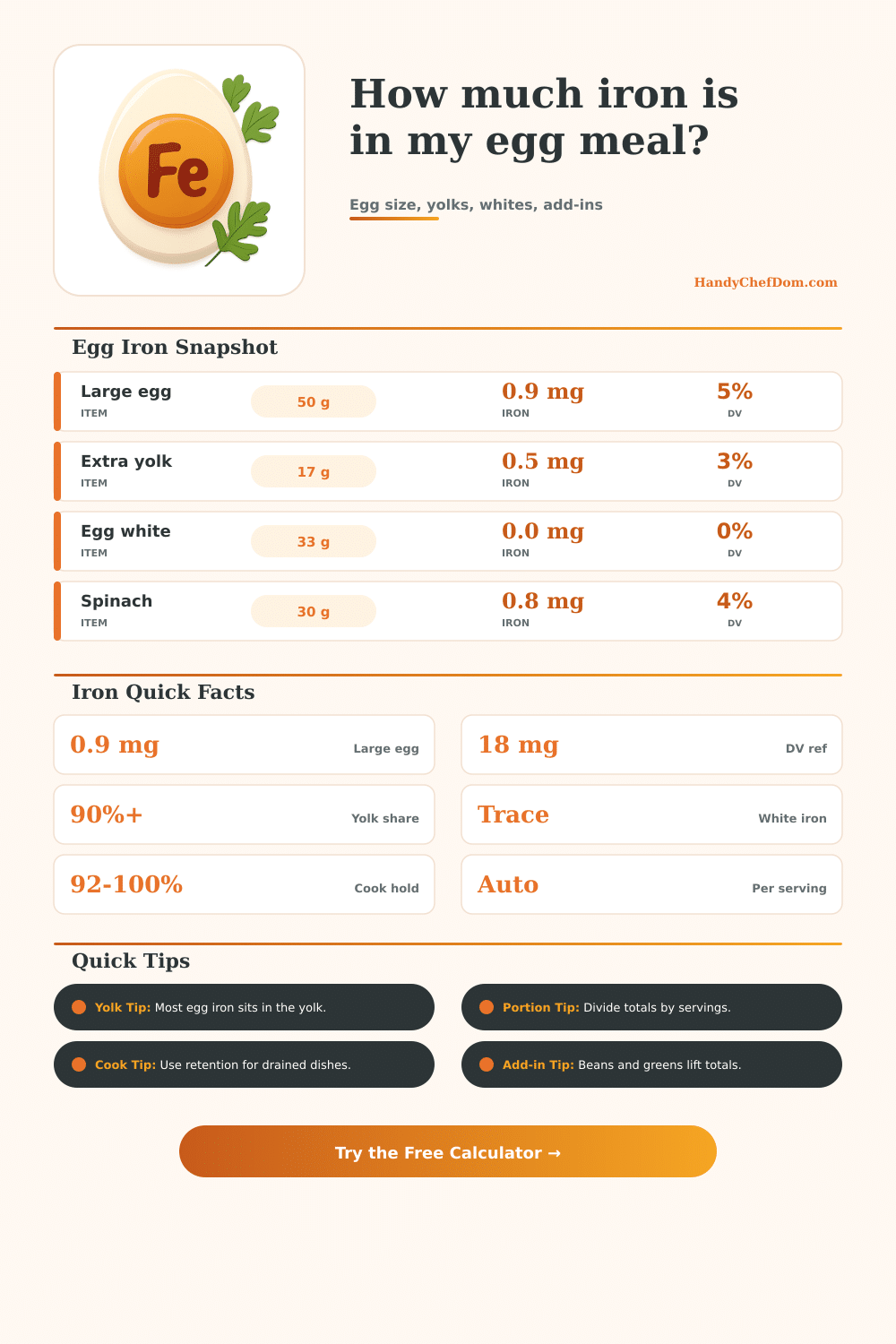
| Whole large egg | 50 g | 0.88 mg | Uses size-based scaling |
| Large yolk | 17 g | 0.46 mg | Higher iron density |
| Large white | 33 g | 0.03 mg | Trace iron only |
| Two large eggs | 100 g | 1.76 mg | Before retention setting |
| Three extra yolks | 51 g | 1.38 mg | Rich mix estimate |
| Four extra whites | 132 g | 0.12 mg | Little iron change |
| Cooking style | Default retention | Yield cue | When to lower it |
|---|---|---|---|
| Boiled or poached | 99-100% | Little food loss | Usually leave near 100% |
| Scrambled eggs | 95-98% | Some pan residue | Lower if eggs stick |
| Omelet or folded eggs | 96-99% | Moderate moisture loss | Lower for filling left behind |
| Fried eggs | 94-98% | Edges and pan loss | Lower if trimming edges |
| Baked egg dish | 92-98% | Slice and dish residue | Lower for large pans |
| Meal add-in | Reference amount | Iron estimate | Why it matters |
|---|---|---|---|
| Cooked spinach | 1/4 cup / 45 g | 1.5 mg | Green add-in with compact iron |
| Black beans | 1/4 cup / 43 g | 0.9 mg | Useful for brunch bowls |
| Cooked lentils | 1/4 cup / 50 g | 1.6 mg | High add-in iron per scoop |
| Sauteed mushrooms | 1/2 cup / 78 g | 0.5 mg | Modest savory addition |
| Fortified toast | 1 slice / 28 g | 1.8 mg | Depends on label fortification |
| Smoked salmon | 2 oz / 57 g | 0.5 mg | Adds a small mineral boost |
| Turkey sausage | 1 link / 45 g | 0.8 mg | Varies by brand and recipe |
| Pumpkin seeds | 1 Tbsp / 9 g | 0.8 mg | Small topping, notable iron |
| Reference choice | Iron reference | One large egg | Use inside calculator |
|---|---|---|---|
| FDA Daily Value | 18 mg | About 5% | General nutrition label comparison |
| Lower reference | 8 mg | About 11% | Compare against a smaller target |
| Teen reference | 15 mg | About 6% | Planning-style comparison |
| Pregnancy label reference | 27 mg | About 3% | Label-style higher reference |
| Custom reference | User entered | Auto calculated | For your own nutrition label math |
Eggs contains iron but the amount of iron that an individual receives from eggs depend on several factors. The size of the egg is one factor that affects the iron content of the egg. Additionally, an individual can receive iron from the egg only if they consumes the yolk, as the white of the egg does not contain any iron.
The way in which the cooks the eggs can also impact the amount of iron that is recieved from the eggs, as can the other foods that are consumed with the eggs. Because so many different factors affect the amount of iron that can be contained within eggs, it is useful to use a calculator to help track and to calculate the amount of iron that will be present in a meal that contains eggs. The majority of the iron in an egg is contained within the yolk, while the egg white contains very little iron.
How Much Iron Is in an Egg?
Therefore, separating the egg white from the egg yolk will change the amount of iron that an individual consumes. Calculators that calculate the iron content within eggs allow an individual to select the size of the eggs to be used. Additionally, an individual can choose to add extra yolks or extra egg whites to the meal.
Finally, it is also possible to enter a cooking retention percentage into the calculator. A cooking percentage is introduced into the calculator because it is known that some cooking methods will lead to some eggs remaining behind in the pan in which they is cooked. For example, if an individual scrambles there eggs, some of the eggs will stick to the pan.
In this case, those cooked eggs will also contain iron. Due to the fact that those cooked eggs will also contain iron, it is important to account for these nutrient within the calculator. An additional setting within the calculator is the ability to input how many servings of the meal will contain the amount of iron that is to be calculated.
To determine the amount of iron that will be present in the meal, one can divide the total amount of iron by the number of servings. This will ensure that the amount of iron that is calculated will be the amount that one individual will consume, rather than the amount that all of the servings will contain. In addition to entering the number of servings, it is also possible to add other food that contain iron to the egg recipe calculator.
Foods that contain iron include foods like spinach, beans, and fortified toast. Each of these foods can be entered into the calculator so that the calculator can calculate the total amount of iron that will be consumed from the meal. The calculator will only provide an estimate of the iron content of the meal, however.
For instance, the amount of iron that is naturaly present in eggs may slightly change depending off the feed that was provided to the hens that laid those eggs. Additionally, the body may absorb iron more differently than other individuals due to other foods that the individual eats. Therefore, the calculator isnt a tool to be used for medical advice.
An additional feature of the calculator is the ability to view a comparison grid of the iron content within the eggs to other minerals that are contained within the eggs. For instance, eggs contain large amounts of both phosphorus and selenium, but contain smaller amounts of both zinc and iodine. Each of these measurements can be reviewed to determine if the eggs is providing the primary source of iron within the meal.
It is helpful to use the egg iron calculator prior to shopping for food to determine how many eggs an individual will need to consume to provide the amount of iron that is desired for an individuals breakfast. If an individual consumes two eggs and spinach for breakfast, the calculator may indicate that the meal contains enough iron to cover half of the iron that an adult should consume daily. Alternatively, the individual may use the calculator to determine that additional iron-containing foods must be added to the meal.
Additionally, individuals that wish to limit the amount of iron that their body consumes may also use such a calculator. Thus, using the calculator before the cooking of food helps to remove the guesswork regarding the amount of iron that will be contained within the meal that is prepared. Another feature within the calculator includes the option to compare the amount of iron that is contained within the meal to the daily value of iron that an individual should consume.
For example, an individual may wish to compare the amount of iron within the meal to the 18 mg daily value of iron that is recommended for adults. Alternatively, another group of individuals may wish to compare iron content to the amount of iron that is required of those who are pregnant or those teenagers who are experiencing rapid growth. In each case, the amount of milligrams of iron will be the same, but the percentage that is of the daily value will change.
Thus, this feature allows individuals to still focus upon the amount of iron that is actualy contained within the eggs. Additionally, because eggs are available in consistent sizes, and because the iron within eggs is most abundant in the yolk, it is easy to use such a calculator to prepare meal.