Keto Calculator
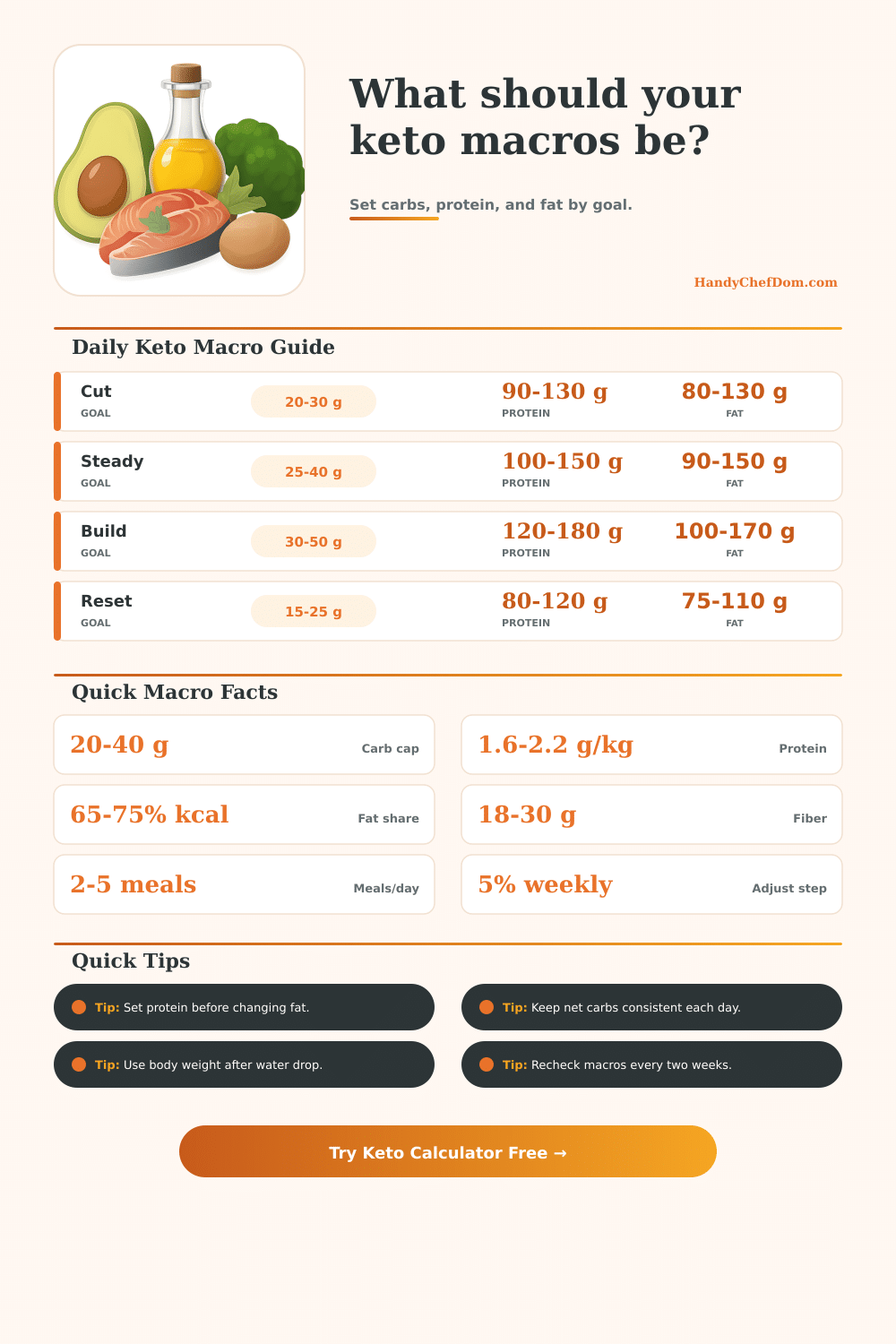
Plan daily keto macros with unit conversion, macro targets, and meal splits so your carb cap, protein floor, and fat balance stay aligned with your goal.
Choose your goal, weight unit, and protein source, then adjust calories and carb cap to get daily keto targets with per-meal splits.
| Protein | Raw 100 g | Cooked Yield | Net Carbs |
|---|---|---|---|
| Salmon | 20 g protein | 86 g cooked | 0 g |
| Chicken thigh | 26 g protein | 78 g cooked | 0 g |
| Ground beef | 26 g protein | 76 g cooked | 0 g |
| Eggs | 13 g protein | 90 g cooked | 1.1 g |
| Unit | Metric | Imperial | Use |
|---|---|---|---|
| 1 kg | 1000 g | 2.20 lb | Body weight |
| 1 lb | 454 g | 16 oz | Portion prep |
| 100 g fat | 900 kcal | 3.53 oz | Macro energy |
| 10 g carbs | 40 kcal | 0.35 oz | Carb cap |
| Meals/day | Carbs/meal | Protein/meal | Fat/meal |
|---|---|---|---|
| 2 meals | 12-20 g | 45-70 g | 45-80 g |
| 3 meals | 8-14 g | 30-50 g | 30-60 g |
| 4 meals | 6-10 g | 22-38 g | 24-45 g |
| 5 meals | 4-8 g | 18-30 g | 18-35 g |
This keto calculator helps you set daily carb, protein, and fat targets using goal, activity, and unit conversion so each meal split stays practical, trackable, and easier to repeat every day.
When a person begins to use a keto calculator, the person is attempting to figure out the number of grams of each type of macro-nutrient that a person should consume each day. Each persons body is different, so the number of grams of carbohydrates, protein, and fat that a person should consume will differ from another individual’s target values. A keto calculator helps a person calculate these targets for the different types of macros.
These variables has specific inputs into the calculator, which will help to determine the target for each of the macros. For instance, the goal that a person chooses for their ketogenic diet will allow the calculator to determine whether their calorie needs to be reduce or increased. An individuals activity level will change the number of calories that they burn during the day.
How a Keto Calculator Works
Body weight will help to determine the amount of protein that an individual need each day. Individual adjustments to the protein intake according to physical activity will also be a variable that an individual can decide for themselfs. The keto calculator will perform the calculations once the individual has entered these variable.
The keto calculator will calculate the number of calories that an individual should consume per day, calculate the amount of protein that should be provided according to body weight, subtract the amount of carbohydrates that the individual selects as their cap for keto diet, and fill the remaining calories with fat. The keto calculator will also produce a recommendation of the portion of each macro-nutrient that should be consumed during each meal of the individuals 24-hour day. In some instances, the protein that is consumed may have a different fat content than other protein source.
Salmon contains more fat than chicken breast, for instance. The keto calculator will account for these different fat contents of protein sources. As a result, an individual using the keto calculator will be able to see the amount of butter, oil, or avocado that should be added to the proteins that the individual is to consume.
If an individual does not account for fat content in protein sources, the keto calculator may indicate that an individual should consume too much fat or to little fat. To assist individuals in understanding the portion of protein or carbohydrates that is yielded when cooking foods, the keto calculator may provide reference table for these products. These tables will show the number of grams of protein or carbohydrates that is yielded when raw foods are cooked.
Additionally, the tables can show the energy value of each of the macronutrients. These tables will allow an individual to translate the targets that the keto calculator established into the food scale in the individuals kitchen. The weekly adjust field for the keto calculator allows an individual to make changes to the targets for the macronutrients without having to rebuild the diet according to the keto calculator.
Individuals may not remain at the same amount of calories for ketosis for long period of time. The weekly adjust field allows for an individual to make small changes to the