🧀 Mozzarella Protein Calculator
Compare fresh, low-moisture, string, and shredded mozzarella portions by protein, calories, fat, and calcium.
Enter mozzarella by ounces, grams, cups, pieces, or serving target. The calculator converts the portion into total and per-person nutrition.
| Mozzarella form | Protein per 100 g | Calories per 100 g | Fat per 100 g | Calcium per 100 g |
|---|---|---|---|---|
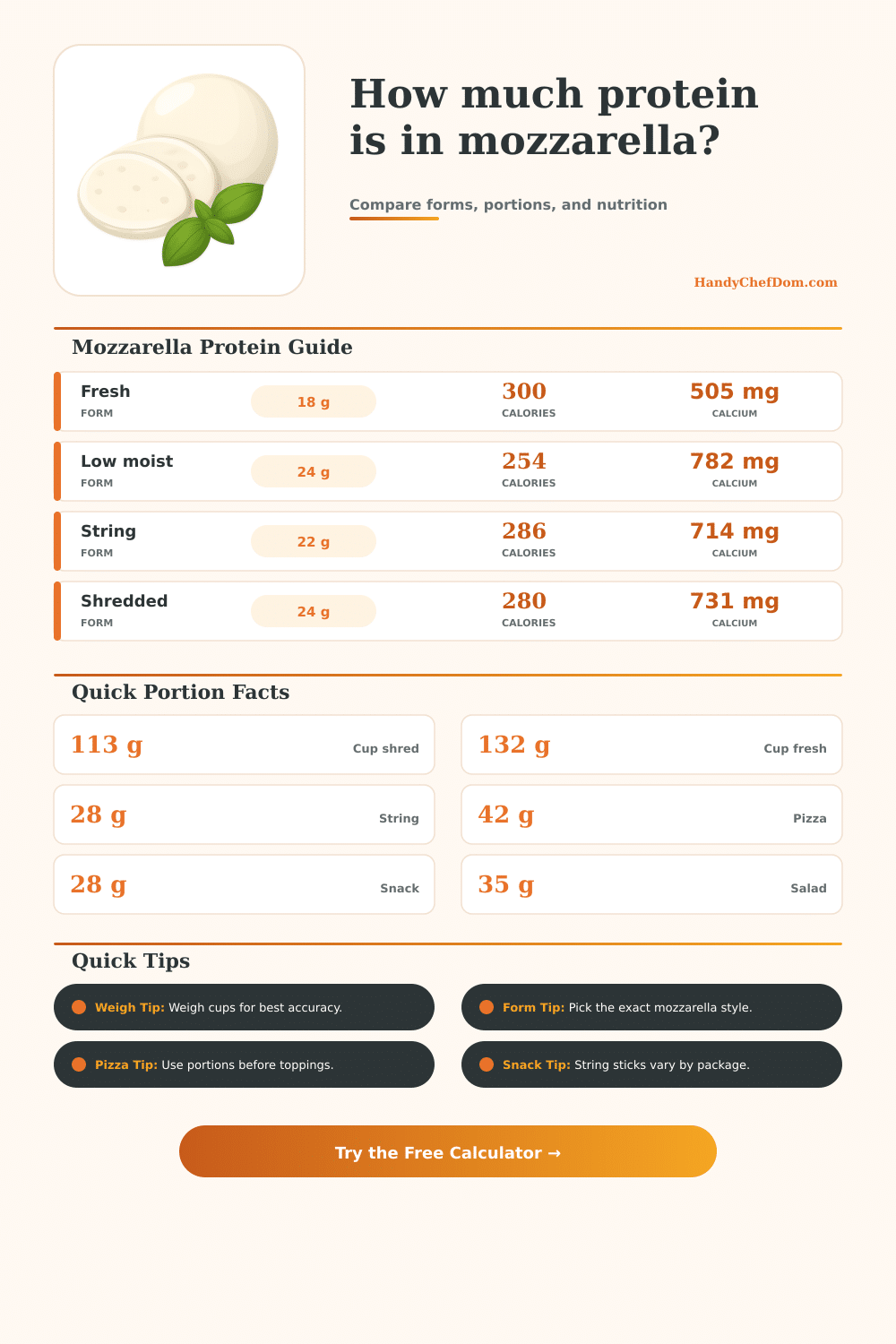
| Fresh whole milk mozzarella | 18 g | 300 kcal | 22 g | 505 mg |
| Fresh part-skim mozzarella | 19 g | 254 kcal | 16 g | 730 mg |
| Low-moisture whole milk mozzarella | 22 g | 316 kcal | 22 g | 710 mg |
| Low-moisture part-skim mozzarella | 24 g | 254 kcal | 16 g | 782 mg |
| Whole milk string cheese | 22 g | 286 kcal | 18 g | 714 mg |
| Part-skim string cheese | 23 g | 271 kcal | 17 g | 760 mg |
| Shredded whole milk mozzarella | 22 g | 316 kcal | 22 g | 710 mg |
| Shredded part-skim mozzarella | 24 g | 280 kcal | 17 g | 731 mg |
| Portion style | Baseline per portion | Best form match | Protein at baseline | Common use |
|---|---|---|---|---|
| Pizza topping | 42 g | Low-moisture shredded | 10.1 g | Pizza, flatbread |
| Snack plate | 28 g | String cheese | 6.4 g | Lunchbox, snack |
| Salad or caprese | 35 g | Fresh mozzarella | 6.3 g | Tomato salad |
| Pasta bake | 45 g | Low-moisture whole | 9.9 g | Baked pasta |
| Appetizer tray | 25 g | Fresh pearls | 4.5 g | Small bites |
| Meal prep bowl | 56 g | Part-skim shredded | 13.4 g | Prepared meals |
| Measurement | Fresh mozzarella | Low-moisture block | Shredded mozzarella | String cheese |
|---|---|---|---|---|
| 1 ounce | 28.35 g | 28.35 g | 28.35 g | 1 stick typical |
| 1 cup | 132 g sliced | 113 g diced | 113 g shredded | About 4 sticks |
| 1 piece | 56 g ball slice | 28 g slice | 28 g handful | 28 g stick |
| 1/2 cup | 66 g | 56.5 g | 56.5 g | About 2 sticks |
| 2 ounces | 56.7 g | 56.7 g | 56.7 g | 2 sticks |
| 8 ounces | 227 g | 227 g | 227 g | 8 sticks |
| Scenario | Portions | Suggested form | Total mozzarella | Protein estimate |
|---|---|---|---|---|
| Personal pizza | 1 | Low-moisture part-skim | 42 g | 10 g |
| Pizza for 4 | 4 | Shredded whole milk | 168 g | 37 g |
| Snack packs | 5 | Part-skim string | 140 g | 32 g |
| Caprese for 6 | 6 | Fresh whole milk | 210 g | 38 g |
| Pasta bake for 8 | 8 | Low-moisture whole | 360 g | 79 g |
| Meal prep for 5 | 5 | Shredded part-skim | 280 g | 67 g |
Fresh mozzarella and low-moisture mozzarella is both claimed to be cheese, but their nutritional profile are different based off of their water content (which affects the amount of protein per serving). Nutritionally, the water-rich food will have a lower density of protein even though it looks like there’s more cheese. However, most people make decisions by sight, so they aren’t aware that volume isn’t always relevant when comparing moist and dry foods.
The calculator up top take care of the math once you select the portion size and form. You no longer have to guess on conversions between ounces, cups, or grams of this stuff. What this does is link the label on the package back to what you eat since a large part of the fresh mozzarella’s mass come from water (not protein).
Fresh vs Dry Mozzarella: Water and Protein Facts
So what happens? To get the same amount of protein as a low-moisture variety, you might actualy have to consume double the amount of fresh mozzarella, while still consuming all that unnecessary moisture-weight.
Keep in mind that the way you normally use something matters when you’re picking what kind of measurement to use. A block of cheese and a cup of shredded cheese is not the same size. Pre-shredded cheese, like mozzarella, may have some type of anti-caking agent added (cellulose) making it lighter per cup than fresh-off-the-block grated cheese. The tool take into account this variation in density, meaning you won’t overestimate amount you eat.
If you want to measure by volume, then the correct choice of form type will make volume conversions fairly accurate; measuring by weight (ounces/grams) is even better.
Finally there’s string cheese, which sits in an awkward middle ground: It’s technically low-moisture, but it comes pre-packaged in easy-to-grab form (sticks). Each ~28 gram stick has about six grams of protein, which will give your snack game a boost. However, if you’re trying to hit higher protein levels, you’ll need to eat more then one stick.
To illustrate, the tool includes preset portions so you can see just how many sticks might fit in a meal prep bowl or on a regular old pizza night.
Beyond protein, fat content is relevant too: Whole milk mozzarella has a higher percentage of saturated fat making it higher in calories (per gram). Therefore, lower-fat options like part skim have fewer calories without affecting protein, which gives part skim low moisture the best ratio for building lean muscle. By removing water and reducing fat, it increases nutrient density; the chart at the bottom of the page show how this affects calcium. Calcium absorption from dairy products is high, and getting maximum bang for your buck bone-wise also means not overdoing calories.
The nutrient density are lower, but fresh mozzarella still has a better flavor and texture for antipasti or caprese salads. It is about enjoyment, not just utility. And keep this in mind: In situations like this, you’re buying water weight that dilutes the nutrients. You can adjust the water drain to make up for the extra moisture squeezed from the cheese which helps bump up the nutrients per ounce a bit. This small modification shows how preparation techniques impact the final results.
Nutrition tracking is about understanding trade-offs, not perfection in a lab. I don’t care if it’s exact within an ounce. I just need it to be close enough to show that one type of cheese has less protein by weight, while another have more because it is lower in moisture and denser. When you know that, you can read the label and make sense of what you’re holding in your hands.
And then decide: Is this the right cheese to eat because it tastes good? Or do I want something with more fuel value?