🌶 Paprika in Chili Calculator
Estimate sweet, smoked, or hot paprika for chili by quarts, meat and bean load, chili style, existing chili powder, color target, heat level, simmer time, and servings.
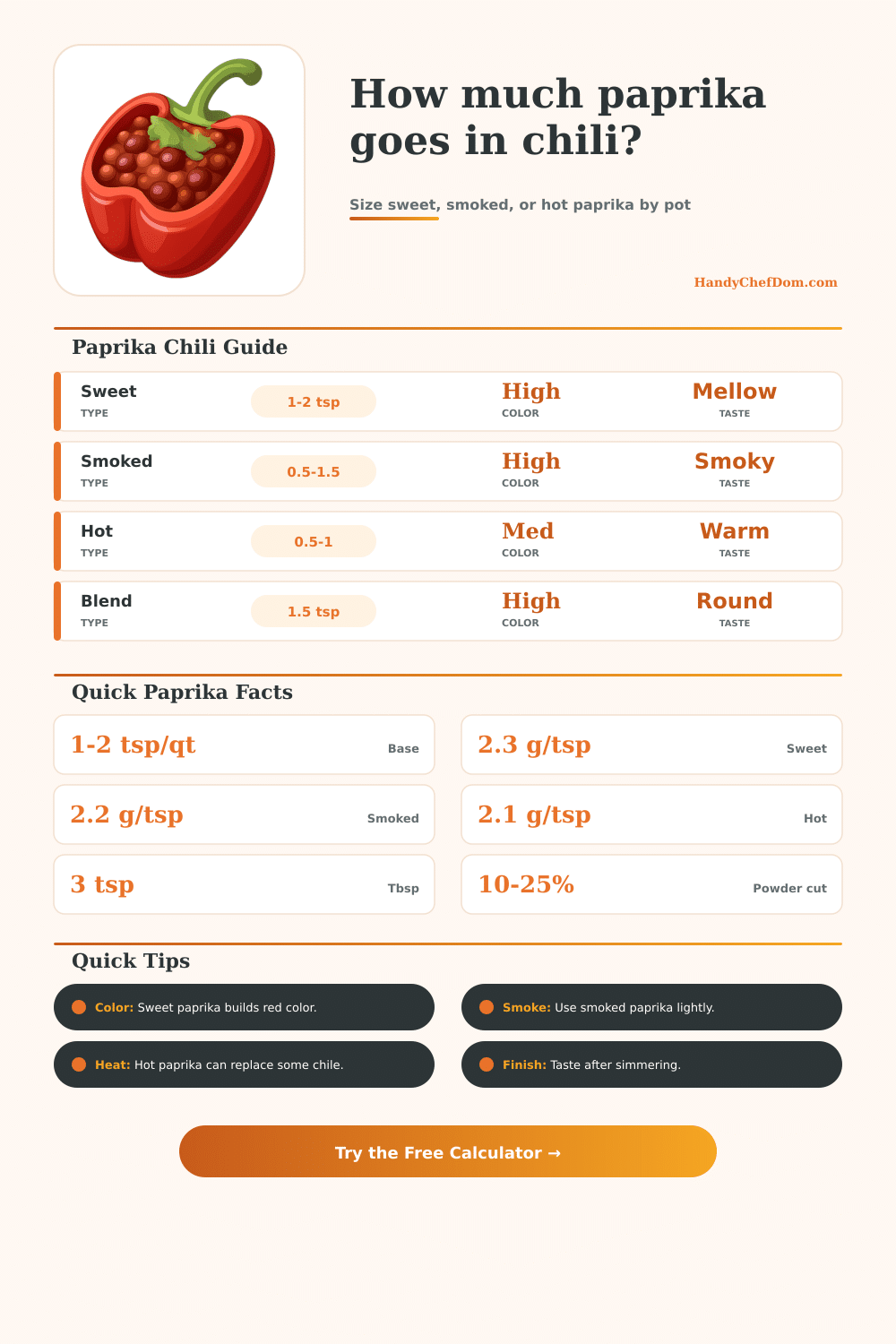
Use 1 to 2 teaspoons paprika per quart of chili as the reference range. The calculator adjusts that amount for paprika type, smoky strength, existing chili powder, meat and bean density, color goal, heat level, and long simmering.
Best all-purpose choice when the chili needs red color without more heat or smoke.
Use less than sweet paprika because smoke can dominate after a long simmer.
Counts toward both color and heat, so hotter chili needs a smaller paprika dose.
Sweet or Spanish-style paprika can brighten a dull tomato chili without changing salt.
| Paprika type | Starting range | Grams per teaspoon | Calculator note |
|---|---|---|---|
| Sweet paprika | 1 to 2 tsp per quart chili | About 2.3 g | Best choice for color and gentle pepper flavor. |
| Smoked paprika | 0.5 to 1.5 tsp per quart chili | About 2.2 g | Smoke reads stronger after simmering, so the calculator lowers it. |
| Hot paprika | 0.5 to 1 tsp per quart chili | About 2.1 g | Counts toward heat as well as red color. |
| Half sweet, half smoked | 1 to 1.75 tsp per quart chili | About 2.25 g | Balanced option for color with controlled smoke. |
| Half sweet, half hot | 0.75 to 1.5 tsp per quart chili | About 2.2 g | Good when the chili needs warmth without a full hot-paprika dose. |
| Spanish-style vivid paprika | 1 to 2 tsp per quart chili | About 2.3 g | Strong color, clean pepper aroma, and a smooth finish. |
| Chili style | Paprika start | Color goal | Best type |
|---|---|---|---|
| Classic tomato beef chili | 1.5 tsp per quart | Balanced brick red | Sweet paprika or half sweet, half smoked. |
| Texas-style meat chili | 1.25 tsp per quart | Dark red gravy | Smoked paprika in a controlled amount. |
| Bean-heavy homestyle chili | 1.65 tsp per quart | Warm red color through beans | Sweet paprika with a final color reserve. |
| Turkey or chicken chili | 1.2 tsp per quart | Light red-orange tint | Sweet paprika or Spanish-style paprika. |
| Vegetarian black bean chili | 1.55 tsp per quart | Red color against dark beans | Sweet smoked blend for depth. |
| Green chili with red color lift | 0.6 tsp per quart | Subtle warmth only | Sweet paprika in a small amount. |
| Competition-style red chili | 1.8 tsp per quart | Vivid first-spoon color | Spanish-style vivid or sweet paprika. |
| Spoon measure | Sweet paprika | Smoked paprika | Hot paprika |
|---|---|---|---|
| 1/4 teaspoon | About 0.6 g | About 0.6 g | About 0.5 g |
| 1/2 teaspoon | About 1.2 g | About 1.1 g | About 1.1 g |
| 1 teaspoon | About 2.3 g | About 2.2 g | About 2.1 g |
| 1 tablespoon | About 6.9 g | About 6.6 g | About 6.3 g |
| 1/4 cup | About 27.6 g | About 26.4 g | About 25.2 g |
| Spice in chili | Main job | Typical relationship | Adjustment cue |
|---|---|---|---|
| Paprika | Color, pepper aroma, optional smoke | Often 1 to 2 tsp per quart | Increase for color, reduce smoked and hot types. |
| Chili powder | Complete chili seasoning blend | Often includes paprika already | Use the existing powder field to avoid double-counting. |
| Cumin | Earthy warm backbone | Works beside paprika, not as a color spice | Too much cumin can make paprika taste dusty. |
| Cocoa powder | Dark savory depth | Much smaller dose than paprika | Use cocoa for depth, paprika for red color. |
| Cayenne or hot chile | Sharp heat | Pairs with sweet paprika for color | Lower hot paprika when cayenne is already strong. |
Paprika is a spice that affect the color and the flavor of chili, and paprika can also affect the heat level of chili. When preparing chili, cooks must decide how much paprika to add to the chili pot. Depending on the type of paprika that is used, chili can contain sweet paprika, which add red color to chili without adding heat, smoked paprika, which adds a smoky flavor to chili, or hot paprika that adds both color and heat to chili.
Because paprika changes the flavor and color of chili in different ways, depending on the type of paprika used, it is important to account for the type of paprika that is used in making chili to ensure that the chili has the correct flavor and colors. The paprika in chili calculator is a tool that will calculate for cooks how much paprika to add to their chili pot to achieve the desired outcome from their chili. To use the calculator, cooks must input information about their chili pot, such as the volume of the chili, the amount of meat and beans in the chili, and the type of paprika that will be used in the chili pot.
How Much Paprika to Add to Chili
The volume of chili that will be cooked will impact the amount of paprika that is needed. Additionally, the ingredients in the chili will impact the amount of paprika that is needed. For instance, a quart of thin broth will react differently to the addition of paprika than a chili that contain heavy beef and beans.
Additionally, the type of paprika that is used will change with the evaporation of water during the simmering of the chili. Sweet paprika does not contain a strong heat component, whereas smoked paprika can become too strong with the addition of large amount of smoked paprika to chili. Hot paprika contains both color and heat to chili, so cooks use less hot paprika in chili than sweet paprika.
These differing component of paprika allow the chili pot to account for each type of paprika and calculate how much of each type is needed to achieve the chilis desired outcome. The style of the chili will also impact the amount of paprika that is needed. For instance, Texas-style chili contains very few beans.
Therefore, Texas-style chili will contain less paprika than chili that contains a large amount of beans. Additionally, chili that contains turkey or chicken will contain a different amount of paprika than beef chili because the color of turkey or chicken will make the red color of the paprika more visible to those who consume the chili. In this case, cooks can input the desired color of chili into the chili pot calculator so that the calculator will recommend the appropriate amount of paprika to achieve that color.
Another factor that needs to be accounted for is the amount of chili powder that is already in the chili pot. Commercial chili powder already contains paprika, so cooks should input the amount of chili powder that is already in the chili pot. This will allow the chili pot calculator to provide a recommendation for the amount of paprika that will not make the chili too spicy or too strongly flavor with paprika.
Additionally, cooks can also add a custom amount of spices to chili pot, so this can also be entered into the chili pot calculator to ensure the recommendation of the amount of paprika is accurate. The length of time that chili simmers will impact the amount of paprika that is added to the chili pot. If chili simmers for shorter periods of time, the amount of paprika will be allowed to remain aromatic and bright.
However, if chili simmers for longer periods of time, the color and smoke of the paprika will be softened. Therefore, the longer the chili simmers, the less paprika the chili pot calculator will recommend to be add to the chili pot to avoid adding too much paprika. The target color and heat level will also impact the amount of paprika that is needed for chili.
If chili is to be mild, sweet paprika can be used in large amounts because it does not add heat to the chili. However, if chili is to be hot, hot paprika should be used but in lesser amounts because the color of hot paprika can make the chili too hot. These components of chili can be combined by the chili pot calculator into a total amount of paprika that must be added to the chili pot to achieve the desired color and heat levels of chili.
Once the chili pot calculator has calculated the total amount of paprika, cooks must decide when to add the paprika to the chili pot. Most cooks will add most of the calculated amount of paprika to the chili pot when it is first prepared. However, cooks may also choose to save a portion of the paprika and add it later to the chili pot.
This saved amount of paprika can later be used to determine the color of the chili after the cooking and simmering of chili. The chili pot calculator will calculate both the amount of paprika to be added to the chili pot and the amount of paprika to be reserved to allow cooks to make their own decisions about the color that will result from the chili pot. Using such a calculation for the amount of paprika that is to be added to chili will allow cooks to focus on other aspects of the chili recipe.
Once the amount of paprika has been calculated and added to chili, the color, smoke, and heat levels of chili will be balanced. At this point, cooks can focus on other aspects of the chili recipe, such as tasting the chili for its salt content, its acidity, and other spices, such as cumin. It is more easier to get the flavor right when you have the right amounts of spices.
You should of used a calculator to make sure the flavors are perfect, its much better than guessing. Youll find that the amount of spices matter alot to teh final result. One should of known that the amount of paprika is crucial.
Many people thinks the heat is the most important part but it isnt. You cant just add too much paprika without thinking. The result depends on the type of paprika used, and the amount of paprika used can change the flavor drastically.
If you want a luxurius flavor, you need to get it right. All the different furnitures in the kitchen doesnt matter if the food isnt good. You should focus on your recipe more than your decorations.
The chili should be cooked slowly to let the flavors meld together. This makes the dish more delicious than if you rush the process. It is naturaly a slow process but it is worth it.
The results is amazing. Most people prefers a balanced flavor. Sometimes the spices can be too strong, which makes the chili hard to enjoy.
You need to be careful with the amount of spice you add. If you add too much, the flavor will be ruined. If you add too little, the chili will be bland.
You must find the right balance. This is why the calculator is so useful. It helps you avoid common mistakes.
You will recieve better results if you follow the instructions. The recipe is based off traditional methods. It is a moddern way to cook a classic dish.
Making chili can be a fun experience if you have the right tools. You can make it exactly how you like it. There is no reason to guess when you can be certain.
This is the best way to cook chili.