🌶 Paprika in Goulash Calculator
Size sweet, hot, and smoked paprika for goulash by meat, broth, stew style, simmer time, heat goal, and bloom timing.
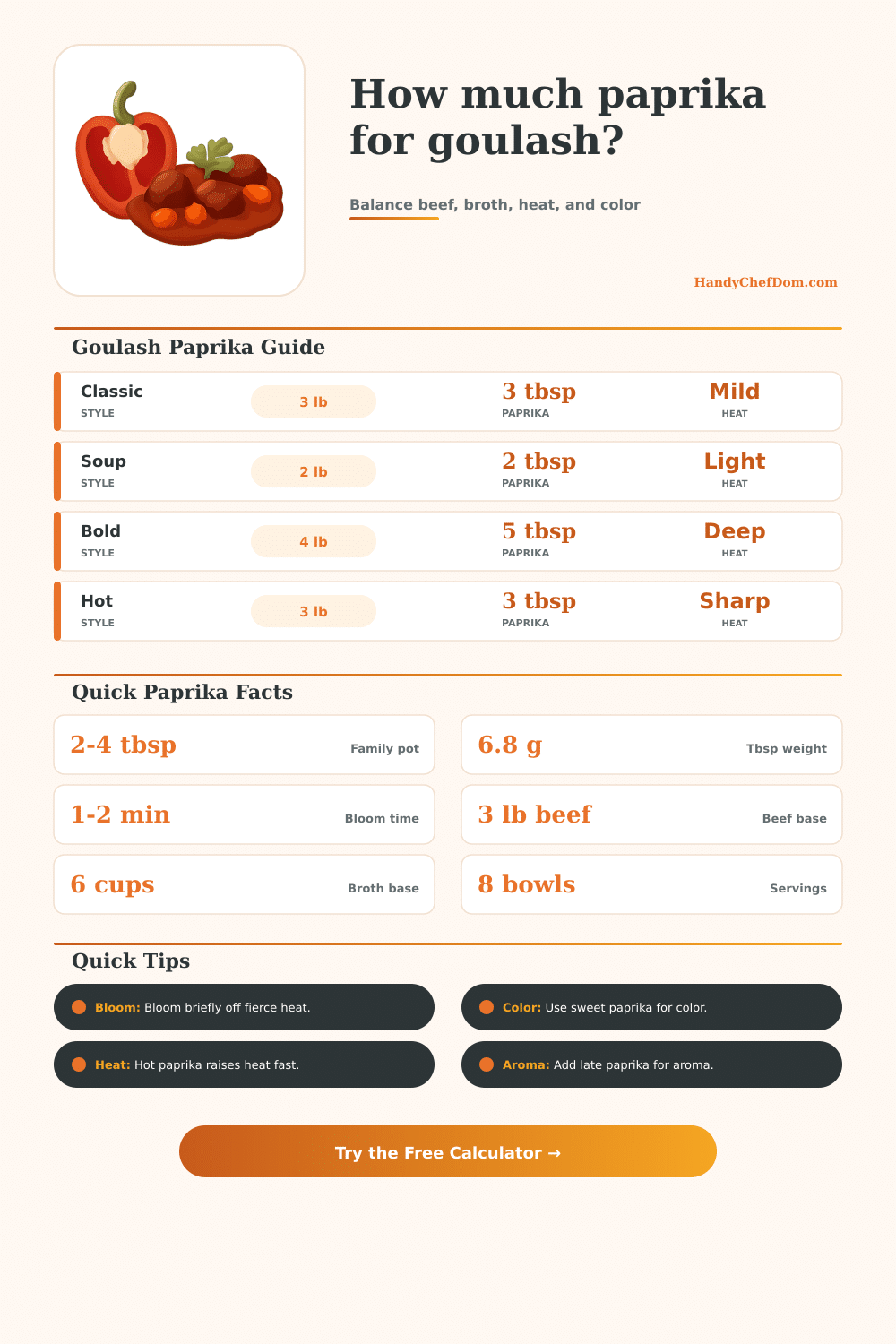
Hungarian-style goulash often uses generous paprika, commonly around 2-4 tablespoons for a family pot depending on meat, broth, and style. Metric view treats weight fields as kg and volume fields as liters.
| Paprika Type | Heat Level | Color Impact | Best Use in Goulash |
|---|---|---|---|
| Sweet Hungarian | Low | Deep red | Main paprika base for classic color and rounded pepper flavor. |
| Noble sweet | Low | Bright red | Clean family-pot flavor when heat should stay gentle. |
| Rose paprika | Medium | Rosy red | Adds a sharper pepper edge without turning the pot fiery. |
| Hot paprika | High | Red-orange | Use as a small blend share when the heat target is higher. |
| Smoked paprika | Low-medium | Dark red | Best as a supporting note so smoke does not dominate the stew. |
| Half-sharp paprika | Medium-high | Warm red | Useful when you want heat and paprika aroma in one spoon. |
| Goulash Style | Meat and Liquid Pattern | Paprika Range | Balance Target |
|---|---|---|---|
| Classic family pot | About 3 lb beef with 5-7 cups broth | 2.8-4.0 tbsp | Bold red color, gentle heat, rounded onion sweetness. |
| Soup-style goulash | More broth per pound of beef | 2.0-3.2 tbsp | Lighter color because paprika is spread through more liquid. |
| Thick stew goulash | Lower broth and longer simmer | 3.5-5.0 tbsp | Full paprika body with enough liquid to avoid chalkiness. |
| Porkolt-style stew | Concentrated onion and meat base | 4.0-6.0 tbsp | Deep paprika presence in a compact, saucy stew. |
| Tomato-rich pot | Extra tomato softens paprika color | 3.0-4.5 tbsp | More paprika keeps the stew from tasting tomato-led. |
| Hot paprika pot | Classic broth with higher hot share | 2.5-4.0 tbsp | Heat should support the stew instead of covering sweetness. |
| Serving Count | Typical Beef | Typical Broth | Paprika Starting Point |
|---|---|---|---|
| 4 servings | 1.5-2 lb | 3-4 cups | 1.8-2.5 tbsp for a small family pot. |
| 6 servings | 2-2.5 lb | 4-5 cups | 2.3-3.2 tbsp for a weeknight pot. |
| 8 servings | 3 lb | 5-7 cups | 3.0-4.0 tbsp for classic goulash balance. |
| 10 servings | 3.5-4 lb | 7-8 cups | 3.8-5.0 tbsp when the pot is fuller. |
| 12 servings | 4.5-5 lb | 9-10 cups | 4.8-6.2 tbsp for potluck-size stew. |
| 20 servings | 7.5-8 lb | 15-17 cups | 8.0-10.5 tbsp for a gathering kettle. |
| Bloom Time | Heat Contact | Flavor Effect | Calculator Meaning |
|---|---|---|---|
| 0 minutes | No fat bloom | Cleaner but flatter paprika aroma | Color score is slightly reduced. |
| 0.5-1 minute | Brief bloom | Fresh aroma with low bitterness risk | Best for delicate sweet paprika blends. |
| 1-2 minutes | Balanced bloom | Full color release and rounded spice | Ideal window for most goulash pots. |
| 2-3 minutes | Long bloom | Deeper flavor, needs gentle heat | Calculator flags this as bold. |
| 3+ minutes | Extended contact | Can taste dull if heat is too strong | Balance note warns to protect aroma. |
Making goulash isn’t just about adding a dash of paprika to give it some red color. Depending on length of time your mixture cooks, volume of broth you’ve included, and the quantity of beef you put in, different amounts of paprika is necessary to create the dish’s complete taste. After plugging in a few details (meat, liquid, tomatoes, target heat), goulash paprika calculator takes care of the rest for you. But knowing what to input and why will tell you what matters most.
We start with the bottom layer, which is beef weight. Paprika will coat exterior of your hunks of meat and dissolve into sauce that’s formed around them. The bigger your chunks of meat are, the greater the surface area, meaning the larger the amount of meat you use, the more paprika you need. How much broth you use behaves inversely. With same weight of meat, extra broth simply spreads existing paprika over a larger area. This explains why soup-like portions needs less spice, even when beef weights is equal or lower.
Why These Ingredients Matter for Goulash
Both onion and tomato is important because they adds acid and sugar to the mix. Tomato in particular mutes the color. This is why the tool adjust the total upward slightly when tomato volume increases compared to meat.
Since we know how long the paprika will sit in hot fat, we track that time separately; how long you let it bloom affects not just the aroma, but also how much color are transferred into the final result. Bloom for too long and the paprika might go bitter (though it deepens the red); too little bloom time and the flavor stay bright and fresh. The calculator calculates this moment independently so that you has an idea about whether your chosen timing will work with your stated heat/color aims.
With smoked, hot, and sweet paprika to mix together, you choose the proportions of each that goes into end result. Sweet paprika provide the main pepper flavor (and color) that people associate with goulash. Hot paprika brings the heat quickly, so use a smaller amount if you don’t want a sharp taste at the end. Smoked paprika enriches the dish but can dominate it if too large a portion of it go in. It’s measured out in both grams and tablespoons, so you can take what you’ve got on hand.
That’s why I adjusted the recommendation not just by simmer time, but by servings as well. If you’re cooking for yourself and want some sauce (or all of it), use the per-serving recommendations. They also works if you’re cooking for a crowd and want each bowl to be about equally spiced up. Cooking longer will concentrate the sauce and allow the paprika flavor to become bolder. Cooking for a shorter time will keep the paprika more spread out.
The reference table on the page shows typical ranges for various styles so you know how yours compares to common benchmarks, no guesswork required. Ultimately it all boils down to the type of goulash you want to put onto the table. If it’s a classic-leaning one, it’ll be somewhere in a comfortabley middle ground. The broth will have just enough color without being heavy. With a thick stew, you can get away with more paprika, since there’s so much concentration in the sauce, while a soup has to show restraint so the broth stays light.
After you’ve seen the calculator balance these variables for the amount you’re making, it’s no longer a matter of how much paprika to add; it’s a matter of how the final stew tastes. You should of used more if it was too weak. If you want more flavor, then use less broth. Actualy, some people prefer more.
Making goulash is better than making other stews. It feels more naturaly when you get it right. One should of checked the beef weight first. I’m livig for this food. Everything looks moddern and good.