🧀 Parmesan for Lasagna Calculator
Estimate grated parmesan for lasagna by pan size, layer count, grate density, sauce richness, mozzarella and ricotta balance, salt target, top crust, and servings.
The formula starts from pan area and layer count, then adjusts parmesan for grate density, sauce richness, ricotta moisture, mozzarella saltiness, top crust preference, and the salt level you want at the table.
| Grate style | Density | Best lasagna use | Measuring note |
|---|---|---|---|
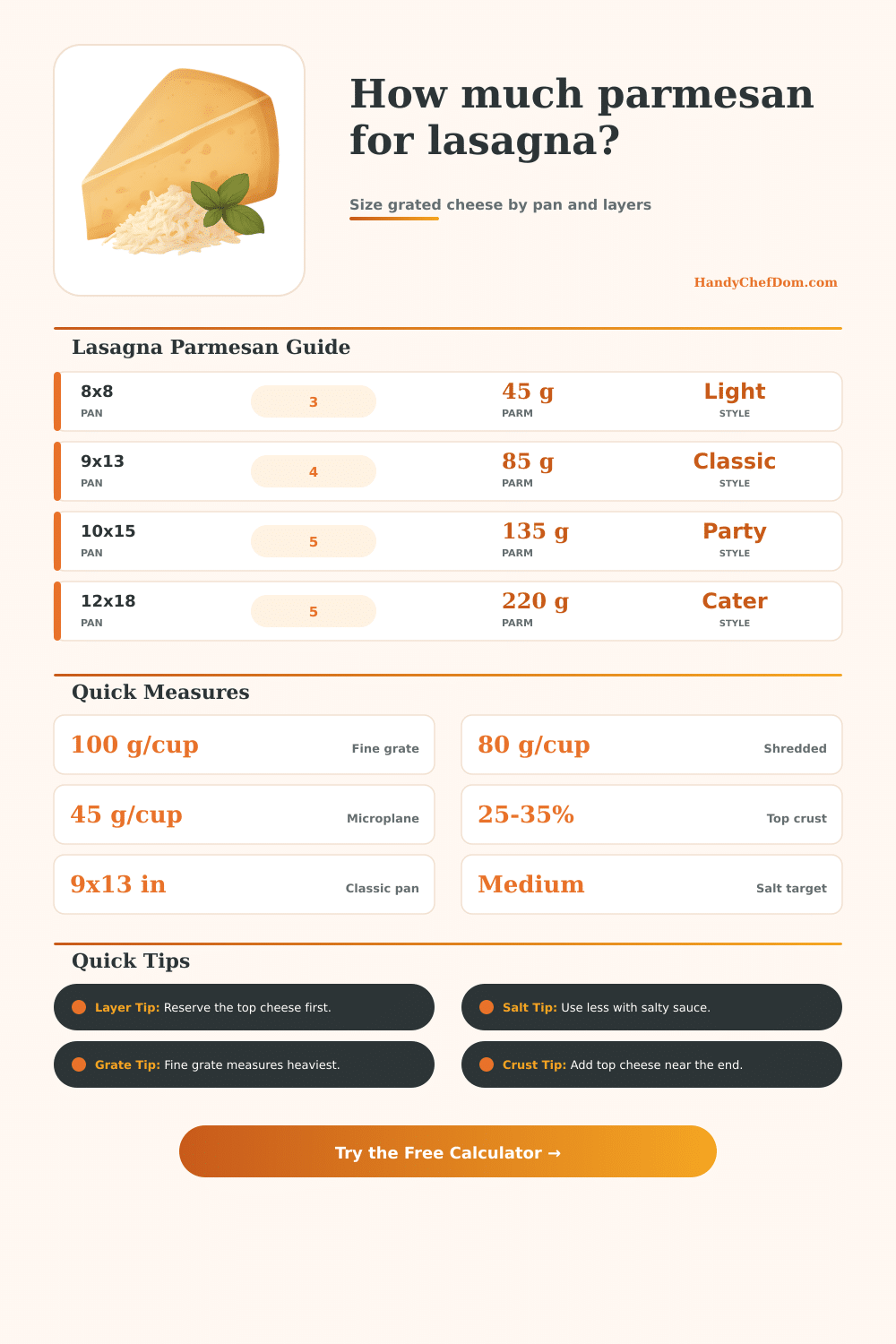
| Finely grated, packed | 100 g/cup | Even layer seasoning | Level the cup lightly |
| Shredded strands | 80 g/cup | Visible cheese pockets | Do not compress hard |
| Microplaned fluffy | 45 g/cup | Finishing aroma | Very airy cup volume |
| Coarse grated | 70 g/cup | Rustic baked texture | Shake cup to settle |
| Thin shaved pieces | 60 g/cup | Top and edges | Use grams if possible |
| Dry powdery grated | 110 g/cup | Strong salty coverage | Reduce for low salt |
| Fresh grated loose | 90 g/cup | Classic home grating | Good all-purpose value |
| Parmesan-pecorino blend | 95 g/cup | Sharper savory pans | Watch salt level |
| Pan size | Area | Classic parmesan | Serving range |
|---|---|---|---|
| 8×8 in square | 64 sq in | 45-55 g | 4-6 servings |
| 9×9 in square | 81 sq in | 55-70 g | 6-8 servings |
| 9×13 in casserole | 117 sq in | 75-95 g | 10-12 servings |
| 10×14 in deep pan | 140 sq in | 95-120 g | 12-14 servings |
| 10×15 in jelly roll | 150 sq in | 105-135 g | 14-18 servings |
| 12×18 in half sheet | 216 sq in | 160-220 g | 24-30 servings |
| Sauce and filling | Parm factor | Why it changes | Best salt target |
|---|---|---|---|
| Bright tomato, lean | 0.95x | Acid reads sharper | Medium |
| Balanced tomato sauce | 1.00x | Classic baseline | Medium |
| Meaty or reduced sauce | 1.10x | Rich sauce carries more | Savory |
| Cream or bechamel heavy | 1.16x | Dairy softens salt | Savory |
| Loose fresh tomato sauce | 0.90x | Watery layers need restraint | Low-medium |
| Herb or pesto accent | 1.08x | Herbs like salty cheese | Medium |
| Cheese balance | Adjustment | Layer effect | Flavor read |
|---|---|---|---|
| No ricotta, light mozzarella | 0.93x | Less dairy to season | Cleaner tomato |
| Classic ricotta and mozzarella | 1.00x | Balanced dairy | Traditional |
| Heavy ricotta filling | 1.10x | Needs savory lift | Rounder |
| Spinach-ricotta filling | 1.08x | Greens need seasoning | Herby savory |
| Heavy mozzarella | 0.96x | More salt from mozz | Milder parm |
| Fresh mozzarella slices | 1.05x | Fresh cheese is gentle | Milkier |
Lasagna is one of those dishes where the parmesan can be quietly critical; too little and the lasagne turns out flat and lifeless; too much and the salt sneaks up on you halfway across the plate. This isn’t just about your baking dish size, either; how much you need varies with that, too. It’s an art people guess, then tweak to taste at the table.
From there, the first part is pan size and how many layers, since those determine the surface area being seasoned. More layers mean more pasta sheets stacked deeper, resulting in more parmesan between the layer. A wider pan makes for thinner layer of cheese overall. You still need to use more parmesan to keep the taste consistent throughout. Deeper stacks generally means fewer layers then shallow ones. If you know these two things (along with desired number of servings), then the calculator above will do the math, no more doing that in your head when scaling up or down.
How Much Parmesan Cheese Do You Need?
The way you grate also matters, denser gratings requires less actual volume compared to fluffier ones (think about how a cup of finely grated Parmesan versus a cup of fluffy microplaned shavings will look dramatically different). The impact here? Not only does this affect the amount of salt that goes into each bite, but also the way the cheese is distributed throughout the layers.
The other cheeses and the overall richness of the sauce also change the equation. You can add more parmesan to a reduced meat sauce without making it too much. The same is not true for a bright tomato sauce. In that case, overdoing it will make the salt and acid fight each other. Ricotta has moisture to soften sharpness, so ricotta-heavy pans tend to require a bit more freedom with the parmesan in order to maintain savory-ness. Finally, mozz’s own salt comes into play: you’ll want to pull back a little on the parmesan when dealing with heavier mozzarella pans to prevent a one-note finish.
Another lever to pay attention to: how much of the top is crust? Keep about a third of all your cheese in reserve until right before you bake, it’s what makes the brownish, just-chewy part we all grab first, and adding it too soon will melt it down into the interior rather than developing its own identifiable cap, which tells you when lasagna has achieved a well-finished look.
The final knob is for salt, which no one seems to think about until somebody sitting down says, “hey this needs more salt.” Saltiness varies depending on what cheeses you’re using, such as a salty mozzarella. It also depends on any other strongly flavored ingredients in the sauce, like anchovies or sausage. Selecting the low end here will prevent the final dish from being over-the-top. Then the output gives total amount of parmesan used, plus an estimate of how much sodium that amount provides per serving… allowing you to determine whether you want to use a bit more as a final garnish at the table rather than baking it in.
The mistake people tend to make with parmesan is thinking it’s a set quantity: one ingredient in one position that doesn’t adjust based off anything else in the pan. They’ll measure out exactly what they need for a standard nine-by-thirteen lasagna, then use this exact same amount for every variation, including when the number of layers changes or the sauce do. It’s less about having extra cheese on hand for “just-in-case.” It is more about learning what elements of your specific lasagna are doing all the work. You should of allowed the cheese to play supporting roles rather than desperately trying to save them all at once.
After awhile, with all of these decisions influencing the final balance, the numbers don’t seem so arbitrary anymore. Why does a weeknight portion of lasagna in an eight- by eight pan require less cheese than a catering tray? Why does a loose tomato lasagne call for less cheese than a creamy white one? And the end result is a lasagne that feels like it’s finished without requiring extra cheese (or salt) at the table to make it feel right.