🥗 Dressing per Pasta Salad Calculator
Estimate dressing for pasta salad by dry pasta weight, cooked pasta yield, add-in volume, dressing style, absorption time, serving count, moisture level, reserve dressing, and chill time.
Start with dry pasta weight, then add cooked-yield, add-in, moisture, absorption, chill, and reserve settings. The result separates dressing to fold in now from dressing to hold back.
| Pasta Shape | Cooked Yield From Dry | Dressing Behavior | Best Dressing Fit |
|---|---|---|---|
| Rotini or fusilli | About 0.60 cup per dry oz | Spirals catch dressing in ridges. | Classic vinaigrette, pesto, or creamy dressing. |
| Elbow macaroni | About 0.55 cup per dry oz | Small hollow curves carry creamy dressing well. | Mayo, ranch-style, or yogurt dressing. |
| Penne or ziti | About 0.52 cup per dry oz | Tubes hold pockets of dressing and add-ins. | Italian vinaigrette or Mediterranean dressing. |
| Farfalle bow ties | About 0.58 cup per dry oz | Wide centers can drink in dressing during chilling. | Vinaigrette with a small reserve. |
| Medium shells | About 0.56 cup per dry oz | Shell cups trap dressing and diced vegetables. | Creamy or Italian dressing. |
| Orzo or small pasta | About 0.48 cup per dry oz | Dense finished volume makes add-ins important. | Lemon herb, Greek-style, or light vinaigrette. |
| Cavatappi | About 0.62 cup per dry oz | Large curls create a fluffy salad volume. | Classic or extra saucy dressing. |
| Cheese tortellini | About 0.45 cup per dry oz | Filled pasta is rich and needs gentler coating. | Pesto, vinaigrette, or light creamy dressing. |
| Dressing Style | Base Rate | Reserve Cue | Planning Note |
|---|---|---|---|
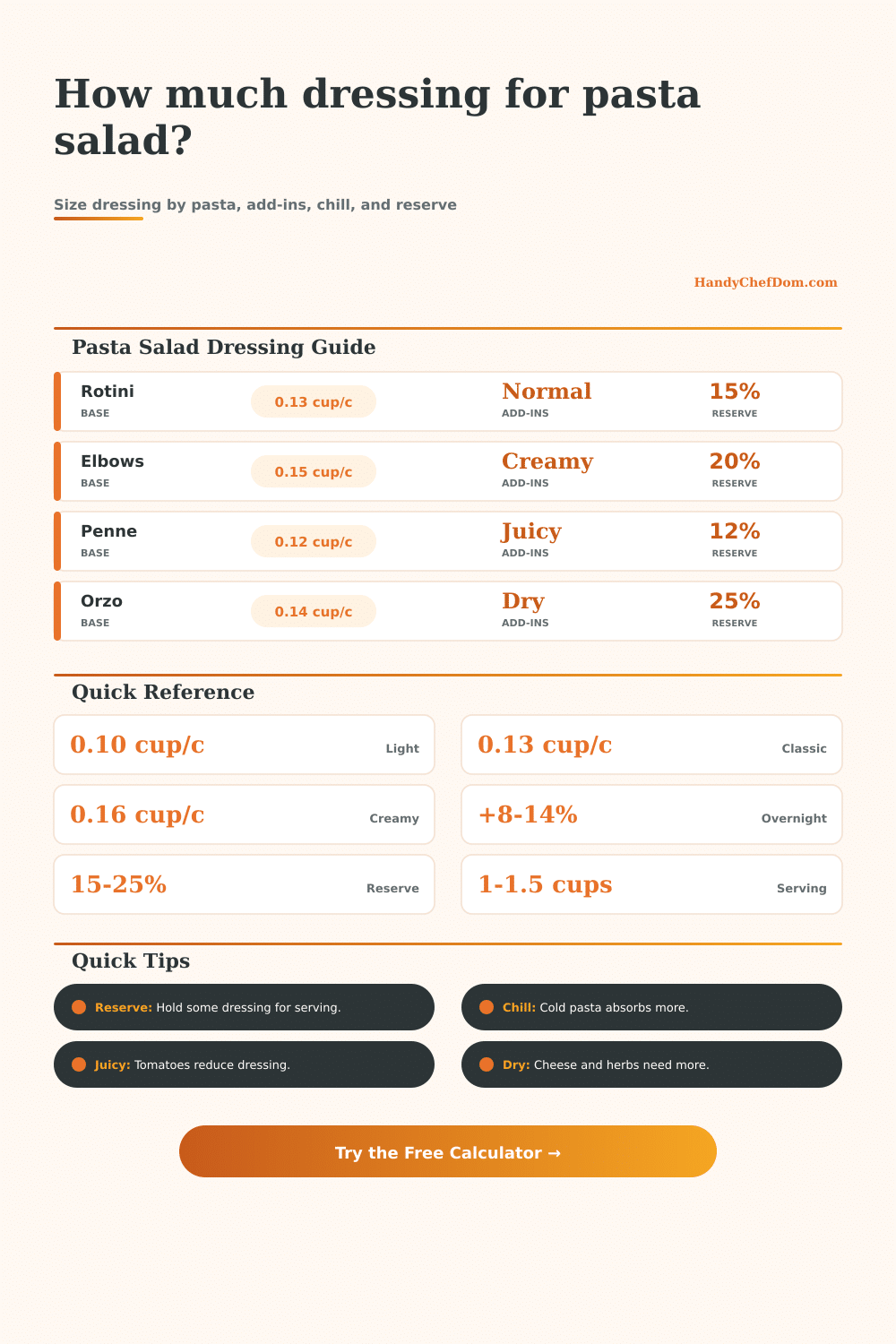
| Italian vinaigrette | 0.13 cup per cup salad | 15% to 20% | A good default for balanced pasta, vegetables, and cheese. |
| Creamy mayo dressing | 0.16 cup per cup salad | 20% to 25% | Chilling thickens the dressing, so reserve helps restore gloss. |
| Greek yogurt dressing | 0.15 cup per cup salad | 18% to 25% | Yogurt absorbs into starch and may loosen with juicy vegetables. |
| Pesto dressing | 0.12 cup per cup salad | 12% to 18% | Concentrated flavor usually needs less total volume. |
| Light lemon herb | 0.10 cup per cup salad | 10% to 15% | Best for bright, vegetable-heavy salads that should not feel wet. |
| Sesame soy dressing | 0.13 cup per cup salad | 15% to 20% | Works for noodle-style salads with crunchy vegetables. |
| Ranch-style creamy | 0.17 cup per cup salad | 20% to 25% | Good for deli-style bowls where creamy coverage is the goal. |
| Extra saucy deli style | 0.19 cup per cup salad | 22% to 30% | Use when the salad must stay visibly moist after a long chill. |
| Add-In Moisture | Calculator Factor | Examples | Effect On Dressing |
|---|---|---|---|
| Dry add-ins | 1.08x | Grated cheese, herbs, salami, nuts, breadcrumbs. | Plan more dressing because dry pieces absorb or coat heavily. |
| Balanced vegetables | 1.00x | Peppers, carrots, broccoli, peas, scallions, celery. | Use the base rate for a classic pasta salad texture. |
| Juicy vegetables | 0.90x | Tomatoes, cucumber, roasted peppers, fresh corn. | Reduce dressing slightly because the bowl releases moisture. |
| Briny add-ins | 0.93x | Olives, pickles, pepperoncini, marinated artichokes. | Brine adds liquid and seasoning, so avoid over-dressing. |
| Starchy add-ins | 1.06x | Beans, potatoes, chickpeas, lentils, corn-heavy mixes. | Add a little more dressing for starch absorption. |
| Dry Pasta | Cooked Pasta | Add-Ins | Classic Dressing |
|---|---|---|---|
| 8 oz dry pasta | About 4.8 cups rotini | 2 to 3 cups | About 1.0 cup total dressing. |
| 12 oz dry pasta | About 7.2 cups rotini | 3 to 4 cups | About 1.4 cups total dressing. |
| 16 oz dry pasta | About 9.6 cups rotini | 4 to 5 cups | About 1.9 cups total dressing. |
| 24 oz dry pasta | About 14.4 cups rotini | 6 to 8 cups | About 2.8 cups total dressing. |
| 32 oz dry pasta | About 19.2 cups rotini | 8 to 10 cups | About 3.7 cups total dressing. |
| 48 oz dry pasta | About 28.8 cups rotini | 12 to 16 cups | About 5.6 cups total dressing. |
Making pasta salad is an exercise in waiting and attention to detail. Chop your veggies. Cook your noodles. Mix your dressing. Wait. Look at that! Your pasta salad looks great. Now wait some more. Time will do its thing. When company arrives, what’s there? Clumps of dry pasta and naked veggie. What happened? Why did the pasta soak up all of the oil?
It’s not that the recipe was wrong. It’s how fast the pasta soaked it up… And time put pressure on.
How to Make Perfect Pasta Salad
Preparation: Most recipes call for a set quantity of dressing. Great… when you’re serving it right away. Not so great… when the salad is sitting in a cooler for hours. Use the calculator on this page. You input how much you want to serve, what kind of add-in ingredients you have, and how long you’ll be chilling it. Say goodbye to the guessing game.
The calculator view dressing as a variable resource. As it chills, it takes into account changing texture + temperature.
The type of pasta impacts its dressability. Fusilli and rotini has hollows and ridges that trap the dressing. It is a good match with vinaigrette. Elbow macaroni has smooth, curving sides. This means there is less surface area to get oily, so it require more dressing or a heavier base. Tool will adjust based off shape, making it go faster/slower different than how much dressing it can hold. Orzo is especially difficult. When packed together in clumps, it soak up the dressing quickly, even quicker then others.
In addition, pay attention to the moisture in your add-ins. Cucumbers and tomatoes are juicy things that give off moisture as they chill. That moisture mix with the dressing. This results in a watery, greasy salad. To compensate, use less dressing for these ingredients.
Nuts and cheese are dry ingredients that soak up moisture greedily. More dressing are needed to keep them pliable.
But chill time makes a difference. Cool pasta will continue to soak up your liquid. A salad mixed an hour before serving requires less dressing at first. A night-before-made salad require more.
How does the tool make this difference? There are two parts of the dressing. Some goes in now. And some gets set aside for later. Why’s that different? Part of what you add coats the pasta immediately. It keeps it from drying out. But you don’t want to drown your pasta! Setting aside some dressing lets you refresh the salad right before you serve it. Stir it again. Recombine the flavors.
Vinaigrette vs. Creamy Dressing: Vinaigrette is a different animal from creamy dressings like mayonnaise or yogurt. Creamy dressings thickens when chilled. Using the same amount of dressing as with an oil dressing will make the salad feel heavy. For creamies, the calculator advises a higher base rate. Also, use a bigger reserve percentage because you need extra thickener to cover the pasta. It gets even thicker in the fridge, so you should of had some backup. This strikes a balance between texture and coverage.
Standard rates for various styles are listed in reference tables. They are not rules carved in stone. Adjust them according to your taste. Like every bite dressed? Increase the ratio. Decrease the ratio if you prefer a lighter touch. Decrease the ratio. Control absorption is the deal. Based off the ingredients, you determine the volume.
Timing and texture make all the difference for a good pasta salad. Keep in mind that the noodles will expand and absorb liquid. Dressing will thicken at room temperature. No guessing required. Mix it with confidence in the bowl. When friends drop by, pour on some reserved dressing. It look the way you intended.