🍝 Pasta Sauce Per Pound of Pasta Calculator
Size sauce for dry pasta by pounds or grams, sauce style, pasta shape, add-ins, coating level, servings, and simmer reduction.
Enter dry pasta weight, then adjust for sauce style, shape grip, coating preference, add-ins, and reduction before serving.
| Sauce Type | Classic Ratio | Best Match | Calculator Note |
|---|---|---|---|
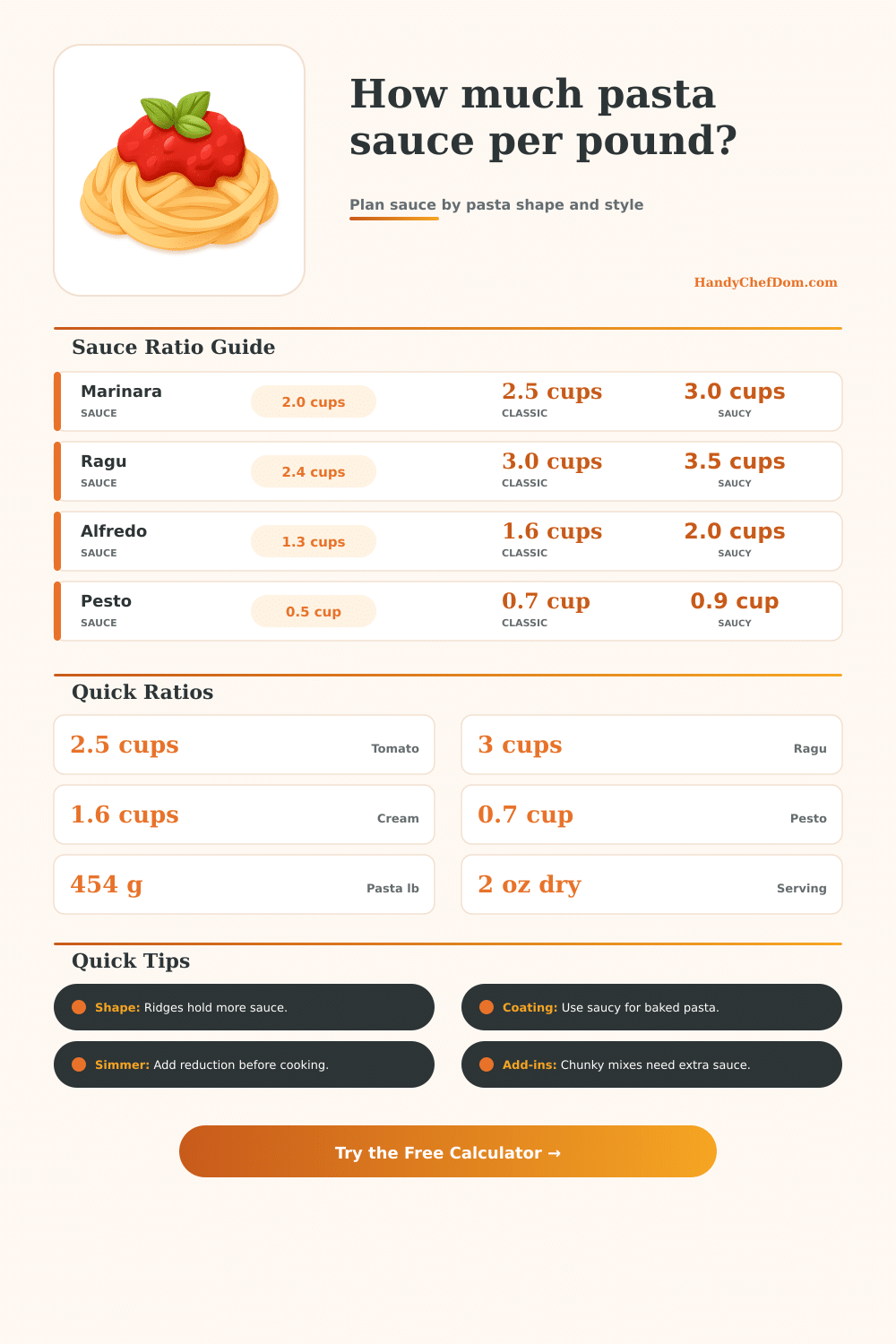
| Bright marinara | 2.5 cups per lb | Spaghetti, penne | Balanced tomato coverage |
| Smooth pomodoro | 2.2 cups per lb | Linguine, spaghetti | Sleeker coating |
| Meat ragu | 3.0 cups per lb | Rigatoni, shells | Chunky sauce buffer |
| Vodka cream tomato | 1.9 cups per lb | Penne, farfalle | Creamy but not heavy |
| Alfredo cream | 1.6 cups per lb | Fettuccine, linguine | Rich coating ratio |
| Basil pesto | 0.7 cup per lb | Fusilli, trofie | Concentrated sauce |
| Butter cheese sauce | 0.9 cup per lb | Short pasta, ribbons | Light emulsion style |
| White clam sauce | 1.6 cups per lb | Linguine, spaghetti | Brothy coating |
| Coating Level | Multiplier | Use Case | Per Pound Effect |
|---|---|---|---|
| Light gloss | 0.82x | Delicate coating | Less sauce than base |
| Classic coated | 1.00x | Balanced plate | Uses table ratio |
| Saucy bowl | 1.18x | Extra spoonable sauce | Adds about 18% |
| Baked pasta buffer | 1.35x | Tray or casserole pasta | Adds about 35% |
| Pasta Shape | Sauce Pickup | Shape Factor | Best Sauce Style |
|---|---|---|---|
| Spaghetti | Lean strands | 0.95x | Marinara, clam |
| Linguine | Wide strands | 1.00x | Clam, pomodoro |
| Fettuccine | Broad ribbons | 1.04x | Alfredo, ragu |
| Penne | Small tubes | 1.06x | Vodka, marinara |
| Rigatoni | Ridged tubes | 1.12x | Ragu, baked sauce |
| Fusilli | Spirals | 1.15x | Pesto, chunky tomato |
| Shells | Cupped pasta | 1.18x | Ragu, cheese sauces |
| Ravioli | Filled pillows | 0.85x | Butter, tomato gloss |
| Add-in Load | Multiplier | What It Covers | Ratio Effect |
|---|---|---|---|
| No add-ins | 1.00x | Pasta and sauce only | No change |
| Light vegetables | 1.05x | Small vegetable pieces | Small increase |
| Hearty vegetables | 1.10x | Mushrooms, zucchini, peppers | Moderate increase |
| Meatballs or sausage | 1.14x | Large protein pieces | Needs extra sauce |
| Beans and greens | 1.11x | Cannellini, spinach, kale | Adds coating volume |
| Seafood pieces | 1.08x | Clams, shrimp, fish flakes | Light sauce lift |
| Baked cheese layer | 1.22x | Cheese plus tray coverage | Largest add-in bump |
To calculate an amount of sauce needed for one pound of pasta, you must consider several variable. Many cook use one of two method to measure the sauce for they pasta: by eye or by use the volume of the jar that the sauce come in. However, both of these method will lead to inconsistent result.
The amount of sauce that a pound of pasta can hold can be affected by the shape of the pasta, the type of sauce to be used, and any additional ingredient that will be used in the sauce. The shape of the pasta will change the amount of sauce that the pasta can hold. For instance, pasta with ridged shape can hold sauce on the outside of the pasta as well as within the pasta, whereas pasta with smooth shape will hold less sauce due to the lack of surface area for the sauce to settle on.
How Much Sauce for One Pound of Pasta
Different pasta shape hold different amount of sauce, so the cook must choose the sauce in accordance with the type of pasta that will be used in the recipe. The sauce ratio calculator account for these variables by applying different factor to different pasta shape to ensure that sauce isnt under measured for the pasta that is being prepared. Another variable to consider is the type of sauce that will be used.
Different sauce type contain different amount of thickness and can behave different than when simmering to allow the sauce to thicken. For instance, tomato sauce will reduce in volume while simmering, whereas cream sauce may thicken in the saucepan. Additionally, sauces like pesto is concentrated sauce and will take up less volume in the sauce calculation than thinner sauce.
The cook must select the sauce type in the sauce ratio calculator to establish the proper base ratio of sauce to pasta. Additionally, the preference for a coating for the sauce can be selected in the sauce ratio calculator. Add-ins such as meatballs, sausage, and cheese will take up space in the sauce and absorb some of the sauce.
Vegetables can also be added to the sauce, although whether the vegetables release or absorb water must be consider when preparing the sauce. The cook will select the add-ins in the sauce ratio calculator, which will adjust the total amount of sauce to be prepare for the pasta. If the sauce is not adjusted for add-ins, the sauce may end up too dry due to the add-ins absorbing the sauce.
Simmer reduction is a variable that most cook will overlook when preparing sauce. If the cook will simmer the sauce to reduce the sauce volume, the sauce need to be measured with a larger volume to account for the reduction of sauce that will occur during simmering. The sauce ratio calculator allow for the percentage of reduction of the sauce to be entered into the calculator, which multiply the sauce amount to account for the simmer reduction.
Additionally, the amount of reserved pasta water can be factored into the sauce calculation to ensure the sauce will properly adhere to the pasta. The method in which the sauce will be prepared once it is cooked is another variable to consider. If the cook is to bake the sauce, more sauce will be needed than if the sauce was to be prepare on the stovetop.
This is due to the amount of moisture that will be lost from the pasta while baking the sauce. Additionally, the type of finish to the sauce will change the texture of the sauce. For instance, a cheese finish will change the sauce texture.
The sauce ratio calculator account for these variables by applying a sauce multiplier for each of these variables. The sauce ratio calculator will provide the cook with a single number for the amount of sauce that will be needed for the one pound of pasta. This single number will ensure that the pasta will not be too dry or too full of sauce.
The reference tables will help cook to understand the classic sauce ratios and the multipliers for each pasta shape. Using these tables will avoid the common mistake of using the same recipe for all pasta dish. Additionally, using these tables will ensure that cook dont neglect the simmer reduction of sauce.
By using the sauce ratio calculator, cooks can ensure that the amount of sauce that they will use will be appropriate for the amount of pasta that they are preparing for their meal.