🥜 Peanut Butter Fiber Calculator
Estimate total fiber, daily goal percentage, and fiber per calorie from creamy, crunchy, powdered, natural, and reduced-fat peanut butter portions.
Use tablespoons for quick kitchen estimates, grams for label-level accuracy, or batch mode for jars, sandwiches, snack trays, and make-ahead portions.
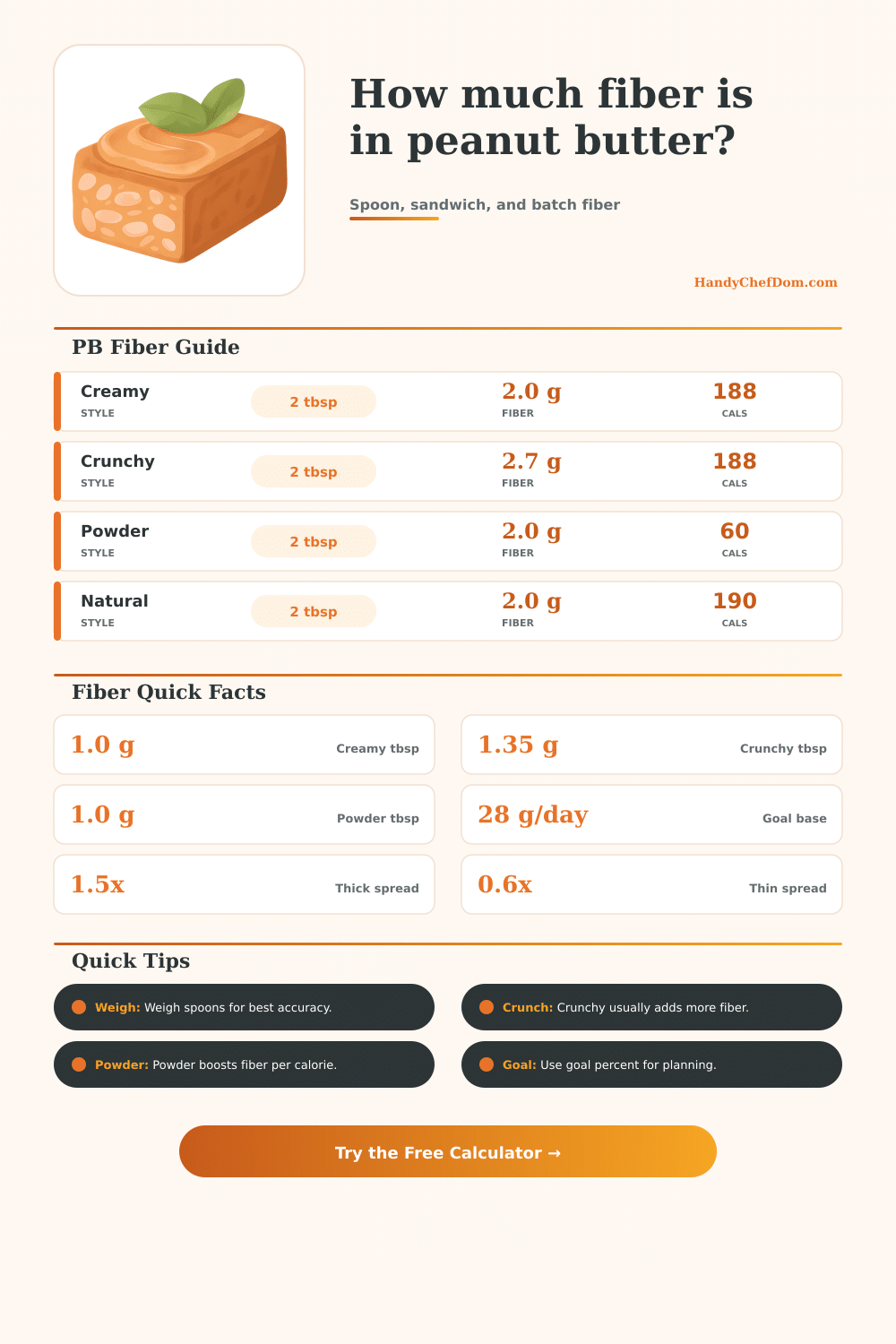
Standard 2 tablespoon serving has a smooth texture and about 1 gram fiber per tablespoon.
Peanut pieces can lift the fiber estimate while keeping the same 2 tablespoon serving size.
Powdered peanut butter often gives similar fiber with fewer calories per dry serving.
Natural creamy peanut butter tracks close to regular creamy when weighed by grams.
| Peanut Butter Style | Label Serving | Fiber | Calories | Fiber Per 100 Cal |
|---|---|---|---|---|
| Creamy peanut butter | 2 tbsp / 32 g | 2.0 g | 188 | 1.1 g |
| Crunchy peanut butter | 2 tbsp / 32 g | 2.7 g | 188 | 1.4 g |
| Natural creamy peanut butter | 2 tbsp / 32 g | 2.0 g | 190 | 1.1 g |
| Natural crunchy peanut butter | 2 tbsp / 32 g | 2.6 g | 190 | 1.4 g |
| Reduced-fat peanut butter | 2 tbsp / 32 g | 2.0 g | 180 | 1.1 g |
| Powdered peanut butter, dry | 2 tbsp / 13 g | 2.0 g | 60 | 3.3 g |
| Powdered peanut butter, prepared | 2 tbsp / 31 g | 2.0 g | 60 | 3.3 g |
| High-fiber peanut spread | 2 tbsp / 32 g | 5.0 g | 190 | 2.6 g |
| Spread Thickness | Typical Tbsp | Creamy Grams | Creamy Fiber | Best Fit |
|---|---|---|---|---|
| Thin scrape | 1.2 tbsp | 19 g | 1.2 g | Toast |
| Light spread | 1.7 tbsp | 27 g | 1.7 g | Snack |
| Standard spread | 2.0 tbsp | 32 g | 2.0 g | Sandwich |
| Generous spread | 2.5 tbsp | 40 g | 2.5 g | Lunchbox |
| Thick spread | 3.0 tbsp | 48 g | 3.0 g | Meal prep |
| Double layer | 4.0 tbsp | 64 g | 4.0 g | Batch |
| Use Case | Portion Target | Servings | Total Tbsp | Creamy Fiber |
|---|---|---|---|---|
| Toast spread | 1 tbsp each | 1 | 1 tbsp | 1.0 g |
| PB sandwich | 2 tbsp each | 1 | 2 tbsp | 2.0 g |
| Apple snack | 1.5 tbsp each | 2 | 3 tbsp | 3.0 g |
| Celery sticks | 1 tbsp each | 4 | 4 tbsp | 4.0 g |
| Meal prep jars | 2 tbsp each | 5 | 10 tbsp | 10.0 g |
| Sandwich batch | 2 tbsp each | 12 | 24 tbsp | 24.0 g |
| Daily Goal Context | Fiber Goal | Creamy 2 Tbsp | Crunchy 2 Tbsp | Powder 2 Tbsp |
|---|---|---|---|---|
| Lower planning goal | 21 g/day | 10% | 13% | 10% |
| General daily value | 28 g/day | 7% | 10% | 7% |
| Higher planning goal | 34 g/day | 6% | 8% | 6% |
| Batch planning | 56 g total | 4% | 5% | 4% |
Peanut butter is an easy staple; not only does it taste great, but it’s filling and a quick way to get through the day. Many aren’t aware that this goop of goo can also work silently in the background to help you meet your fiber needs every day. That said, the figures on the container can be misleading. According to standard serving size, peanut butter contains just two grams of fiber.
That doesn’t sound like a lot until you account for all those spoonfuls you realy end up consuming when making a sandwich or stirring it into your oatmeal. It’s tedious trying to keep track of that over time, so a device that translates what you’re eating into nutritional values based off what goes into each spoonful would save time and eliminate guesswork.
How to Count Fiber in Peanut Butter
The problem with guessing at your peanut butter fiber comes down to variation: people is different when they apply PB. Sometimes you slather on a thin layer; other times you make sure a banana slice has something to hold onto. These variations in thickness has a large impact on the overall weight (and therefore on your fiber tally). Enter the calculator above, which does the math after you specify your thickness setting (and yes, your favorite spread style). Go ahead and test out the difference between a light vs. Generous spread in real terms.
The amount isn’t everything, peanut butter type also matters. Because of its physical form, crunchy peanut butter will be different than creamy. The former have solid peanut chunks floating within the otherwise smooth paste. Even if the two products appear equal in serving size on package, those solid components adds some extra fiber compared to a completely processed creamy variety. It is a small difference, but one that adds up week after week of daily use. You may be able to close the gap between your current intake and your desired daily target by switching from creamy to crunchy, no need to increase caloric intake.
The nutrition profile is very different than powdered peanut butter. The powder remove nearly all the natural oil, which dramatically reduces calories while keeping much of the same fiber and protein as the full nut. That makes the fiber-to-calorie ratio incredibly high for powders. You’ll get a concentrated hit of nutrients for far fewer calories then usual. Just remember that the fiber remains the same no matter what, so make sure to consider if you’re consuming it dry or rehydrated (the weight will vary but not the fiber). Armed with that knowledge, you can select the best form to fit your nutrition plan without accidentally undereating.
Another area where many people fail is the scrape loss factor. Do you ever grab a spoonful of peanut butter out of the jar and notice some gets scraped off onto the spoon, or stuck to the jar’s sides? Although it may appear insignificant, that’s still food that didn’t go into your body. If you’re tracking meals realistically instead of in an overly optimistic manner, account for this tiny amount of waste. This is the difference between nutritional theory and what actualy goes into your body.
If you’re weighing your food, that’s going to be most accurate. Tablespoons range from very light to pretty darn heavy since there is such variation between filled-to-the-brim tablespoons and level ones that aren’t quite as full. The variability of volume mean that your guesses will fly all over the place if you only measure things by volume. When you use grams, you get rid of this variable. You can quickly weigh out three or four serving at once for meal prep, ensuring each container gets an identical amount. They’ll all weigh exactly the same. That way, you can easily track changes in your diet over time. You would of not had to worry about whether your measurements were right.
In conclusion: Peanut butter is a special kind of ingredient. It’s both comfort food and functional nutrition, straddling the line. When we pay attention to the measurement method, the type of peanut butter spread, and the thickness of that spread, we’re turning a casual snack into a part of our balanced days. We’re no longer wondering if that second spoonful is going to help or hurt; instead, we have a clear idea of what we’re consuming with each bite. The knowledge doesn’t change the sweetness of the jar, but it makes each mouthful add to something bigger than simple immediate satisfaction.