🐖 Pork Per Person Calculator
Plan raw pork weight, cooked yield, sandwiches, side-dish adjustment, and leftovers for chops, roasts, ribs, ham, or pulled pork.
Choose a pork cut and guest plan. The calculator adjusts for bone, shrink, appetite, sides, leftovers, and sandwich portions.
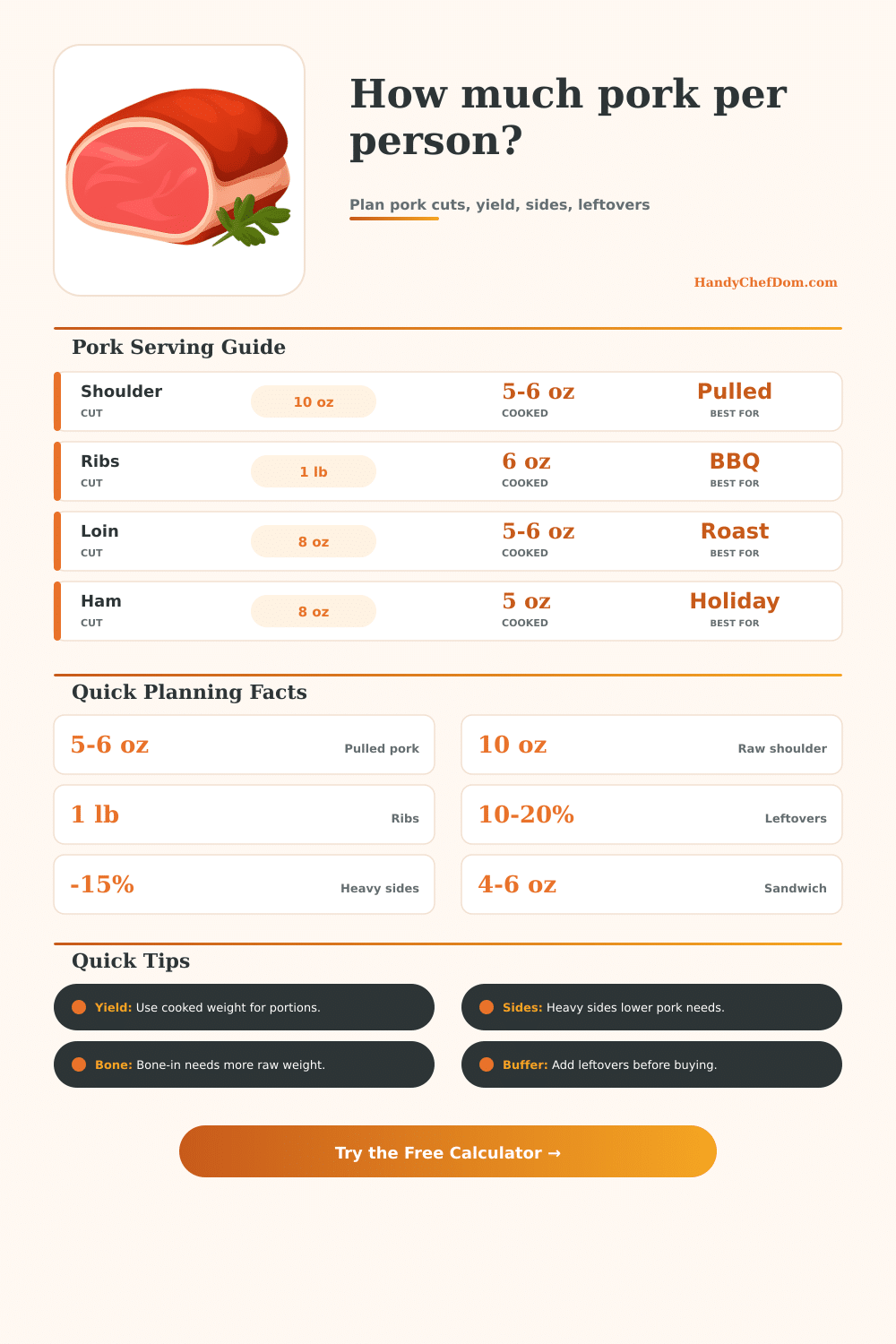
| Cut | Raw Per Person | Cooked Serving | Common Use |
|---|---|---|---|
| Pork shoulder or butt | 10 oz | 5 to 6 oz | Pulled pork |
| Picnic roast | 11 oz | 5 to 6 oz | Shredded pork |
| Pork loin roast | 8 oz | 5 to 6 oz | Sliced roast |
| Pork tenderloin | 7 oz | 5 oz | Lean portions |
| Pork chops | 8 oz | 5 to 6 oz | Plate servings |
| Pork ribs | 16 oz | 5 to 7 oz | Rib meal |
| Ham | 8 oz | 5 oz | Holiday meal |
| Pork belly | 6 oz | 4 oz | Rich portions |
| Cut | Boneless Yield | Bone-In Yield | Notes |
|---|---|---|---|
| Shoulder or butt | 58% | 50% | High shrink |
| Picnic roast | 55% | 47% | Extra trim |
| Loin roast | 72% | 63% | Leaner cut |
| Tenderloin | 80% | 76% | Low trim |
| Chops | 75% | 63% | Portion cuts |
| Ribs | 56% | 42% | Bone heavy |
| Ham | 78% | 66% | Slice yield |
| Belly | 72% | 68% | Rich cut |
| Guests | Pulled Pork Raw | Loin Raw | Ribs Raw |
|---|---|---|---|
| 4 | 2.5 lb | 2 lb | 4 lb |
| 6 | 3.75 lb | 3 lb | 6 lb |
| 12 | 7.5 lb | 6 lb | 12 lb |
| 25 | 15.75 lb | 12.5 lb | 25 lb |
| 40 | 25 lb | 20 lb | 40 lb |
| 50 | 31.25 lb | 25 lb | 50 lb |
| Cooked Pork | 4 oz Sandwiches | 5 oz Sandwiches | 6 oz Sandwiches |
|---|---|---|---|
| 2 lb | 8 | 6 | 5 |
| 5 lb | 20 | 16 | 13 |
| 10 lb | 40 | 32 | 26 |
| 15 lb | 60 | 48 | 40 |
| 20 lb | 80 | 64 | 53 |
| 30 lb | 120 | 96 | 80 |
Calculating the amount of raw pork to buy require determining how many guest you will feed and considering the cut of the pork, whether it contains bone, and the style in which you will serve the pork. Pork lose moisture and fat when heated, so the raw weight of the pork will be higher than the cooked weight of the pork. The bone content of the pork is one of the first factors to consider.
If the cut of pork you select contains bone, such as an bone-in picnic roast or rack of ribs, the guests will not consume that weight. If you use a cut of pork that contains bones, you will need to purchase more raw pork to account for the weight of the bones. A boneless pork cut will contain a higher percentage of usable pork than a cut that contains bones.
How Much Raw Pork to Buy
Using a boneless cut allow you to purchase less raw pork to feed the same number of guests as a cut that contains bones. The serving style for the pork will change the amount of pork that you need to purchase. If you are planning a plated dinner in which pork is the centerpiece of the meal, each guest will be served a larger portion of pork than if it is a buffet style meal that includes many different food items.
If pork is being served as part of a meal that also include side dishes, such as macaroni or beans, the number of ounces of pork that each guest consume will be less than if the meal primarily consist of pork. The calculator allows for choosing between main plate, buffet, sandwich, or tasting portions to account for these difference. Another factor to consider is whether you want to have leftovers.
Any extra portions of pork that you cook in excess of the number of guests that will eat the pork as part of their main meal can be prepare in advance to eat later in the week. If you would like to have pork sandwiches the next day, for instance, you will need to purchase an additional percentage of pork to allow for leftovers. The calculator includes the percentage of pork that should be purchased in advance to account for leftovers, as is a feature that automatically calculate the raw weight of the pork that is required to provide the amount of cooked pork that is desired.
Not all cuts of pork are created the same. Some cut of pork have more fat and connective tissue than others. Pork shoulders and picnic roasts contains more fat and connective tissue than pork loin or tenderloin cuts.
Ribs also contain more bone and fat than other cut of pork. The reference table to the right list the shrinkage percentage of each cut of pork. Using this information allow individuals to understand how much raw pork should be purchased to provide the amount of cooked pork that is desired.
If the meal to be prepared include pork sandwiches, there is a sandwich mode on the calculator. This mode allow individuals to type in the number of cooked ounces of pork that they would like in each sandwich. The calculator will automatically determine the amount of raw pork that will provide the amount of cooked pork that will be contain in each sandwich.
The sandwich mode is helpful for individuals who would like to prepare pulled pork or ham sandwiches, for instance. Individuals of large appetites will consume more pork than individuals of small appetites. The calculator allow for different levels of appetites to be selected, from light to hearty.
Using these options ensures that the amount of pork that is purchased is enough to feed the type of guests that will attend the dinner. One of the most common error that are made when cooking pork are assuming that all portions of pork are the same once cooked. A five-ounce portion of pork loin will not contain the same amount of pork as a five-ounce portion of pulled pork shoulder.
In the calculator, the portion size are set to the cooked weights for each cut of pork. If the cut of pork that is used in the recipe is changed, the raw weight of the pork will change even if no other setting are modified in the calculator. When traveling to the butcher shop to purchase the pork, it is likely that the pork cannot be purchased in the raw weight that is calculate.
It is best to round up to the nearest pound, as the weight of the pork on the butcher shop package may differ slightly from the amount that is calculate. Rounding up on the amount of pork that is to be purchased will ensure that there is enough for all of the guest who would like a second helping of pork. By using the pork calculator to determine the raw amount of pork that is needed and by adjusting for the type of pork, serving style, appetite of the guests, and whether leftovers will be prepare, individuals can be sure that they purchase the correct amount of pork for the meal.