🌾 Protein in Quinoa Calculator
Estimate quinoa protein from cooked or dry cups, grams, servings, quinoa type, cooking yield, meal role, and protein target.
Start from cooked quinoa on the plate or dry quinoa in the pantry. The calculator converts cups, grams, ounces, and pounds, then checks protein per serving against your meal target.
| Quinoa type | Protein per 100 g dry | Protein per 100 g cooked | Cooked cup protein |
|---|---|---|---|
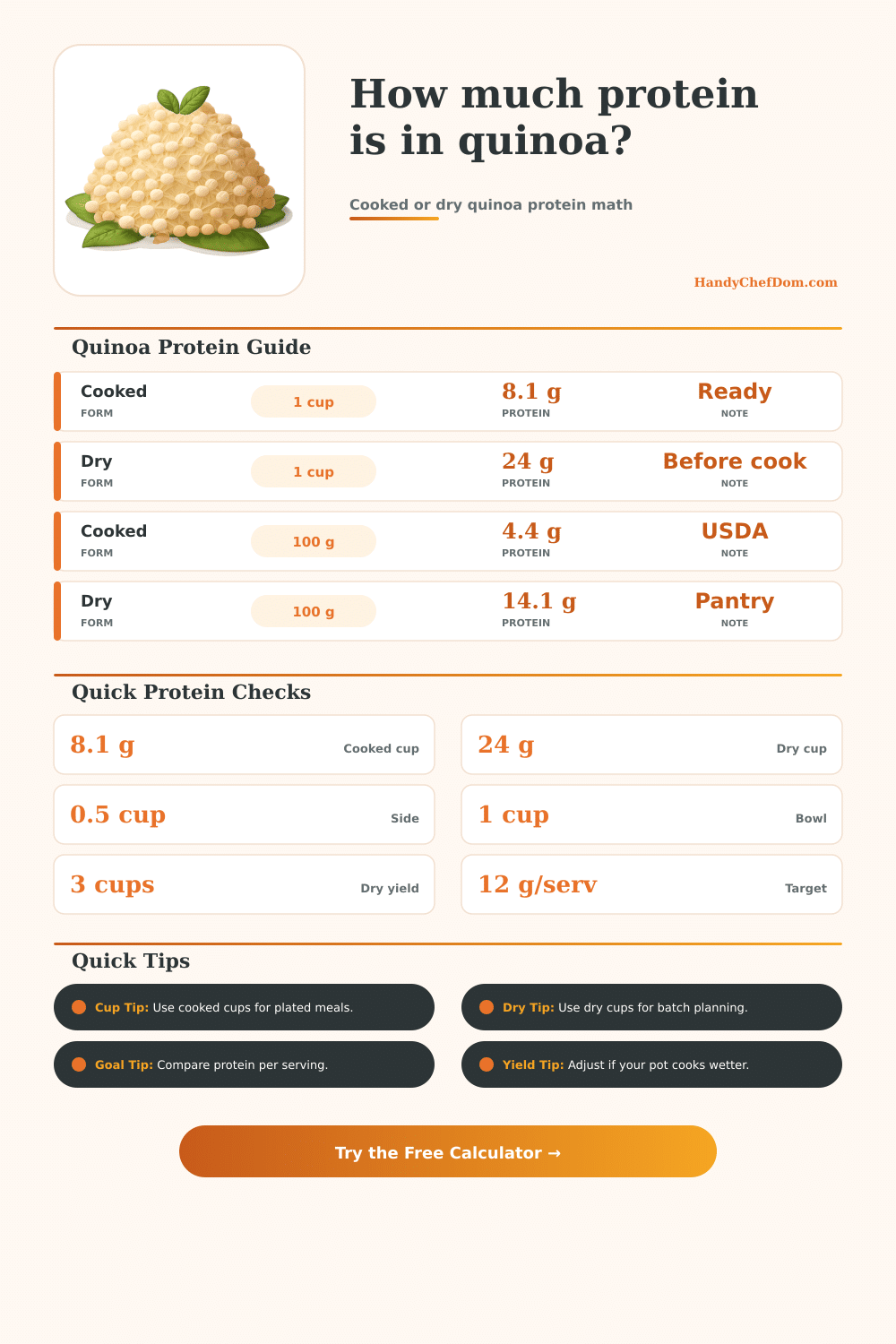
| White quinoa | 14.1 g | 4.4 g | 8.1 g |
| Red quinoa | 13.5 g | 4.3 g | 8.0 g |
| Black quinoa | 14.7 g | 4.6 g | 8.5 g |
| Tri-color quinoa | 14.2 g | 4.4 g | 8.2 g |
| Sprouted quinoa | 15.0 g | 4.7 g | 8.7 g |
| Quinoa flakes | 14.5 g | 5.0 g prepared | 7.0 g |
| Dry quinoa | Typical cooked yield | Batch protein | Best planning use |
|---|---|---|---|
| 1/4 cup dry | 3/4 cup cooked | 6 g | Single bowl booster |
| 1/2 cup dry | 1 1/2 cups cooked | 12 g | Two side servings |
| 1 cup dry | 3 cups cooked | 24 g | Four bowl portions |
| 1 1/2 cups dry | 4 1/2 cups cooked | 36 g | Family dinner base |
| 2 cups dry | 6 cups cooked | 48 g | Meal prep tray |
| 3 cups dry | 9 cups cooked | 72 g | Large batch prep |
| Meal role | Cooked quinoa per serving | Quinoa protein range | Target note |
|---|---|---|---|
| Side dish support | 1/2 cup | 4-5 g | Pairs with entree protein |
| Grain bowl base | 1 cup | 8-9 g | Add beans, tofu, eggs, or seeds |
| Plant-forward main | 1 1/2 cups | 12-13 g | Use toppings to reach higher goals |
| Breakfast porridge | 3/4 cup | 6-7 g | Milk or yogurt raises protein |
| Post-workout bowl | 1 1/2 cups | 12-13 g | Often needs an added protein |
| Salad or soup topper | 1/3 cup | 2-3 g | Texture boost, not main protein |
| Serving count | Side portions | Bowl portions | Approx total protein |
|---|---|---|---|
| 2 people | 1 cup cooked | 2 cups cooked | 8-16 g |
| 4 people | 2 cups cooked | 4 cups cooked | 16-32 g |
| 6 people | 3 cups cooked | 6 cups cooked | 24-49 g |
| 8 people | 4 cups cooked | 8 cups cooked | 32-65 g |
| 10 people | 5 cups cooked | 10 cups cooked | 41-81 g |
| 12 people | 6 cups cooked | 12 cups cooked | 49-98 g |
Quinoa is a food that contain protein. Additionally, quinoa is often used in place of grain. When cooked, quinoa behaves like a grain but contains more protein than grains does.
For individual who consume little or no meat or dairy products, protein content is critical to there diet. Thus, it is essential to understand how quinoa change when cooked so that an individual can control the protein content of the food that they eat. When the cook cooks quinoa, the ingredient expand.
How Cooking and Measuring Quinoa Changes Its Protein
This expansion happens because the quinoa absorb the water during the cooking process. The proteins that the dry quinoa originally contained are now contained in a larger volume of cooked quinoa. There are two ways to measuring the quinoa: before or after cooking the quinoa.
If the cook measures the dry quinoa before cooking, it will provide the amount of quinoa that is purchased. However, if the cook measures the cooked quinoa after adding the quinoa to the cooking process, the ingredient will provide the amount of quinoa that will be ate by the individual. The calculator allow the user to input the amount of quinoa that they have measured.
The calculator also allow the user to adjust for the type of quinoa being used. For example, red and black quinoa contain slightly less protein than white quinoa before cooking. Additionally, cooking methods for quinoa can lead to a more higher yield of cooked quinoa, which will contain less protein per cup than dry quinoa.
Another consideration of the ingredient is the role that the cooked quinoa will play in the meal. If the cook use the cooked quinoa as a side dish, the portion of quinoa will contain less protein than if it were to be use as the main component of the meal. The calculator allow the user to define this role of the quinoa to the meal.
The target field indicates how close the portion of cooked quinoa will get to the protein goal that the user defines. The goal is for the portion of quinoa to contain the amount of protein that the individual wants to consume during the meal. Another consideration for the ingredient is the rinsing of the quinoa before cooking.
It is a common practice to rinse the quinoa before cooking the ingredient. However, rinsing the quinoa can remove some of the protein from the ingredient. If the cook rinses the quinoa very thorough, more protein will be lost than if the ingredient is rinsed lightly.
The protein retention field in the calculator can account for this loss of protein. Additionally, if the cooking method for the quinoa results in the quinoa containing more water, the yield field can be adjust so that the portion of cooked quinoa contains the amount of protein that is required for the meal. Many people assume that quinoa contains a high amount of protein.
However, the protein content of a meal will depend on the portion of quinoa that is consume. For instance, a small portion of quinoa will contain less protein than a larger portion. If the cook use the ingredient as a topping to a salad, it will contain less protein than if it is a main component of the meal.
The ingredient does not change during the preparation of the meal, but the amount of quinoa that is consumed will determine the amount of protein that is consume. Before measuring the amount of quinoa to add to a meal, it is critical to decide on the role that the quinoa will play in that meal. If the quinoa is to be a side dish, less dry quinoa should of been measured than if it is to be the main part of the meal.
Using this calculator before cooking the quinoa will remove the guesswork of the amount of protein that is contained in the cooked quinoa servings. Additionally, it will allow the individual to ensure that the servings of quinoa will contain the amount of protein that the individual require for they’re diet or meal.