Ramen Broth Ratio Calculator
Balance broth stock, tare concentrate, aroma oil, and bowl fill by ramen style so each service round lands the same body, salinity, and finish from solo bowls to batch prep.
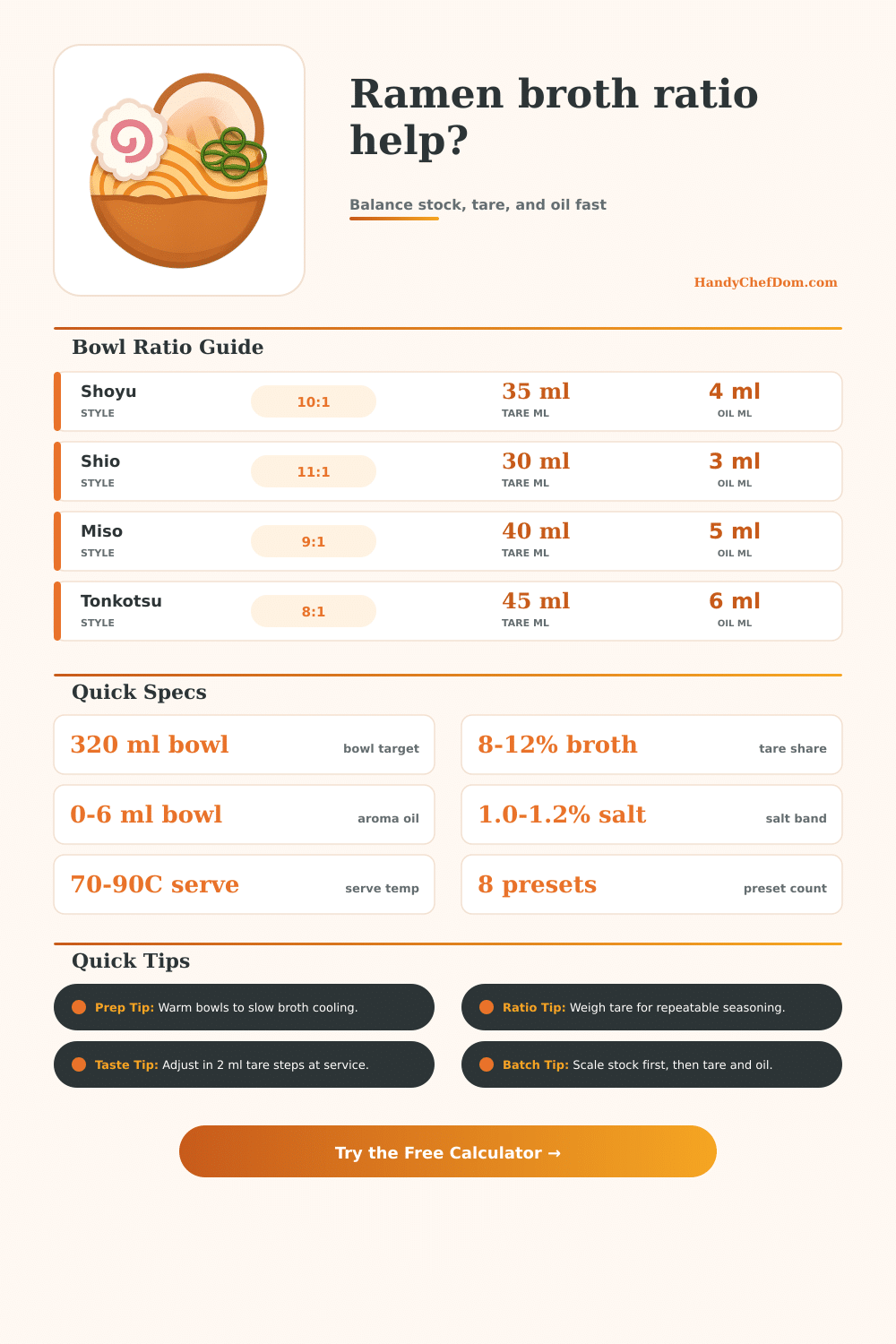
Choose ramen style, target bowls, and bowl fill volume. The calculator applies style-specific tare and oil ranges, then adjusts salinity, concentration, and batch losses for practical kitchen output.
| Style | Tare range | Oil range | Salt finish |
|---|---|---|---|
| Shoyu | 9-11% | 3-5 ml/bowl | 1.05-1.15% |
| Shio | 8-10% | 2-4 ml/bowl | 1.00-1.10% |
| Miso | 10-12% | 4-6 ml/bowl | 1.10-1.25% |
| Tonkotsu | 10-13% | 4-7 ml/bowl | 1.10-1.30% |
| Tantan | 11-13% | 5-7 ml/bowl | 1.15-1.30% |
| Vegan konbu | 9-11% | 2-4 ml/bowl | 1.00-1.15% |
| Tori paitan | 9-12% | 3-6 ml/bowl | 1.05-1.20% |
| Gyokai blend | 9-11% | 3-5 ml/bowl | 1.05-1.18% |
| Bowls | Finished broth | Stock base | Tare estimate |
|---|---|---|---|
| 2 bowls | 640 ml | 572 ml | 68 ml |
| 4 bowls | 1280 ml | 1146 ml | 134 ml |
| 8 bowls | 2560 ml | 2291 ml | 269 ml |
| 12 bowls | 3840 ml | 3437 ml | 403 ml |
| 20 bowls | 6400 ml | 5728 ml | 672 ml |
To prepare ramen, a balance of three component is required. These components include the stock, the tare, and an aroma oil. The stock is the foundation of the ramen and provides the body and umami for the ramen.
The tare is the seasoning component of the ramen and is usually made from salt, soy sauce, or miso. It determine the salt level of the ramen. The aroma oil is the final component of the ramen and the cook adds it to the top of the ramen to provide fragrance and richness to the dish.
How to Balance the Three Parts of Ramen
To ensure the ramen is balanced, the cook must measure these three component against each other to ensure the ramen isnt too salty or too flat. Different style of ramen require different ratios of stock, tare, and aroma oil because the flavor of each style of ramen are different. For example, shio ramen require less tare than miso ramen because the salt content in miso is more intense.
Tonkotsu ramen contain thick collagen that require more tare to balance the flavor of the broth. A calculator can assist in determining the proper ratio of each component of ramen. The setting of the calculator can change the ratio of the three components.
If ramen is to taste clean, then the setting should be adjusted to a light extraction setting. However, if the ramen is to taste rich, then the setting should be adjusted to a dense setting. A dense setting will put more flavor into the stock and allow for a lower percentage of tare to be used in the ramen to achieve the same flavor.
The volume of liquid for each bowl of ramen can change the seasoning of the ramen. If you use less liquid, such as 280 ml per bowl, then there is less liquid in which to add the tare. Consequently, the salt level of the ramen will rise quick.
Using a larger volume of liquid, such as 350 ml per bowl of ramen, provides more liquid in which to dissolve the tare. Additionally, there is more liquid in which to add heavy topping to the ramen without diluting the seasoning of the ramen too much. A specific volume of liquid per bowl of ramen should be decided.
The volume of liquid per bowl of ramen will change the concentration of the seasoning. Furthermore, another variable is the loss of the seasoning during the preparation of the ramen. Known as service loss, this is when the broth evaporate or is lost during the transfer of the broth from the pot to the bowl of ramen.
This loss of seasoning should of been accounted for when preparing the ramen. The temperature of the ramen will also affect the components of the ramen. If the ramen is very hot when served, the components will remain mixed.
However, if the ramen sit on a warm pass to reheat, the top of the ramen will begin to cool. The cooling of the ramen will cause the aroma oil to separate and form a thick layer on the top of the ramen. Therefore, the cook should adjust the amount of aroma oil according to the temperature at which the ramen will be served.
Another variable that will affect the preparation of ramen is the batch size of the ramen. If the batch size increase from a small amount to a large amount of ramen, the evaporation rate of the liquid will change. Furthermore, the loss of seasoning during the preparation will also change with the batch size.
In order to account for these changes, a cook should use a batch multiplier so that the ratio of the components of the ramen is maintain within the large batches of ramen. Finally, the salt target for the ramen should be set between 1.0 and 1.3 percent. This percentage of salt will ensure that the ramen is seasoned correct.
The salt level that is used will be matched with the body of the stock used because the body of the stock will affect the salt taste of the ramen. The noodle will absorb the liquid at different rate, and the topping will contribute to the amount of liquid in each bowl of ramen. To account for this, a ratio of the components should be established for each batch of ramen.
Once this ratio is established, small adjustment can be made to the ramen instead of having to start the recipe from the beginning to make changes. By using a consistent ratio of the components of the ramen, the chef can focus on the cooking of the ramen instead of measuring each component. Furthermore, by using a consistent ratio, every bowl of ramen will taste same.
Its important to make sure the ramen tastes better then the last one. Youll find that the moddern way of making ramen is alot more consistant.