🍝 Salt per Pasta Water Calculator
Dial in pasta water salinity from water volume, pasta weight, salt grind, sauce saltiness, drain retention, servings, and a low-sodium target.
Enter the actual water in the pot, then tune the recommendation for fresh or dry pasta, sauce saltiness, retained pasta water, servings, and any sodium cap you want to respect.
| Water Style | Salt Target | Salinity | Best Fit |
|---|---|---|---|
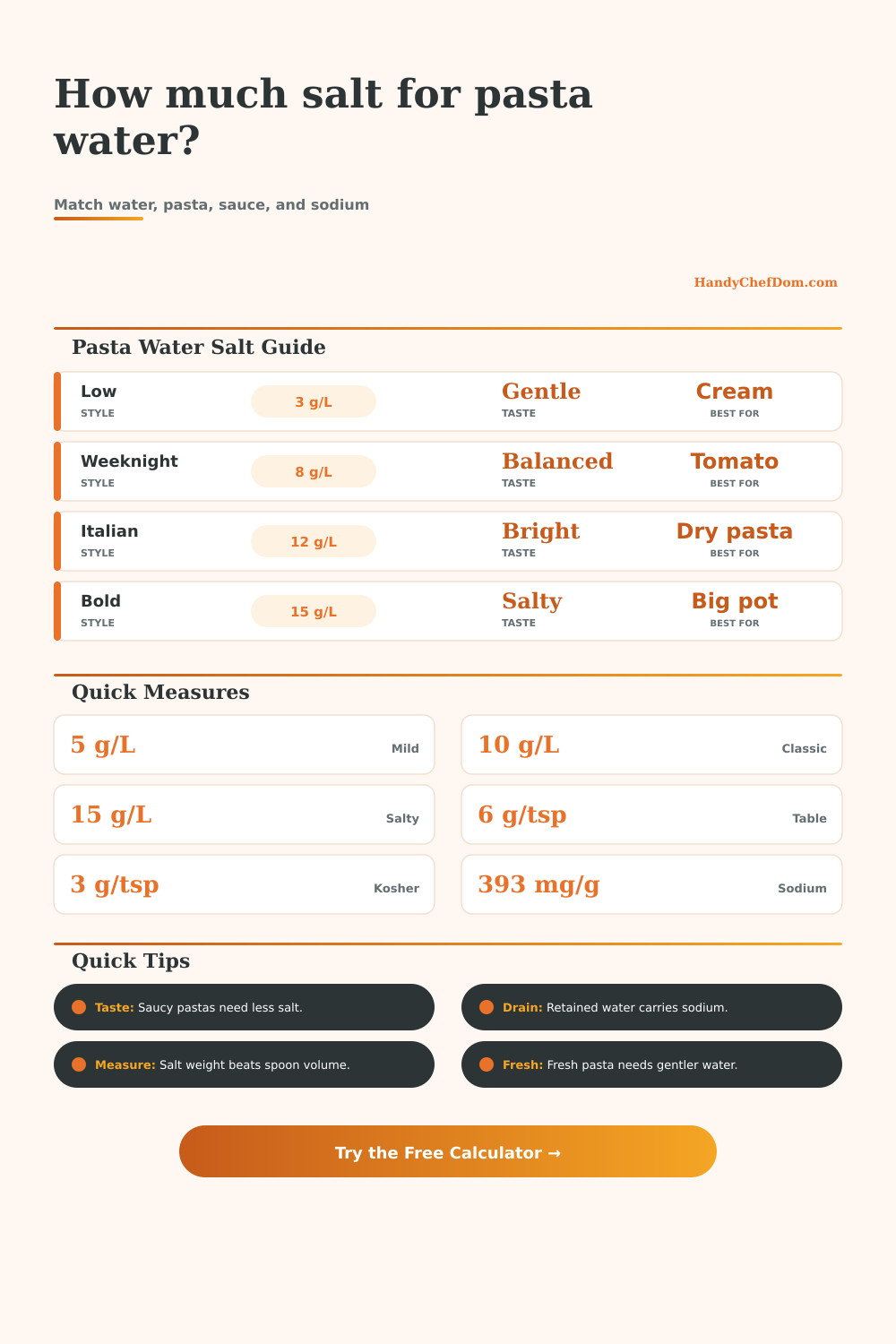
| Low-sodium gentle | 3 to 5 g/L | 0.3% to 0.5% | Cheese sauces, kids plates, or a specific sodium cap. |
| Mild weeknight | 5 to 7 g/L | 0.5% to 0.7% | Jarred sauces, salty toppings, and smaller retained-water amounts. |
| Balanced home pot | 8 to 10 g/L | 0.8% to 1.0% | Most dry spaghetti, penne, rigatoni, and tomato-based dinners. |
| Saltier Italian style | 11 to 12 g/L | 1.1% to 1.2% | Large unsalted sauces where pasta water is the main seasoning. |
| Bold restaurant style | 13 to 15 g/L | 1.3% to 1.5% | Brief cooking, big water volumes, and robust dry pasta. |
| Custom testing | Any g/L | Varies | Use when you know the exact grams per liter you prefer. |
| Salt Type | Approx g/tsp | Tablespoon | Volume Note |
|---|---|---|---|
| Fine table salt | 6.0 g | 18.0 g | Dense crystals; teaspoons run salty by volume. |
| Fine sea salt | 5.8 g | 17.4 g | Close to table salt, but brand grind can vary. |
| Coarse sea salt | 4.5 g | 13.5 g | Larger crystals need more spoon volume. |
| Morton kosher salt | 4.8 g | 14.4 g | Flaky but fairly dense compared with Diamond. |
| Diamond kosher salt | 2.8 g | 8.4 g | Very light flakes; use more teaspoons for equal grams. |
| Flaky finishing salt | 1.6 g | 4.8 g | Not ideal for pot salting unless weighed. |
| Fine pink salt | 5.9 g | 17.7 g | Fine grind behaves much like table salt. |
| Canning salt | 6.2 g | 18.6 g | Very fine and quick dissolving in hot water. |
| Pasta Or Sauce | Calculator Factor | Why It Changes | Typical Choice |
|---|---|---|---|
| Dry long pasta | 1.00x | Standard absorption and surface area. | Balanced or classic target. |
| Dry short pasta | 1.03x | More ridges and cavities can carry more flavor. | Balanced target with tomato sauce. |
| Whole wheat pasta | 1.05x | Earthier flavor often needs slightly brighter water. | Classic target unless sauce is salty. |
| Gluten free pasta | 0.92x | Starchier water and fragile texture benefit from restraint. | Mild or balanced target. |
| Fresh plain pasta | 0.78x | Short cooking time means less salt pickup. | Mild target, especially with butter. |
| Fresh filled pasta | 0.65x | Fillings are often seasoned before boiling. | Low or mild target. |
| Salty cheese sauce | 0.72x | Cheese, capers, and cured meat add sodium later. | Mild water and lower retention. |
| Unsalted butter sauce | 1.10x | The pasta water may supply most of the seasoning. | Balanced or classic target. |
| Drain Retention | Meaning | Use Case | Sodium Impact |
|---|---|---|---|
| 1% | Well drained | Colander, no sauce water added. | Very low sodium transfer from the pot. |
| 3% | Normal cling | Everyday drained spaghetti or penne. | Moderate transfer; good default estimate. |
| 6% | Sauced wet | Pasta tossed with a splash of cooking water. | Noticeably raises per-serving sodium. |
| 10% | Starchy sauce | Cacio e pepe, Alfredo, carbonara-style tosses. | Strong sodium transfer; watch salty cheese. |
| 15% | Saved water | Large ladle of water kept in the finished dish. | Use a lower target if sodium matters. |
| 20% | Soup-like finish | Brothy pasta, small shapes, or one-pot finishing. | Most pot sodium stays in the meal. |
We’ve been haunted by the phrase: Season the water like the sea. But the ocean is much saltier then even a reasonable pot of spaghetti could ever be. This gap between taste and intuition is one that most home cooks try to fill by guessing wildly. Some throw in a handful and hope for the best, others hold back entirely, resulting in pasta that is flat-tasting before the sauce comes to its rescue.
By removing both conversion and coefficient guesswork from the equation, the calculator above will do the math for you based off your actual water volume and pasta weight. It will convert a vague culinary ideal into a specific number of grams that fit your exact pot.
How to Salt Your Pasta Water Correctly
Salt density is the first variable that throw folks for a loop. Depending upon which salt you use, a teaspoon can contain as little as three grams (light kosher flake) or as much as six (fine table). Different grinds is not comparable by volume. Seasoning with a new salt and failing to adjust accordingly mean bland or over-salted food. This is explained quite nicely in the reference table found on the page, showing how wide the variation can be between crystal sizes in terms of sodium delivered per spoonful.
Understanding what is realy being measured is the main point here. It’s about seasoning the starch not simply the water in the pan. The game is also changed by the type of pasta. Boiled pasta can vary in size. The filling also matter. Fresh pasta with filling, like ravioli, is already seasoned with cheese or meat. This mean the water does not have to do as much work. On the other hand, dry pastas like long pasta varieties tend to have more surface area exposed to the water for longer periods of time; so, they requires stronger base seasonings to reach through the outside of the pasta.
The device takes all this into account, setting a target salinity according to the age and shape of your pasta. It knows that dried rigatoni can absorbs more salt than fresh plain pasta. That’s what makes a one-size-fits-all recipe fail when you modify the ingredients.
The salinity of the cooking water is important. It matters not only how hot it boils but also how salty it is. For example, when I cook a simple aglio e olio, which uses unsalted butter, the main flavor come from the pasta water itself. So you can err on the high side with the goal. In contrast, if you’re making an olive- and caper-laden tomato sauce topped with pecorino, then the pasta water should be on the mild side. When you enter your sauce type into the calculator, it will dial that amount down.
That’s because double-salting your dish is a no-no. That’s where people go wrong. Salt = boil, they say. What happens in the bowl doesn’t matter.
Then there’s a secret ingredient: Water retention. Yes, as in pasta sticking to water. Once drained, some of that starchy and salty water remains with the pasta even after being tossed with sauce. The more water retained by the pasta, the more sodium that will be present in each serving. Depending on what you enter, the tool calculates that retention so you can get an idea of the sodium level per serving. Which, if you’re concerned about keeping sodium levels down, or just balancing flavor vs. Overload, is pretty handy.
Because you’ll realize that the reason it matters if you pour out half the pot isn’t because of volume, it’s because of flavor concentration. A tiny portion of that salt passes into the pasta. You want some, but you don’t want seawater; you just want a liquid that carries flavor from the interior outward. Eight grams per liter is a good target… Sufficient to impact taste without making a dish taste salty on its own. This ratio is a sweet spot for most pots. Bold styles goes up for quick-draining restaurant equipment and hearty pastas. Mild styles come down for dietary constraints or more delicate preparations.
At the end of the day, though, this is all about control. You gain control over sodium consumption, flavor transfer, and texture. By weighing your salt instead of using a spoon you eliminate any guesswork on that front. Adjusting for the type of sauce ensures you don’t go too far with your seasoning. And by accounting for retention you keep your sodium numbers honest. Taste isn’t replaced by the calculator, but it’s a good place to start. After that you have to rely on instinct. Season the water as you would the sea, only now you’ll know just how much sea goes into the pot.