🍣 Sushi Vinegar to Rice Calculator
Scale sushi rice seasoning from cooked cups, cooked grams, dry rice, or servings. Tune vinegar strength, sugar-salt balance, rice type, and cooling loss.
Choose the batch basis you trust most. The calculator converts between cooked rice cups or grams, dry rice starting amount, and serving count before sizing the sushi vinegar blend.
| Cooked Rice | Classic Vinegar | Sugar | Salt |
|---|---|---|---|
| 1 cup cooked rice | 24-28 ml | 8-11 g | 2-3 g |
| 2 cups cooked rice | 48-56 ml | 17-22 g | 4-6 g |
| 4 cups cooked rice | 95-110 ml | 34-44 g | 8-11 g |
| 6 cups cooked rice | 140-170 ml | 50-66 g | 12-16 g |
| 8 cups cooked rice | 190-220 ml | 68-88 g | 16-22 g |
| 12 cups cooked rice | 285-335 ml | 100-132 g | 25-33 g |
| Dry Rice Start | Cooked Rice Yield | Best Use | Seasoning Note |
|---|---|---|---|
| 1 cup dry short-grain | 2.8-3.0 cups cooked | Two roll dinners | Use classic 12% |
| 2 cups dry short-grain | 5.6-6.0 cups cooked | Family maki night | Start with 145 ml |
| 3 cups dry Calrose | 8.5-9.3 cups cooked | Party rolls | Keep salt balanced |
| 2 cups dry brown rice | 4.8-5.4 cups cooked | Sushi bowls | Use bright 14% |
| 4 cups dry premium rice | 11.5-12.4 cups cooked | Platter service | Add 3% buffer |
| 5 cups dry blend | 13.0-14.5 cups cooked | Event bowls | Use light bowl mix |
| Sushi Format | Rice Per Person | Blend Strength | Flavor Target |
|---|---|---|---|
| Nigiri tasting | 90-110 g | 13-15% | Bright and clean |
| Maki roll dinner | 140-170 g | 11-13% | Balanced |
| Chirashi bowl | 170-210 g | 9-12% | Gentle acidity |
| Inari sushi | 120-150 g | 12-14% | Sweeter finish |
| Onigiri picnic | 130-180 g | 7-9% | Lightly seasoned |
| Party platter | 120-150 g | 12-13% | Consistent rolls |
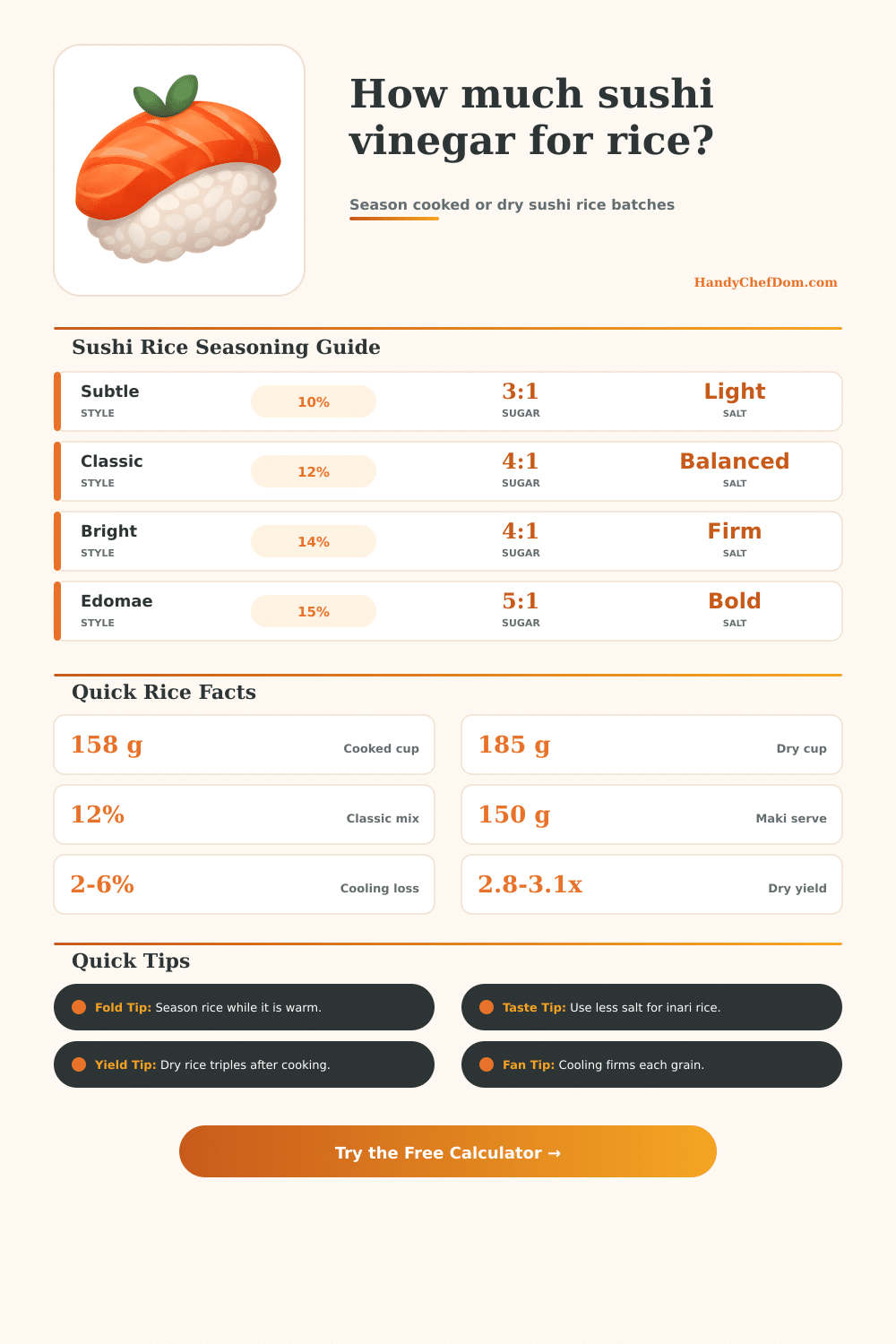
| Vinegar Blend | Percent of Rice | Acidity Feel | Best Batch |
|---|---|---|---|
| Onigiri gentle | 7.5% | Very mild | Picnic rice balls |
| Chirashi bowl light | 9% | Soft | Bowls with toppings |
| Subtle maki | 10% | Clean | Seaweed-forward rolls |
| Classic sushi-zu | 12% | Balanced | Everyday rolls |
| Bright restaurant | 14% | Fresh | Nigiri and maki |
| Edomae style | 15.5% | Bold | Focused nigiri trays |
To make sushi rice, the seasoning blend and the rice grains must be combine in the proper manner. The seasoning blend contain vinegar, sugar, and salt. Furthermore, the cook has to apply the seasoning blend to the rice in a way that consider the temperature of the rice and the variety of the rice.
If the seasoning blend is not applied correct to the rice, the sushi rice could taste flat or become gummy. The rice must be measured in a specific way. The choice of how to measure the rice will change the amount of sushi rice that can be prepared.
How to Measure and Season Sushi Rice
If the cook measures the rice from cooked rice, that rice will contain extra water weight. On the other hand, if the rice is measured from dry rice, the rice have not yet absorbed the water. Furthermore, if the rice is measured from serving, the rice can be prepared in such a way that it will create the correct amount of sushi rice for sushi dishes such as nigiri or maki roll.
The type of vinegar in the seasoning blend will change the acidity of the sushi rice. The acidity of the rice will allow for different type of fish to be eaten. Using a light vinegar will allow the rice to be neutral in taste to allow for delicate fish to be eaten.
Using a strong vinegar will allow the rice to contain more acidity to balance the fat from rich ingredient. Using a weaker vinegar will require the use of more vinegar to provide the same acidity as using a strong vinegar will require the use of less vinegar then the weaker vinegar. The ratio of sugar to salt in the seasoning blend will change the taste of the sushi rice in the presence of different topping.
Using a seasoning blend that is sweet works well with toppings like tofu or fruit. Using a seasoning blend that is salty works well with fatty fish. If the sushi rice will be used to make rice bowl, using a seasoning blend with a lower ratio of salt will allow for soy sauce and pickled vegetable to be added to the rice bowls.
Rice will lose some of its weight as it cool. This weight will be lost due to the evaporation of the water in the rice. Furthermore, the amount of weight that is lost will depend upon the container in which the rice is cooled.
Placing the rice in a wide wooden bowl will allow for more evaporation than a deep stainless-steel bowl. To compensate for the weight and water loss due to evaporation, an small buffer of the seasoning blend can be added to the rice before it cools. Depending upon the variety of rice that is used, the rice will absorb the seasoning blend differently.
Japanese rice is short grained and will easily absorb the seasoning blend to remain glossy. Brown rice will require more vinegar to penetrate the grain due to the bran layer on the rice grain. The correct variety of rice should be chosen when using a rice calculator to determine the amount of cooked rice that will be prepared.
Common mistake when making sushi rice include relying on memory to season the rice. The strength of the vinegar may have changed or the humidity in the kitchen may have changed so the rice will taste different than what was remembered. Furthermore, it is common for people to add all of the seasoning blend to the rice at once.
If all of the seasoning blend is added at once, some grains of rice may contain too much seasoning compared to others. The best way to season rice is to fold the seasoning blend into the rice while the rice is warm. Rice that is warm will allow the seasoning blend to easily penetrate the rice grains.
Warm rice will also allow for better absorption of the seasoning blend so that the rice grain contain the same amount of seasoning. By incorporating the vinegar, sugar, and salt into the rice grains, each grain will taste complete. Furthermore, by calibrating the seasoning blend to the weight and variety of the rice, each portion of sushi rice will taste the same.
Once the seasoning blend is calibrated to the rice, the same process can be followed to make rice for different amount.