🍔 Tomato Paste for Sloppy Joes Calculator
Estimate tomato paste for sloppy joes from ground meat pounds, sauce cups, buns, sweetness, tang, simmer reduction, servings, and your ideal saucy-but-not-runny texture.
Use the tomato paste planned field if you already added some paste. The calculator compares that amount with a target based on meat, sauce, bun count, reduction, sweetness, tang, and looseness.
| Ground Filling | Base Paste | Cooked Yield | Why It Changes |
|---|---|---|---|
| 80/20 ground beef | 2.8 to 3.2 tbsp/lb | About 2.0 cups/lb | Fat carries tomato flavor, so classic paste levels work well. |
| Lean ground beef | 3.0 to 3.4 tbsp/lb | About 2.1 cups/lb | Less fat needs a little more tomato body and richness. |
| Ground turkey | 3.2 to 3.8 tbsp/lb | About 2.15 cups/lb | Milder meat benefits from extra paste depth. |
| Ground chicken | 3.3 to 3.9 tbsp/lb | About 2.2 cups/lb | Light flavor needs stronger tomato concentration. |
| Beef and pork blend | 2.6 to 3.0 tbsp/lb | About 2.05 cups/lb | Richer meat needs slightly less paste to taste balanced. |
| Plant or lentil mix | 2.2 to 3.1 tbsp/lb | About 2.3 cups/lb | More starch and fiber hold sauce differently. |
| Looseness Target | Filling Per Standard Bun | Sauce Feel | Paste Move |
|---|---|---|---|
| Firm picnic bun | 0.42 to 0.48 cup | Holds shape, low drip | Use a little more paste if sauce is high. |
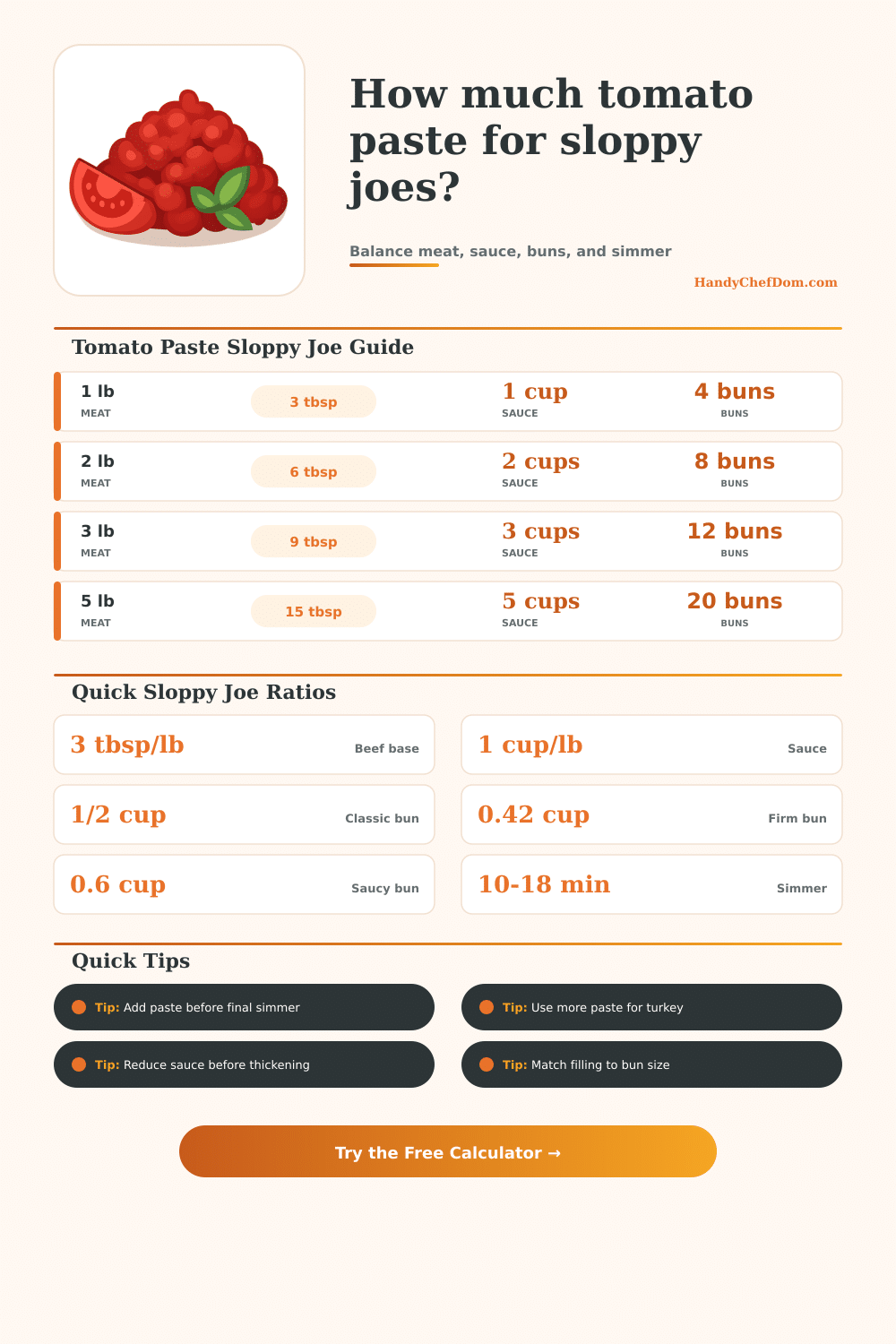
| Classic sloppy joe | 0.48 to 0.56 cup | Saucy but scoopable | Use baseline paste and normal reduction. |
| Extra saucy sandwich | 0.56 to 0.66 cup | Glossy and loose | Use more sauce plus enough paste for body. |
| Spoonable topping bar | 0.38 to 0.50 cup | Soft topping texture | Reduce less, but keep tomato flavor concentrated. |
| Reduction | What Happens | Paste Adjustment | Best Use |
|---|---|---|---|
| 0% to 5% | Loose, bright sauce | Add 4% to 8% more paste | Fast dinners and topping bars. |
| 10% to 18% | Classic skillet body | Use calculator baseline | Most ground beef sloppy joes. |
| 20% to 28% | Thicker, deeper tomato | Use 4% to 8% less paste | Meal prep and sturdy buns. |
| 30% to 40% | Concentrated filling | Use 10% to 15% less paste | Large pans or make-ahead batches. |
| Batch | Ground Meat | Tomato Paste | Sauce Cups | Standard Buns |
|---|---|---|---|---|
| Small dinner | 1 lb | 3 tbsp | 1 cup | 4 buns |
| Family skillet | 1.5 lb | 4.5 to 5 tbsp | 1.5 cups | 6 buns |
| Double batch | 2 lb | 6 to 7 tbsp | 2 cups | 8 buns |
| Party pan | 4 lb | 12 to 14 tbsp | 4 cups | 16 buns |
| Potluck tray | 6 lb | 18 to 22 tbsp | 6 cups | 24 buns |
Paste First
Stir tomato paste into the browned meat before sauce when you want a deeper tomato base and less raw edge.
Paste To Tighten
Add extra paste near the end when sauce cups are high or the filling slides off the bun too easily.
Sauce To Loosen
Add sauce or water when the paste target is met but the batch is too firm for spooning onto buns.
Reduce To Finish
Let the skillet reduce before adding more paste if the flavor is good but the texture is watery.
For example, too little tomato paste mean the sloppy joe sauce spill all over the plate. However, too much result in a thick goop that is better for spreading on bread then eating from a bun. How do you know?
The answer lie in how sloppy joes behave after simmering. They should sticks to the bun and have enough flavor and substance to make satisfying meal. There are a lot of variables, though. For example, how much and what kind of meat will you use? What kind of sauce do you want to eat it with? How many bun? How thick would you like result to be?
How to Get the Right Sloppy Joe Texture
All those factor influence the paste’s role in the equation, which is why the calculator (above) does the math for you. Less-fat means more-paste: You need more paste to deliver flavor if you’re working with leaner cuts. Sauce that’s sweeter or tangier alter things too; this influences the paste amount so that note of tomato comes through clearly. And finally, the amount of paste you add will vary according to length of time you intend to simmer, since the sauce become more concentrated with longer cook time (and therefore requires less paste to achieve a given density).
It also calculates how much filling you’ll get per bun, which is useful if you’re considering slider-sized portion rather than standard buns. It will also let you know if it’s time to add more paste to the batch or dilute things with more sauce, based off the difference between what you plan to make and what the batch requires. If you don’t feel like calculating all scenarios yourself, you can also use the reference tables on the page to see what effect various reductions have on the texture target.
Tomato paste is often seen as an afterthought: It’s there to season the dish, sure, but that’s it. In fact, the key happen earlier. You need to brown the meat and decide if you want to add the paste at the start for maximum depth. Or, you can leave some back for final adjustments in case the mix come out too watery. With the calculator, I know exactly how much more room my ingredient have to shrink (and what kind of consistency I’m aiming for), so I can make that call with more confidence rather than guessing.
I would of liked to use it sooner. The same goes for your big pan of food when it’s time for a potluck, as well as your six-person skillet meal: A larger surface area lose moisture quicker then something narrow (even with equal portions of meat/sauce), so even keeping that same meat-to-sauce proportion changes the target on your tomato paste. Milder-flavored meats like chicken and turkey needs more-concentrated tomato to balance out after you’ve adjusted the sweetness and tang, but beef is different than everything else. The tool accounts for those change so you don’t have to remember them.
Actualy, it makes life easier. The calculator give you a reliable starting point, but the final test is still the spoon. Simmering it for a few more minutes and adding a little paste will often solve the issue if the filling won’t stay put on the bun. When it cools down and seems too thick, a spoonful of sauce thin it to just-right while maintaining all the taste you developed so far.
Math alone gets the meal started, but only your skillet can tell what it tasted like today. It’s much more comfortabley once you get it right.