Tomato Paste To Sauce Converter
Convert tomato paste tablespoons, cans, grams, or ounces into tomato sauce with water ratio, seasoning displacement, simmer loss, and serving yield
| Container | Net Weight | Approx Tbsp | Classic Sauce Yield |
|---|---|---|---|
| 1 tablespoon scoop | 16 g / 0.56 oz | 1 tbsp | 3.5 tbsp / 53 mL before simmer |
| Half 6 oz can | 85 g / 3 oz | 5.3 tbsp | 1.16 cups / 278 mL before simmer |
| Small can | 170 g / 6 oz | 10.6 tbsp | 2.32 cups / 557 mL before simmer |
| Large can | 340 g / 12 oz | 21.3 tbsp | 4.65 cups / 1115 mL before simmer |
| Tube paste | 127 g / 4.5 oz | 7.9 tbsp | 1.74 cups / 418 mL before simmer |
| #10 foodservice can | 111 oz / 3.15 kg | 197 tbsp | 43 cups / 10.3 L before simmer |
| Target | Water Per Tbsp Paste | Texture | Common Use |
|---|---|---|---|
| Pizza / spreadable | 1.5 tbsp | Dense | Pizza, flatbread, tomato spread |
| Thick sauce | 2 tbsp | Spoonable | Meat sauce, baked pasta |
| Classic sauce | 2.5 tbsp | Balanced | Pasta sauce, marinara base |
| Pourable pasta | 3 tbsp | Loose | Quick noodle sauce, skillet sauce |
| Soup or braise base | 3.5 tbsp | Thin | Soup starter, stew liquid, braise |
| Serving Style | Sauce Per Serving | 1 Cup Serves | Best Planning Use |
|---|---|---|---|
| Pasta portion | 1/2 cup / 120 mL | 2 servings | Dinner plates and bowls |
| Pizza topping | 1/4 cup / 60 mL | 4 servings | Personal pizzas or slices |
| Lasagna layer | 1/3 cup / 80 mL | 3 servings | Layered baked dishes |
| Dip or spread | 3 tbsp / 45 mL | 5 servings | Small dipping portions |
| Stew base | 2 tbsp / 30 mL | 8 servings | Flavor base, not full sauce |
| Add-In | Count As | Typical Amount | Calculator Entry |
|---|---|---|---|
| Olive oil | Liquid displacement | 1 to 2 tbsp | Enter full tablespoons |
| Wine or broth | Water replacement | 2 to 8 tbsp | Enter full tablespoons |
| Minced garlic | Small displacement | 1 to 3 tsp | Use 0.3 to 1 tbsp |
| Dry herbs | Minimal displacement | 1 to 3 tsp | Use 0 to 0.5 tbsp |
In your pantry is a dense red brick of concentrated tomato flavor: tomato paste. Innocuous-looking, yes, but transform it with some water, and it transforms fastly.
Rehydrating it is something most people do either by guessing (until it tastes good) or by relying on strict ratio-based formulas (which don’t always work). If you’re hungry enough to cook yourself dinner for four on a Tuesday night and you don’t want a disaster on your hands, neither method will cut it. You want a system that factor in how much liquid evaporates during simmer time. It should also consider what’s being added to the pot later and how thick you’d like your finished sauce to be.
How to Make Tomato Sauce Perfectly
When you hit calculate, top calculator uses your initial amount of paste and factors out the simmer loss, seasoning displacement and paste thickness. It will convert for you and let you do the cooking.
Most home cooks don’t realize that adding half a cup of broth, oil, or wine to deglaze the onions will reduce your total volume. For example, 1/2 cup of red wine added to de-glase adds to your water amount. The tool adjust your number of tablespoons for you automaticly.
This is where many people go wrong. They toss in their seasonings and then throw in the entire recommended ratio of water, only to find they have created a watery mess that won’t thicken regardless of how long they cooks it.
How thick? That’s a matter of taste. For pizza, you want a sauce dense enough to hold onto the dough while exposed to high temperatures. That’s why tomato paste and water should be mix at a ratio of 5 to 1, at least. But maybe you’re cooking a baked pasta dish or a lasagna, in which case a pourable sauce would coat each noodle uniformly. You can choose your desired texture in the calculator, which will adjust amount of water to match.
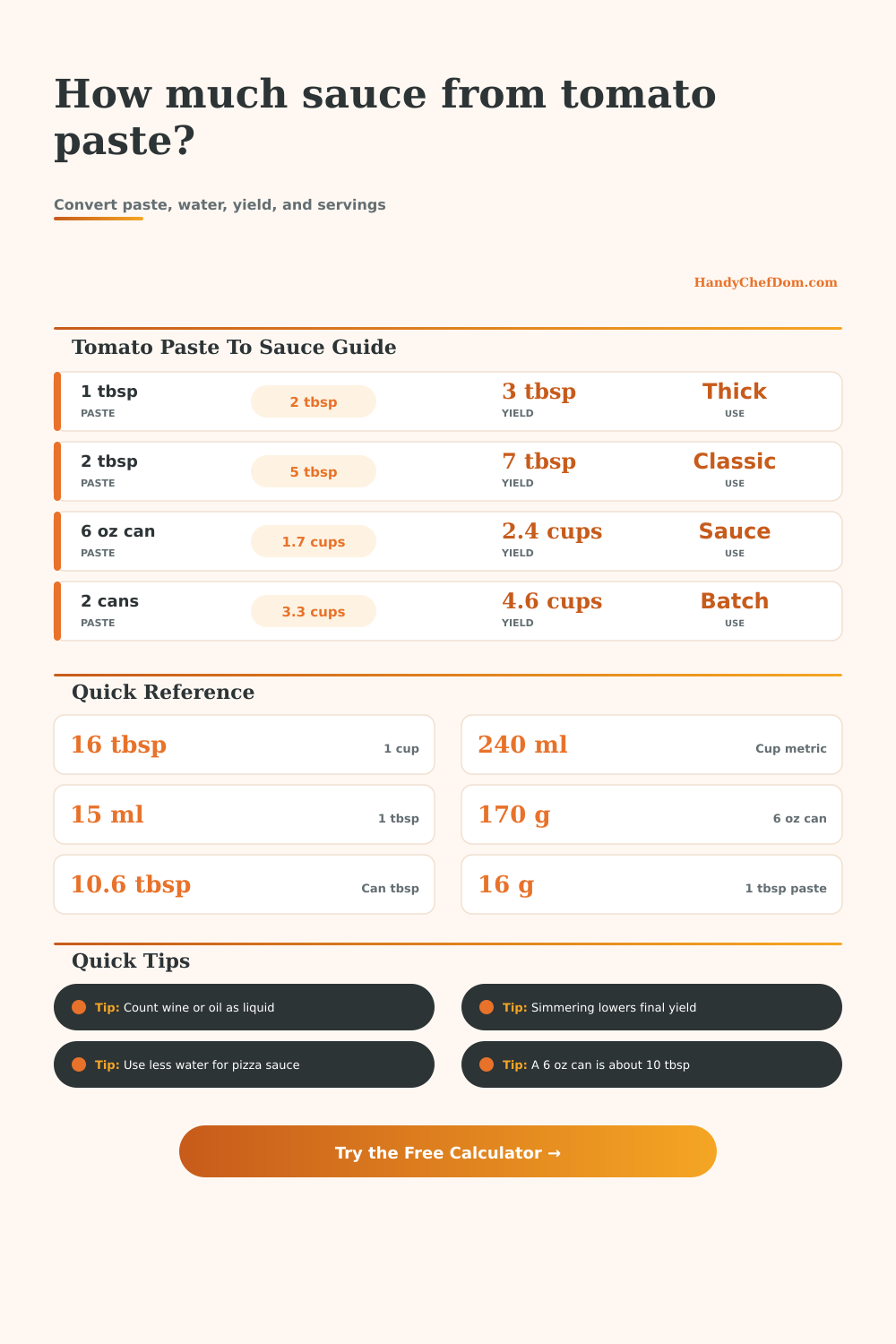
And it takes into account physics of heating: Boiling will make things smaller. So if you simmer something, remember that it will shrink by about eight percent due to evaporation while making a quick thirty-minute marinara. A slow-cooked Sunday gravy could shrink by twenty percent or even more. Adjust for that ahead of time, and when the timer dings, your finished product won’t have hardened into a chunky paste like the one shown above, but instead will reach the target yield you selected.
And then there’s knowing what size your containers are. This is why it matters: This is laid out really nicely in the reference table at the bottom of the page. Each size of a can (in ounces) is converted to cups and tablespoons so you’ll have an idea of what one can equals in the paste world. It is about ten tablespoons of paste. Using a 2.5 to 1 ratio of water to paste results in two cups of traditional sauce from just one can.
Now you’ll be able to eyeball things to adjust up or down as needed, without having to open several cans when all you want is a small amount of something. So you’ll know exactly how much to scoop out for a half cup of sauce for a weeknight pasta, put the remaining portion away for later, and not have any more wasted than absolutely necessary. And you won’t have a sad little jar of leftover paste sitting in the fridge for three weeks.
We don’t think about spices and seasonings enough. A few tablespoons of stock, olive oil and minced garlic make a big difference in how much space they take up compared to dry herbs. You can input those tablespoons into the seasoning liquid input field and the tool will adjust accordingly for you. These is little things that add up and really matter when you’re trying to hit the right notes with salt and acidity.
Tomato paste is concentrated. Get the dilution right and your dish won’t taste too much like tomato or metal. The tomato flavor will shine through.
At its heart, turning paste into sauce is all about control. It’s a process of taking a concentrated form and changing it into a loose, medium-like liquid. And time, heat and water determine how far you go from one end of that spectrum to the other. When you have a utensil that accounts for displacement and evaporation, you cook, not guess. You achieve the desired texture every single time.
You should of used this tool sooner.