🍪 Vanilla Extract Per Vanilla Bean Calculator
Convert whole vanilla beans into extract tablespoons, teaspoons, milliliters, paste equivalents, alcohol-free flavoring, and scaled recipe totals.
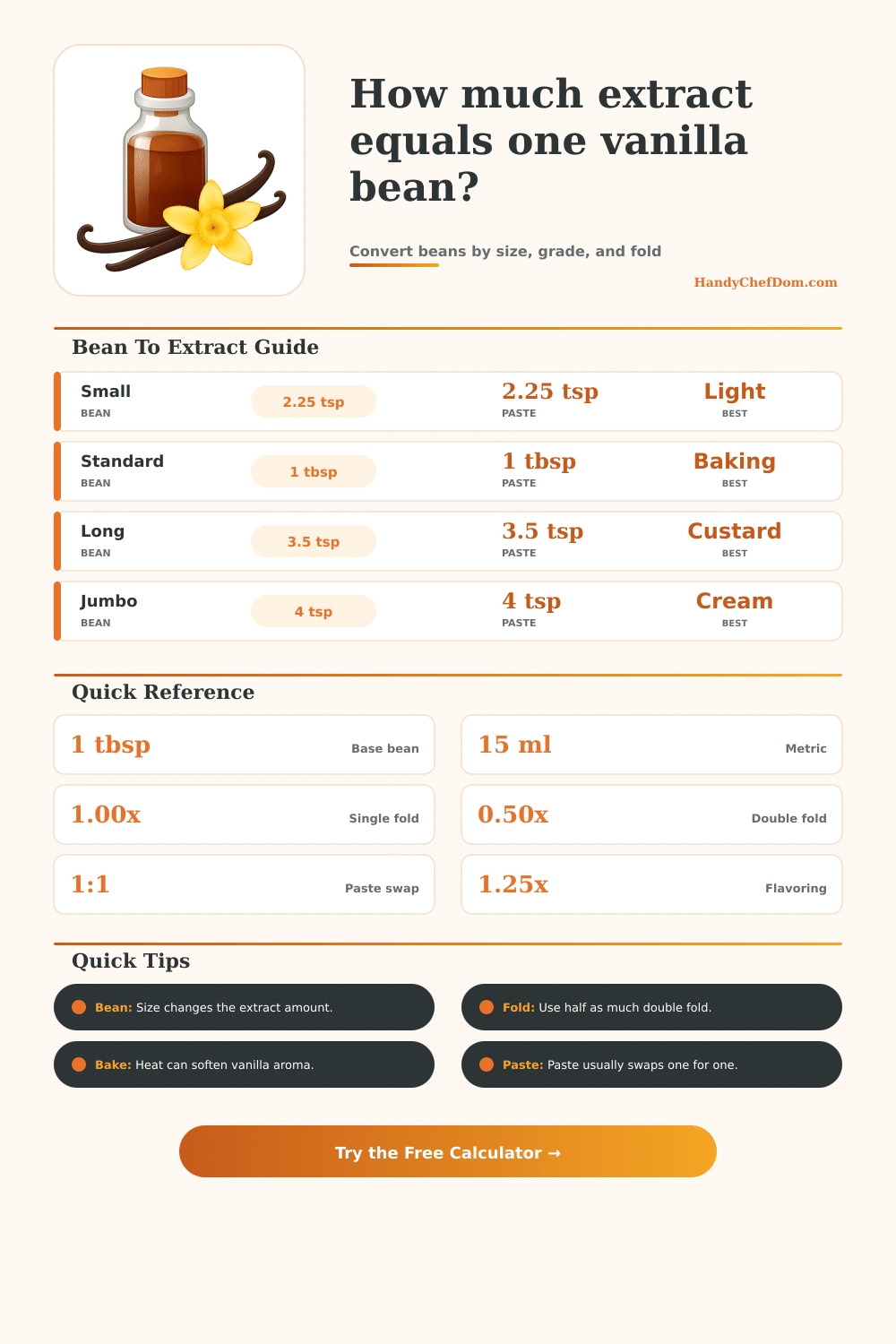
A common kitchen swap is 1 vanilla bean equals about 1 tablespoon vanilla extract or 1 tablespoon vanilla paste. This calculator adjusts that base for bean size, grade, fold strength, recipe use, alcohol-free flavoring, batch multiplier, and intensity.
| Bean size | Typical length | Extract equivalent | Best use |
|---|---|---|---|
| Small bean | 4 to 5 inches | About 2 1/4 teaspoons | Small cakes, drinks, quick frosting |
| Standard bean | About 6 inches | 1 tablespoon or 3 teaspoons | Most recipe substitutions |
| Long bean | About 7 inches | About 3 1/2 teaspoons | Custards and pastry cream |
| Jumbo bean | About 8 inches | About 4 teaspoons | Ice cream, rich cream, large bowls |
| Mixed pieces | Broken pods | About 2 3/4 teaspoons per bean | Extract-style measuring and batch work |
| Thick heavy bean | 6 to 7 inches | About 3 3/4 teaspoons | Bold vanilla-forward desserts |
| Extract strength | Use for one bean | Multiplier | Kitchen note |
|---|---|---|---|
| Single fold extract | 1 tablespoon | 1.00x | Standard recipe replacement for one vanilla bean. |
| Double fold extract | 1 1/2 teaspoons | 0.50x | Concentrated extract, so use half the single-fold amount. |
| Light homemade extract | About 3 3/4 teaspoons | 1.25x | Milder homemade extract may need a fuller spoon. |
| Strong homemade extract | About 2 1/2 teaspoons | 0.85x | Use less if the homemade extract is very aromatic. |
| Alcohol-free flavoring | About 3 3/4 teaspoons | 1.25x | Often softer than extract, so increase gently. |
| Vanilla powder backup | About 1 1/2 teaspoons | 0.50x | Dry and concentrated; add carefully. |
| Recipe use | Adjustment | Why it changes | Suggested form |
|---|---|---|---|
| Baked cake, cookies, quick bread | 1.10x | Oven heat can soften some aroma. | Extract or paste |
| Custard, pudding, pastry cream | 1.00x | Warm dairy carries vanilla well. | Bean, paste, or extract |
| Frosting, whipped cream, glaze | 0.85x | Unbaked vanilla tastes more direct. | Paste or extract |
| Ice cream or frozen dessert base | 1.20x | Cold dulls aroma slightly. | Bean or paste |
| Beverage, syrup, coffee cream | 0.75x | Liquid servings can taste strong quickly. | Extract or flavoring |
| Sauce, compote, stovetop filling | 0.95x | Moist heat spreads vanilla evenly. | Extract or scraped bean |
| Vanilla form | Bean equivalent | Metric equivalent | Best measuring cue |
|---|---|---|---|
| Whole vanilla bean | 1 bean | About 15 ml extract | Split and scrape seeds when specks are welcome. |
| Pure vanilla extract | 1 tablespoon | About 15 ml | Use for the cleanest liquid substitution. |
| Vanilla bean paste | 1 tablespoon | About 15 ml | Swap one-for-one when thickness is acceptable. |
| Double fold extract | 1 1/2 teaspoons | About 7.5 ml | Measure smaller because flavor is concentrated. |
| Alcohol-free flavoring | About 1 1/4 tablespoons | About 19 ml | Increase gently and taste when possible. |
| Vanilla powder | About 1 1/2 teaspoons | About 3.5 g | Best when extra liquid is not wanted. |
Despite the common inclusion of vanilla as an ingredient in many dessert recipes, it can be dificult for individuals to understand how many vanilla extract is needed compared to vanilla beans. Many people assume that one vanilla bean will provide the same amount of flavor as one tablespoon of vanilla extract, but vanilla bean can vary in size and moisture levels, and can also have different flavors due to the amount of oil and seeds that the beans contain. Vanilla beans that contain more oil and seeds will have a stronger flavor then vanilla beans that contain less of these ingredients; the same is true of moisture content.
Vanilla beans that are moist will contain more flavor than vanilla beans that is dry. Beans that are graded A are moist and often used in baking, while vanilla beans that is graded B are dry and often used in the production of vanilla extract. As a result, vanilla extract from Grade B beans will contain less of the flavor than vanilla extract from Grade A beans.
How to Convert Vanilla Beans to Vanilla Extract
A calculator can adjust for vanilla beans of different sizes and grades, eliminating the need for individuals to estimate the amount of vanilla that is needed for a recipe by visually inspecting the beans. The type of recipe that is to be prepared will also impact the amount of vanilla that is required. For instance, baked goods will lose some of the vanilla aroma with the heat of the oven, so recipes for cookies may contain more vanilla than recipes for custards of the same flavor.
Additionally, many desserts that are frozen will hide the vanilla flavor with their cold temperature. Thus, recipes for products like ice cream will contain more vanilla than other dessert recipes. The calculator can account for different types of recipe by allowing individuals to adjust for the type of recipe that will be prepared.
Lastly, vanilla paste and alcohol free vanilla flavorings will have different measurements than vanilla extract. Vanilla paste is often used as a one to one replacement for vanilla extract; however, it is also possible to use less vanilla paste if the vanilla specks is to be used for decoration only. Additionally, alcohol-free vanilla flavorings are softer in flavor than vanilla extract, so more of the alcohol-free flavoring will need to be added to recipes to achieve the same flavor strength as vanilla extract.
Vanilla flavor intensity is another factor to consider when measuring vanilla beans. For example, recipes for cakes may require a different strength of vanilla than recipes for pastry cream. Vanilla flavor intensity can be adjusted on the calculator to ensure that vanilla flavorings will match the other vanilla flavorings in the recipe.
Finally, the batch size of the recipe will impact the amount of vanilla beans that are required. Vanilla beans can be used for batches of any size, but the vanilla bean measurement will need to be doubled for recipes that is to be doubled, and halved for recipes that are to be halved. By entering the batch size of the recipe in the calculator, the calculator will automatically adjust the amount of vanilla beans to ensure that each batch of the dessert will contain the same ratio of vanilla beans to other ingredients.
After the individuals have calculated the vanilla beans in the recipe, the individuals can focus on other factor in the recipe, such as the freshness of the vanilla beans, or the type of dairy product that is to be use in the dessert to enhance the vanilla flavoring. Despite the common inclusion of vanilla as an ingredient in many dessert recipes, it can be dificult for individuals to understand how much vanilla extract is needed compared to vanilla beans. Many people assume that one vanilla bean will provide the same amount of flavor as one tablespoon of vanilla extract, but vanilla bean can vary in size and moisture levels, and can also have different flavors due to the amount of oil and seeds that the beans contain.
Vanilla beans that contain more oil and seeds will have a stronger flavor then vanilla beans that contain less of these ingredients; the same is true of moisture content. Vanilla beans that are moist will contain more flavor than vanilla beans that is dry. Beans that are graded A are moist and often used in baking, while vanilla beans that is graded B are dry and often used in the production of vanilla extract.
As a result, vanilla extract from Grade B beans will contain less of the flavor than vanilla extract from Grade A beans. A calculator can adjust for vanilla beans of different sizes and grades, eliminating the need for individuals to estimate the amount of vanilla that is needed for a recipe by visually inspecting the beans. The type of recipe that is to be prepared will also impact the amount of vanilla that is required.
For instance, baked goods will lose some of the vanilla aroma with the heat of the oven, so recipes for cookies may contain more vanilla than recipes for custards of the same flavor. Additionally, many desserts that are frozen will hide the vanilla flavor with their cold temperature. Thus, recipes for products like ice cream will contain more vanilla than other dessert recipes.
The calculator can account for different types of recipe by allowing individuals to adjust for the type of recipe that will be prepared. Lastly, vanilla paste and alcohol free vanilla flavorings will have different measurements than vanilla extract. Vanilla paste is often used as a one to one replacement for vanilla extract; however, its also possible to use less vanilla paste if the vanilla specks is to be used for decoration only.
Additionally, alcohol-free vanilla flavorings are softer in flavor than vanilla extract, so more of the alcohol-free flavoring will need to be added to recipes to achieve the same flavor strength as vanilla extract. Vanilla flavor intensity is another factor to consider when measuring vanilla beans. For example, recipes for cakes may require a different strength of vanilla than recipes for pastry cream.
Vanilla flavor intensity can be adjusted on the calculator to ensure that vanilla flavorings will match the other vanilla flavorings in the recipe. Finally, the batch size of the recipe will impact the amount of vanilla beans that are required. Vanilla beans can be used for batches of any size, but the vanilla bean measurement will need to be doubled for recipes that is to be doubled, and halved for recipes that is to be halved.
By entering the batch size of the recipe in the calculator, the calculator will automatically adjust the amount of vanilla beans to ensure that each batch of the dessert will contain the same ratio of vanilla beans to other ingredients. After the individuals have calculated the vanilla beans in the recipe, the individuals can focus on other factor in the recipe, such as the freshness of the vanilla beans, or the type of dairy product that is to be use in the dessert to enhance the vanilla flavoring. Despite the common inclusion of vanilla as an ingredient in many dessert recipes, it can be dificult for individuals to understand how much vanilla extract is needed compared to vanilla beans.
Many people assume that one vanilla bean will provide the same amount of flavor as one tablespoon of vanilla extract, but vanilla bean can vary in size and moisture levels, and can also have different flavors due to the amount of oil and seeds that the beans contain. Vanilla beans that contain more oil and seeds will have a stronger flavor then vanilla beans that contain less of these ingredients; the same is true of moisture content. Vanilla beans that are moist will contain more flavor than vanilla beans that is dry.
Beans that are graded A are moist and often used in baking, while vanilla beans that is graded B are dry and often used in the production of vanilla extract. As a result, vanilla extract from Grade B beans will contain less of the flavor than vanilla extract from Grade A beans. A calculator can adjust for vanilla beans of different sizes and grades, eliminating the need for individuals to estimate the amount of vanilla that is needed for a recipe by visually inspecting the beans.
The type of recipe that is to be prepared will also impact the amount of vanilla that is required. For instance, baked goods will lose some of the vanilla aroma with the heat of the oven, so recipes for cookies may contain more vanilla than recipes for custards of the same flavor. Additionally, many desserts that are frozen will hide the vanilla flavor with their cold temperature.
Thus, recipes for products like ice cream will contain more vanilla than other dessert recipes. The calculator can account for different types of recipe by allowing individuals to adjust for the type of recipe that will be prepared. Lastly, vanilla paste and alcohol free vanilla flavorings will have different measurements than vanilla extract.
Vanilla paste is often used as a one to one replacement for vanilla extract; however, its also possible to use less vanilla paste if the vanilla specks is to be used for decoration only. Additionally, alcohol-free vanilla flavorings are softer in flavor than vanilla extract, so more of the alcohol-free flavoring will need to be added to recipes to achieve the same flavor strength as vanilla extract. Vanilla flavor intensity is another factor to consider when measuring vanilla beans.
For example, recipes for cakes may require a different strength of vanilla than recipes for pastry cream. Vanilla flavor intensity can be adjusted on the calculator to ensure that vanilla flavorings will match the other vanilla flavorings in the recipe. Finally, the batch size of the recipe will impact the amount of vanilla beans that are required.
Vanilla beans can be used for batches of any size, but the vanilla bean measurement will need to be doubled for recipes that is to be doubled, and halved for recipes that is to be halved. By entering the batch size of the recipe in the calculator, the calculator will automatically adjust the amount of vanilla beans to ensure that each batch of the dessert will contain the same ratio of vanilla beans to other ingredients. After the individuals have calculated the vanilla beans in the recipe, the individuals can focus on other factor in the recipe, such as the freshness of the vanilla beans, or the type of dairy product that is to be use in the dessert to enhance the vanilla flavoring.
Despite the common inclusion of vanilla as an ingredient in many dessert recipes, it can be dificult for individuals to understand how much vanilla extract is needed compared to vanilla beans. Many people assume that one vanilla bean will provide the same amount of flavor as one tablespoon of vanilla extract, but vanilla bean can vary in size and moisture levels, and can also have different flavors due to the amount of oil and seeds that the beans contain. Vanilla beans that contain more oil and seeds will have a stronger flavor then vanilla beans that contain less of these ingredients; the same is true of moisture content.
Vanilla beans that are moist will contain more flavor than vanilla beans that is dry. Beans that are graded A are moist and often used in baking, while vanilla beans that is graded B are dry and often used in the production of vanilla extract. As a result, vanilla extract from Grade B beans will contain less of the flavor than vanilla extract from Grade A beans.
A calculator can adjust for vanilla beans of different sizes and grades, eliminating the need for individuals to estimate the amount of vanilla that is needed for a recipe by visually inspecting the beans. The type of recipe that is to be prepared will also impact the amount of vanilla that is required. For instance, baked goods will lose some of the vanilla aroma with the heat of the oven, so recipes for cookies may contain more vanilla than recipes for custards of the same flavor.
Additionally, many desserts that are frozen will hide the vanilla flavor with their cold temperature. Thus, recipes for products like ice cream will contain more vanilla than other dessert recipes. The calculator can account for different types of recipe by allowing individuals to adjust for the type of recipe that will be prepared.
Lastly, vanilla paste and alcohol free vanilla flavorings will have different measurements than vanilla extract. Vanilla paste is often used as a one to one replacement for vanilla extract; however, its also possible to use less vanilla paste if the vanilla specks is to be used for decoration only. Additionally, alcohol-free vanilla flavorings are softer in flavor than vanilla extract, so more of the alcohol-free flavoring will need to be added to recipes to achieve the same flavor strength as vanilla extract.
Vanilla flavor intensity is another factor to consider when measuring vanilla beans. For example, recipes for cakes may require a different strength of vanilla than recipes for pastry cream. Vanilla flavor intensity can be adjusted on the calculator to ensure that vanilla flavorings will match the other vanilla flavorings in the recipe.
Finally, the batch size of the recipe will impact the amount of vanilla beans that are required. Vanilla beans can be used for batches of any size, but the vanilla bean measurement will need to be doubled for recipes that is to be doubled, and halved for recipes that is to be halved. By entering the batch size of the recipe in the calculator, the calculator will automatically adjust the amount of vanilla beans to ensure that each batch of the dessert will contain the same ratio of vanilla beans to other ingredients.
After the individuals have calculated the vanilla beans in the recipe, the individuals can focus on other factor in the recipe, such as the freshness of the vanilla beans, or the type of dairy product that is to be use in the dessert to enhance the vanilla flavoring. Despite the common inclusion of vanilla as an ingredient in many dessert recipes, it can be dificult for individuals to understand how much vanilla extract is needed compared to vanilla beans. Many people assume that one vanilla bean will provide the same amount of flavor as one tablespoon of vanilla extract, but vanilla bean can vary in size and moisture levels, and can also have different flavors due to the amount of oil and seeds that the beans contain.
Vanilla beans that contain more oil and seeds will have a stronger flavor then vanilla beans that contain less of these ingredients; the same is true of moisture content. Vanilla beans that are moist will contain more flavor than vanilla beans that is dry. Beans that are graded A are moist and often used in baking, while vanilla beans that is graded B are dry and often used in the production of vanilla extract.
As a result, vanilla extract from Grade B beans will contain less of the flavor than vanilla extract from Grade A beans. A calculator can adjust for vanilla beans of different sizes and grades, eliminating the need for individuals to estimate the amount of vanilla that is needed for a recipe by visually inspecting the beans. The type of recipe that is to be prepared will also impact the amount of vanilla that is required.
For instance, baked goods will lose some of the vanilla aroma with the heat of the oven, so recipes for cookies may contain more vanilla than recipes for custards of the same flavor. Additionally, many desserts that are frozen will hide the vanilla flavor with their cold temperature. Thus, recipes for products like ice cream will contain more vanilla than other dessert recipes.
The calculator can account for different types of recipe by allowing individuals to adjust for the type of recipe that will be prepared. Lastly, vanilla paste and alcohol free vanilla flavorings will have different measurements than vanilla extract. Vanilla paste is often used as a one to one replacement for vanilla extract; however, its also possible to use less vanilla paste if the vanilla specks is to be used for decoration only.
Additionally, alcohol-free vanilla flavorings are softer in flavor than vanilla extract, so more of the alcohol-free flavoring will need to be added to recipes to achieve the same flavor strength as vanilla extract. Vanilla flavor intensity is another factor to consider when measuring vanilla beans. For example, recipes for cakes may require a different strength of vanilla than recipes for pastry cream.
Vanilla flavor intensity can be adjusted on the calculator to ensure that vanilla flavorings will match the other vanilla flavorings in the recipe. Finally, the batch size of the recipe will impact the amount of vanilla beans that are required. Vanilla beans can be used for batches of any size, but the vanilla bean measurement will need to be doubled for recipes that is to be doubled, and halved for recipes that is to be halved.
By entering the batch size of the recipe in the calculator, the calculator will automatically adjust the amount of vanilla beans to ensure that each batch of the dessert will contain the same ratio of vanilla beans to other ingredients. After the individuals have calculated the vanilla beans in the recipe, the individuals can focus on other factor in the recipe, such as the freshness of the vanilla beans, or the type of dairy product that is to be use in the dessert to enhance the vanilla flavoring. Despite the common inclusion of vanilla as an ingredient in many dessert recipes, it can be dificult for individuals to understand how much vanilla extract is needed compared to vanilla beans.
Many people assume that one vanilla bean will provide the same amount of flavor as one tablespoon of vanilla extract, but vanilla bean can vary in size and moisture levels, and can also have different flavors due to the amount of oil and seeds that the beans contain. Vanilla beans that contain more oil and seeds will have a stronger flavor then vanilla beans that contain less of these ingredients; the same is true of moisture content. Vanilla beans that are moist will contain more flavor than vanilla beans that is dry.
Beans that are graded A are moist and often used in baking, while vanilla beans that is graded B are dry and often used in the production of vanilla extract. As a result, vanilla extract from Grade B beans will contain less of the flavor than vanilla extract from Grade A beans. A calculator can adjust for vanilla beans of different sizes and grades, eliminating the need for individuals to estimate the amount of vanilla that is needed for a recipe by visually inspecting the beans.
The type of recipe that is to be prepared will also impact the amount of vanilla that is required. For instance, baked goods will lose some of the vanilla aroma with the heat of the oven, so recipes for cookies may contain more vanilla than recipes for custards of the same flavor. Additionally, many desserts that are frozen will hide the vanilla flavor with their cold temperature.
Thus, recipes for products like ice cream will contain more vanilla than other dessert recipes. The calculator can account for different types of recipe by allowing individuals to adjust for the type of recipe that will be prepared. Lastly, vanilla paste and alcohol free vanilla flavorings will have different measurements than vanilla extract.
Vanilla paste is often used as a one to one replacement for vanilla extract; however, its also possible to use less vanilla paste if the vanilla specks is to be used for decoration only. Additionally, alcohol-free vanilla flavorings are softer in flavor than vanilla extract, so more of the alcohol-free flavoring will need to be added to recipes to achieve the same flavor strength as vanilla extract. Vanilla flavor intensity is another factor to consider when measuring vanilla beans.
For example, recipes for cakes may require a different strength of vanilla than recipes for pastry cream. Vanilla flavor intensity can be adjusted on the calculator to ensure that vanilla flavorings will match the other vanilla flavorings in the recipe. Finally, the batch size of the recipe will impact the amount of vanilla beans that are required.
Vanilla beans can be used for batches of any size, but the vanilla bean measurement will need to be doubled for recipes that is to be doubled, and halved for recipes that is to be halved. By entering the batch size of the recipe in the calculator, the calculator will automatically adjust the amount of vanilla beans to ensure that each batch of the dessert will contain the same ratio of vanilla beans to other ingredients. After the individuals have calculated the vanilla beans in the recipe, the individuals can focus on other factor in the recipe, such as the freshness of the vanilla beans, or the type of dairy product that is to be use in the dessert to enhance the vanilla flavoring.
Despite the common inclusion of vanilla as an ingredient in many dessert recipes, it can be dificult for individuals to understand how much vanilla extract is needed compared to vanilla beans. Many people assume that one vanilla bean will provide the same amount of flavor as one tablespoon of vanilla extract, but vanilla bean can vary in size and moisture levels, and can also have different flavors due to the amount of oil and seeds that the beans contain. Vanilla beans that contain more oil and seeds will have a stronger flavor then vanilla beans that contain less of these ingredients; the same is true of moisture content.
Vanilla beans that are moist will contain more flavor than vanilla beans that is dry. Beans that are graded A are moist and often used in baking, while vanilla beans that is graded B are dry and often used in the production of vanilla extract. As a result, vanilla extract from Grade B beans will contain less of the flavor than vanilla extract from Grade A beans.
A calculator can adjust for vanilla beans of different sizes and grades, eliminating the need for individuals to estimate the amount of vanilla that is needed for a recipe by visually inspecting the beans. The type of recipe that is to be prepared will also impact the amount of vanilla that is required. For instance, baked goods will lose some of the vanilla aroma with the heat of the oven, so recipes for cookies may contain more vanilla than recipes for custards of the same flavor.
Additionally, many desserts that are frozen will hide the vanilla flavor with their cold temperature. Thus, recipes for products like ice cream will contain more vanilla than other dessert recipes. The calculator can account for different types of recipe by allowing individuals to adjust for the type of recipe that will be prepared.
Lastly, vanilla paste and alcohol free vanilla flavorings will have different measurements than vanilla extract. Vanilla paste is often used as a one to one replacement for vanilla extract; however, its also possible to use less vanilla paste if the vanilla specks is to be used for decoration only. Additionally, alcohol-free vanilla flavorings are softer in flavor than vanilla extract, so more of the alcohol-free flavoring will need to be added to recipes to achieve the same flavor strength as vanilla extract.
Vanilla flavor intensity is another factor to consider when measuring vanilla beans. For example, recipes for cakes may require a different strength of vanilla than recipes for pastry cream. Vanilla flavor intensity can be adjusted on the calculator to ensure that vanilla flavorings will match the other vanilla flavorings in the recipe.
Finally, the batch size of the recipe will impact the amount of vanilla beans that are required. Vanilla beans can be used for batches of any size, but the vanilla bean measurement will need to be doubled for recipes that is to be doubled, and halved for recipes that is to be halved. By entering the batch size of the recipe in the calculator, the calculator will automatically adjust the amount of vanilla beans to ensure that each batch of the dessert will contain the same ratio of vanilla beans to other ingredients.
After the individuals have calculated the vanilla beans in the recipe, the individuals can focus on other factor in the recipe, such as the freshness of the vanilla beans, or the type of dairy product that is to be use in the dessert to enhance the vanilla flavoring. Despite the common inclusion of vanilla as an ingredient in many dessert recipes, it can be dificult for individuals to understand how much vanilla extract is needed compared to vanilla beans. Many people assume that one vanilla bean will provide the same amount of flavor as one tablespoon of vanilla extract, but vanilla bean can vary in size and moisture levels, and can also have different flavors due to the amount of oil and seeds that the beans contain.
Vanilla beans that contain more oil and seeds will have a stronger flavor then vanilla beans that contain less of these ingredients; the same is true of moisture content. Vanilla beans that are moist will contain more flavor than vanilla beans that is dry. Beans that are graded A are moist and often used in baking, while vanilla beans that is graded B are dry and often used in the production of vanilla extract.
As a result, vanilla extract from Grade B beans will contain less of the flavor than vanilla extract from Grade A beans. A calculator can adjust for vanilla beans of different sizes and grades, eliminating the need for individuals to estimate the amount of vanilla that is needed for a recipe by visually inspecting the beans. The type of recipe that is to be prepared will also impact the amount of vanilla that is required.
For instance, baked goods will lose some of the vanilla aroma with the heat of the oven, so recipes for cookies may contain more vanilla than recipes for custards of the same flavor. Additionally, many desserts that are frozen will hide the vanilla flavor with their cold temperature. Thus, recipes for products like ice cream will contain more vanilla than other dessert recipes.
The calculator can account for different types of recipe by allowing individuals to adjust for the type of recipe that will be prepared. Lastly, vanilla paste and alcohol free vanilla flavorings will have different measurements than vanilla extract. Vanilla paste is often used as a one to one replacement for vanilla extract; however, its also possible to use less vanilla paste if the vanilla specks is to be used for decoration only.
Additionally, alcohol-free vanilla flavorings are softer in flavor than vanilla extract, so more of the alcohol-free flavoring will need to be added to recipes to achieve the same flavor strength as vanilla extract. Vanilla flavor intensity is another factor to consider when measuring vanilla beans. For example, recipes for cakes may require a different strength of vanilla than recipes for pastry cream.
Vanilla flavor intensity can be adjusted on the calculator to ensure that vanilla flavorings will match the other vanilla flavorings in the recipe. Finally, the batch size of the recipe will impact the amount of vanilla beans that are required. Vanilla beans can be used for batches of any size, but the vanilla bean measurement will need to be doubled for recipes that is to be doubled, and halved for recipes that is to be halved.
By entering the batch size of the recipe in the calculator, the calculator will automatically adjust the amount of vanilla beans to ensure that each batch of the dessert will contain the same ratio of vanilla beans to other ingredients. After the individuals have calculated the vanilla beans in the recipe, the individuals can focus on other factor in the recipe, such as the freshness of the vanilla beans, or the type of dairy product that is to be use in the dessert to enhance the vanilla flavoring. Despite the common inclusion of vanilla as an ingredient in many dessert recipes, it can be dificult for individuals to understand how much vanilla extract is needed compared to vanilla beans.
Many people assume that one vanilla bean will provide the same amount of flavor as one tablespoon of vanilla extract, but vanilla bean can vary in size and moisture levels, and can also have different flavors due to the amount of oil and seeds that the beans contain. Vanilla beans that contain more oil and seeds will have a stronger flavor then vanilla beans that contain less of these ingredients; the same is true of moisture content. Vanilla beans that are moist will contain more flavor than vanilla beans that is dry.
Beans that are graded A are moist and often used in baking, while vanilla beans that is graded B are dry and often used in the production of vanilla extract. As a result, vanilla extract from Grade B beans will contain less of the flavor than vanilla extract from Grade A beans. A calculator can adjust for vanilla beans of different sizes and grades, eliminating the need for individuals to estimate the amount of vanilla that is needed for a recipe by visually inspecting the beans.
The type of recipe that is to be prepared will also impact the amount of vanilla that is required. For instance, baked goods will lose some of the vanilla aroma with the heat of the oven, so recipes for cookies may contain more vanilla than recipes for custards of the same flavor. Additionally, many desserts that are frozen will hide the vanilla flavor with their cold temperature.
Thus, recipes for products like ice cream will contain more vanilla than other dessert recipes. The calculator can account for different types of recipe by allowing individuals to adjust for the type of recipe that will be prepared. Lastly, vanilla paste and alcohol free vanilla flavorings will have different measurements than vanilla extract.
Vanilla paste is often used as a one to one replacement for vanilla extract; however, its also possible to use less vanilla paste if the vanilla specks is to be used for decoration only. Additionally, alcohol-free vanilla flavorings are softer in flavor than vanilla extract, so more of the alcohol-free flavoring will need to be added to recipes to achieve the same flavor strength as vanilla extract. Vanilla flavor intensity is another factor to consider when measuring vanilla beans.
For example, recipes for cakes may require a different strength of vanilla than recipes for pastry cream. Vanilla flavor intensity can be adjusted on the calculator to ensure that vanilla flavorings will match the other vanilla flavorings in the recipe. Finally, the batch size of the recipe will impact the amount of vanilla beans that are required.
Vanilla beans can be used for batches of any size, but the vanilla bean measurement will need to be doubled for recipes that is to be doubled, and halved for recipes that is to be halved. By entering the batch size of the recipe in the calculator, the calculator will automatically adjust the amount of vanilla beans to ensure that each batch of the dessert will contain the same ratio of vanilla beans to other ingredients. After the individuals have calculated the vanilla beans in the recipe, the individuals can focus on other factor in the recipe, such as the freshness of the vanilla beans, or the type of dairy product that is to be use in the dessert to enhance the vanilla flavoring.
Despite the common inclusion of vanilla as an ingredient in many dessert recipes, it can be dificult for individuals to understand how much vanilla extract is needed compared to vanilla beans. Many people assume that one vanilla bean will provide the same amount of flavor as one tablespoon of vanilla extract, but vanilla bean can vary in size and moisture levels, and can also have different flavors due to the amount of oil and seeds that the beans contain. Vanilla beans that contain more oil and seeds will have a stronger flavor then vanilla beans that contain less of these ingredients; the same is true of moisture content.
Vanilla beans that are moist will contain more flavor than vanilla beans that is dry. Beans that are graded A are moist and often used in baking, while vanilla beans that is graded B are dry and often used in the production of vanilla extract. As a result, vanilla extract from Grade B beans will contain less of the flavor than vanilla extract from Grade A beans.
A calculator can adjust for vanilla beans of different sizes and grades, eliminating the need for individuals to estimate the amount of vanilla that is needed for a recipe by visually inspecting the beans. The type of recipe that is to be prepared will also impact the amount of vanilla that is required. For instance, baked goods will lose some of the vanilla aroma with the heat of the oven, so recipes for cookies may contain more vanilla than recipes for custards of the same flavor.
Additionally, many desserts that are frozen will hide the vanilla flavor with their cold temperature. Thus, recipes for products like ice cream will contain more vanilla than other dessert recipes. The calculator can account for different types of recipe by allowing individuals to adjust for the type of recipe that will be prepared.
Lastly, vanilla paste and alcohol free vanilla flavorings will have different measurements than vanilla extract. Vanilla paste is often used as a one to one replacement for vanilla extract; however, its also possible to use less vanilla paste if the vanilla specks is to be used for decoration only. Additionally, alcohol-free vanilla flavorings are softer in flavor than vanilla extract, so more of the alcohol-free flavoring will need to be added to recipes to achieve the same flavor strength as vanilla extract.
Vanilla flavor intensity is another factor to consider when measuring vanilla beans. For example, recipes for cakes may require a different strength of vanilla than recipes for pastry cream. Vanilla flavor intensity can be adjusted on the calculator to ensure that vanilla flavorings will match the other vanilla flavorings in the recipe.
Finally, the batch size of the recipe will impact the amount of vanilla beans that are required. Vanilla beans can be used for batches of any size, but the vanilla bean measurement will need to be doubled for recipes that is to be doubled, and halved for recipes that is to be halved. By entering the batch size of the recipe in the calculator, the calculator will automatically adjust the amount of vanilla beans to ensure that each batch of the dessert will contain the same ratio of vanilla beans to other ingredients.
After the individuals have calculated the vanilla beans in the recipe, the individuals can focus on other factor in the recipe, such as the freshness of the vanilla beans, or the type of dairy product that is to be use in the dessert to enhance the vanilla flavoring. Despite the common inclusion of vanilla as an ingredient in many dessert recipes, it can be dificult for individuals to understand how much vanilla extract is needed compared to vanilla beans. Many people assume that one vanilla bean will provide the same amount of flavor as one tablespoon of vanilla extract, but vanilla bean can vary in size and moisture levels, and can also have different flavors due to the amount of oil and seeds that the beans contain.
Vanilla beans that contain more oil and seeds will have a stronger flavor then vanilla beans that contain less of these ingredients; the same is true of moisture content. Vanilla beans that are moist will contain more flavor than vanilla beans that is dry. Beans that are graded A are moist and often used in baking, while vanilla beans that is graded B are dry and often used in the production of vanilla extract.
As a result, vanilla extract from Grade B beans will contain less of the flavor than vanilla extract from Grade A beans. A calculator can adjust for vanilla beans of different sizes and grades, eliminating the need for individuals to estimate the amount of vanilla that is needed for a recipe by visually inspecting the beans. The type of recipe that is to be prepared will also impact the amount of vanilla that is required.
For instance, baked goods will lose some of the vanilla aroma with the heat of the oven, so recipes for cookies may contain more vanilla than recipes for custards of the same flavor. Additionally, many desserts that are frozen will hide the vanilla flavor with their cold temperature. Thus, recipes for products like ice cream will contain more vanilla than other dessert recipes.
The calculator can account for different types of recipe by allowing individuals to adjust for the type of recipe that will be prepared. Lastly, vanilla paste and alcohol free vanilla flavorings will have different measurements than vanilla extract. Vanilla paste is often used as a one to one replacement for vanilla extract; however, its also possible to use less vanilla paste if the vanilla specks is to be used for decoration only.
Additionally, alcohol-free vanilla flavorings are softer in flavor than vanilla extract, so more of the alcohol-free flavoring will need to be added to recipes to achieve the same flavor strength as vanilla extract. Vanilla flavor intensity is another factor to consider when measuring vanilla beans. For example, recipes for cakes may require a different strength of vanilla than recipes for pastry cream.
Vanilla flavor intensity can be adjusted on the calculator to ensure that vanilla flavorings will match the other vanilla flavorings in the recipe. Finally, the batch size of the recipe will impact the amount of vanilla beans that are required. Vanilla beans can be used for batches of any size, but the vanilla bean measurement will need to be doubled for recipes that is to be doubled, and halved for recipes that is to be halved.
By entering the batch size of the recipe in the calculator, the calculator will automatically adjust the amount of vanilla beans to ensure that each batch of the dessert will contain the same ratio of vanilla beans to other ingredients. After the individuals have calculated the vanilla beans in the recipe, the individuals can focus on other factor in the recipe, such as the freshness of the vanilla beans, or the type of dairy product that is to be use in the dessert to enhance the vanilla flavoring. Despite the common inclusion of vanilla as an ingredient in many dessert recipes, it can be dificult for individuals to understand how much vanilla extract is needed compared to vanilla beans.
Many people assume that one vanilla bean will provide the same amount of flavor as one tablespoon of vanilla extract, but vanilla bean can vary in size and moisture levels, and can also have different flavors due to the amount of oil and seeds that the beans contain. Vanilla beans that contain more oil and seeds will have a stronger flavor then vanilla beans that contain less of these ingredients; the same is true of moisture content. Vanilla beans that are moist will contain more flavor than vanilla beans that is dry.
Beans that are graded A are moist and often used in baking, while vanilla beans that is graded B are dry and often used in the production of vanilla extract. As a result, vanilla extract from Grade B beans will contain less of the flavor than vanilla extract from Grade A beans. A calculator can adjust for vanilla beans of different sizes and grades, eliminating the need for individuals to estimate the amount of vanilla that is needed for a recipe by visually inspecting the beans.
The type of recipe that is to be prepared will also impact the amount of vanilla that is required. For instance, baked goods will lose some of the vanilla aroma with the heat of the oven, so recipes for cookies may contain more vanilla than recipes for custards of the same flavor. Additionally, many desserts that are frozen will hide the vanilla flavor with their cold temperature.
Thus, recipes for products like ice cream will contain more vanilla than other dessert recipes. The calculator can account for different types of recipe by allowing individuals to adjust for the type of recipe that will be prepared. Lastly, vanilla paste and alcohol free vanilla flavorings will have different measurements than vanilla extract.
Vanilla paste is often used as a one to one replacement for vanilla extract; however, its also possible to use less vanilla paste if the vanilla specks is to be used for decoration only. Additionally, alcohol-free vanilla flavorings are softer in flavor than vanilla extract, so more of the alcohol-free flavoring will need to be added to recipes to achieve the same flavor strength as vanilla extract. Vanilla flavor intensity is another factor to consider when measuring vanilla beans.
For example, recipes for cakes may require a different strength of vanilla than recipes for pastry cream. Vanilla flavor intensity can be adjusted on the calculator to ensure that vanilla flavorings will match the other vanilla flavorings in the recipe. Finally, the batch size of the recipe will impact the amount of vanilla beans that are required.
Vanilla beans can be used for batches of any size, but the vanilla bean measurement will need to be doubled for recipes that is to be doubled, and halved for recipes that is to be halved. By entering the batch size of the recipe in the calculator, the calculator will automatically adjust the amount of vanilla beans to ensure that each batch of the dessert will contain the same ratio of vanilla beans to other ingredients. After the individuals have calculated the vanilla beans in the recipe, the individuals can focus on other factor in the recipe, such as the freshness of the vanilla beans, or the type of dairy product that is to be use in the dessert to enhance the vanilla flavoring.
Despite the common inclusion of vanilla as an ingredient in many dessert recipes, it can be dificult for individuals to understand how much vanilla extract is needed compared to vanilla beans. Many people assume that one vanilla bean will provide the same amount of flavor as one tablespoon of vanilla extract, but vanilla bean can vary in size and moisture levels, and can also have different flavors due to the amount of oil and seeds that the beans contain. Vanilla beans that contain more oil and seeds will have a stronger flavor then vanilla beans that contain less of these ingredients; the same is true of moisture content.
Vanilla beans that are moist will contain more flavor than vanilla beans that is dry. Beans that are graded A are moist and often used in baking, while vanilla beans that is graded B are dry and often used in the production of vanilla extract. As a result, vanilla extract from Grade B beans will contain less of the flavor than vanilla extract from Grade A beans.
A calculator can adjust for vanilla beans of different sizes and grades, eliminating the need for individuals to estimate the amount of vanilla that is needed for a recipe by visually inspecting the beans. The type of recipe that is to be prepared will also impact the amount of vanilla that is required. For instance, baked goods will lose some of the vanilla aroma with the heat of the oven, so recipes for cookies may contain more vanilla than recipes for custards of the same flavor.
Additionally, many desserts that are frozen will hide the vanilla flavor with their cold temperature. Thus, recipes for products like ice cream will contain more vanilla than other dessert recipes. The calculator can account for different types of recipe by allowing individuals to adjust for the type of recipe that will be prepared.
Lastly, vanilla paste and alcohol free vanilla flavorings will have different measurements than vanilla extract. Vanilla paste is often used as a one to one replacement for vanilla extract; however, its also possible to use less vanilla paste if the vanilla specks is to be used for decoration only. Additionally, alcohol-free vanilla flavorings are softer in flavor than vanilla extract, so more of the alcohol-free flavoring will need to be added to recipes to achieve the same flavor strength as vanilla extract.
Vanilla flavor intensity is another factor to consider when measuring vanilla beans. For example, recipes for cakes may require a different strength of vanilla than recipes for pastry cream. Vanilla flavor intensity can be adjusted on the calculator to ensure that vanilla flavorings will match the other vanilla flavorings in the recipe.
Finally, the batch size of the recipe will impact the amount of vanilla beans that are required. Vanilla beans can be used for batches of any size, but the vanilla bean measurement will need to be doubled for recipes that is to be doubled, and halved for recipes that is to be halved. By entering the batch size of the recipe in the calculator, the calculator will automatically adjust the amount of vanilla beans to ensure that each batch of the dessert will contain the same ratio of vanilla beans to other ingredients.
After the individuals have calculated the vanilla beans in the recipe, the individuals can focus on other factor in the recipe, such as the freshness of the vanilla beans, or the type of dairy product that is to be use in the dessert to enhance the vanilla flavoring. Despite the common inclusion of vanilla as an ingredient in many dessert recipes, it can be dificult for individuals to understand how much vanilla extract is needed compared to vanilla beans. Many people assume that one vanilla bean will provide the same amount of flavor as one tablespoon of vanilla extract, but vanilla bean can vary in size and moisture levels, and can also have different flavors due to the amount of oil and seeds that the beans contain.
Vanilla beans that contain more oil and seeds will have a stronger flavor then vanilla beans that contain less of these ingredients; the same is true of moisture content. Vanilla beans that are moist will contain more flavor than vanilla beans that is dry. Beans that are graded A are moist and often used in baking, while vanilla beans that is graded B are dry and often used in the production of vanilla extract.
As a result, vanilla extract from Grade B beans will contain less of the flavor than vanilla extract from Grade A beans. A calculator can adjust for vanilla beans of different sizes and grades, eliminating the need for individuals to estimate the amount of vanilla that is needed for a recipe by visually inspecting the beans. The type of recipe that is to be prepared will also impact the amount of vanilla that is required.
For instance, baked goods will lose some of the vanilla aroma with the heat of the oven, so recipes for cookies may contain more vanilla than recipes for custards of the same flavor. Additionally, many desserts that are frozen will hide the vanilla flavor with their cold temperature. Thus, recipes for products like ice cream will contain more vanilla than other dessert recipes.
The calculator can account for different types of recipe by allowing individuals to adjust for the type of recipe that will be prepared. Lastly, vanilla paste and alcohol free vanilla flavorings will have different measurements than vanilla extract. Vanilla paste is often used as a one to one replacement for vanilla extract; however, its also possible to use less vanilla paste if the vanilla specks is to be used for decoration only.
Additionally, alcohol-free vanilla flavorings are softer in flavor than vanilla extract, so more of the alcohol-free flavoring will need to be added to recipes to achieve the same flavor strength as vanilla extract. Vanilla flavor intensity is another factor to consider when measuring vanilla beans. For example, recipes for cakes may require a different strength of vanilla than recipes for pastry cream.
Vanilla flavor intensity can be adjusted on the calculator to ensure that vanilla flavorings will match the other vanilla flavorings in the recipe. Finally, the batch size of the recipe will impact the amount of vanilla beans that are required. Vanilla beans can be used for batches of any size, but the vanilla bean measurement will need to be doubled for recipes that is to be doubled, and halved for recipes that is to be halved.
By entering the batch size of the recipe in the calculator, the calculator will automatically adjust the amount of vanilla beans to ensure that each batch of the dessert will contain the same ratio of vanilla beans to other ingredients. After the individuals have calculated the vanilla beans in the recipe, the individuals can focus on other factor in the recipe, such as the freshness of the vanilla beans, or the type of dairy product that is to be use in the dessert to enhance the vanilla flavoring. Despite the common inclusion of vanilla as an ingredient in many dessert recipes, it can be dificult for individuals to understand how much vanilla extract is needed compared to vanilla beans.
Many people assume that one vanilla bean will provide the same amount of flavor as one tablespoon of vanilla extract, but vanilla bean can vary in size and moisture levels, and can also have different flavors due to the amount of oil and seeds that the beans contain. Vanilla beans that contain more oil and seeds will have a stronger flavor then vanilla beans that contain less of these ingredients; the same is true of moisture content. Vanilla beans that are moist will contain more flavor than vanilla beans that is dry.
Beans that are graded A are moist and often used in baking, while vanilla beans that is graded B are dry and often used in the production of vanilla extract. As a result, vanilla extract from Grade B beans will contain less of the flavor than vanilla extract from Grade A beans. A calculator can adjust for vanilla beans of different sizes and grades, eliminating the need for individuals to estimate the amount of vanilla that is needed for a recipe by visually inspecting the beans.
The type of recipe that is to be prepared will also impact the amount of vanilla that is required. For instance, baked goods will lose some of the vanilla aroma with the heat of the oven, so recipes for cookies may contain more vanilla than recipes for custards of the same flavor. Additionally, many desserts that are frozen will hide the vanilla flavor with their cold temperature.
Thus, recipes for products like ice cream will contain more vanilla than other dessert recipes. The calculator can account for different types of recipe by allowing individuals to adjust for the type of recipe that will be prepared. Lastly, vanilla paste and alcohol free vanilla flavorings will have different measurements than vanilla extract.
Vanilla paste is often used as a one to one replacement for vanilla extract; however, its also possible to use less vanilla paste if the vanilla specks is to be used for decoration only. Additionally, alcohol-free vanilla flavorings are softer in flavor than vanilla extract, so more of the alcohol-free flavoring will need to be added to recipes to achieve the same flavor strength as vanilla extract. Vanilla flavor intensity is another factor to consider when measuring vanilla beans.
For example, recipes for cakes may require a different strength of vanilla than recipes for pastry cream. Vanilla flavor intensity can be adjusted on the calculator to ensure that vanilla flavorings will match the other vanilla flavorings in the recipe. Finally, the batch size of the recipe will impact the amount of vanilla beans that are required.
Vanilla beans can be used for batches of any size, but the vanilla bean measurement will need to be doubled for recipes that is to be doubled, and halved for recipes that is to be halved. By entering the batch size of the recipe in the calculator, the calculator will automatically adjust the amount of vanilla beans to ensure that each batch of the dessert will contain the same ratio of vanilla beans to other ingredients. After the individuals have calculated the vanilla beans in the recipe, the individuals can focus on other factor in the recipe, such as the freshness of the vanilla beans, or the type of dairy product that is to be use in the dessert to enhance the vanilla flavoring.
Despite the common inclusion of vanilla as an ingredient in many dessert recipes, it can be dificult for individuals to understand how much vanilla extract is needed compared to vanilla beans. Many people assume that one vanilla bean will provide the same amount of flavor as one tablespoon of vanilla extract, but vanilla bean can vary in size and moisture levels, and can also have different flavors due to the amount of oil and seeds that the beans contain. Vanilla beans that contain more oil and seeds will have a stronger flavor then vanilla beans that contain less of these ingredients; the same is true of moisture content.
Vanilla beans that are moist will contain more flavor than vanilla beans that is dry. Beans that are graded A are moist and often used in baking, while vanilla beans that is graded B are dry and often used in the production of vanilla extract. As a result, vanilla extract from Grade B beans will contain less of the flavor than vanilla extract from Grade A beans.
A calculator can adjust for vanilla beans of different sizes and grades, eliminating the need for individuals to estimate the amount of vanilla that is needed for a recipe by visually inspecting the beans. The type of recipe that is to be prepared will also impact the amount of vanilla that is required. For instance, baked goods will lose some of the vanilla aroma with the heat of the oven, so recipes for cookies may contain more vanilla than recipes for custards of the same flavor.
Additionally, many desserts that are frozen will hide the vanilla flavor with their cold temperature. Thus, recipes for products like ice cream will contain more vanilla than other dessert recipes. The calculator can account for different types of recipe by allowing individuals to adjust for the type of recipe that will be prepared.
Lastly, vanilla paste and alcohol free vanilla flavorings will have different measurements than vanilla extract. Vanilla paste is often used as a one to one replacement for vanilla extract; however, its also possible to use less vanilla paste if the vanilla specks is to be used for decoration only. Additionally, alcohol-free vanilla flavorings are softer in flavor than vanilla extract, so more of the alcohol-free flavoring will need to be added to recipes to achieve the same flavor strength as vanilla extract.
Vanilla flavor intensity is another factor to consider when measuring vanilla beans. For example, recipes for cakes may require a different strength of vanilla than recipes for pastry cream. Vanilla flavor intensity can be adjusted on the calculator to ensure that vanilla flavorings will match the other vanilla flavorings in the recipe.
Finally, the batch size of the recipe will impact the amount of vanilla beans that are required. Vanilla beans can be used for batches of any size, but the vanilla bean measurement will need to be doubled for recipes that is to be doubled, and halved for recipes that is to be halved. By entering the batch size of the recipe in the calculator, the calculator will automatically adjust the amount of vanilla beans to ensure that each batch of the dessert will contain the same ratio of vanilla beans to other ingredients.
After the individuals have calculated the vanilla beans in the recipe, the individuals can focus on other factor in the recipe, such as the freshness of the vanilla beans, or the type of dairy product that is to be use in the dessert to enhance the vanilla flavoring. Despite the common inclusion of vanilla as an ingredient in many dessert recipes, it can be dificult for individuals to understand how much vanilla extract is needed compared to vanilla beans. Many people assume that one vanilla bean will provide the same amount of flavor as one tablespoon of vanilla extract, but vanilla bean can vary in size and moisture levels, and can also have different flavors due to the amount of oil and seeds that the beans contain.
Vanilla beans that contain more oil and seeds will have a stronger flavor then vanilla beans that contain less of these ingredients; the same is true of moisture content. Vanilla beans that are moist will contain more flavor than vanilla beans that is dry. Beans that are graded A are moist and often used in baking, while vanilla beans that is graded B are dry and often used in the production of vanilla extract.
As a result, vanilla extract from Grade B beans will contain less of the flavor than vanilla extract from Grade A beans. A calculator can adjust for vanilla beans of different sizes and grades, eliminating the need for individuals to estimate the amount of vanilla that is needed for a recipe by visually inspecting the beans. The type of recipe that is to be prepared will also impact the amount of vanilla that is required.
For instance, baked goods will lose some of the vanilla aroma with the heat of the oven, so recipes for cookies may contain more vanilla than recipes for custards of the same flavor. Additionally, many desserts that are frozen will hide the vanilla flavor with their cold temperature. Thus, recipes for products like ice cream will contain more vanilla than other dessert recipes.
The calculator can account for different types of recipe by allowing individuals to adjust for the type of recipe that will be prepared. Lastly, vanilla paste and alcohol free vanilla flavorings will have different measurements than vanilla extract. Vanilla paste is often used as a one to one replacement for vanilla extract; however, its also possible to use less vanilla paste if the vanilla specks is to be used for decoration only.
Additionally, alcohol-free vanilla flavorings are softer in flavor than vanilla extract, so more of the alcohol-free flavoring will need to be added to recipes to achieve the same flavor strength as vanilla extract. Vanilla flavor intensity is another factor to consider when measuring vanilla beans. For example, recipes for cakes may require a different strength of vanilla than recipes for pastry cream.
Vanilla flavor intensity can be adjusted on the calculator to ensure that vanilla flavorings will match the other vanilla flavorings in the recipe. Finally, the batch size of the recipe will impact the amount of vanilla beans that are required. Vanilla beans can be used for batches of any size, but the vanilla bean measurement will need to be doubled for recipes that is to be doubled, and halved for recipes that is to be halved.
By entering the batch size of the recipe in the calculator, the calculator will automatically adjust the amount of vanilla beans to ensure that each batch of the dessert will contain the same ratio of vanilla beans to other ingredients. After the individuals have calculated the vanilla beans in the recipe, the individuals can focus on other factor in the recipe, such as the freshness of the vanilla beans, or the type of dairy product that is to be use in the dessert to enhance the vanilla flavoring. Despite the common inclusion of vanilla as an ingredient in many dessert recipes, it can be dificult for individuals to understand how much vanilla extract is needed compared to vanilla beans.
Many people assume that one vanilla bean will provide the same amount of flavor as one tablespoon of vanilla extract, but vanilla bean can vary in size and moisture levels, and can also have different flavors due to the amount of oil and seeds that the beans contain. Vanilla beans that contain more oil and seeds will have a stronger flavor then vanilla beans that contain less of these ingredients; the same is true of moisture content. Vanilla beans that are moist will contain more flavor than vanilla beans that is dry.
Beans that are graded A are moist and often used in baking, while vanilla beans that is graded B are dry and often used in the production of vanilla extract. As a result, vanilla extract from Grade B beans will contain less of the flavor than vanilla extract from Grade A beans. A calculator can adjust for vanilla beans of different sizes and grades, eliminating the need for individuals to estimate the amount of vanilla that is needed for a recipe by visually inspecting the beans.
The type of recipe that is to be prepared will also impact the amount of vanilla that is required. For instance, baked goods will lose some of the vanilla aroma with the heat of the oven, so recipes for cookies may contain more vanilla than recipes for custards of the same flavor. Additionally, many desserts that are frozen will hide the vanilla flavor with their cold temperature.
Thus, recipes for products like ice cream will contain more vanilla than other dessert recipes. The calculator can account for different types of recipe by allowing individuals to adjust for the type of recipe that will be prepared. Lastly, vanilla paste and alcohol free vanilla flavorings will have different measurements than vanilla extract.
Vanilla paste is often used as a one to one replacement for vanilla extract; however, its also possible to use less vanilla paste if the vanilla specks is to be used for decoration only. Additionally, alcohol-free vanilla flavorings are softer in flavor than vanilla extract, so more of the alcohol-free flavoring will need to be added to recipes to achieve the same flavor strength as vanilla extract. Vanilla flavor intensity is another factor to consider when measuring vanilla beans.
For example, recipes for cakes may require a different strength of vanilla than recipes for pastry cream. Vanilla flavor intensity can be adjusted on the calculator to ensure that vanilla flavorings will match the other vanilla flavorings in the recipe. Finally, the batch size of the recipe will impact the amount of vanilla beans that are required.
Vanilla beans can be used for batches of any size, but the vanilla bean measurement will need to be doubled for recipes that is to be doubled, and halved for recipes that is to be halved. By entering the batch size of the recipe in the calculator, the calculator will automatically adjust the amount of vanilla beans to ensure that each batch of the dessert will contain the same ratio of vanilla beans to other ingredients. After the individuals have calculated the vanilla beans in the recipe, the individuals can focus on other factor in the recipe, such as the freshness of the vanilla beans, or the type of dairy product that is to be use in the dessert to enhance the vanilla flavoring.
Despite the common inclusion of vanilla as an ingredient in many dessert recipes, it can be dificult for individuals to understand how much vanilla extract is needed compared to vanilla beans. Many people assume that one vanilla bean will provide the same amount of flavor as one tablespoon of vanilla extract, but vanilla bean can vary in size and moisture levels, and can also have different flavors due to the amount of oil and seeds that the beans contain. Vanilla beans that contain more oil and seeds will have a stronger flavor then vanilla beans that contain less of these ingredients; the same is true of moisture content.
Vanilla beans that are moist will contain more flavor than vanilla beans that is dry. Beans that are graded A are moist and often used in baking, while vanilla beans that is graded B are dry and often used in the production of vanilla extract. As a result, vanilla extract from Grade B beans will contain less of the flavor than vanilla extract from Grade A beans.
A calculator can adjust for vanilla beans of different sizes and grades, eliminating the need for individuals to estimate the amount of vanilla that is needed for a recipe by visually inspecting the beans. The type of recipe that is to be prepared will also impact the amount of vanilla that is required. For instance, baked goods will lose some of the vanilla aroma with the heat of the oven, so recipes for cookies may contain more vanilla than recipes for custards of the same flavor.
Additionally, many desserts that are frozen will hide the vanilla flavor with their cold temperature. Thus, recipes for products like ice cream will contain more vanilla than other dessert recipes. The calculator can account for different types of recipe by allowing individuals to adjust for the type of recipe that will be prepared.
Lastly, vanilla paste and alcohol free vanilla flavorings will have different measurements than vanilla extract. Vanilla paste is often used as a one to one replacement for vanilla extract; however, its also possible to use less vanilla paste if the vanilla specks is to be used for decoration only. Additionally, alcohol-free vanilla flavorings are softer in flavor than vanilla extract, so more of the alcohol-free flavoring will need to be added to recipes to achieve the same flavor strength as vanilla extract.
Vanilla flavor intensity is another factor to consider when measuring vanilla beans. For example, recipes for cakes may require a different strength of vanilla than recipes for pastry cream. Vanilla flavor intensity can be adjusted on the calculator to ensure that vanilla flavorings will match the other vanilla flavorings in the recipe.
Finally, the batch size of the recipe will impact the amount of vanilla beans that are required. Vanilla beans can be used for batches of any size, but the vanilla bean measurement will need to be doubled for recipes that is to be doubled, and halved for recipes that is to be halved. By entering the batch size of the recipe in the calculator, the calculator will automatically adjust the amount of vanilla beans to ensure that each batch of the dessert will contain the same ratio of vanilla beans to other ingredients.
After the individuals have calculated the vanilla beans in the recipe, the individuals can focus on other factor in the recipe, such as the freshness of the vanilla beans, or the type of dairy product that is to be use in the dessert to enhance the vanilla flavoring. Despite the common inclusion of vanilla as an ingredient in many dessert recipes, it can be dificult for individuals to understand how much vanilla extract is needed compared to vanilla beans. Many people assume that one vanilla bean will provide the same amount of flavor as one tablespoon of vanilla extract, but vanilla bean can vary in size and moisture levels, and can also have different flavors due to the amount of oil and seeds that the beans contain.
Vanilla beans that contain more oil and seeds will have a stronger flavor then vanilla beans that contain less of these ingredients; the same is true of moisture content. Vanilla beans that are moist will contain more flavor than vanilla beans that is dry. Beans that are graded A are moist and often used in baking, while vanilla beans that is graded B are dry and often used in the production of vanilla extract.
As a result, vanilla extract from Grade B beans will contain less of the flavor than vanilla extract from Grade A beans. A calculator can adjust for vanilla beans of different sizes and grades, eliminating the need for individuals to estimate the amount of vanilla that is needed for a recipe by visually inspecting the beans. The type of recipe that is to be prepared will also impact the amount of vanilla that is required.
For instance, baked goods will lose some of the vanilla aroma with the heat of the oven, so recipes for cookies may contain more vanilla than recipes for custards of the same flavor. Additionally, many desserts that are frozen will hide the vanilla flavor with their cold temperature. Thus, recipes for products like ice cream will contain more vanilla than other dessert recipes.
The calculator can account for different types of recipe by allowing individuals to adjust for the type of recipe that will be prepared. Lastly, vanilla paste and alcohol free vanilla flavorings will have different measurements than vanilla extract. Vanilla paste is often used as a one to one replacement for vanilla extract; however, its also possible to use less vanilla paste if the vanilla specks is to be used for decoration only.
Additionally, alcohol-free vanilla flavorings are softer in flavor than vanilla extract, so more of the alcohol-free flavoring will need to be added to recipes to achieve the same flavor strength as vanilla extract. Vanilla flavor intensity is another factor to consider when measuring vanilla beans. For example, recipes for cakes may require a different strength of vanilla than recipes for pastry cream.
Vanilla flavor intensity can be adjusted on the calculator to ensure that vanilla flavorings will match the other vanilla flavorings in the recipe. Finally, the batch size of the recipe will impact the amount of vanilla beans that are required. Vanilla beans can be used for batches of any size, but the vanilla bean measurement will need to be doubled for recipes that is to be doubled, and halved for recipes that is to be halved.
By entering the batch size of the recipe in the calculator, the calculator will automatically adjust the amount of vanilla beans to ensure that each batch of the dessert will contain the same ratio of vanilla beans to other ingredients. After the individuals have calculated the vanilla beans in the recipe, the individuals can focus on other factor in the recipe, such as the freshness of the vanilla beans, or the type of dairy product that is to be use in the dessert to enhance the vanilla flavoring. Despite the common inclusion of vanilla as an ingredient in many dessert recipes, it can be dificult for individuals to understand how much vanilla extract is needed compared to vanilla beans.
Many people assume that one vanilla bean will provide the same amount of flavor as one tablespoon of vanilla extract, but vanilla bean can vary in size and moisture levels, and can also have different flavors due to the amount of oil and seeds that the beans contain. Vanilla beans that contain more oil and seeds will have a stronger flavor then vanilla beans that contain less of these ingredients; the same is true of moisture content. Vanilla beans that are moist will contain more flavor than vanilla beans that is dry.
Beans that are graded A are moist and often used in baking, while vanilla beans that is graded B are dry and often used in the production of vanilla extract. As a result, vanilla extract from Grade B beans will contain less of the flavor than vanilla extract from Grade A beans. A calculator can adjust for vanilla beans of different sizes and grades, eliminating the need for individuals to estimate the amount of vanilla that is needed for a recipe by visually inspecting the beans.
The type of recipe that is to be prepared will also impact the amount of vanilla that is required. For instance, baked goods will lose some of the vanilla aroma with the heat of the oven, so recipes for cookies may contain more vanilla than recipes for custards of the same flavor. Additionally, many desserts that are frozen will hide the vanilla flavor with their cold temperature.
Thus, recipes for products like ice cream will contain more vanilla than other dessert recipes. The calculator can account for different types of recipe by allowing individuals to adjust for the type of recipe that will be prepared. Lastly, vanilla paste and alcohol free vanilla flavorings will have different measurements than vanilla extract.
Vanilla paste is often used as a one to one replacement for vanilla extract; however, its also possible to use less vanilla paste if the vanilla specks is to be used for decoration only. Additionally, alcohol-free vanilla flavorings are softer in flavor than vanilla extract, so more of the alcohol-free flavoring will need to be added to recipes to achieve the same flavor strength as vanilla extract. Vanilla flavor intensity is another factor to consider when measuring vanilla beans.
For example, recipes for cakes may require a different strength of vanilla than recipes for pastry cream. Vanilla flavor intensity can be adjusted on the calculator to ensure that vanilla flavorings will match the other vanilla flavorings in the recipe. Finally, the batch size of the recipe will impact the amount of vanilla beans that are required.
Vanilla beans can be used for batches of any size, but the vanilla bean measurement will need to be doubled for recipes that is to be doubled, and halved for recipes that is to be halved. By entering the batch size of the recipe in the calculator, the calculator will automatically adjust the amount of vanilla beans to ensure that each batch of the dessert will contain the same ratio of vanilla beans to other ingredients. After the individuals have calculated the vanilla beans in the recipe, the individuals can focus on other factor in the recipe, such as the freshness of the vanilla beans, or the type of dairy product that is to be use in the dessert to enhance the vanilla flavoring.
Despite the common inclusion of vanilla as an ingredient in many dessert recipes, it can be dificult for individuals to understand how much vanilla extract is needed compared to vanilla beans. Many people assume that one vanilla bean will provide the same amount of flavor as one tablespoon of vanilla extract, but vanilla bean can vary in size and moisture levels, and can also have different flavors due to the amount of oil and seeds that the beans contain. Vanilla beans that contain more oil and seeds will have a stronger flavor then vanilla beans that contain less of these ingredients; the same is true of moisture content.
Vanilla beans that are moist will contain more flavor than vanilla beans that is dry. Beans that are graded A are moist and often used in baking, while vanilla beans that is graded B are dry and often used in the production of vanilla extract. As a result, vanilla extract from Grade B beans will contain less of the flavor than vanilla extract from Grade A beans.
A calculator can adjust for vanilla beans of different sizes and grades, eliminating the need for individuals to estimate the amount of vanilla that is needed for a recipe by visually inspecting the beans. The type of recipe that is to be prepared will also impact the amount of vanilla that is required. For instance, baked goods will lose some of the vanilla aroma with the heat of the oven, so recipes for cookies may contain more vanilla than recipes for custards of the same flavor.
Additionally, many desserts that are frozen will hide the vanilla flavor with their cold temperature. Thus, recipes for products like ice cream will contain more vanilla than other dessert recipes. The calculator can account for different types of recipe by allowing individuals to adjust for the type of recipe that will be prepared.
Lastly, vanilla paste and alcohol free vanilla flavorings will have different measurements than vanilla extract. Vanilla paste is often used as a one to one replacement for vanilla extract; however, its also possible to use less vanilla paste if the vanilla specks is to be used for decoration only. Additionally, alcohol-free vanilla flavorings are softer in flavor than vanilla extract, so more of the alcohol-free flavoring will need to be added to recipes to achieve the same flavor strength as vanilla extract.
Vanilla flavor intensity is another factor to consider when measuring vanilla beans. For example, recipes for cakes may require a different strength of vanilla than recipes for pastry cream. Vanilla flavor intensity can be adjusted on the calculator to ensure that vanilla flavorings will match the other vanilla flavorings in the recipe.
Finally, the batch size of the recipe will impact the amount of vanilla beans that are required. Vanilla beans can be used for batches of any size, but the vanilla bean measurement will need to be doubled for recipes that is to be doubled, and halved for recipes that is to be halved. By entering the batch size of the recipe in the calculator, the calculator will automatically adjust the amount of vanilla beans to ensure that each batch of the dessert will contain the same ratio of vanilla beans to other ingredients.
After the individuals have calculated the vanilla beans in the recipe, the individuals can focus on other factor in the recipe, such as the freshness of the vanilla beans, or the type of dairy product that is to be use in the dessert to enhance the vanilla flavoring. Despite the common inclusion of vanilla as an ingredient in many dessert recipes, it can be dificult for individuals to understand how much vanilla extract is needed compared to vanilla beans. Many people assume that one vanilla bean will provide the same amount of flavor as one tablespoon of vanilla extract, but vanilla bean can vary in size and moisture levels, and can also have different flavors due to the amount of oil and seeds that the beans contain.
Vanilla beans that contain more oil and seeds will have a stronger flavor then vanilla beans that contain less of these ingredients; the same is true of moisture content. Vanilla beans that are moist will contain more flavor than vanilla beans that is dry. Beans that are graded A are moist and often used in baking, while vanilla beans that is graded B are dry and often used in the production of vanilla extract.
As a result, vanilla extract from Grade B beans will contain less of the flavor than vanilla extract from Grade A beans. A calculator can adjust for vanilla beans of different sizes and grades, eliminating the need for individuals to estimate the amount of vanilla that is needed for a recipe by visually inspecting the beans. The type of recipe that is to be prepared will also impact the amount of vanilla that is required.
For instance, baked goods will lose some of the vanilla aroma with the heat of the oven, so recipes for cookies may contain more vanilla than recipes for custards of the same flavor. Additionally, many desserts that are frozen will hide the vanilla flavor with their cold temperature. Thus, recipes for products like ice cream will contain more vanilla than other dessert recipes.
The calculator can account for different types of recipe by allowing individuals to adjust for the type of recipe that will be prepared. Lastly, vanilla paste and alcohol free vanilla flavorings will have different measurements than vanilla extract. Vanilla paste is often used as a one to one replacement for vanilla extract; however, its also possible to use less vanilla paste if the vanilla specks is to be used for decoration only.
Additionally, alcohol-free vanilla flavorings are softer in flavor than vanilla extract, so more of the alcohol-free flavoring will need to be added to recipes to achieve the same flavor strength as vanilla extract. Vanilla flavor intensity is another factor to consider when measuring vanilla beans. For example, recipes for cakes may require a different strength of vanilla than recipes for pastry cream.
Vanilla flavor intensity can be adjusted on the calculator to ensure that vanilla flavorings will match the other vanilla flavorings in the recipe. Finally, the batch size of the recipe will impact the amount of vanilla beans that are required. Vanilla beans can be used for batches of any size, but the vanilla bean measurement will need to be doubled for recipes that is to be doubled, and halved for recipes that is to be halved.
By entering the batch size of the recipe in the calculator, the calculator will automatically adjust the amount of vanilla beans to ensure that each batch of the dessert will contain the same ratio of vanilla beans to other ingredients. After the individuals have calculated the vanilla beans in the recipe, the individuals can focus on other factor in the recipe, such as the freshness of the vanilla beans, or the type of dairy product that is to be use in the dessert to enhance the vanilla flavoring. Despite the common inclusion of vanilla as an ingredient in many dessert recipes, it can be dificult for individuals to understand how much vanilla extract is needed compared to vanilla beans.
Many people assume that one vanilla bean will provide the same amount of flavor as one tablespoon of vanilla extract, but vanilla bean can vary in size and moisture levels, and can also have different flavors due to the amount of oil and seeds that the beans contain. Vanilla beans that contain more oil and seeds will have a stronger flavor then vanilla beans that contain less of these ingredients; the same is true of moisture content. Vanilla beans that are moist will contain more flavor than vanilla beans that is dry.
Beans that are graded A are moist and often used in baking, while vanilla beans that is graded B are dry and often used in the production of vanilla extract. As a result, vanilla extract from Grade B beans will contain less of the flavor than vanilla extract from Grade A beans. A calculator can adjust for vanilla beans of different sizes and grades, eliminating the need for individuals to estimate the amount of vanilla that is needed for a recipe by visually inspecting the beans.
The type of recipe that is to be prepared will also impact the amount of vanilla that is required. For instance, baked goods will lose some of the vanilla aroma with the heat of the oven, so recipes for cookies may contain more vanilla than recipes for custards of the same flavor. Additionally, many desserts that are frozen will hide the vanilla flavor with their cold temperature.
Thus, recipes for products like ice cream will contain more vanilla than other dessert recipes. The calculator can account for different types of recipe by allowing individuals to adjust for the type of recipe that will be prepared. Lastly, vanilla paste and alcohol free vanilla flavorings will have different measurements than vanilla extract.
Vanilla paste is often used as a one to one replacement for vanilla extract; however, its also possible to use less vanilla paste if the vanilla specks is to be used for decoration only. Additionally, alcohol-free vanilla flavorings are softer in flavor than vanilla extract, so more of the alcohol-free flavoring will need to be added to recipes to achieve the same flavor strength as vanilla extract. Vanilla flavor intensity is another factor to consider when measuring vanilla beans.
For example, recipes for cakes may require a different strength of vanilla than recipes for pastry cream. Vanilla flavor intensity can be adjusted on the calculator to ensure that vanilla flavorings will match the other vanilla flavorings in the recipe. Finally, the batch size of the recipe will impact the amount of vanilla beans that are required.
Vanilla beans can be used for batches of any size, but the vanilla bean measurement will need to be doubled for recipes that is to be doubled, and halved for recipes that is to be halved. By entering the batch size of the recipe in the calculator, the calculator will automatically adjust the amount of vanilla beans to ensure that each batch of the dessert will contain the same ratio of vanilla beans to other ingredients. After the individuals have calculated the vanilla beans in the recipe, the individuals can focus on other factor in the recipe, such as the freshness of the vanilla beans, or the type of dairy product that is to be use in the dessert to enhance the vanilla flavoring.
Despite the common inclusion of vanilla as an ingredient in many dessert recipes, it can be dificult for individuals to understand how much vanilla extract is needed compared to vanilla beans. Many people assume that one vanilla bean will provide the same amount of flavor as one tablespoon of vanilla extract, but vanilla bean can vary in size and moisture levels, and can also have different flavors due to the amount of oil and seeds that the beans contain. Vanilla beans that contain more oil and seeds will have a stronger flavor then vanilla beans that contain less of these ingredients; the same is true of moisture content.
Vanilla beans that are moist will contain more flavor than vanilla beans that is dry. Beans that are graded A are moist and often used in baking, while vanilla beans that is graded B are dry and often used in the production of vanilla extract. As a result, vanilla extract from Grade B beans will contain less of the flavor than vanilla extract from Grade A beans.
A calculator can adjust for vanilla beans of different sizes and grades, eliminating the need for individuals to estimate the amount of vanilla that is needed for a recipe by visually inspecting the beans. The type of recipe that is to be prepared will also impact the amount of vanilla that is required. For instance, baked goods will lose some of the vanilla aroma with the heat of the oven, so recipes for cookies may contain more vanilla than recipes for custards of the same flavor.
Additionally, many desserts that are frozen will hide the vanilla flavor with their cold temperature. Thus, recipes for products like ice cream will contain more vanilla than other dessert recipes. The calculator can account for different types of recipe by allowing individuals to adjust for the type of recipe that will be prepared.
Lastly, vanilla paste and alcohol free vanilla flavorings will have different measurements than vanilla extract. Vanilla paste is often used as a one to one replacement for vanilla extract; however, its also possible to use less vanilla paste if the vanilla specks is to be used for decoration only. Additionally, alcohol-free vanilla flavorings are softer in flavor than vanilla extract, so more of the alcohol-free flavoring will need to be added to recipes to achieve the same flavor strength as vanilla extract.
Vanilla flavor intensity is another factor to consider when measuring vanilla beans. For example, recipes for cakes may require a different strength of vanilla than recipes for pastry cream. Vanilla flavor intensity can be adjusted on the calculator to ensure that vanilla flavorings will match the other vanilla flavorings in the recipe.
Finally, the batch size of the recipe will impact the amount of vanilla beans that are required. Vanilla beans can be used for batches of any size, but the vanilla bean measurement will need to be doubled for recipes that is to be doubled, and halved for recipes that is to be halved. By entering the batch size of the recipe in the calculator, the calculator will automatically adjust the amount of vanilla beans to ensure that each batch of the dessert will contain the same ratio of vanilla beans to other ingredients.
After the individuals have calculated the vanilla beans in the recipe, the individuals can focus on other factor in the recipe, such as the freshness of the vanilla beans, or the type of dairy product that is to be use in the dessert to enhance the vanilla flavoring. Despite the common inclusion of vanilla as an ingredient in many dessert recipes, it can be dificult for individuals to understand how much vanilla extract is needed compared to vanilla beans. Many people assume that one vanilla bean will provide the same amount of flavor as one tablespoon of vanilla extract, but vanilla bean can vary in size and moisture levels, and can also have different flavors due to the amount of oil and seeds that the beans contain.
Vanilla beans that contain more oil and seeds will have a stronger flavor then vanilla beans that contain less of these ingredients; the same is true of moisture content. Vanilla beans that are moist will contain more flavor than vanilla beans that is dry. Beans that are graded A are moist and often used in baking, while vanilla beans that is graded B are dry and often used in the production of vanilla extract.
As a result, vanilla extract from Grade B beans will contain less of the flavor than vanilla extract from Grade A beans. A calculator can adjust for vanilla beans of different sizes and grades, eliminating the need for individuals to estimate the amount of vanilla that is needed for a recipe by visually inspecting the beans. The type of recipe that is to be prepared will also impact the amount of vanilla that is required.
For instance, baked goods will lose some of the vanilla aroma with the heat of the oven, so recipes for cookies may contain more vanilla than recipes for custards of the same flavor. Additionally, many desserts that are frozen will hide the vanilla flavor with their cold temperature. Thus, recipes for products like ice cream will contain more vanilla than other dessert recipes.
The calculator can account for different types of recipe by allowing individuals to adjust for the type of recipe that will be prepared. Lastly, vanilla paste and alcohol free vanilla flavorings will have different measurements than vanilla extract. Vanilla paste is often used as a one to one replacement for vanilla extract; however, its also possible to use less vanilla paste if the vanilla specks is to be used for decoration only.
Additionally, alcohol-free vanilla flavorings are softer in flavor than vanilla extract, so more of the alcohol-free flavoring will need to be added to recipes to achieve the same flavor strength as vanilla extract. Vanilla flavor intensity is another factor to consider when measuring vanilla beans. For example, recipes for cakes may require a different strength of vanilla than recipes for pastry cream.
Vanilla flavor intensity can be adjusted on the calculator to ensure that vanilla flavorings will match the other vanilla flavorings in the recipe. Finally, the batch size of the recipe will impact the amount of vanilla beans that are required. Vanilla beans can be used for batches of any size, but the vanilla bean measurement will need to be doubled for recipes that is to be doubled, and halved for recipes that is to be halved.
By entering the batch size of the recipe in the calculator, the calculator will automatically adjust the amount of vanilla beans to ensure that each batch of the dessert will contain the same ratio of vanilla beans to other ingredients. After the individuals have calculated the vanilla beans in the recipe, the individuals can focus on other factor in the recipe, such as the freshness of the vanilla beans, or the type of dairy product that is to be use in the dessert to enhance the vanilla flavoring. Despite the common inclusion of vanilla as an ingredient in many dessert recipes, it can be dificult for individuals to understand how much vanilla extract is needed compared to vanilla beans.
Many people assume that one vanilla bean will provide the same amount of flavor as one tablespoon of vanilla extract, but vanilla bean can vary in size and moisture levels, and can also have different flavors due to the amount of oil and seeds that the beans contain. Vanilla beans that contain more oil and seeds will have a stronger flavor then vanilla beans that contain less of these ingredients; the same is true of moisture content. Vanilla beans that are moist will contain more flavor than vanilla beans that is dry.
Beans that are graded A are moist and often used in baking, while vanilla beans that is graded B are dry and often used in the production of vanilla extract. As a result, vanilla extract from Grade B beans will contain less of the flavor than vanilla extract from Grade A beans. A calculator can adjust for vanilla beans of different sizes and grades, eliminating the need for individuals to estimate the amount of vanilla that is needed for a recipe by visually inspecting the beans.
The type of recipe that is to be prepared will also impact the amount of vanilla that is required. For instance, baked goods will lose some of the vanilla aroma with the heat of the oven, so recipes for cookies may contain more vanilla than recipes for custards of the same flavor. Additionally, many desserts that are frozen will hide the vanilla flavor with their cold temperature.
Thus, recipes for products like ice cream will contain more vanilla than other dessert recipes. The calculator can account for different types of recipe by allowing individuals to adjust for the type of recipe that will be prepared. Lastly, vanilla paste and alcohol free vanilla flavorings will have different measurements than vanilla extract.
Vanilla paste is often used as a one to one replacement for vanilla extract; however, its also possible to use less vanilla paste if the vanilla specks is to be used for decoration only. Additionally, alcohol-free vanilla flavorings are softer in flavor than vanilla extract, so more of the alcohol-free flavoring will need to be added to recipes to achieve the same flavor strength as vanilla extract. Vanilla flavor intensity is another factor to consider when measuring vanilla beans.
For example, recipes for cakes may require a different strength of vanilla than recipes for pastry cream. Vanilla flavor intensity can be adjusted on the calculator to ensure that vanilla flavorings will match the other vanilla flavorings in the recipe. Finally, the batch size of the recipe will impact the amount of vanilla beans that are required.
Vanilla beans can be used for batches of any size, but the vanilla bean measurement will need to be doubled for recipes that is to be doubled, and halved for recipes that is to be halved. By entering the batch size of the recipe in the calculator, the calculator will automatically adjust the amount of vanilla beans to ensure that each batch of the dessert will contain the same ratio of vanilla beans to other ingredients. After the individuals have calculated the vanilla beans in the recipe, the individuals can focus on other factor in the recipe, such as the freshness of the vanilla beans, or the type of dairy product that is to be use in the dessert to enhance the vanilla flavoring.
Despite the common inclusion of vanilla as an ingredient in many dessert recipes, it can be dificult for individuals to understand how much vanilla extract is needed compared to vanilla beans. Many people assume that one vanilla bean will provide the same amount of flavor as one tablespoon of vanilla extract, but vanilla bean can vary in size and moisture levels, and can also have different flavors due to the amount of oil and seeds that the beans contain. Vanilla beans that contain more oil and seeds will have a stronger flavor then vanilla beans that contain less of these ingredients; the same is true of moisture content.
Vanilla beans that are moist will contain more flavor than vanilla beans that is dry. Beans that are graded A are moist and often used in baking, while vanilla beans that is graded B are dry and often used in the production of vanilla extract. As a result, vanilla extract from Grade B beans will contain less of the flavor than vanilla extract from Grade A beans.
A calculator can adjust for vanilla beans of different sizes and grades, eliminating the need for individuals to estimate the amount of vanilla that is needed for a recipe by visually inspecting the beans. The type of recipe that is to be prepared will also impact the amount of vanilla that is required. For instance, baked goods will lose some of the vanilla aroma with the heat of the oven, so recipes for cookies may contain more vanilla than recipes for custards of the same flavor.
Additionally, many desserts that are frozen will hide the vanilla flavor with their cold temperature. Thus, recipes for products like ice cream will contain more vanilla than other dessert recipes. The calculator can account for different types of recipe by allowing individuals to adjust for the type of recipe that will be prepared.
Lastly, vanilla paste and alcohol free vanilla flavorings will have different measurements than vanilla extract. Vanilla paste is often used as a one to one replacement for vanilla extract; however, its also possible to use less vanilla paste if the vanilla specks is to be used for decoration only. Additionally, alcohol-free vanilla flavorings are softer in flavor than vanilla extract, so more of the alcohol-free flavoring will need to be added to recipes to achieve the same flavor strength as vanilla extract.
Vanilla flavor intensity is another factor to consider when measuring vanilla beans. For example, recipes for cakes may require a different strength of vanilla than recipes for pastry cream. Vanilla flavor intensity can be adjusted on the calculator to ensure that vanilla flavorings will match the other vanilla flavorings in the recipe.
Finally, the batch size of the recipe will impact the amount of vanilla beans that are required. Vanilla beans can be used for batches of any size, but the vanilla bean measurement will need to be doubled for recipes that is to be doubled, and halved for recipes that is to be halved. By entering the batch size of the recipe in the calculator, the calculator will automatically adjust the amount of vanilla beans to ensure that each batch of the dessert will contain the same ratio of vanilla beans to other ingredients.
After the individuals have calculated the vanilla beans in the recipe, the individuals can focus on other factor in the recipe, such as the freshness of the vanilla beans, or the type of dairy product that is to be use in the dessert to enhance the vanilla flavoring. Despite the common inclusion of vanilla as an ingredient in many dessert recipes, it can be dificult for individuals to understand how much vanilla extract is needed compared to vanilla beans. Many people assume that one vanilla bean will provide the same amount of flavor as one tablespoon of vanilla extract, but vanilla bean can vary in size and moisture levels, and can also have different flavors due to the amount of oil and seeds that the beans contain.
Vanilla beans that contain more oil and seeds will have a stronger flavor then vanilla beans that contain less of these ingredients; the same is true of moisture content. Vanilla beans that are moist will contain more flavor than vanilla beans that is dry. Beans that are graded A are moist and often used in baking, while vanilla beans that is graded B are dry and often used in the production of vanilla extract.
As a result, vanilla extract from Grade B beans will contain less of the flavor than vanilla extract from Grade A beans. A calculator can adjust for vanilla beans of different sizes and grades, eliminating the need for individuals to estimate the amount of vanilla that is needed for a recipe by visually inspecting the beans. The type of recipe that is to be prepared will also impact the amount of vanilla that is required.
For instance, baked goods will lose some of the vanilla aroma with the heat of the oven, so recipes for cookies may contain more vanilla than recipes for custards of the same flavor. Additionally, many desserts that are frozen will hide the vanilla flavor with their cold temperature. Thus, recipes for products like ice cream will contain more vanilla than other dessert recipes.
The calculator can account for different types of recipe by allowing individuals to adjust for the type of recipe that will be prepared. Lastly, vanilla paste and alcohol free vanilla flavorings will have different measurements than vanilla extract. Vanilla paste is often used as a one to one replacement for vanilla extract; however, its also possible to use less vanilla paste if the vanilla specks is to be used for decoration only.
Additionally, alcohol-free vanilla flavorings are softer in flavor than vanilla extract, so more of the alcohol-free flavoring will need to be added to recipes to achieve the same flavor strength as vanilla extract. Vanilla flavor intensity is another factor to consider when measuring vanilla beans. For example, recipes for cakes may require a different strength of vanilla than recipes for pastry cream.
Vanilla flavor intensity can be adjusted on the calculator to ensure that vanilla flavorings will match the other vanilla flavorings in the recipe. Finally, the batch size of the recipe will impact the amount of vanilla beans that are required. Vanilla beans can be used for batches of any size, but the vanilla bean measurement will need to be doubled for recipes that is to be doubled, and halved for recipes that is to be halved.
By entering the batch size of the recipe in the calculator, the calculator will automatically adjust the amount of vanilla beans to ensure that each batch of the dessert will contain the same ratio of vanilla beans to other ingredients. After the individuals have calculated the vanilla beans in the recipe, the individuals can focus on other factor in the recipe, such as the freshness of the vanilla beans, or the type of dairy product that is to be use in the dessert to enhance the vanilla flavoring. Despite the common inclusion of vanilla as an ingredient in many dessert recipes, it can be dificult for individuals to understand how much vanilla extract is needed compared to vanilla beans.
Many people assume that one vanilla bean will provide the same amount of flavor as one tablespoon of vanilla extract, but vanilla bean can vary in size and moisture levels, and can also have different flavors due to the amount of oil and seeds that the beans contain. Vanilla beans that contain more oil and seeds will have a stronger flavor then vanilla beans that contain less of these ingredients; the same is true of moisture content. Vanilla beans that are moist will contain more flavor than vanilla beans that is dry.
Beans that are graded A are moist and often used in baking, while vanilla beans that is graded B are dry and often used in the production of vanilla extract. As a result, vanilla extract from Grade B beans will contain less of the flavor than vanilla extract from Grade A beans. A calculator can adjust for vanilla beans of different sizes and grades, eliminating the need for individuals to estimate the amount of vanilla that is needed for a recipe by visually inspecting the beans.
The type of recipe that is to be prepared will also impact the amount of vanilla that is required. For instance, baked goods will lose some of the vanilla aroma with the heat of the oven, so recipes for cookies may contain more vanilla than recipes for custards of the same flavor. Additionally, many desserts that are frozen will hide the vanilla flavor with their cold temperature.
Thus, recipes for products like ice cream will contain more vanilla than other dessert recipes. The calculator can account for different types of recipe by allowing individuals to adjust for the type of recipe that will be prepared. Lastly, vanilla paste and alcohol free vanilla flavorings will have different measurements than vanilla extract.
Vanilla paste is often used as a one to one replacement for vanilla extract; however, its also possible to use less vanilla paste if the vanilla specks is to be used for decoration only. Additionally, alcohol-free vanilla flavorings are softer in flavor than vanilla extract, so more of the alcohol-free flavoring will need to be added to recipes to achieve the same flavor strength as vanilla extract. Vanilla flavor intensity is another factor to consider when measuring vanilla beans.
For example, recipes for cakes may require a different strength of vanilla than recipes for pastry cream. Vanilla flavor intensity can be adjusted on the calculator to ensure that vanilla flavorings will match the other vanilla flavorings in the recipe. Finally, the batch size of the recipe will impact the amount of vanilla beans that are required.
Vanilla beans can be used for batches of any size, but the vanilla bean measurement will need to be doubled for recipes that is to be doubled, and halved for recipes that is to be halved. By entering the batch size of the recipe in the calculator, the calculator will automatically adjust the amount of vanilla beans to ensure that each batch of the dessert will contain the same ratio of vanilla beans to other ingredients. After the individuals have calculated the vanilla beans in the recipe, the individuals can focus on other factor in the recipe, such as the freshness of the vanilla beans, or the type of dairy product that is to be use in the dessert to enhance the vanilla flavoring.
Despite the common inclusion of vanilla as an ingredient in many dessert recipes, it can be dificult for individuals to understand how much vanilla extract is needed compared to vanilla beans. Many people assume that one vanilla bean will provide the same amount of flavor as one tablespoon of vanilla extract, but vanilla bean can vary in size and moisture levels, and can also have different flavors due to the amount of oil and seeds that the beans contain. Vanilla beans that contain more oil and seeds will have a stronger flavor then vanilla beans that contain less of these ingredients; the same is true of moisture content.
Vanilla beans that are moist will contain more flavor than vanilla beans that is dry. Beans that are graded A are moist and often used in baking, while vanilla beans that is graded B are dry and often used in the production of vanilla extract. As a result, vanilla extract from Grade B beans will contain less of the flavor than vanilla extract from Grade A beans.
A calculator can adjust for vanilla beans of different sizes and grades, eliminating the need for individuals to estimate the amount of vanilla that is needed for a recipe by visually inspecting the beans. The type of recipe that is to be prepared will also impact the amount of vanilla that is required. For instance, baked goods will lose some of the vanilla aroma with the heat of the oven, so recipes for cookies may contain more vanilla than recipes for custards of the same flavor.
Additionally, many desserts that are frozen will hide the vanilla flavor with their cold temperature. Thus, recipes for products like ice cream will contain more vanilla than other dessert recipes. The calculator can account for different types of recipe by allowing individuals to adjust for the type of recipe that will be prepared.
Lastly, vanilla paste and alcohol free vanilla flavorings will have different measurements than vanilla extract. Vanilla paste is often used as a one to one replacement for vanilla extract; however, its also possible to use less vanilla paste if the vanilla specks is to be used for decoration only. Additionally, alcohol-free vanilla flavorings are softer in flavor than vanilla extract, so more of the alcohol-free flavoring will need to be added to recipes to achieve the same flavor strength as vanilla extract.
Vanilla flavor intensity is another factor to consider when measuring vanilla beans. For example, recipes for cakes may require a different strength of vanilla than recipes for pastry cream. Vanilla flavor intensity can be adjusted on the calculator to ensure that vanilla flavorings will match the other vanilla flavorings in the recipe.
Finally, the batch size of the recipe will impact the amount of vanilla beans that are required. Vanilla beans can be used for batches of any size, but the vanilla bean measurement will need to be doubled for recipes that is to be doubled, and halved for recipes that is to be halved. By entering the batch size of the recipe in the calculator, the calculator will automatically adjust the amount of vanilla beans to ensure that each batch of the dessert will contain the same ratio of vanilla beans to other ingredients.
After the individuals have calculated the vanilla beans in the recipe, the individuals can focus on other factor in the recipe, such as the freshness of the vanilla beans, or the type of dairy product that is to be use in the dessert to enhance the vanilla flavoring. Despite the common inclusion of vanilla as an ingredient in many dessert recipes, it can be dificult for individuals to understand how much vanilla extract is needed compared to vanilla beans. Many people assume that one vanilla bean will provide the same amount of flavor as one tablespoon of vanilla extract, but vanilla bean can vary in size and moisture levels, and can also have different flavors due to the amount of oil and seeds that the beans contain.
Vanilla beans that contain more oil and seeds will have a stronger flavor then vanilla beans that contain less of these ingredients; the same is true of moisture content. Vanilla beans that are moist will contain more flavor than vanilla beans that is dry. Beans that are graded A are moist and often used in baking, while vanilla beans that is graded B are dry and often used in the production of vanilla extract.
As a result, vanilla extract from Grade B beans will contain less of the flavor than vanilla extract from Grade A beans. A calculator can adjust for vanilla beans of different sizes and grades, eliminating the need for individuals to estimate the amount of vanilla that is needed for a recipe by visually inspecting the beans. The type of recipe that is to be prepared will also impact the amount of vanilla that is required.
For instance, baked goods will lose some of the vanilla aroma with the heat of the oven, so recipes for cookies may contain more vanilla than recipes for custards of the same flavor. Additionally, many desserts that are frozen will hide the vanilla flavor with their cold temperature. Thus, recipes for products like ice cream will contain more vanilla than other dessert recipes.
The calculator can account for different types of recipe by allowing individuals to adjust for the type of recipe that will be prepared. Lastly, vanilla paste and alcohol free vanilla flavorings will have different measurements than vanilla extract. Vanilla paste is often used as a one to one replacement for vanilla extract; however, its also possible to use less vanilla paste if the vanilla specks is to be used for decoration only.
Additionally, alcohol-free vanilla flavorings are softer in flavor than vanilla extract, so more of the alcohol-free flavoring will need to be added to recipes to achieve the same flavor strength as vanilla extract. Vanilla flavor intensity is another factor to consider when measuring vanilla beans. For example, recipes for cakes may require a different strength of vanilla than recipes for pastry cream.
Vanilla flavor intensity can be adjusted on the calculator to ensure that vanilla flavorings will match the other vanilla flavorings in the recipe. Finally, the batch size of the recipe will impact the amount of vanilla beans that are required. Vanilla beans can be used for batches of any size, but the vanilla bean measurement will need to be doubled for recipes that is to be doubled, and halved for recipes that is to be halved.
By entering the batch size of the recipe in the calculator, the calculator will automatically adjust the amount of vanilla beans to ensure that each batch of the dessert will contain the same ratio of vanilla beans to other ingredients. After the individuals have calculated the vanilla beans in the recipe, the individuals can focus on other factor in the recipe, such as the freshness of the vanilla beans, or the type of dairy product that is to be use in the dessert to enhance the vanilla flavoring. Despite the common inclusion of vanilla as an ingredient in many dessert recipes, it can be dificult for individuals to understand how much vanilla extract is needed compared to vanilla beans.
Many people assume that one vanilla bean will provide the same amount of flavor as one tablespoon of vanilla extract, but vanilla bean can vary in size and moisture levels, and can also have different flavors due to the amount of oil and seeds that the beans contain. Vanilla beans that contain more oil and seeds will have a stronger flavor then vanilla beans that contain less of these ingredients; the same is true of moisture content. Vanilla beans that are moist will contain more flavor than vanilla beans that is dry.
Beans that are graded A are moist and often used in baking, while vanilla beans that is graded B are dry and often used in the production of vanilla extract. As a result, vanilla extract from Grade B beans will contain less of the flavor than vanilla extract from Grade A beans. A calculator can adjust for vanilla beans of different sizes and grades, eliminating the need for individuals to estimate the amount of vanilla that is needed for a recipe by visually inspecting the beans.
The type of recipe that is to be prepared will also impact the amount of vanilla that is required. For instance, baked goods will lose some of the vanilla aroma with the heat of the oven, so recipes for cookies may contain more vanilla than recipes for custards of the same flavor. Additionally, many desserts that are frozen will hide the vanilla flavor with their cold temperature.
Thus, recipes for products like ice cream will contain more vanilla than other dessert recipes. The calculator can account for different types of recipe by allowing individuals to adjust for the type of recipe that will be prepared. Lastly, vanilla paste and alcohol free vanilla flavorings will have different measurements than vanilla extract.
Vanilla paste is often used as a one to one replacement for vanilla extract; however, its also possible to use less vanilla paste if the vanilla specks is to be used for decoration only. Additionally, alcohol-free vanilla flavorings are softer in flavor than vanilla extract, so more of the alcohol-free flavoring will need to be added to recipes to achieve the same flavor strength as vanilla extract. Vanilla flavor intensity is another factor to consider when measuring vanilla beans.
For example, recipes for cakes may require a different strength of vanilla than recipes for pastry cream. Vanilla flavor intensity can be adjusted on the calculator to ensure that vanilla flavorings will match the other vanilla flavorings in the recipe. Finally, the batch size of the recipe will impact the amount of vanilla beans that are required.
Vanilla beans can be used for batches of any size, but the vanilla bean measurement will need to be doubled for recipes that is to be doubled, and halved for recipes that is to be halved. By entering the batch size of the recipe in the calculator, the calculator will automatically adjust the amount of vanilla beans to ensure that each batch of the dessert will contain the same ratio of vanilla beans to other ingredients. After the individuals have calculated the vanilla beans in the recipe, the individuals can focus on other factor in the recipe, such as the freshness of the vanilla beans, or the type of dairy product that is to be use in the dessert to enhance the vanilla flavoring.
Despite the common inclusion of vanilla as an ingredient in many dessert recipes, it can be dificult for individuals to understand how much vanilla extract is needed compared to vanilla beans. Many people assume that one vanilla bean will provide the same amount of flavor as one tablespoon of vanilla extract, but vanilla bean can vary in size and moisture levels, and can also have different flavors due to the amount of oil and seeds that the beans contain. Vanilla beans that contain more oil and seeds will have a stronger flavor then vanilla beans that contain less of these ingredients; the same is true of moisture content.
Vanilla beans that are moist will contain more flavor than vanilla beans that is dry. Beans that are graded A are moist and often used in baking, while vanilla beans that is graded B are dry and often used in the production of vanilla extract. As a result, vanilla extract from Grade B beans will contain less of the flavor than vanilla extract from Grade A beans.
A calculator can adjust for vanilla beans of different sizes and grades, eliminating the need for individuals to estimate the amount of vanilla that is needed for a recipe by visually inspecting the beans. The type of recipe that is to be prepared will also impact the amount of vanilla that is required. For instance, baked goods will lose some of the vanilla aroma with the heat of the oven, so recipes for cookies may contain more vanilla than recipes for custards of the same flavor.
Additionally, many desserts that are frozen will hide the vanilla flavor with their cold temperature. Thus, recipes for products like ice cream will contain more vanilla than other dessert recipes. The calculator can account for different types of recipe by allowing individuals to adjust for the type of recipe that will be prepared.
Lastly, vanilla paste and alcohol free vanilla flavorings will have different measurements than vanilla extract. Vanilla paste is often used as a one to one replacement for vanilla extract; however, its also possible to use less vanilla paste if the vanilla specks is to be used for decoration only. Additionally, alcohol-free vanilla flavorings are softer in flavor than vanilla extract, so more of the alcohol-free flavoring will need to be added to recipes to achieve the same flavor strength as vanilla extract.
Vanilla flavor intensity is another factor to consider when measuring vanilla beans. For example, recipes for cakes may require a different strength of vanilla than recipes for pastry cream. Vanilla flavor intensity can be adjusted on the calculator to ensure that vanilla flavorings will match the other vanilla flavorings in the recipe.
Finally, the batch size of the recipe will impact the amount of vanilla beans that are required. Vanilla beans can be used for batches of any size, but the vanilla bean measurement will need to be doubled for recipes that is to be doubled, and halved for recipes that is to be halved. By entering the batch size of the recipe in the calculator, the calculator will automatically adjust the amount of vanilla beans to ensure that each batch of the dessert will contain the same ratio of vanilla beans to other ingredients.
After the individuals have calculated the vanilla beans in the recipe, the individuals can focus on other factor in the recipe, such as the freshness of the vanilla beans, or the type of dairy product that is to be use in the dessert to enhance the vanilla flavoring. Despite the common inclusion of vanilla as an ingredient in many dessert recipes, it can be dificult for individuals to understand how much vanilla extract is needed compared to vanilla beans. Many people assume that one vanilla bean will provide the same amount of flavor as one tablespoon of vanilla extract, but vanilla bean can vary in size and moisture levels, and can also have different flavors due to the amount of oil and seeds that the beans contain.
Vanilla beans that contain more oil and seeds will have a stronger flavor then vanilla beans that contain less of these ingredients; the same is true of moisture content. Vanilla beans that are moist will contain more flavor than vanilla beans that is dry. Beans that are graded A are moist and often used in baking, while vanilla beans that is graded B are dry and often used in the production of vanilla extract.
As a result, vanilla extract from Grade B beans will contain less of the flavor than vanilla extract from Grade A beans. A calculator can adjust for vanilla beans of different sizes and grades, eliminating the need for individuals to estimate the amount of vanilla that is needed for a recipe by visually inspecting the beans. The type of recipe that is to be prepared will also impact the amount of vanilla that is required.
For instance, baked goods will lose some of the vanilla aroma with the heat of the oven, so recipes for cookies may contain more vanilla than recipes for custards of the same flavor. Additionally, many desserts that are frozen will hide the vanilla flavor with their cold temperature. Thus, recipes for products like ice cream will contain more vanilla than other dessert recipes.
The calculator can account for different types of recipe by allowing individuals to adjust for the type of recipe that will be prepared. Lastly, vanilla paste and alcohol free vanilla flavorings will have different measurements than vanilla extract. Vanilla paste is often used as a one to one replacement for vanilla extract; however, its also possible to use less vanilla paste if the vanilla specks is to be used for decoration only.
Additionally, alcohol-free vanilla flavorings are softer in flavor than vanilla extract, so more of the alcohol-free flavoring will need to be added to recipes to achieve the same flavor strength as vanilla extract. Vanilla flavor intensity is another factor to consider when measuring vanilla beans. For example, recipes for cakes may require a different strength of vanilla than recipes for pastry cream.
Vanilla flavor intensity can be adjusted on the calculator to ensure that vanilla flavorings will match the other vanilla flavorings in the recipe. Finally, the batch size of the recipe will impact the amount of vanilla beans that are required. Vanilla beans can be used for batches of any size, but the vanilla bean measurement will need to be doubled for recipes that is to be doubled, and halved for recipes that is to be halved.
By entering the batch size of the recipe in the calculator, the calculator will automatically adjust the amount of vanilla beans to ensure that each batch of the dessert will contain the same ratio of vanilla beans to other ingredients. After the individuals have calculated the vanilla beans in the recipe, the individuals can focus on other factor in the recipe, such as the freshness of the vanilla beans, or the type of dairy product that is to be use in the dessert to enhance the vanilla flavoring. Despite the common inclusion of vanilla as an ingredient in many dessert recipes, it can be dificult for individuals to understand how much vanilla extract is needed compared to vanilla beans.
Many people assume that one vanilla bean will provide the same amount of flavor as one tablespoon of vanilla extract, but vanilla bean can vary in size and moisture levels, and can also have different flavors due to the amount of oil and seeds that the beans contain. Vanilla beans that contain more oil and seeds will have a stronger flavor then vanilla beans that contain less of these ingredients; the same is true of moisture content. Vanilla beans that are moist will contain more flavor than vanilla beans that is dry.
Beans that are graded A are moist and often used in baking, while vanilla beans that is graded B are dry and often used in the production of vanilla extract. As a result, vanilla extract from Grade B beans will contain less of the flavor than vanilla extract from Grade A beans. A calculator can adjust for vanilla beans of different sizes and grades, eliminating the need for individuals to estimate the amount of vanilla that is needed for a recipe by visually inspecting the beans.
The type of recipe that is to be prepared will also impact the amount of vanilla that is required. For instance, baked goods will lose some of the vanilla aroma with the heat of the oven, so recipes for cookies may contain more vanilla than recipes for custards of the same flavor. Additionally, many desserts that are frozen will hide the vanilla flavor with their cold temperature.
Thus, recipes for products like ice cream will contain more vanilla than other dessert recipes. The calculator can account for different types of recipe by allowing individuals to adjust for the type of recipe that will be prepared. Lastly, vanilla paste and alcohol free vanilla flavorings will have different measurements than vanilla extract.
Vanilla paste is often used as a one to one replacement for vanilla extract; however, its also possible to use less vanilla paste if the vanilla specks is to be used for decoration only. Additionally, alcohol-free vanilla flavorings are softer in flavor than vanilla extract, so more of the alcohol-free flavoring will need to be added to recipes to achieve the same flavor strength as vanilla extract. Vanilla flavor intensity is another factor to consider when measuring vanilla beans.
For example, recipes for cakes may require a different strength of vanilla than recipes for pastry cream. Vanilla flavor intensity can be adjusted on the calculator to ensure that vanilla flavorings will match the other vanilla flavorings in the recipe. Finally, the batch size of the recipe will impact the amount of vanilla beans that are required.
Vanilla beans can be used for batches of any size, but the vanilla bean measurement will need to be doubled for recipes that is to be doubled, and halved for recipes that is to be halved. By entering the batch size of the recipe in the calculator, the calculator will automatically adjust the amount of vanilla beans to ensure that each batch of the dessert will contain the same ratio of vanilla beans to other ingredients. After the individuals have calculated the vanilla beans in the recipe, the individuals can focus on other factor in the recipe, such as the freshness of the vanilla beans, or the type of dairy product that is to be use in the dessert to enhance the vanilla flavoring.
Despite the common inclusion of vanilla as an ingredient in many dessert recipes, it can be dificult for individuals to understand how much vanilla extract is needed compared to vanilla beans. Many people assume that one vanilla bean will provide the same amount of flavor as one tablespoon of vanilla extract, but vanilla bean can vary in size and moisture levels, and can also have different flavors due to the amount of oil and seeds that the beans contain. Vanilla beans that contain more oil and seeds will have a stronger flavor then vanilla beans that contain less of these ingredients; the same is true of moisture content.
Vanilla beans that are moist will contain more flavor than vanilla beans that is dry. Beans that are graded A are moist and often used in baking, while vanilla beans that is graded B are dry and often used in the production of vanilla extract. As a result, vanilla extract from Grade B beans will contain less of the flavor than vanilla extract from Grade A beans.
A calculator can adjust for vanilla beans of different sizes and grades, eliminating the need for individuals to estimate the amount of vanilla that is needed for a recipe by visually inspecting the beans. The type of recipe that is to be prepared will also impact the amount of vanilla that is required. For instance, baked goods will lose some of the vanilla aroma with the heat of the oven, so recipes for cookies may contain more vanilla than recipes for custards of the same flavor.
Additionally, many desserts that are frozen will hide the vanilla flavor with their cold temperature. Thus, recipes for products like ice cream will contain more vanilla than other dessert recipes. The calculator can account for different types of recipe by allowing individuals to adjust for the type of recipe that will be prepared.
Lastly, vanilla paste and alcohol free vanilla flavorings will have different measurements than vanilla extract. Vanilla paste is often used as a one to one replacement for vanilla extract; however, its also possible to use less vanilla paste if the vanilla specks is to be used for decoration only. Additionally, alcohol-free vanilla flavorings are softer in flavor than vanilla extract, so more of the alcohol-free flavoring will need to be added to recipes to achieve the same flavor strength as vanilla extract.
Vanilla flavor intensity is another factor to consider when measuring vanilla beans. For example, recipes for cakes may require a different strength of vanilla than recipes for pastry cream. Vanilla flavor intensity can be adjusted on the calculator to ensure that vanilla flavorings will match the other vanilla flavorings in the recipe.
Finally, the batch size of the recipe will impact the amount of vanilla beans that are required. Vanilla beans can be used for batches of any size, but the vanilla bean measurement will need to be doubled for recipes that is to be doubled, and halved for recipes that is to be halved. By entering the batch size of the recipe in the calculator, the calculator will automatically adjust the amount of vanilla beans to ensure that each batch of the dessert will contain the same ratio of vanilla beans to other ingredients.
After the individuals have calculated the vanilla beans in the recipe, the individuals can focus on other factor in the recipe, such as the freshness of the vanilla beans, or the type of dairy product that is to be use in the dessert to enhance the vanilla flavoring. Despite the common inclusion of vanilla as an ingredient in many dessert recipes, it can be dificult for individuals to understand how much vanilla extract is needed compared to vanilla beans. Many people assume that one vanilla bean will provide the same amount of flavor as one tablespoon of vanilla extract, but vanilla bean can vary in size and moisture levels, and can also have different flavors due to the amount of oil and seeds that the beans contain.
Vanilla beans that contain more oil and seeds will have a stronger flavor then vanilla beans that contain less of these ingredients; the same is true of moisture content. Vanilla beans that are moist will contain more flavor than vanilla beans that is dry. Beans that are graded A are moist and often used in baking, while vanilla beans that is graded B are dry and often used in the production of vanilla extract.
As a result, vanilla extract from Grade B beans will contain less of the flavor than vanilla extract from Grade A beans. A calculator can adjust for vanilla beans of different sizes and grades, eliminating the need for individuals to estimate the amount of vanilla that is needed for a recipe by visually inspecting the beans. The type of recipe that is to be prepared will also impact the amount of vanilla that is required.
For instance, baked goods will lose some of the vanilla aroma with the heat of the oven, so recipes for cookies may contain more vanilla than recipes for custards of the same flavor. Additionally, many desserts that are frozen will hide the vanilla flavor with their cold temperature. Thus, recipes for products like ice cream will contain more vanilla than other dessert recipes.
The calculator can account for different types of recipe by allowing individuals to adjust for the type of recipe that will be prepared. Lastly, vanilla paste and alcohol free vanilla flavorings will have different measurements than vanilla extract. Vanilla paste is often used as a one to one replacement for vanilla extract; however, its also possible to use less vanilla paste if the vanilla specks is to be used for decoration only.
Additionally, alcohol-free vanilla flavorings are softer in flavor than vanilla extract, so more of the alcohol-free flavoring will need to be added to recipes to achieve the same flavor strength as vanilla extract. Vanilla flavor intensity is another factor to consider when measuring vanilla beans. For example, recipes for cakes may require a different strength of vanilla than recipes for pastry cream.
Vanilla flavor intensity can be adjusted on the calculator to ensure that vanilla flavorings will match the other vanilla flavorings in the recipe. Finally, the batch size of the recipe will impact the amount of vanilla beans that are required. Vanilla beans can be used for batches of any size, but the vanilla bean measurement will need to be doubled for recipes that is to be doubled, and halved for recipes that is to be halved.
By entering the batch size of the recipe in the calculator, the calculator will automatically adjust the amount of vanilla beans to ensure that each batch of the dessert will contain the same ratio of vanilla beans to other ingredients. After the individuals have calculated the vanilla beans in the recipe, the individuals can focus on other factor in the recipe, such as the freshness of the vanilla beans, or the type of dairy product that is to be use in the dessert to enhance the vanilla flavoring. Despite the common inclusion of vanilla as an ingredient in many dessert recipes, it can be dificult for individuals to understand how much vanilla extract is needed compared to vanilla beans.
Many people assume that one vanilla bean will provide the same amount of flavor as one tablespoon of vanilla extract, but vanilla bean can vary in size and moisture levels, and can also have different flavors due to the amount of oil and seeds that the beans contain. Vanilla beans that contain more oil and seeds will have a stronger flavor then vanilla beans that contain less of these ingredients; the same is true of moisture content. Vanilla beans that are moist will contain more flavor than vanilla beans that is dry.
Beans that are graded A are moist and often used in baking, while vanilla beans that is graded B are dry and often used in the production of vanilla extract. As a result, vanilla extract from Grade B beans will contain less of the flavor than vanilla extract from Grade A beans. A calculator can adjust for vanilla beans of different sizes and grades, eliminating the need for individuals to estimate the amount of vanilla that is needed for a recipe by visually inspecting the beans.
The type of recipe that is to be prepared will also impact the amount of vanilla that is required. For instance, baked goods will lose some of the vanilla aroma with the heat of the oven, so recipes for cookies may contain more vanilla than recipes for custards of the same flavor. Additionally, many desserts that are frozen will hide the vanilla flavor with their cold temperature.
Thus, recipes for products like ice cream will contain more vanilla than other dessert recipes. The calculator can account for different types of recipe by allowing individuals to adjust for the type of recipe that will be prepared. Lastly, vanilla paste and alcohol free vanilla flavorings will have different measurements than vanilla extract.
Vanilla paste is often used as a one to one replacement for vanilla extract; however, its also possible to use less vanilla paste if the vanilla specks is to be used for decoration only. Additionally, alcohol-free vanilla flavorings are softer in flavor than vanilla extract, so more of the alcohol-free flavoring will need to be added to recipes to achieve the same flavor strength as vanilla extract. Vanilla flavor intensity is another factor to consider when measuring vanilla beans.
For example, recipes for cakes may require a different strength of vanilla than recipes for pastry cream. Vanilla flavor intensity can be adjusted on the calculator to ensure that vanilla flavorings will match the other vanilla flavorings in the recipe. Finally, the batch size of the recipe will impact the amount of vanilla beans that are required.
Vanilla beans can be used for batches of any size, but the vanilla bean measurement will need to be doubled for recipes that is to be doubled, and halved for recipes that is to be halved. By entering the batch size of the recipe in the calculator, the calculator will automatically adjust the amount of vanilla beans to ensure that each batch of the dessert will contain the same ratio of vanilla beans to other ingredients. After the individuals have calculated the vanilla beans in the recipe, the individuals can focus on other factor in the recipe, such as the freshness of the vanilla beans, or the type of dairy product that is to be use in the dessert to enhance the vanilla flavoring.
Despite the common inclusion of vanilla as an ingredient in many dessert recipes, it can be dificult for individuals to understand how much vanilla extract is needed compared to vanilla beans. Many people assume that one vanilla bean will provide the same amount of flavor as one tablespoon of vanilla extract, but vanilla bean can vary in size and moisture levels, and can also have different flavors due to the amount of oil and seeds that the beans contain. Vanilla beans that contain more oil and seeds will have a stronger flavor then vanilla beans that contain less of these ingredients; the same is true of moisture content.
Vanilla beans that are moist will contain more flavor than vanilla beans that is dry. Beans that are graded A are moist and often used in baking, while vanilla beans that is graded B are dry and often used in the production of vanilla extract. As a result, vanilla extract from Grade B beans will contain less of the flavor than vanilla extract from Grade A beans.
A calculator can adjust for vanilla beans of different sizes and grades, eliminating the need for individuals to estimate the amount of vanilla that is needed for a recipe by visually inspecting the beans. The type of recipe that is to be prepared will also impact the amount of vanilla that is required. For instance, baked goods will lose some of the vanilla aroma with the heat of the oven, so recipes for cookies may contain more vanilla than recipes for custards of the same flavor.
Additionally, many desserts that are frozen will hide the vanilla flavor with their cold temperature. Thus, recipes for products like ice cream will contain more vanilla than other dessert recipes. The calculator can account for different types of recipe by allowing individuals to adjust for the type of recipe that will be prepared.
Lastly, vanilla paste and alcohol free vanilla flavorings will have different measurements than vanilla extract. Vanilla paste is often used as a one to one replacement for vanilla extract; however, its also possible to use less vanilla paste if the vanilla specks is to be used for decoration only. Additionally, alcohol-free vanilla flavorings are softer in flavor than vanilla extract, so more of the alcohol-free flavoring will need to be added to recipes to achieve the same flavor strength as vanilla extract.
Vanilla flavor intensity is another factor to consider when measuring vanilla beans. For example, recipes for cakes may require a different strength of vanilla than recipes for pastry cream. Vanilla flavor intensity can be adjusted on the calculator to ensure that vanilla flavorings will match the other vanilla flavorings in the recipe.
Finally, the batch size of the recipe will impact the amount of vanilla beans that are required. Vanilla beans can be used for batches of any size, but the vanilla bean measurement will need to be doubled for recipes that is to be doubled, and halved for recipes that is to be halved. By entering the batch size of the recipe in the calculator, the calculator will automatically adjust the amount of vanilla beans to ensure that each batch of the dessert will contain the same ratio of vanilla beans to other ingredients.
After the individuals have calculated the vanilla beans in the recipe, the individuals can focus on other factor in the recipe, such as the freshness of the vanilla beans, or the type of dairy product that is to be use in the dessert to enhance the vanilla flavoring. Despite the common inclusion of vanilla as an ingredient in many dessert recipes, it can be dificult for individuals to understand how much vanilla extract is needed compared to vanilla beans. Many people assume that one vanilla bean will provide the same amount of flavor as one tablespoon of vanilla extract, but vanilla bean can vary in size and moisture levels, and can also have different flavors due to the amount of oil and seeds that the beans contain.
Vanilla beans that contain more oil and seeds will have a stronger flavor then vanilla beans that contain less of these ingredients; the same is true of moisture content. Vanilla beans that are moist will contain more flavor than vanilla beans that is dry. Beans that are graded A are moist and often used in baking, while vanilla beans that is graded B are dry and often used in the production of vanilla extract.
As a result, vanilla extract from Grade B beans will contain less of the flavor than vanilla extract from Grade A beans. A calculator can adjust for vanilla beans of different sizes and grades, eliminating the need for individuals to estimate the amount of vanilla that is needed for a recipe by visually inspecting the beans. The type of recipe that is to be prepared will also impact the amount of vanilla that is required.
For instance, baked goods will lose some of the vanilla aroma with the heat of the oven, so recipes for cookies may contain more vanilla than recipes for custards of the same flavor. Additionally, many desserts that are frozen will hide the vanilla flavor with their cold temperature. Thus, recipes for products like ice cream will contain more vanilla than other dessert recipes.
The calculator can account for different types of recipe by allowing individuals to adjust for the type of recipe that will be prepared. Lastly, vanilla paste and alcohol free vanilla flavorings will have different measurements than vanilla extract. Vanilla paste is often used as a one to one replacement for vanilla extract; however, its also possible to use less vanilla paste if the vanilla specks is to be used for decoration only.
Additionally, alcohol-free vanilla flavorings are softer in flavor than vanilla extract, so more of the alcohol-free flavoring will need to be added to recipes to achieve the same flavor strength as vanilla extract. Vanilla flavor intensity is another factor to consider when measuring vanilla beans. For example, recipes for cakes may require a different strength of vanilla than recipes for pastry cream.
Vanilla flavor intensity can be adjusted on the calculator to ensure that vanilla flavorings will match the other vanilla flavorings in the recipe. Finally, the batch size of the recipe will impact the amount of vanilla beans that are required. Vanilla beans can be used for batches of any size, but the vanilla bean measurement will need to be doubled for recipes that is to be doubled, and halved for recipes that is to be halved.
By entering the batch size of the recipe in the calculator, the calculator will automatically adjust the amount of vanilla beans to ensure that each batch of the dessert will contain the same ratio of vanilla beans to other ingredients. After the individuals have calculated the vanilla beans in the recipe, the individuals can focus on other factor in the recipe, such as the freshness of the vanilla beans, or the type of dairy product that is to be use in the dessert to enhance the vanilla flavoring. Despite the common inclusion of vanilla as an ingredient in many dessert recipes, it can be dificult for individuals to understand how much vanilla extract is needed compared to vanilla beans.
Many people assume that one vanilla bean will provide the same amount of flavor as one tablespoon of vanilla extract, but vanilla bean can vary in size and moisture levels, and can also have different flavors due to the amount of oil and seeds that the beans contain. Vanilla beans that contain more oil and seeds will have a stronger flavor then vanilla beans that contain less of these ingredients; the same is true of moisture content. Vanilla beans that are moist will contain more flavor than vanilla beans that is dry.
Beans that are graded A are moist and often used in baking, while vanilla beans that is graded B are dry and often used in the production of vanilla extract. As a result, vanilla extract from Grade B beans will contain less of the flavor than vanilla extract from Grade A beans. A calculator can adjust for vanilla beans of different sizes and grades, eliminating the need for individuals to estimate the amount of vanilla that is needed for a recipe by visually inspecting the beans.
The type of recipe that is to be prepared will also impact the amount of vanilla that is required. For instance, baked goods will lose some of the vanilla aroma with the heat of the oven, so recipes for cookies may contain more vanilla than recipes for custards of the same flavor. Additionally, many desserts that are frozen will hide the vanilla flavor with their cold temperature.
Thus, recipes for products like ice cream will contain more vanilla than other dessert recipes. The calculator can account for different types of recipe by allowing individuals to adjust for the type of recipe that will be prepared. Lastly, vanilla paste and alcohol free vanilla flavorings will have different measurements than vanilla extract.
Vanilla paste is often used as a one to one replacement for vanilla extract; however, its also possible to use less vanilla paste if the vanilla specks is to be used for decoration only. Additionally, alcohol-free vanilla flavorings are softer in flavor than vanilla extract, so more of the alcohol-free flavoring will need to be added to recipes to achieve the same flavor strength as vanilla extract. Vanilla flavor intensity is another factor to consider when measuring vanilla beans.
For example, recipes for cakes may require a different strength of vanilla than recipes for pastry cream. Vanilla flavor intensity can be adjusted on the calculator to ensure that vanilla flavorings will match the other vanilla flavorings in the recipe. Finally, the batch size of the recipe will impact the amount of vanilla beans that are required.
Vanilla beans can be used for batches of any size, but the vanilla bean measurement will need to be doubled for recipes that is to be doubled, and halved for recipes that is to be halved. By entering the batch size of the recipe in the calculator, the calculator will automatically adjust the amount of vanilla beans to ensure that each batch of the dessert will contain the same ratio of vanilla beans to other ingredients. After the individuals have calculated the vanilla beans in the recipe, the individuals can focus on other factor in the recipe, such as the freshness of the vanilla beans, or the type of dairy product that is to be use in the dessert to enhance the vanilla flavoring.
Despite the common inclusion of vanilla as an ingredient in many dessert recipes, it can be dificult for individuals to understand how much vanilla extract is needed compared to vanilla beans. Many people assume that one vanilla bean will provide the same amount of flavor as one tablespoon of vanilla extract, but vanilla bean can vary in size and moisture levels, and can also have different flavors due to the amount of oil and seeds that the beans contain. Vanilla beans that contain more oil and seeds will have a stronger flavor then vanilla beans that contain less of these ingredients; the same is true of moisture content.
Vanilla beans that are moist will contain more flavor than vanilla beans that is dry. Beans that are graded A are moist and often used in baking, while vanilla beans that is graded B are dry and often used in the production of vanilla extract. As a result, vanilla extract from Grade B beans will contain less of the flavor than vanilla extract from Grade A beans.
A calculator can adjust for vanilla beans of different sizes and grades, eliminating the need for individuals to estimate the amount of vanilla that is needed for a recipe by visually inspecting the beans. The type of recipe that is to be prepared will also impact the amount of vanilla that is required. For instance, baked goods will lose some of the vanilla aroma with the heat of the oven, so recipes for cookies may contain more vanilla than recipes for custards of the same flavor.
Additionally, many desserts that are frozen will hide the vanilla flavor with their cold temperature. Thus, recipes for products like ice cream will contain more vanilla than other dessert recipes. The calculator can account for different types of recipe by allowing individuals to adjust for the type of recipe that will be prepared.
Lastly, vanilla paste and alcohol free vanilla flavorings will have different measurements than vanilla extract. Vanilla paste is often used as a one to one replacement for vanilla extract; however, its also possible to use less vanilla paste if the vanilla specks is to be used for decoration only. Additionally, alcohol-free vanilla flavorings are softer in flavor than vanilla extract, so more of the alcohol-free flavoring will need to be added to recipes to achieve the same flavor strength as vanilla extract.
Vanilla flavor intensity is another factor to consider when measuring vanilla beans. For example, recipes for cakes may require a different strength of vanilla than recipes for pastry cream. Vanilla flavor intensity can be adjusted on the calculator to ensure that vanilla flavorings will match the other vanilla flavorings in the recipe.
Finally, the batch size of the recipe will impact the amount of vanilla beans that are required. Vanilla beans can be used for batches of any size, but the vanilla bean measurement will need to be doubled for recipes that is to be doubled, and halved for recipes that is to be halved. By entering the batch size of the recipe in the calculator, the calculator will automatically adjust the amount of vanilla beans to ensure that each batch of the dessert will contain the same ratio of vanilla beans to other ingredients.
After the individuals have calculated the vanilla beans in the recipe, the individuals can focus on other factor in the recipe, such as the freshness of the vanilla beans, or the type of dairy product that is to be use in the dessert to enhance the vanilla flavoring. Despite the common inclusion of vanilla as an ingredient in many dessert recipes, it can be dificult for individuals to understand how much vanilla extract is needed compared to vanilla beans. Many people assume that one vanilla bean will provide the same amount of flavor as one tablespoon of vanilla extract, but vanilla bean can vary in size and moisture levels, and can also have different flavors due to the amount of oil and seeds that the beans contain.
Vanilla beans that contain more oil and seeds will have a stronger flavor then vanilla beans that contain less of these ingredients; the same is true of moisture content. Vanilla beans that are moist will contain more flavor than vanilla beans that is dry. Beans that are graded A are moist and often used in baking, while vanilla beans that is graded B are dry and often used in the production of vanilla extract.
As a result, vanilla extract from Grade B beans will contain less of the flavor than vanilla extract from Grade A beans. A calculator can adjust for vanilla beans of different sizes and grades, eliminating the need for individuals to estimate the amount of vanilla that is needed for a recipe by visually inspecting the beans. The type of recipe that is to be prepared will also impact the amount of vanilla that is required.
For instance, baked goods will lose some of the vanilla aroma with the heat of the oven, so recipes for cookies may contain more vanilla than recipes for custards of the same flavor. Additionally, many desserts that are frozen will hide the vanilla flavor with their cold temperature. Thus, recipes for products like ice cream will contain more vanilla than other dessert recipes.
The calculator can account for different types of recipe by allowing individuals to adjust for the type of recipe that will be prepared. Lastly, vanilla paste and alcohol free vanilla flavorings will have different measurements than vanilla extract. Vanilla paste is often used as a one to one replacement for vanilla extract; however, its also possible to use less vanilla paste if the vanilla specks is to be used for decoration only.
Additionally, alcohol-free vanilla flavorings are softer in flavor than vanilla extract, so more of the alcohol-free flavoring will need to be added to recipes to achieve the same flavor strength as vanilla extract. Vanilla flavor intensity is another factor to consider when measuring vanilla beans. For example, recipes for cakes may require a different strength of vanilla than recipes for pastry cream.
Vanilla flavor intensity can be adjusted on the calculator to ensure that vanilla flavorings will match the other vanilla flavorings in the recipe. Finally, the batch size of the recipe will impact the amount of vanilla beans that are required. Vanilla beans can be used for batches of any size, but the vanilla bean measurement will need to be doubled for recipes that is to be doubled, and halved for recipes that is to be halved.
By entering the batch size of the recipe in the calculator, the calculator will automatically adjust the amount of vanilla beans to ensure that each batch of the dessert will contain the same ratio of vanilla beans to other ingredients. After the individuals have calculated the vanilla beans in the recipe, the individuals can focus on other factor in the recipe, such as the freshness of the vanilla beans, or the type of dairy product that is to be use in the dessert to enhance the vanilla flavoring. Despite the common inclusion of vanilla as an ingredient in many dessert recipes, it can be dificult for individuals to understand how much vanilla extract is needed compared to vanilla beans.
Many people assume that one vanilla bean will provide the same amount of flavor as one tablespoon of vanilla extract, but vanilla bean can vary in size and moisture levels, and can also have different flavors due to the amount of oil and seeds that the beans contain. Vanilla beans that contain more oil and seeds will have a stronger flavor then vanilla beans that contain less of these ingredients; the same is true of moisture content. Vanilla beans that are moist will contain more flavor than vanilla beans that is dry.
Beans that are graded A are moist and often used in baking, while vanilla beans that is graded B are dry and often used in the production of vanilla extract. As a result, vanilla extract from Grade B beans will contain less of the flavor than vanilla extract from Grade A beans. A calculator can adjust for vanilla beans of different sizes and grades, eliminating the need for individuals to estimate the amount of vanilla that is needed for a recipe by visually inspecting the beans.
The type of recipe that is to be prepared will also impact the amount of vanilla that is required. For instance, baked goods will lose some of the vanilla aroma with the heat of the oven, so recipes for cookies may contain more vanilla than recipes for custards of the same flavor. Additionally, many desserts that are frozen will hide the vanilla flavor with their cold temperature.
Thus, recipes for products like ice cream will contain more vanilla than other dessert recipes. The calculator can account for different types of recipe by allowing individuals to adjust for the type of recipe that will be prepared. Lastly, vanilla paste and alcohol free vanilla flavorings will have different measurements than vanilla extract.
Vanilla paste is often used as a one to one replacement for vanilla extract; however, its also possible to use less vanilla paste if the vanilla specks is to be used for decoration only. Additionally, alcohol-free vanilla flavorings are softer in flavor than vanilla extract, so more of the alcohol-free flavoring will need to be added to recipes to achieve the same flavor strength as vanilla extract. Vanilla flavor intensity is another factor to consider when measuring vanilla beans.
For example, recipes for cakes may require a different strength of vanilla than recipes for pastry cream. Vanilla flavor intensity can be adjusted on the calculator to ensure that vanilla flavorings will match the other vanilla flavorings in the recipe. Finally, the batch size of the recipe will impact the amount of vanilla beans that are required.
Vanilla beans can be used for batches of any size, but the vanilla bean measurement will need to be doubled for recipes that is to be doubled, and halved for recipes that is to be halved. By entering the batch size of the recipe in the calculator, the calculator will automatically adjust the amount of vanilla beans to ensure that each batch of the dessert will contain the same ratio of vanilla beans to other ingredients. After the individuals have calculated the vanilla beans in the recipe, the individuals can focus on other factor in the recipe, such as the freshness of the vanilla beans, or the type of dairy product that is to be use in the dessert to enhance the vanilla flavoring.
Despite the common inclusion of vanilla as an ingredient in many dessert recipes, it can be dificult for individuals to understand how much vanilla extract is needed compared to vanilla beans. Many people assume that one vanilla bean will provide the same amount of flavor as one tablespoon of vanilla extract, but vanilla bean can vary in size and moisture levels, and can also have different flavors due to the amount of oil and seeds that the beans contain. Vanilla beans that contain more oil and seeds will have a stronger flavor then vanilla beans that contain less of these ingredients; the same is true of moisture content.
Vanilla beans that are moist will contain more flavor than vanilla beans that is dry. Beans that are graded A are moist and often used in baking, while vanilla beans that is graded B are dry and often used in the production of vanilla extract. As a result, vanilla extract from Grade B beans will contain less of the flavor than vanilla extract from Grade A beans.
A calculator can adjust for vanilla beans of different sizes and grades, eliminating the need for individuals to estimate the amount of vanilla that is needed for a recipe by visually inspecting the beans. The type of recipe that is to be prepared will also impact the amount of vanilla that is required. For instance, baked goods will lose some of the vanilla aroma with the heat of the oven, so recipes for cookies may contain more vanilla than recipes for custards of the same flavor.
Additionally, many desserts that are frozen will hide the vanilla flavor with their cold temperature. Thus, recipes for products like ice cream will contain more vanilla than other dessert recipes. The calculator can account for different types of recipe by allowing individuals to adjust for the type of recipe that will be prepared.
Lastly, vanilla paste and alcohol free vanilla flavorings will have different measurements than vanilla extract. Vanilla paste is often used as a one to one replacement for vanilla extract; however, its also possible to use less vanilla paste if the vanilla specks is to be used for decoration only. Additionally, alcohol-free vanilla flavorings are softer in flavor than vanilla extract, so more of the alcohol-free flavoring will need to be added to recipes to achieve the same flavor strength as vanilla extract.
Vanilla flavor intensity is another factor to consider when measuring vanilla beans. For example, recipes for cakes may require a different strength of vanilla than recipes for pastry cream. Vanilla flavor intensity can be adjusted on the calculator to ensure that vanilla flavorings will match the other vanilla flavorings in the recipe.
Finally, the batch size of the recipe will impact the amount of vanilla beans that are required. Vanilla beans can be used for batches of any size, but the vanilla bean measurement will need to be doubled for recipes that is to be doubled, and halved for recipes that is to be halved. By entering the batch size of the recipe in the calculator, the calculator will automatically adjust the amount of vanilla beans to ensure that each batch of the dessert will contain the same ratio of vanilla beans to other ingredients.
After the individuals have calculated the vanilla beans in the recipe, the individuals can focus on other factor in the recipe, such as the freshness of the vanilla beans, or the type of dairy product that is to be use in the dessert to enhance the vanilla flavoring. Despite the common inclusion of vanilla as an ingredient in many dessert recipes, it can be dificult for individuals to understand how much vanilla extract is needed compared to vanilla beans. Many people assume that one vanilla bean will provide the same amount of flavor as one tablespoon of vanilla extract, but vanilla bean can vary in size and moisture levels, and can also have different flavors due to the amount of oil and seeds that the beans contain.
Vanilla beans that contain more oil and seeds will have a stronger flavor then vanilla beans that contain less of these ingredients; the same is true of moisture content. Vanilla beans that are moist will contain more flavor than vanilla beans that is dry. Beans that are graded A are moist and often used in baking, while vanilla beans that is graded B are dry and often used in the production of vanilla extract.
As a result, vanilla extract from Grade B beans will contain less of the flavor than vanilla extract from Grade A beans. A calculator can adjust for vanilla beans of different sizes and grades, eliminating the need for individuals to estimate the amount of vanilla that is needed for a recipe by visually inspecting the beans. The type of recipe that is to be prepared will also impact the amount of vanilla that is required.
For instance, baked goods will lose some of the vanilla aroma with the heat of the oven, so recipes for cookies may contain more vanilla than recipes for custards of the same flavor. Additionally, many desserts that are frozen will hide the vanilla flavor with their cold temperature. Thus, recipes for products like ice cream will contain more vanilla than other dessert recipes.
The calculator can account for different types of recipe by allowing individuals to adjust for the type of recipe that will be prepared. Lastly, vanilla paste and alcohol free vanilla flavorings will have different measurements than vanilla extract. Vanilla paste is often used as a one to one replacement for vanilla extract; however, its also possible to use less vanilla paste if the vanilla specks is to be used for decoration only.
Additionally, alcohol-free vanilla flavorings are softer in flavor than vanilla extract, so more of the alcohol-free flavoring will need to be added to recipes to achieve the same flavor strength as vanilla extract. Vanilla flavor intensity is another factor to consider when measuring vanilla beans. For example, recipes for cakes may require a different strength of vanilla than recipes for pastry cream.
Vanilla flavor intensity can be adjusted on the calculator to ensure that vanilla flavorings will match the other vanilla flavorings in the recipe. Finally, the batch size of the recipe will impact the amount of vanilla beans that are required. Vanilla beans can be used for batches of any size, but the vanilla bean measurement will need to be doubled for recipes that is to be doubled, and halved for recipes that is to be halved.
By entering the batch size of the recipe in the calculator, the calculator will automatically adjust the amount of vanilla beans to ensure that each batch of the dessert will contain the same ratio of vanilla beans to other ingredients. After the individuals have calculated the vanilla beans in the recipe, the individuals can focus on other factor in the recipe, such as the freshness of the vanilla beans, or the type of dairy product that is to be use in the dessert to enhance the vanilla flavoring. Despite the common inclusion of vanilla as an ingredient in many dessert recipes, it can be dificult for individuals to understand how much vanilla extract is needed compared to vanilla beans.
Many people assume that one vanilla bean will provide the same amount of flavor as one tablespoon of vanilla extract, but vanilla bean can vary in size and moisture levels, and can also have different flavors due to the amount of oil and seeds that the beans contain. Vanilla beans that contain more oil and seeds will have a stronger flavor then vanilla beans that contain less of these ingredients; the same is true of moisture content. Vanilla beans that are moist will contain more flavor than vanilla beans that is dry.
Beans that are graded A are moist and often used in baking, while vanilla beans that is graded B are dry and often used in the production of vanilla extract. As a result, vanilla extract from Grade B beans will contain less of the flavor than vanilla extract from Grade A beans. A calculator can adjust for vanilla beans of different sizes and grades, eliminating the need for individuals to estimate the amount of vanilla that is needed for a recipe by visually inspecting the beans.
The type of recipe that is to be prepared will also impact the amount of vanilla that is required. For instance, baked goods will lose some of the vanilla aroma with the heat of the oven, so recipes for cookies may contain more vanilla than recipes for custards of the same flavor. Additionally, many desserts that are frozen will hide the vanilla flavor with their cold temperature.
Thus, recipes for products like ice cream will contain more vanilla than other dessert recipes. The calculator can account for different types of recipe by allowing individuals to adjust for the type of recipe that will be prepared. Lastly, vanilla paste and alcohol free vanilla flavorings will have different measurements than vanilla extract.
Vanilla paste is often used as a one to one replacement for vanilla extract; however, its also possible to use less vanilla paste if the vanilla specks is to be used for decoration only. Additionally, alcohol-free vanilla flavorings are softer in flavor than vanilla extract, so more of the alcohol-free flavoring will need to be added to recipes to achieve the same flavor strength as vanilla extract. Vanilla flavor intensity is another factor to consider when measuring vanilla beans.
For example, recipes for cakes may require a different strength of vanilla than recipes for pastry cream. Vanilla flavor intensity can be adjusted on the calculator to ensure that vanilla flavorings will match the other vanilla flavorings in the recipe. Finally, the batch size of the recipe will impact the amount of vanilla beans that are required.
Vanilla beans can be used for batches of any size, but the vanilla bean measurement will need to be doubled for recipes that is to be doubled, and halved for recipes that is to be halved. By entering the batch size of the recipe in the calculator, the calculator will automatically adjust the amount of vanilla beans to ensure that each batch of the dessert will contain the same ratio of vanilla beans to other ingredients. After the individuals have calculated the vanilla beans in the recipe, the individuals can focus on other factor in the recipe, such as the freshness of the vanilla beans, or the type of dairy product that is to be use in the dessert to enhance the vanilla flavoring.
Despite the common inclusion of vanilla as an ingredient in many dessert recipes, it can be dificult for individuals to understand how much vanilla extract is needed compared to vanilla beans. Many people assume that one vanilla bean will provide the same amount of flavor as one tablespoon of vanilla extract, but vanilla bean can vary in size and moisture levels, and can also have different flavors due to the amount of oil and seeds that the beans contain. Vanilla beans that contain more oil and seeds will have a stronger flavor then vanilla beans that contain less of these ingredients; the same is true of moisture content.
Vanilla beans that are moist will contain more flavor than vanilla beans that is dry. Beans that are graded A are moist and often used in baking, while vanilla beans that is graded B are dry and often used in the production of vanilla extract. As a result, vanilla extract from Grade B beans will contain less of the flavor than vanilla extract from Grade A beans.
A calculator can adjust for vanilla beans of different sizes and grades, eliminating the need for individuals to estimate the amount of vanilla that is needed for a recipe by visually inspecting the beans. The type of recipe that is to be prepared will also impact the amount of vanilla that is required. For instance, baked goods will lose some of the vanilla aroma with the heat of the oven, so recipes for cookies may contain more vanilla than recipes for custards of the same flavor.
Additionally, many desserts that are frozen will hide the vanilla flavor with their cold temperature. Thus, recipes for products like ice cream will contain more vanilla than other dessert recipes. The calculator can account for different types of recipe by allowing individuals to adjust for the type of recipe that will be prepared.
Lastly, vanilla paste and alcohol free vanilla flavorings will have different measurements than vanilla extract. Vanilla paste is often used as a one to one replacement for vanilla extract; however, its also possible to use less vanilla paste if the vanilla specks is to be used for decoration only. Additionally, alcohol-free vanilla flavorings are softer in flavor than vanilla extract, so more of the alcohol-free flavoring will need to be added to recipes to achieve the same flavor strength as vanilla extract.
Vanilla flavor intensity is another factor to consider when measuring vanilla beans. For example, recipes for cakes may require a different strength of vanilla than recipes for pastry cream. Vanilla flavor intensity can be adjusted on the calculator to ensure that vanilla flavorings will match the other vanilla flavorings in the recipe.
Finally, the batch size of the recipe will impact the amount of vanilla beans that are required. Vanilla beans can be used for batches of any size, but the vanilla bean measurement will need to be doubled for recipes that is to be doubled, and halved for recipes that is to be halved. By entering the batch size of the recipe in the calculator, the calculator will automatically adjust the amount of vanilla beans to ensure that each batch of the dessert will contain the same ratio of vanilla beans to other ingredients.
After the individuals have calculated the vanilla beans in the recipe, the individuals can focus on other factor in the recipe, such as the freshness of the vanilla beans, or the type of dairy product that is to be use in the dessert to enhance the vanilla flavoring. Despite the common inclusion of vanilla as an ingredient in many dessert recipes, it can be dificult for individuals to understand how much vanilla extract is needed compared to vanilla beans. Many people assume that one vanilla bean will provide the same amount of flavor as one tablespoon of vanilla extract, but vanilla bean can vary in size and moisture levels, and can also have different flavors due to the amount of oil and seeds that the beans contain.
Vanilla beans that contain more oil and seeds will have a stronger flavor then vanilla beans that contain less of these ingredients; the same is true of moisture content. Vanilla beans that are moist will contain more flavor than vanilla beans that is dry. Beans that are graded A are moist and often used in baking, while vanilla beans that is graded B are dry and often used in the production of vanilla extract.
As a result, vanilla extract from Grade B beans will contain less of the flavor than vanilla extract from Grade A beans. A calculator can adjust for vanilla beans of different sizes and grades, eliminating the need for individuals to estimate the amount of vanilla that is needed for a recipe by visually inspecting the beans. The type of recipe that is to be prepared will also impact the amount of vanilla that is required.
For instance, baked goods will lose some of the vanilla aroma with the heat of the oven, so recipes for cookies may contain more vanilla than recipes for custards of the same flavor. Additionally, many desserts that are frozen will hide the vanilla flavor with their cold temperature. Thus, recipes for products like ice cream will contain more vanilla than other dessert recipes.
The calculator can account for different types of recipe by allowing individuals to adjust for the type of recipe that will be prepared. Lastly, vanilla paste and alcohol free vanilla flavorings will have different measurements than vanilla extract. Vanilla paste is often used as a one to one replacement for vanilla extract; however, its also possible to use less vanilla paste if the vanilla specks is to be used for decoration only.
Additionally, alcohol-free vanilla flavorings are softer in flavor than vanilla extract, so more of the alcohol-free flavoring will need to be added to recipes to achieve the same flavor strength as vanilla extract. Vanilla flavor intensity is another factor to consider when measuring vanilla beans. For example, recipes for cakes may require a different strength of vanilla than recipes for pastry cream.
Vanilla flavor intensity can be adjusted on the calculator to ensure that vanilla flavorings will match the other vanilla flavorings in the recipe. Finally, the batch size of the recipe will impact the amount of vanilla beans that are required. Vanilla beans can be used for batches of any size, but the vanilla bean measurement will need to be doubled for recipes that is to be doubled, and halved for recipes that is to be halved.
By entering the batch size of the recipe in the calculator, the calculator will automatically adjust the amount of vanilla beans to ensure that each batch of the dessert will contain the same ratio of vanilla beans to other ingredients. After the individuals have calculated the vanilla beans in the recipe, the individuals can focus on other factor in the recipe, such as the freshness of the vanilla beans, or the type of dairy product that is to be use in the dessert to enhance the vanilla flavoring. Despite the common inclusion of vanilla as an ingredient in many dessert recipes, it can be dificult for individuals to understand how much vanilla extract is needed compared to vanilla beans.
Many people assume that one vanilla bean will provide the same amount of flavor as one tablespoon of vanilla extract, but vanilla bean can vary in size and moisture levels, and can also have different flavors due to the amount of oil and seeds that the beans contain. Vanilla beans that contain more oil and seeds will have a stronger flavor then vanilla beans that contain less of these ingredients; the same is true of moisture content. Vanilla beans that are moist will contain more flavor than vanilla beans that is dry.
Beans that are graded A are moist and often used in baking, while vanilla beans that is graded B are dry and often used in the production of vanilla extract. As a result, vanilla extract from Grade B beans will contain less of the flavor than vanilla extract from Grade A beans. A calculator can adjust for vanilla beans of different sizes and grades, eliminating the need for individuals to estimate the amount of vanilla that is needed for a recipe by visually inspecting the beans.
The type of recipe that is to be prepared will also impact the amount of vanilla that is required. For instance, baked goods will lose some of the vanilla aroma with the heat of the oven, so recipes for cookies may contain more vanilla than recipes for custards of the same flavor. Additionally, many desserts that are frozen will hide the vanilla flavor with their cold temperature.
Thus, recipes for products like ice cream will contain more vanilla than other dessert recipes. The calculator can account for different types of recipe by allowing individuals to adjust for the type of recipe that will be prepared. Lastly, vanilla paste and alcohol free vanilla flavorings will have different measurements than vanilla extract.
Vanilla paste is often used as a one to one replacement for vanilla extract; however, its also possible to use less vanilla paste if the vanilla specks is to be used for decoration only. Additionally, alcohol-free vanilla flavorings are softer in flavor than vanilla extract, so more of the alcohol-free flavoring will need to be added to recipes to achieve the same flavor strength as vanilla extract. Vanilla flavor intensity is another factor to consider when measuring vanilla beans.
For example, recipes for cakes may require a different strength of vanilla than recipes for pastry cream. Vanilla flavor intensity can be adjusted on the calculator to ensure that vanilla flavorings will match the other vanilla flavorings in the recipe. Finally, the batch size of the recipe will impact the amount of vanilla beans that are required.
Vanilla beans can be used for batches of any size, but the vanilla bean measurement will need to be doubled for recipes that is to be doubled, and halved for recipes that is to be halved. By entering the batch size of the recipe in the calculator, the calculator will automatically adjust the amount of vanilla beans to ensure that each batch of the dessert will contain the same ratio of vanilla beans to other ingredients. After the individuals have calculated the vanilla beans in the recipe, the individuals can focus on other factor in the recipe, such as the freshness of the vanilla beans, or the type of dairy product that is to be use in the dessert to enhance the vanilla flavoring.
Despite the common inclusion of vanilla as an ingredient in many dessert recipes, it can be dificult for individuals to understand how much vanilla extract is needed compared to vanilla beans. Many people assume that one vanilla bean will provide the same amount of flavor as one tablespoon of vanilla extract, but vanilla bean can vary in size and moisture levels, and can also have different flavors due to the amount of oil and seeds that the beans contain. Vanilla beans that contain more oil and seeds will have a stronger flavor then vanilla beans that contain less of these ingredients; the same is true of moisture content.
Vanilla beans that are moist will contain more flavor than vanilla beans that is dry. Beans that are graded A are moist and often used in baking, while vanilla beans that is graded B are dry and often used in the production of vanilla extract. As a result, vanilla extract from Grade B beans will contain less of the flavor than vanilla extract from Grade A beans.
A calculator can adjust for vanilla beans of different sizes and grades, eliminating the need for individuals to estimate the amount of vanilla that is needed for a recipe by visually inspecting the beans. The type of recipe that is to be prepared will also impact the amount of vanilla that is required. For instance, baked goods will lose some of the vanilla aroma with the heat of the oven, so recipes for cookies may contain more vanilla than recipes for custards of the same flavor.
Additionally, many desserts that are frozen will hide the vanilla flavor with their cold temperature. Thus, recipes for products like ice cream will contain more vanilla than other dessert recipes. The calculator can account for different types of recipe by allowing individuals to adjust for the type of recipe that will be prepared.
Lastly, vanilla paste and alcohol free vanilla flavorings will have different measurements than vanilla extract. Vanilla paste is often used as a one to one replacement for vanilla extract; however, its also possible to use less vanilla paste if the vanilla specks is to be used for decoration only. Additionally, alcohol-free vanilla flavorings are softer in flavor than vanilla extract, so more of the alcohol-free flavoring will need to be added to recipes to achieve the same flavor strength as vanilla extract.
Vanilla flavor intensity is another factor to consider when measuring vanilla beans. For example, recipes for cakes may require a different strength of vanilla than recipes for pastry cream. Vanilla flavor intensity can be adjusted on the calculator to ensure that vanilla flavorings will match the other vanilla flavorings in the recipe.
Finally, the batch size of the recipe will impact the amount of vanilla beans that are required. Vanilla beans can be used for batches of any size, but the vanilla bean measurement will need to be doubled for recipes that is to be doubled, and halved for recipes that is to be halved. By entering the batch size of the recipe in the calculator, the calculator will automatically adjust the amount of vanilla beans to ensure that each batch of the dessert will contain the same ratio of vanilla beans to other ingredients.
After the individuals have calculated the vanilla beans in the recipe, the individuals can focus on other factor in the recipe, such as the freshness of the vanilla beans, or the type of dairy product that is to be use in the dessert to enhance the vanilla flavoring. Despite the common inclusion of vanilla as an ingredient in many dessert recipes, it can be dificult for individuals to understand how much vanilla extract is needed compared to vanilla beans. Many people assume that one vanilla bean will provide the same amount of flavor as one tablespoon of vanilla extract, but vanilla bean can vary in size and moisture levels, and can also have different flavors due to the amount of oil and seeds that the beans contain.
Vanilla beans that contain more oil and seeds will have a stronger flavor then vanilla beans that contain less of these ingredients; the same is true of moisture content. Vanilla beans that are moist will contain more flavor than vanilla beans that is dry. Beans that are graded A are moist and often used in baking, while vanilla beans that is graded B are dry and often used in the production of vanilla extract.
As a result, vanilla extract from Grade B beans will contain less of the flavor than vanilla extract from Grade A beans. A calculator can adjust for vanilla beans of different sizes and grades, eliminating the need for individuals to estimate the amount of vanilla that is needed for a recipe by visually inspecting the beans. The type of recipe that is to be prepared will also impact the amount of vanilla that is required.
For instance, baked goods will lose some of the vanilla aroma with the heat of the oven, so recipes for cookies may contain more vanilla than recipes for custards of the same flavor. Additionally, many desserts that are frozen will hide the vanilla flavor with their cold temperature. Thus, recipes for products like ice cream will contain more vanilla than other dessert recipes.
The calculator can account for different types of recipe by allowing individuals to adjust for the type of recipe that will be prepared. Lastly, vanilla paste and alcohol free vanilla flavorings will have different measurements than vanilla extract. Vanilla paste is often used as a one to one replacement for vanilla extract; however, its also possible to use less vanilla paste if the vanilla specks is to be used for decoration only.
Additionally, alcohol-free vanilla flavorings are softer in flavor than vanilla extract, so more of the alcohol-free flavoring will need to be added to recipes to achieve the same flavor strength as vanilla extract. Vanilla flavor intensity is another factor to consider when measuring vanilla beans. For example, recipes for cakes may require a different strength of vanilla than recipes for pastry cream.
Vanilla flavor intensity can be adjusted on the calculator to ensure that vanilla flavorings will match the other vanilla flavorings in the recipe. Finally, the batch size of the recipe will impact the amount of vanilla beans that are required. Vanilla beans can be used for batches of any size, but the vanilla bean measurement will need to be doubled for recipes that is to be doubled, and halved for recipes that is to be halved.
By entering the batch size of the recipe in the calculator, the calculator will automatically adjust the amount of vanilla beans to ensure that each batch of the dessert will contain the same ratio of vanilla beans to other ingredients. After the individuals have calculated the vanilla beans in the recipe, the individuals can focus on other factor in the recipe, such as the freshness of the vanilla beans, or the type of dairy product that is to be use in the dessert to enhance the vanilla flavoring. Despite the common inclusion of vanilla as an ingredient in many dessert recipes, it can be dificult for individuals to understand how much vanilla extract is needed compared to vanilla beans.
Many people assume that one vanilla bean will provide the same amount of flavor as one tablespoon of vanilla extract, but vanilla bean can vary in size and moisture levels, and can also have different flavors due to the amount of oil and seeds that the beans contain. Vanilla beans that contain more oil and seeds will have a stronger flavor then vanilla beans that contain less of these ingredients; the same is true of moisture content. Vanilla beans that are moist will contain more flavor than vanilla beans that is dry.
Beans that are graded A are moist and often used in baking, while vanilla beans that is graded B are dry and often used in the production of vanilla extract. As a result, vanilla extract from Grade B beans will contain less of the flavor than vanilla extract from Grade A beans. A calculator can adjust for vanilla beans of different sizes and grades, eliminating the need for individuals to estimate the amount of vanilla that is needed for a recipe by visually inspecting the beans.
The type of recipe that is to be prepared will also impact the amount of vanilla that is required. For instance, baked goods will lose some of the vanilla aroma with the heat of the oven, so recipes for cookies may contain more vanilla than recipes for custards of the same flavor. Additionally, many desserts that are frozen will hide the vanilla flavor with their cold temperature.
Thus, recipes for products like ice cream will contain more vanilla than other dessert recipes. The calculator can account for different types of recipe by allowing individuals to adjust for the type of recipe that will be prepared. Lastly, vanilla paste and alcohol free vanilla flavorings will have different measurements than vanilla extract.
Vanilla paste is often used as a one to one replacement for vanilla extract; however, its also possible to use less vanilla paste if the vanilla specks is to be used for decoration only. Additionally, alcohol-free vanilla flavorings are softer in flavor than vanilla extract, so more of the alcohol-free flavoring will need to be added to recipes to achieve the same flavor strength as vanilla extract. Vanilla flavor intensity is another factor to consider when measuring vanilla beans.
For example, recipes for cakes may require a different strength of vanilla than recipes for pastry cream. Vanilla flavor intensity can be adjusted on the calculator to ensure that vanilla flavorings will match the other vanilla flavorings in the recipe. Finally, the batch size of the recipe will impact the amount of vanilla beans that are required.
Vanilla beans can be used for batches of any size, but the vanilla bean measurement will need to be doubled for recipes that is to be doubled, and halved for recipes that is to be halved. By entering the batch size of the recipe in the calculator, the calculator will automatically adjust the amount of vanilla beans to ensure that each batch of the dessert will contain the same ratio of vanilla beans to other ingredients. After the individuals have calculated the vanilla beans in the recipe, the individuals can focus on other factor in the recipe, such as the freshness of the vanilla beans, or the type of dairy product that is to be use in the dessert to enhance the vanilla flavoring.
Despite the common inclusion of vanilla as an ingredient in many dessert recipes, it can be dificult for individuals to understand how much vanilla extract is needed compared to vanilla beans. Many people assume that one vanilla bean will provide the same amount of flavor as one tablespoon of vanilla extract, but vanilla bean can vary in size and moisture levels, and can also have different flavors due to the amount of oil and seeds that the beans contain. Vanilla beans that contain more oil and seeds will have a stronger flavor then vanilla beans that contain less of these ingredients; the same is true of moisture content.
Vanilla beans that are moist will contain more flavor than vanilla beans that is dry. Beans that are graded A are moist and often used in baking, while vanilla beans that is graded B are dry and often used in the production of vanilla extract. As a result, vanilla extract from Grade B beans will contain less of the flavor than vanilla extract from Grade A beans.
A calculator can adjust for vanilla beans of different sizes and grades, eliminating the need for individuals to estimate the amount of vanilla that is needed for a recipe by visually inspecting the beans. The type of recipe that is to be prepared will also impact the amount of vanilla that is required. For instance, baked goods will lose some of the vanilla aroma with the heat of the oven, so recipes for cookies may contain more vanilla than recipes for custards of the same flavor.
Additionally, many desserts that are frozen will hide the vanilla flavor with their cold temperature. Thus, recipes for products like ice cream will contain more vanilla than other dessert recipes. The calculator can account for different types of recipe by allowing individuals to adjust for the type of recipe that will be prepared.
Lastly, vanilla paste and alcohol free vanilla flavorings will have different measurements than vanilla extract. Vanilla paste is often used as a one to one replacement for vanilla extract; however, its also possible to use less vanilla paste if the vanilla specks is to be used for decoration only. Additionally, alcohol-free vanilla flavorings are softer in flavor than vanilla extract, so more of the alcohol-free flavoring will need to be added to recipes to achieve the same flavor strength as vanilla extract.
Vanilla flavor intensity is another factor to consider when measuring vanilla beans. For example, recipes for cakes may require a different strength of vanilla than recipes for pastry cream. Vanilla flavor intensity can be adjusted on the calculator to ensure that vanilla flavorings will match the other vanilla flavorings in the recipe.
Finally, the batch size of the recipe will impact the amount of vanilla beans that are required. Vanilla beans can be used for batches of any size, but the vanilla bean measurement will need to be doubled for recipes that is to be doubled, and halved for recipes that is to be halved. By entering the batch size of the recipe in the calculator, the calculator will automatically adjust the amount of vanilla beans to ensure that each batch of the dessert will contain the same ratio of vanilla beans to other ingredients.
After the individuals have calculated the vanilla beans in the recipe, the individuals can focus on other factor in the recipe, such as the freshness of the vanilla beans, or the type of dairy product that is to be use in the dessert to enhance the vanilla flavoring. Despite the common inclusion of vanilla as an ingredient in many dessert recipes, it can be dificult for individuals to understand how much vanilla extract is needed compared to vanilla beans. Many people assume that one vanilla bean will provide the same amount of flavor as one tablespoon of vanilla extract, but vanilla bean can vary in size and moisture levels, and can also have different flavors due to the amount of oil and seeds that the beans contain.
Vanilla beans that contain more oil and seeds will have a stronger flavor then vanilla beans that contain less of these ingredients; the same is true of moisture content. Vanilla beans that are moist will contain more flavor than vanilla beans that is dry. Beans that are graded A are moist and often used in baking, while vanilla beans that is graded B are dry and often used in the production of vanilla extract.
As a result, vanilla extract from Grade B beans will contain less of the flavor than vanilla extract from Grade A beans. A calculator can adjust for vanilla beans of different sizes and grades, eliminating the need for individuals to estimate the amount of vanilla that is needed for a recipe by visually inspecting the beans. The type of recipe that is to be prepared will also impact the amount of vanilla that is required.
For instance, baked goods will lose some of the vanilla aroma with the heat of the oven, so recipes for cookies may contain more vanilla than recipes for custards of the same flavor. Additionally, many desserts that are frozen will hide the vanilla flavor with their cold temperature. Thus, recipes for products like ice cream will contain more vanilla than other dessert recipes.
The calculator can account for different types of recipe by allowing individuals to adjust for the type of recipe that will be prepared. Lastly, vanilla paste and alcohol free vanilla flavorings will have different measurements than vanilla extract. Vanilla paste is often used as a one to one replacement for vanilla extract; however, its also possible to use less vanilla paste if the vanilla specks is to be used for decoration only.
Additionally, alcohol-free vanilla flavorings are softer in flavor than vanilla extract, so more of the alcohol-free flavoring will need to be added to recipes to achieve the same flavor strength as vanilla extract. Vanilla flavor intensity is another factor to consider when measuring vanilla beans. For example, recipes for cakes may require a different strength of vanilla than recipes for pastry cream.
Vanilla flavor intensity can be adjusted on the calculator to ensure that vanilla flavorings will match the other vanilla flavorings in the recipe. Finally, the batch size of the recipe will impact the amount of vanilla beans that are required. Vanilla beans can be used for batches of any size, but the vanilla bean measurement will need to be doubled for recipes that is to be doubled, and halved for recipes that is to be halved.
By entering the batch size of the recipe in the calculator, the calculator will automatically adjust the amount of vanilla beans to ensure that each batch of the dessert will contain the same ratio of vanilla beans to other ingredients. After the individuals have calculated the vanilla beans in the recipe, the individuals can focus on other factor in the recipe, such as the freshness of the vanilla beans, or the type of dairy product that is to be use in the dessert to enhance the vanilla flavoring. Despite the common inclusion of vanilla as an ingredient in many dessert recipes, it can be dificult for individuals to understand how much vanilla extract is needed compared to vanilla beans.
Many people assume that one vanilla bean will provide the same amount of flavor as one tablespoon of vanilla extract, but vanilla bean can vary in size and moisture levels, and can also have different flavors due to the amount of oil and seeds that the beans contain. Vanilla beans that contain more oil and seeds will have a stronger flavor then vanilla beans that contain less of these ingredients; the same is true of moisture content. Vanilla beans that are moist will contain more flavor than vanilla beans that is dry.
Beans that are graded A are moist and often used in baking, while vanilla beans that is graded B are dry and often used in the production of vanilla extract. As a result, vanilla extract from Grade B beans will contain less of the flavor than vanilla extract from Grade A beans. A calculator can adjust for vanilla beans of different sizes and grades, eliminating the need for individuals to estimate the amount of vanilla that is needed for a recipe by visually inspecting the beans.
The type of recipe that is to be prepared will also impact the amount of vanilla that is required. For instance, baked goods will lose some of the vanilla aroma with the heat of the oven, so recipes for cookies may contain more vanilla than recipes for custards of the same flavor. Additionally, many desserts that are frozen will hide the vanilla flavor with their cold temperature.
Thus, recipes for products like ice cream will contain more vanilla than other dessert recipes. The calculator can account for different types of recipe by allowing individuals to adjust for the type of recipe that will be prepared. Lastly, vanilla paste and alcohol free vanilla flavorings will have different measurements than vanilla extract.
Vanilla paste is often used as a one to one replacement for vanilla extract; however, its also possible to use less vanilla paste if the vanilla specks is to be used for decoration only. Additionally, alcohol-free vanilla flavorings are softer in flavor than vanilla extract, so more of the alcohol-free flavoring will need to be added to recipes to achieve the same flavor strength as vanilla extract. Vanilla flavor intensity is another factor to consider when measuring vanilla beans.
For example, recipes for cakes may require a different strength of vanilla than recipes for pastry cream. Vanilla flavor intensity can be adjusted on the calculator to ensure that vanilla flavorings will match the other vanilla flavorings in the recipe. Finally, the batch size of the recipe will impact the amount of vanilla beans that are required.
Vanilla beans can be used for batches of any size, but the vanilla bean measurement will need to be doubled for recipes that is to be doubled, and halved for recipes that is to be halved. By entering the batch size of the recipe in the calculator, the calculator will automatically adjust the amount of vanilla beans to ensure that each batch of the dessert will contain the same ratio of vanilla beans to other ingredients. After the individuals have calculated the vanilla beans in the recipe, the individuals can focus on other factor in the recipe, such as the freshness of the vanilla beans, or the type of dairy product that is to be use in the dessert to enhance the vanilla flavoring.
Despite the common inclusion of vanilla as an ingredient in many dessert recipes, it can be dificult for individuals to understand how much vanilla extract is needed compared to vanilla beans. Many people assume that one vanilla bean will provide the same amount of flavor as one tablespoon of vanilla extract, but vanilla bean can vary in size and moisture levels, and can also have different flavors due to the amount of oil and seeds that the beans contain. Vanilla beans that contain more oil and seeds will have a stronger flavor then vanilla beans that contain less of these ingredients; the same is true of moisture content.
Vanilla beans that are moist will contain more flavor than vanilla beans that is dry. Beans that are graded A are moist and often used in baking, while vanilla beans that is graded B are dry and often used in the production of vanilla extract. As a result, vanilla extract from Grade B beans will contain less of the flavor than vanilla extract from Grade A beans.
A calculator can adjust for vanilla beans of different sizes and grades, eliminating the need for individuals to estimate the amount of vanilla that is needed for a recipe by visually inspecting the beans. The type of recipe that is to be prepared will also impact the amount of vanilla that is required. For instance, baked goods will lose some of the vanilla aroma with the heat of the oven, so recipes for cookies may contain more vanilla than recipes for custards of the same flavor.
Additionally, many desserts that are frozen will hide the vanilla flavor with their cold temperature. Thus, recipes for products like ice cream will contain more vanilla than other dessert recipes. The calculator can account for different types of recipe by allowing individuals to adjust for the type of recipe that will be prepared.
Lastly, vanilla paste and alcohol free vanilla flavorings will have different measurements than vanilla extract. Vanilla paste is often used as a one to one replacement for vanilla extract; however, its also possible to use less vanilla paste if the vanilla specks is to be used for decoration only. Additionally, alcohol-free vanilla flavorings are softer in flavor than vanilla extract, so more of the alcohol-free flavoring will need to be added to recipes to achieve the same flavor strength as vanilla extract.
Vanilla flavor intensity is another factor to consider when measuring vanilla beans. For example, recipes for cakes may require a different strength of vanilla than recipes for pastry cream. Vanilla flavor intensity can be adjusted on the calculator to ensure that vanilla flavorings will match the other vanilla flavorings in the recipe.
Finally, the batch size of the recipe will impact the amount of vanilla beans that are required. Vanilla beans can be used for batches of any size, but the vanilla bean measurement will need to be doubled for recipes that is to be doubled, and halved for recipes that is to be halved. By entering the batch size of the recipe in the calculator, the calculator will automatically adjust the amount of vanilla beans to ensure that each batch of the dessert will contain the same ratio of vanilla beans to other ingredients.
After the individuals have calculated the vanilla beans in the recipe, the individuals can focus on other factor in the recipe, such as the freshness of the vanilla beans, or the type of dairy product that is to be use in the dessert to enhance the vanilla flavoring. Despite the common inclusion of vanilla as an ingredient in many dessert recipes, it can be dificult for individuals to understand how much vanilla extract is needed compared to vanilla beans. Many people assume that one vanilla bean will provide the same amount of flavor as one tablespoon of vanilla extract, but vanilla bean can vary in size and moisture levels, and can also have different flavors due to the amount of oil and seeds that the beans contain.
Vanilla beans that contain more oil and seeds will have a stronger flavor then vanilla beans that contain less of these ingredients; the same is true of moisture content. Vanilla beans that are moist will contain more flavor than vanilla beans that is dry. Beans that are graded A are moist and often used in baking, while vanilla beans that is graded B are dry and often used in the production of vanilla extract.
As a result, vanilla extract from Grade B beans will contain less of the flavor than vanilla extract from Grade A beans. A calculator can adjust for vanilla beans of different sizes and grades, eliminating the need for individuals to estimate the amount of vanilla that is needed for a recipe by visually inspecting the beans. The type of recipe that is to be prepared will also impact the amount of vanilla that is required.
For instance, baked goods will lose some of the vanilla aroma with the heat of the oven, so recipes for cookies may contain more vanilla than recipes for custards of the same flavor. Additionally, many desserts that are frozen will hide the vanilla flavor with their cold temperature. Thus, recipes for products like ice cream will contain more vanilla than other dessert recipes.
The calculator can account for different types of recipe by allowing individuals to adjust for the type of recipe that will be prepared. Lastly, vanilla paste and alcohol free vanilla flavorings will have different measurements than vanilla extract. Vanilla paste is often used as a one to one replacement for vanilla extract; however, its also possible to use less vanilla paste if the vanilla specks is to be used for decoration only.
Additionally, alcohol-free vanilla flavorings are softer in flavor than vanilla extract, so more of the alcohol-free flavoring will need to be added to recipes to achieve the same flavor strength as vanilla extract. Vanilla flavor intensity is another factor to consider when measuring vanilla beans. For example, recipes for cakes may require a different strength of vanilla than recipes for pastry cream.
Vanilla flavor intensity can be adjusted on the calculator to ensure that vanilla flavorings will match the other vanilla flavorings in the recipe. Finally, the batch size of the recipe will impact the amount of vanilla beans that are required. Vanilla beans can be used for batches of any size, but the vanilla bean measurement will need to be doubled for recipes that is to be doubled, and halved for recipes that is to be halved.
By entering the batch size of the recipe in the calculator, the calculator will automatically adjust the amount of vanilla beans to ensure that each batch of the dessert will contain the same ratio of vanilla beans to other ingredients. After the individuals have calculated the vanilla beans in the recipe, the individuals can focus on other factor in the recipe, such as the freshness of the vanilla beans, or the type of dairy product that is to be use in the dessert to enhance the vanilla flavoring. Despite the common inclusion of vanilla as an ingredient in many dessert recipes, it can be dificult for individuals to understand how much vanilla extract is needed compared to vanilla beans.
Many people assume that one vanilla bean will provide the same amount of flavor as one tablespoon of vanilla extract, but vanilla bean can vary in size and moisture levels, and can also have different flavors due to the amount of oil and seeds that the beans contain. Vanilla beans that contain more oil and seeds will have a stronger flavor then vanilla beans that contain less of these ingredients; the same is true of moisture content. Vanilla beans that are moist will contain more flavor than vanilla beans that is dry.
Beans that are graded A are moist and often used in baking, while vanilla beans that is graded B are dry and often used in the production of vanilla extract. As a result, vanilla extract from Grade B beans will contain less of the flavor than vanilla extract from Grade A beans. A calculator can adjust for vanilla beans of different sizes and grades, eliminating the need for individuals to estimate the amount of vanilla that is needed for a recipe by visually inspecting the beans.
The type of recipe that is to be prepared will also impact the amount of vanilla that is required. For instance, baked goods will lose some of the vanilla aroma with the heat of the oven, so recipes for cookies may contain more vanilla than recipes for custards of the same flavor. Additionally, many desserts that are frozen will hide the vanilla flavor with their cold temperature.
Thus, recipes for products like ice cream will contain more vanilla than other dessert recipes. The calculator can account for different types of recipe by allowing individuals to adjust for the type of recipe that will be prepared. Lastly, vanilla paste and alcohol free vanilla flavorings will have different measurements than vanilla extract.
Vanilla paste is often used as a one to one replacement for vanilla extract; however, its also possible to use less vanilla paste if the vanilla specks is to be used for decoration only. Additionally, alcohol-free vanilla flavorings are softer in flavor than vanilla extract, so more of the alcohol-free flavoring will need to be added to recipes to achieve the same flavor strength as vanilla extract. Vanilla flavor intensity is another factor to consider when measuring vanilla beans.
For example, recipes for cakes may require a different strength of vanilla than recipes for pastry cream. Vanilla flavor intensity can be adjusted on the calculator to ensure that vanilla flavorings will match the other vanilla flavorings in the recipe. Finally, the batch size of the recipe will impact the amount of vanilla beans that are required.
Vanilla beans can be used for batches of any size, but the vanilla bean measurement will need to be doubled for recipes that is to be doubled, and halved for recipes that is to be halved. By entering the batch size of the recipe in the calculator, the calculator will automatically adjust the amount of vanilla beans to ensure that each batch of the dessert will contain the same ratio of vanilla beans to other ingredients. After the individuals have calculated the vanilla beans in the recipe, the individuals can focus on other factor in the recipe, such as the freshness of the vanilla beans, or the type of dairy product that is to be use in the dessert to enhance the vanilla flavoring.
Despite the common inclusion of vanilla as an ingredient in many dessert recipes, it can be dificult for individuals to understand how much vanilla extract is needed compared to vanilla beans. Many people assume that one vanilla bean will provide the same amount of flavor as one tablespoon of vanilla extract, but vanilla bean can vary in size and moisture levels, and can also have different flavors due to the amount of oil and seeds that the beans contain. Vanilla beans that contain more oil and seeds will have a stronger flavor then vanilla beans that contain less of these ingredients; the same is true of moisture content.
Vanilla beans that are moist will contain more flavor than vanilla beans that is dry. Beans that are graded A are moist and often used in baking, while vanilla beans that is graded B are dry and often used in the production of vanilla extract. As a result, vanilla extract from Grade B beans will contain less of the flavor than vanilla extract from Grade A beans.
A calculator can adjust for vanilla beans of different sizes and grades, eliminating the need for individuals to estimate the amount of vanilla that is needed for a recipe by visually inspecting the beans. The type of recipe that is to be prepared will also impact the amount of vanilla that is required. For instance, baked goods will lose some of the vanilla aroma with the heat of the oven, so recipes for cookies may contain more vanilla than recipes for custards of the same flavor.
Additionally, many desserts that are frozen will hide the vanilla flavor with their cold temperature. Thus, recipes for products like ice cream will contain more vanilla than other dessert recipes. The calculator can account for different types of recipe by allowing individuals to adjust for the type of recipe that will be prepared.
Lastly, vanilla paste and alcohol free vanilla flavorings will have different measurements than vanilla extract. Vanilla paste is often used as a one to one replacement for vanilla extract; however, its also possible to use less vanilla paste if the vanilla specks is to be used for decoration only. Additionally, alcohol-free vanilla flavorings are softer in flavor than vanilla extract, so more of the alcohol-free flavoring will need to be added to recipes to achieve the same flavor strength as vanilla extract.
Vanilla flavor intensity is another factor to consider when measuring vanilla beans. For example, recipes for cakes may require a different strength of vanilla than recipes for pastry cream. Vanilla flavor intensity can be adjusted on the calculator to ensure that vanilla flavorings will match the other vanilla flavorings in the recipe.
Finally, the batch size of the recipe will impact the amount of vanilla beans that are required. Vanilla beans can be used for batches of any size, but the vanilla bean measurement will need to be doubled for recipes that is to be doubled, and halved for recipes that is to be halved. By entering the batch size of the recipe in the calculator, the calculator will automatically adjust the amount of vanilla beans to ensure that each batch of the dessert will contain the same ratio of vanilla beans to other ingredients.
After the individuals have calculated the vanilla beans in the recipe, the individuals can focus on other factor in the recipe, such as the freshness of the vanilla beans, or the type of dairy product that is to be use in the dessert to enhance the vanilla flavoring. Despite the common inclusion of vanilla as an ingredient in many dessert recipes, it can be dificult for individuals to understand how much vanilla extract is needed compared to vanilla beans. Many people assume that one vanilla bean will provide the same amount of flavor as one tablespoon of vanilla extract, but vanilla bean can vary in size and moisture levels, and can also have different flavors due to the amount of oil and seeds that the beans contain.
Vanilla beans that contain more oil and seeds will have a stronger flavor then vanilla beans that contain less of these ingredients; the same is true of moisture content. Vanilla beans that are moist will contain more flavor than vanilla beans that is dry. Beans that are graded A are moist and often used in baking, while vanilla beans that is graded B are dry and often used in the production of vanilla extract.
As a result, vanilla extract from Grade B beans will contain less of the flavor than vanilla extract from Grade A beans. A calculator can adjust for vanilla beans of different sizes and grades, eliminating the need for individuals to estimate the amount of vanilla that is needed for a recipe by visually inspecting the beans. The type of recipe that is to be prepared will also impact the amount of vanilla that is required.
For instance, baked goods will lose some of the vanilla aroma with the heat of the oven, so recipes for cookies may contain more vanilla than recipes for custards of the same flavor. Additionally, many desserts that are frozen will hide the vanilla flavor with their cold temperature. Thus, recipes for products like ice cream will contain more vanilla than other dessert recipes.
The calculator can account for different types of recipe by allowing individuals to adjust for the type of recipe that will be prepared. Lastly, vanilla paste and alcohol free vanilla flavorings will have different measurements than vanilla extract. Vanilla paste is often used as a one to one replacement for vanilla extract; however, its also possible to use less vanilla paste if the vanilla specks is to be used for decoration only.
Additionally, alcohol-free vanilla flavorings are softer in flavor than vanilla extract, so more of the alcohol-free flavoring will need to be added to recipes to achieve the same flavor strength as vanilla extract. Vanilla flavor intensity is another factor to consider when measuring vanilla beans. For example, recipes for cakes may require a different strength of vanilla than recipes for pastry cream.
Vanilla flavor intensity can be adjusted on the calculator to ensure that vanilla flavorings will match the other vanilla flavorings in the recipe. Finally, the batch size of the recipe will impact the amount of vanilla beans that are required. Vanilla beans can be used for batches of any size, but the vanilla bean measurement will need to be doubled for recipes that is to be doubled, and halved for recipes that is to be halved.
By entering the batch size of the recipe in the calculator, the calculator will automatically adjust the amount of vanilla beans to ensure that each batch of the dessert will contain the same ratio of vanilla beans to other ingredients. After the individuals have calculated the vanilla beans in the recipe, the individuals can focus on other factor in the recipe, such as the freshness of the vanilla beans, or the type of dairy product that is to be use in the dessert to enhance the vanilla flavoring. Despite the common inclusion of vanilla as an ingredient in many dessert recipes, it can be dificult for individuals to understand how much vanilla extract is needed compared to vanilla beans.
Many people assume that one vanilla bean will provide the same amount of flavor as one tablespoon of vanilla extract, but vanilla bean can vary in size and moisture levels, and can also have different flavors due to the amount of oil and seeds that the beans contain. Vanilla beans that contain more oil and seeds will have a stronger flavor then vanilla beans that contain less of these ingredients; the same is true of moisture content. Vanilla beans that are moist will contain more flavor than vanilla beans that is dry.
Beans that are graded A are moist and often used in baking, while vanilla beans that is graded B are dry and often used in the production of vanilla extract. As a result, vanilla extract from Grade B beans will contain less of the flavor than vanilla extract from Grade A beans. A calculator can adjust for vanilla beans of different sizes and grades, eliminating the need for individuals to estimate the amount of vanilla that is needed for a recipe by visually inspecting the beans.
The type of recipe that is to be prepared will also impact the amount of vanilla that is required. For instance, baked goods will lose some of the vanilla aroma with the heat of the oven, so recipes for cookies may contain more vanilla than recipes for custards of the same flavor. Additionally, many desserts that are frozen will hide the vanilla flavor with their cold temperature.
Thus, recipes for products like ice cream will contain more vanilla than other dessert recipes. The calculator can account for different types of recipe by allowing individuals to adjust for the type of recipe that will be prepared. Lastly, vanilla paste and alcohol free vanilla flavorings will have different measurements than vanilla extract.
Vanilla paste is often used as a one to one replacement for vanilla extract; however, its also possible to use less vanilla paste if the vanilla specks is to be used for decoration only. Additionally, alcohol-free vanilla flavorings are softer in flavor than vanilla extract, so more of the alcohol-free flavoring will need to be added to recipes to achieve the same flavor strength as vanilla extract. Vanilla flavor intensity is another factor to consider when measuring vanilla beans.
For example, recipes for cakes may require a different strength of vanilla than recipes for pastry cream. Vanilla flavor intensity can be adjusted on the calculator to ensure that vanilla flavorings will match the other vanilla flavorings in the recipe. Finally, the batch size of the recipe will impact the amount of vanilla beans that are required.
Vanilla beans can be used for batches of any size, but the vanilla bean measurement will need to be doubled for recipes that is to be doubled, and halved for recipes that is to be halved. By entering the batch size of the recipe in the calculator, the calculator will automatically adjust the amount of vanilla beans to ensure that each batch of the dessert will contain the same ratio of vanilla beans to other ingredients. After the individuals have calculated the vanilla beans in the recipe, the individuals can focus on other factor in the recipe, such as the freshness of the vanilla beans, or the type of dairy product that is to be use in the dessert to enhance the vanilla flavoring.
Despite the common inclusion of vanilla as an ingredient in many dessert recipes, it can be dificult for individuals to understand how much vanilla extract is needed compared to vanilla beans. Many people assume that one vanilla bean will provide the same amount of flavor as one tablespoon of vanilla extract, but vanilla bean can vary in size and moisture levels, and can also have different flavors due to the amount of oil and seeds that the beans contain. Vanilla beans that contain more oil and seeds will have a stronger flavor then vanilla beans that contain less of these ingredients; the same is true of moisture content.
Vanilla beans that are moist will contain more flavor than vanilla beans that is dry. Beans that are graded A are moist and often used in baking, while vanilla beans that is graded B are dry and often used in the production of vanilla extract. As a result, vanilla extract from Grade B beans will contain less of the flavor than vanilla extract from Grade A beans.
A calculator can adjust for vanilla beans of different sizes and grades, eliminating the need for individuals to estimate the amount of vanilla that is needed for a recipe by visually inspecting the beans. The type of recipe that is to be prepared will also impact the amount of vanilla that is required. For instance, baked goods will lose some of the vanilla aroma with the heat of the oven, so recipes for cookies may contain more vanilla than recipes for custards of the same flavor.
Additionally, many desserts that are frozen will hide the vanilla flavor with their cold temperature. Thus, recipes for products like ice cream will contain more vanilla than other dessert recipes. The calculator can account for different types of recipe by allowing individuals to adjust for the type of recipe that will be prepared.
Lastly, vanilla paste and alcohol free vanilla flavorings will have different measurements than vanilla extract. Vanilla paste is often used as a one to one replacement for vanilla extract; however, its also possible to use less vanilla paste if the vanilla specks is to be used for decoration only. Additionally, alcohol-free vanilla flavorings are softer in flavor than vanilla extract, so more of the alcohol-free flavoring will need to be added to recipes to achieve the same flavor strength as vanilla extract.
Vanilla flavor intensity is another factor to consider when measuring vanilla beans. For example, recipes for cakes may require a different strength of vanilla than recipes for pastry cream. Vanilla flavor intensity can be adjusted on the calculator to ensure that vanilla flavorings will match the other vanilla flavorings in the recipe.
Finally, the batch size of the recipe will impact the amount of vanilla beans that are required. Vanilla beans can be used for batches of any size, but the vanilla bean measurement will need to be doubled for recipes that is to be doubled, and halved for recipes that is to be halved. By entering the batch size of the recipe in the calculator, the calculator will automatically adjust the amount of vanilla beans to ensure that each batch of the dessert will contain the same ratio of vanilla beans to other ingredients.
After the individuals have calculated the vanilla beans in the recipe, the individuals can focus on other factor in the recipe, such as the freshness of the vanilla beans, or the type of dairy product that is to be use in the dessert to enhance the vanilla flavoring. Despite the common inclusion of vanilla as an ingredient in many dessert recipes, it can be dificult for individuals to understand how much vanilla extract is needed compared to vanilla beans. Many people assume that one vanilla bean will provide the same amount of flavor as one tablespoon of vanilla extract, but vanilla bean can vary in size and moisture levels, and can also have different flavors due to the amount of oil and seeds that the beans contain.
Vanilla beans that contain more oil and seeds will have a stronger flavor then vanilla beans that contain less of these ingredients; the same is true of moisture content. Vanilla beans that are moist will contain more flavor than vanilla beans that is dry. Beans that are graded A are moist and often used in baking, while vanilla beans that is graded B are dry and often used in the production of vanilla extract.
As a result, vanilla extract from Grade B beans will contain less of the flavor than vanilla extract from Grade A beans. A calculator can adjust for vanilla beans of different sizes and grades, eliminating the need for individuals to estimate the amount of vanilla that is needed for a recipe by visually inspecting the beans. The type of recipe that is to be prepared will also impact the amount of vanilla that is required.
For instance, baked goods will lose some of the vanilla aroma with the heat of the oven, so recipes for cookies may contain more vanilla than recipes for custards of the same flavor. Additionally, many desserts that are frozen will hide the vanilla flavor with their cold temperature. Thus, recipes for products like ice cream will contain more vanilla than other dessert recipes.
The calculator can account for different types of recipe by allowing individuals to adjust for the type of recipe that will be prepared. Lastly, vanilla paste and alcohol free vanilla flavorings will have different measurements than vanilla extract. Vanilla paste is often used as a one to one replacement for vanilla extract; however, its also possible to use less vanilla paste if the vanilla specks is to be used for decoration only.
Additionally, alcohol-free vanilla flavorings are softer in flavor than vanilla extract, so more of the alcohol-free flavoring will need to be added to recipes to achieve the same flavor strength as vanilla extract. Vanilla flavor intensity is another factor to consider when measuring vanilla beans. For example, recipes for cakes may require a different strength of vanilla than recipes for pastry cream.
Vanilla flavor intensity can be adjusted on the calculator to ensure that vanilla flavorings will match the other vanilla flavorings in the recipe. Finally, the batch size of the recipe will impact the amount of vanilla beans that are required. Vanilla beans can be used for batches of any size, but the vanilla bean measurement will need to be doubled for recipes that is to be doubled, and halved for recipes that is to be halved.
By entering the batch size of the recipe in the calculator, the calculator will automatically adjust the amount of vanilla beans to ensure that each batch of the dessert will contain the same ratio of vanilla beans to other ingredients. After the individuals have calculated the vanilla beans in the recipe, the individuals can focus on other factor in the recipe, such as the freshness of the vanilla beans, or the type of dairy product that is to be use in the dessert to enhance the vanilla flavoring. Despite the common inclusion of vanilla as an ingredient in many dessert recipes, it can be dificult for individuals to understand how much vanilla extract is needed compared to vanilla beans.
Many people assume that one vanilla bean will provide the same amount of flavor as one tablespoon of vanilla extract, but vanilla bean can vary in size and moisture levels, and can also have different flavors due to the amount of oil and seeds that the beans contain. Vanilla beans that contain more oil and seeds will have a stronger flavor then vanilla beans that contain less of these ingredients; the same is true of moisture content. Vanilla beans that are moist will contain more flavor than vanilla beans that is dry.
Beans that are graded A are moist and often used in baking, while vanilla beans that is graded B are dry and often used in the production of vanilla extract. As a result, vanilla extract from Grade B beans will contain less of the flavor than vanilla extract from Grade A beans. A calculator can adjust for vanilla beans of different sizes and grades, eliminating the need for individuals to estimate the amount of vanilla that is needed for a recipe by visually inspecting the beans.
The type of recipe that is to be prepared will also impact the amount of vanilla that is required. For instance, baked goods will lose some of the vanilla aroma with the heat of the oven, so recipes for cookies may contain more vanilla than recipes for custards of the same flavor. Additionally, many desserts that are frozen will hide the vanilla flavor with their cold temperature.
Thus, recipes for products like ice cream will contain more vanilla than other dessert recipes. The calculator can account for different types of recipe by allowing individuals to adjust for the type of recipe that will be prepared. Lastly, vanilla paste and alcohol free vanilla flavorings will have different measurements than vanilla extract.
Vanilla paste is often used as a one to one replacement for vanilla extract; however, its also possible to use less vanilla paste if the vanilla specks is to be used for decoration only. Additionally, alcohol-free vanilla flavorings are softer in flavor than vanilla extract, so more of the alcohol-free flavoring will need to be added to recipes to achieve the same flavor strength as vanilla extract. Vanilla flavor intensity is another factor to consider when measuring vanilla beans.
For example, recipes for cakes may require a different strength of vanilla than recipes for pastry cream. Vanilla flavor intensity can be adjusted on the calculator to ensure that vanilla flavorings will match the other vanilla flavorings in the recipe. Finally, the batch size of the recipe will impact the amount of vanilla beans that are required.
Vanilla beans can be used for batches of any size, but the vanilla bean measurement will need to be doubled for recipes that is to be doubled, and halved for recipes that is to be halved. By entering the batch size of the recipe in the calculator, the calculator will automatically adjust the amount of vanilla beans to ensure that each batch of the dessert will contain the same ratio of vanilla beans to other ingredients. After the individuals have calculated the vanilla beans in the recipe, the individuals can focus on other factor in the recipe, such as the freshness of the vanilla beans, or the type of dairy product that is to be use in the dessert to enhance the vanilla flavoring.
Despite the common inclusion of vanilla as an ingredient in many dessert recipes, it can be dificult for individuals to understand how much vanilla extract is needed compared to vanilla beans. Many people assume that one vanilla bean will provide the same amount of flavor as one tablespoon of vanilla extract, but vanilla bean can vary in size and moisture levels, and can also have different flavors due to the amount of oil and seeds that the beans contain. Vanilla beans that contain more oil and seeds will have a stronger flavor then vanilla beans that contain less of these ingredients; the same is true of moisture content.
Vanilla beans that are moist will contain more flavor than vanilla beans that is dry. Beans that are graded A are moist and often used in baking, while vanilla beans that is graded B are dry and often used in the production of vanilla extract. As a result, vanilla extract from Grade B beans will contain less of the flavor than vanilla extract from Grade A beans.
A calculator can adjust for vanilla beans of different sizes and grades, eliminating the need for individuals to estimate the amount of vanilla that is needed for a recipe by visually inspecting the beans. The type of recipe that is to be prepared will also impact the amount of vanilla that is required. For instance, baked goods will lose some of the vanilla aroma with the heat of the oven, so recipes for cookies may contain more vanilla than recipes for custards of the same flavor.
Additionally, many desserts that are frozen will hide the vanilla flavor with their cold temperature. Thus, recipes for products like ice cream will contain more vanilla than other dessert recipes. The calculator can account for different types of recipe by allowing individuals to adjust for the type of recipe that will be prepared.
Lastly, vanilla paste and alcohol free vanilla flavorings will have different measurements than vanilla extract. Vanilla paste is often used as a one to one replacement for vanilla extract; however, its also possible to use less vanilla paste if the vanilla specks is to be used for decoration only. Additionally, alcohol-free vanilla flavorings are softer in flavor than vanilla extract, so more of the alcohol-free flavoring will need to be added to recipes to achieve the same flavor strength as vanilla extract.
Vanilla flavor intensity is another factor to consider when measuring vanilla beans. For example, recipes for cakes may require a different strength of vanilla than recipes for pastry cream. Vanilla flavor intensity can be adjusted on the calculator to ensure that vanilla flavorings will match the other vanilla flavorings in the recipe.
Finally, the batch size of the recipe will impact the amount of vanilla beans that are required. Vanilla beans can be used for batches of any size, but the vanilla bean measurement will need to be doubled for recipes that is to be doubled, and halved for recipes that is to be halved. By entering the batch size of the recipe in the calculator, the calculator will automatically adjust the amount of vanilla beans to ensure that each batch of the dessert will contain the same ratio of vanilla beans to other ingredients.
After the individuals have calculated the vanilla beans in the recipe, the individuals can focus on other factor in the recipe, such as the freshness of the vanilla beans, or the type of dairy product that is to be use in the dessert to enhance the vanilla flavoring. Despite the common inclusion of vanilla as an ingredient in many dessert recipes, it can be dificult for individuals to understand how much vanilla extract is needed compared to vanilla beans. Many people assume that one vanilla bean will provide the same amount of flavor as one tablespoon of vanilla extract, but vanilla bean can vary in size and moisture levels, and can also have different flavors due to the amount of oil and seeds that the beans contain.
Vanilla beans that contain more oil and seeds will have a stronger flavor then vanilla beans that contain less of these ingredients; the same is true of moisture content. Vanilla beans that are moist will contain more flavor than vanilla beans that is dry. Beans that are graded A are moist and often used in baking, while vanilla beans that is graded B are dry and often used in the production of vanilla extract.
As a result, vanilla extract from Grade B beans will contain less of the flavor than vanilla extract from Grade A beans. A calculator can adjust for vanilla beans of different sizes and grades, eliminating the need for individuals to estimate the amount of vanilla that is needed for a recipe by visually inspecting the beans. The type of recipe that is to be prepared will also impact the amount of vanilla that is required.
For instance, baked goods will lose some of the vanilla aroma with the heat of the oven, so recipes for cookies may contain more vanilla than recipes for custards of the same flavor. Additionally, many desserts that are frozen will hide the vanilla flavor with their cold temperature. Thus, recipes for products like ice cream will contain more vanilla than other dessert recipes.
The calculator can account for different types of recipe by allowing individuals to adjust for the type of recipe that will be prepared. Lastly, vanilla paste and alcohol free vanilla flavorings will have different measurements than vanilla extract. Vanilla paste is often used as a one to one replacement for vanilla extract; however, its also possible to use less vanilla paste if the vanilla specks is to be used for decoration only.
Additionally, alcohol-free vanilla flavorings are softer in flavor than vanilla extract, so more of the alcohol-free flavoring will need to be added to recipes to achieve the same flavor strength as vanilla extract. Vanilla flavor intensity is another factor to consider when measuring vanilla beans. For example, recipes for cakes may require a different strength of vanilla than recipes for pastry cream.
Vanilla flavor intensity can be adjusted on the calculator to ensure that vanilla flavorings will match the other vanilla flavorings in the recipe. Finally, the batch size of the recipe will impact the amount of vanilla beans that are required. Vanilla beans can be used for batches of any size, but the vanilla bean measurement will need to be doubled for recipes that is to be doubled, and halved for recipes that is to be halved.
By entering the batch size of the recipe in the calculator, the calculator will automatically adjust the amount of vanilla beans to ensure that each batch of the dessert will contain the same ratio of vanilla beans to other ingredients. After the individuals have calculated the vanilla beans in the recipe, the individuals can focus on other factor in the recipe, such as the freshness of the vanilla beans, or the type of dairy product that is to be use in the dessert to enhance the vanilla flavoring. Despite the common inclusion of vanilla as an ingredient in many dessert recipes, it can be dificult for individuals to understand how much vanilla extract is needed compared to vanilla beans.
Many people assume that one vanilla bean will provide the same amount of flavor as one tablespoon of vanilla extract, but vanilla bean can vary in size and moisture levels, and can also have different flavors due to the amount of oil and seeds that the beans contain. Vanilla beans that contain more oil and seeds will have a stronger flavor then vanilla beans that contain less of these ingredients; the same is true of moisture content. Vanilla beans that are moist will contain more flavor than vanilla beans that is dry.
Beans that are graded A are moist and often used in baking, while vanilla beans that is graded B are dry and often used in the production of vanilla extract. As a result, vanilla extract from Grade B beans will contain less of the flavor than vanilla extract from Grade A beans. A calculator can adjust for vanilla beans of different sizes and grades, eliminating the need for individuals to estimate the amount of vanilla that is needed for a recipe by visually inspecting the beans.
The type of recipe that is to be prepared will also impact the amount of vanilla that is required. For instance, baked goods will lose some of the vanilla aroma with the heat of the oven, so recipes for cookies may contain more vanilla than recipes for custards of the same flavor. Additionally, many desserts that are frozen will hide the vanilla flavor with their cold temperature.
Thus, recipes for products like ice cream will contain more vanilla than other dessert recipes. The calculator can account for different types of recipe by allowing individuals to adjust for the type of recipe that will be prepared. Lastly, vanilla paste and alcohol free vanilla flavorings will have different measurements than vanilla extract.
Vanilla paste is often used as a one to one replacement for vanilla extract; however, its also possible to use less vanilla paste if the vanilla specks is to be used for decoration only. Additionally, alcohol-free vanilla flavorings are softer in flavor than vanilla extract, so more of the alcohol-free flavoring will need to be added to recipes to achieve the same flavor strength as vanilla extract. Vanilla flavor intensity is another factor to consider when measuring vanilla beans.
For example, recipes for cakes may require a different strength of vanilla than recipes for pastry cream. Vanilla flavor intensity can be adjusted on the calculator to ensure that vanilla flavorings will match the other vanilla flavorings in the recipe. Finally, the batch size of the recipe will impact the amount of vanilla beans that are required.
Vanilla beans can be used for batches of any size, but the vanilla bean measurement will need to be doubled for recipes that is to be doubled, and halved for recipes that is to be halved. By entering the batch size of the recipe in the calculator, the calculator will automatically adjust the amount of vanilla beans to ensure that each batch of the dessert will contain the same ratio of vanilla beans to other ingredients. After the individuals have calculated the vanilla beans in the recipe, the individuals can focus on other factor in the recipe, such as the freshness of the vanilla beans, or the type of dairy product that is to be use in the dessert to enhance the vanilla flavoring.
Despite the common inclusion of vanilla as an ingredient in many dessert recipes, it can be dificult for individuals to understand how much vanilla extract is needed compared to vanilla beans. Many people assume that one vanilla bean will provide the same amount of flavor as one tablespoon of vanilla extract, but vanilla bean can vary in size and moisture levels, and can also have different flavors due to the amount of oil and seeds that the beans contain. Vanilla beans that contain more oil and seeds will have a stronger flavor then vanilla beans that contain less of these ingredients; the same is true of moisture content.
Vanilla beans that are moist will contain more flavor than vanilla beans that is dry. Beans that are graded A are moist and often used in baking, while vanilla beans that is graded B are dry and often used in the production of vanilla extract. As a result, vanilla extract from Grade B beans will contain less of the flavor than vanilla extract from Grade A beans.
A calculator can adjust for vanilla beans of different sizes and grades, eliminating the need for individuals to estimate the amount of vanilla that is needed for a recipe by visually inspecting the beans. The type of recipe that is to be prepared will also impact the amount of vanilla that is required. For instance, baked goods will lose some of the vanilla aroma with the heat of the oven, so recipes for cookies may contain more vanilla than recipes for custards of the same flavor.
Additionally, many desserts that are frozen will hide the vanilla flavor with their cold temperature. Thus, recipes for products like ice cream will contain more vanilla than other dessert recipes. The calculator can account for different types of recipe by allowing individuals to adjust for the type of recipe that will be prepared.
Lastly, vanilla paste and alcohol free vanilla flavorings will have different measurements than vanilla extract. Vanilla paste is often used as a one to one replacement for vanilla extract; however, its also possible to use less vanilla paste if the vanilla specks is to be used for decoration only. Additionally, alcohol-free vanilla flavorings are softer in flavor than vanilla extract, so more of the alcohol-free flavoring will need to be added to recipes to achieve the same flavor strength as vanilla extract.
Vanilla flavor intensity is another factor to consider when measuring vanilla beans. For example, recipes for cakes may require a different strength of vanilla than recipes for pastry cream. Vanilla flavor intensity can be adjusted on the calculator to ensure that vanilla flavorings will match the other vanilla flavorings in the recipe.
Finally, the batch size of the recipe will impact the amount of vanilla beans that are required. Vanilla beans can be used for batches of any size, but the vanilla bean measurement will need to be doubled for recipes that is to be doubled, and halved for recipes that is to be halved. By entering the batch size of the recipe in the calculator, the calculator will automatically adjust the amount of vanilla beans to ensure that each batch of the dessert will contain the same ratio of vanilla beans to other ingredients.
After the individuals have calculated the vanilla beans in the recipe, the individuals can focus on other factor in the recipe, such as the freshness of the vanilla beans, or the type of dairy product that is to be use in the dessert to enhance the vanilla flavoring. Despite the common inclusion of vanilla as an ingredient in many dessert recipes, it can be dificult for individuals to understand how much vanilla extract is needed compared to vanilla beans. Many people assume that one vanilla bean will provide the same amount of flavor as one tablespoon of vanilla extract, but vanilla bean can vary in size and moisture levels, and can also have different flavors due to the amount of oil and seeds that the beans contain.
Vanilla beans that contain more oil and seeds will have a stronger flavor then vanilla beans that contain less of these ingredients; the same is true of moisture content. Vanilla beans that are moist will contain more flavor than vanilla beans that is dry. Beans that are graded A are moist and often used in baking, while vanilla beans that is graded B are dry and often used in the production of vanilla extract.
As a result, vanilla extract from Grade B beans will contain less of the flavor than vanilla extract from Grade A beans. A calculator can adjust for vanilla beans of different sizes and grades, eliminating the need for individuals to estimate the amount of vanilla that is needed for a recipe by visually inspecting the beans. The type of recipe that is to be prepared will also impact the amount of vanilla that is required.
For instance, baked goods will lose some of the vanilla aroma with the heat of the oven, so recipes for cookies may contain more vanilla than recipes for custards of the same flavor. Additionally, many desserts that are frozen will hide the vanilla flavor with their cold temperature. Thus, recipes for products like ice cream will contain more vanilla than other dessert recipes.
The calculator can account for different types of recipe by allowing individuals to adjust for the type of recipe that will be prepared. Lastly, vanilla paste and alcohol free vanilla flavorings will have different measurements than vanilla extract. Vanilla paste is often used as a one to one replacement for vanilla extract; however, its also possible to use less vanilla paste if the vanilla specks is to be used for decoration only.
Additionally, alcohol-free vanilla flavorings are softer in flavor than vanilla extract, so more of the alcohol-free flavoring will need to be added to recipes to achieve the same flavor strength as vanilla extract. Vanilla flavor intensity is another factor to consider when measuring vanilla beans. For example, recipes for cakes may require a different strength of vanilla than recipes for pastry cream.
Vanilla flavor intensity can be adjusted on the calculator to ensure that vanilla flavorings will match the other vanilla flavorings in the recipe. Finally, the batch size of the recipe will impact the amount of vanilla beans that are required. Vanilla beans can be used for batches of any size, but the vanilla bean measurement will need to be doubled for recipes that is to be doubled, and halved for recipes that is to be halved.
By entering the batch size of the recipe in the calculator, the calculator will automatically adjust the amount of vanilla beans to ensure that each batch of the dessert will contain the same ratio of vanilla beans to other ingredients. After the individuals have calculated the vanilla beans in the recipe, the individuals can focus on other factor in the recipe, such as the freshness of the vanilla beans, or the type of dairy product that is to be use in the dessert to enhance the vanilla flavoring. Despite the common inclusion of vanilla as an ingredient in many dessert recipes, it can be dificult for individuals to understand how much vanilla extract is needed compared to vanilla beans.
Many people assume that one vanilla bean will provide the same amount of flavor as one tablespoon of vanilla extract, but vanilla bean can vary in size and moisture levels, and can also have different flavors due to the amount of oil and seeds that the beans contain. Vanilla beans that contain more oil and seeds will have a stronger flavor then vanilla beans that contain less of these ingredients; the same is true of moisture content. Vanilla beans that are moist will contain more flavor than vanilla beans that is dry.
Beans that are graded A are moist and often used in baking, while vanilla beans that is graded B are dry and often used in the production of vanilla extract. As a result, vanilla extract from Grade B beans will contain less of the flavor than vanilla extract from Grade A beans. A calculator can adjust for vanilla beans of different sizes and grades, eliminating the need for individuals to estimate the amount of vanilla that is needed for a recipe by visually inspecting the beans.
The type of recipe that is to be prepared will also impact the amount of vanilla that is required. For instance, baked goods will lose some of the vanilla aroma with the heat of the oven, so recipes for cookies may contain more vanilla than recipes for custards of the same flavor. Additionally, many desserts that are frozen will hide the vanilla flavor with their cold temperature.
Thus, recipes for products like ice cream will contain more vanilla than other dessert recipes. The calculator can account for different types of recipe by allowing individuals to adjust for the type of recipe that will be prepared. Lastly, vanilla paste and alcohol free vanilla flavorings will have different measurements than vanilla extract.
Vanilla paste is often used as a one to one replacement for vanilla extract; however, its also possible to use less vanilla paste if the vanilla specks is to be used for decoration only. Additionally, alcohol-free vanilla flavorings are softer in flavor than vanilla extract, so more of the alcohol-free flavoring will need to be added to recipes to achieve the same flavor strength as vanilla extract. Vanilla flavor intensity is another factor to consider when measuring vanilla beans.
For example, recipes for cakes may require a different strength of vanilla than recipes for pastry cream. Vanilla flavor intensity can be adjusted on the calculator to ensure that vanilla flavorings will match the other vanilla flavorings in the recipe. Finally, the batch size of the recipe will impact the amount of vanilla beans that are required.
Vanilla beans can be used for batches of any size, but the vanilla bean measurement will need to be doubled for recipes that is to be doubled, and halved for recipes that is to be halved. By entering the batch size of the recipe in the calculator, the calculator will automatically adjust the amount of vanilla beans to ensure that each batch of the dessert will contain the same ratio of vanilla beans to other ingredients. After the individuals have calculated the vanilla beans in the recipe, the individuals can focus on other factor in the recipe, such as the freshness of the vanilla beans, or the type of dairy product that is to be use in the dessert to enhance the vanilla flavoring.
Despite the common inclusion of vanilla as an ingredient in many dessert recipes, it can be dificult for individuals to understand how much vanilla extract is needed compared to vanilla beans. Many people assume that one vanilla bean will provide the same amount of flavor as one tablespoon of vanilla extract, but vanilla bean can vary in size and moisture levels, and can also have different flavors due to the amount of oil and seeds that the beans contain. Vanilla beans that contain more oil and seeds will have a stronger flavor then vanilla beans that contain less of these ingredients; the same is true of moisture content.
Vanilla beans that are moist will contain more flavor than vanilla beans that is dry. Beans that are graded A are moist and often used in baking, while vanilla beans that is graded B are dry and often used in the production of vanilla extract. As a result, vanilla extract from Grade B beans will contain less of the flavor than vanilla extract from Grade A beans.
A calculator can adjust for vanilla beans of different sizes and grades, eliminating the need for individuals to estimate the amount of vanilla that is needed for a recipe by visually inspecting the beans. The type of recipe that is to be prepared will also impact the amount of vanilla that is required. For instance, baked goods will lose some of the vanilla aroma with the heat of the oven, so recipes for cookies may contain more vanilla than recipes for custards of the same flavor.
Additionally, many desserts that are frozen will hide the vanilla flavor with their cold temperature. Thus, recipes for products like ice cream will contain more vanilla than other dessert recipes. The calculator can account for different types of recipe by allowing individuals to adjust for the type of recipe that will be prepared.
Lastly, vanilla paste and alcohol free vanilla flavorings will have different measurements than vanilla extract. Vanilla paste is often used as a one to one replacement for vanilla extract; however, its also possible to use less vanilla paste if the vanilla specks is to be used for decoration only. Additionally, alcohol-free vanilla flavorings are softer in flavor than vanilla extract, so more of the alcohol-free flavoring will need to be added to recipes to achieve the same flavor strength as vanilla extract.
Vanilla flavor intensity is another factor to consider when measuring vanilla beans. For example, recipes for cakes may require a different strength of vanilla than recipes for pastry cream. Vanilla flavor intensity can be adjusted on the calculator to ensure that vanilla flavorings will match the other vanilla flavorings in the recipe.
Finally, the batch size of the recipe will impact the amount of vanilla beans that are required. Vanilla beans can be used for batches of any size, but the vanilla bean measurement will need to be doubled for recipes that is to be doubled, and halved for recipes that is to be halved. By entering the batch size of the recipe in the calculator, the calculator will automatically adjust the amount of vanilla beans to ensure that each batch of the dessert will contain the same ratio of vanilla beans to other ingredients.
After the individuals have calculated the vanilla beans in the recipe, the individuals can focus on other factor in the recipe, such as the freshness of the vanilla beans, or the type of dairy product that is to be use in the dessert to enhance the vanilla flavoring. Despite the common inclusion of vanilla as an ingredient in many dessert recipes, it can be dificult for individuals to understand how much vanilla extract is needed compared to vanilla beans. Many people assume that one vanilla bean will provide the same amount of flavor as one tablespoon of vanilla extract, but vanilla bean can vary in size and moisture levels, and can also have different flavors due to the amount of oil and seeds that the beans contain.
Vanilla beans that contain more oil and seeds will have a stronger flavor then vanilla beans that contain less of these ingredients; the same is true of moisture content. Vanilla beans that are moist will contain more flavor than vanilla beans that is dry. Beans that are graded A are moist and often used in baking, while vanilla beans that is graded B are dry and often used in the production of vanilla extract.
As a result, vanilla extract from Grade B beans will contain less of the flavor than vanilla extract from Grade A beans. A calculator can adjust for vanilla beans of different sizes and grades, eliminating the need for individuals to estimate the amount of vanilla that is needed for a recipe by visually inspecting the beans. The type of recipe that is to be prepared will also impact the amount of vanilla that is required.
For instance, baked goods will lose some of the vanilla aroma with the heat of the oven, so recipes for cookies may contain more vanilla than recipes for custards of the same flavor. Additionally, many desserts that are frozen will hide the vanilla flavor with their cold temperature. Thus, recipes for products like ice cream will contain more vanilla than other dessert recipes.
The calculator can account for different types of recipe by allowing individuals to adjust for the type of recipe that will be prepared. Lastly, vanilla paste and alcohol free vanilla flavorings will have different measurements than vanilla extract. Vanilla paste is often used as a one to one replacement for vanilla extract; however, its also possible to use less vanilla paste if the vanilla specks is to be used for decoration only.
Additionally, alcohol-free vanilla flavorings are softer in flavor than vanilla extract, so more of the alcohol-free flavoring will need to be added to recipes to achieve the same flavor strength as vanilla extract. Vanilla flavor intensity is another factor to consider when measuring vanilla beans. For example, recipes for cakes may require a different strength of vanilla than recipes for pastry cream.
Vanilla flavor intensity can be adjusted on the calculator to ensure that vanilla flavorings will match the other vanilla flavorings in the recipe. Finally, the batch size of the recipe will impact the amount of vanilla beans that are required. Vanilla beans can be used for batches of any size, but the vanilla bean measurement will need to be doubled for recipes that is to be doubled, and halved for recipes that is to be halved.
By entering the batch size of the recipe in the calculator, the calculator will automatically adjust the amount of vanilla beans to ensure that each batch of the dessert will contain the same ratio of vanilla beans to other ingredients. After the individuals have calculated the vanilla beans in the recipe, the individuals can focus on other factor in the recipe, such as the freshness of the vanilla beans, or the type of dairy product that is to be use in the dessert to enhance the vanilla flavoring. Despite the common inclusion of vanilla as an ingredient in many dessert recipes, it can be dificult for individuals to understand how much vanilla extract is needed compared to vanilla beans.
Many people assume that one vanilla bean will provide the same amount of flavor as one tablespoon of vanilla extract, but vanilla bean can vary in size and moisture levels, and can also have different flavors due to the amount of oil and seeds that the beans contain. Vanilla beans that contain more oil and seeds will have a stronger flavor then vanilla beans that contain less of these ingredients; the same is true of moisture content. Vanilla beans that are moist will contain more flavor than vanilla beans that is dry.
Beans that are graded A are moist and often used in baking, while vanilla beans that is graded B are dry and often used in the production of vanilla extract. As a result, vanilla extract from Grade B beans will contain less of the flavor than vanilla extract from Grade A beans. A calculator can adjust for vanilla beans of different sizes and grades, eliminating the need for individuals to estimate the amount of vanilla that is needed for a recipe by visually inspecting the beans.
The type of recipe that is to be prepared will also impact the amount of vanilla that is required. For instance, baked goods will lose some of the vanilla aroma with the heat of the oven, so recipes for cookies may contain more vanilla than recipes for custards of the same flavor. Additionally, many desserts that are frozen will hide the vanilla flavor with their cold temperature.
Thus, recipes for products like ice cream will contain more vanilla than other dessert recipes. The calculator can account for different types of recipe by allowing individuals to adjust for the type of recipe that will be prepared. Lastly, vanilla paste and alcohol free vanilla flavorings will have different measurements than vanilla extract.
Vanilla paste is often used as a one to one replacement for vanilla extract; however, its also possible to use less vanilla paste if the vanilla specks is to be used for decoration only. Additionally, alcohol-free vanilla flavorings are softer in flavor than vanilla extract, so more of the alcohol-free flavoring will need to be added to recipes to achieve the same flavor strength as vanilla extract. Vanilla flavor intensity is another factor to consider when measuring vanilla beans.
For example, recipes for cakes may require a different strength of vanilla than recipes for pastry cream. Vanilla flavor intensity can be adjusted on the calculator to ensure that vanilla flavorings will match the other vanilla flavorings in the recipe. Finally, the batch size of the recipe will impact the amount of vanilla beans that are required.
Vanilla beans can be used for batches of any size, but the vanilla bean measurement will need to be doubled for recipes that is to be doubled, and halved for recipes that is to be halved. By entering the batch size of the recipe in the calculator, the calculator will automatically adjust the amount of vanilla beans to ensure that each batch of the dessert will contain the same ratio of vanilla beans to other ingredients. After the individuals have calculated the vanilla beans in the recipe, the individuals can focus on other factor in the recipe, such as the freshness of the vanilla beans, or the type of dairy product that is to be use in the dessert to enhance the vanilla flavoring.
Despite the common inclusion of vanilla as an ingredient in many dessert recipes, it can be dificult for individuals to understand how much vanilla extract is needed compared to vanilla beans. Many people assume that one vanilla bean will provide the same amount of flavor as one tablespoon of vanilla extract, but vanilla bean can vary in size and moisture levels, and can also have different flavors due to the amount of oil and seeds that the beans contain. Vanilla beans that contain more oil and seeds will have a stronger flavor then vanilla beans that contain less of these ingredients; the same is true of moisture content.
Vanilla beans that are moist will contain more flavor than vanilla beans that is dry. Beans that are graded A are moist and often used in baking, while vanilla beans that is graded B are dry and often used in the production of vanilla extract. As a result, vanilla extract from Grade B beans will contain less of the flavor than vanilla extract from Grade A beans.
A calculator can adjust for vanilla beans of different sizes and grades, eliminating the need for individuals to estimate the amount of vanilla that is needed for a recipe by visually inspecting the beans. The type of recipe that is to be prepared will also impact the amount of vanilla that is required. For instance, baked goods will lose some of the vanilla aroma with the heat of the oven, so recipes for cookies may contain more vanilla than recipes for custards of the same flavor.
Additionally, many desserts that are frozen will hide the vanilla flavor with their cold temperature. Thus, recipes for products like ice cream will contain more vanilla than other dessert recipes. The calculator can account for different types of recipe by allowing individuals to adjust for the type of recipe that will be prepared.
Lastly, vanilla paste and alcohol free vanilla flavorings will have different measurements than vanilla extract. Vanilla paste is often used as a one to one replacement for vanilla extract; however, its also possible to use less vanilla paste if the vanilla specks is to be used for decoration only. Additionally, alcohol-free vanilla flavorings are softer in flavor than vanilla extract, so more of the alcohol-free flavoring will need to be added to recipes to achieve the same flavor strength as vanilla extract.
Vanilla flavor intensity is another factor to consider when measuring vanilla beans. For example, recipes for cakes may require a different strength of vanilla than recipes for pastry cream. Vanilla flavor intensity can be adjusted on the calculator to ensure that vanilla flavorings will match the other vanilla flavorings in the recipe.
Finally, the batch size of the recipe will impact the amount of vanilla beans that are required. Vanilla beans can be used for batches of any size, but the vanilla bean measurement will need to be doubled for recipes that is to be doubled, and halved for recipes that is to be halved. By entering the batch size of the recipe in the calculator, the calculator will automatically adjust the amount of vanilla beans to ensure that each batch of the dessert will contain the same ratio of vanilla beans to other ingredients.
After the individuals have calculated the vanilla beans in the recipe, the individuals can focus on other factor in the recipe, such as the freshness of the vanilla beans, or the type of dairy product that is to be use in the dessert to enhance the vanilla flavoring. Despite the common inclusion of vanilla as an ingredient in many dessert recipes, it can be dificult for individuals to understand how much vanilla extract is needed compared to vanilla beans. Many people assume that one vanilla bean will provide the same amount of flavor as one tablespoon of vanilla extract, but vanilla bean can vary in size and moisture levels, and can also have different flavors due to the amount of oil and seeds that the beans contain.
Vanilla beans that contain more oil and seeds will have a stronger flavor then vanilla beans that contain less of these ingredients; the same is true of moisture content. Vanilla beans that are moist will contain more flavor than vanilla beans that is dry. Beans that are graded A are moist and often used in baking, while vanilla beans that is graded B are dry and often used in the production of vanilla extract.
As a result, vanilla extract from Grade B beans will contain less of the flavor than vanilla extract from Grade A beans. A calculator can adjust for vanilla beans of different sizes and grades, eliminating the need for individuals to estimate the amount of vanilla that is needed for a recipe by visually inspecting the beans. The type of recipe that is to be prepared will also impact the amount of vanilla that is required.
For instance, baked goods will lose some of the vanilla aroma with the heat of the oven, so recipes for cookies may contain more vanilla than recipes for custards of the same flavor. Additionally, many desserts that are frozen will hide the vanilla flavor with their cold temperature. Thus, recipes for products like ice cream will contain more vanilla than other dessert recipes.
The calculator can account for different types of recipe by allowing individuals to adjust for the type of recipe that will be prepared. Lastly, vanilla paste and alcohol free vanilla flavorings will have different measurements than vanilla extract. Vanilla paste is often used as a one to one replacement for vanilla extract; however, its also possible to use less vanilla paste if the vanilla specks is to be used for decoration only.
Additionally, alcohol-free vanilla flavorings are softer in flavor than vanilla extract, so more of the alcohol-free flavoring will need to be added to recipes to achieve the same flavor strength as vanilla extract. Vanilla flavor intensity is another factor to consider when measuring vanilla beans. For example, recipes for cakes may require a different strength of vanilla than recipes for pastry cream.
Vanilla flavor intensity can be adjusted on the calculator to ensure that vanilla flavorings will match the other vanilla flavorings in the recipe. Finally, the batch size of the recipe will impact the amount of vanilla beans that are required. Vanilla beans can be used for batches of any size, but the vanilla bean measurement will need to be doubled for recipes that is to be doubled, and halved for recipes that is to be halved.
By entering the batch size of the recipe in the calculator, the calculator will automatically adjust the amount of vanilla beans to ensure that each batch of the dessert will contain the same ratio of vanilla beans to other ingredients. After the individuals have calculated the vanilla beans in the recipe, the individuals can focus on other factor in the recipe, such as the freshness of the vanilla beans, or the type of dairy product that is to be use in the dessert to enhance the vanilla flavoring. Despite the common inclusion of vanilla as an ingredient in many dessert recipes, it can be dificult for individuals to understand how much vanilla extract is needed compared to vanilla beans.
Many people assume that one vanilla bean will provide the same amount of flavor as one tablespoon of vanilla extract, but vanilla bean can vary in size and moisture levels, and can also have different flavors due to the amount of oil and seeds that the beans contain. Vanilla beans that contain more oil and seeds will have a stronger flavor then vanilla beans that contain less of these ingredients; the same is true of moisture content. Vanilla beans that are moist will contain more flavor than vanilla beans that is dry.
Beans that are graded A are moist and often used in baking, while vanilla beans that is graded B are dry and often used in the production of vanilla extract. As a result, vanilla extract from Grade B beans will contain less of the flavor than vanilla extract from Grade A beans. A calculator can adjust for vanilla beans of different sizes and grades, eliminating the need for individuals to estimate the amount of vanilla that is needed for a recipe by visually inspecting the beans.
The type of recipe that is to be prepared will also impact the amount of vanilla that is required. For instance, baked goods will lose some of the vanilla aroma with the heat of the oven, so recipes for cookies may contain more vanilla than recipes for custards of the same flavor. Additionally, many desserts that are frozen will hide the vanilla flavor with their cold temperature.
Thus, recipes for products like ice cream will contain more vanilla than other dessert recipes. The calculator can account for different types of recipe by allowing individuals to adjust for the type of recipe that will be prepared. Lastly, vanilla paste and alcohol free vanilla flavorings will have different measurements than vanilla extract.
Vanilla paste is often used as a one to one replacement for vanilla extract; however, its also possible to use less vanilla paste if the vanilla specks is to be used for decoration only. Additionally, alcohol-free vanilla flavorings are softer in flavor than vanilla extract, so more of the alcohol-free flavoring will need to be added to recipes to achieve the same flavor strength as vanilla extract. Vanilla flavor intensity is another factor to consider when measuring vanilla beans.
For example, recipes for cakes may require a different strength of vanilla than recipes for pastry cream. Vanilla flavor intensity can be adjusted on the calculator to ensure that vanilla flavorings will match the other vanilla flavorings in the recipe. Finally, the batch size of the recipe will impact the amount of vanilla beans that are required.
Vanilla beans can be used for batches of any size, but the vanilla bean measurement will need to be doubled for recipes that is to be doubled, and halved for recipes that is to be halved. By entering the batch size of the recipe in the calculator, the calculator will automatically adjust the amount of vanilla beans to ensure that each batch of the dessert will contain the same ratio of vanilla beans to other ingredients. After the individuals have calculated the vanilla beans in the recipe, the individuals can focus on other factor in the recipe, such as the freshness of the vanilla beans, or the type of dairy product that is to be use in the dessert to enhance the vanilla flavoring.
Despite the common inclusion of vanilla as an ingredient in many dessert recipes, it can be dificult for individuals to understand how much vanilla extract is needed compared to vanilla beans. Many people assume that one vanilla bean will provide the same amount of flavor as one tablespoon of vanilla extract, but vanilla bean can vary in size and moisture levels, and can also have different flavors due to the amount of oil and seeds that the beans contain. Vanilla beans that contain more oil and seeds will have a stronger flavor then vanilla beans that contain less of these ingredients; the same is true of moisture content.
Vanilla beans that are moist will contain more flavor than vanilla beans that is dry. Beans that are graded A are moist and often used in baking, while vanilla beans that is graded B are dry and often used in the production of vanilla extract. As a result, vanilla extract from Grade B beans will contain less of the flavor than vanilla extract from Grade A beans.
A calculator can adjust for vanilla beans of different sizes and grades, eliminating the need for individuals to estimate the amount of vanilla that is needed for a recipe by visually inspecting the beans. The type of recipe that is to be prepared will also impact the amount of vanilla that is required. For instance, baked goods will lose some of the vanilla aroma with the heat of the oven, so recipes for cookies may contain more vanilla than recipes for custards of the same flavor.
Additionally, many desserts that are frozen will hide the vanilla flavor with their cold temperature. Thus, recipes for products like ice cream will contain more vanilla than other dessert recipes. The calculator can account for different types of recipe by allowing individuals to adjust for the type of recipe that will be prepared.
Lastly, vanilla paste and alcohol free vanilla flavorings will have different measurements than vanilla extract. Vanilla paste is often used as a one to one replacement for vanilla extract; however, its also possible to use less vanilla paste if the vanilla specks is to be used for decoration only. Additionally, alcohol-free vanilla flavorings are softer in flavor than vanilla extract, so more of the alcohol-free flavoring will need to be added to recipes to achieve the same flavor strength as vanilla extract.
Vanilla flavor intensity is another factor to consider when measuring vanilla beans. For example, recipes for cakes may require a different strength of vanilla than recipes for pastry cream. Vanilla flavor intensity can be adjusted on the calculator to ensure that vanilla flavorings will match the other vanilla flavorings in the recipe.
Finally, the batch size of the recipe will impact the amount of vanilla beans that are required. Vanilla beans can be used for batches of any size, but the vanilla bean measurement will need to be doubled for recipes that is to be doubled, and halved for recipes that is to be halved. By entering the batch size of the recipe in the calculator, the calculator will automatically adjust the amount of vanilla beans to ensure that each batch of the dessert will contain the same ratio of vanilla beans to other ingredients.
After the individuals have calculated the vanilla beans in the recipe, the individuals can focus on other factor in the recipe, such as the freshness of the vanilla beans, or the type of dairy product that is to be use in the dessert to enhance the vanilla flavoring. Despite the common inclusion of vanilla as an ingredient in many dessert recipes, it can be dificult for individuals to understand how much vanilla extract is needed compared to vanilla beans. Many people assume that one vanilla bean will provide the same amount of flavor as one tablespoon of vanilla extract, but vanilla bean can vary in size and moisture levels, and can also have different flavors due to the amount of oil and seeds that the beans contain.
Vanilla beans that contain more oil and seeds will have a stronger flavor then vanilla beans that contain less of these ingredients; the same is true of moisture content. Vanilla beans that are moist will contain more flavor than vanilla beans that is dry. Beans that are graded A are moist and often used in baking, while vanilla beans that is graded B are dry and often used in the production of vanilla extract.
As a result, vanilla extract from Grade B beans will contain less of the flavor than vanilla extract from Grade A beans. A calculator can adjust for vanilla beans of different sizes and grades, eliminating the need for individuals to estimate the amount of vanilla that is needed for a recipe by visually inspecting the beans. The type of recipe that is to be prepared will also impact the amount of vanilla that is required.
For instance, baked goods will lose some of the vanilla aroma with the heat of the oven, so recipes for cookies may contain more vanilla than recipes for custards of the same flavor. Additionally, many desserts that are frozen will hide the vanilla flavor with their cold temperature. Thus, recipes for products like ice cream will contain more vanilla than other dessert recipes.
The calculator can account for different types of recipe by allowing individuals to adjust for the type of recipe that will be prepared. Lastly, vanilla paste and alcohol free vanilla flavorings will have different measurements than vanilla extract. Vanilla paste is often used as a one to one replacement for vanilla extract; however, its also possible to use less vanilla paste if the vanilla specks is to be used for decoration only.
Additionally, alcohol-free vanilla flavorings are softer in flavor than vanilla extract, so more of the alcohol-free flavoring will need to be added to recipes to achieve the same flavor strength as vanilla extract. Vanilla flavor intensity is another factor to consider when measuring vanilla beans. For example, recipes for cakes may require a different strength of vanilla than recipes for pastry cream.
Vanilla flavor intensity can be adjusted on the calculator to ensure that vanilla flavorings will match the other vanilla flavorings in the recipe. Finally, the batch size of the recipe will impact the amount of vanilla beans that are required. Vanilla beans can be used for batches of any size, but the vanilla bean measurement will need to be doubled for recipes that is to be doubled, and halved for recipes that is to be halved.
By entering the batch size of the recipe in the calculator, the calculator will automatically adjust the amount of vanilla beans to ensure that each batch of the dessert will contain the same ratio of vanilla beans to other ingredients. After the individuals have calculated the vanilla beans in the recipe, the individuals can focus on other factor in the recipe, such as the freshness of the vanilla beans, or the type of dairy product that is to be use in the dessert to enhance the vanilla flavoring. Despite the common inclusion of vanilla as an ingredient in many dessert recipes, it can be dificult for individuals to understand how much vanilla extract is needed compared to vanilla beans.
Many people assume that one vanilla bean will provide the same amount of flavor as one tablespoon of vanilla extract, but vanilla bean can vary in size and moisture levels, and can also have different flavors due to the amount of oil and seeds that the beans contain. Vanilla beans that contain more oil and seeds will have a stronger flavor then vanilla beans that contain less of these ingredients; the same is true of moisture content. Vanilla beans that are moist will contain more flavor than vanilla beans that is dry.
Beans that are graded A are moist and often used in baking, while vanilla beans that is graded B are dry and often used in the production of vanilla extract. As a result, vanilla extract from Grade B beans will contain less of the flavor than vanilla extract from Grade A beans. A calculator can adjust for vanilla beans of different sizes and grades, eliminating the need for individuals to estimate the amount of vanilla that is needed for a recipe by visually inspecting the beans.
The type of recipe that is to be prepared will also impact the amount of vanilla that is required. For instance, baked goods will lose some of the vanilla aroma with the heat of the oven, so recipes for cookies may contain more vanilla than recipes for custards of the same flavor. Additionally, many desserts that are frozen will hide the vanilla flavor with their cold temperature.
Thus, recipes for products like ice cream will contain more vanilla than other dessert recipes. The calculator can account for different types of recipe by allowing individuals to adjust for the type of recipe that will be prepared. Lastly, vanilla paste and alcohol free vanilla flavorings will have different measurements than vanilla extract.
Vanilla paste is often used as a one to one replacement for vanilla extract; however, its also possible to use less vanilla paste if the vanilla specks is to be used for decoration only. Additionally, alcohol-free vanilla flavorings are softer in flavor than vanilla extract, so more of the alcohol-free flavoring will need to be added to recipes to achieve the same flavor strength as vanilla extract. Vanilla flavor intensity is another factor to consider when measuring vanilla beans.
For example, recipes for cakes may require a different strength of vanilla than recipes for pastry cream. Vanilla flavor intensity can be adjusted on the calculator to ensure that vanilla flavorings will match the other vanilla flavorings in the recipe. Finally, the batch size of the recipe will impact the amount of vanilla beans that are required.
Vanilla beans can be used for batches of any size, but the vanilla bean measurement will need to be doubled for recipes that is to be doubled, and halved for recipes that is to be halved. By entering the batch size of the recipe in the calculator, the calculator will automatically adjust the amount of vanilla beans to ensure that each batch of the dessert will contain the same ratio of vanilla beans to other ingredients. After the individuals have calculated the vanilla beans in the recipe, the individuals can focus on other factor in the recipe, such as the freshness of the vanilla beans, or the type of dairy product that is to be use in the dessert to enhance the vanilla flavoring.
Despite the common inclusion of vanilla as an ingredient in many dessert recipes, it can be dificult for individuals to understand how much vanilla extract is needed compared to vanilla beans. Many people assume that one vanilla bean will provide the same amount of flavor as one tablespoon of vanilla extract, but vanilla bean can vary in size and moisture levels, and can also have different flavors due to the amount of oil and seeds that the beans contain. Vanilla beans that contain more oil and seeds will have a stronger flavor then vanilla beans that contain less of these ingredients; the same is true of moisture content.
Vanilla beans that are moist will contain more flavor than vanilla beans that is dry. Beans that are graded A are moist and often used in baking, while vanilla beans that is graded B are dry and often used in the production of vanilla extract. As a result, vanilla extract from Grade B beans will contain less of the flavor than vanilla extract from Grade A beans.
A calculator can adjust for vanilla beans of different sizes and grades, eliminating the need for individuals to estimate the amount of vanilla that is needed for a recipe by visually inspecting the beans. The type of recipe that is to be prepared will also impact the amount of vanilla that is required. For instance, baked goods will lose some of the vanilla aroma with the heat of the oven, so recipes for cookies may contain more vanilla than recipes for custards of the same flavor.
Additionally, many desserts that are frozen will hide the vanilla flavor with their cold temperature. Thus, recipes for products like ice cream will contain more vanilla than other dessert recipes. The calculator can account for different types of recipe by allowing individuals to adjust for the type of recipe that will be prepared.
Lastly, vanilla paste and alcohol free vanilla flavorings will have different measurements than vanilla extract. Vanilla paste is often used as a one to one replacement for vanilla extract; however, its also possible to use less vanilla paste if the vanilla specks is to be used for decoration only. Additionally, alcohol-free vanilla flavorings are softer in flavor than vanilla extract, so more of the alcohol-free flavoring will need to be added to recipes to achieve the same flavor strength as vanilla extract.
Vanilla flavor intensity is another factor to consider when measuring vanilla beans. For example, recipes for cakes may require a different strength of vanilla than recipes for pastry cream. Vanilla flavor intensity can be adjusted on the calculator to ensure that vanilla flavorings will match the other vanilla flavorings in the recipe.
Finally, the batch size of the recipe will impact the amount of vanilla beans that are required. Vanilla beans can be used for batches of any size, but the vanilla bean measurement will need to be doubled for recipes that is to be doubled, and halved for recipes that is to be halved. By entering the batch size of the recipe in the calculator, the calculator will automatically adjust the amount of vanilla beans to ensure that each batch of the dessert will contain the same ratio of vanilla beans to other ingredients.
After the individuals have calculated the vanilla beans in the recipe, the individuals can focus on other factor in the recipe, such as the freshness of the vanilla beans, or the type of dairy product that is to be use in the dessert to enhance the vanilla flavoring. Despite the common inclusion of vanilla as an ingredient in many dessert recipes, it can be dificult for individuals to understand how much vanilla extract is needed compared to vanilla beans. Many people assume that one vanilla bean will provide the same amount of flavor as one tablespoon of vanilla extract, but vanilla bean can vary in size and moisture levels, and can also have different flavors due to the amount of oil and seeds that the beans contain.
Vanilla beans that contain more oil and seeds will have a stronger flavor then vanilla beans that contain less of these ingredients; the same is true of moisture content. Vanilla beans that are moist will contain more flavor than vanilla beans that is dry. Beans that are graded A are moist and often used in baking, while vanilla beans that is graded B are dry and often used in the production of vanilla extract.
As a result, vanilla extract from Grade B beans will contain less of the flavor than vanilla extract from Grade A beans. A calculator can adjust for vanilla beans of different sizes and grades, eliminating the need for individuals to estimate the amount of vanilla that is needed for a recipe by visually inspecting the beans. The type of recipe that is to be prepared will also impact the amount of vanilla that is required.
For instance, baked goods will lose some of the vanilla aroma with the heat of the oven, so recipes for cookies may contain more vanilla than recipes for custards of the same flavor. Additionally, many desserts that are frozen will hide the vanilla flavor with their cold temperature. Thus, recipes for products like ice cream will contain more vanilla than other dessert recipes.
The calculator can account for different types of recipe by allowing individuals to adjust for the type of recipe that will be prepared. Lastly, vanilla paste and alcohol free vanilla flavorings will have different measurements than vanilla extract. Vanilla paste is often used as a one to one replacement for vanilla extract; however, its also possible to use less vanilla paste if the vanilla specks is to be used for decoration only.
Additionally, alcohol-free vanilla flavorings are softer in flavor than vanilla extract, so more of the alcohol-free flavoring will need to be added to recipes to achieve the same flavor strength as vanilla extract. Vanilla flavor intensity is another factor to consider when measuring vanilla beans. For example, recipes for cakes may require a different strength of vanilla than recipes for pastry cream.
Vanilla flavor intensity can be adjusted on the calculator to ensure that vanilla flavorings will match the other vanilla flavorings in the recipe. Finally, the batch size of the recipe will impact the amount of vanilla beans that are required. Vanilla beans can be used for batches of any size, but the vanilla bean measurement will need to be doubled for recipes that is to be doubled, and halved for recipes that is to be halved.
By entering the batch size of the recipe in the calculator, the calculator will automatically adjust the amount of vanilla beans to ensure that each batch of the dessert will contain the same ratio of vanilla beans to other ingredients. After the individuals have calculated the vanilla beans in the recipe, the individuals can focus on other factor in the recipe, such as the freshness of the vanilla beans, or the type of dairy product that is to be use in the dessert to enhance the vanilla flavoring. Despite the common inclusion of vanilla as an ingredient in many dessert recipes, it can be dificult for individuals to understand how much vanilla extract is needed compared to vanilla beans.
Many people assume that one vanilla bean will provide the same amount of flavor as one tablespoon of vanilla extract, but vanilla bean can vary in size and moisture levels, and can also have different flavors due to the amount of oil and seeds that the beans contain. Vanilla beans that contain more oil and seeds will have a stronger flavor then vanilla beans that contain less of these ingredients; the same is true of moisture content. Vanilla beans that are moist will contain more flavor than vanilla beans that is dry.
Beans that are graded A are moist and often used in baking, while vanilla beans that is graded B are dry and often used in the production of vanilla extract. As a result, vanilla extract from Grade B beans will contain less of the flavor than vanilla extract from Grade A beans. A calculator can adjust for vanilla beans of different sizes and grades, eliminating the need for individuals to estimate the amount of vanilla that is needed for a recipe by visually inspecting the beans.
The type of recipe that is to be prepared will also impact the amount of vanilla that is required. For instance, baked goods will lose some of the vanilla aroma with the heat of the oven, so recipes for cookies may contain more vanilla than recipes for custards of the same flavor. Additionally, many desserts that are frozen will hide the vanilla flavor with their cold temperature.
Thus, recipes for products like ice cream will contain more vanilla than other dessert recipes. The calculator can account for different types of recipe by allowing individuals to adjust for the type of recipe that will be prepared. Lastly, vanilla paste and alcohol free vanilla flavorings will have different measurements than vanilla extract.
Vanilla paste is often used as a one to one replacement for vanilla extract; however, its also possible to use less vanilla paste if the vanilla specks is to be used for decoration only. Additionally, alcohol-free vanilla flavorings are softer in flavor than vanilla extract, so more of the alcohol-free flavoring will need to be added to recipes to achieve the same flavor strength as vanilla extract. Vanilla flavor intensity is another factor to consider when measuring vanilla beans.
For example, recipes for cakes may require a different strength of vanilla than recipes for pastry cream. Vanilla flavor intensity can be adjusted on the calculator to ensure that vanilla flavorings will match the other vanilla flavorings in the recipe. Finally, the batch size of the recipe will impact the amount of vanilla beans that are required.
Vanilla beans can be used for batches of any size, but the vanilla bean measurement will need to be doubled for recipes that is to be doubled, and halved for recipes that is to be halved. By entering the batch size of the recipe in the calculator, the calculator will automatically adjust the amount of vanilla beans to ensure that each batch of the dessert will contain the same ratio of vanilla beans to other ingredients. After the individuals have calculated the vanilla beans in the recipe, the individuals can focus on other factor in the recipe, such as the freshness of the vanilla beans, or the type of dairy product that is to be use in the dessert to enhance the vanilla flavoring.
Despite the common inclusion of vanilla as an ingredient in many dessert recipes, it can be dificult for individuals to understand how much vanilla extract is needed compared to vanilla beans. Many people assume that one vanilla bean will provide the same amount of flavor as one tablespoon of vanilla extract, but vanilla bean can vary in size and moisture levels, and can also have different flavors due to the amount of oil and seeds that the beans contain. Vanilla beans that contain more oil and seeds will have a stronger flavor then vanilla beans that contain less of these ingredients; the same is true of moisture content.
Vanilla beans that are moist will contain more flavor than vanilla beans that is dry. Beans that are graded A are moist and often used in baking, while vanilla beans that is graded B are dry and often used in the production of vanilla extract. As a result, vanilla extract from Grade B beans will contain less of the flavor than vanilla extract from Grade A beans.
A calculator can adjust for vanilla beans of different sizes and grades, eliminating the need for individuals to estimate the amount of vanilla that is needed for a recipe by visually inspecting the beans. The type of recipe that is to be prepared will also impact the amount of vanilla that is required. For instance, baked goods will lose some of the vanilla aroma with the heat of the oven, so recipes for cookies may contain more vanilla than recipes for custards of the same flavor.
Additionally, many desserts that are frozen will hide the vanilla flavor with their cold temperature. Thus, recipes for products like ice cream will contain more vanilla than other dessert recipes. The calculator can account for different types of recipe by allowing individuals to adjust for the type of recipe that will be prepared.
Lastly, vanilla paste and alcohol free vanilla flavorings will have different measurements than vanilla extract. Vanilla paste is often used as a one to one replacement for vanilla extract; however, its also possible to use less vanilla paste if the vanilla specks is to be used for decoration only. Additionally, alcohol-free vanilla flavorings are softer in flavor than vanilla extract, so more of the alcohol-free flavoring will need to be added to recipes to achieve the same flavor strength as vanilla extract.
Vanilla flavor intensity is another factor to consider when measuring vanilla beans. For example, recipes for cakes may require a different strength of vanilla than recipes for pastry cream. Vanilla flavor intensity can be adjusted on the calculator to ensure that vanilla flavorings will match the other vanilla flavorings in the recipe.
Finally, the batch size of the recipe will impact the amount of vanilla beans that are required. Vanilla beans can be used for batches of any size, but the vanilla bean measurement will need to be doubled for recipes that is to be doubled, and halved for recipes that is to be halved. By entering the batch size of the recipe in the calculator, the calculator will automatically adjust the amount of vanilla beans to ensure that each batch of the dessert will contain the same ratio of vanilla beans to other ingredients.
After the individuals have calculated the vanilla beans in the recipe, the individuals can focus on other factor in the recipe, such as the freshness of the vanilla beans, or the type of dairy product that is to be use in the dessert to enhance the vanilla flavoring. Despite the common inclusion of vanilla as an ingredient in many dessert recipes, it can be dificult for individuals to understand how much vanilla extract is needed compared to vanilla beans. Many people assume that one vanilla bean will provide the same amount of flavor as one tablespoon of vanilla extract, but vanilla bean can vary in size and moisture levels, and can also have different flavors due to the amount of oil and seeds that the beans contain.
Vanilla beans that contain more oil and seeds will have a stronger flavor then vanilla beans that contain less of these ingredients; the same is true of moisture content. Vanilla beans that are moist will contain more flavor than vanilla beans that is dry. Beans that are graded A are moist and often used in baking, while vanilla beans that is graded B are dry and often used in the production of vanilla extract.
As a result, vanilla extract from Grade B beans will contain less of the flavor than vanilla extract from Grade A beans. A calculator can adjust for vanilla beans of different sizes and grades, eliminating the need for individuals to estimate the amount of vanilla that is needed for a recipe by visually inspecting the beans. The type of recipe that is to be prepared will also impact the amount of vanilla that is required.
For instance, baked goods will lose some of the vanilla aroma with the heat of the oven, so recipes for cookies may contain more vanilla than recipes for custards of the same flavor. Additionally, many desserts that are frozen will hide the vanilla flavor with their cold temperature. Thus, recipes for products like ice cream will contain more vanilla than other dessert recipes.
The calculator can account for different types of recipe by allowing individuals to adjust for the type of recipe that will be prepared. Lastly, vanilla paste and alcohol free vanilla flavorings will have different measurements than vanilla extract. Vanilla paste is often used as a one to one replacement for vanilla extract; however, its also possible to use less vanilla paste if the vanilla specks is to be used for decoration only.
Additionally, alcohol-free vanilla flavorings are softer in flavor than vanilla extract, so more of the alcohol-free flavoring will need to be added to recipes to achieve the same flavor strength as vanilla extract. Vanilla flavor intensity is another factor to consider when measuring vanilla beans. For example, recipes for cakes may require a different strength of vanilla than recipes for pastry cream.
Vanilla flavor intensity can be adjusted on the calculator to ensure that vanilla flavorings will match the other vanilla flavorings in the recipe. Finally, the batch size of the recipe will impact the amount of vanilla beans that are required. Vanilla beans can be used for batches of any size, but the vanilla bean measurement will need to be doubled for recipes that is to be doubled, and halved for recipes that is to be halved.
By entering the batch size of the recipe in the calculator, the calculator will automatically adjust the amount of vanilla beans to ensure that each batch of the dessert will contain the same ratio of vanilla beans to other ingredients. After the individuals have calculated the vanilla beans in the recipe, the individuals can focus on other factor in the recipe, such as the freshness of the vanilla beans, or the type of dairy product that is to be use in the dessert to enhance the vanilla flavoring. Despite the common inclusion of vanilla as an ingredient in many dessert recipes, it can be dificult for individuals to understand how much vanilla extract is needed compared to vanilla beans.
Many people assume that one vanilla bean will provide the same amount of flavor as one tablespoon of vanilla extract, but vanilla bean can vary in size and moisture levels, and can also have different flavors due to the amount of oil and seeds that the beans contain. Vanilla beans that contain more oil and seeds will have a stronger flavor then vanilla beans that contain less of these ingredients; the same is true of moisture content. Vanilla beans that are moist will contain more flavor than vanilla beans that is dry.
Beans that are graded A are moist and often used in baking, while vanilla beans that is graded B are dry and often used in the production of vanilla extract. As a result, vanilla extract from Grade B beans will contain less of the flavor than vanilla extract from Grade A beans. A calculator can adjust for vanilla beans of different sizes and grades, eliminating the need for individuals to estimate the amount of vanilla that is needed for a recipe by visually inspecting the beans.
The type of recipe that is to be prepared will also impact the amount of vanilla that is required. For instance, baked goods will lose some of the vanilla aroma with the heat of the oven, so recipes for cookies may contain more vanilla than recipes for custards of the same flavor. Additionally, many desserts that are frozen will hide the vanilla flavor with their cold temperature.
Thus, recipes for products like ice cream will contain more vanilla than other dessert recipes. The calculator can account for different types of recipe by allowing individuals to adjust for the type of recipe that will be prepared. Lastly, vanilla paste and alcohol free vanilla flavorings will have different measurements than vanilla extract.
Vanilla paste is often used as a one to one replacement for vanilla extract; however, its also possible to use less vanilla paste if the vanilla specks is to be used for decoration only. Additionally, alcohol-free vanilla flavorings are softer in flavor than vanilla extract, so more of the alcohol-free flavoring will need to be added to recipes to achieve the same flavor strength as vanilla extract. Vanilla flavor intensity is another factor to consider when measuring vanilla beans.
For example, recipes for cakes may require a different strength of vanilla than recipes for pastry cream. Vanilla flavor intensity can be adjusted on the calculator to ensure that vanilla flavorings will match the other vanilla flavorings in the recipe. Finally, the batch size of the recipe will impact the amount of vanilla beans that are required.
Vanilla beans can be used for batches of any size, but the vanilla bean measurement will need to be doubled for recipes that is to be doubled, and halved for recipes that is to be halved. By entering the batch size of the recipe in the calculator, the calculator will automatically adjust the amount of vanilla beans to ensure that each batch of the dessert will contain the same ratio of vanilla beans to other ingredients. After the individuals have calculated the vanilla beans in the recipe, the individuals can focus on other factor in the recipe, such as the freshness of the vanilla beans, or the type of dairy product that is to be use in the dessert to enhance the vanilla flavoring.
Despite the common inclusion of vanilla as an ingredient in many dessert recipes, it can be dificult for individuals to understand how much vanilla extract is needed compared to vanilla beans. Many people assume that one vanilla bean will provide the same amount of flavor as one tablespoon of vanilla extract, but vanilla bean can vary in size and moisture levels, and can also have different flavors due to the amount of oil and seeds that the beans contain. Vanilla beans that contain more oil and seeds will have a stronger flavor then vanilla beans that contain less of these ingredients; the same is true of moisture content.
Vanilla beans that are moist will contain more flavor than vanilla beans that is dry. Beans that are graded A are moist and often used in baking, while vanilla beans that is graded B are dry and often used in the production of vanilla extract. As a result, vanilla extract from Grade B beans will contain less of the flavor than vanilla extract from Grade A beans.
A calculator can adjust for vanilla beans of different sizes and grades, eliminating the need for individuals to estimate the amount of vanilla that is needed for a recipe by visually inspecting the beans. The type of recipe that is to be prepared will also impact the amount of vanilla that is required. For instance, baked goods will lose some of the vanilla aroma with the heat of the oven, so recipes for cookies may contain more vanilla than recipes for custards of the same flavor.
Additionally, many desserts that are frozen will hide the vanilla flavor with their cold temperature. Thus, recipes for products like ice cream will contain more vanilla than other dessert recipes. The calculator can account for different types of recipe by allowing individuals to adjust for the type of recipe that will be prepared.
Lastly, vanilla paste and alcohol free vanilla flavorings will have different measurements than vanilla extract. Vanilla paste is often used as a one to one replacement for vanilla extract; however, its also possible to use less vanilla paste if the vanilla specks is to be used for decoration only. Additionally, alcohol-free vanilla flavorings are softer in flavor than vanilla extract, so more of the alcohol-free flavoring will need to be added to recipes to achieve the same flavor strength as vanilla extract.
Vanilla flavor intensity is another factor to consider when measuring vanilla beans. For example, recipes for cakes may require a different strength of vanilla than recipes for pastry cream. Vanilla flavor intensity can be adjusted on the calculator to ensure that vanilla flavorings will match the other vanilla flavorings in the recipe.
Finally, the batch size of the recipe will impact the amount of vanilla beans that are required. Vanilla beans can be used for batches of any size, but the vanilla bean measurement will need to be doubled for recipes that is to be doubled, and halved for recipes that is to be halved. By entering the batch size of the recipe in the calculator, the calculator will automatically adjust the amount of vanilla beans to ensure that each batch of the dessert will contain the same ratio of vanilla beans to other ingredients.
After the individuals have calculated the vanilla beans in the recipe, the individuals can focus on other factor in the recipe, such as the freshness of the vanilla beans, or the type of dairy product that is to be use in the dessert to enhance the vanilla flavoring. Despite the common inclusion of vanilla as an ingredient in many dessert recipes, it can be dificult for individuals to understand how much vanilla extract is needed compared to vanilla beans. Many people assume that one vanilla bean will provide the same amount of flavor as one tablespoon of vanilla extract, but vanilla bean can vary in size and moisture levels, and can also have different flavors due to the amount of oil and seeds that the beans contain.
Vanilla beans that contain more oil and seeds will have a stronger flavor then vanilla beans that contain less of these ingredients; the same is true of moisture content. Vanilla beans that are moist will contain more flavor than vanilla beans that is dry. Beans that are graded A are moist and often used in baking, while vanilla beans that is graded B are dry and often used in the production of vanilla extract.
As a result, vanilla extract from Grade B beans will contain less of the flavor than vanilla extract from Grade A beans. A calculator can adjust for vanilla beans of different sizes and grades, eliminating the need for individuals to estimate the amount of vanilla that is needed for a recipe by visually inspecting the beans. The type of recipe that is to be prepared will also impact the amount of vanilla that is required.
For instance, baked goods will lose some of the vanilla aroma with the heat of the oven, so recipes for cookies may contain more vanilla than recipes for custards of the same flavor. Additionally, many desserts that are frozen will hide the vanilla flavor with their cold temperature. Thus, recipes for products like ice cream will contain more vanilla than other dessert recipes.
The calculator can account for different types of recipe by allowing individuals to adjust for the type of recipe that will be prepared. Lastly, vanilla paste and alcohol free vanilla flavorings will have different measurements than vanilla extract. Vanilla paste is often used as a one to one replacement for vanilla extract; however, its also possible to use less vanilla paste if the vanilla specks is to be used for decoration only.
Additionally, alcohol-free vanilla flavorings are softer in flavor than vanilla extract, so more of the alcohol-free flavoring will need to be added to recipes to achieve the same flavor strength as vanilla extract. Vanilla flavor intensity is another factor to consider when measuring vanilla beans. For example, recipes for cakes may require a different strength of vanilla than recipes for pastry cream.
Vanilla flavor intensity can be adjusted on the calculator to ensure that vanilla flavorings will match the other vanilla flavorings in the recipe. Finally, the batch size of the recipe will impact the amount of vanilla beans that are required. Vanilla beans can be used for batches of any size, but the vanilla bean measurement will need to be doubled for recipes that is to be doubled, and halved for recipes that is to be halved.
By entering the batch size of the recipe in the calculator, the calculator will automatically adjust the amount of vanilla beans to ensure that each batch of the dessert will contain the same ratio of vanilla beans to other ingredients. After the individuals have calculated the vanilla beans in the recipe, the individuals can focus on other factor in the recipe, such as the freshness of the vanilla beans, or the type of dairy product that is to be use in the dessert to enhance the vanilla flavoring. Despite the common inclusion of vanilla as an ingredient in many dessert recipes, it can be dificult for individuals to understand how much vanilla extract is needed compared to vanilla beans.
Many people assume that one vanilla bean will provide the same amount of flavor as one tablespoon of vanilla extract, but vanilla bean can vary in size and moisture levels, and can also have different flavors due to the amount of oil and seeds that the beans contain. Vanilla beans that contain more oil and seeds will have a stronger flavor then vanilla beans that contain less of these ingredients; the same is true of moisture content. Vanilla beans that are moist will contain more flavor than vanilla beans that is dry.
Beans that are graded A are moist and often used in baking, while vanilla beans that is graded B are dry and often used in the production of vanilla extract. As a result, vanilla extract from Grade B beans will contain less of the flavor than vanilla extract from Grade A beans. A calculator can adjust for vanilla beans of different sizes and grades, eliminating the need for individuals to estimate the amount of vanilla that is needed for a recipe by visually inspecting the beans.
The type of recipe that is to be prepared will also impact the amount of vanilla that is required. For instance, baked goods will lose some of the vanilla aroma with the heat of the oven, so recipes for cookies may contain more vanilla than recipes for custards of the same flavor. Additionally, many desserts that are frozen will hide the vanilla flavor with their cold temperature.
Thus, recipes for products like ice cream will contain more vanilla than other dessert recipes. The calculator can account for different types of recipe by allowing individuals to adjust for the type of recipe that will be prepared. Lastly, vanilla paste and alcohol free vanilla flavorings will have different measurements than vanilla extract.
Vanilla paste is often used as a one to one replacement for vanilla extract; however, its also possible to use less vanilla paste if the vanilla specks is to be used for decoration only. Additionally, alcohol-free vanilla flavorings are softer in flavor than vanilla extract, so more of the alcohol-free flavoring will need to be added to recipes to achieve the same flavor strength as vanilla extract. Vanilla flavor intensity is another factor to consider when measuring vanilla beans.
For example, recipes for cakes may require a different strength of vanilla than recipes for pastry cream. Vanilla flavor intensity can be adjusted on the calculator to ensure that vanilla flavorings will match the other vanilla flavorings in the recipe. Finally, the batch size of the recipe will impact the amount of vanilla beans that are required.
Vanilla beans can be used for batches of any size, but the vanilla bean measurement will need to be doubled for recipes that is to be doubled, and halved for recipes that is to be halved. By entering the batch size of the recipe in the calculator, the calculator will automatically adjust the amount of vanilla beans to ensure that each batch of the dessert will contain the same ratio of vanilla beans to other ingredients. After the individuals have calculated the vanilla beans in the recipe, the individuals can focus on other factor in the recipe, such as the freshness of the vanilla beans, or the type of dairy product that is to be use in the dessert to enhance the vanilla flavoring.
Despite the common inclusion of vanilla as an ingredient in many dessert recipes, it can be dificult for individuals to understand how much vanilla extract is needed compared to vanilla beans. Many people assume that one vanilla bean will provide the same amount of flavor as one tablespoon of vanilla extract, but vanilla bean can vary in size and moisture levels, and can also have different flavors due to the amount of oil and seeds that the beans contain. Vanilla beans that contain more oil and seeds will have a stronger flavor then vanilla beans that contain less of these ingredients; the same is true of moisture content.
Vanilla beans that are moist will contain more flavor than vanilla beans that is dry. Beans that are graded A are moist and often used in baking, while vanilla beans that is graded B are dry and often used in the production of vanilla extract. As a result, vanilla extract from Grade B beans will contain less of the flavor than vanilla extract from Grade A beans.
A calculator can adjust for vanilla beans of different sizes and grades, eliminating the need for individuals to estimate the amount of vanilla that is needed for a recipe by visually inspecting the beans. The type of recipe that is to be prepared will also impact the amount of vanilla that is required. For instance, baked goods will lose some of the vanilla aroma with the heat of the oven, so recipes for cookies may contain more vanilla than recipes for custards of the same flavor.
Additionally, many desserts that are frozen will hide the vanilla flavor with their cold temperature. Thus, recipes for products like ice cream will contain more vanilla than other dessert recipes. The calculator can account for different types of recipe by allowing individuals to adjust for the type of recipe that will be prepared.
Lastly, vanilla paste and alcohol free vanilla flavorings will have different measurements than vanilla extract. Vanilla paste is often used as a one to one replacement for vanilla extract; however, its also possible to use less vanilla paste if the vanilla specks is to be used for decoration only. Additionally, alcohol-free vanilla flavorings are softer in flavor than vanilla extract, so more of the alcohol-free flavoring will need to be added to recipes to achieve the same flavor strength as vanilla extract.
Vanilla flavor intensity is another factor to consider when measuring vanilla beans. For example, recipes for cakes may require a different strength of vanilla than recipes for pastry cream. Vanilla flavor intensity can be adjusted on the calculator to ensure that vanilla flavorings will match the other vanilla flavorings in the recipe.
Finally, the batch size of the recipe will impact the amount of vanilla beans that are required. Vanilla beans can be used for batches of any size, but the vanilla bean measurement will need to be doubled for recipes that is to be doubled, and halved for recipes that is to be halved. By entering the batch size of the recipe in the calculator, the calculator will automatically adjust the amount of vanilla beans to ensure that each batch of the dessert will contain the same ratio of vanilla beans to other ingredients.
After the individuals have calculated the vanilla beans in the recipe, the individuals can focus on other factor in the recipe, such as the freshness of the vanilla beans, or the type of dairy product that is to be use in the dessert to enhance the vanilla flavoring. Despite the common inclusion of vanilla as an ingredient in many dessert recipes, it can be dificult for individuals to understand how much vanilla extract is needed compared to vanilla beans. Many people assume that one vanilla bean will provide the same amount of flavor as one tablespoon of vanilla extract, but vanilla bean can vary in size and moisture levels, and can also have different flavors due to the amount of oil and seeds that the beans contain.
Vanilla beans that contain more oil and seeds will have a stronger flavor then vanilla beans that contain less of these ingredients; the same is true of moisture content. Vanilla beans that are moist will contain more flavor than vanilla beans that is dry. Beans that are graded A are moist and often used in baking, while vanilla beans that is graded B are dry and often used in the production of vanilla extract.
As a result, vanilla extract from Grade B beans will contain less of the flavor than vanilla extract from Grade A beans. A calculator can adjust for vanilla beans of different sizes and grades, eliminating the need for individuals to estimate the amount of vanilla that is needed for a recipe by visually inspecting the beans. The type of recipe that is to be prepared will also impact the amount of vanilla that is required.
For instance, baked goods will lose some of the vanilla aroma with the heat of the oven, so recipes for cookies may contain more vanilla than recipes for custards of the same flavor. Additionally, many desserts that are frozen will hide the vanilla flavor with their cold temperature. Thus, recipes for products like ice cream will contain more vanilla than other dessert recipes.
The calculator can account for different types of recipe by allowing individuals to adjust for the type of recipe that will be prepared. Lastly, vanilla paste and alcohol free vanilla flavorings will have different measurements than vanilla extract. Vanilla paste is often used as a one to one replacement for vanilla extract; however, its also possible to use less vanilla paste if the vanilla specks is to be used for decoration only.
Additionally, alcohol-free vanilla flavorings are softer in flavor than vanilla extract, so more of the alcohol-free flavoring will need to be added to recipes to achieve the same flavor strength as vanilla extract. Vanilla flavor intensity is another factor to consider when measuring vanilla beans. For example, recipes for cakes may require a different strength of vanilla than recipes for pastry cream.
Vanilla flavor intensity can be adjusted on the calculator to ensure that vanilla flavorings will match the other vanilla flavorings in the recipe. Finally, the batch size of the recipe will impact the amount of vanilla beans that are required. Vanilla beans can be used for batches of any size, but the vanilla bean measurement will need to be doubled for recipes that is to be doubled, and halved for recipes that is to be halved.
By entering the batch size of the recipe in the calculator, the calculator will automatically adjust the amount of vanilla beans to ensure that each batch of the dessert will contain the same ratio of vanilla beans to other ingredients. After the individuals have calculated the vanilla beans in the recipe, the individuals can focus on other factor in the recipe, such as the freshness of the vanilla beans, or the type of dairy product that is to be use in the dessert to enhance the vanilla flavoring. Despite the common inclusion of vanilla as an ingredient in many dessert recipes, it can be dificult for individuals to understand how much vanilla extract is needed compared to vanilla beans.
Many people assume that one vanilla bean will provide the same amount of flavor as one tablespoon of vanilla extract, but vanilla bean can vary in size and moisture levels, and can also have different flavors due to the amount of oil and seeds that the beans contain. Vanilla beans that contain more oil and seeds will have a stronger flavor then vanilla beans that contain less of these ingredients; the same is true of moisture content. Vanilla beans that are moist will contain more flavor than vanilla beans that is dry.
Beans that are graded A are moist and often used in baking, while vanilla beans that is graded B are dry and often used in the production of vanilla extract. As a result, vanilla extract from Grade B beans will contain less of the flavor than vanilla extract from Grade A beans. A calculator can adjust for vanilla beans of different sizes and grades, eliminating the need for individuals to estimate the amount of vanilla that is needed for a recipe by visually inspecting the beans.
The type of recipe that is to be prepared will also impact the amount of vanilla that is required. For instance, baked goods will lose some of the vanilla aroma with the heat of the oven, so recipes for cookies may contain more vanilla than recipes for custards of the same flavor. Additionally, many desserts that are frozen will hide the vanilla flavor with their cold temperature.
Thus, recipes for products like ice cream will contain more vanilla than other dessert recipes. The calculator can account for different types of recipe by allowing individuals to adjust for the type of recipe that will be prepared. Lastly, vanilla paste and alcohol free vanilla flavorings will have different measurements than vanilla extract.
Vanilla paste is often used as a one to one replacement for vanilla extract; however, its also possible to use less vanilla paste if the vanilla specks is to be used for decoration only. Additionally, alcohol-free vanilla flavorings are softer in flavor than vanilla extract, so more of the alcohol-free flavoring will need to be added to recipes to achieve the same flavor strength as vanilla extract. Vanilla flavor intensity is another factor to consider when measuring vanilla beans.
For example, recipes for cakes may require a different strength of vanilla than recipes for pastry cream. Vanilla flavor intensity can be adjusted on the calculator to ensure that vanilla flavorings will match the other vanilla flavorings in the recipe. Finally, the batch size of the recipe will impact the amount of vanilla beans that are required.
Vanilla beans can be used for batches of any size, but the vanilla bean measurement will need to be doubled for recipes that is to be doubled, and halved for recipes that is to be halved. By entering the batch size of the recipe in the calculator, the calculator will automatically adjust the amount of vanilla beans to ensure that each batch of the dessert will contain the same ratio of vanilla beans to other ingredients. After the individuals have calculated the vanilla beans in the recipe, the individuals can focus on other factor in the recipe, such as the freshness of the vanilla beans, or the type of dairy product that is to be use in the dessert to enhance the vanilla flavoring.
Despite the common inclusion of vanilla as an ingredient in many dessert recipes, it can be dificult for individuals to understand how much vanilla extract is needed compared to vanilla beans. Many people assume that one vanilla bean will provide the same amount of flavor as one tablespoon of vanilla extract, but vanilla bean can vary in size and moisture levels, and can also have different flavors due to the amount of oil and seeds that the beans contain. Vanilla beans that contain more oil and seeds will have a stronger flavor then vanilla beans that contain less of these ingredients; the same is true of moisture content.
Vanilla beans that are moist will contain more flavor than vanilla beans that is dry. Beans that are graded A are moist and often used in baking, while vanilla beans that is graded B are dry and often used in the production of vanilla extract. As a result, vanilla extract from Grade B beans will contain less of the flavor than vanilla extract from Grade A beans.
A calculator can adjust for vanilla beans of different sizes and grades, eliminating the need for individuals to estimate the amount of vanilla that is needed for a recipe by visually inspecting the beans. The type of recipe that is to be prepared will also impact the amount of vanilla that is required. For instance, baked goods will lose some of the vanilla aroma with the heat of the oven, so recipes for cookies may contain more vanilla than recipes for custards of the same flavor.
Additionally, many desserts that are frozen will hide the vanilla flavor with their cold temperature. Thus, recipes for products like ice cream will contain more vanilla than other dessert recipes. The calculator can account for different types of recipe by allowing individuals to adjust for the type of recipe that will be prepared.
Lastly, vanilla paste and alcohol free vanilla flavorings will have different measurements than vanilla extract. Vanilla paste is often used as a one to one replacement for vanilla extract; however, its also possible to use less vanilla paste if the vanilla specks is to be used for decoration only. Additionally, alcohol-free vanilla flavorings are softer in flavor than vanilla extract, so more of the alcohol-free flavoring will need to be added to recipes to achieve the same flavor strength as vanilla extract.
Vanilla flavor intensity is another factor to consider when measuring vanilla beans. For example, recipes for cakes may require a different strength of vanilla than recipes for pastry cream. Vanilla flavor intensity can be adjusted on the calculator to ensure that vanilla flavorings will match the other vanilla flavorings in the recipe.
Finally, the batch size of the recipe will impact the amount of vanilla beans that are required. Vanilla beans can be used for batches of any size, but the vanilla bean measurement will need to be doubled for recipes that is to be doubled, and halved for recipes that is to be halved. By entering the batch size of the recipe in the calculator, the calculator will automatically adjust the amount of vanilla beans to ensure that each batch of the dessert will contain the same ratio of vanilla beans to other ingredients.
After the individuals have calculated the vanilla beans in the recipe, the individuals can focus on other factor in the recipe, such as the freshness of the vanilla beans, or the type of dairy product that is to be use in the dessert to enhance the vanilla flavoring. Despite the common inclusion of vanilla as an ingredient in many dessert recipes, it can be dificult for individuals to understand how much vanilla extract is needed compared to vanilla beans. Many people assume that one vanilla bean will provide the same amount of flavor as one tablespoon of vanilla extract, but vanilla bean can vary in size and moisture levels, and can also have different flavors due to the amount of oil and seeds that the beans contain.
Vanilla beans that contain more oil and seeds will have a stronger flavor then vanilla beans that contain less of these ingredients; the same is true of moisture content. Vanilla beans that are moist will contain more flavor than vanilla beans that is dry. Beans that are graded A are moist and often used in baking, while vanilla beans that is graded B are dry and often used in the production of vanilla extract.
As a result, vanilla extract from Grade B beans will contain less of the flavor than vanilla extract from Grade A beans. A calculator can adjust for vanilla beans of different sizes and grades, eliminating the need for individuals to estimate the amount of vanilla that is needed for a recipe by visually inspecting the beans. The type of recipe that is to be prepared will also impact the amount of vanilla that is required.
For instance, baked goods will lose some of the vanilla aroma with the heat of the oven, so recipes for cookies may contain more vanilla than recipes for custards of the same flavor. Additionally, many desserts that are frozen will hide the vanilla flavor with their cold temperature. Thus, recipes for products like ice cream will contain more vanilla than other dessert recipes.
The calculator can account for different types of recipe by allowing individuals to adjust for the type of recipe that will be prepared. Lastly, vanilla paste and alcohol free vanilla flavorings will have different measurements than vanilla extract. Vanilla paste is often used as a one to one replacement for vanilla extract; however, its also possible to use less vanilla paste if the vanilla specks is to be used for decoration only.
Additionally, alcohol-free vanilla flavorings are softer in flavor than vanilla extract, so more of the alcohol-free flavoring will need to be added to recipes to achieve the same flavor strength as vanilla extract. Vanilla flavor intensity is another factor to consider when measuring vanilla beans. For example, recipes for cakes may require a different strength of vanilla than recipes for pastry cream.
Vanilla flavor intensity can be adjusted on the calculator to ensure that vanilla flavorings will match the other vanilla flavorings in the recipe. Finally, the batch size of the recipe will impact the amount of vanilla beans that are required. Vanilla beans can be used for batches of any size, but the vanilla bean measurement will need to be doubled for recipes that is to be doubled, and halved for recipes that is to be halved.
By entering the batch size of the recipe in the calculator, the calculator will automatically adjust the amount of vanilla beans to ensure that each batch of the dessert will contain the same ratio of vanilla beans to other ingredients. After the individuals have calculated the vanilla beans in the recipe, the individuals can focus on other factor in the recipe, such as the freshness of the vanilla beans, or the type of dairy product that is to be use in the dessert to enhance the vanilla flavoring. Despite the common inclusion of vanilla as an ingredient in many dessert recipes, it can be dificult for individuals to understand how much vanilla extract is needed compared to vanilla beans.
Many people assume that one vanilla bean will provide the same amount of flavor as one tablespoon of vanilla extract, but vanilla bean can vary in size and moisture levels, and can also have different flavors due to the amount of oil and seeds that the beans contain. Vanilla beans that contain more oil and seeds will have a stronger flavor then vanilla beans that contain less of these ingredients; the same is true of moisture content. Vanilla beans that are moist will contain more flavor than vanilla beans that is dry.
Beans that are graded A are moist and often used in baking, while vanilla beans that is graded B are dry and often used in the production of vanilla extract. As a result, vanilla extract from Grade B beans will contain less of the flavor than vanilla extract from Grade A beans. A calculator can adjust for vanilla beans of different sizes and grades, eliminating the need for individuals to estimate the amount of vanilla that is needed for a recipe by visually inspecting the beans.
The type of recipe that is to be prepared will also impact the amount of vanilla that is required. For instance, baked goods will lose some of the vanilla aroma with the heat of the oven, so recipes for cookies may contain more vanilla than recipes for custards of the same flavor. Additionally, many desserts that are frozen will hide the vanilla flavor with their cold temperature.
Thus, recipes for products like ice cream will contain more vanilla than other dessert recipes. The calculator can account for different types of recipe by allowing individuals to adjust for the type of recipe that will be prepared. Lastly, vanilla paste and alcohol free vanilla flavorings will have different measurements than vanilla extract.
Vanilla paste is often used as a one to one replacement for vanilla extract; however, its also possible to use less vanilla paste if the vanilla specks is to be used for decoration only. Additionally, alcohol-free vanilla flavorings are softer in flavor than vanilla extract, so more of the alcohol-free flavoring will need to be added to recipes to achieve the same flavor strength as vanilla extract. Vanilla flavor intensity is another factor to consider when measuring vanilla beans.
For example, recipes for cakes may require a different strength of vanilla than recipes for pastry cream. Vanilla flavor intensity can be adjusted on the calculator to ensure that vanilla flavorings will match the other vanilla flavorings in the recipe. Finally, the batch size of the recipe will impact the amount of vanilla beans that are required.
Vanilla beans can be used for batches of any size, but the vanilla bean measurement will need to be doubled for recipes that is to be doubled, and halved for recipes that is to be halved. By entering the batch size of the recipe in the calculator, the calculator will automatically adjust the amount of vanilla beans to ensure that each batch of the dessert will contain the same ratio of vanilla beans to other ingredients. After the individuals have calculated the vanilla beans in the recipe, the individuals can focus on other factor in the recipe, such as the freshness of the vanilla beans, or the type of dairy product that is to be use in the dessert to enhance the vanilla flavoring.
Despite the common inclusion of vanilla as an ingredient in many dessert recipes, it can be dificult for individuals to understand how much vanilla extract is needed compared to vanilla beans. Many people assume that one vanilla bean will provide the same amount of flavor as one tablespoon of vanilla extract, but vanilla bean can vary in size and moisture levels, and can also have different flavors due to the amount of oil and seeds that the beans contain. Vanilla beans that contain more oil and seeds will have a stronger flavor then vanilla beans that contain less of these ingredients; the same is true of moisture content.
Vanilla beans that are moist will contain more flavor than vanilla beans that is dry. Beans that are graded A are moist and often used in baking, while vanilla beans that is graded B are dry and often used in the production of vanilla extract. As a result, vanilla extract from Grade B beans will contain less of the flavor than vanilla extract from Grade A beans.
A calculator can adjust for vanilla beans of different sizes and grades, eliminating the need for individuals to estimate the amount of vanilla that is needed for a recipe by visually inspecting the beans. The type of recipe that is to be prepared will also impact the amount of vanilla that is required. For instance, baked goods will lose some of the vanilla aroma with the heat of the oven, so recipes for cookies may contain more vanilla than recipes for custards of the same flavor.
Additionally, many desserts that are frozen will hide the vanilla flavor with their cold temperature. Thus, recipes for products like ice cream will contain more vanilla than other dessert recipes. The calculator can account for different types of recipe by allowing individuals to adjust for the type of recipe that will be prepared.
Lastly, vanilla paste and alcohol free vanilla flavorings will have different measurements than vanilla extract. Vanilla paste is often used as a one to one replacement for vanilla extract; however, its also possible to use less vanilla paste if the vanilla specks is to be used for decoration only. Additionally, alcohol-free vanilla flavorings are softer in flavor than vanilla extract, so more of the alcohol-free flavoring will need to be added to recipes to achieve the same flavor strength as vanilla extract.
Vanilla flavor intensity is another factor to consider when measuring vanilla beans. For example, recipes for cakes may require a different strength of vanilla than recipes for pastry cream. Vanilla flavor intensity can be adjusted on the calculator to ensure that vanilla flavorings will match the other vanilla flavorings in the recipe.
Finally, the batch size of the recipe will impact the amount of vanilla beans that are required. Vanilla beans can be used for batches of any size, but the vanilla bean measurement will need to be doubled for recipes that is to be doubled, and halved for recipes that is to be halved. By entering the batch size of the recipe in the calculator, the calculator will automatically adjust the amount of vanilla beans to ensure that each batch of the dessert will contain the same ratio of vanilla beans to other ingredients.
After the individuals have calculated the vanilla beans in the recipe, the individuals can focus on other factor in the recipe, such as the freshness of the vanilla beans, or the type of dairy product that is to be use in the dessert to enhance the vanilla flavoring. Despite the common inclusion of vanilla as an ingredient in many dessert recipes, it can be dificult for individuals to understand how much vanilla extract is needed compared to vanilla beans. Many people assume that one vanilla bean will provide the same amount of flavor as one tablespoon of vanilla extract, but vanilla bean can vary in size and moisture levels, and can also have different flavors due to the amount of oil and seeds that the beans contain.
Vanilla beans that contain more oil and seeds will have a stronger flavor then vanilla beans that contain less of these ingredients; the same is true of moisture content. Vanilla beans that are moist will contain more flavor than vanilla beans that is dry. Beans that are graded A are moist and often used in baking, while vanilla beans that is graded B are dry and often used in the production of vanilla extract.
As a result, vanilla extract from Grade B beans will contain less of the flavor than vanilla extract from Grade A beans. A calculator can adjust for vanilla beans of different sizes and grades, eliminating the need for individuals to estimate the amount of vanilla that is needed for a recipe by visually inspecting the beans. The type of recipe that is to be prepared will also impact the amount of vanilla that is required.
For instance, baked goods will lose some of the vanilla aroma with the heat of the oven, so recipes for cookies may contain more vanilla than recipes for custards of the same flavor. Additionally, many desserts that are frozen will hide the vanilla flavor with their cold temperature. Thus, recipes for products like ice cream will contain more vanilla than other dessert recipes.
The calculator can account for different types of recipe by allowing individuals to adjust for the type of recipe that will be prepared. Lastly, vanilla paste and alcohol free vanilla flavorings will have different measurements than vanilla extract. Vanilla paste is often used as a one to one replacement for vanilla extract; however, its also possible to use less vanilla paste if the vanilla specks is to be used for decoration only.
Additionally, alcohol-free vanilla flavorings are softer in flavor than vanilla extract, so more of the alcohol-free flavoring will need to be added to recipes to achieve the same flavor strength as vanilla extract. Vanilla flavor intensity is another factor to consider when measuring vanilla beans. For example, recipes for cakes may require a different strength of vanilla than recipes for pastry cream.
Vanilla flavor intensity can be adjusted on the calculator to ensure that vanilla flavorings will match the other vanilla flavorings in the recipe. Finally, the batch size of the recipe will impact the amount of vanilla beans that are required. Vanilla beans can be used for batches of any size, but the vanilla bean measurement will need to be doubled for recipes that is to be doubled, and halved for recipes that is to be halved.
By entering the batch size of the recipe in the calculator, the calculator will automatically adjust the amount of vanilla beans to ensure that each batch of the dessert will contain the same ratio of vanilla beans to other ingredients. After the individuals have calculated the vanilla beans in the recipe, the individuals can focus on other factor in the recipe, such as the freshness of the vanilla beans, or the type of dairy product that is to be use in the dessert to enhance the vanilla flavoring. Despite the common inclusion of vanilla as an ingredient in many dessert recipes, it can be dificult for individuals to understand how much vanilla extract is needed compared to vanilla beans.
Many people assume that one vanilla bean will provide the same amount of flavor as one tablespoon of vanilla extract, but vanilla bean can vary in size and moisture levels, and can also have different flavors due to the amount of oil and seeds that the beans contain. Vanilla beans that contain more oil and seeds will have a stronger flavor then vanilla beans that contain less of these ingredients; the same is true of moisture content. Vanilla beans that are moist will contain more flavor than vanilla beans that is dry.
Beans that are graded A are moist and often used in baking, while vanilla beans that is graded B are dry and often used in the production of vanilla extract. As a result, vanilla extract from Grade B beans will contain less of the flavor than vanilla extract from Grade A beans. A calculator can adjust for vanilla beans of different sizes and grades, eliminating the need for individuals to estimate the amount of vanilla that is needed for a recipe by visually inspecting the beans.
The type of recipe that is to be prepared will also impact the amount of vanilla that is required. For instance, baked goods will lose some of the vanilla aroma with the heat of the oven, so recipes for cookies may contain more vanilla than recipes for custards of the same flavor. Additionally, many desserts that are frozen will hide the vanilla flavor with their cold temperature.
Thus, recipes for products like ice cream will contain more vanilla than other dessert recipes. The calculator can account for different types of recipe by allowing individuals to adjust for the type of recipe that will be prepared. Lastly, vanilla paste and alcohol free vanilla flavorings will have different measurements than vanilla extract.
Vanilla paste is often used as a one to one replacement for vanilla extract; however, its also possible to use less vanilla paste if the vanilla specks is to be used for decoration only. Additionally, alcohol-free vanilla flavorings are softer in flavor than vanilla extract, so more of the alcohol-free flavoring will need to be added to recipes to achieve the same flavor strength as vanilla extract. Vanilla flavor intensity is another factor to consider when measuring vanilla beans.
For example, recipes for cakes may require a different strength of vanilla than recipes for pastry cream. Vanilla flavor intensity can be adjusted on the calculator to ensure that vanilla flavorings will match the other vanilla flavorings in the recipe. Finally, the batch size of the recipe will impact the amount of vanilla beans that are required.
Vanilla beans can be used for batches of any size, but the vanilla bean measurement will need to be doubled for recipes that is to be doubled, and halved for recipes that is to be halved. By entering the batch size of the recipe in the calculator, the calculator will automatically adjust the amount of vanilla beans to ensure that each batch of the dessert will contain the same ratio of vanilla beans to other ingredients. After the individuals have calculated the vanilla beans in the recipe, the individuals can focus on other factor in the recipe, such as the freshness of the vanilla beans, or the type of dairy product that is to be use in the dessert to enhance the vanilla flavoring.
Despite the common inclusion of vanilla as an ingredient in many dessert recipes, it can be dificult for individuals to understand how much vanilla extract is needed compared to vanilla beans. Many people assume that one vanilla bean will provide the same amount of flavor as one tablespoon of vanilla extract, but vanilla bean can vary in size and moisture levels, and can also have different flavors due to the amount of oil and seeds that the beans contain. Vanilla beans that contain more oil and seeds will have a stronger flavor then vanilla beans that contain less of these ingredients; the same is true of moisture content.
Vanilla beans that are moist will contain more flavor than vanilla beans that is dry. Beans that are graded A are moist and often used in baking, while vanilla beans that is graded B are dry and often used in the production of vanilla extract. As a result, vanilla extract from Grade B beans will contain less of the flavor than vanilla extract from Grade A beans.
A calculator can adjust for vanilla beans of different sizes and grades, eliminating the need for individuals to estimate the amount of vanilla that is needed for a recipe by visually inspecting the beans. The type of recipe that is to be prepared will also impact the amount of vanilla that is required. For instance, baked goods will lose some of the vanilla aroma with the heat of the oven, so recipes for cookies may contain more vanilla than recipes for custards of the same flavor.
Additionally, many desserts that are frozen will hide the vanilla flavor with their cold temperature. Thus, recipes for products like ice cream will contain more vanilla than other dessert recipes. The calculator can account for different types of recipe by allowing individuals to adjust for the type of recipe that will be prepared.
Lastly, vanilla paste and alcohol free vanilla flavorings will have different measurements than vanilla extract. Vanilla paste is often used as a one to one replacement for vanilla extract; however, its also possible to use less vanilla paste if the vanilla specks is to be used for decoration only. Additionally, alcohol-free vanilla flavorings are softer in flavor than vanilla extract, so more of the alcohol-free flavoring will need to be added to recipes to achieve the same flavor strength as vanilla extract.
Vanilla flavor intensity is another factor to consider when measuring vanilla beans. For example, recipes for cakes may require a different strength of vanilla than recipes for pastry cream. Vanilla flavor intensity can be adjusted on the calculator to ensure that vanilla flavorings will match the other vanilla flavorings in the recipe.
Finally, the batch size of the recipe will impact the amount of vanilla beans that are required. Vanilla beans can be used for batches of any size, but the vanilla bean measurement will need to be doubled for recipes that is to be doubled, and halved for recipes that is to be halved. By entering the batch size of the recipe in the calculator, the calculator will automatically adjust the amount of vanilla beans to ensure that each batch of the dessert will contain the same ratio of vanilla beans to other ingredients.
After the individuals have calculated the vanilla beans in the recipe, the individuals can focus on other factor in the recipe, such as the freshness of the vanilla beans, or the type of dairy product that is to be use in the dessert to enhance the vanilla flavoring. Despite the common inclusion of vanilla as an ingredient in many dessert recipes, it can be dificult for individuals to understand how much vanilla extract is needed compared to vanilla beans. Many people assume that one vanilla bean will provide the same amount of flavor as one tablespoon of vanilla extract, but vanilla bean can vary in size and moisture levels, and can also have different flavors due to the amount of oil and seeds that the beans contain.
Vanilla beans that contain more oil and seeds will have a stronger flavor then vanilla beans that contain less of these ingredients; the same is true of moisture content. Vanilla beans that are moist will contain more flavor than vanilla beans that is dry. Beans that are graded A are moist and often used in baking, while vanilla beans that is graded B are dry and often used in the production of vanilla extract.
As a result, vanilla extract from Grade B beans will contain less of the flavor than vanilla extract from Grade A beans. A calculator can adjust for vanilla beans of different sizes and grades, eliminating the need for individuals to estimate the amount of vanilla that is needed for a recipe by visually inspecting the beans. The type of recipe that is to be prepared will also impact the amount of vanilla that is required.
For instance, baked goods will lose some of the vanilla aroma with the heat of the oven, so recipes for cookies may contain more vanilla than recipes for custards of the same flavor. Additionally, many desserts that are frozen will hide the vanilla flavor with their cold temperature. Thus, recipes for products like ice cream will contain more vanilla than other dessert recipes.
The calculator can account for different types of recipe by allowing individuals to adjust for the type of recipe that will be prepared. Lastly, vanilla paste and alcohol free vanilla flavorings will have different measurements than vanilla extract. Vanilla paste is often used as a one to one replacement for vanilla extract; however, its also possible to use less vanilla paste if the vanilla specks is to be used for decoration only.
Additionally, alcohol-free vanilla flavorings are softer in flavor than vanilla extract, so more of the alcohol-free flavoring will need to be added to recipes to achieve the same flavor strength as vanilla extract. Vanilla flavor intensity is another factor to consider when measuring vanilla beans. For example, recipes for cakes may require a different strength of vanilla than recipes for pastry cream.
Vanilla flavor intensity can be adjusted on the calculator to ensure that vanilla flavorings will match the other vanilla flavorings in the recipe. Finally, the batch size of the recipe will impact the amount of vanilla beans that are required. Vanilla beans can be used for batches of any size, but the vanilla bean measurement will need to be doubled for recipes that is to be doubled, and halved for recipes that is to be halved.
By entering the batch size of the recipe in the calculator, the calculator will automatically adjust the amount of vanilla beans to ensure that each batch of the dessert will contain the same ratio of vanilla beans to other ingredients. After the individuals have calculated the vanilla beans in the recipe, the individuals can focus on other factor in the recipe, such as the freshness of the vanilla beans, or the type of dairy product that is to be use in the dessert to enhance the vanilla flavoring. Despite the common inclusion of vanilla as an ingredient in many dessert recipes, it can be dificult for individuals to understand how much vanilla extract is needed compared to vanilla beans.
Many people assume that one vanilla bean will provide the same amount of flavor as one tablespoon of vanilla extract, but vanilla bean can vary in size and moisture levels, and can also have different flavors due to the amount of oil and seeds that the beans contain. Vanilla beans that contain more oil and seeds will have a stronger flavor then vanilla beans that contain less of these ingredients; the same is true of moisture content. Vanilla beans that are moist will contain more flavor than vanilla beans that is dry.
Beans that are graded A are moist and often used in baking, while vanilla beans that is graded B are dry and often used in the production of vanilla extract. As a result, vanilla extract from Grade B beans will contain less of the flavor than vanilla extract from Grade A beans. A calculator can adjust for vanilla beans of different sizes and grades, eliminating the need for individuals to estimate the amount of vanilla that is needed for a recipe by visually inspecting the beans.
The type of recipe that is to be prepared will also impact the amount of vanilla that is required. For instance, baked goods will lose some of the vanilla aroma with the heat of the oven, so recipes for cookies may contain more vanilla than recipes for custards of the same flavor. Additionally, many desserts that are frozen will hide