Vegan Protein Calculator
Plan raw amounts, cooked yield, and per-serving vegan protein with realistic prep factors and quick scenario presets.
Real Presets
Calculator Inputs
Switch units, pick a source, then calculate from raw weight or from a protein goal.
Comparison Grid
Reference Tables
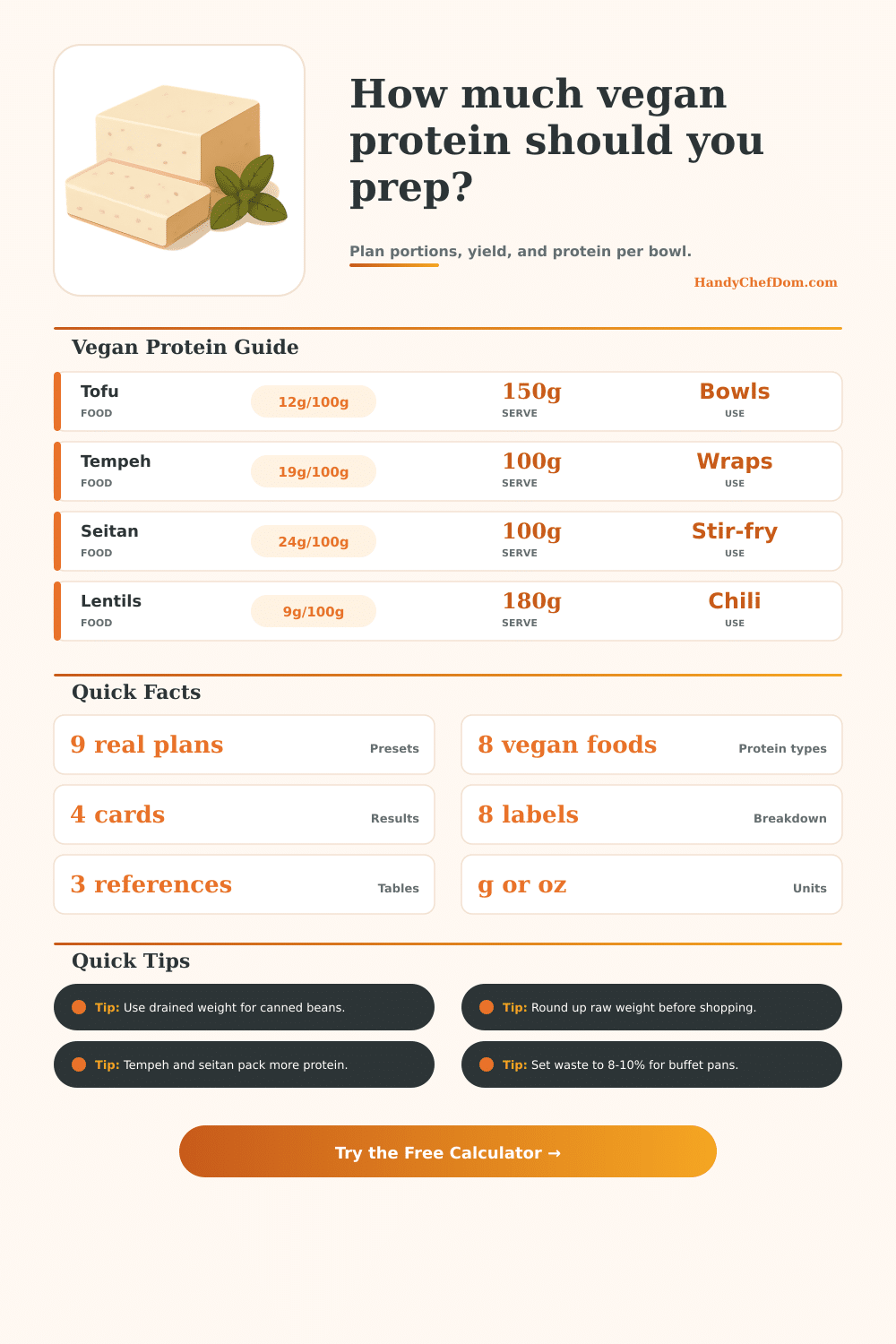
| Source | Protein / 100g | Std Serve | Real Use |
|---|---|---|---|
| Firm tofu | 12 g | 150 g | Bowls, curries |
| Tempeh | 19 g | 100 g | Wraps, stir-fry |
| Seitan | 24 g | 100 g | High-protein plates |
| Lentils cooked | 9 g | 180 g | Chili, soups |
| Chickpeas cooked | 8.5 g | 180 g | Curries, salads |
| Black beans cooked | 8.9 g | 180 g | Burritos, bowls |
| Edamame shelled | 11 g | 130 g | Lunch boxes |
| TVP hydrated | 16 g | 120 g | Sauces, tacos |
| Source | Yield | 1000g Raw -> | Practical Note |
|---|---|---|---|
| Firm tofu | 1.00x | 1000g cooked | Minimal weight change |
| Tempeh | 0.98x | 980g cooked | Small moisture loss |
| Seitan | 0.93x | 930g cooked | Pan sear shrinkage |
| Lentils cooked | 0.97x | 970g cooked | Post-drain weight |
| Chickpeas cooked | 0.96x | 960g cooked | Drain before weighing |
| Black beans cooked | 0.96x | 960g cooked | Similar to chickpeas |
| Edamame shelled | 0.95x | 950g cooked | Steam then drain |
| TVP hydrated | 1.04x | 1040g cooked | Absorbs liquid |
| Source | Light | Standard | Hearty |
|---|---|---|---|
| Firm tofu | 228 g | 210 g | 188 g |
| Tempeh | 144 g | 133 g | 119 g |
| Seitan | 116 g | 107 g | 96 g |
| Lentils cooked | 303 g | 279 g | 249 g |
| Chickpeas cooked | 321 g | 296 g | 264 g |
| Edamame shelled | 248 g | 228 g | 204 g |
Prep Tips
Planning meals around plant proteins can be difficult for many peoples because they are not familiar with how much plant protein to buy. Tofu and lentils, for instance, has a tendency to be purchased either in amounts that are too large or too small relative to the amount of protein that is needed. A variety of factors can cause the gap between the amount of plant protein that is intended to be served versus the amount that is actualy served.
For instance, different plant proteins contains different amounts of protein per gram of that foods. Some foods, like lentils, absorb the liquid during cooking, but foods like tofu actualy lose some of it moisture during the cooking process. The concept of how the food is to be portioned can also have an impact on the amount of protein that is needed; a light meal will require less protein than a hearty meal.
How to Plan Plant Protein with a Calculator
Finally, the waste that is created in the kitchen in preparing and serving these meals can lead to deficiency in the amount of protein that is served to the individuals eating those meals. The calculator that is provided to assist with plant protein calculations allow individuals to determine the amount of each type of plant protein that should be bought based off the protein requirements of those who will eat the meals. The calculator allows individuals to enter the raw weight of the protein items that are to be used, in which case the calculator will indicate the amount of protein that will be provided.
Alternatively, individuals can enter the amount of protein that is required for each person who is to eat the meals; in this case, the calculator will provide the raw amount of the protein item that will be required to provide the amount of protein per person that is required. Additionally, the calculator will indicate the total amount of protein that the items will provide, the amount of protein that will be provided to each person who eats, the amount of the ingredient that youll need to buy from the grocery store, and the weight of the protein items after they are cooked. These outputs of the protein calculator is helpful in that they allow individuals to make decisions regarding the meals that will be prepared.
For instance, if individuals desire to serve each of the meals to six individuals with 25 grams of protein provided to each person, the calculator will inform them if 600 grams of tempeh will provide that amount of protein, or if 800 grams of tempeh will be required to meet the protein requirements for each individual. Additionally, if an individual decides to change from tofu to lentils, or if they change the style of the meals from plates to a buffet, the calculator will reflect the impact that those changes can have upon the amount of protein that will be required for preparation of those meals. The tables that are provided allow individuals to compare the different types of plant proteins that is available without having to use the calculator for each different scenario.
These tables provide information regarding the protein density of the items, the amount of the item that is to be provided as a serving, the amount of raw weight that will produce the amount of cooked food that is provided, and an efficiency factor regarding how much protein that each item contains relative to the others. These tables can help individuals make decisions about what type of protein to buy from the grocery store. While the calculator accounts for some of the variables of cooking with plant proteins, there are additional factors that should be considered.
For instance, tofu firms when it is pressed. Tempeh and seitan contain the potential to create browned edges when they are seared in a hot pan. Additionally, foods like lentils and beans will absorb the cooking liquid once they have been cooked, which can lead to thickening of the food that is created that contains those ingredients.
An amount of waste can also be created when preparing these meals; some of the protein foods have to be trimmed prior to cooking, and some protein will be lost at the buffet when some individuals eat more than others. Additionally, the amount of plant protein that must be bought will change with the portioning of the meals; light meals will contain less of the protein foods than hearty meals, and the same amount of protein will be provided to individuals eating from a buffet than from a plated meal. While these factors may have little impact upon the protein that is contained in the meals, they do have the potential to impact the amount of protein that will actualy be served to the individuals.
In addition, the weight of the canned beans that is listed is the weight of the beans and the liquid; the drained weight and amount of the beans will be the weight that actually goes into the cooking pot. If the beans are not drained prior to cooking, the calculated amount of protein will not accurately reflect the amount of protein that will be provided to each individual. Individuals can prepare a variety of different meals that use this plant protein calculator.
For instance, if individuals calculate that 700 grams of firm tofu will provide four people with 25 grams of protein each, that calculation can be performed for other meals that are created. While the other ingredients for the meals may be changed, the amount of protein will be the same. This protein calculation can be applied to both small groups of individuals as well as to large groups of individuals; if those preparing the meals know that an increased amount of waste will be created if the meals are to be served as a buffet, and that the meals will be provided in buffet style, the cook will increase the amount of tofu to ensure that there is still enough protein provided to each individual after they have served themselves.
Thus, while the calculator cannot be used to prepare the meals or to season the proteins, it does provide the ability to remove the uncertainty regarding the protein content of those meals.