☕ Coffee Caffeine Calculator
Calculate caffeine mg per cup, daily total, and half-life timing for any brew method
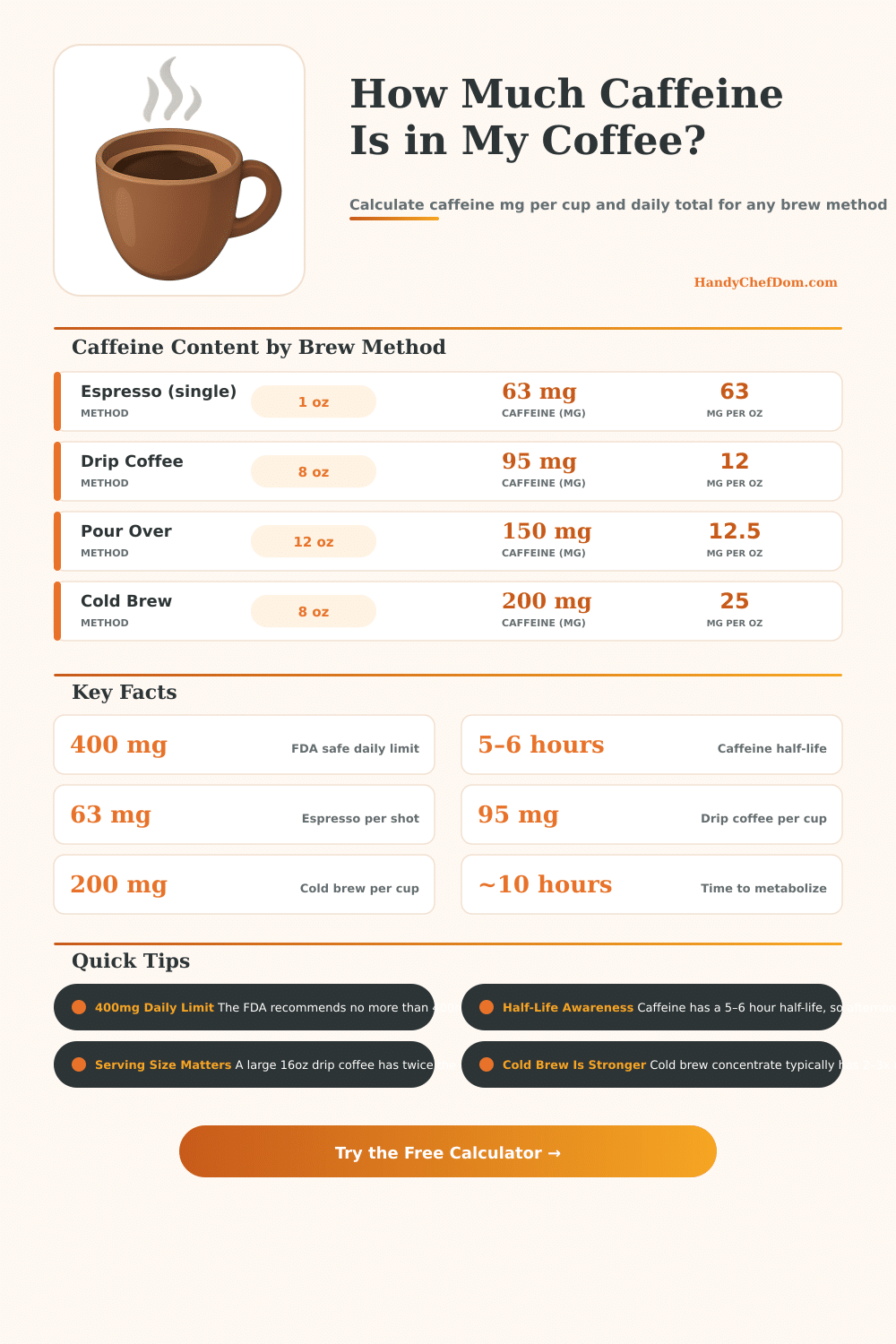
| Method | Serving Size | Caffeine (mg) | mg per oz |
|---|---|---|---|
| Espresso (single) | 1 oz | 63 mg | 63 |
| Drip Coffee | 8 oz | 95 mg | 12 |
| Pour Over | 12 oz | 150 mg | 12.5 |
| Cold Brew | 8 oz | 200 mg | 25 |
| French Press | 8 oz | 107 mg | 13 |
| AeroPress | 8 oz | 100 mg | 12.5 |
| Instant Coffee | 8 oz | 62 mg | 8 |
| Moka Pot | 3 oz | 80 mg | 27 |
| Sensitivity | Half-Life | 8am Coffee | 75% Cleared By |
|---|---|---|---|
| Low (fast metabolizer) | 4 hours | 8:00 AM | 4:00 PM |
| Medium (average) | 5.5 hours | 8:00 AM | 5:30 PM |
| High (slow metabolizer) | 7 hours | 8:00 AM | 7:00 PM |
Coffee is made from roasted and ground grains of coffee-plant. It appears black have bitter base with a bit of bitterness. The appeal comes mainly because of the caffeine in it.
For those that want to escape the caffeine, decaf coffee also exists. The decaf version helps folks that search for a totally different experience.
What Coffee Is and How People Drink It
The coffee-plant is a tropical evergreen tree that comes from Africa. Two mainstream species deserve to mention: arabica and robusta. Robusta stores more caffeine and commonly has a bitter nuance copmared with arabica.
Some brilliant brands choose only 100% arabica grains, roasted by medium-dark until very dark grade.
Coffee ranks between the three mainstream drinks globally, together with water and tea. It also belongs to the most profitable export products. Folks drink it everywhere, but the mode ranges.
Every land has its custom about preparation, service and enjoyment. For instance, the Turkish coffee is brewed strong, which boosts both caffeine and taste. In the Balkan region, that Turkish method stays the usual mode.
The serving size for coffee sometimes gets unclear. Industry estimates won cups at six liquid ounces, so around 150 milliliters. That is small compared with standard measure of eight ounces.
In cafes, one served it usually at eight until 24 ounces, some even reach 32 or 48. Producers commonly take five ounces for cup, which differs from the American standard. Like this one can control the marks on the pot.
Adding more ground coffee would seem a way for more caffeine, but truly it brings out the taste instead of the boost. Sometimes that results only in a more bitter drink.
Studies show that careful coffee drinking can help the health. Regular consumers have fewer cases of diabetes, stroke, heart disease, some cancerous diseases and dementia, according to surveys. The caffeine in coffee helps to stay energetic, hence many require it in the morning first.
Even so coffee stays a drink, not nourishment. It goes with a meal, but does not replace italone.
Home roasting of coffee attracts many as a cool hobby. A special roaster for City+ gives to the grains a rich set of blueberry and its taste. Even used grounds work for baking in bread, for instance in bitter roll with rye and oats.