🍛 Cumin Per Pound of Meat Calculator
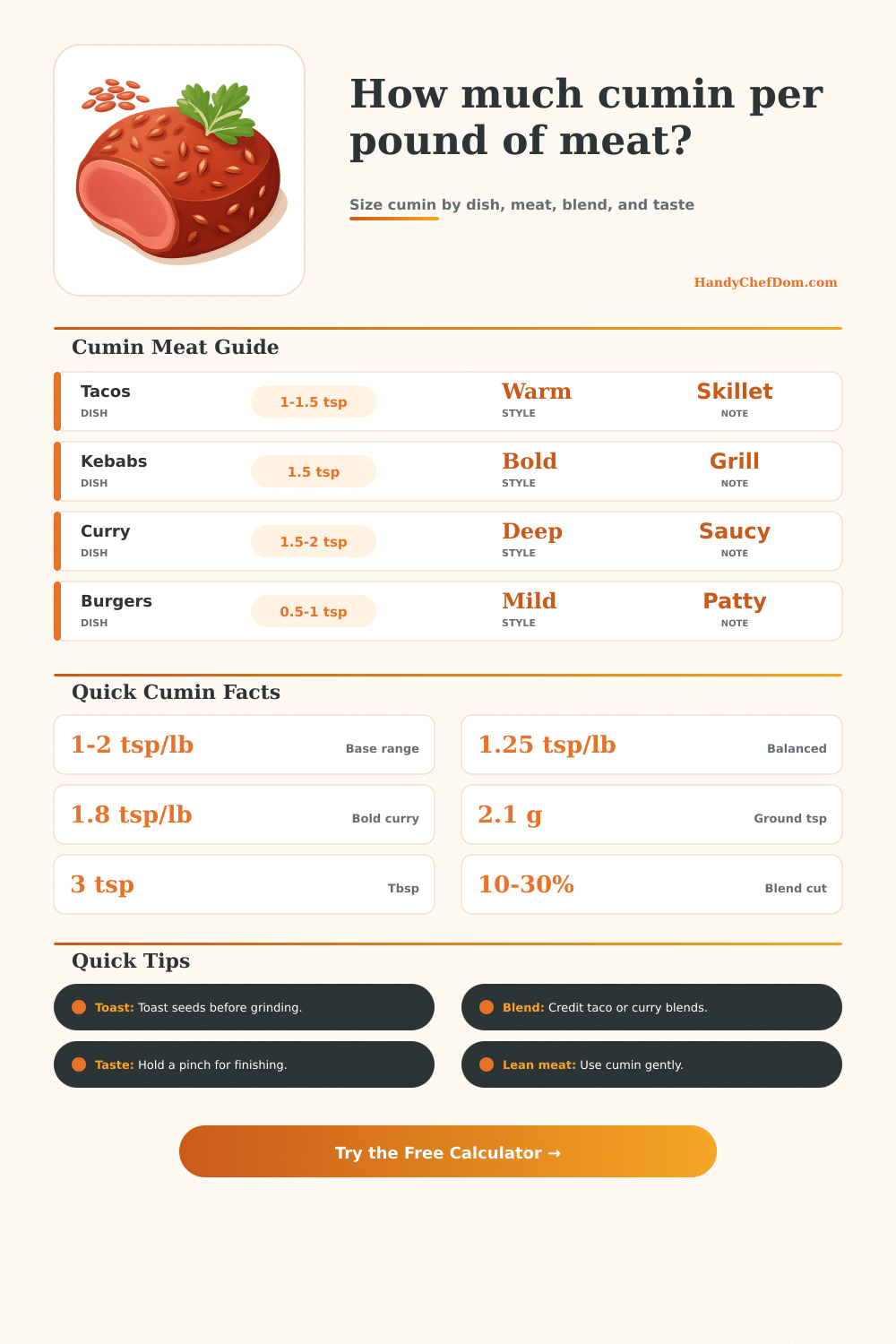
Estimate cumin for tacos, kebabs, chili, curry, and burgers using a practical 1 to 2 teaspoon ground cumin per pound reference, then adjust for meat, form, blend, intensity, servings, and marinade time.
Use 1 to 2 teaspoons ground cumin per pound of meat as the main kitchen reference. The calculator adjusts that range for dish style, cumin form, spice blend already included, intensity, meat type, serving count, and marinade time.
Warm, clear cumin flavor for skillet beef, pork, turkey, or chicken taco filling.
Marinated chunks can take a bolder cumin dose, especially with lamb or beef.
Saucy dishes, onions, and warm spices usually support the top end of the range.
Use a lighter touch so cumin seasons the patty without making it taste dusty.
| Dish type | Ground cumin start | Best intensity | Calculator note |
|---|---|---|---|
| Tacos or burrito filling | 1 to 1.5 tsp per lb meat | Balanced to bold | Works well with garlic, chile, oregano, and a small blend credit if taco seasoning is already present. |
| Kebabs or grilled skewers | 1.25 to 1.75 tsp per lb meat | Bold | Marinade time makes cumin more obvious, so long marinades get a small reduction. |
| Chili meat base | 1 to 1.4 tsp per lb meat | Balanced | This is cumin only, separate from chili powder amount; blend credit prevents double cumin. |
| Curry or masala meat | 1.5 to 2 tsp per lb meat | Bold | Curry sauces and aromatics can carry a stronger cumin profile. |
| Burgers or meat patties | 0.5 to 1 tsp per lb meat | Mild to balanced | Lower range keeps patties savory without overpowering the meat. |
| Spoon measure | Ground cumin | Whole cumin seed | Toasted ground cumin |
|---|---|---|---|
| 1/4 teaspoon | About 0.5 g | About 0.5 g | About 0.5 g |
| 1/2 teaspoon | About 1.1 g | About 1.0 g | About 1.0 g |
| 1 teaspoon | About 2.1 g | About 2.0 g | About 1.9 g |
| 1 tablespoon | About 6.3 g | About 6.0 g | About 5.7 g |
| 1/4 cup | About 25 g | About 24 g | About 23 g |
| Cumin form | Use in calculator | Flavor strength | Adjustment cue |
|---|---|---|---|
| Ground cumin | Baseline teaspoon amount | Standard | Use the result directly for most weeknight meat dishes. |
| Whole cumin seeds | Slightly less intense by volume | Gentle until toasted | Best when toasted and then crushed or ground before mixing. |
| Toasted ground cumin | Reduced a little | Very aromatic | Toasting wakes up the spice, so less can taste like more. |
| Freshly ground seeds | Reduced slightly | Bright and warm | Fresh grinding gives a clearer cumin note than an older jar. |
| Cumin paste or wet masala | Higher spoon volume | Diluted by moisture | Use more teaspoons by volume because paste is not all dry cumin. |
| Roasted cumin seed powder | Reduced for aroma | Deep and nutty | Good finishing choice for kebabs, curry meat, and tacos. |
| Meat type | Cumin tendency | Good dish fit | Calculator note |
|---|---|---|---|
| Beef | Baseline | Tacos, chili, burgers | Rich meat handles balanced cumin without much adjustment. |
| Lamb | Higher | Kebabs and curry | Earthy lamb supports a stronger cumin profile. |
| Chicken | Lower | Kebabs, tacos, curry | Lighter meat can show cumin quickly, so the factor is reduced. |
| Pork | Slightly lower | Tacos and burgers | Sweetness in pork works best with balanced cumin. |
| Turkey | Lower | Burgers and taco meat | Lean turkey can taste dusty if cumin runs too high. |
| Venison or game | Higher | Chili and kebabs | Game meat benefits from warm spice depth. |
| Mixed meat batch | Baseline | Meal prep and parties | Use the middle of the range unless one meat dominates. |
Using an correct amount of cumin when you are cooking meat is important, as the amount of cumin you use will determine the final flavors of the meat. Using too little cumin will result in the flavor of the meat being flat, while using too much cumin will make the flavor of the meat dusty or one note. Many people often want to know how much cumin to use for each pound of meat that they will cook.
The amount of cumin that you should use in your meat will depend upon the type of dish that you are cooking, how much time the cumin has to sit with the meat, and if the dish contain any spice blends that contain cumin. Each type of dish require a different amount of cumin to best bring out the flavor that you desire from the meat. For example, tacos require a small amount of cumin to flavor the meat, as too much cumin will overpower the other flavor in the taco.
How Much Cumin to Use per Pound of Meat
Kebabs, on the other hand, require a larger amount of cumin to stand up to the cooking process, as the meat will be in direct contact with the cumin while it is marinating. Curries require a high amount of cumin to flavor the meat and sauce, as the cumin will simmer with the other ingredient in the curry. Burgers, however, only require a small amount of cumin to even season the burger patty.
The calculator that is provided will help you to determine the correct amount of cumin to add to your meat based off the weight of the meat, the type of dish that you are making, the form of the cumin that you will use, and the spice blends that are contained within the dish. Each of these variables will have an impact upon the amount of cumin that you need for your recipe. For instance, whole cumin seeds will release different flavors than ground cumin.
Similarly, if your recipe contains taco seasoning, which contains cumin, the calculator will account for the amount of cumin contained within the seasoning blend. The same is true for the amount of time that the meat will be in contact with the cumin. The more time that the cumin has to flavor the meat, the less cumin that will be required to season the meat.
Additionally, the type of meat will also impact the amount of cumin that is required. Beef and lamb can handle large amount of cumin due to the fat content of these meats. Chicken and turkey will absorb the cumin quick, so using a large amount of cumin will overpower the meat.
Venison, or game meats, naturaly contain flavors that work well with warm spices like cumin, so increasing the amount of cumin will work to enhance the flavor of these meats. While these adjustments to the amount of cumin to use are small, it is important in ensuring that the meat maintains it’s flavor profile. People often make mistake when adding cumin to meat.
For instance, many people do not account for the fact that toasting the cumin will increase the strength of the cumin. Another of the mistakes that people make is adding all of the cumin to the meat at the beginning of the cooking process. A small amount of cumin should be added at the end of cooking the meat so that the flavor can be adjusted after the meat has been cooked.
When scaling the recipe to serve more individuals, the amount of cumin will not increase in direct correlation to the amount of meat that is being used. The calculator includes the number of serving that the recipe will produce, which will allow individuals to determine the amount of cumin that should be added to each serving of the meat. This information is important for those with different appetites, or for those who like meat with a milder flavoring with cumin.
Lastly, it is important to pay attention to the spice blends that are included in the recipe. Many store-bought spices, such as taco seasoning or curry spice blends will contain cumin. If you dont account for the amount of cumin that is contained in the spice blend in the calculation of the amount of cumin to add to the meat, the meat will contain too much cumin.
To account for this, the calculator will allow individuals to select the spice blend that contains the most cumin, which will automatically reduce the amount of cumin that must be added to the meat. Cumin works well alongside other flavors in the recipe, such as garlic, chile, citrus flavors, and herbs like cilantro. Adding lime juice to the meat at the end of the cooking process will brighten the flavor of the cumin, for instance.
Other herbs like cilantro will make the flavor of the cumin seem brighter and more pronouncedly. These flavoring additives can be used to adjust the flavor of the meat after it is cooked. While the number of tablespoons of cumin that are calculated are an excellent starting point for cooking the meat, the amount can be adjusted according to the individual stovetops, individual cuts of meat, and the specific spice blends that you will use in the recipe.