🧁 Grams to mL Sugar Converter
Convert sugar weight in grams to milliliters, cups, tablespoons & teaspoons
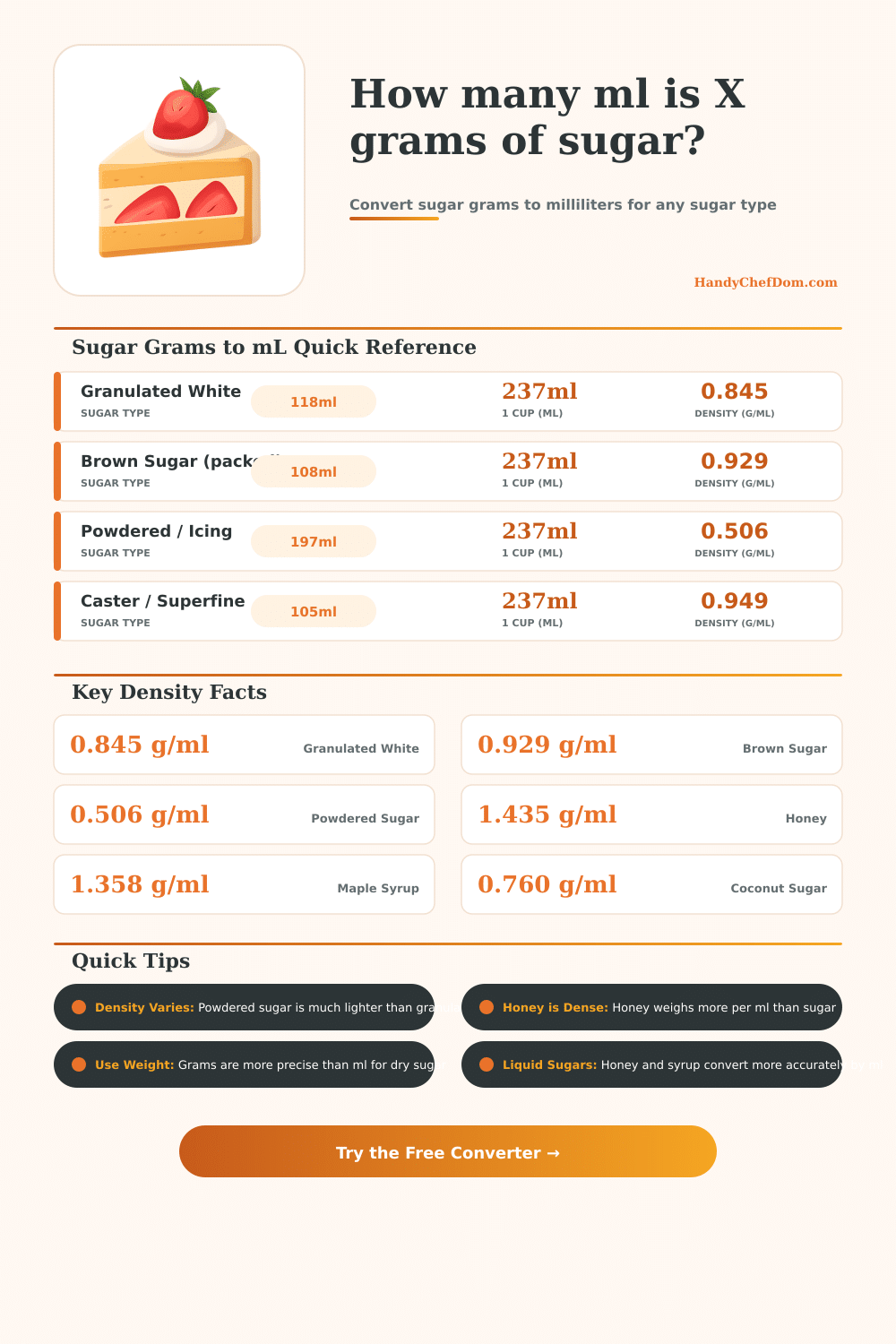
| Sugar Type | Density (g/ml) | 100g = ml | 1 Cup (ml) | 1 Tbsp (g) |
|---|---|---|---|---|
| Granulated White | 0.845 | 118ml | 237ml | 12.5g |
| Brown Sugar (packed) | 0.929 | 108ml | 237ml | 13.8g |
| Powdered / Icing | 0.506 | 197ml | 237ml | 7.5g |
| Caster / Superfine | 0.949 | 105ml | 237ml | 14g |
| Raw / Turbinado | 0.845 | 118ml | 237ml | 12.5g |
| Coconut Sugar | 0.760 | 132ml | 237ml | 11.3g |
| Honey | 1.435 | 70ml | 237ml | 21.3g |
| Maple Syrup | 1.358 | 74ml | 237ml | 20g |
| Volume | mL | Cups | Tablespoons | Teaspoons |
|---|---|---|---|---|
| 1 teaspoon | 5ml | 0.021 | 0.33 | 1 |
| 1 tablespoon | 15ml | 0.063 | 1 | 3 |
| ¼ cup | 59ml | 0.25 | 4 | 12 |
| ½ cup | 118ml | 0.5 | 8 | 24 |
| ¾ cup | 177ml | 0.75 | 12 | 36 |
| 1 cup | 237ml | 1 | 16 | 48 |
| 1 pint | 473ml | 2 | 32 | 96 |
| 1 liter | 1000ml | 4.23 | 67.6 | 202.9 |
That crystalline sweet sugar comes mainly from juice of sugarcane and sugar beet, although you find it also in sorghum and maple juice. It appears everywhere in kitchen and bakery, you use it as base, flavoring, even for help fermentation. There are many different sugar types, each with its own grade of sweetness for your creation.
Whether for cakes, drinks, steak rubs or fish, a bit of sugar genuinely animate the food
Sugar: Types, Uses and Health Risks
When you dig into the meaning of “sugar”, everything quickly complicates. The word covers many different chemicals, and not all taste the same. Some sugars happen naturally in foods, for instance fructose in fruits or lactose in milk.
Folks usually think about sugar only as that sweet taste in foods and drinks, but it is much more nuanced. Fresh fruits and dairy products store those natural sugars. It is interesting that fructose in fruits helps to deliver glycogen to liver, which genuinely matters for sleep and resting after hard exercise.
Brown sugar has two main kinds, prepared differently. One kind stays with molasses inside, because it was not refined fully. The second one comes from white refined sugar, to that you mix molasses.
Both melt very slowly because of the dense crystals of grains. For light brown sugar, take around one spoon of molasses in cup of white sugar. For darker, reach until two spoons in cup.
Even so, in recipes usually do not matter, whether you choose one or another, the results are the same.
Flows myth about use of that sugar for bread, especially for feeding yeast. But genuinely? Yeast does not require sugar.
It eats well the starch in flour. If you want to skip sugar, do that (many breads are without added sugar). Even so, if you mix brown sugar in the dough, it becomes wet.
Even after blending of dry ingredients, those grains stay stubborn and form little gums.
Too much added sugar however is dangerous. Talk about weight gain, obesity, type 2 diabetes and heart diseases later. The American Dietary Guidelines are clear: children under two years should not receive added sugar.
For others, added sugar stay under 10 percent of everyday calories. Ideal for women around 25 grams daily, for men close to 36 grams. Problem?
Average American consumes much more (around 17 spoons day), so two-three times the advocated.
Dried apricots conceal big sugar amount, which surprises many. One fresh apricot has only 3 grams. But four big dried reach 21 grams.
Natural yoghurt can store until 8 grams each serving, although those are not added sugars, because they come from milk. Some use artificial sweeteners as solution… They give sweetness with few calories.
But genuinely is compromise. For creating food, those sweeteners fail, because only natural sugar delivers full taste, aroma and colour.