🍲 Stir Fry Nutrition Calculator
Map calories and macros by protein, veg, oil, sauce, and starch so every wok bowl lands where you expect.
The estimate adds the main protein, vegetables, sauce, oil, and starch. Use it to trim a takeout bowl or to balance a home wok dinner.
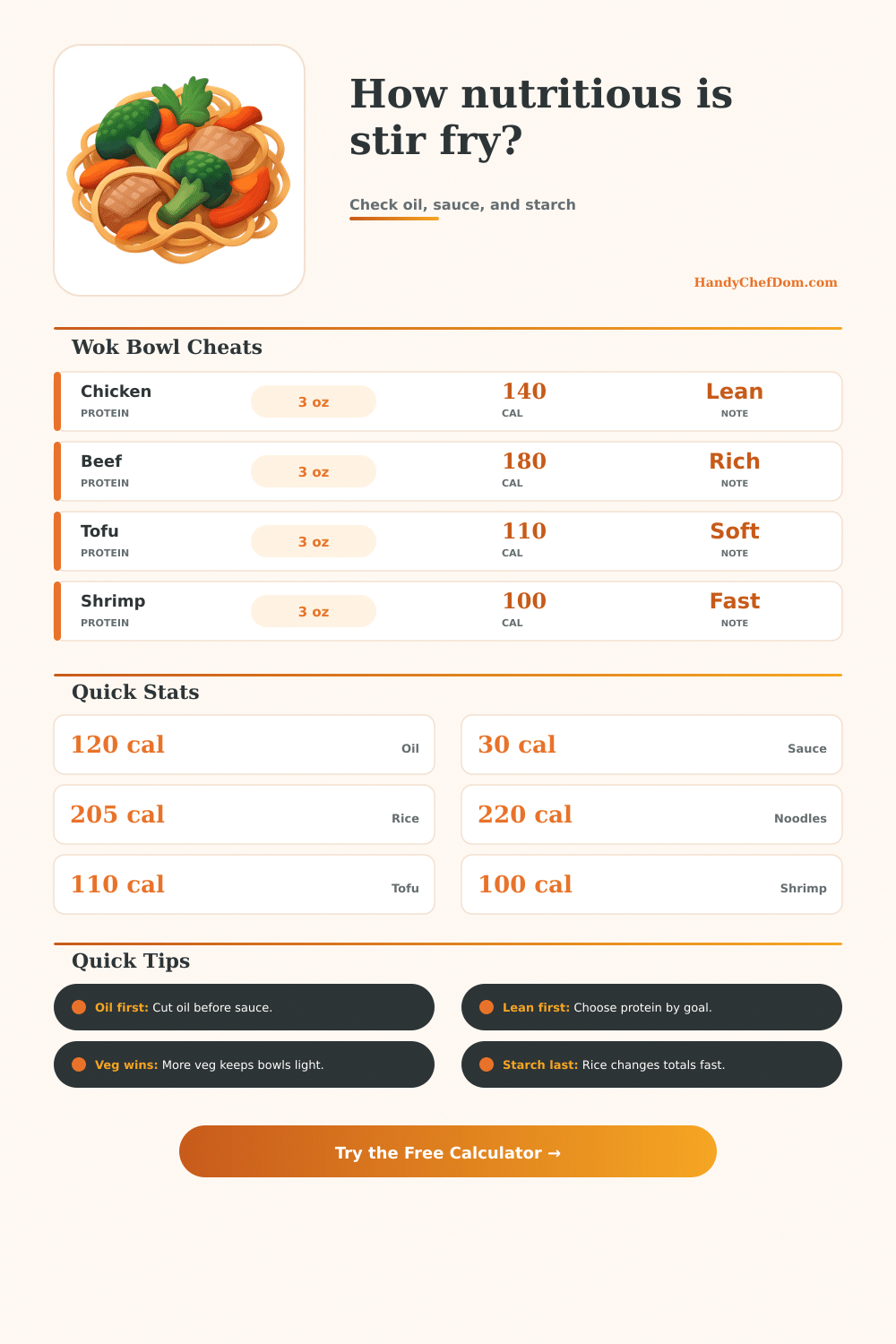
| Protein | 3 oz | Cal | Note |
|---|---|---|---|
| Chicken | 3 oz | 140 | Lean and easy |
| Beef | 3 oz | 180 | Richer bite |
| Shrimp | 3 oz | 100 | Fast and light |
| Tofu | 3 oz | 110 | Soaks sauce |
| Turkey | 3 oz | 135 | Lean mince |
| Pork | 3 oz | 160 | Juicy and round |
| Sauce | 1 tbsp | Cal | Note |
|---|---|---|---|
| Soy | 1 tbsp | 10 | Salty base |
| Teriyaki | 1 tbsp | 25 | Sweeter finish |
| Oyster | 1 tbsp | 20 | Deep umami |
| Peanut | 1 tbsp | 95 | Rich and dense |
| Ginger | 1 tbsp | 18 | Bright lift |
| Chili crisp | 1 tbsp | 80 | Oil plus bite |
| Veg | 1 cup | Cal | Note |
|---|---|---|---|
| Broccoli | 1 cup | 31 | Crunchy crown |
| Snap pea | 1 cup | 41 | Sweet snap |
| Bell pepper | 1 cup | 30 | Bright color |
| Mushroom | 1 cup | 22 | Earthy body |
| Carrot | 1 cup | 52 | Sweet bite |
| Baby bok choy | 1 cup | 13 | Soft leafy lift |
| Starch | 1 cup | Cal | Note |
|---|---|---|---|
| White rice | 1 cup | 205 | Takeout classic |
| Brown rice | 1 cup | 215 | More bite |
| Lo mein | 1 cup | 220 | Chewy and rich |
| Udon | 1 cup | 210 | Thick noodles |
| Cauli rice | 1 cup | 30 | Very light |
| No starch | 1 cup | 0 | Pure wok bowl |
Stir fry can be prepared in a wok, and stir fry can be healthy or not depending on the preparation of the stir fry. Stir fry contains healthy ingredient such as vegetables and lean meats but also contains ingredient that are not healthy such as oil, sodium, and starch. If you dont track the ingredients in your stir fry recipe, you may consume too many calorie from your stir fry.
By tracking the ingredients in your stir fry recipe, you will have control over your meal and your body will be fueled with the proper nutrient. The ingredients in stir fry will determine the nutritional value of the stir fry. Protein is one of the main ingredient in stir fry and contribute to the muscle in the body.
How to Make a Healthy Stir Fry
Chicken breast and shrimp are two of the lean protein that are used in stir fry recipes. Six ounce of chicken breast or shrimp will supply enough protein for two servings without adding too many calorie to the meal. Vegetables is another ingredient in stir fry recipes and add the vitamins to the meal.
Broccoli and snap peas are two of the vegetables that provide volume to the meal and contain very few calorie. Sauce is added to the stir fry to enhance the flavor of the meal. However, many sauces contain high amounts of salt and sugar.
The cook uses oil in the wok to ensure that the food will not stick to the wok. Oil is a very dense source of fat. One tablespoon of oil contains many calorie.
Starch is used to add carbohydrates to the meal, and starch like white rice is often used in stir fry recipes. Many people do not account for the ingredients in a stir fry recipe. For instance, many people may think that using more vegetable will even out the calories from the oil in the stir fry.
However, vegetables like bok choy contain fiber while sauces like teriyaki sauce contain high amounts of sodium. This stir fry ingredient tool will allow individuals to calculate the nutritional value of the stir fry recipe that they create. By selecting the ingredients that they would like to use in their stir fry recipe, they can hit the calculate button to determine the total amount of calories, grams of protein, grams of carbohydrate, and grams of fat that will be in the stir fry.
Furthermore, these number will be broken down to show the amount of each nutrient per serving of stir fry. The health goal that individuals set for themselves will determine the ingredients in their stir fry recipe. For individuals who wish to focus on lean proteins, shrimp and tofu could be selected as the protein sources for the stir fry recipe.
Additionally, cauliflower rice could be used as an alternative to rice to reduce the calorie in the stir fry. For individuals who wish to consume high amounts of protein, turkey or beef could be used in the stir fry recipe. Additionally, the cook could reduce the amount of sauce in the stir fry to increase the protein in the stir fry.
For those who want a stir fry recipe that tastes like restaurant stir fry, noodles and peanut sauce can be used in the stir fry recipe. However, many restaurant ingredient contain high amounts of calorie. The stir fry ingredient presets will allow individuals to quickly add the most common stir fry ingredients.
For instance, the preset of chicken and broccoli will be loaded into the stir fry recipe tool. This will allow individuals to recognize the difference between a healthy stir fry that they cook at home versus one that they might eat at a restaurant. Some of the most common stir fry recipe mistakes include the amount of oil that is added to the wok.
Many individuals add oil to the wok to cook the stir fry ingredients, but they dont measure the amount of oil that they add. Furthermore, the heat required to cook in the wok causes individuals to add too much oil to the wok. One tablespoon of oil contains approximately fourteen gram of fat.
Therefore, individuals should measure the amount of oil that they add to the wok. Additionally, many stir fry sauces contain high amounts of sodium, such as soy sauce. Therefore, individuals should be cautious of the amount of soy sauce that they use in their stir fry recipes.
Furthermore, different vegetables contain different amount of calories. For instance, mushrooms contain very few calorie while carrots contain more calories than mushrooms. Baby bok choy can be added to the stir fry recipe to provide the benefits of leafy vegetable.
However, cashews can be added as an ingredient to the stir fry recipe that provides texture to the stir fry. However, the calories from cashews can significantly increase the amount of fat in the stir fry recipe. The reference table will allow individuals to see the amount of calories and the amount of fat that is in the three ounce portions of protein and the one cup portion of starch in their stir fry recipe.
To prepare a successful stir fry recipe, the stir fry should contain a balance of nutrients. Protein will ensure that the body has the building block for muscle. Furthermore, the vegetables will add fiber to the stir fry that will allow the body to prevent a significant spike in the carbohydrates in the blood.
Sauce will add flavor to the stir fry, but ginger and chili can be used as flavoring alternative to the sauce in the stir fry. Oil is necessary to cook the stir fry in the wok. However, only one tablespoon of oil should be used in the wok to prepare the stir fry recipe to ensure the stir fry is healthy.
The starch, such as rice, can be one of the most variable ingredient in a stir fry recipe. Rice containing complex carbohydrate like brown rice will provide more fiber than white rice. Additionally, cauliflower rice can be used in place of white rice in the stir fry to reduce the amount of carbohydrates in the stir fry.
Some of the most common mistakes made when preparing a stir fry include using too much oil. For instance, individuals may use oil to prepare the wok but then use too much oil because they are worried that the food will stick to the wok while cooking. However, using high heat in the wok will prevent the food from sticking.
Additionally, some individuals may use too much sauce in the stir fry while it is cooking. Too much sauce will cause the sauce to pool in the wok while cooking the stir fry. Additionally, some individuals may use too much starch; two cups of rice will contain too much starch for a healthy stir fry recipe.
Instead, one cup of rice should be used in the recipe. Additionally, if an individual is very sensitive to the amount of salt in their food, they will need to use less soy sauce and more vegetable that contain less sodium. The health goals that the individual set for themselves will determine the ingredients in their stir fry recipe.
For instance, tofu could be used to prepare a vegetarian stir fry while turkey could be used in the recipe to provide high amounts of protein. Additionally, splitting the stir fry recipe into two serving will allow individuals to better control the amount of nutrients that they consume from the meal. While the stir fry ingredient recipe tool can account for the different ingredient in the stir fry recipe, there are some variable in the recipe that the tool will not account for.
For instance, some oil will remain in the wok. Additionally, some vegetables will shrink in size when stir fried. Furthermore, protein will shrink in size during the stir fry cooking process.
However, the value provided by the stir fry recipe tool are close enough to the actual amounts in the stir fry to be meaningful and helpful. If tracked over the course of a week, an individual can see what type of stir fry recipes contain the most fat while others have the least amount of calorie. Additionally, the reference sheet can be printed and used as a guide when preparing stir fry at home.
By utilizing these number for each ingredient in the stir fry recipe, an individual will own the stir fry cooking process and be able to prepare each bowl of stir fry to contain the nutrient that their body requires.