Chicken Nutrition Calculator for Cuts, Portions, and Cooking
Switch cuts, account for trim loss, and see calories, protein, and cooked yield per serving in one quick calculator.
USDA-style base: values are per 100 g cooked edible portion. Trim and cooking yield convert your entered raw weight into a practical plated estimate.
| Cut | Calories | Protein | Fat | Sodium |
|---|---|---|---|---|
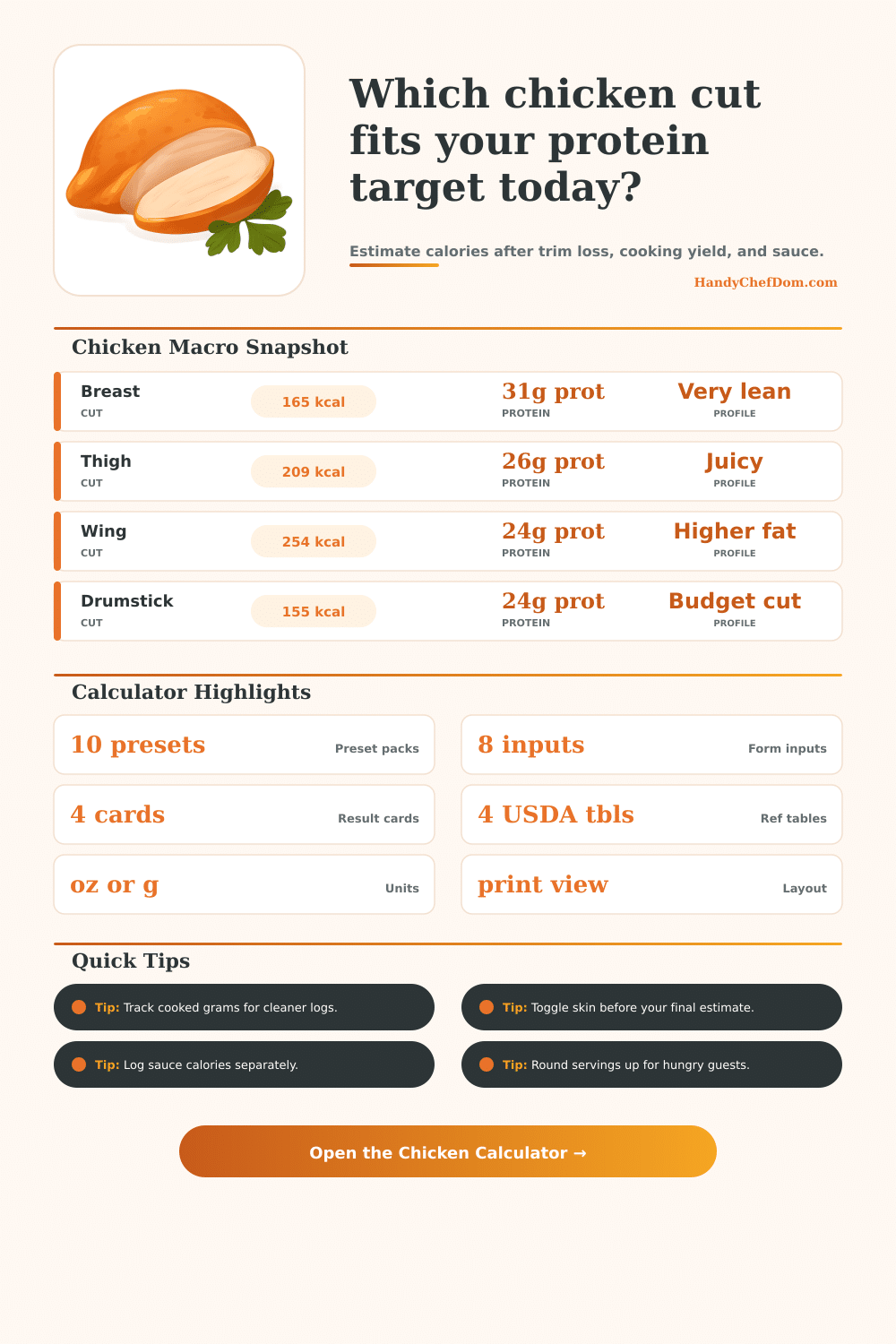
| Breast, meat only, roasted | 165 kcal | 31.0 g | 3.6 g | 74 mg |
| Thigh, meat only, roasted | 209 kcal | 26.0 g | 10.9 g | 88 mg |
| Drumstick, meat only, roasted | 155 kcal | 24.2 g | 5.7 g | 95 mg |
| Wing, meat and skin, roasted | 254 kcal | 23.8 g | 16.9 g | 98 mg |
| Leg, meat only, roasted | 174 kcal | 24.2 g | 7.8 g | 92 mg |
| Whole chicken, meat only, roasted | 190 kcal | 28.9 g | 7.4 g | 86 mg |
| Method | Yield factor | Density factor | Why it shifts |
|---|---|---|---|
| Oven roast | 0.76x | 1.00x | Baseline water loss |
| Grill | 0.72x | 1.05x | More moisture loss |
| Air fry | 0.73x | 1.04x | Fast dry heat |
| Poach | 0.84x | 0.93x | Water retention |
| Stew | 0.81x | 0.96x | Liquid carryover |
| Rotisserie style | 0.75x | 1.08x | Drip and concentration |
| Portion cue | Cooked grams | Calories | Protein |
|---|---|---|---|
| Breast, 4 oz cooked | 113 g | 186 kcal | 35 g |
| Thigh, 4 oz cooked | 113 g | 236 kcal | 29 g |
| Drumstick, 1 medium | 82 g | 127 kcal | 20 g |
| Wing, 2 pieces edible | 56 g | 142 kcal | 13 g |
| Leg meat, 4 oz cooked | 113 g | 197 kcal | 27 g |
| Mixed roast, 5 oz cooked | 142 g | 270 kcal | 41 g |
| Add-on | Amount | Calories | Use case |
|---|---|---|---|
| Olive oil | 1 tsp | 40 kcal | Pan finish |
| Honey garlic sauce | 1 tbsp | 45 kcal | Glaze |
| Buffalo sauce | 1 tbsp | 15 kcal | Wing toss |
| BBQ sauce | 1 tbsp | 29 kcal | Grill coat |
| Yogurt marinade | 2 tbsp | 25 kcal | Tenderizing |
| Dry spice rub | 1 tsp | 6 kcal | Low-cal flavor |
Chicken is a food that contains protein and is used in many different meals. When planning a chicken dinners, the amount of protein in the meal has to be considered. The protein content of chicken has to be considered because chicken will loses weight during the cooking process.
If you consider the raw weight of the chicken alone, the true nutritional value of the cooked chicken will not be known. A nutrition calculator allow individuals to determine the nutritional value of their chicken dish by utilizing the USDA values for chicken breast, chicken thighs, chicken drumstick, chicken wings, and whole chicken. Additionally, the nutrition calculator accounts for the trim and weight loss that occur during the cooking of the chicken, as well as the amount of sauce that may be added to the chicken.
How to check protein and calories in cooked chicken
The nutritional value of the different part of the chicken may differ from one another. For instance, chicken breast contain fewer calories than chicken thigh meat. Additionally, chicken drumsticks tend to contain a middle-priced and flavored alternative to the other cuts of chicken.
Chicken wings, however, contain the most highest amount of energy per pound if the skin is left on the chicken. An individual can use the nutrition calculator to select the cut of the chicken that is being used in the recipe to ensure that the protein and fat values for the chicken dish are accurate to that of the purchased chicken. The way that the chicken is prepared also change the nutrition facts of the chicken.
For instance, oven roasting chicken will lead to a loss of the water weight of the chicken. As a result, the protein concentration of the chicken will be more concentrated than if the chicken was cooked in another way. Poached chicken will retain more of its weight than roasted chicken, but the poaching process will dilute the protein concentration of the chicken.
Air fryers sit somewhere in the middle of these two extremes in terms of the water weight that is lost during the cooking process; they use less fat than pan-frying. Each cooking method has its own setting on the nutrition calculator to reflect the difference in the weight of the cooked chicken. Additionally, you must also account for the skin of the chicken; leaving the skin on the chicken will add fat to the chicken, even if that skin is later removed from the chicken prior to eating.
Some of the factor that must be accounted for in the nutrition calculator are the loss of the bones and trim weight of the chicken. If whole chickens or chicken thighs that contain the bones are purchased, some of the weight of the raw chicken will be composed of the bones, which will not be consumed. To account for this, individuals must tell the nutrition calculator the percentage of the weight of the chicken that is compose of bones and trim weight.
If this percentage isnt accounted for, the calorie count will be based upon the weight of the chicken that contains the edible portion only. Additionally, any marinades or sauces that are used in the chicken will contain calories. These sauces should be accounted for in the nutrition calculator in terms of the number of tablespoons of sauce that are used in the recipe.
Many individuals make the mistake of assuming that the raw weight of the chicken is the same as the weight that will be obtained after the chicken is cooked. Because chicken can lose between 16 and 28% of its raw weight during the cooking process, a chicken dish that weighs four ounce when raw will be less than four ounces when cooked. The nutrition calculator accounts for this loss of weight during the cooking process to determine the number of calories that will be obtained with each serving of the chicken.
Additionally, individuals may not consider the amount of fat that will be contributed to the chicken if the skin is left on the chicken during the cooking process. If the correct skin setting is chose in the nutrition calculator, this hidden fat will not be a surprise in the dietary logs of the individual. The comparison grid that is included in the nutrition calculator allows individuals to compare the different parts of the chicken to one another.
For instance, chicken breast contains more protein per calorie than chicken thigh. However, chicken thigh contains more moisture, so it is a better choice for individuals who want to reheat the chicken. Chicken drumsticks are typically less expensive than the other cuts of chicken.
Additionally, chicken wings contain more flavor than the other cuts of chicken. These differences between chicken parts can be seen by selecting the same amount of raw chicken and comparing each of the different profiles within the nutrition calculator. The results of the nutrition calculator will indicate the amount of protein and fat that the chicken contains based off the cut of the chicken that is used in the recipe.
The nutritional information that is calculated by this nutrition calculator can help the individual to determine which cut of chicken to use for what dietary goal. For instance, if the goal is to consume 30 grams of protein yet burn few calories, skinless chicken breast will contain the best balance of protein to calories. However, if the goal is to feed a family and to ensure that the chicken will stay moist after cooking, chicken thigh will contain the best balance of protein, calories, and moisture.
Each cut of chicken can contain the same raw weight of chicken, but the results will differ based upon the trim, yield of the chicken, and the number of calories from the added ingredient. This nutrition calculator allows the individual to determine the nutritional information of the chicken dish in relation to each of the variable that may impact the outcome of the meal.