🍚 Rice To Water Ratio Calculator
Set the water amount for a rice batch by variety, cooking method, rinse or soak state, texture target, cup or gram entry, absorption, evaporation, and final yield.
Enter the dry rice you are cooking, then tune the ratio for grain type, pot style, rinsing, soaking, lid evaporation, and desired texture. This calculator focuses on water ratios, not guest portions.
| Rice variety | Base water ratio | Dry cup weight | Cooked yield |
|---|---|---|---|
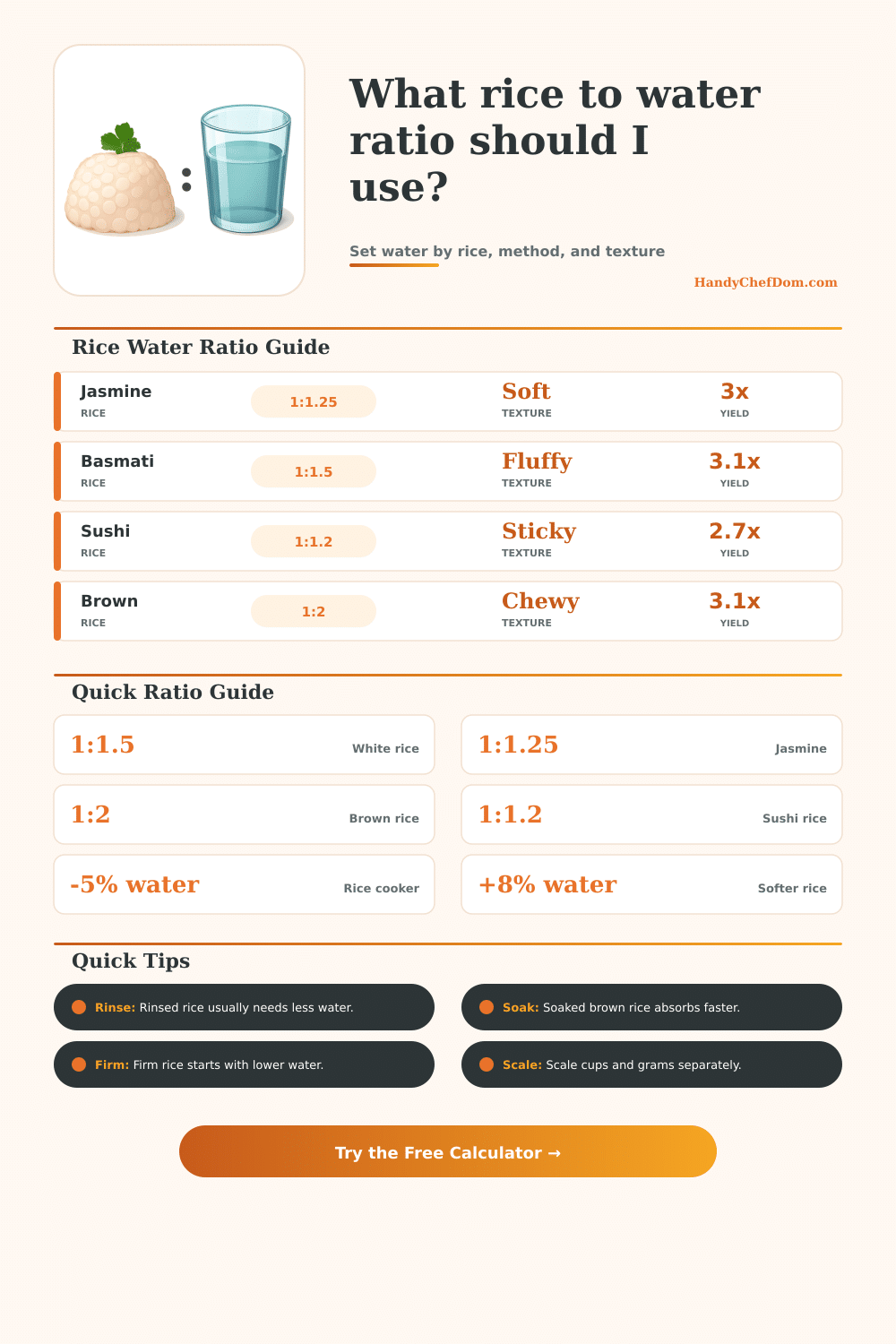
| Long-grain white rice | 1.50 cups water per 1 cup rice | 185 g per dry cup | About 3.05 cups cooked |
| Jasmine rice | 1.25 cups water per 1 cup rice | 185 g per dry cup | About 3.00 cups cooked |
| Basmati rice | 1.50 cups water per 1 cup rice | 180 g per dry cup | About 3.10 cups cooked |
| Medium-grain white rice | 1.45 cups water per 1 cup rice | 190 g per dry cup | About 2.90 cups cooked |
| Short-grain sushi rice | 1.20 cups water per 1 cup rice | 190 g per dry cup | About 2.70 cups cooked |
| Brown rice | 2.00 cups water per 1 cup rice | 190 g per dry cup | About 3.10 cups cooked |
| Parboiled rice | 2.00 cups water per 1 cup rice | 185 g per dry cup | About 3.10 cups cooked |
| Wild rice blend | 2.50 cups water per 1 cup rice | 175 g per dry cup | About 3.20 cups cooked |
| Black rice | 1.75 cups water per 1 cup rice | 180 g per dry cup | About 3.00 cups cooked |
| Arborio rice | 2.75 cups liquid per 1 cup rice | 195 g per dry cup | About 2.90 cups cooked |
| Cooking method | Ratio adjustment | Use when | Watch point |
|---|---|---|---|
| Covered stovetop absorption | Use base ratio | Standard saucepan with a fitted lid | Keep simmer low after boiling |
| Rice cooker | About 5% less water | Sealed cooker bowls with measured lines | Rinsed rice can need another small cut |
| Pressure cooker | About 22% less water | Instant Pot or other sealed pressure pots | Very little evaporation occurs |
| Pilaf or sauteed rice | About 5% more water | Rice is toasted in fat before liquid | Toasting slows surface hydration |
| Wide pot or loose lid | About 12% more water | More steam escapes during cooking | Check heat and lid fit |
| Open boil and drain | Ratio is less strict | Rice is cooked like pasta and drained | Use abundant water, then drain well |
| Rinse or soak state | Water change | Best fit | Reason |
|---|---|---|---|
| Unrinsed dry rice | No change | Packaged rice cooked straight from dry | No surface water has been added |
| Rinsed and well drained | About 3% less water | White, jasmine, basmati, and sushi rice | Drained grains still hold a little moisture |
| Rinsed and still damp | About 8% less water | Rice poured in shortly after rinsing | Clinging water counts toward the pot total |
| Soaked 15 to 30 minutes | About 11% less water | Basmati, brown rice, and aged grains | Some water is already inside the grain |
| Long soak, drained well | About 15% less water | Brown, black, wild blend, or older rice | Hydrated grains need less pot water |
| Dry rice amount | 1:1.25 water | 1:1.50 water | 1:2.00 water |
|---|---|---|---|
| 1 cup dry rice | 1.25 cups water | 1.50 cups water | 2.00 cups water |
| 1.5 cups dry rice | 1.9 cups water | 2.25 cups water | 3.00 cups water |
| 2 cups dry rice | 2.50 cups water | 3.00 cups water | 4.00 cups water |
| 3 cups dry rice | 3.75 cups water | 4.50 cups water | 6.00 cups water |
| 500 g dry rice | About 3.4 cups water | About 4.1 cups water | About 5.4 cups water |
| 1 kg dry rice | About 6.8 cups water | About 8.1 cups water | About 10.8 cups water |
The correct ratio of rice to water are a fundamental skill for individuals looking to cook rice. The ratio that is used will determine the textures of the rice that is cooked. If the ratio contains too much water relative to the amount of rice, the rice will become a sticky clump.
If there is too little water than rice, the rice will remain hard and underdone. While many use the same measurements for cooking rice, the type of rice will change the amount of water that is required. Some rice varieties contains more water than others.
How Much Water to Use for Rice
For instance, brown rice contains the bran layer which requires more water and takes longer to cook than white rice. Sushi rice is a short rice that has been polished which allow it to stick to itself even with less water. Jasmine rice also takes on water quickly but retains its fragrance with a lower rice to water ratio.
Consequently, each variety of rice has its own unique composition which allows for different amount of water to be added. Additionally, the method for cooking the rice will change the amount of water that is required. Rice cookers retain the steam which allow for less water to be added to the rice relative to methods that allow for steam to escape.
Pressure cookers retain the steam which allows for even more less water to be added to the rice as compared to rice cookers. Methods that allow for steam to escape, such as using a wide pan or pot with a loose lid will require the addition of extra water to the rice to compensate for the loss of steam. Another factor in the amount of water to rice is the step of rinsing or soaking the rice.
Because rinsed rice contains moisture on the surface of the rice grains, less water is required. Soaked rice has taken in water to the center of the rice grains which indicate that even less water is required. Skipping these steps may lead to inconsistent rice; therefore they must be accounted for in the preparation of rice.
Individuals may also have a preference in the texture of the rice. For instance, some may prefer rice to have distinct grain while others prefer the rice to be soft and moist. Additionally, rice that will be kept warm for long periods may require the addition of extra water so that it does not dry out.
Rice that is prepared to be softer will require the addition of slightly more water. The amount of rice that will be cooked will also impact the amount of water that is added. Rice will triple in volume when cooked; therefore, the exact amount of rice that is cooked can have an impact on the amount of water that is required.
If more rice is cooked, more water will be required. Thus, the amount of rice that will be cooked can help to indicate the amount of water that should be added. Common mistake may include treating all types of rice the same or ignoring the equipment to be used in the preparation of rice.
Using the correct ratio for white rice to brown rice will lead to underdone rice. Using the correct ratio for rice in a wide pan will lead to the development of dry rice on the bottom of the pan. Finally, measuring rice after rinsing it will change the volume of rice which will ruin the ratio of rice to water.
The tables that are provided here illustrate the different ratios of rice to water according to type of rice and method of cooking the rice. For instance, the tables indicate that parboiled rice will require more water than white rice. Additionally, open boiling methods will require more water than absorption cooking methods.
These tables can help to indicate the relationship between rice and water. Additionally, the calculator can help to remove the need of individuals to manually calculate the amount of water that should be added to rice for cooking. The calculator will calculate the amount of water for the rice which allows individuals to focus on the cooking of the rice itself.
The correct ratio of rice to water are a fundamental skill for individuals looking to cook rice. The ratio that is used will determine the textures of the rice that is cooked. If the ratio contains too many water relative to the amount of rice, the rice will become a sticky clump.
If there is too little water than rice, the rice will remain hard and underdone. While many use the same measurements for cooking rice, the type of rice will change the amount of water that is required. Some rice varieties contains more water than others.
For instance, brown rice contains the bran layer which requires more water and takes longer to cook than white rice. Sushi rice is a short rice that has been polished which allow it to stick to itself even with less water. Jasmine rice also takes on water quickly but retains its fragrance with a lower rice to water ratio.
Consequently, each variety of rice has its own unique composition which allows for different amount of water to be added. Additionally, the method for cooking the rice will change the amount of water that is required. Rice cookers retain the steam which allow for less water to be added to the rice relative to methods that allow for steam to escape.
Pressure cookers retain the steam which allows for even more less water to be added to the rice as compared to rice cookers. Methods that allow for steam to escape, such as using a wide pan or pot with a loose lid will require the addition of extra water to the rice to compensate for the loss of steam. Another factor in the amount of water to rice is the step of rinsing or soaking the rice.
Because rinsed rice contains moisture on the surface of the rice grains, less water is required. Soaked rice has taken in water to the center of the rice grains which indicate that even less water is required. Skipping these steps may lead to inconsistent rice; therefore they must be accounted for in the preparation of rice.
Individuals may also have a preference in the texture of the rice. For instance, some may prefer rice to have distinct grain while others prefer the rice to be soft and moist. Additionally, rice that will be kept warm for long periods may require the addition of extra water so that it does not dry out.
Rice that is prepared to be softer will require the addition of slightly more water. The amount of rice that will be cooked will also impact the amount of water that is added. Rice will triple in volume when cooked; therefore, the exact amount of rice that is cooked can have an impact on the amount of water that is required.
If more rice is cooked, more water will be required. Thus, the amount of rice that will be cooked can help to indicate the amount of water that should be added. Common mistake may include treating all types of rice the same or ignoring the equipment to be used in the preparation of rice.
Using the correct ratio for white rice to brown rice will lead to underdone rice. Using the correct ratio for rice in a wide pan will lead to the development of dry rice on the bottom of the pan. Finally, measuring rice after rinsing it will change the volume of rice which will ruin the ratio of rice to water.
The tables that are provided here illustrate the different ratios of rice to water according to type of rice and method of cooking the rice. For instance, the tables indicate that parboiled rice will require more water than white rice. Additionally, open boiling methods will require more water than absorption cooking methods.
These tables can help to indicate the relationship between rice and water. Additionally, the calculator can help to remove the need of individuals to manually calculate the amount of water that should be added to rice for cooking. The calculator will calculate the amount of water for the rice which allows individuals to focus on the cooking of the rice itself.
The correct ratio of rice to water are a fundamental skill for individuals looking to cook rice. The ratio that is used will determine the textures of the rice that is cooked. If the ratio contains too many water relative to the amount of rice, the rice will become a sticky clump.
If there is too little water than rice, the rice will remain hard and underdone. While many use the same measurements for cooking rice, the type of rice will change the amount of water that is required. Some rice varieties contains more water than others.
For instance, brown rice contains the bran layer which requires more water and takes longer to cook than white rice. Sushi rice is a short rice that has been polished which allow it to stick to itself even with less water. Jasmine rice also takes on water quickly but retains its fragrance with a lower rice to water ratio.
Consequently, each variety of rice has its own unique composition which allows for different amount of water to be added. Additionally, the method for cooking the rice will change the amount of water that is required. Rice cookers retain the steam which allow for less water to be added to the rice relative to methods that allow for steam to escape.
Pressure cookers retain the steam which allows for even more less water to be added to the rice as compared to rice cookers. Methods that allow for steam to escape, such as using a wide pan or pot with a loose lid will require the addition of extra water to the rice to compensate for the loss of steam. Another factor in the amount of water to rice is the step of rinsing or soaking the rice.
Because rinsed rice contains moisture on the surface of the rice grains, less water is required. Soaked rice has taken in water to the center of the rice grains which indicate that even less water is required. Skipping these steps may lead to inconsistent rice; therefore they must be accounted for in the preparation of rice.
Individuals may also have a preference in the texture of the rice. For instance, some may prefer rice to have distinct grain while others prefer the rice to be soft and moist. Additionally, rice that will be kept warm for long periods may require the addition of extra water so that it does not dry out.
Rice that is prepared to be softer will require the addition of slightly more water. The amount of rice that will be cooked will also impact the amount of water that is added. Rice will triple in volume when cooked; therefore, the exact amount of rice that is cooked can have an impact on the amount of water that is required.
If more rice is cooked, more water will be required. Thus, the amount of rice that will be cooked can help to indicate the amount of water that should be added. Common mistake may include treating all types of rice the same or ignoring the equipment to be used in the preparation of rice.
Using the correct ratio for white rice to brown rice will lead to underdone rice. Using the correct ratio for rice in a wide pan will lead to the development of dry rice on the bottom of the pan. Finally, measuring rice after rinsing it will change the volume of rice which will ruin the ratio of rice to water.
The tables that are provided here illustrate the different ratios of rice to water according to type of rice and method of cooking the rice. For instance, the tables indicate that parboiled rice will require more water than white rice. Additionally, open boiling methods will require more water than absorption cooking methods.
These tables can help to indicate the relationship between rice and water. Additionally, the calculator can help to remove the need of individuals to manually calculate the amount of water that should be added to rice for cooking. The calculator will calculate the amount of water for the rice which allows individuals to focus on the cooking of the rice itself.
The correct ratio of rice to water are a fundamental skill for individuals looking to cook rice. The ratio that is used will determine the textures of the rice that is cooked. If the ratio contains too many water relative to the amount of rice, the rice will become a sticky clump.
If there is too little water than rice, the rice will remain hard and underdone. While many use the same measurements for cooking rice, the type of rice will change the amount of water that is required. Some rice varieties contains more water than others.
For instance, brown rice contains the bran layer which requires more water and takes longer to cook than white rice. Sushi rice is a short rice that has been polished which allow it to stick to itself even with less water. Jasmine rice also takes on water quickly but retains its fragrance with a lower rice to water ratio.
Consequently, each variety of rice has its own unique composition which allows for different amount of water to be added. Additionally, the method for cooking the rice will change the amount of water that is required. Rice cookers retain the steam which allow for less water to be added to the rice relative to methods that allow for steam to escape.
Pressure cookers retain the steam which allows for even more less water to be added to the rice as compared to rice cookers. Methods that allow for steam to escape, such as using a wide pan or pot with a loose lid will require the addition of extra water to the rice to compensate for the loss of steam. Another factor in the amount of water to rice is the step of rinsing or soaking the rice.
Because rinsed rice contains moisture on the surface of the rice grains, less water is required. Soaked rice has taken in water to the center of the rice grains which indicate that even less water is required. Skipping these steps may lead to inconsistent rice; therefore they must be accounted for in the preparation of rice.
Individuals may also have a preference in the texture of the rice. For instance, some may prefer rice to have distinct grain while others prefer the rice to be soft and moist. Additionally, rice that will be kept warm for long periods may require the addition of extra water so that it does not dry out.
Rice that is prepared to be softer will require the addition of slightly more water. The amount of rice that will be cooked will also impact the amount of water that is added. Rice will triple in volume when cooked; therefore, the exact amount of rice that is cooked can have an impact on the amount of water that is required.
If more rice is cooked, more water will be required. Thus, the amount of rice that will be cooked can help to indicate the amount of water that should be added. Common mistake may include treating all types of rice the same or ignoring the equipment to be used in the preparation of rice.
Using the correct ratio for white rice to brown rice will lead to underdone rice. Using the correct ratio for rice in a wide pan will lead to the development of dry rice on the bottom of the pan. Finally, measuring rice after rinsing it will change the volume of rice which will ruin the ratio of rice to water.
The tables that are provided here illustrate the different ratios of rice to water according to type of rice and method of cooking the rice. For instance, the tables indicate that parboiled rice will require more water than white rice. Additionally, open boiling methods will require more water than absorption cooking methods.
These tables can help to indicate the relationship between rice and water. Additionally, the calculator can help to remove the need of individuals to manually calculate the amount of water that should be added to rice for cooking. The calculator will calculate the amount of water for the rice which allows individuals to focus on the cooking of the rice itself.
The correct ratio of rice to water are a fundamental skill for individuals looking to cook rice. The ratio that is used will determine the textures of the rice that is cooked. If the ratio contains too many water relative to the amount of rice, the rice will become a sticky clump.
If there is too little water than rice, the rice will remain hard and underdone. While many use the same measurements for cooking rice, the type of rice will change the amount of water that is required. Some rice varieties contains more water than others.
For instance, brown rice contains the bran layer which requires more water and takes longer to cook than white rice. Sushi rice is a short rice that has been polished which allow it to stick to itself even with less water. Jasmine rice also takes on water quickly but retains its fragrance with a lower rice to water ratio.
Consequently, each variety of rice has its own unique composition which allows for different amount of water to be added. Additionally, the method for cooking the rice will change the amount of water that is required. Rice cookers retain the steam which allow for less water to be added to the rice relative to methods that allow for steam to escape.
Pressure cookers retain the steam which allows for even more less water to be added to the rice as compared to rice cookers. Methods that allow for steam to escape, such as using a wide pan or pot with a loose lid will require the addition of extra water to the rice to compensate for the loss of steam. Another factor in the amount of water to rice is the step of rinsing or soaking the rice.
Because rinsed rice contains moisture on the surface of the rice grains, less water is required. Soaked rice has taken in water to the center of the rice grains which indicate that even less water is required. Skipping these steps may lead to inconsistent rice; therefore they must be accounted for in the preparation of rice.
Individuals may also have a preference in the texture of the rice. For instance, some may prefer rice to have distinct grain while others prefer the rice to be soft and moist. Additionally, rice that will be kept warm for long periods may require the addition of extra water so that it does not dry out.
Rice that is prepared to be softer will require the addition of slightly more water. The amount of rice that will be cooked will also impact the amount of water that is added. Rice will triple in volume when cooked; therefore, the exact amount of rice that is cooked can have an impact on the amount of water that is required.
If more rice is cooked, more water will be required. Thus, the amount of rice that will be cooked can help to indicate the amount of water that should be added. Common mistake may include treating all types of rice the same or ignoring the equipment to be used in the preparation of rice.
Using the correct ratio for white rice to brown rice will lead to underdone rice. Using the correct ratio for rice in a wide pan will lead to the development of dry rice on the bottom of the pan. Finally, measuring rice after rinsing it will change the volume of rice which will ruin the ratio of rice to water.
The tables that are provided here illustrate the different ratios of rice to water according to type of rice and method of cooking the rice. For instance, the tables indicate that parboiled rice will require more water than white rice. Additionally, open boiling methods will require more water than absorption cooking methods.
These tables can help to indicate the relationship between rice and water. Additionally, the calculator can help to remove the need of individuals to manually calculate the amount of water that should be added to rice for cooking. The calculator will calculate the amount of water for the rice which allows individuals to focus on the cooking of the rice itself.
The correct ratio of rice to water are a fundamental skill for individuals looking to cook rice. The ratio that is used will determine the textures of the rice that is cooked. If the ratio contains too many water relative to the amount of rice, the rice will become a sticky clump.
If there is too little water than rice, the rice will remain hard and underdone. While many use the same measurements for cooking rice, the type of rice will change the amount of water that is required. Some rice varieties contains more water than others.
For instance, brown rice contains the bran layer which requires more water and takes longer to cook than white rice. Sushi rice is a short rice that has been polished which allow it to stick to itself even with less water. Jasmine rice also takes on water quickly but retains its fragrance with a lower rice to water ratio.
Consequently, each variety of rice has its own unique composition which allows for different amount of water to be added. Additionally, the method for cooking the rice will change the amount of water that is required. Rice cookers retain the steam which allow for less water to be added to the rice relative to methods that allow for steam to escape.
Pressure cookers retain the steam which allows for even more less water to be added to the rice as compared to rice cookers. Methods that allow for steam to escape, such as using a wide pan or pot with a loose lid will require the addition of extra water to the rice to compensate for the loss of steam. Another factor in the amount of water to rice is the step of rinsing or soaking the rice.
Because rinsed rice contains moisture on the surface of the rice grains, less water is required. Soaked rice has taken in water to the center of the rice grains which indicate that even less water is required. Skipping these steps may lead to inconsistent rice; therefore they must be accounted for in the preparation of rice.
Individuals may also have a preference in the texture of the rice. For instance, some may prefer rice to have distinct grain while others prefer the rice to be soft and moist. Additionally, rice that will be kept warm for long periods may require the addition of extra water so that it does not dry out.
Rice that is prepared to be softer will require the addition of slightly more water. The amount of rice that will be cooked will also impact the amount of water that is added. Rice will triple in volume when cooked; therefore, the exact amount of rice that is cooked can have an impact on the amount of water that is required.
If more rice is cooked, more water will be required. Thus, the amount of rice that will be cooked can help to indicate the amount of water that should be added. Common mistake may include treating all types of rice the same or ignoring the equipment to be used in the preparation of rice.
Using the correct ratio for white rice to brown rice will lead to underdone rice. Using the correct ratio for rice in a wide pan will lead to the development of dry rice on the bottom of the pan. Finally, measuring rice after rinsing it will change the volume of rice which will ruin the ratio of rice to water.
The tables that are provided here illustrate the different ratios of rice to water according to type of rice and method of cooking the rice. For instance, the tables indicate that parboiled rice will require more water than white rice. Additionally, open boiling methods will require more water than absorption cooking methods.
These tables can help to indicate the relationship between rice and water. Additionally, the calculator can help to remove the need of individuals to manually calculate the amount of water that should be added to rice for cooking. The calculator will calculate the amount of water for the rice which allows individuals to focus on the cooking of the rice itself.
The correct ratio of rice to water are a fundamental skill for individuals looking to cook rice. The ratio that is used will determine the textures of the rice that is cooked. If the ratio contains too many water relative to the amount of rice, the rice will become a sticky clump.
If there is too little water than rice, the rice will remain hard and underdone. While many use the same measurements for cooking rice, the type of rice will change the amount of water that is required. Some rice varieties contains more water than others.
For instance, brown rice contains the bran layer which requires more water and takes longer to cook than white rice. Sushi rice is a short rice that has been polished which allow it to stick to itself even with less water. Jasmine rice also takes on water quickly but retains its fragrance with a lower rice to water ratio.
Consequently, each variety of rice has its own unique composition which allows for different amount of water to be added. Additionally, the method for cooking the rice will change the amount of water that is required. Rice cookers retain the steam which allow for less water to be added to the rice relative to methods that allow for steam to escape.
Pressure cookers retain the steam which allows for even more less water to be added to the rice as compared to rice cookers. Methods that allow for steam to escape, such as using a wide pan or pot with a loose lid will require the addition of extra water to the rice to compensate for the loss of steam. Another factor in the amount of water to rice is the step of rinsing or soaking the rice.
Because rinsed rice contains moisture on the surface of the rice grains, less water is required. Soaked rice has taken in water to the center of the rice grains which indicate that even less water is required. Skipping these steps may lead to inconsistent rice; therefore they must be accounted for in the preparation of rice.
Individuals may also have a preference in the texture of the rice. For instance, some may prefer rice to have distinct grain while others prefer the rice to be soft and moist. Additionally, rice that will be kept warm for long periods may require the addition of extra water so that it does not dry out.
Rice that is prepared to be softer will require the addition of slightly more water. The amount of rice that will be cooked will also impact the amount of water that is added. Rice will triple in volume when cooked; therefore, the exact amount of rice that is cooked can have an impact on the amount of water that is required.
If more rice is cooked, more water will be required. Thus, the amount of rice that will be cooked can help to indicate the amount of water that should be added. Common mistake may include treating all types of rice the same or ignoring the equipment to be used in the preparation of rice.
Using the correct ratio for white rice to brown rice will lead to underdone rice. Using the correct ratio for rice in a wide pan will lead to the development of dry rice on the bottom of the pan. Finally, measuring rice after rinsing it will change the volume of rice which will ruin the ratio of rice to water.
The tables that are provided here illustrate the different ratios of rice to water according to type of rice and method of cooking the rice. For instance, the tables indicate that parboiled rice will require more water than white rice. Additionally, open boiling methods will require more water than absorption cooking methods.
These tables can help to indicate the relationship between rice and water. Additionally, the calculator can help to remove the need of individuals to manually calculate the amount of water that should be added to rice for cooking. The calculator will calculate the amount of water for the rice which allows individuals to focus on the cooking of the rice itself.
The correct ratio of rice to water are a fundamental skill for individuals looking to cook rice. The ratio that is used will determine the textures of the rice that is cooked. If the ratio contains too many water relative to the amount of rice, the rice will become a sticky clump.
If there is too little water than rice, the rice will remain hard and underdone. While many use the same measurements for cooking rice, the type of rice will change the amount of water that is required. Some rice varieties contains more water than others.
For instance, brown rice contains the bran layer which requires more water and takes longer to cook than white rice. Sushi rice is a short rice that has been polished which allow it to stick to itself even with less water. Jasmine rice also takes on water quickly but retains its fragrance with a lower rice to water ratio.
Consequently, each variety of rice has its own unique composition which allows for different amount of water to be added. Additionally, the method for cooking the rice will change the amount of water that is required. Rice cookers retain the steam which allow for less water to be added to the rice relative to methods that allow for steam to escape.
Pressure cookers retain the steam which allows for even more less water to be added to the rice as compared to rice cookers. Methods that allow for steam to escape, such as using a wide pan or pot with a loose lid will require the addition of extra water to the rice to compensate for the loss of steam. Another factor in the amount of water to rice is the step of rinsing or soaking the rice.
Because rinsed rice contains moisture on the surface of the rice grains, less water is required. Soaked rice has taken in water to the center of the rice grains which indicate that even less water is required. Skipping these steps may lead to inconsistent rice; therefore they must be accounted for in the preparation of rice.
Individuals may also have a preference in the texture of the rice. For instance, some may prefer rice to have distinct grain while others prefer the rice to be soft and moist. Additionally, rice that will be kept warm for long periods may require the addition of extra water so that it does not dry out.
Rice that is prepared to be softer will require the addition of slightly more water. The amount of rice that will be cooked will also impact the amount of water that is added. Rice will triple in volume when cooked; therefore, the exact amount of rice that is cooked can have an impact on the amount of water that is required.
If more rice is cooked, more water will be required. Thus, the amount of rice that will be cooked can help to indicate the amount of water that should be added. Common mistake may include treating all types of rice the same or ignoring the equipment to be used in the preparation of rice.
Using the correct ratio for white rice to brown rice will lead to underdone rice. Using the correct ratio for rice in a wide pan will lead to the development of dry rice on the bottom of the pan. Finally, measuring rice after rinsing it will change the volume of rice which will ruin the ratio of rice to water.
The tables that are provided here illustrate the different ratios of rice to water according to type of rice and method of cooking the rice. For instance, the tables indicate that parboiled rice will require more water than white rice. Additionally, open boiling methods will require more water than absorption cooking methods.
These tables can help to indicate the relationship between rice and water. Additionally, the calculator can help to remove the need of individuals to manually calculate the amount of water that should be added to rice for cooking. The calculator will calculate the amount of water for the rice which allows individuals to focus on the cooking of the rice itself.
The correct ratio of rice to water are a fundamental skill for individuals looking to cook rice. The ratio that is used will determine the textures of the rice that is cooked. If the ratio contains too many water relative to the amount of rice, the rice will become a sticky clump.
If there is too little water than rice, the rice will remain hard and underdone. While many use the same measurements for cooking rice, the type of rice will change the amount of water that is required. Some rice varieties contains more water than others.
For instance, brown rice contains the bran layer which requires more water and takes longer to cook than white rice. Sushi rice is a short rice that has been polished which allow it to stick to itself even with less water. Jasmine rice also takes on water quickly but retains its fragrance with a lower rice to water ratio.
Consequently, each variety of rice has its own unique composition which allows for different amount of water to be added. Additionally, the method for cooking the rice will change the amount of water that is required. Rice cookers retain the steam which allow for less water to be added to the rice relative to methods that allow for steam to escape.
Pressure cookers retain the steam which allows for even more less water to be added to the rice as compared to rice cookers. Methods that allow for steam to escape, such as using a wide pan or pot with a loose lid will require the addition of extra water to the rice to compensate for the loss of steam. Another factor in the amount of water to rice is the step of rinsing or soaking the rice.
Because rinsed rice contains moisture on the surface of the rice grains, less water is required. Soaked rice has taken in water to the center of the rice grains which indicate that even less water is required. Skipping these steps may lead to inconsistent rice; therefore they must be accounted for in the preparation of rice.
Individuals may also have a preference in the texture of the rice. For instance, some may prefer rice to have distinct grain while others prefer the rice to be soft and moist. Additionally, rice that will be kept warm for long periods may require the addition of extra water so that it does not dry out.
Rice that is prepared to be softer will require the addition of slightly more water. The amount of rice that will be cooked will also impact the amount of water that is added. Rice will triple in volume when cooked; therefore, the exact amount of rice that is cooked can have an impact on the amount of water that is required.
If more rice is cooked, more water will be required. Thus, the amount of rice that will be cooked can help to indicate the amount of water that should be added. Common mistake may include treating all types of rice the same or ignoring the equipment to be used in the preparation of rice.
Using the correct ratio for white rice to brown rice will lead to underdone rice. Using the correct ratio for rice in a wide pan will lead to the development of dry rice on the bottom of the pan. Finally, measuring rice after rinsing it will change the volume of rice which will ruin the ratio of rice to water.
The tables that are provided here illustrate the different ratios of rice to water according to type of rice and method of cooking the rice. For instance, the tables indicate that parboiled rice will require more water than white rice. Additionally, open boiling methods will require more water than absorption cooking methods.
These tables can help to indicate the relationship between rice and water. Additionally, the calculator can help to remove the need of individuals to manually calculate the amount of water that should be added to rice for cooking. The calculator will calculate the amount of water for the rice which allows individuals to focus on the cooking of the rice itself.
The correct ratio of rice to water are a fundamental skill for individuals looking to cook rice. The ratio that is used will determine the textures of the rice that is cooked. If the ratio contains too many water relative to the amount of rice, the rice will become a sticky clump.
If there is too little water than rice, the rice will remain hard and underdone. While many use the same measurements for cooking rice, the type of rice will change the amount of water that is required. Some rice varieties contains more water than others.
For instance, brown rice contains the bran layer which requires more water and takes longer to cook than white rice. Sushi rice is a short rice that has been polished which allow it to stick to itself even with less water. Jasmine rice also takes on water quickly but retains its fragrance with a lower rice to water ratio.
Consequently, each variety of rice has its own unique composition which allows for different amount of water to be added. Additionally, the method for cooking the rice will change the amount of water that is required. Rice cookers retain the steam which allow for less water to be added to the rice relative to methods that allow for steam to escape.
Pressure cookers retain the steam which allows for even more less water to be added to the rice as compared to rice cookers. Methods that allow for steam to escape, such as using a wide pan or pot with a loose lid will require the addition of extra water to the rice to compensate for the loss of steam. Another factor in the amount of water to rice is the step of rinsing or soaking the rice.
Because rinsed rice contains moisture on the surface of the rice grains, less water is required. Soaked rice has taken in water to the center of the rice grains which indicate that even less water is required. Skipping these steps may lead to inconsistent rice; therefore they must be accounted for in the preparation of rice.
Individuals may also have a preference in the texture of the rice. For instance, some may prefer rice to have distinct grain while others prefer the rice to be soft and moist. Additionally, rice that will be kept warm for long periods may require the addition of extra water so that it does not dry out.
Rice that is prepared to be softer will require the addition of slightly more water. The amount of rice that will be cooked will also impact the amount of water that is added. Rice will triple in volume when cooked; therefore, the exact amount of rice that is cooked can have an impact on the amount of water that is required.
If more rice is cooked, more water will be required. Thus, the amount of rice that will be cooked can help to indicate the amount of water that should be added. Common mistake may include treating all types of rice the same or ignoring the equipment to be used in the preparation of rice.
Using the correct ratio for white rice to brown rice will lead to underdone rice. Using the correct ratio for rice in a wide pan will lead to the development of dry rice on the bottom of the pan. Finally, measuring rice after rinsing it will change the volume of rice which will ruin the ratio of rice to water.
The tables that are provided here illustrate the different ratios of rice to water according to type of rice and method of cooking the rice. For instance, the tables indicate that parboiled rice will require more water than white rice. Additionally, open boiling methods will require more water than absorption cooking methods.
These tables can help to indicate the relationship between rice and water. Additionally, the calculator can help to remove the need of individuals to manually calculate the amount of water that should be added to rice for cooking. The calculator will calculate the amount of water for the rice which allows individuals to focus on the cooking of the rice itself.
The correct ratio of rice to water are a fundamental skill for individuals looking to cook rice. The ratio that is used will determine the textures of the rice that is cooked. If the ratio contains too many water relative to the amount of rice, the rice will become a sticky clump.
If there is too little water than rice, the rice will remain hard and underdone. While many use the same measurements for cooking rice, the type of rice will change the amount of water that is required. Some rice varieties contains more water than others.
For instance, brown rice contains the bran layer which requires more water and takes longer to cook than white rice. Sushi rice is a short rice that has been polished which allow it to stick to itself even with less water. Jasmine rice also takes on water quickly but retains its fragrance with a lower rice to water ratio.
Consequently, each variety of rice has its own unique composition which allows for different amount of water to be added. Additionally, the method for cooking the rice will change the amount of water that is required. Rice cookers retain the steam which allow for less water to be added to the rice relative to methods that allow for steam to escape.
Pressure cookers retain the steam which allows for even more less water to be added to the rice as compared to rice cookers. Methods that allow for steam to escape, such as using a wide pan or pot with a loose lid will require the addition of extra water to the rice to compensate for the loss of steam. Another factor in the amount of water to rice is the step of rinsing or soaking the rice.
Because rinsed rice contains moisture on the surface of the rice grains, less water is required. Soaked rice has taken in water to the center of the rice grains which indicate that even less water is required. Skipping these steps may lead to inconsistent rice; therefore they must be accounted for in the preparation of rice.
Individuals may also have a preference in the texture of the rice. For instance, some may prefer rice to have distinct grain while others prefer the rice to be soft and moist. Additionally, rice that will be kept warm for long periods may require the addition of extra water so that it does not dry out.
Rice that is prepared to be softer will require the addition of slightly more water. The amount of rice that will be cooked will also impact the amount of water that is added. Rice will triple in volume when cooked; therefore, the exact amount of rice that is cooked can have an impact on the amount of water that is required.
If more rice is cooked, more water will be required. Thus, the amount of rice that will be cooked can help to indicate the amount of water that should be added. Common mistake may include treating all types of rice the same or ignoring the equipment to be used in the preparation of rice.
Using the correct ratio for white rice to brown rice will lead to underdone rice. Using the correct ratio for rice in a wide pan will lead to the development of dry rice on the bottom of the pan. Finally, measuring rice after rinsing it will change the volume of rice which will ruin the ratio of rice to water.
The tables that are provided here illustrate the different ratios of rice to water according to type of rice and method of cooking the rice. For instance, the tables indicate that parboiled rice will require more water than white rice. Additionally, open boiling methods will require more water than absorption cooking methods.
These tables can help to indicate the relationship between rice and water. Additionally, the calculator can help to remove the need of individuals to manually calculate the amount of water that should be added to rice for cooking. The calculator will calculate the amount of water for the rice which allows individuals to focus on the cooking of the rice itself.
The correct ratio of rice to water are a fundamental skill for individuals looking to cook rice. The ratio that is used will determine the textures of the rice that is cooked. If the ratio contains too many water relative to the amount of rice, the rice will become a sticky clump.
If there is too little water than rice, the rice will remain hard and underdone. While many use the same measurements for cooking rice, the type of rice will change the amount of water that is required. Some rice varieties contains more water than others.
For instance, brown rice contains the bran layer which requires more water and takes longer to cook than white rice. Sushi rice is a short rice that has been polished which allow it to stick to itself even with less water. Jasmine rice also takes on water quickly but retains its fragrance with a lower rice to water ratio.
Consequently, each variety of rice has its own unique composition which allows for different amount of water to be added. Additionally, the method for cooking the rice will change the amount of water that is required. Rice cookers retain the steam which allow for less water to be added to the rice relative to methods that allow for steam to escape.
Pressure cookers retain the steam which allows for even more less water to be added to the rice as compared to rice cookers. Methods that allow for steam to escape, such as using a wide pan or pot with a loose lid will require the addition of extra water to the rice to compensate for the loss of steam. Another factor in the amount of water to rice is the step of rinsing or soaking the rice.
Because rinsed rice contains moisture on the surface of the rice grains, less water is required. Soaked rice has taken in water to the center of the rice grains which indicate that even less water is required. Skipping these steps may lead to inconsistent rice; therefore they must be accounted for in the preparation of rice.
Individuals may also have a preference in the texture of the rice. For instance, some may prefer rice to have distinct grain while others prefer the rice to be soft and moist. Additionally, rice that will be kept warm for long periods may require the addition of extra water so that it does not dry out.
Rice that is prepared to be softer will require the addition of slightly more water. The amount of rice that will be cooked will also impact the amount of water that is added. Rice will triple in volume when cooked; therefore, the exact amount of rice that is cooked can have an impact on the amount of water that is required.
If more rice is cooked, more water will be required. Thus, the amount of rice that will be cooked can help to indicate the amount of water that should be added. Common mistake may include treating all types of rice the same or ignoring the equipment to be used in the preparation of rice.
Using the correct ratio for white rice to brown rice will lead to underdone rice. Using the correct ratio for rice in a wide pan will lead to the development of dry rice on the bottom of the pan. Finally, measuring rice after rinsing it will change the volume of rice which will ruin the ratio of rice to water.
The tables that are provided here illustrate the different ratios of rice to water according to type of rice and method of cooking the rice. For instance, the tables indicate that parboiled rice will require more water than white rice. Additionally, open boiling methods will require more water than absorption cooking methods.
These tables can help to indicate the relationship between rice and water. Additionally, the calculator can help to remove the need of individuals to manually calculate the amount of water that should be added to rice for cooking. The calculator will calculate the amount of water for the rice which allows individuals to focus on the cooking of the rice itself.
The correct ratio of rice to water are a fundamental skill for individuals looking to cook rice. The ratio that is used will determine the textures of the rice that is cooked. If the ratio contains too many water relative to the amount of rice, the rice will become a sticky clump.
If there is too little water than rice, the rice will remain hard and underdone. While many use the same measurements for cooking rice, the type of rice will change the amount of water that is required. Some rice varieties contains more water than others.
For instance, brown rice contains the bran layer which requires more water and takes longer to cook than white rice. Sushi rice is a short rice that has been polished which allow it to stick to itself even with less water. Jasmine rice also takes on water quickly but retains its fragrance with a lower rice to water ratio.
Consequently, each variety of rice has its own unique composition which allows for different amount of water to be added. Additionally, the method for cooking the rice will change the amount of water that is required. Rice cookers retain the steam which allow for less water to be added to the rice relative to methods that allow for steam to escape.
Pressure cookers retain the steam which allows for even more less water to be added to the rice as compared to rice cookers. Methods that allow for steam to escape, such as using a wide pan or pot with a loose lid will require the addition of extra water to the rice to compensate for the loss of steam. Another factor in the amount of water to rice is the step of rinsing or soaking the rice.
Because rinsed rice contains moisture on the surface of the rice grains, less water is required. Soaked rice has taken in water to the center of the rice grains which indicate that even less water is required. Skipping these steps may lead to inconsistent rice; therefore they must be accounted for in the preparation of rice.
Individuals may also have a preference in the texture of the rice. For instance, some may prefer rice to have distinct grain while others prefer the rice to be soft and moist. Additionally, rice that will be kept warm for long periods may require the addition of extra water so that it does not dry out.
Rice that is prepared to be softer will require the addition of slightly more water. The amount of rice that will be cooked will also impact the amount of water that is added. Rice will triple in volume when cooked; therefore, the exact amount of rice that is cooked can have an impact on the amount of water that is required.
If more rice is cooked, more water will be required. Thus, the amount of rice that will be cooked can help to indicate the amount of water that should be added. Common mistake may include treating all types of rice the same or ignoring the equipment to be used in the preparation of rice.
Using the correct ratio for white rice to brown rice will lead to underdone rice. Using the correct ratio for rice in a wide pan will lead to the development of dry rice on the bottom of the pan. Finally, measuring rice after rinsing it will change the volume of rice which will ruin the ratio of rice to water.
The tables that are provided here illustrate the different ratios of rice to water according to type of rice and method of cooking the rice. For instance, the tables indicate that parboiled rice will require more water than white rice. Additionally, open boiling methods will require more water than absorption cooking methods.
These tables can help to indicate the relationship between rice and water. Additionally, the calculator can help to remove the need of individuals to manually calculate the amount of water that should be added to rice for cooking. The calculator will calculate the amount of water for the rice which allows individuals to focus on the cooking of the rice itself.
The correct ratio of rice to water are a fundamental skill for individuals looking to cook rice. The ratio that is used will determine the textures of the rice that is cooked. If the ratio contains too many water relative to the amount of rice, the rice will become a sticky clump.
If there is too little water than rice, the rice will remain hard and underdone. While many use the same measurements for cooking rice, the type of rice will change the amount of water that is required. Some rice varieties contains more water than others.
For instance, brown rice contains the bran layer which requires more water and takes longer to cook than white rice. Sushi rice is a short rice that has been polished which allow it to stick to itself even with less water. Jasmine rice also takes on water quickly but retains its fragrance with a lower rice to water ratio.
Consequently, each variety of rice has its own unique composition which allows for different amount of water to be added. Additionally, the method for cooking the rice will change the amount of water that is required. Rice cookers retain the steam which allow for less water to be added to the rice relative to methods that allow for steam to escape.
Pressure cookers retain the steam which allows for even more less water to be added to the rice as compared to rice cookers. Methods that allow for steam to escape, such as using a wide pan or pot with a loose lid will require the addition of extra water to the rice to compensate for the loss of steam. Another factor in the amount of water to rice is the step of rinsing or soaking the rice.
Because rinsed rice contains moisture on the surface of the rice grains, less water is required. Soaked rice has taken in water to the center of the rice grains which indicate that even less water is required. Skipping these steps may lead to inconsistent rice; therefore they must be accounted for in the preparation of rice.
Individuals may also have a preference in the texture of the rice. For instance, some may prefer rice to have distinct grain while others prefer the rice to be soft and moist. Additionally, rice that will be kept warm for long periods may require the addition of extra water so that it does not dry out.
Rice that is prepared to be softer will require the addition of slightly more water. The amount of rice that will be cooked will also impact the amount of water that is added. Rice will triple in volume when cooked; therefore, the exact amount of rice that is cooked can have an impact on the amount of water that is required.
If more rice is cooked, more water will be required. Thus, the amount of rice that will be cooked can help to indicate the amount of water that should be added. Common mistake may include treating all types of rice the same or ignoring the equipment to be used in the preparation of rice.
Using the correct ratio for white rice to brown rice will lead to underdone rice. Using the correct ratio for rice in a wide pan will lead to the development of dry rice on the bottom of the pan. Finally, measuring rice after rinsing it will change the volume of rice which will ruin the ratio of rice to water.
The tables that are provided here illustrate the different ratios of rice to water according to type of rice and method of cooking the rice. For instance, the tables indicate that parboiled rice will require more water than white rice. Additionally, open boiling methods will require more water than absorption cooking methods.
These tables can help to indicate the relationship between rice and water. Additionally, the calculator can help to remove the need of individuals to manually calculate the amount of water that should be added to rice for cooking. The calculator will calculate the amount of water for the rice which allows individuals to focus on the cooking of the rice itself.
The correct ratio of rice to water are a fundamental skill for individuals looking to cook rice. The ratio that is used will determine the textures of the rice that is cooked. If the ratio contains too many water relative to the amount of rice, the rice will become a sticky clump.
If there is too little water than rice, the rice will remain hard and underdone. While many use the same measurements for cooking rice, the type of rice will change the amount of water that is required. Some rice varieties contains more water than others.
For instance, brown rice contains the bran layer which requires more water and takes longer to cook than white rice. Sushi rice is a short rice that has been polished which allow it to stick to itself even with less water. Jasmine rice also takes on water quickly but retains its fragrance with a lower rice to water ratio.
Consequently, each variety of rice has its own unique composition which allows for different amount of water to be added. Additionally, the method for cooking the rice will change the amount of water that is required. Rice cookers retain the steam which allow for less water to be added to the rice relative to methods that allow for steam to escape.
Pressure cookers retain the steam which allows for even more less water to be added to the rice as compared to rice cookers. Methods that allow for steam to escape, such as using a wide pan or pot with a loose lid will require the addition of extra water to the rice to compensate for the loss of steam. Another factor in the amount of water to rice is the step of rinsing or soaking the rice.
Because rinsed rice contains moisture on the surface of the rice grains, less water is required. Soaked rice has taken in water to the center of the rice grains which indicate that even less water is required. Skipping these steps may lead to inconsistent rice; therefore they must be accounted for in the preparation of rice.
Individuals may also have a preference in the texture of the rice. For instance, some may prefer rice to have distinct grain while others prefer the rice to be soft and moist. Additionally, rice that will be kept warm for long periods may require the addition of extra water so that it does not dry out.
Rice that is prepared to be softer will require the addition of slightly more water. The amount of rice that will be cooked will also impact the amount of water that is added. Rice will triple in volume when cooked; therefore, the exact amount of rice that is cooked can have an impact on the amount of water that is required.
If more rice is cooked, more water will be required. Thus, the amount of rice that will be cooked can help to indicate the amount of water that should be added. Common mistake may include treating all types of rice the same or ignoring the equipment to be used in the preparation of rice.
Using the correct ratio for white rice to brown rice will lead to underdone rice. Using the correct ratio for rice in a wide pan will lead to the development of dry rice on the bottom of the pan. Finally, measuring rice after rinsing it will change the volume of rice which will ruin the ratio of rice to water.
The tables that are provided here illustrate the different ratios of rice to water according to type of rice and method of cooking the rice. For instance, the tables indicate that parboiled rice will require more water than white rice. Additionally, open boiling methods will require more water than absorption cooking methods.
These tables can help to indicate the relationship between rice and water. Additionally, the calculator can help to remove the need of individuals to manually calculate the amount of water that should be added to rice for cooking. The calculator will calculate the amount of water for the rice which allows individuals to focus on the cooking of the rice itself.
The correct ratio of rice to water are a fundamental skill for individuals looking to cook rice. The ratio that is used will determine the textures of the rice that is cooked. If the ratio contains too many water relative to the amount of rice, the rice will become a sticky clump.
If there is too little water than rice, the rice will remain hard and underdone. While many use the same measurements for cooking rice, the type of rice will change the amount of water that is required. Some rice varieties contains more water than others.
For instance, brown rice contains the bran layer which requires more water and takes longer to cook than white rice. Sushi rice is a short rice that has been polished which allow it to stick to itself even with less water. Jasmine rice also takes on water quickly but retains its fragrance with a lower rice to water ratio.
Consequently, each variety of rice has its own unique composition which allows for different amount of water to be added. Additionally, the method for cooking the rice will change the amount of water that is required. Rice cookers retain the steam which allow for less water to be added to the rice relative to methods that allow for steam to escape.
Pressure cookers retain the steam which allows for even more less water to be added to the rice as compared to rice cookers. Methods that allow for steam to escape, such as using a wide pan or pot with a loose lid will require the addition of extra water to the rice to compensate for the loss of steam. Another factor in the amount of water to rice is the step of rinsing or soaking the rice.
Because rinsed rice contains moisture on the surface of the rice grains, less water is required. Soaked rice has taken in water to the center of the rice grains which indicate that even less water is required. Skipping these steps may lead to inconsistent rice; therefore they must be accounted for in the preparation of rice.
Individuals may also have a preference in the texture of the rice. For instance, some may prefer rice to have distinct grain while others prefer the rice to be soft and moist. Additionally, rice that will be kept warm for long periods may require the addition of extra water so that it does not dry out.
Rice that is prepared to be softer will require the addition of slightly more water. The amount of rice that will be cooked will also impact the amount of water that is added. Rice will triple in volume when cooked; therefore, the exact amount of rice that is cooked can have an impact on the amount of water that is required.
If more rice is cooked, more water will be required. Thus, the amount of rice that will be cooked can help to indicate the amount of water that should be added. Common mistake may include treating all types of rice the same or ignoring the equipment to be used in the preparation of rice.
Using the correct ratio for white rice to brown rice will lead to underdone rice. Using the correct ratio for rice in a wide pan will lead to the development of dry rice on the bottom of the pan. Finally, measuring rice after rinsing it will change the volume of rice which will ruin the ratio of rice to water.
The tables that are provided here illustrate the different ratios of rice to water according to type of rice and method of cooking the rice. For instance, the tables indicate that parboiled rice will require more water than white rice. Additionally, open boiling methods will require more water than absorption cooking methods.
These tables can help to indicate the relationship between rice and water. Additionally, the calculator can help to remove the need of individuals to manually calculate the amount of water that should be added to rice for cooking. The calculator will calculate the amount of water for the rice which allows individuals to focus on the cooking of the rice itself.
The correct ratio of rice to water are a fundamental skill for individuals looking to cook rice. The ratio that is used will determine the textures of the rice that is cooked. If the ratio contains too many water relative to the amount of rice, the rice will become a sticky clump.
If there is too little water than rice, the rice will remain hard and underdone. While many use the same measurements for cooking rice, the type of rice will change the amount of water that is required. Some rice varieties contains more water than others.
For instance, brown rice contains the bran layer which requires more water and takes longer to cook than white rice. Sushi rice is a short rice that has been polished which allow it to stick to itself even with less water. Jasmine rice also takes on water quickly but retains its fragrance with a lower rice to water ratio.
Consequently, each variety of rice has its own unique composition which allows for different amount of water to be added. Additionally, the method for cooking the rice will change the amount of water that is required. Rice cookers retain the steam which allow for less water to be added to the rice relative to methods that allow for steam to escape.
Pressure cookers retain the steam which allows for even more less water to be added to the rice as compared to rice cookers. Methods that allow for steam to escape, such as using a wide pan or pot with a loose lid will require the addition of extra water to the rice to compensate for the loss of steam. Another factor in the amount of water to rice is the step of rinsing or soaking the rice.
Because rinsed rice contains moisture on the surface of the rice grains, less water is required. Soaked rice has taken in water to the center of the rice grains which indicate that even less water is required. Skipping these steps may lead to inconsistent rice; therefore they must be accounted for in the preparation of rice.
Individuals may also have a preference in the texture of the rice. For instance, some may prefer rice to have distinct grain while others prefer the rice to be soft and moist. Additionally, rice that will be kept warm for long periods may require the addition of extra water so that it does not dry out.
Rice that is prepared to be softer will require the addition of slightly more water. The amount of rice that will be cooked will also impact the amount of water that is added. Rice will triple in volume when cooked; therefore, the exact amount of rice that is cooked can have an impact on the amount of water that is required.
If more rice is cooked, more water will be required. Thus, the amount of rice that will be cooked can help to indicate the amount of water that should be added. Common mistake may include treating all types of rice the same or ignoring the equipment to be used in the preparation of rice.
Using the correct ratio for white rice to brown rice will lead to underdone rice. Using the correct ratio for rice in a wide pan will lead to the development of dry rice on the bottom of the pan. Finally, measuring rice after rinsing it will change the volume of rice which will ruin the ratio of rice to water.
The tables that are provided here illustrate the different ratios of rice to water according to type of rice and method of cooking the rice. For instance, the tables indicate that parboiled rice will require more water than white rice. Additionally, open boiling methods will require more water than absorption cooking methods.
These tables can help to indicate the relationship between rice and water. Additionally, the calculator can help to remove the need of individuals to manually calculate the amount of water that should be added to rice for cooking. The calculator will calculate the amount of water for the rice which allows individuals to focus on the cooking of the rice itself.
The correct ratio of rice to water are a fundamental skill for individuals looking to cook rice. The ratio that is used will determine the textures of the rice that is cooked. If the ratio contains too many water relative to the amount of rice, the rice will become a sticky clump.
If there is too little water than rice, the rice will remain hard and underdone. While many use the same measurements for cooking rice, the type of rice will change the amount of water that is required. Some rice varieties contains more water than others.
For instance, brown rice contains the bran layer which requires more water and takes longer to cook than white rice. Sushi rice is a short rice that has been polished which allow it to stick to itself even with less water. Jasmine rice also takes on water quickly but retains its fragrance with a lower rice to water ratio.
Consequently, each variety of rice has its own unique composition which allows for different amount of water to be added. Additionally, the method for cooking the rice will change the amount of water that is required. Rice cookers retain the steam which allow for less water to be added to the rice relative to methods that allow for steam to escape.
Pressure cookers retain the steam which allows for even more less water to be added to the rice as compared to rice cookers. Methods that allow for steam to escape, such as using a wide pan or pot with a loose lid will require the addition of extra water to the rice to compensate for the loss of steam. Another factor in the amount of water to rice is the step of rinsing or soaking the rice.
Because rinsed rice contains moisture on the surface of the rice grains, less water is required. Soaked rice has taken in water to the center of the rice grains which indicate that even less water is required. Skipping these steps may lead to inconsistent rice; therefore they must be accounted for in the preparation of rice.
Individuals may also have a preference in the texture of the rice. For instance, some may prefer rice to have distinct grain while others prefer the rice to be soft and moist. Additionally, rice that will be kept warm for long periods may require the addition of extra water so that it does not dry out.
Rice that is prepared to be softer will require the addition of slightly more water. The amount of rice that will be cooked will also impact the amount of water that is added. Rice will triple in volume when cooked; therefore, the exact amount of rice that is cooked can have an impact on the amount of water that is required.
If more rice is cooked, more water will be required. Thus, the amount of rice that will be cooked can help to indicate the amount of water that should be added. Common mistake may include treating all types of rice the same or ignoring the equipment to be used in the preparation of rice.
Using the correct ratio for white rice to brown rice will lead to underdone rice. Using the correct ratio for rice in a wide pan will lead to the development of dry rice on the bottom of the pan. Finally, measuring rice after rinsing it will change the volume of rice which will ruin the ratio of rice to water.
The tables that are provided here illustrate the different ratios of rice to water according to type of rice and method of cooking the rice. For instance, the tables indicate that parboiled rice will require more water than white rice. Additionally, open boiling methods will require more water than absorption cooking methods.
These tables can help to indicate the relationship between rice and water. Additionally, the calculator can help to remove the need of individuals to manually calculate the amount of water that should be added to rice for cooking. The calculator will calculate the amount of water for the rice which allows individuals to focus on the cooking of the rice itself.
The correct ratio of rice to water are a fundamental skill for individuals looking to cook rice. The ratio that is used will determine the textures of the rice that is cooked. If the ratio contains too many water relative to the amount of rice, the rice will become a sticky clump.
If there is too little water than rice, the rice will remain hard and underdone. While many use the same measurements for cooking rice, the type of rice will change the amount of water that is required. Some rice varieties contains more water than others.
For instance, brown rice contains the bran layer which requires more water and takes longer to cook than white rice. Sushi rice is a short rice that has been polished which allow it to stick to itself even with less water. Jasmine rice also takes on water quickly but retains its fragrance with a lower rice to water ratio.
Consequently, each variety of rice has its own unique composition which allows for different amount of water to be added. Additionally, the method for cooking the rice will change the amount of water that is required. Rice cookers retain the steam which allow for less water to be added to the rice relative to methods that allow for steam to escape.
Pressure cookers retain the steam which allows for even more less water to be added to the rice as compared to rice cookers. Methods that allow for steam to escape, such as using a wide pan or pot with a loose lid will require the addition of extra water to the rice to compensate for the loss of steam. Another factor in the amount of water to rice is the step of rinsing or soaking the rice.
Because rinsed rice contains moisture on the surface of the rice grains, less water is required. Soaked rice has taken in water to the center of the rice grains which indicate that even less water is required. Skipping these steps may lead to inconsistent rice; therefore they must be accounted for in the preparation of rice.
Individuals may also have a preference in the texture of the rice. For instance, some may prefer rice to have distinct grain while others prefer the rice to be soft and moist. Additionally, rice that will be kept warm for long periods may require the addition of extra water so that it does not dry out.
Rice that is prepared to be softer will require the addition of slightly more water. The amount of rice that will be cooked will also impact the amount of water that is added. Rice will triple in volume when cooked; therefore, the exact amount of rice that is cooked can have an impact on the amount of water that is required.
If more rice is cooked, more water will be required. Thus, the amount of rice that will be cooked can help to indicate the amount of water that should be added. Common mistake may include treating all types of rice the same or ignoring the equipment to be used in the preparation of rice.
Using the correct ratio for white rice to brown rice will lead to underdone rice. Using the correct ratio for rice in a wide pan will lead to the development of dry rice on the bottom of the pan. Finally, measuring rice after rinsing it will change the volume of rice which will ruin the ratio of rice to water.
The tables that are provided here illustrate the different ratios of rice to water according to type of rice and method of cooking the rice. For instance, the tables indicate that parboiled rice will require more water than white rice. Additionally, open boiling methods will require more water than absorption cooking methods.
These tables can help to indicate the relationship between rice and water. Additionally, the calculator can help to remove the need of individuals to manually calculate the amount of water that should be added to rice for cooking. The calculator will calculate the amount of water for the rice which allows individuals to focus on the cooking of the rice itself.
The correct ratio of rice to water are a fundamental skill for individuals looking to cook rice. The ratio that is used will determine the textures of the rice that is cooked. If the ratio contains too many water relative to the amount of rice, the rice will become a sticky clump.
If there is too little water than rice, the rice will remain hard and underdone. While many use the same measurements for cooking rice, the type of rice will change the amount of water that is required. Some rice varieties contains more water than others.
For instance, brown rice contains the bran layer which requires more water and takes longer to cook than white rice. Sushi rice is a short rice that has been polished which allow it to stick to itself even with less water. Jasmine rice also takes on water quickly but retains its fragrance with a lower rice to water ratio.
Consequently, each variety of rice has its own unique composition which allows for different amount of water to be added. Additionally, the method for cooking the rice will change the amount of water that is required. Rice cookers retain the steam which allow for less water to be added to the rice relative to methods that allow for steam to escape.
Pressure cookers retain the steam which allows for even more less water to be added to the rice as compared to rice cookers. Methods that allow for steam to escape, such as using a wide pan or pot with a loose lid will require the addition of extra water to the rice to compensate for the loss of steam. Another factor in the amount of water to rice is the step of rinsing or soaking the rice.
Because rinsed rice contains moisture on the surface of the rice grains, less water is required. Soaked rice has taken in water to the center of the rice grains which indicate that even less water is required. Skipping these steps may lead to inconsistent rice; therefore they must be accounted for in the preparation of rice.
Individuals may also have a preference in the texture of the rice. For instance, some may prefer rice to have distinct grain while others prefer the rice to be soft and moist. Additionally, rice that will be kept warm for long periods may require the addition of extra water so that it does not dry out.
Rice that is prepared to be softer will require the addition of slightly more water. The amount of rice that will be cooked will also impact the amount of water that is added. Rice will triple in volume when cooked; therefore, the exact amount of rice that is cooked can have an impact on the amount of water that is required.
If more rice is cooked, more water will be required. Thus, the amount of rice that will be cooked can help to indicate the amount of water that should be added. Common mistake may include treating all types of rice the same or ignoring the equipment to be used in the preparation of rice.
Using the correct ratio for white rice to brown rice will lead to underdone rice. Using the correct ratio for rice in a wide pan will lead to the development of dry rice on the bottom of the pan. Finally, measuring rice after rinsing it will change the volume of rice which will ruin the ratio of rice to water.
The tables that are provided here illustrate the different ratios of rice to water according to type of rice and method of cooking the rice. For instance, the tables indicate that parboiled rice will require more water than white rice. Additionally, open boiling methods will require more water than absorption cooking methods.
These tables can help to indicate the relationship between rice and water. Additionally, the calculator can help to remove the need of individuals to manually calculate the amount of water that should be added to rice for cooking. The calculator will calculate the amount of water for the rice which allows individuals to focus on the cooking of the rice itself.
The correct ratio of rice to water are a fundamental skill for individuals looking to cook rice. The ratio that is used will determine the textures of the rice that is cooked. If the ratio contains too many water relative to the amount of rice, the rice will become a sticky clump.
If there is too little water than rice, the rice will remain hard and underdone. While many use the same measurements for cooking rice, the type of rice will change the amount of water that is required. Some rice varieties contains more water than others.
For instance, brown rice contains the bran layer which requires more water and takes longer to cook than white rice. Sushi rice is a short rice that has been polished which allow it to stick to itself even with less water. Jasmine rice also takes on water quickly but retains its fragrance with a lower rice to water ratio.
Consequently, each variety of rice has its own unique composition which allows for different amount of water to be added. Additionally, the method for cooking the rice will change the amount of water that is required. Rice cookers retain the steam which allow for less water to be added to the rice relative to methods that allow for steam to escape.
Pressure cookers retain the steam which allows for even more less water to be added to the rice as compared to rice cookers. Methods that allow for steam to escape, such as using a wide pan or pot with a loose lid will require the addition of extra water to the rice to compensate for the loss of steam. Another factor in the amount of water to rice is the step of rinsing or soaking the rice.
Because rinsed rice contains moisture on the surface of the rice grains, less water is required. Soaked rice has taken in water to the center of the rice grains which indicate that even less water is required. Skipping these steps may lead to inconsistent rice; therefore they must be accounted for in the preparation of rice.
Individuals may also have a preference in the texture of the rice. For instance, some may prefer rice to have distinct grain while others prefer the rice to be soft and moist. Additionally, rice that will be kept warm for long periods may require the addition of extra water so that it does not dry out.
Rice that is prepared to be softer will require the addition of slightly more water. The amount of rice that will be cooked will also impact the amount of water that is added. Rice will triple in volume when cooked; therefore, the exact amount of rice that is cooked can have an impact on the amount of water that is required.
If more rice is cooked, more water will be required. Thus, the amount of rice that will be cooked can help to indicate the amount of water that should be added. Common mistake may include treating all types of rice the same or ignoring the equipment to be used in the preparation of rice.
Using the correct ratio for white rice to brown rice will lead to underdone rice. Using the correct ratio for rice in a wide pan will lead to the development of dry rice on the bottom of the pan. Finally, measuring rice after rinsing it will change the volume of rice which will ruin the ratio of rice to water.
The tables that are provided here illustrate the different ratios of rice to water according to type of rice and method of cooking the rice. For instance, the tables indicate that parboiled rice will require more water than white rice. Additionally, open boiling methods will require more water than absorption cooking methods.
These tables can help to indicate the relationship between rice and water. Additionally, the calculator can help to remove the need of individuals to manually calculate the amount of water that should be added to rice for cooking. The calculator will calculate the amount of water for the rice which allows individuals to focus on the cooking of the rice itself.
The correct ratio of rice to water are a fundamental skill for individuals looking to cook rice. The ratio that is used will determine the textures of the rice that is cooked. If the ratio contains too many water relative to the amount of rice, the rice will become a sticky clump.
If there is too little water than rice, the rice will remain hard and underdone. While many use the same measurements for cooking rice, the type of rice will change the amount of water that is required. Some rice varieties contains more water than others.
For instance, brown rice contains the bran layer which requires more water and takes longer to cook than white rice. Sushi rice is a short rice that has been polished which allow it to stick to itself even with less water. Jasmine rice also takes on water quickly but retains its fragrance with a lower rice to water ratio.
Consequently, each variety of rice has its own unique composition which allows for different amount of water to be added. Additionally, the method for cooking the rice will change the amount of water that is required. Rice cookers retain the steam which allow for less water to be added to the rice relative to methods that allow for steam to escape.
Pressure cookers retain the steam which allows for even more less water to be added to the rice as compared to rice cookers. Methods that allow for steam to escape, such as using a wide pan or pot with a loose lid will require the addition of extra water to the rice to compensate for the loss of steam. Another factor in the amount of water to rice is the step of rinsing or soaking the rice.
Because rinsed rice contains moisture on the surface of the rice grains, less water is required. Soaked rice has taken in water to the center of the rice grains which indicate that even less water is required. Skipping these steps may lead to inconsistent rice; therefore they must be accounted for in the preparation of rice.
Individuals may also have a preference in the texture of the rice. For instance, some may prefer rice to have distinct grain while others prefer the rice to be soft and moist. Additionally, rice that will be kept warm for long periods may require the addition of extra water so that it does not dry out.
Rice that is prepared to be softer will require the addition of slightly more water. The amount of rice that will be cooked will also impact the amount of water that is added. Rice will triple in volume when cooked; therefore, the exact amount of rice that is cooked can have an impact on the amount of water that is required.
If more rice is cooked, more water will be required. Thus, the amount of rice that will be cooked can help to indicate the amount of water that should be added. Common mistake may include treating all types of rice the same or ignoring the equipment to be used in the preparation of rice.
Using the correct ratio for white rice to brown rice will lead to underdone rice. Using the correct ratio for rice in a wide pan will lead to the development of dry rice on the bottom of the pan. Finally, measuring rice after rinsing it will change the volume of rice which will ruin the ratio of rice to water.
The tables that are provided here illustrate the different ratios of rice to water according to type of rice and method of cooking the rice. For instance, the tables indicate that parboiled rice will require more water than white rice. Additionally, open boiling methods will require more water than absorption cooking methods.
These tables can help to indicate the relationship between rice and water. Additionally, the calculator can help to remove the need of individuals to manually calculate the amount of water that should be added to rice for cooking. The calculator will calculate the amount of water for the rice which allows individuals to focus on the cooking of the rice itself.
The correct ratio of rice to water are a fundamental skill for individuals looking to cook rice. The ratio that is used will determine the textures of the rice that is cooked. If the ratio contains too many water relative to the amount of rice, the rice will become a sticky clump.
If there is too little water than rice, the rice will remain hard and underdone. While many use the same measurements for cooking rice, the type of rice will change the amount of water that is required. Some rice varieties contains more water than others.
For instance, brown rice contains the bran layer which requires more water and takes longer to cook than white rice. Sushi rice is a short rice that has been polished which allow it to stick to itself even with less water. Jasmine rice also takes on water quickly but retains its fragrance with a lower rice to water ratio.
Consequently, each variety of rice has its own unique composition which allows for different amount of water to be added. Additionally, the method for cooking the rice will change the amount of water that is required. Rice cookers retain the steam which allow for less water to be added to the rice relative to methods that allow for steam to escape.
Pressure cookers retain the steam which allows for even more less water to be added to the rice as compared to rice cookers. Methods that allow for steam to escape, such as using a wide pan or pot with a loose lid will require the addition of extra water to the rice to compensate for the loss of steam. Another factor in the amount of water to rice is the step of rinsing or soaking the rice.
Because rinsed rice contains moisture on the surface of the rice grains, less water is required. Soaked rice has taken in water to the center of the rice grains which indicate that even less water is required. Skipping these steps may lead to inconsistent rice; therefore they must be accounted for in the preparation of rice.
Individuals may also have a preference in the texture of the rice. For instance, some may prefer rice to have distinct grain while others prefer the rice to be soft and moist. Additionally, rice that will be kept warm for long periods may require the addition of extra water so that it does not dry out.
Rice that is prepared to be softer will require the addition of slightly more water. The amount of rice that will be cooked will also impact the amount of water that is added. Rice will triple in volume when cooked; therefore, the exact amount of rice that is cooked can have an impact on the amount of water that is required.
If more rice is cooked, more water will be required. Thus, the amount of rice that will be cooked can help to indicate the amount of water that should be added. Common mistake may include treating all types of rice the same or ignoring the equipment to be used in the preparation of rice.
Using the correct ratio for white rice to brown rice will lead to underdone rice. Using the correct ratio for rice in a wide pan will lead to the development of dry rice on the bottom of the pan. Finally, measuring rice after rinsing it will change the volume of rice which will ruin the ratio of rice to water.
The tables that are provided here illustrate the different ratios of rice to water according to type of rice and method of cooking the rice. For instance, the tables indicate that parboiled rice will require more water than white rice. Additionally, open boiling methods will require more water than absorption cooking methods.
These tables can help to indicate the relationship between rice and water. Additionally, the calculator can help to remove the need of individuals to manually calculate the amount of water that should be added to rice for cooking. The calculator will calculate the amount of water for the rice which allows individuals to focus on the cooking of the rice itself.
The correct ratio of rice to water are a fundamental skill for individuals looking to cook rice. The ratio that is used will determine the textures of the rice that is cooked. If the ratio contains too many water relative to the amount of rice, the rice will become a sticky clump.
If there is too little water than rice, the rice will remain hard and underdone. While many use the same measurements for cooking rice, the type of rice will change the amount of water that is required. Some rice varieties contains more water than others.
For instance, brown rice contains the bran layer which requires more water and takes longer to cook than white rice. Sushi rice is a short rice that has been polished which allow it to stick to itself even with less water. Jasmine rice also takes on water quickly but retains its fragrance with a lower rice to water ratio.
Consequently, each variety of rice has its own unique composition which allows for different amount of water to be added. Additionally, the method for cooking the rice will change the amount of water that is required. Rice cookers retain the steam which allow for less water to be added to the rice relative to methods that allow for steam to escape.
Pressure cookers retain the steam which allows for even more less water to be added to the rice as compared to rice cookers. Methods that allow for steam to escape, such as using a wide pan or pot with a loose lid will require the addition of extra water to the rice to compensate for the loss of steam. Another factor in the amount of water to rice is the step of rinsing or soaking the rice.
Because rinsed rice contains moisture on the surface of the rice grains, less water is required. Soaked rice has taken in water to the center of the rice grains which indicate that even less water is required. Skipping these steps may lead to inconsistent rice; therefore they must be accounted for in the preparation of rice.
Individuals may also have a preference in the texture of the rice. For instance, some may prefer rice to have distinct grain while others prefer the rice to be soft and moist. Additionally, rice that will be kept warm for long periods may require the addition of extra water so that it does not dry out.
Rice that is prepared to be softer will require the addition of slightly more water. The amount of rice that will be cooked will also impact the amount of water that is added. Rice will triple in volume when cooked; therefore, the exact amount of rice that is cooked can have an impact on the amount of water that is required.
If more rice is cooked, more water will be required. Thus, the amount of rice that will be cooked can help to indicate the amount of water that should be added. Common mistake may include treating all types of rice the same or ignoring the equipment to be used in the preparation of rice.
Using the correct ratio for white rice to brown rice will lead to underdone rice. Using the correct ratio for rice in a wide pan will lead to the development of dry rice on the bottom of the pan. Finally, measuring rice after rinsing it will change the volume of rice which will ruin the ratio of rice to water.
The tables that are provided here illustrate the different ratios of rice to water according to type of rice and method of cooking the rice. For instance, the tables indicate that parboiled rice will require more water than white rice. Additionally, open boiling methods will require more water than absorption cooking methods.
These tables can help to indicate the relationship between rice and water. Additionally, the calculator can help to remove the need of individuals to manually calculate the amount of water that should be added to rice for cooking. The calculator will calculate the amount of water for the rice which allows individuals to focus on the cooking of the rice itself.
The correct ratio of rice to water are a fundamental skill for individuals looking to cook rice. The ratio that is used will determine the textures of the rice that is cooked. If the ratio contains too many water relative to the amount of rice, the rice will become a sticky clump.
If there is too little water than rice, the rice will remain hard and underdone. While many use the same measurements for cooking rice, the type of rice will change the amount of water that is required. Some rice varieties contains more water than others.
For instance, brown rice contains the bran layer which requires more water and takes longer to cook than white rice. Sushi rice is a short rice that has been polished which allow it to stick to itself even with less water. Jasmine rice also takes on water quickly but retains its fragrance with a lower rice to water ratio.
Consequently, each variety of rice has its own unique composition which allows for different amount of water to be added. Additionally, the method for cooking the rice will change the amount of water that is required. Rice cookers retain the steam which allow for less water to be added to the rice relative to methods that allow for steam to escape.
Pressure cookers retain the steam which allows for even more less water to be added to the rice as compared to rice cookers. Methods that allow for steam to escape, such as using a wide pan or pot with a loose lid will require the addition of extra water to the rice to compensate for the loss of steam. Another factor in the amount of water to rice is the step of rinsing or soaking the rice.
Because rinsed rice contains moisture on the surface of the rice grains, less water is required. Soaked rice has taken in water to the center of the rice grains which indicate that even less water is required. Skipping these steps may lead to inconsistent rice; therefore they must be accounted for in the preparation of rice.
Individuals may also have a preference in the texture of the rice. For instance, some may prefer rice to have distinct grain while others prefer the rice to be soft and moist. Additionally, rice that will be kept warm for long periods may require the addition of extra water so that it does not dry out.
Rice that is prepared to be softer will require the addition of slightly more water. The amount of rice that will be cooked will also impact the amount of water that is added. Rice will triple in volume when cooked; therefore, the exact amount of rice that is cooked can have an impact on the amount of water that is required.
If more rice is cooked, more water will be required. Thus, the amount of rice that will be cooked can help to indicate the amount of water that should be added. Common mistake may include treating all types of rice the same or ignoring the equipment to be used in the preparation of rice.
Using the correct ratio for white rice to brown rice will lead to underdone rice. Using the correct ratio for rice in a wide pan will lead to the development of dry rice on the bottom of the pan. Finally, measuring rice after rinsing it will change the volume of rice which will ruin the ratio of rice to water.
The tables that are provided here illustrate the different ratios of rice to water according to type of rice and method of cooking the rice. For instance, the tables indicate that parboiled rice will require more water than white rice. Additionally, open boiling methods will require more water than absorption cooking methods.
These tables can help to indicate the relationship between rice and water. Additionally, the calculator can help to remove the need of individuals to manually calculate the amount of water that should be added to rice for cooking. The calculator will calculate the amount of water for the rice which allows individuals to focus on the cooking of the rice itself.
The correct ratio of rice to water are a fundamental skill for individuals looking to cook rice. The ratio that is used will determine the textures of the rice that is cooked. If the ratio contains too many water relative to the amount of rice, the rice will become a sticky clump.
If there is too little water than rice, the rice will remain hard and underdone. While many use the same measurements for cooking rice, the type of rice will change the amount of water that is required. Some rice varieties contains more water than others.
For instance, brown rice contains the bran layer which requires more water and takes longer to cook than white rice. Sushi rice is a short rice that has been polished which allow it to stick to itself even with less water. Jasmine rice also takes on water quickly but retains its fragrance with a lower rice to water ratio.
Consequently, each variety of rice has its own unique composition which allows for different amount of water to be added. Additionally, the method for cooking the rice will change the amount of water that is required. Rice cookers retain the steam which allow for less water to be added to the rice relative to methods that allow for steam to escape.
Pressure cookers retain the steam which allows for even more less water to be added to the rice as compared to rice cookers. Methods that allow for steam to escape, such as using a wide pan or pot with a loose lid will require the addition of extra water to the rice to compensate for the loss of steam. Another factor in the amount of water to rice is the step of rinsing or soaking the rice.
Because rinsed rice contains moisture on the surface of the rice grains, less water is required. Soaked rice has taken in water to the center of the rice grains which indicate that even less water is required. Skipping these steps may lead to inconsistent rice; therefore they must be accounted for in the preparation of rice.
Individuals may also have a preference in the texture of the rice. For instance, some may prefer rice to have distinct grain while others prefer the rice to be soft and moist. Additionally, rice that will be kept warm for long periods may require the addition of extra water so that it does not dry out.
Rice that is prepared to be softer will require the addition of slightly more water. The amount of rice that will be cooked will also impact the amount of water that is added. Rice will triple in volume when cooked; therefore, the exact amount of rice that is cooked can have an impact on the amount of water that is required.
If more rice is cooked, more water will be required. Thus, the amount of rice that will be cooked can help to indicate the amount of water that should be added. Common mistake may include treating all types of rice the same or ignoring the equipment to be used in the preparation of rice.
Using the correct ratio for white rice to brown rice will lead to underdone rice. Using the correct ratio for rice in a wide pan will lead to the development of dry rice on the bottom of the pan. Finally, measuring rice after rinsing it will change the volume of rice which will ruin the ratio of rice to water.
The tables that are provided here illustrate the different ratios of rice to water according to type of rice and method of cooking the rice. For instance, the tables indicate that parboiled rice will require more water than white rice. Additionally, open boiling methods will require more water than absorption cooking methods.
These tables can help to indicate the relationship between rice and water. Additionally, the calculator can help to remove the need of individuals to manually calculate the amount of water that should be added to rice for cooking. The calculator will calculate the amount of water for the rice which allows individuals to focus on the cooking of the rice itself.
The correct ratio of rice to water are a fundamental skill for individuals looking to cook rice. The ratio that is used will determine the textures of the rice that is cooked. If the ratio contains too many water relative to the amount of rice, the rice will become a sticky clump.
If there is too little water than rice, the rice will remain hard and underdone. While many use the same measurements for cooking rice, the type of rice will change the amount of water that is required. Some rice varieties contains more water than others.
For instance, brown rice contains the bran layer which requires more water and takes longer to cook than white rice. Sushi rice is a short rice that has been polished which allow it to stick to itself even with less water. Jasmine rice also takes on water quickly but retains its fragrance with a lower rice to water ratio.
Consequently, each variety of rice has its own unique composition which allows for different amount of water to be added. Additionally, the method for cooking the rice will change the amount of water that is required. Rice cookers retain the steam which allow for less water to be added to the rice relative to methods that allow for steam to escape.
Pressure cookers retain the steam which allows for even more less water to be added to the rice as compared to rice cookers. Methods that allow for steam to escape, such as using a wide pan or pot with a loose lid will require the addition of extra water to the rice to compensate for the loss of steam. Another factor in the amount of water to rice is the step of rinsing or soaking the rice.
Because rinsed rice contains moisture on the surface of the rice grains, less water is required. Soaked rice has taken in water to the center of the rice grains which indicate that even less water is required. Skipping these steps may lead to inconsistent rice; therefore they must be accounted for in the preparation of rice.
Individuals may also have a preference in the texture of the rice. For instance, some may prefer rice to have distinct grain while others prefer the rice to be soft and moist. Additionally, rice that will be kept warm for long periods may require the addition of extra water so that it does not dry out.
Rice that is prepared to be softer will require the addition of slightly more water. The amount of rice that will be cooked will also impact the amount of water that is added. Rice will triple in volume when cooked; therefore, the exact amount of rice that is cooked can have an impact on the amount of water that is required.
If more rice is cooked, more water will be required. Thus, the amount of rice that will be cooked can help to indicate the amount of water that should be added. Common mistake may include treating all types of rice the same or ignoring the equipment to be used in the preparation of rice.
Using the correct ratio for white rice to brown rice will lead to underdone rice. Using the correct ratio for rice in a wide pan will lead to the development of dry rice on the bottom of the pan. Finally, measuring rice after rinsing it will change the volume of rice which will ruin the ratio of rice to water.
The tables that are provided here illustrate the different ratios of rice to water according to type of rice and method of cooking the rice. For instance, the tables indicate that parboiled rice will require more water than white rice. Additionally, open boiling methods will require more water than absorption cooking methods.
These tables can help to indicate the relationship between rice and water. Additionally, the calculator can help to remove the need of individuals to manually calculate the amount of water that should be added to rice for cooking. The calculator will calculate the amount of water for the rice which allows individuals to focus on the cooking of the rice itself.
The correct ratio of rice to water are a fundamental skill for individuals looking to cook rice. The ratio that is used will determine the textures of the rice that is cooked. If the ratio contains too many water relative to the amount of rice, the rice will become a sticky clump.
If there is too little water than rice, the rice will remain hard and underdone. While many use the same measurements for cooking rice, the type of rice will change the amount of water that is required. Some rice varieties contains more water than others.
For instance, brown rice contains the bran layer which requires more water and takes longer to cook than white rice. Sushi rice is a short rice that has been polished which allow it to stick to itself even with less water. Jasmine rice also takes on water quickly but retains its fragrance with a lower rice to water ratio.
Consequently, each variety of rice has its own unique composition which allows for different amount of water to be added. Additionally, the method for cooking the rice will change the amount of water that is required. Rice cookers retain the steam which allow for less water to be added to the rice relative to methods that allow for steam to escape.
Pressure cookers retain the steam which allows for even more less water to be added to the rice as compared to rice cookers. Methods that allow for steam to escape, such as using a wide pan or pot with a loose lid will require the addition of extra water to the rice to compensate for the loss of steam. Another factor in the amount of water to rice is the step of rinsing or soaking the rice.
Because rinsed rice contains moisture on the surface of the rice grains, less water is required. Soaked rice has taken in water to the center of the rice grains which indicate that even less water is required. Skipping these steps may lead to inconsistent rice; therefore they must be accounted for in the preparation of rice.
Individuals may also have a preference in the texture of the rice. For instance, some may prefer rice to have distinct grain while others prefer the rice to be soft and moist. Additionally, rice that will be kept warm for long periods may require the addition of extra water so that it does not dry out.
Rice that is prepared to be softer will require the addition of slightly more water. The amount of rice that will be cooked will also impact the amount of water that is added. Rice will triple in volume when cooked; therefore, the exact amount of rice that is cooked can have an impact on the amount of water that is required.
If more rice is cooked, more water will be required. Thus, the amount of rice that will be cooked can help to indicate the amount of water that should be added. Common mistake may include treating all types of rice the same or ignoring the equipment to be used in the preparation of rice.
Using the correct ratio for white rice to brown rice will lead to underdone rice. Using the correct ratio for rice in a wide pan will lead to the development of dry rice on the bottom of the pan. Finally, measuring rice after rinsing it will change the volume of rice which will ruin the ratio of rice to water.
The tables that are provided here illustrate the different ratios of rice to water according to type of rice and method of cooking the rice. For instance, the tables indicate that parboiled rice will require more water than white rice. Additionally, open boiling methods will require more water than absorption cooking methods.
These tables can help to indicate the relationship between rice and water. Additionally, the calculator can help to remove the need of individuals to manually calculate the amount of water that should be added to rice for cooking. The calculator will calculate the amount of water for the rice which allows individuals to focus on the cooking of the rice itself.
The correct ratio of rice to water are a fundamental skill for individuals looking to cook rice. The ratio that is used will determine the textures of the rice that is cooked. If the ratio contains too many water relative to the amount of rice, the rice will become a sticky clump.
If there is too little water than rice, the rice will remain hard and underdone. While many use the same measurements for cooking rice, the type of rice will change the amount of water that is required. Some rice varieties contains more water than others.
For instance, brown rice contains the bran layer which requires more water and takes longer to cook than white rice. Sushi rice is a short rice that has been polished which allow it to stick to itself even with less water. Jasmine rice also takes on water quickly but retains its fragrance with a lower rice to water ratio.
Consequently, each variety of rice has its own unique composition which allows for different amount of water to be added. Additionally, the method for cooking the rice will change the amount of water that is required. Rice cookers retain the steam which allow for less water to be added to the rice relative to methods that allow for steam to escape.
Pressure cookers retain the steam which allows for even more less water to be added to the rice as compared to rice cookers. Methods that allow for steam to escape, such as using a wide pan or pot with a loose lid will require the addition of extra water to the rice to compensate for the loss of steam. Another factor in the amount of water to rice is the step of rinsing or soaking the rice.
Because rinsed rice contains moisture on the surface of the rice grains, less water is required. Soaked rice has taken in water to the center of the rice grains which indicate that even less water is required. Skipping these steps may lead to inconsistent rice; therefore they must be accounted for in the preparation of rice.
Individuals may also have a preference in the texture of the rice. For instance, some may prefer rice to have distinct grain while others prefer the rice to be soft and moist. Additionally, rice that will be kept warm for long periods may require the addition of extra water so that it does not dry out.
Rice that is prepared to be softer will require the addition of slightly more water. The amount of rice that will be cooked will also impact the amount of water that is added. Rice will triple in volume when cooked; therefore, the exact amount of rice that is cooked can have an impact on the amount of water that is required.
If more rice is cooked, more water will be required. Thus, the amount of rice that will be cooked can help to indicate the amount of water that should be added. Common mistake may include treating all types of rice the same or ignoring the equipment to be used in the preparation of rice.
Using the correct ratio for white rice to brown rice will lead to underdone rice. Using the correct ratio for rice in a wide pan will lead to the development of dry rice on the bottom of the pan. Finally, measuring rice after rinsing it will change the volume of rice which will ruin the ratio of rice to water.
The tables that are provided here illustrate the different ratios of rice to water according to type of rice and method of cooking the rice. For instance, the tables indicate that parboiled rice will require more water than white rice. Additionally, open boiling methods will require more water than absorption cooking methods.
These tables can help to indicate the relationship between rice and water. Additionally, the calculator can help to remove the need of individuals to manually calculate the amount of water that should be added to rice for cooking. The calculator will calculate the amount of water for the rice which allows individuals to focus on the cooking of the rice itself.
The correct ratio of rice to water are a fundamental skill for individuals looking to cook rice. The ratio that is used will determine the textures of the rice that is cooked. If the ratio contains too many water relative to the amount of rice, the rice will become a sticky clump.
If there is too little water than rice, the rice will remain hard and underdone. While many use the same measurements for cooking rice, the type of rice will change the amount of water that is required. Some rice varieties contains more water than others.
For instance, brown rice contains the bran layer which requires more water and takes longer to cook than white rice. Sushi rice is a short rice that has been polished which allow it to stick to itself even with less water. Jasmine rice also takes on water quickly but retains its fragrance with a lower rice to water ratio.
Consequently, each variety of rice has its own unique composition which allows for different amount of water to be added. Additionally, the method for cooking the rice will change the amount of water that is required. Rice cookers retain the steam which allow for less water to be added to the rice relative to methods that allow for steam to escape.
Pressure cookers retain the steam which allows for even more less water to be added to the rice as compared to rice cookers. Methods that allow for steam to escape, such as using a wide pan or pot with a loose lid will require the addition of extra water to the rice to compensate for the loss of steam. Another factor in the amount of water to rice is the step of rinsing or soaking the rice.
Because rinsed rice contains moisture on the surface of the rice grains, less water is required. Soaked rice has taken in water to the center of the rice grains which indicate that even less water is required. Skipping these steps may lead to inconsistent rice; therefore they must be accounted for in the preparation of rice.
Individuals may also have a preference in the texture of the rice. For instance, some may prefer rice to have distinct grain while others prefer the rice to be soft and moist. Additionally, rice that will be kept warm for long periods may require the addition of extra water so that it does not dry out.
Rice that is prepared to be softer will require the addition of slightly more water. The amount of rice that will be cooked will also impact the amount of water that is added. Rice will triple in volume when cooked; therefore, the exact amount of rice that is cooked can have an impact on the amount of water that is required.
If more rice is cooked, more water will be required. Thus, the amount of rice that will be cooked can help to indicate the amount of water that should be added. Common mistake may include treating all types of rice the same or ignoring the equipment to be used in the preparation of rice.
Using the correct ratio for white rice to brown rice will lead to underdone rice. Using the correct ratio for rice in a wide pan will lead to the development of dry rice on the bottom of the pan. Finally, measuring rice after rinsing it will change the volume of rice which will ruin the ratio of rice to water.
The tables that are provided here illustrate the different ratios of rice to water according to type of rice and method of cooking the rice. For instance, the tables indicate that parboiled rice will require more water than white rice. Additionally, open boiling methods will require more water than absorption cooking methods.
These tables can help to indicate the relationship between rice and water. Additionally, the calculator can help to remove the need of individuals to manually calculate the amount of water that should be added to rice for cooking. The calculator will calculate the amount of water for the rice which allows individuals to focus on the cooking of the rice itself.
The correct ratio of rice to water are a fundamental skill for individuals looking to cook rice. The ratio that is used will determine the textures of the rice that is cooked. If the ratio contains too many water relative to the amount of rice, the rice will become a sticky clump.
If there is too little water than rice, the rice will remain hard and underdone. While many use the same measurements for cooking rice, the type of rice will change the amount of water that is required. Some rice varieties contains more water than others.
For instance, brown rice contains the bran layer which requires more water and takes longer to cook than white rice. Sushi rice is a short rice that has been polished which allow it to stick to itself even with less water. Jasmine rice also takes on water quickly but retains its fragrance with a lower rice to water ratio.
Consequently, each variety of rice has its own unique composition which allows for different amount of water to be added. Additionally, the method for cooking the rice will change the amount of water that is required. Rice cookers retain the steam which allow for less water to be added to the rice relative to methods that allow for steam to escape.
Pressure cookers retain the steam which allows for even more less water to be added to the rice as compared to rice cookers. Methods that allow for steam to escape, such as using a wide pan or pot with a loose lid will require the addition of extra water to the rice to compensate for the loss of steam. Another factor in the amount of water to rice is the step of rinsing or soaking the rice.
Because rinsed rice contains moisture on the surface of the rice grains, less water is required. Soaked rice has taken in water to the center of the rice grains which indicate that even less water is required. Skipping these steps may lead to inconsistent rice; therefore they must be accounted for in the preparation of rice.
Individuals may also have a preference in the texture of the rice. For instance, some may prefer rice to have distinct grain while others prefer the rice to be soft and moist. Additionally, rice that will be kept warm for long periods may require the addition of extra water so that it does not dry out.
Rice that is prepared to be softer will require the addition of slightly more water. The amount of rice that will be cooked will also impact the amount of water that is added. Rice will triple in volume when cooked; therefore, the exact amount of rice that is cooked can have an impact on the amount of water that is required.
If more rice is cooked, more water will be required. Thus, the amount of rice that will be cooked can help to indicate the amount of water that should be added. Common mistake may include treating all types of rice the same or ignoring the equipment to be used in the preparation of rice.
Using the correct ratio for white rice to brown rice will lead to underdone rice. Using the correct ratio for rice in a wide pan will lead to the development of dry rice on the bottom of the pan. Finally, measuring rice after rinsing it will change the volume of rice which will ruin the ratio of rice to water.
The tables that are provided here illustrate the different ratios of rice to water according to type of rice and method of cooking the rice. For instance, the tables indicate that parboiled rice will require more water than white rice. Additionally, open boiling methods will require more water than absorption cooking methods.
These tables can help to indicate the relationship between rice and water. Additionally, the calculator can help to remove the need of individuals to manually calculate the amount of water that should be added to rice for cooking. The calculator will calculate the amount of water for the rice which allows individuals to focus on the cooking of the rice itself.
The correct ratio of rice to water are a fundamental skill for individuals looking to cook rice. The ratio that is used will determine the textures of the rice that is cooked. If the ratio contains too many water relative to the amount of rice, the rice will become a sticky clump.
If there is too little water than rice, the rice will remain hard and underdone. While many use the same measurements for cooking rice, the type of rice will change the amount of water that is required. Some rice varieties contains more water than others.
For instance, brown rice contains the bran layer which requires more water and takes longer to cook than white rice. Sushi rice is a short rice that has been polished which allow it to stick to itself even with less water. Jasmine rice also takes on water quickly but retains its fragrance with a lower rice to water ratio.
Consequently, each variety of rice has its own unique composition which allows for different amount of water to be added. Additionally, the method for cooking the rice will change the amount of water that is required. Rice cookers retain the steam which allow for less water to be added to the rice relative to methods that allow for steam to escape.
Pressure cookers retain the steam which allows for even more less water to be added to the rice as compared to rice cookers. Methods that allow for steam to escape, such as using a wide pan or pot with a loose lid will require the addition of extra water to the rice to compensate for the loss of steam. Another factor in the amount of water to rice is the step of rinsing or soaking the rice.
Because rinsed rice contains moisture on the surface of the rice grains, less water is required. Soaked rice has taken in water to the center of the rice grains which indicate that even less water is required. Skipping these steps may lead to inconsistent rice; therefore they must be accounted for in the preparation of rice.
Individuals may also have a preference in the texture of the rice. For instance, some may prefer rice to have distinct grain while others prefer the rice to be soft and moist. Additionally, rice that will be kept warm for long periods may require the addition of extra water so that it does not dry out.
Rice that is prepared to be softer will require the addition of slightly more water. The amount of rice that will be cooked will also impact the amount of water that is added. Rice will triple in volume when cooked; therefore, the exact amount of rice that is cooked can have an impact on the amount of water that is required.
If more rice is cooked, more water will be required. Thus, the amount of rice that will be cooked can help to indicate the amount of water that should be added. Common mistake may include treating all types of rice the same or ignoring the equipment to be used in the preparation of rice.
Using the correct ratio for white rice to brown rice will lead to underdone rice. Using the correct ratio for rice in a wide pan will lead to the development of dry rice on the bottom of the pan. Finally, measuring rice after rinsing it will change the volume of rice which will ruin the ratio of rice to water.
The tables that are provided here illustrate the different ratios of rice to water according to type of rice and method of cooking the rice. For instance, the tables indicate that parboiled rice will require more water than white rice. Additionally, open boiling methods will require more water than absorption cooking methods.
These tables can help to indicate the relationship between rice and water. Additionally, the calculator can help to remove the need of individuals to manually calculate the amount of water that should be added to rice for cooking. The calculator will calculate the amount of water for the rice which allows individuals to focus on the cooking of the rice itself.
The correct ratio of rice to water are a fundamental skill for individuals looking to cook rice. The ratio that is used will determine the textures of the rice that is cooked. If the ratio contains too many water relative to the amount of rice, the rice will become a sticky clump.
If there is too little water than rice, the rice will remain hard and underdone. While many use the same measurements for cooking rice, the type of rice will change the amount of water that is required. Some rice varieties contains more water than others.
For instance, brown rice contains the bran layer which requires more water and takes longer to cook than white rice. Sushi rice is a short rice that has been polished which allow it to stick to itself even with less water. Jasmine rice also takes on water quickly but retains its fragrance with a lower rice to water ratio.
Consequently, each variety of rice has its own unique composition which allows for different amount of water to be added. Additionally, the method for cooking the rice will change the amount of water that is required. Rice cookers retain the steam which allow for less water to be added to the rice relative to methods that allow for steam to escape.
Pressure cookers retain the steam which allows for even more less water to be added to the rice as compared to rice cookers. Methods that allow for steam to escape, such as using a wide pan or pot with a loose lid will require the addition of extra water to the rice to compensate for the loss of steam. Another factor in the amount of water to rice is the step of rinsing or soaking the rice.
Because rinsed rice contains moisture on the surface of the rice grains, less water is required. Soaked rice has taken in water to the center of the rice grains which indicate that even less water is required. Skipping these steps may lead to inconsistent rice; therefore they must be accounted for in the preparation of rice.
Individuals may also have a preference in the texture of the rice. For instance, some may prefer rice to have distinct grain while others prefer the rice to be soft and moist. Additionally, rice that will be kept warm for long periods may require the addition of extra water so that it does not dry out.
Rice that is prepared to be softer will require the addition of slightly more water. The amount of rice that will be cooked will also impact the amount of water that is added. Rice will triple in volume when cooked; therefore, the exact amount of rice that is cooked can have an impact on the amount of water that is required.
If more rice is cooked, more water will be required. Thus, the amount of rice that will be cooked can help to indicate the amount of water that should be added. Common mistake may include treating all types of rice the same or ignoring the equipment to be used in the preparation of rice.
Using the correct ratio for white rice to brown rice will lead to underdone rice. Using the correct ratio for rice in a wide pan will lead to the development of dry rice on the bottom of the pan. Finally, measuring rice after rinsing it will change the volume of rice which will ruin the ratio of rice to water.
The tables that are provided here illustrate the different ratios of rice to water according to type of rice and method of cooking the rice. For instance, the tables indicate that parboiled rice will require more water than white rice. Additionally, open boiling methods will require more water than absorption cooking methods.
These tables can help to indicate the relationship between rice and water. Additionally, the calculator can help to remove the need of individuals to manually calculate the amount of water that should be added to rice for cooking. The calculator will calculate the amount of water for the rice which allows individuals to focus on the cooking of the rice itself.
The correct ratio of rice to water are a fundamental skill for individuals looking to cook rice. The ratio that is used will determine the textures of the rice that is cooked. If the ratio contains too many water relative to the amount of rice, the rice will become a sticky clump.
If there is too little water than rice, the rice will remain hard and underdone. While many use the same measurements for cooking rice, the type of rice will change the amount of water that is required. Some rice varieties contains more water than others.
For instance, brown rice contains the bran layer which requires more water and takes longer to cook than white rice. Sushi rice is a short rice that has been polished which allow it to stick to itself even with less water. Jasmine rice also takes on water quickly but retains its fragrance with a lower rice to water ratio.
Consequently, each variety of rice has its own unique composition which allows for different amount of water to be added. Additionally, the method for cooking the rice will change the amount of water that is required. Rice cookers retain the steam which allow for less water to be added to the rice relative to methods that allow for steam to escape.
Pressure cookers retain the steam which allows for even more less water to be added to the rice as compared to rice cookers. Methods that allow for steam to escape, such as using a wide pan or pot with a loose lid will require the addition of extra water to the rice to compensate for the loss of steam. Another factor in the amount of water to rice is the step of rinsing or soaking the rice.
Because rinsed rice contains moisture on the surface of the rice grains, less water is required. Soaked rice has taken in water to the center of the rice grains which indicate that even less water is required. Skipping these steps may lead to inconsistent rice; therefore they must be accounted for in the preparation of rice.
Individuals may also have a preference in the texture of the rice. For instance, some may prefer rice to have distinct grain while others prefer the rice to be soft and moist. Additionally, rice that will be kept warm for long periods may require the addition of extra water so that it does not dry out.
Rice that is prepared to be softer will require the addition of slightly more water. The amount of rice that will be cooked will also impact the amount of water that is added. Rice will triple in volume when cooked; therefore, the exact amount of rice that is cooked can have an impact on the amount of water that is required.
If more rice is cooked, more water will be required. Thus, the amount of rice that will be cooked can help to indicate the amount of water that should be added. Common mistake may include treating all types of rice the same or ignoring the equipment to be used in the preparation of rice.
Using the correct ratio for white rice to brown rice will lead to underdone rice. Using the correct ratio for rice in a wide pan will lead to the development of dry rice on the bottom of the pan. Finally, measuring rice after rinsing it will change the volume of rice which will ruin the ratio of rice to water.
The tables that are provided here illustrate the different ratios of rice to water according to type of rice and method of cooking the rice. For instance, the tables indicate that parboiled rice will require more water than white rice. Additionally, open boiling methods will require more water than absorption cooking methods.
These tables can help to indicate the relationship between rice and water. Additionally, the calculator can help to remove the need of individuals to manually calculate the amount of water that should be added to rice for cooking. The calculator will calculate the amount of water for the rice which allows individuals to focus on the cooking of the rice itself.
The correct ratio of rice to water are a fundamental skill for individuals looking to cook rice. The ratio that is used will determine the textures of the rice that is cooked. If the ratio contains too many water relative to the amount of rice, the rice will become a sticky clump.
If there is too little water than rice, the rice will remain hard and underdone. While many use the same measurements for cooking rice, the type of rice will change the amount of water that is required. Some rice varieties contains more water than others.
For instance, brown rice contains the bran layer which requires more water and takes longer to cook than white rice. Sushi rice is a short rice that has been polished which allow it to stick to itself even with less water. Jasmine rice also takes on water quickly but retains its fragrance with a lower rice to water ratio.
Consequently, each variety of rice has its own unique composition which allows for different amount of water to be added. Additionally, the method for cooking the rice will change the amount of water that is required. Rice cookers retain the steam which allow for less water to be added to the rice relative to methods that allow for steam to escape.
Pressure cookers retain the steam which allows for even more less water to be added to the rice as compared to rice cookers. Methods that allow for steam to escape, such as using a wide pan or pot with a loose lid will require the addition of extra water to the rice to compensate for the loss of steam. Another factor in the amount of water to rice is the step of rinsing or soaking the rice.
Because rinsed rice contains moisture on the surface of the rice grains, less water is required. Soaked rice has taken in water to the center of the rice grains which indicate that even less water is required. Skipping these steps may lead to inconsistent rice; therefore they must be accounted for in the preparation of rice.
Individuals may also have a preference in the texture of the rice. For instance, some may prefer rice to have distinct grain while others prefer the rice to be soft and moist. Additionally, rice that will be kept warm for long periods may require the addition of extra water so that it does not dry out.
Rice that is prepared to be softer will require the addition of slightly more water. The amount of rice that will be cooked will also impact the amount of water that is added. Rice will triple in volume when cooked; therefore, the exact amount of rice that is cooked can have an impact on the amount of water that is required.
If more rice is cooked, more water will be required. Thus, the amount of rice that will be cooked can help to indicate the amount of water that should be added. Common mistake may include treating all types of rice the same or ignoring the equipment to be used in the preparation of rice.
Using the correct ratio for white rice to brown rice will lead to underdone rice. Using the correct ratio for rice in a wide pan will lead to the development of dry rice on the bottom of the pan. Finally, measuring rice after rinsing it will change the volume of rice which will ruin the ratio of rice to water.
The tables that are provided here illustrate the different ratios of rice to water according to type of rice and method of cooking the rice. For instance, the tables indicate that parboiled rice will require more water than white rice. Additionally, open boiling methods will require more water than absorption cooking methods.
These tables can help to indicate the relationship between rice and water. Additionally, the calculator can help to remove the need of individuals to manually calculate the amount of water that should be added to rice for cooking. The calculator will calculate the amount of water for the rice which allows individuals to focus on the cooking of the rice itself.
The correct ratio of rice to water are a fundamental skill for individuals looking to cook rice. The ratio that is used will determine the textures of the rice that is cooked. If the ratio contains too many water relative to the amount of rice, the rice will become a sticky clump.
If there is too little water than rice, the rice will remain hard and underdone. While many use the same measurements for cooking rice, the type of rice will change the amount of water that is required. Some rice varieties contains more water than others.
For instance, brown rice contains the bran layer which requires more water and takes longer to cook than white rice. Sushi rice is a short rice that has been polished which allow it to stick to itself even with less water. Jasmine rice also takes on water quickly but retains its fragrance with a lower rice to water ratio.
Consequently, each variety of rice has its own unique composition which allows for different amount of water to be added. Additionally, the method for cooking the rice will change the amount of water that is required. Rice cookers retain the steam which allow for less water to be added to the rice relative to methods that allow for steam to escape.
Pressure cookers retain the steam which allows for even more less water to be added to the rice as compared to rice cookers. Methods that allow for steam to escape, such as using a wide pan or pot with a loose lid will require the addition of extra water to the rice to compensate for the loss of steam. Another factor in the amount of water to rice is the step of rinsing or soaking the rice.
Because rinsed rice contains moisture on the surface of the rice grains, less water is required. Soaked rice has taken in water to the center of the rice grains which indicate that even less water is required. Skipping these steps may lead to inconsistent rice; therefore they must be accounted for in the preparation of rice.
Individuals may also have a preference in the texture of the rice. For instance, some may prefer rice to have distinct grain while others prefer the rice to be soft and moist. Additionally, rice that will be kept warm for long periods may require the addition of extra water so that it does not dry out.
Rice that is prepared to be softer will require the addition of slightly more water. The amount of rice that will be cooked will also impact the amount of water that is added. Rice will triple in volume when cooked; therefore, the exact amount of rice that is cooked can have an impact on the amount of water that is required.
If more rice is cooked, more water will be required. Thus, the amount of rice that will be cooked can help to indicate the amount of water that should be added. Common mistake may include treating all types of rice the same or ignoring the equipment to be used in the preparation of rice.
Using the correct ratio for white rice to brown rice will lead to underdone rice. Using the correct ratio for rice in a wide pan will lead to the development of dry rice on the bottom of the pan. Finally, measuring rice after rinsing it will change the volume of rice which will ruin the ratio of rice to water.
The tables that are provided here illustrate the different ratios of rice to water according to type of rice and method of cooking the rice. For instance, the tables indicate that parboiled rice will require more water than white rice. Additionally, open boiling methods will require more water than absorption cooking methods.
These tables can help to indicate the relationship between rice and water. Additionally, the calculator can help to remove the need of individuals to manually calculate the amount of water that should be added to rice for cooking. The calculator will calculate the amount of water for the rice which allows individuals to focus on the cooking of the rice itself.
The correct ratio of rice to water are a fundamental skill for individuals looking to cook rice. The ratio that is used will determine the textures of the rice that is cooked. If the ratio contains too many water relative to the amount of rice, the rice will become a sticky clump.
If there is too little water than rice, the rice will remain hard and underdone. While many use the same measurements for cooking rice, the type of rice will change the amount of water that is required. Some rice varieties contains more water than others.
For instance, brown rice contains the bran layer which requires more water and takes longer to cook than white rice. Sushi rice is a short rice that has been polished which allow it to stick to itself even with less water. Jasmine rice also takes on water quickly but retains its fragrance with a lower rice to water ratio.
Consequently, each variety of rice has its own unique composition which allows for different amount of water to be added. Additionally, the method for cooking the rice will change the amount of water that is required. Rice cookers retain the steam which allow for less water to be added to the rice relative to methods that allow for steam to escape.
Pressure cookers retain the steam which allows for even more less water to be added to the rice as compared to rice cookers. Methods that allow for steam to escape, such as using a wide pan or pot with a loose lid will require the addition of extra water to the rice to compensate for the loss of steam. Another factor in the amount of water to rice is the step of rinsing or soaking the rice.
Because rinsed rice contains moisture on the surface of the rice grains, less water is required. Soaked rice has taken in water to the center of the rice grains which indicate that even less water is required. Skipping these steps may lead to inconsistent rice; therefore they must be accounted for in the preparation of rice.
Individuals may also have a preference in the texture of the rice. For instance, some may prefer rice to have distinct grain while others prefer the rice to be soft and moist. Additionally, rice that will be kept warm for long periods may require the addition of extra water so that it does not dry out.
Rice that is prepared to be softer will require the addition of slightly more water. The amount of rice that will be cooked will also impact the amount of water that is added. Rice will triple in volume when cooked; therefore, the exact amount of rice that is cooked can have an impact on the amount of water that is required.
If more rice is cooked, more water will be required. Thus, the amount of rice that will be cooked can help to indicate the amount of water that should be added. Common mistake may include treating all types of rice the same or ignoring the equipment to be used in the preparation of rice.
Using the correct ratio for white rice to brown rice will lead to underdone rice. Using the correct ratio for rice in a wide pan will lead to the development of dry rice on the bottom of the pan. Finally, measuring rice after rinsing it will change the volume of rice which will ruin the ratio of rice to water.
The tables that are provided here illustrate the different ratios of rice to water according to type of rice and method of cooking the rice. For instance, the tables indicate that parboiled rice will require more water than white rice. Additionally, open boiling methods will require more water than absorption cooking methods.
These tables can help to indicate the relationship between rice and water. Additionally, the calculator can help to remove the need of individuals to manually calculate the amount of water that should be added to rice for cooking. The calculator will calculate the amount of water for the rice which allows individuals to focus on the cooking of the rice itself.
The correct ratio of rice to water are a fundamental skill for individuals looking to cook rice. The ratio that is used will determine the textures of the rice that is cooked. If the ratio contains too many water relative to the amount of rice, the rice will become a sticky clump.
If there is too little water than rice, the rice will remain hard and underdone. While many use the same measurements for cooking rice, the type of rice will change the amount of water that is required. Some rice varieties contains more water than others.
For instance, brown rice contains the bran layer which requires more water and takes longer to cook than white rice. Sushi rice is a short rice that has been polished which allow it to stick to itself even with less water. Jasmine rice also takes on water quickly but retains its fragrance with a lower rice to water ratio.
Consequently, each variety of rice has its own unique composition which allows for different amount of water to be added. Additionally, the method for cooking the rice will change the amount of water that is required. Rice cookers retain the steam which allow for less water to be added to the rice relative to methods that allow for steam to escape.
Pressure cookers retain the steam which allows for even more less water to be added to the rice as compared to rice cookers. Methods that allow for steam to escape, such as using a wide pan or pot with a loose lid will require the addition of extra water to the rice to compensate for the loss of steam. Another factor in the amount of water to rice is the step of rinsing or soaking the rice.
Because rinsed rice contains moisture on the surface of the rice grains, less water is required. Soaked rice has taken in water to the center of the rice grains which indicate that even less water is required. Skipping these steps may lead to inconsistent rice; therefore they must be accounted for in the preparation of rice.
Individuals may also have a preference in the texture of the rice. For instance, some may prefer rice to have distinct grain while others prefer the rice to be soft and moist. Additionally, rice that will be kept warm for long periods may require the addition of extra water so that it does not dry out.
Rice that is prepared to be softer will require the addition of slightly more water. The amount of rice that will be cooked will also impact the amount of water that is added. Rice will triple in volume when cooked; therefore, the exact amount of rice that is cooked can have an impact on the amount of water that is required.
If more rice is cooked, more water will be required. Thus, the amount of rice that will be cooked can help to indicate the amount of water that should be added. Common mistake may include treating all types of rice the same or ignoring the equipment to be used in the preparation of rice.
Using the correct ratio for white rice to brown rice will lead to underdone rice. Using the correct ratio for rice in a wide pan will lead to the development of dry rice on the bottom of the pan. Finally, measuring rice after rinsing it will change the volume of rice which will ruin the ratio of rice to water.
The tables that are provided here illustrate the different ratios of rice to water according to type of rice and method of cooking the rice. For instance, the tables indicate that parboiled rice will require more water than white rice. Additionally, open boiling methods will require more water than absorption cooking methods.
These tables can help to indicate the relationship between rice and water. Additionally, the calculator can help to remove the need of individuals to manually calculate the amount of water that should be added to rice for cooking. The calculator will calculate the amount of water for the rice which allows individuals to focus on the cooking of the rice itself.
The correct ratio of rice to water are a fundamental skill for individuals looking to cook rice. The ratio that is used will determine the textures of the rice that is cooked. If the ratio contains too many water relative to the amount of rice, the rice will become a sticky clump.
If there is too little water than rice, the rice will remain hard and underdone. While many use the same measurements for cooking rice, the type of rice will change the amount of water that is required. Some rice varieties contains more water than others.
For instance, brown rice contains the bran layer which requires more water and takes longer to cook than white rice. Sushi rice is a short rice that has been polished which allow it to stick to itself even with less water. Jasmine rice also takes on water quickly but retains its fragrance with a lower rice to water ratio.
Consequently, each variety of rice has its own unique composition which allows for different amount of water to be added. Additionally, the method for cooking the rice will change the amount of water that is required. Rice cookers retain the steam which allow for less water to be added to the rice relative to methods that allow for steam to escape.
Pressure cookers retain the steam which allows for even more less water to be added to the rice as compared to rice cookers. Methods that allow for steam to escape, such as using a wide pan or pot with a loose lid will require the addition of extra water to the rice to compensate for the loss of steam. Another factor in the amount of water to rice is the step of rinsing or soaking the rice.
Because rinsed rice contains moisture on the surface of the rice grains, less water is required. Soaked rice has taken in water to the center of the rice grains which indicate that even less water is required. Skipping these steps may lead to inconsistent rice; therefore they must be accounted for in the preparation of rice.
Individuals may also have a preference in the texture of the rice. For instance, some may prefer rice to have distinct grain while others prefer the rice to be soft and moist. Additionally, rice that will be kept warm for long periods may require the addition of extra water so that it does not dry out.
Rice that is prepared to be softer will require the addition of slightly more water. The amount of rice that will be cooked will also impact the amount of water that is added. Rice will triple in volume when cooked; therefore, the exact amount of rice that is cooked can have an impact on the amount of water that is required.
If more rice is cooked, more water will be required. Thus, the amount of rice that will be cooked can help to indicate the amount of water that should be added. Common mistake may include treating all types of rice the same or ignoring the equipment to be used in the preparation of rice.
Using the correct ratio for white rice to brown rice will lead to underdone rice. Using the correct ratio for rice in a wide pan will lead to the development of dry rice on the bottom of the pan. Finally, measuring rice after rinsing it will change the volume of rice which will ruin the ratio of rice to water.
The tables that are provided here illustrate the different ratios of rice to water according to type of rice and method of cooking the rice. For instance, the tables indicate that parboiled rice will require more water than white rice. Additionally, open boiling methods will require more water than absorption cooking methods.
These tables can help to indicate the relationship between rice and water. Additionally, the calculator can help to remove the need of individuals to manually calculate the amount of water that should be added to rice for cooking. The calculator will calculate the amount of water for the rice which allows individuals to focus on the cooking of the rice itself.
The correct ratio of rice to water are a fundamental skill for individuals looking to cook rice. The ratio that is used will determine the textures of the rice that is cooked. If the ratio contains too many water relative to the amount of rice, the rice will become a sticky clump.
If there is too little water than rice, the rice will remain hard and underdone. While many use the same measurements for cooking rice, the type of rice will change the amount of water that is required. Some rice varieties contains more water than others.
For instance, brown rice contains the bran layer which requires more water and takes longer to cook than white rice. Sushi rice is a short rice that has been polished which allow it to stick to itself even with less water. Jasmine rice also takes on water quickly but retains its fragrance with a lower rice to water ratio.
Consequently, each variety of rice has its own unique composition which allows for different amount of water to be added. Additionally, the method for cooking the rice will change the amount of water that is required. Rice cookers retain the steam which allow for less water to be added to the rice relative to methods that allow for steam to escape.
Pressure cookers retain the steam which allows for even more less water to be added to the rice as compared to rice cookers. Methods that allow for steam to escape, such as using a wide pan or pot with a loose lid will require the addition of extra water to the rice to compensate for the loss of steam. Another factor in the amount of water to rice is the step of rinsing or soaking the rice.
Because rinsed rice contains moisture on the surface of the rice grains, less water is required. Soaked rice has taken in water to the center of the rice grains which indicate that even less water is required. Skipping these steps may lead to inconsistent rice; therefore they must be accounted for in the preparation of rice.
Individuals may also have a preference in the texture of the rice. For instance, some may prefer rice to have distinct grain while others prefer the rice to be soft and moist. Additionally, rice that will be kept warm for long periods may require the addition of extra water so that it does not dry out.
Rice that is prepared to be softer will require the addition of slightly more water. The amount of rice that will be cooked will also impact the amount of water that is added. Rice will triple in volume when cooked; therefore, the exact amount of rice that is cooked can have an impact on the amount of water that is required.
If more rice is cooked, more water will be required. Thus, the amount of rice that will be cooked can help to indicate the amount of water that should be added. Common mistake may include treating all types of rice the same or ignoring the equipment to be used in the preparation of rice.
Using the correct ratio for white rice to brown rice will lead to underdone rice. Using the correct ratio for rice in a wide pan will lead to the development of dry rice on the bottom of the pan. Finally, measuring rice after rinsing it will change the volume of rice which will ruin the ratio of rice to water.
The tables that are provided here illustrate the different ratios of rice to water according to type of rice and method of cooking the rice. For instance, the tables indicate that parboiled rice will require more water than white rice. Additionally, open boiling methods will require more water than absorption cooking methods.
These tables can help to indicate the relationship between rice and water. Additionally, the calculator can help to remove the need of individuals to manually calculate the amount of water that should be added to rice for cooking. The calculator will calculate the amount of water for the rice which allows individuals to focus on the cooking of the rice itself.
The correct ratio of rice to water are a fundamental skill for individuals looking to cook rice. The ratio that is used will determine the textures of the rice that is cooked. If the ratio contains too many water relative to the amount of rice, the rice will become a sticky clump.
If there is too little water than rice, the rice will remain hard and underdone. While many use the same measurements for cooking rice, the type of rice will change the amount of water that is required. Some rice varieties contains more water than others.
For instance, brown rice contains the bran layer which requires more water and takes longer to cook than white rice. Sushi rice is a short rice that has been polished which allow it to stick to itself even with less water. Jasmine rice also takes on water quickly but retains its fragrance with a lower rice to water ratio.
Consequently, each variety of rice has its own unique composition which allows for different amount of water to be added. Additionally, the method for cooking the rice will change the amount of water that is required. Rice cookers retain the steam which allow for less water to be added to the rice relative to methods that allow for steam to escape.
Pressure cookers retain the steam which allows for even more less water to be added to the rice as compared to rice cookers. Methods that allow for steam to escape, such as using a wide pan or pot with a loose lid will require the addition of extra water to the rice to compensate for the loss of steam. Another factor in the amount of water to rice is the step of rinsing or soaking the rice.
Because rinsed rice contains moisture on the surface of the rice grains, less water is required. Soaked rice has taken in water to the center of the rice grains which indicate that even less water is required. Skipping these steps may lead to inconsistent rice; therefore they must be accounted for in the preparation of rice.
Individuals may also have a preference in the texture of the rice. For instance, some may prefer rice to have distinct grain while others prefer the rice to be soft and moist. Additionally, rice that will be kept warm for long periods may require the addition of extra water so that it does not dry out.
Rice that is prepared to be softer will require the addition of slightly more water. The amount of rice that will be cooked will also impact the amount of water that is added. Rice will triple in volume when cooked; therefore, the exact amount of rice that is cooked can have an impact on the amount of water that is required.
If more rice is cooked, more water will be required. Thus, the amount of rice that will be cooked can help to indicate the amount of water that should be added. Common mistake may include treating all types of rice the same or ignoring the equipment to be used in the preparation of rice.
Using the correct ratio for white rice to brown rice will lead to underdone rice. Using the correct ratio for rice in a wide pan will lead to the development of dry rice on the bottom of the pan. Finally, measuring rice after rinsing it will change the volume of rice which will ruin the ratio of rice to water.
The tables that are provided here illustrate the different ratios of rice to water according to type of rice and method of cooking the rice. For instance, the tables indicate that parboiled rice will require more water than white rice. Additionally, open boiling methods will require more water than absorption cooking methods.
These tables can help to indicate the relationship between rice and water. Additionally, the calculator can help to remove the need of individuals to manually calculate the amount of water that should be added to rice for cooking. The calculator will calculate the amount of water for the rice which allows individuals to focus on the cooking of the rice itself.
The correct ratio of rice to water are a fundamental skill for individuals looking to cook rice. The ratio that is used will determine the textures of the rice that is cooked. If the ratio contains too many water relative to the amount of rice, the rice will become a sticky clump.
If there is too little water than rice, the rice will remain hard and underdone. While many use the same measurements for cooking rice, the type of rice will change the amount of water that is required. Some rice varieties contains more water than others.
For instance, brown rice contains the bran layer which requires more water and takes longer to cook than white rice. Sushi rice is a short rice that has been polished which allow it to stick to itself even with less water. Jasmine rice also takes on water quickly but retains its fragrance with a lower rice to water ratio.
Consequently, each variety of rice has its own unique composition which allows for different amount of water to be added. Additionally, the method for cooking the rice will change the amount of water that is required. Rice cookers retain the steam which allow for less water to be added to the rice relative to methods that allow for steam to escape.
Pressure cookers retain the steam which allows for even more less water to be added to the rice as compared to rice cookers. Methods that allow for steam to escape, such as using a wide pan or pot with a loose lid will require the addition of extra water to the rice to compensate for the loss of steam. Another factor in the amount of water to rice is the step of rinsing or soaking the rice.
Because rinsed rice contains moisture on the surface of the rice grains, less water is required. Soaked rice has taken in water to the center of the rice grains which indicate that even less water is required. Skipping these steps may lead to inconsistent rice; therefore they must be accounted for in the preparation of rice.
Individuals may also have a preference in the texture of the rice. For instance, some may prefer rice to have distinct grain while others prefer the rice to be soft and moist. Additionally, rice that will be kept warm for long periods may require the addition of extra water so that it does not dry out.
Rice that is prepared to be softer will require the addition of slightly more water. The amount of rice that will be cooked will also impact the amount of water that is added. Rice will triple in volume when cooked; therefore, the exact amount of rice that is cooked can have an impact on the amount of water that is required.
If more rice is cooked, more water will be required. Thus, the amount of rice that will be cooked can help to indicate the amount of water that should be added. Common mistake may include treating all types of rice the same or ignoring the equipment to be used in the preparation of rice.
Using the correct ratio for white rice to brown rice will lead to underdone rice. Using the correct ratio for rice in a wide pan will lead to the development of dry rice on the bottom of the pan. Finally, measuring rice after rinsing it will change the volume of rice which will ruin the ratio of rice to water.
The tables that are provided here illustrate the different ratios of rice to water according to type of rice and method of cooking the rice. For instance, the tables indicate that parboiled rice will require more water than white rice. Additionally, open boiling methods will require more water than absorption cooking methods.
These tables can help to indicate the relationship between rice and water. Additionally, the calculator can help to remove the need of individuals to manually calculate the amount of water that should be added to rice for cooking. The calculator will calculate the amount of water for the rice which allows individuals to focus on the cooking of the rice itself.
The correct ratio of rice to water are a fundamental skill for individuals looking to cook rice. The ratio that is used will determine the textures of the rice that is cooked. If the ratio contains too many water relative to the amount of rice, the rice will become a sticky clump.
If there is too little water than rice, the rice will remain hard and underdone. While many use the same measurements for cooking rice, the type of rice will change the amount of water that is required. Some rice varieties contains more water than others.
For instance, brown rice contains the bran layer which requires more water and takes longer to cook than white rice. Sushi rice is a short rice that has been polished which allow it to stick to itself even with less water. Jasmine rice also takes on water quickly but retains its fragrance with a lower rice to water ratio.
Consequently, each variety of rice has its own unique composition which allows for different amount of water to be added. Additionally, the method for cooking the rice will change the amount of water that is required. Rice cookers retain the steam which allow for less water to be added to the rice relative to methods that allow for steam to escape.
Pressure cookers retain the steam which allows for even more less water to be added to the rice as compared to rice cookers. Methods that allow for steam to escape, such as using a wide pan or pot with a loose lid will require the addition of extra water to the rice to compensate for the loss of steam. Another factor in the amount of water to rice is the step of rinsing or soaking the rice.
Because rinsed rice contains moisture on the surface of the rice grains, less water is required. Soaked rice has taken in water to the center of the rice grains which indicate that even less water is required. Skipping these steps may lead to inconsistent rice; therefore they must be accounted for in the preparation of rice.
Individuals may also have a preference in the texture of the rice. For instance, some may prefer rice to have distinct grain while others prefer the rice to be soft and moist. Additionally, rice that will be kept warm for long periods may require the addition of extra water so that it does not dry out.
Rice that is prepared to be softer will require the addition of slightly more water. The amount of rice that will be cooked will also impact the amount of water that is added. Rice will triple in volume when cooked; therefore, the exact amount of rice that is cooked can have an impact on the amount of water that is required.
If more rice is cooked, more water will be required. Thus, the amount of rice that will be cooked can help to indicate the amount of water that should be added. Common mistake may include treating all types of rice the same or ignoring the equipment to be used in the preparation of rice.
Using the correct ratio for white rice to brown rice will lead to underdone rice. Using the correct ratio for rice in a wide pan will lead to the development of dry rice on the bottom of the pan. Finally, measuring rice after rinsing it will change the volume of rice which will ruin the ratio of rice to water.
The tables that are provided here illustrate the different ratios of rice to water according to type of rice and method of cooking the rice. For instance, the tables indicate that parboiled rice will require more water than white rice. Additionally, open boiling methods will require more water than absorption cooking methods.
These tables can help to indicate the relationship between rice and water. Additionally, the calculator can help to remove the need of individuals to manually calculate the amount of water that should be added to rice for cooking. The calculator will calculate the amount of water for the rice which allows individuals to focus on the cooking of the rice itself.
The correct ratio of rice to water are a fundamental skill for individuals looking to cook rice. The ratio that is used will determine the textures of the rice that is cooked. If the ratio contains too many water relative to the amount of rice, the rice will become a sticky clump.
If there is too little water than rice, the rice will remain hard and underdone. While many use the same measurements for cooking rice, the type of rice will change the amount of water that is required. Some rice varieties contains more water than others.
For instance, brown rice contains the bran layer which requires more water and takes longer to cook than white rice. Sushi rice is a short rice that has been polished which allow it to stick to itself even with less water. Jasmine rice also takes on water quickly but retains its fragrance with a lower rice to water ratio.
Consequently, each variety of rice has its own unique composition which allows for different amount of water to be added. Additionally, the method for cooking the rice will change the amount of water that is required. Rice cookers retain the steam which allow for less water to be added to the rice relative to methods that allow for steam to escape.
Pressure cookers retain the steam which allows for even more less water to be added to the rice as compared to rice cookers. Methods that allow for steam to escape, such as using a wide pan or pot with a loose lid will require the addition of extra water to the rice to compensate for the loss of steam. Another factor in the amount of water to rice is the step of rinsing or soaking the rice.
Because rinsed rice contains moisture on the surface of the rice grains, less water is required. Soaked rice has taken in water to the center of the rice grains which indicate that even less water is required. Skipping these steps may lead to inconsistent rice; therefore they must be accounted for in the preparation of rice.
Individuals may also have a preference in the texture of the rice. For instance, some may prefer rice to have distinct grain while others prefer the rice to be soft and moist. Additionally, rice that will be kept warm for long periods may require the addition of extra water so that it does not dry out.
Rice that is prepared to be softer will require the addition of slightly more water. The amount of rice that will be cooked will also impact the amount of water that is added. Rice will triple in volume when cooked; therefore, the exact amount of rice that is cooked can have an impact on the amount of water that is required.
If more rice is cooked, more water will be required. Thus, the amount of rice that will be cooked can help to indicate the amount of water that should be added. Common mistake may include treating all types of rice the same or ignoring the equipment to be used in the preparation of rice.
Using the correct ratio for white rice to brown rice will lead to underdone rice. Using the correct ratio for rice in a wide pan will lead to the development of dry rice on the bottom of the pan. Finally, measuring rice after rinsing it will change the volume of rice which will ruin the ratio of rice to water.
The tables that are provided here illustrate the different ratios of rice to water according to type of rice and method of cooking the rice. For instance, the tables indicate that parboiled rice will require more water than white rice. Additionally, open boiling methods will require more water than absorption cooking methods.
These tables can help to indicate the relationship between rice and water. Additionally, the calculator can help to remove the need of individuals to manually calculate the amount of water that should be added to rice for cooking. The calculator will calculate the amount of water for the rice which allows individuals to focus on the cooking of the rice itself.
The correct ratio of rice to water are a fundamental skill for individuals looking to cook rice. The ratio that is used will determine the textures of the rice that is cooked. If the ratio contains too many water relative to the amount of rice, the rice will become a sticky clump.
If there is too little water than rice, the rice will remain hard and underdone. While many use the same measurements for cooking rice, the type of rice will change the amount of water that is required. Some rice varieties contains more water than others.
For instance, brown rice contains the bran layer which requires more water and takes longer to cook than white rice. Sushi rice is a short rice that has been polished which allow it to stick to itself even with less water. Jasmine rice also takes on water quickly but retains its fragrance with a lower rice to water ratio.
Consequently, each variety of rice has its own unique composition which allows for different amount of water to be added. Additionally, the method for cooking the rice will change the amount of water that is required. Rice cookers retain the steam which allow for less water to be added to the rice relative to methods that allow for steam to escape.
Pressure cookers retain the steam which allows for even more less water to be added to the rice as compared to rice cookers. Methods that allow for steam to escape, such as using a wide pan or pot with a loose lid will require the addition of extra water to the rice to compensate for the loss of steam. Another factor in the amount of water to rice is the step of rinsing or soaking the rice.
Because rinsed rice contains moisture on the surface of the rice grains, less water is required. Soaked rice has taken in water to the center of the rice grains which indicate that even less water is required. Skipping these steps may lead to inconsistent rice; therefore they must be accounted for in the preparation of rice.
Individuals may also have a preference in the texture of the rice. For instance, some may prefer rice to have distinct grain while others prefer the rice to be soft and moist. Additionally, rice that will be kept warm for long periods may require the addition of extra water so that it does not dry out.
Rice that is prepared to be softer will require the addition of slightly more water. The amount of rice that will be cooked will also impact the amount of water that is added. Rice will triple in volume when cooked; therefore, the exact amount of rice that is cooked can have an impact on the amount of water that is required.
If more rice is cooked, more water will be required. Thus, the amount of rice that will be cooked can help to indicate the amount of water that should be added. Common mistake may include treating all types of rice the same or ignoring the equipment to be used in the preparation of rice.
Using the correct ratio for white rice to brown rice will lead to underdone rice. Using the correct ratio for rice in a wide pan will lead to the development of dry rice on the bottom of the pan. Finally, measuring rice after rinsing it will change the volume of rice which will ruin the ratio of rice to water.
The tables that are provided here illustrate the different ratios of rice to water according to type of rice and method of cooking the rice. For instance, the tables indicate that parboiled rice will require more water than white rice. Additionally, open boiling methods will require more water than absorption cooking methods.
These tables can help to indicate the relationship between rice and water. Additionally, the calculator can help to remove the need of individuals to manually calculate the amount of water that should be added to rice for cooking. The calculator will calculate the amount of water for the rice which allows individuals to focus on the cooking of the rice itself.
The correct ratio of rice to water are a fundamental skill for individuals looking to cook rice. The ratio that is used will determine the textures of the rice that is cooked. If the ratio contains too many water relative to the amount of rice, the rice will become a sticky clump.
If there is too little water than rice, the rice will remain hard and underdone. While many use the same measurements for cooking rice, the type of rice will change the amount of water that is required. Some rice varieties contains more water than others.
For instance, brown rice contains the bran layer which requires more water and takes longer to cook than white rice. Sushi rice is a short rice that has been polished which allow it to stick to itself even with less water. Jasmine rice also takes on water quickly but retains its fragrance with a lower rice to water ratio.
Consequently, each variety of rice has its own unique composition which allows for different amount of water to be added. Additionally, the method for cooking the rice will change the amount of water that is required. Rice cookers retain the steam which allow for less water to be added to the rice relative to methods that allow for steam to escape.
Pressure cookers retain the steam which allows for even more less water to be added to the rice as compared to rice cookers. Methods that allow for steam to escape, such as using a wide pan or pot with a loose lid will require the addition of extra water to the rice to compensate for the loss of steam. Another factor in the amount of water to rice is the step of rinsing or soaking the rice.
Because rinsed rice contains moisture on the surface of the rice grains, less water is required. Soaked rice has taken in water to the center of the rice grains which indicate that even less water is required. Skipping these steps may lead to inconsistent rice; therefore they must be accounted for in the preparation of rice.
Individuals may also have a preference in the texture of the rice. For instance, some may prefer rice to have distinct grain while others prefer the rice to be soft and moist. Additionally, rice that will be kept warm for long periods may require the addition of extra water so that it does not dry out.
Rice that is prepared to be softer will require the addition of slightly more water. The amount of rice that will be cooked will also impact the amount of water that is added. Rice will triple in volume when cooked; therefore, the exact amount of rice that is cooked can have an impact on the amount of water that is required.
If more rice is cooked, more water will be required. Thus, the amount of rice that will be cooked can help to indicate the amount of water that should be added. Common mistake may include treating all types of rice the same or ignoring the equipment to be used in the preparation of rice.
Using the correct ratio for white rice to brown rice will lead to underdone rice. Using the correct ratio for rice in a wide pan will lead to the development of dry rice on the bottom of the pan. Finally, measuring rice after rinsing it will change the volume of rice which will ruin the ratio of rice to water.
The tables that are provided here illustrate the different ratios of rice to water according to type of rice and method of cooking the rice. For instance, the tables indicate that parboiled rice will require more water than white rice. Additionally, open boiling methods will require more water than absorption cooking methods.
These tables can help to indicate the relationship between rice and water. Additionally, the calculator can help to remove the need of individuals to manually calculate the amount of water that should be added to rice for cooking. The calculator will calculate the amount of water for the rice which allows individuals to focus on the cooking of the rice itself.
The correct ratio of rice to water are a fundamental skill for individuals looking to cook rice. The ratio that is used will determine the textures of the rice that is cooked. If the ratio contains too many water relative to the amount of rice, the rice will become a sticky clump.
If there is too little water than rice, the rice will remain hard and underdone. While many use the same measurements for cooking rice, the type of rice will change the amount of water that is required. Some rice varieties contains more water than others.
For instance, brown rice contains the bran layer which requires more water and takes longer to cook than white rice. Sushi rice is a short rice that has been polished which allow it to stick to itself even with less water. Jasmine rice also takes on water quickly but retains its fragrance with a lower rice to water ratio.
Consequently, each variety of rice has its own unique composition which allows for different amount of water to be added. Additionally, the method for cooking the rice will change the amount of water that is required. Rice cookers retain the steam which allow for less water to be added to the rice relative to methods that allow for steam to escape.
Pressure cookers retain the steam which allows for even more less water to be added to the rice as compared to rice cookers. Methods that allow for steam to escape, such as using a wide pan or pot with a loose lid will require the addition of extra water to the rice to compensate for the loss of steam. Another factor in the amount of water to rice is the step of rinsing or soaking the rice.
Because rinsed rice contains moisture on the surface of the rice grains, less water is required. Soaked rice has taken in water to the center of the rice grains which indicate that even less water is required. Skipping these steps may lead to inconsistent rice; therefore they must be accounted for in the preparation of rice.
Individuals may also have a preference in the texture of the rice. For instance, some may prefer rice to have distinct grain while others prefer the rice to be soft and moist. Additionally, rice that will be kept warm for long periods may require the addition of extra water so that it does not dry out.
Rice that is prepared to be softer will require the addition of slightly more water. The amount of rice that will be cooked will also impact the amount of water that is added. Rice will triple in volume when cooked; therefore, the exact amount of rice that is cooked can have an impact on the amount of water that is required.
If more rice is cooked, more water will be required. Thus, the amount of rice that will be cooked can help to indicate the amount of water that should be added. Common mistake may include treating all types of rice the same or ignoring the equipment to be used in the preparation of rice.
Using the correct ratio for white rice to brown rice will lead to underdone rice. Using the correct ratio for rice in a wide pan will lead to the development of dry rice on the bottom of the pan. Finally, measuring rice after rinsing it will change the volume of rice which will ruin the ratio of rice to water.
The tables that are provided here illustrate the different ratios of rice to water according to type of rice and method of cooking the rice. For instance, the tables indicate that parboiled rice will require more water than white rice. Additionally, open boiling methods will require more water than absorption cooking methods.
These tables can help to indicate the relationship between rice and water. Additionally, the calculator can help to remove the need of individuals to manually calculate the amount of water that should be added to rice for cooking. The calculator will calculate the amount of water for the rice which allows individuals to focus on the cooking of the rice itself.
The correct ratio of rice to water are a fundamental skill for individuals looking to cook rice. The ratio that is used will determine the textures of the rice that is cooked. If the ratio contains too many water relative to the amount of rice, the rice will become a sticky clump.
If there is too little water than rice, the rice will remain hard and underdone. While many use the same measurements for cooking rice, the type of rice will change the amount of water that is required. Some rice varieties contains more water than others.
For instance, brown rice contains the bran layer which requires more water and takes longer to cook than white rice. Sushi rice is a short rice that has been polished which allow it to stick to itself even with less water. Jasmine rice also takes on water quickly but retains its fragrance with a lower rice to water ratio.
Consequently, each variety of rice has its own unique composition which allows for different amount of water to be added. Additionally, the method for cooking the rice will change the amount of water that is required. Rice cookers retain the steam which allow for less water to be added to the rice relative to methods that allow for steam to escape.
Pressure cookers retain the steam which allows for even more less water to be added to the rice as compared to rice cookers. Methods that allow for steam to escape, such as using a wide pan or pot with a loose lid will require the addition of extra water to the rice to compensate for the loss of steam. Another factor in the amount of water to rice is the step of rinsing or soaking the rice.
Because rinsed rice contains moisture on the surface of the rice grains, less water is required. Soaked rice has taken in water to the center of the rice grains which indicate that even less water is required. Skipping these steps may lead to inconsistent rice; therefore they must be accounted for in the preparation of rice.
Individuals may also have a preference in the texture of the rice. For instance, some may prefer rice to have distinct grain while others prefer the rice to be soft and moist. Additionally, rice that will be kept warm for long periods may require the addition of extra water so that it does not dry out.
Rice that is prepared to be softer will require the addition of slightly more water. The amount of rice that will be cooked will also impact the amount of water that is added. Rice will triple in volume when cooked; therefore, the exact amount of rice that is cooked can have an impact on the amount of water that is required.
If more rice is cooked, more water will be required. Thus, the amount of rice that will be cooked can help to indicate the amount of water that should be added. Common mistake may include treating all types of rice the same or ignoring the equipment to be used in the preparation of rice.
Using the correct ratio for white rice to brown rice will lead to underdone rice. Using the correct ratio for rice in a wide pan will lead to the development of dry rice on the bottom of the pan. Finally, measuring rice after rinsing it will change the volume of rice which will ruin the ratio of rice to water.
The tables that are provided here illustrate the different ratios of rice to water according to type of rice and method of cooking the rice. For instance, the tables indicate that parboiled rice will require more water than white rice. Additionally, open boiling methods will require more water than absorption cooking methods.
These tables can help to indicate the relationship between rice and water. Additionally, the calculator can help to remove the need of individuals to manually calculate the amount of water that should be added to rice for cooking. The calculator will calculate the amount of water for the rice which allows individuals to focus on the cooking of the rice itself.
The correct ratio of rice to water are a fundamental skill for individuals looking to cook rice. The ratio that is used will determine the textures of the rice that is cooked. If the ratio contains too many water relative to the amount of rice, the rice will become a sticky clump.
If there is too little water than rice, the rice will remain hard and underdone. While many use the same measurements for cooking rice, the type of rice will change the amount of water that is required. Some rice varieties contains more water than others.
For instance, brown rice contains the bran layer which requires more water and takes longer to cook than white rice. Sushi rice is a short rice that has been polished which allow it to stick to itself even with less water. Jasmine rice also takes on water quickly but retains its fragrance with a lower rice to water ratio.
Consequently, each variety of rice has its own unique composition which allows for different amount of water to be added. Additionally, the method for cooking the rice will change the amount of water that is required. Rice cookers retain the steam which allow for less water to be added to the rice relative to methods that allow for steam to escape.
Pressure cookers retain the steam which allows for even more less water to be added to the rice as compared to rice cookers. Methods that allow for steam to escape, such as using a wide pan or pot with a loose lid will require the addition of extra water to the rice to compensate for the loss of steam. Another factor in the amount of water to rice is the step of rinsing or soaking the rice.
Because rinsed rice contains moisture on the surface of the rice grains, less water is required. Soaked rice has taken in water to the center of the rice grains which indicate that even less water is required. Skipping these steps may lead to inconsistent rice; therefore they must be accounted for in the preparation of rice.
Individuals may also have a preference in the texture of the rice. For instance, some may prefer rice to have distinct grain while others prefer the rice to be soft and moist. Additionally, rice that will be kept warm for long periods may require the addition of extra water so that it does not dry out.
Rice that is prepared to be softer will require the addition of slightly more water. The amount of rice that will be cooked will also impact the amount of water that is added. Rice will triple in volume when cooked; therefore, the exact amount of rice that is cooked can have an impact on the amount of water that is required.
If more rice is cooked, more water will be required. Thus, the amount of rice that will be cooked can help to indicate the amount of water that should be added. Common mistake may include treating all types of rice the same or ignoring the equipment to be used in the preparation of rice.
Using the correct ratio for white rice to brown rice will lead to underdone rice. Using the correct ratio for rice in a wide pan will lead to the development of dry rice on the bottom of the pan. Finally, measuring rice after rinsing it will change the volume of rice which will ruin the ratio of rice to water.
The tables that are provided here illustrate the different ratios of rice to water according to type of rice and method of cooking the rice. For instance, the tables indicate that parboiled rice will require more water than white rice. Additionally, open boiling methods will require more water than absorption cooking methods.
These tables can help to indicate the relationship between rice and water. Additionally, the calculator can help to remove the need of individuals to manually calculate the amount of water that should be added to rice for cooking. The calculator will calculate the amount of water for the rice which allows individuals to focus on the cooking of the rice itself.
The correct ratio of rice to water are a fundamental skill for individuals looking to cook rice. The ratio that is used will determine the textures of the rice that is cooked. If the ratio contains too many water relative to the amount of rice, the rice will become a sticky clump.
If there is too little water than rice, the rice will remain hard and underdone. While many use the same measurements for cooking rice, the type of rice will change the amount of water that is required. Some rice varieties contains more water than others.
For instance, brown rice contains the bran layer which requires more water and takes longer to cook than white rice. Sushi rice is a short rice that has been polished which allow it to stick to itself even with less water. Jasmine rice also takes on water quickly but retains its fragrance with a lower rice to water ratio.
Consequently, each variety of rice has its own unique composition which allows for different amount of water to be added. Additionally, the method for cooking the rice will change the amount of water that is required. Rice cookers retain the steam which allow for less water to be added to the rice relative to methods that allow for steam to escape.
Pressure cookers retain the steam which allows for even more less water to be added to the rice as compared to rice cookers. Methods that allow for steam to escape, such as using a wide pan or pot with a loose lid will require the addition of extra water to the rice to compensate for the loss of steam. Another factor in the amount of water to rice is the step of rinsing or soaking the rice.
Because rinsed rice contains moisture on the surface of the rice grains, less water is required. Soaked rice has taken in water to the center of the rice grains which indicate that even less water is required. Skipping these steps may lead to inconsistent rice; therefore they must be accounted for in the preparation of rice.
Individuals may also have a preference in the texture of the rice. For instance, some may prefer rice to have distinct grain while others prefer the rice to be soft and moist. Additionally, rice that will be kept warm for long periods may require the addition of extra water so that it does not dry out.
Rice that is prepared to be softer will require the addition of slightly more water. The amount of rice that will be cooked will also impact the amount of water that is added. Rice will triple in volume when cooked; therefore, the exact amount of rice that is cooked can have an impact on the amount of water that is required.
If more rice is cooked, more water will be required. Thus, the amount of rice that will be cooked can help to indicate the amount of water that should be added. Common mistake may include treating all types of rice the same or ignoring the equipment to be used in the preparation of rice.
Using the correct ratio for white rice to brown rice will lead to underdone rice. Using the correct ratio for rice in a wide pan will lead to the development of dry rice on the bottom of the pan. Finally, measuring rice after rinsing it will change the volume of rice which will ruin the ratio of rice to water.
The tables that are provided here illustrate the different ratios of rice to water according to type of rice and method of cooking the rice. For instance, the tables indicate that parboiled rice will require more water than white rice. Additionally, open boiling methods will require more water than absorption cooking methods.
These tables can help to indicate the relationship between rice and water. Additionally, the calculator can help to remove the need of individuals to manually calculate the amount of water that should be added to rice for cooking. The calculator will calculate the amount of water for the rice which allows individuals to focus on the cooking of the rice itself.
The correct ratio of rice to water are a fundamental skill for individuals looking to cook rice. The ratio that is used will determine the textures of the rice that is cooked. If the ratio contains too many water relative to the amount of rice, the rice will become a sticky clump.
If there is too little water than rice, the rice will remain hard and underdone. While many use the same measurements for cooking rice, the type of rice will change the amount of water that is required. Some rice varieties contains more water than others.
For instance, brown rice contains the bran layer which requires more water and takes longer to cook than white rice. Sushi rice is a short rice that has been polished which allow it to stick to itself even with less water. Jasmine rice also takes on water quickly but retains its fragrance with a lower rice to water ratio.
Consequently, each variety of rice has its own unique composition which allows for different amount of water to be added. Additionally, the method for cooking the rice will change the amount of water that is required. Rice cookers retain the steam which allow for less water to be added to the rice relative to methods that allow for steam to escape.
Pressure cookers retain the steam which allows for even more less water to be added to the rice as compared to rice cookers. Methods that allow for steam to escape, such as using a wide pan or pot with a loose lid will require the addition of extra water to the rice to compensate for the loss of steam. Another factor in the amount of water to rice is the step of rinsing or soaking the rice.
Because rinsed rice contains moisture on the surface of the rice grains, less water is required. Soaked rice has taken in water to the center of the rice grains which indicate that even less water is required. Skipping these steps may lead to inconsistent rice; therefore they must be accounted for in the preparation of rice.
Individuals may also have a preference in the texture of the rice. For instance, some may prefer rice to have distinct grain while others prefer the rice to be soft and moist. Additionally, rice that will be kept warm for long periods may require the addition of extra water so that it does not dry out.
Rice that is prepared to be softer will require the addition of slightly more water. The amount of rice that will be cooked will also impact the amount of water that is added. Rice will triple in volume when cooked; therefore, the exact amount of rice that is cooked can have an impact on the amount of water that is required.
If more rice is cooked, more water will be required. Thus, the amount of rice that will be cooked can help to indicate the amount of water that should be added. Common mistake may include treating all types of rice the same or ignoring the equipment to be used in the preparation of rice.
Using the correct ratio for white rice to brown rice will lead to underdone rice. Using the correct ratio for rice in a wide pan will lead to the development of dry rice on the bottom of the pan. Finally, measuring rice after rinsing it will change the volume of rice which will ruin the ratio of rice to water.
The tables that are provided here illustrate the different ratios of rice to water according to type of rice and method of cooking the rice. For instance, the tables indicate that parboiled rice will require more water than white rice. Additionally, open boiling methods will require more water than absorption cooking methods.
These tables can help to indicate the relationship between rice and water. Additionally, the calculator can help to remove the need of individuals to manually calculate the amount of water that should be added to rice for cooking. The calculator will calculate the amount of water for the rice which allows individuals to focus on the cooking of the rice itself.
The correct ratio of rice to water are a fundamental skill for individuals looking to cook rice. The ratio that is used will determine the textures of the rice that is cooked. If the ratio contains too many water relative to the amount of rice, the rice will become a sticky clump.
If there is too little water than rice, the rice will remain hard and underdone. While many use the same measurements for cooking rice, the type of rice will change the amount of water that is required. Some rice varieties contains more water than others.
For instance, brown rice contains the bran layer which requires more water and takes longer to cook than white rice. Sushi rice is a short rice that has been polished which allow it to stick to itself even with less water. Jasmine rice also takes on water quickly but retains its fragrance with a lower rice to water ratio.
Consequently, each variety of rice has its own unique composition which allows for different amount of water to be added. Additionally, the method for cooking the rice will change the amount of water that is required. Rice cookers retain the steam which allow for less water to be added to the rice relative to methods that allow for steam to escape.
Pressure cookers retain the steam which allows for even more less water to be added to the rice as compared to rice cookers. Methods that allow for steam to escape, such as using a wide pan or pot with a loose lid will require the addition of extra water to the rice to compensate for the loss of steam. Another factor in the amount of water to rice is the step of rinsing or soaking the rice.
Because rinsed rice contains moisture on the surface of the rice grains, less water is required. Soaked rice has taken in water to the center of the rice grains which indicate that even less water is required. Skipping these steps may lead to inconsistent rice; therefore they must be accounted for in the preparation of rice.
Individuals may also have a preference in the texture of the rice. For instance, some may prefer rice to have distinct grain while others prefer the rice to be soft and moist. Additionally, rice that will be kept warm for long periods may require the addition of extra water so that it does not dry out.
Rice that is prepared to be softer will require the addition of slightly more water. The amount of rice that will be cooked will also impact the amount of water that is added. Rice will triple in volume when cooked; therefore, the exact amount of rice that is cooked can have an impact on the amount of water that is required.
If more rice is cooked, more water will be required. Thus, the amount of rice that will be cooked can help to indicate the amount of water that should be added. Common mistake may include treating all types of rice the same or ignoring the equipment to be used in the preparation of rice.
Using the correct ratio for white rice to brown rice will lead to underdone rice. Using the correct ratio for rice in a wide pan will lead to the development of dry rice on the bottom of the pan. Finally, measuring rice after rinsing it will change the volume of rice which will ruin the ratio of rice to water.
The tables that are provided here illustrate the different ratios of rice to water according to type of rice and method of cooking the rice. For instance, the tables indicate that parboiled rice will require more water than white rice. Additionally, open boiling methods will require more water than absorption cooking methods.
These tables can help to indicate the relationship between rice and water. Additionally, the calculator can help to remove the need of individuals to manually calculate the amount of water that should be added to rice for cooking. The calculator will calculate the amount of water for the rice which allows individuals to focus on the cooking of the rice itself.
The correct ratio of rice to water are a fundamental skill for individuals looking to cook rice. The ratio that is used will determine the textures of the rice that is cooked. If the ratio contains too many water relative to the amount of rice, the rice will become a sticky clump.
If there is too little water than rice, the rice will remain hard and underdone. While many use the same measurements for cooking rice, the type of rice will change the amount of water that is required. Some rice varieties contains more water than others.
For instance, brown rice contains the bran layer which requires more water and takes longer to cook than white rice. Sushi rice is a short rice that has been polished which allow it to stick to itself even with less water. Jasmine rice also takes on water quickly but retains its fragrance with a lower rice to water ratio.
Consequently, each variety of rice has its own unique composition which allows for different amount of water to be added. Additionally, the method for cooking the rice will change the amount of water that is required. Rice cookers retain the steam which allow for less water to be added to the rice relative to methods that allow for steam to escape.
Pressure cookers retain the steam which allows for even more less water to be added to the rice as compared to rice cookers. Methods that allow for steam to escape, such as using a wide pan or pot with a loose lid will require the addition of extra water to the rice to compensate for the loss of steam. Another factor in the amount of water to rice is the step of rinsing or soaking the rice.
Because rinsed rice contains moisture on the surface of the rice grains, less water is required. Soaked rice has taken in water to the center of the rice grains which indicate that even less water is required. Skipping these steps may lead to inconsistent rice; therefore they must be accounted for in the preparation of rice.
Individuals may also have a preference in the texture of the rice. For instance, some may prefer rice to have distinct grain while others prefer the rice to be soft and moist. Additionally, rice that will be kept warm for long periods may require the addition of extra water so that it does not dry out.
Rice that is prepared to be softer will require the addition of slightly more water. The amount of rice that will be cooked will also impact the amount of water that is added. Rice will triple in volume when cooked; therefore, the exact amount of rice that is cooked can have an impact on the amount of water that is required.
If more rice is cooked, more water will be required. Thus, the amount of rice that will be cooked can help to indicate the amount of water that should be added. Common mistake may include treating all types of rice the same or ignoring the equipment to be used in the preparation of rice.
Using the correct ratio for white rice to brown rice will lead to underdone rice. Using the correct ratio for rice in a wide pan will lead to the development of dry rice on the bottom of the pan. Finally, measuring rice after rinsing it will change the volume of rice which will ruin the ratio of rice to water.
The tables that are provided here illustrate the different ratios of rice to water according to type of rice and method of cooking the rice. For instance, the tables indicate that parboiled rice will require more water than white rice. Additionally, open boiling methods will require more water than absorption cooking methods.
These tables can help to indicate the relationship between rice and water. Additionally, the calculator can help to remove the need of individuals to manually calculate the amount of water that should be added to rice for cooking. The calculator will calculate the amount of water for the rice which allows individuals to focus on the cooking of the rice itself.
The correct ratio of rice to water are a fundamental skill for individuals looking to cook rice. The ratio that is used will determine the textures of the rice that is cooked. If the ratio contains too many water relative to the amount of rice, the rice will become a sticky clump.
If there is too little water than rice, the rice will remain hard and underdone. While many use the same measurements for cooking rice, the type of rice will change the amount of water that is required. Some rice varieties contains more water than others.
For instance, brown rice contains the bran layer which requires more water and takes longer to cook than white rice. Sushi rice is a short rice that has been polished which allow it to stick to itself even with less water. Jasmine rice also takes on water quickly but retains its fragrance with a lower rice to water ratio.
Consequently, each variety of rice has its own unique composition which allows for different amount of water to be added. Additionally, the method for cooking the rice will change the amount of water that is required. Rice cookers retain the steam which allow for less water to be added to the rice relative to methods that allow for steam to escape.
Pressure cookers retain the steam which allows for even more less water to be added to the rice as compared to rice cookers. Methods that allow for steam to escape, such as using a wide pan or pot with a loose lid will require the addition of extra water to the rice to compensate for the loss of steam. Another factor in the amount of water to rice is the step of rinsing or soaking the rice.
Because rinsed rice contains moisture on the surface of the rice grains, less water is required. Soaked rice has taken in water to the center of the rice grains which indicate that even less water is required. Skipping these steps may lead to inconsistent rice; therefore they must be accounted for in the preparation of rice.
Individuals may also have a preference in the texture of the rice. For instance, some may prefer rice to have distinct grain while others prefer the rice to be soft and moist. Additionally, rice that will be kept warm for long periods may require the addition of extra water so that it does not dry out.
Rice that is prepared to be softer will require the addition of slightly more water. The amount of rice that will be cooked will also impact the amount of water that is added. Rice will triple in volume when cooked; therefore, the exact amount of rice that is cooked can have an impact on the amount of water that is required.
If more rice is cooked, more water will be required. Thus, the amount of rice that will be cooked can help to indicate the amount of water that should be added. Common mistake may include treating all types of rice the same or ignoring the equipment to be used in the preparation of rice.
Using the correct ratio for white rice to brown rice will lead to underdone rice. Using the correct ratio for rice in a wide pan will lead to the development of dry rice on the bottom of the pan. Finally, measuring rice after rinsing it will change the volume of rice which will ruin the ratio of rice to water.
The tables that are provided here illustrate the different ratios of rice to water according to type of rice and method of cooking the rice. For instance, the tables indicate that parboiled rice will require more water than white rice. Additionally, open boiling methods will require more water than absorption cooking methods.
These tables can help to indicate the relationship between rice and water. Additionally, the calculator can help to remove the need of individuals to manually calculate the amount of water that should be added to rice for cooking. The calculator will calculate the amount of water for the rice which allows individuals to focus on the cooking of the rice itself.
The correct ratio of rice to water are a fundamental skill for individuals looking to cook rice. The ratio that is used will determine the textures of the rice that is cooked. If the ratio contains too many water relative to the amount of rice, the rice will become a sticky clump.
If there is too little water than rice, the rice will remain hard and underdone. While many use the same measurements for cooking rice, the type of rice will change the amount of water that is required. Some rice varieties contains more water than others.
For instance, brown rice contains the bran layer which requires more water and takes longer to cook than white rice. Sushi rice is a short rice that has been polished which allow it to stick to itself even with less water. Jasmine rice also takes on water quickly but retains its fragrance with a lower rice to water ratio.
Consequently, each variety of rice has its own unique composition which allows for different amount of water to be added. Additionally, the method for cooking the rice will change the amount of water that is required. Rice cookers retain the steam which allow for less water to be added to the rice relative to methods that allow for steam to escape.
Pressure cookers retain the steam which allows for even more less water to be added to the rice as compared to rice cookers. Methods that allow for steam to escape, such as using a wide pan or pot with a loose lid will require the addition of extra water to the rice to compensate for the loss of steam. Another factor in the amount of water to rice is the step of rinsing or soaking the rice.
Because rinsed rice contains moisture on the surface of the rice grains, less water is required. Soaked rice has taken in water to the center of the rice grains which indicate that even less water is required. Skipping these steps may lead to inconsistent rice; therefore they must be accounted for in the preparation of rice.
Individuals may also have a preference in the texture of the rice. For instance, some may prefer rice to have distinct grain while others prefer the rice to be soft and moist. Additionally, rice that will be kept warm for long periods may require the addition of extra water so that it does not dry out.
Rice that is prepared to be softer will require the addition of slightly more water. The amount of rice that will be cooked will also impact the amount of water that is added. Rice will triple in volume when cooked; therefore, the exact amount of rice that is cooked can have an impact on the amount of water that is required.
If more rice is cooked, more water will be required. Thus, the amount of rice that will be cooked can help to indicate the amount of water that should be added. Common mistake may include treating all types of rice the same or ignoring the equipment to be used in the preparation of rice.
Using the correct ratio for white rice to brown rice will lead to underdone rice. Using the correct ratio for rice in a wide pan will lead to the development of dry rice on the bottom of the pan. Finally, measuring rice after rinsing it will change the volume of rice which will ruin the ratio of rice to water.
The tables that are provided here illustrate the different ratios of rice to water according to type of rice and method of cooking the rice. For instance, the tables indicate that parboiled rice will require more water than white rice. Additionally, open boiling methods will require more water than absorption cooking methods.
These tables can help to indicate the relationship between rice and water. Additionally, the calculator can help to remove the need of individuals to manually calculate the amount of water that should be added to rice for cooking. The calculator will calculate the amount of water for the rice which allows individuals to focus on the cooking of the rice itself.
The correct ratio of rice to water are a fundamental skill for individuals looking to cook rice. The ratio that is used will determine the textures of the rice that is cooked. If the ratio contains too many water relative to the amount of rice, the rice will become a sticky clump.
If there is too little water than rice, the rice will remain hard and underdone. While many use the same measurements for cooking rice, the type of rice will change the amount of water that is required. Some rice varieties contains more water than others.
For instance, brown rice contains the bran layer which requires more water and takes longer to cook than white rice. Sushi rice is a short rice that has been polished which allow it to stick to itself even with less water. Jasmine rice also takes on water quickly but retains its fragrance with a lower rice to water ratio.
Consequently, each variety of rice has its own unique composition which allows for different amount of water to be added. Additionally, the method for cooking the rice will change the amount of water that is required. Rice cookers retain the steam which allow for less water to be added to the rice relative to methods that allow for steam to escape.
Pressure cookers retain the steam which allows for even more less water to be added to the rice as compared to rice cookers. Methods that allow for steam to escape, such as using a wide pan or pot with a loose lid will require the addition of extra water to the rice to compensate for the loss of steam. Another factor in the amount of water to rice is the step of rinsing or soaking the rice.
Because rinsed rice contains moisture on the surface of the rice grains, less water is required. Soaked rice has taken in water to the center of the rice grains which indicate that even less water is required. Skipping these steps may lead to inconsistent rice; therefore they must be accounted for in the preparation of rice.
Individuals may also have a preference in the texture of the rice. For instance, some may prefer rice to have distinct grain while others prefer the rice to be soft and moist. Additionally, rice that will be kept warm for long periods may require the addition of extra water so that it does not dry out.
Rice that is prepared to be softer will require the addition of slightly more water. The amount of rice that will be cooked will also impact the amount of water that is added. Rice will triple in volume when cooked; therefore, the exact amount of rice that is cooked can have an impact on the amount of water that is required.
If more rice is cooked, more water will be required. Thus, the amount of rice that will be cooked can help to indicate the amount of water that should be added. Common mistake may include treating all types of rice the same or ignoring the equipment to be used in the preparation of rice.
Using the correct ratio for white rice to brown rice will lead to underdone rice. Using the correct ratio for rice in a wide pan will lead to the development of dry rice on the bottom of the pan. Finally, measuring rice after rinsing it will change the volume of rice which will ruin the ratio of rice to water.
The tables that are provided here illustrate the different ratios of rice to water according to type of rice and method of cooking the rice. For instance, the tables indicate that parboiled rice will require more water than white rice. Additionally, open boiling methods will require more water than absorption cooking methods.
These tables can help to indicate the relationship between rice and water. Additionally, the calculator can help to remove the need of individuals to manually calculate the amount of water that should be added to rice for cooking. The calculator will calculate the amount of water for the rice which allows individuals to focus on the cooking of the rice itself.
The correct ratio of rice to water are a fundamental skill for individuals looking to cook rice. The ratio that is used will determine the textures of the rice that is cooked. If the ratio contains too many water relative to the amount of rice, the rice will become a sticky clump.
If there is too little water than rice, the rice will remain hard and underdone. While many use the same measurements for cooking rice, the type of rice will change the amount of water that is required. Some rice varieties contains more water than others.
For instance, brown rice contains the bran layer which requires more water and takes longer to cook than white rice. Sushi rice is a short rice that has been polished which allow it to stick to itself even with less water. Jasmine rice also takes on water quickly but retains its fragrance with a lower rice to water ratio.
Consequently, each variety of rice has its own unique composition which allows for different amount of water to be added. Additionally, the method for cooking the rice will change the amount of water that is required. Rice cookers retain the steam which allow for less water to be added to the rice relative to methods that allow for steam to escape.
Pressure cookers retain the steam which allows for even more less water to be added to the rice as compared to rice cookers. Methods that allow for steam to escape, such as using a wide pan or pot with a loose lid will require the addition of extra water to the rice to compensate for the loss of steam. Another factor in the amount of water to rice is the step of rinsing or soaking the rice.
Because rinsed rice contains moisture on the surface of the rice grains, less water is required. Soaked rice has taken in water to the center of the rice grains which indicate that even less water is required. Skipping these steps may lead to inconsistent rice; therefore they must be accounted for in the preparation of rice.
Individuals may also have a preference in the texture of the rice. For instance, some may prefer rice to have distinct grain while others prefer the rice to be soft and moist. Additionally, rice that will be kept warm for long periods may require the addition of extra water so that it does not dry out.
Rice that is prepared to be softer will require the addition of slightly more water. The amount of rice that will be cooked will also impact the amount of water that is added. Rice will triple in volume when cooked; therefore, the exact amount of rice that is cooked can have an impact on the amount of water that is required.
If more rice is cooked, more water will be required. Thus, the amount of rice that will be cooked can help to indicate the amount of water that should be added. Common mistake may include treating all types of rice the same or ignoring the equipment to be used in the preparation of rice.
Using the correct ratio for white rice to brown rice will lead to underdone rice. Using the correct ratio for rice in a wide pan will lead to the development of dry rice on the bottom of the pan. Finally, measuring rice after rinsing it will change the volume of rice which will ruin the ratio of rice to water.
The tables that are provided here illustrate the different ratios of rice to water according to type of rice and method of cooking the rice. For instance, the tables indicate that parboiled rice will require more water than white rice. Additionally, open boiling methods will require more water than absorption cooking methods.
These tables can help to indicate the relationship between rice and water. Additionally, the calculator can help to remove the need of individuals to manually calculate the amount of water that should be added to rice for cooking. The calculator will calculate the amount of water for the rice which allows individuals to focus on the cooking of the rice itself.
The correct ratio of rice to water are a fundamental skill for individuals looking to cook rice. The ratio that is used will determine the textures of the rice that is cooked. If the ratio contains too many water relative to the amount of rice, the rice will become a sticky clump.
If there is too little water than rice, the rice will remain hard and underdone. While many use the same measurements for cooking rice, the type of rice will change the amount of water that is required. Some rice varieties contains more water than others.
For instance, brown rice contains the bran layer which requires more water and takes longer to cook than white rice. Sushi rice is a short rice that has been polished which allow it to stick to itself even with less water. Jasmine rice also takes on water quickly but retains its fragrance with a lower rice to water ratio.
Consequently, each variety of rice has its own unique composition which allows for different amount of water to be added. Additionally, the method for cooking the rice will change the amount of water that is required. Rice cookers retain the steam which allow for less water to be added to the rice relative to methods that allow for steam to escape.
Pressure cookers retain the steam which allows for even more less water to be added to the rice as compared to rice cookers. Methods that allow for steam to escape, such as using a wide pan or pot with a loose lid will require the addition of extra water to the rice to compensate for the loss of steam. Another factor in the amount of water to rice is the step of rinsing or soaking the rice.
Because rinsed rice contains moisture on the surface of the rice grains, less water is required. Soaked rice has taken in water to the center of the rice grains which indicate that even less water is required. Skipping these steps may lead to inconsistent rice; therefore they must be accounted for in the preparation of rice.
Individuals may also have a preference in the texture of the rice. For instance, some may prefer rice to have distinct grain while others prefer the rice to be soft and moist. Additionally, rice that will be kept warm for long periods may require the addition of extra water so that it does not dry out.
Rice that is prepared to be softer will require the addition of slightly more water. The amount of rice that will be cooked will also impact the amount of water that is added. Rice will triple in volume when cooked; therefore, the exact amount of rice that is cooked can have an impact on the amount of water that is required.
If more rice is cooked, more water will be required. Thus, the amount of rice that will be cooked can help to indicate the amount of water that should be added. Common mistake may include treating all types of rice the same or ignoring the equipment to be used in the preparation of rice.
Using the correct ratio for white rice to brown rice will lead to underdone rice. Using the correct ratio for rice in a wide pan will lead to the development of dry rice on the bottom of the pan. Finally, measuring rice after rinsing it will change the volume of rice which will ruin the ratio of rice to water.
The tables that are provided here illustrate the different ratios of rice to water according to type of rice and method of cooking the rice. For instance, the tables indicate that parboiled rice will require more water than white rice. Additionally, open boiling methods will require more water than absorption cooking methods.
These tables can help to indicate the relationship between rice and water. Additionally, the calculator can help to remove the need of individuals to manually calculate the amount of water that should be added to rice for cooking. The calculator will calculate the amount of water for the rice which allows individuals to focus on the cooking of the rice itself.
The correct ratio of rice to water are a fundamental skill for individuals looking to cook rice. The ratio that is used will determine the textures of the rice that is cooked. If the ratio contains too many water relative to the amount of rice, the rice will become a sticky clump.
If there is too little water than rice, the rice will remain hard and underdone. While many use the same measurements for cooking rice, the type of rice will change the amount of water that is required. Some rice varieties contains more water than others.
For instance, brown rice contains the bran layer which requires more water and takes longer to cook than white rice. Sushi rice is a short rice that has been polished which allow it to stick to itself even with less water. Jasmine rice also takes on water quickly but retains its fragrance with a lower rice to water ratio.
Consequently, each variety of rice has its own unique composition which allows for different amount of water to be added. Additionally, the method for cooking the rice will change the amount of water that is required. Rice cookers retain the steam which allow for less water to be added to the rice relative to methods that allow for steam to escape.
Pressure cookers retain the steam which allows for even more less water to be added to the rice as compared to rice cookers. Methods that allow for steam to escape, such as using a wide pan or pot with a loose lid will require the addition of extra water to the rice to compensate for the loss of steam. Another factor in the amount of water to rice is the step of rinsing or soaking the rice.
Because rinsed rice contains moisture on the surface of the rice grains, less water is required. Soaked rice has taken in water to the center of the rice grains which indicate that even less water is required. Skipping these steps may lead to inconsistent rice; therefore they must be accounted for in the preparation of rice.
Individuals may also have a preference in the texture of the rice. For instance, some may prefer rice to have distinct grain while others prefer the rice to be soft and moist. Additionally, rice that will be kept warm for long periods may require the addition of extra water so that it does not dry out.
Rice that is prepared to be softer will require the addition of slightly more water. The amount of rice that will be cooked will also impact the amount of water that is added. Rice will triple in volume when cooked; therefore, the exact amount of rice that is cooked can have an impact on the amount of water that is required.
If more rice is cooked, more water will be required. Thus, the amount of rice that will be cooked can help to indicate the amount of water that should be added. Common mistake may include treating all types of rice the same or ignoring the equipment to be used in the preparation of rice.
Using the correct ratio for white rice to brown rice will lead to underdone rice. Using the correct ratio for rice in a wide pan will lead to the development of dry rice on the bottom of the pan. Finally, measuring rice after rinsing it will change the volume of rice which will ruin the ratio of rice to water.
The tables that are provided here illustrate the different ratios of rice to water according to type of rice and method of cooking the rice. For instance, the tables indicate that parboiled rice will require more water than white rice. Additionally, open boiling methods will require more water than absorption cooking methods.
These tables can help to indicate the relationship between rice and water. Additionally, the calculator can help to remove the need of individuals to manually calculate the amount of water that should be added to rice for cooking. The calculator will calculate the amount of water for the rice which allows individuals to focus on the cooking of the rice itself.
The correct ratio of rice to water are a fundamental skill for individuals looking to cook rice. The ratio that is used will determine the textures of the rice that is cooked. If the ratio contains too many water relative to the amount of rice, the rice will become a sticky clump.
If there is too little water than rice, the rice will remain hard and underdone. While many use the same measurements for cooking rice, the type of rice will change the amount of water that is required. Some rice varieties contains more water than others.
For instance, brown rice contains the bran layer which requires more water and takes longer to cook than white rice. Sushi rice is a short rice that has been polished which allow it to stick to itself even with less water. Jasmine rice also takes on water quickly but retains its fragrance with a lower rice to water ratio.
Consequently, each variety of rice has its own unique composition which allows for different amount of water to be added. Additionally, the method for cooking the rice will change the amount of water that is required. Rice cookers retain the steam which allow for less water to be added to the rice relative to methods that allow for steam to escape.
Pressure cookers retain the steam which allows for even more less water to be added to the rice as compared to rice cookers. Methods that allow for steam to escape, such as using a wide pan or pot with a loose lid will require the addition of extra water to the rice to compensate for the loss of steam. Another factor in the amount of water to rice is the step of rinsing or soaking the rice.
Because rinsed rice contains moisture on the surface of the rice grains, less water is required. Soaked rice has taken in water to the center of the rice grains which indicate that even less water is required. Skipping these steps may lead to inconsistent rice; therefore they must be accounted for in the preparation of rice.
Individuals may also have a preference in the texture of the rice. For instance, some may prefer rice to have distinct grain while others prefer the rice to be soft and moist. Additionally, rice that will be kept warm for long periods may require the addition of extra water so that it does not dry out.
Rice that is prepared to be softer will require the addition of slightly more water. The amount of rice that will be cooked will also impact the amount of water that is added. Rice will triple in volume when cooked; therefore, the exact amount of rice that is cooked can have an impact on the amount of water that is required.
If more rice is cooked, more water will be required. Thus, the amount of rice that will be cooked can help to indicate the amount of water that should be added. Common mistake may include treating all types of rice the same or ignoring the equipment to be used in the preparation of rice.
Using the correct ratio for white rice to brown rice will lead to underdone rice. Using the correct ratio for rice in a wide pan will lead to the development of dry rice on the bottom of the pan. Finally, measuring rice after rinsing it will change the volume of rice which will ruin the ratio of rice to water.
The tables that are provided here illustrate the different ratios of rice to water according to type of rice and method of cooking the rice. For instance, the tables indicate that parboiled rice will require more water than white rice. Additionally, open boiling methods will require more water than absorption cooking methods.
These tables can help to indicate the relationship between rice and water. Additionally, the calculator can help to remove the need of individuals to manually calculate the amount of water that should be added to rice for cooking. The calculator will calculate the amount of water for the rice which allows individuals to focus on the cooking of the rice itself.
The correct ratio of rice to water are a fundamental skill for individuals looking to cook rice. The ratio that is used will determine the textures of the rice that is cooked. If the ratio contains too many water relative to the amount of rice, the rice will become a sticky clump.
If there is too little water than rice, the rice will remain hard and underdone. While many use the same measurements for cooking rice, the type of rice will change the amount of water that is required. Some rice varieties contains more water than others.
For instance, brown rice contains the bran layer which requires more water and takes longer to cook than white rice. Sushi rice is a short rice that has been polished which allow it to stick to itself even with less water. Jasmine rice also takes on water quickly but retains its fragrance with a lower rice to water ratio.
Consequently, each variety of rice has its own unique composition which allows for different amount of water to be added. Additionally, the method for cooking the rice will change the amount of water that is required. Rice cookers retain the steam which allow for less water to be added to the rice relative to methods that allow for steam to escape.
Pressure cookers retain the steam which allows for even more less water to be added to the rice as compared to rice cookers. Methods that allow for steam to escape, such as using a wide pan or pot with a loose lid will require the addition of extra water to the rice to compensate for the loss of steam. Another factor in the amount of water to rice is the step of rinsing or soaking the rice.
Because rinsed rice contains moisture on the surface of the rice grains, less water is required. Soaked rice has taken in water to the center of the rice grains which indicate that even less water is required. Skipping these steps may lead to inconsistent rice; therefore they must be accounted for in the preparation of rice.
Individuals may also have a preference in the texture of the rice. For instance, some may prefer rice to have distinct grain while others prefer the rice to be soft and moist. Additionally, rice that will be kept warm for long periods may require the addition of extra water so that it does not dry out.
Rice that is prepared to be softer will require the addition of slightly more water. The amount of rice that will be cooked will also impact the amount of water that is added. Rice will triple in volume when cooked; therefore, the exact amount of rice that is cooked can have an impact on the amount of water that is required.
If more rice is cooked, more water will be required. Thus, the amount of rice that will be cooked can help to indicate the amount of water that should be added. Common mistake may include treating all types of rice the same or ignoring the equipment to be used in the preparation of rice.
Using the correct ratio for white rice to brown rice will lead to underdone rice. Using the correct ratio for rice in a wide pan will lead to the development of dry rice on the bottom of the pan. Finally, measuring rice after rinsing it will change the volume of rice which will ruin the ratio of rice to water.
The tables that are provided here illustrate the different ratios of rice to water according to type of rice and method of cooking the rice. For instance, the tables indicate that parboiled rice will require more water than white rice. Additionally, open boiling methods will require more water than absorption cooking methods.
These tables can help to indicate the relationship between rice and water. Additionally, the calculator can help to remove the need of individuals to manually calculate the amount of water that should be added to rice for cooking. The calculator will calculate the amount of water for the rice which allows individuals to focus on the cooking of the rice itself.
The correct ratio of rice to water are a fundamental skill for individuals looking to cook rice. The ratio that is used will determine the textures of the rice that is cooked. If the ratio contains too many water relative to the amount of rice, the rice will become a sticky clump.
If there is too little water than rice, the rice will remain hard and underdone. While many use the same measurements for cooking rice, the type of rice will change the amount of water that is required. Some rice varieties contains more water than others.
For instance, brown rice contains the bran layer which requires more water and takes longer to cook than white rice. Sushi rice is a short rice that has been polished which allow it to stick to itself even with less water. Jasmine rice also takes on water quickly but retains its fragrance with a lower rice to water ratio.
Consequently, each variety of rice has its own unique composition which allows for different amount of water to be added. Additionally, the method for cooking the rice will change the amount of water that is required. Rice cookers retain the steam which allow for less water to be added to the rice relative to methods that allow for steam to escape.
Pressure cookers retain the steam which allows for even more less water to be added to the rice as compared to rice cookers. Methods that allow for steam to escape, such as using a wide pan or pot with a loose lid will require the addition of extra water to the rice to compensate for the loss of steam. Another factor in the amount of water to rice is the step of rinsing or soaking the rice.
Because rinsed rice contains moisture on the surface of the rice grains, less water is required. Soaked rice has taken in water to the center of the rice grains which indicate that even less water is required. Skipping these steps may lead to inconsistent rice; therefore they must be accounted for in the preparation of rice.
Individuals may also have a preference in the texture of the rice. For instance, some may prefer rice to have distinct grain while others prefer the rice to be soft and moist. Additionally, rice that will be kept warm for long periods may require the addition of extra water so that it does not dry out.
Rice that is prepared to be softer will require the addition of slightly more water. The amount of rice that will be cooked will also impact the amount of water that is added. Rice will triple in volume when cooked; therefore, the exact amount of rice that is cooked can have an impact on the amount of water that is required.
If more rice is cooked, more water will be required. Thus, the amount of rice that will be cooked can help to indicate the amount of water that should be added. Common mistake may include treating all types of rice the same or ignoring the equipment to be used in the preparation of rice.
Using the correct ratio for white rice to brown rice will lead to underdone rice. Using the correct ratio for rice in a wide pan will lead to the development of dry rice on the bottom of the pan. Finally, measuring rice after rinsing it will change the volume of rice which will ruin the ratio of rice to water.
The tables that are provided here illustrate the different ratios of rice to water according to type of rice and method of cooking the rice. For instance, the tables indicate that parboiled rice will require more water than white rice. Additionally, open boiling methods will require more water than absorption cooking methods.
These tables can help to indicate the relationship between rice and water. Additionally, the calculator can help to remove the need of individuals to manually calculate the amount of water that should be added to rice for cooking. The calculator will calculate the amount of water for the rice which allows individuals to focus on the cooking of the rice itself.
The correct ratio of rice to water are a fundamental skill for individuals looking to cook rice. The ratio that is used will determine the textures of the rice that is cooked. If the ratio contains too many water relative to the amount of rice, the rice will become a sticky clump.
If there is too little water than rice, the rice will remain hard and underdone. While many use the same measurements for cooking rice, the type of rice will change the amount of water that is required. Some rice varieties contains more water than others.
For instance, brown rice contains the bran layer which requires more water and takes longer to cook than white rice. Sushi rice is a short rice that has been polished which allow it to stick to itself even with less water. Jasmine rice also takes on water quickly but retains its fragrance with a lower rice to water ratio.
Consequently, each variety of rice has its own unique composition which allows for different amount of water to be added. Additionally, the method for cooking the rice will change the amount of water that is required. Rice cookers retain the steam which allow for less water to be added to the rice relative to methods that allow for steam to escape.
Pressure cookers retain the steam which allows for even more less water to be added to the rice as compared to rice cookers. Methods that allow for steam to escape, such as using a wide pan or pot with a loose lid will require the addition of extra water to the rice to compensate for the loss of steam. Another factor in the amount of water to rice is the step of rinsing or soaking the rice.
Because rinsed rice contains moisture on the surface of the rice grains, less water is required. Soaked rice has taken in water to the center of the rice grains which indicate that even less water is required. Skipping these steps may lead to inconsistent rice; therefore they must be accounted for in the preparation of rice.
Individuals may also have a preference in the texture of the rice. For instance, some may prefer rice to have distinct grain while others prefer the rice to be soft and moist. Additionally, rice that will be kept warm for long periods may require the addition of extra water so that it does not dry out.
Rice that is prepared to be softer will require the addition of slightly more water. The amount of rice that will be cooked will also impact the amount of water that is added. Rice will triple in volume when cooked; therefore, the exact amount of rice that is cooked can have an impact on the amount of water that is required.
If more rice is cooked, more water will be required. Thus, the amount of rice that will be cooked can help to indicate the amount of water that should be added. Common mistake may include treating all types of rice the same or ignoring the equipment to be used in the preparation of rice.
Using the correct ratio for white rice to brown rice will lead to underdone rice. Using the correct ratio for rice in a wide pan will lead to the development of dry rice on the bottom of the pan. Finally, measuring rice after rinsing it will change the volume of rice which will ruin the ratio of rice to water.
The tables that are provided here illustrate the different ratios of rice to water according to type of rice and method of cooking the rice. For instance, the tables indicate that parboiled rice will require more water than white rice. Additionally, open boiling methods will require more water than absorption cooking methods.
These tables can help to indicate the relationship between rice and water. Additionally, the calculator can help to remove the need of individuals to manually calculate the amount of water that should be added to rice for cooking. The calculator will calculate the amount of water for the rice which allows individuals to focus on the cooking of the rice itself.
The correct ratio of rice to water are a fundamental skill for individuals looking to cook rice. The ratio that is used will determine the textures of the rice that is cooked. If the ratio contains too many water relative to the amount of rice, the rice will become a sticky clump.
If there is too little water than rice, the rice will remain hard and underdone. While many use the same measurements for cooking rice, the type of rice will change the amount of water that is required. Some rice varieties contains more water than others.
For instance, brown rice contains the bran layer which requires more water and takes longer to cook than white rice. Sushi rice is a short rice that has been polished which allow it to stick to itself even with less water. Jasmine rice also takes on water quickly but retains its fragrance with a lower rice to water ratio.
Consequently, each variety of rice has its own unique composition which allows for different amount of water to be added. Additionally, the method for cooking the rice will change the amount of water that is required. Rice cookers retain the steam which allow for less water to be added to the rice relative to methods that allow for steam to escape.
Pressure cookers retain the steam which allows for even more less water to be added to the rice as compared to rice cookers. Methods that allow for steam to escape, such as using a wide pan or pot with a loose lid will require the addition of extra water to the rice to compensate for the loss of steam. Another factor in the amount of water to rice is the step of rinsing or soaking the rice.
Because rinsed rice contains moisture on the surface of the rice grains, less water is required. Soaked rice has taken in water to the center of the rice grains which indicate that even less water is required. Skipping these steps may lead to inconsistent rice; therefore they must be accounted for in the preparation of rice.
Individuals may also have a preference in the texture of the rice. For instance, some may prefer rice to have distinct grain while others prefer the rice to be soft and moist. Additionally, rice that will be kept warm for long periods may require the addition of extra water so that it does not dry out.
Rice that is prepared to be softer will require the addition of slightly more water. The amount of rice that will be cooked will also impact the amount of water that is added. Rice will triple in volume when cooked; therefore, the exact amount of rice that is cooked can have an impact on the amount of water that is required.
If more rice is cooked, more water will be required. Thus, the amount of rice that will be cooked can help to indicate the amount of water that should be added. Common mistake may include treating all types of rice the same or ignoring the equipment to be used in the preparation of rice.
Using the correct ratio for white rice to brown rice will lead to underdone rice. Using the correct ratio for rice in a wide pan will lead to the development of dry rice on the bottom of the pan. Finally, measuring rice after rinsing it will change the volume of rice which will ruin the ratio of rice to water.
The tables that are provided here illustrate the different ratios of rice to water according to type of rice and method of cooking the rice. For instance, the tables indicate that parboiled rice will require more water than white rice. Additionally, open boiling methods will require more water than absorption cooking methods.
These tables can help to indicate the relationship between rice and water. Additionally, the calculator can help to remove the need of individuals to manually calculate the amount of water that should be added to rice for cooking. The calculator will calculate the amount of water for the rice which allows individuals to focus on the cooking of the rice itself.
The correct ratio of rice to water are a fundamental skill for individuals looking to cook rice. The ratio that is used will determine the textures of the rice that is cooked. If the ratio contains too many water relative to the amount of rice, the rice will become a sticky clump.
If there is too little water than rice, the rice will remain hard and underdone. While many use the same measurements for cooking rice, the type of rice will change the amount of water that is required. Some rice varieties contains more water than others.
For instance, brown rice contains the bran layer which requires more water and takes longer to cook than white rice. Sushi rice is a short rice that has been polished which allow it to stick to itself even with less water. Jasmine rice also takes on water quickly but retains its fragrance with a lower rice to water ratio.
Consequently, each variety of rice has its own unique composition which allows for different amount of water to be added. Additionally, the method for cooking the rice will change the amount of water that is required. Rice cookers retain the steam which allow for less water to be added to the rice relative to methods that allow for steam to escape.
Pressure cookers retain the steam which allows for even more less water to be added to the rice as compared to rice cookers. Methods that allow for steam to escape, such as using a wide pan or pot with a loose lid will require the addition of extra water to the rice to compensate for the loss of steam. Another factor in the amount of water to rice is the step of rinsing or soaking the rice.
Because rinsed rice contains moisture on the surface of the rice grains, less water is required. Soaked rice has taken in water to the center of the rice grains which indicate that even less water is required. Skipping these steps may lead to inconsistent rice; therefore they must be accounted for in the preparation of rice.
Individuals may also have a preference in the texture of the rice. For instance, some may prefer rice to have distinct grain while others prefer the rice to be soft and moist. Additionally, rice that will be kept warm for long periods may require the addition of extra water so that it does not dry out.
Rice that is prepared to be softer will require the addition of slightly more water. The amount of rice that will be cooked will also impact the amount of water that is added. Rice will triple in volume when cooked; therefore, the exact amount of rice that is cooked can have an impact on the amount of water that is required.
If more rice is cooked, more water will be required. Thus, the amount of rice that will be cooked can help to indicate the amount of water that should be added. Common mistake may include treating all types of rice the same or ignoring the equipment to be used in the preparation of rice.
Using the correct ratio for white rice to brown rice will lead to underdone rice. Using the correct ratio for rice in a wide pan will lead to the development of dry rice on the bottom of the pan. Finally, measuring rice after rinsing it will change the volume of rice which will ruin the ratio of rice to water.
The tables that are provided here illustrate the different ratios of rice to water according to type of rice and method of cooking the rice. For instance, the tables indicate that parboiled rice will require more water than white rice. Additionally, open boiling methods will require more water than absorption cooking methods.
These tables can help to indicate the relationship between rice and water. Additionally, the calculator can help to remove the need of individuals to manually calculate the amount of water that should be added to rice for cooking. The calculator will calculate the amount of water for the rice which allows individuals to focus on the cooking of the rice itself.
The correct ratio of rice to water are a fundamental skill for individuals looking to cook rice. The ratio that is used will determine the textures of the rice that is cooked. If the ratio contains too many water relative to the amount of rice, the rice will become a sticky clump.
If there is too little water than rice, the rice will remain hard and underdone. While many use the same measurements for cooking rice, the type of rice will change the amount of water that is required. Some rice varieties contains more water than others.
For instance, brown rice contains the bran layer which requires more water and takes longer to cook than white rice. Sushi rice is a short rice that has been polished which allow it to stick to itself even with less water. Jasmine rice also takes on water quickly but retains its fragrance with a lower rice to water ratio.
Consequently, each variety of rice has its own unique composition which allows for different amount of water to be added. Additionally, the method for cooking the rice will change the amount of water that is required. Rice cookers retain the steam which allow for less water to be added to the rice relative to methods that allow for steam to escape.
Pressure cookers retain the steam which allows for even more less water to be added to the rice as compared to rice cookers. Methods that allow for steam to escape, such as using a wide pan or pot with a loose lid will require the addition of extra water to the rice to compensate for the loss of steam. Another factor in the amount of water to rice is the step of rinsing or soaking the rice.
Because rinsed rice contains moisture on the surface of the rice grains, less water is required. Soaked rice has taken in water to the center of the rice grains which indicate that even less water is required. Skipping these steps may lead to inconsistent rice; therefore they must be accounted for in the preparation of rice.
Individuals may also have a preference in the texture of the rice. For instance, some may prefer rice to have distinct grain while others prefer the rice to be soft and moist. Additionally, rice that will be kept warm for long periods may require the addition of extra water so that it does not dry out.
Rice that is prepared to be softer will require the addition of slightly more water. The amount of rice that will be cooked will also impact the amount of water that is added. Rice will triple in volume when cooked; therefore, the exact amount of rice that is cooked can have an impact on the amount of water that is required.
If more rice is cooked, more water will be required. Thus, the amount of rice that will be cooked can help to indicate the amount of water that should be added. Common mistake may include treating all types of rice the same or ignoring the equipment to be used in the preparation of rice.
Using the correct ratio for white rice to brown rice will lead to underdone rice. Using the correct ratio for rice in a wide pan will lead to the development of dry rice on the bottom of the pan. Finally, measuring rice after rinsing it will change the volume of rice which will ruin the ratio of rice to water.
The tables that are provided here illustrate the different ratios of rice to water according to type of rice and method of cooking the rice. For instance, the tables indicate that parboiled rice will require more water than white rice. Additionally, open boiling methods will require more water than absorption cooking methods.
These tables can help to indicate the relationship between rice and water. Additionally, the calculator can help to remove the need of individuals to manually calculate the amount of water that should be added to rice for cooking. The calculator will calculate the amount of water for the rice which allows individuals to focus on the cooking of the rice itself.
The correct ratio of rice to water are a fundamental skill for individuals looking to cook rice. The ratio that is used will determine the textures of the rice that is cooked. If the ratio contains too many water relative to the amount of rice, the rice will become a sticky clump.
If there is too little water than rice, the rice will remain hard and underdone. While many use the same measurements for cooking rice, the type of rice will change the amount of water that is required. Some rice varieties contains more water than others.
For instance, brown rice contains the bran layer which requires more water and takes longer to cook than white rice. Sushi rice is a short rice that has been polished which allow it to stick to itself even with less water. Jasmine rice also takes on water quickly but retains its fragrance with a lower rice to water ratio.
Consequently, each variety of rice has its own unique composition which allows for different amount of water to be added. Additionally, the method for cooking the rice will change the amount of water that is required. Rice cookers retain the steam which allow for less water to be added to the rice relative to methods that allow for steam to escape.
Pressure cookers retain the steam which allows for even more less water to be added to the rice as compared to rice cookers. Methods that allow for steam to escape, such as using a wide pan or pot with a loose lid will require the addition of extra water to the rice to compensate for the loss of steam. Another factor in the amount of water to rice is the step of rinsing or soaking the rice.
Because rinsed rice contains moisture on the surface of the rice grains, less water is required. Soaked rice has taken in water to the center of the rice grains which indicate that even less water is required. Skipping these steps may lead to inconsistent rice; therefore they must be accounted for in the preparation of rice.
Individuals may also have a preference in the texture of the rice. For instance, some may prefer rice to have distinct grain while others prefer the rice to be soft and moist. Additionally, rice that will be kept warm for long periods may require the addition of extra water so that it does not dry out.
Rice that is prepared to be softer will require the addition of slightly more water. The amount of rice that will be cooked will also impact the amount of water that is added. Rice will triple in volume when cooked; therefore, the exact amount of rice that is cooked can have an impact on the amount of water that is required.
If more rice is cooked, more water will be required. Thus, the amount of rice that will be cooked can help to indicate the amount of water that should be added. Common mistake may include treating all types of rice the same or ignoring the equipment to be used in the preparation of rice.
Using the correct ratio for white rice to brown rice will lead to underdone rice. Using the correct ratio for rice in a wide pan will lead to the development of dry rice on the bottom of the pan. Finally, measuring rice after rinsing it will change the volume of rice which will ruin the ratio of rice to water.
The tables that are provided here illustrate the different ratios of rice to water according to type of rice and method of cooking the rice. For instance, the tables indicate that parboiled rice will require more water than white rice. Additionally, open boiling methods will require more water than absorption cooking methods.
These tables can help to indicate the relationship between rice and water. Additionally, the calculator can help to remove the need of individuals to manually calculate the amount of water that should be added to rice for cooking. The calculator will calculate the amount of water for the rice which allows individuals to focus on the cooking of the rice itself.
The correct ratio of rice to water are a fundamental skill for individuals looking to cook rice. The ratio that is used will determine the textures of the rice that is cooked. If the ratio contains too many water relative to the amount of rice, the rice will become a sticky clump.
If there is too little water than rice, the rice will remain hard and underdone. While many use the same measurements for cooking rice, the type of rice will change the amount of water that is required. Some rice varieties contains more water than others.
For instance, brown rice contains the bran layer which requires more water and takes longer to cook than white rice. Sushi rice is a short rice that has been polished which allow it to stick to itself even with less water. Jasmine rice also takes on water quickly but retains its fragrance with a lower rice to water ratio.
Consequently, each variety of rice has its own unique composition which allows for different amount of water to be added. Additionally, the method for cooking the rice will change the amount of water that is required. Rice cookers retain the steam which allow for less water to be added to the rice relative to methods that allow for steam to escape.
Pressure cookers retain the steam which allows for even more less water to be added to the rice as compared to rice cookers. Methods that allow for steam to escape, such as using a wide pan or pot with a loose lid will require the addition of extra water to the rice to compensate for the loss of steam. Another factor in the amount of water to rice is the step of rinsing or soaking the rice.
Because rinsed rice contains moisture on the surface of the rice grains, less water is required. Soaked rice has taken in water to the center of the rice grains which indicate that even less water is required. Skipping these steps may lead to inconsistent rice; therefore they must be accounted for in the preparation of rice.
Individuals may also have a preference in the texture of the rice. For instance, some may prefer rice to have distinct grain while others prefer the rice to be soft and moist. Additionally, rice that will be kept warm for long periods may require the addition of extra water so that it does not dry out.
Rice that is prepared to be softer will require the addition of slightly more water. The amount of rice that will be cooked will also impact the amount of water that is added. Rice will triple in volume when cooked; therefore, the exact amount of rice that is cooked can have an impact on the amount of water that is required.
If more rice is cooked, more water will be required. Thus, the amount of rice that will be cooked can help to indicate the amount of water that should be added. Common mistake may include treating all types of rice the same or ignoring the equipment to be used in the preparation of rice.
Using the correct ratio for white rice to brown rice will lead to underdone rice. Using the correct ratio for rice in a wide pan will lead to the development of dry rice on the bottom of the pan. Finally, measuring rice after rinsing it will change the volume of rice which will ruin the ratio of rice to water.
The tables that are provided here illustrate the different ratios of rice to water according to type of rice and method of cooking the rice. For instance, the tables indicate that parboiled rice will require more water than white rice. Additionally, open boiling methods will require more water than absorption cooking methods.
These tables can help to indicate the relationship between rice and water. Additionally, the calculator can help to remove the need of individuals to manually calculate the amount of water that should be added to rice for cooking. The calculator will calculate the amount of water for the rice which allows individuals to focus on the cooking of the rice itself.
The correct ratio of rice to water are a fundamental skill for individuals looking to cook rice. The ratio that is used will determine the textures of the rice that is cooked. If the ratio contains too many water relative to the amount of rice, the rice will become a sticky clump.
If there is too little water than rice, the rice will remain hard and underdone. While many use the same measurements for cooking rice, the type of rice will change the amount of water that is required. Some rice varieties contains more water than others.
For instance, brown rice contains the bran layer which requires more water and takes longer to cook than white rice. Sushi rice is a short rice that has been polished which allow it to stick to itself even with less water. Jasmine rice also takes on water quickly but retains its fragrance with a lower rice to water ratio.
Consequently, each variety of rice has its own unique composition which allows for different amount of water to be added. Additionally, the method for cooking the rice will change the amount of water that is required. Rice cookers retain the steam which allow for less water to be added to the rice relative to methods that allow for steam to escape.
Pressure cookers retain the steam which allows for even more less water to be added to the rice as compared to rice cookers. Methods that allow for steam to escape, such as using a wide pan or pot with a loose lid will require the addition of extra water to the rice to compensate for the loss of steam. Another factor in the amount of water to rice is the step of rinsing or soaking the rice.
Because rinsed rice contains moisture on the surface of the rice grains, less water is required. Soaked rice has taken in water to the center of the rice grains which indicate that even less water is required. Skipping these steps may lead to inconsistent rice; therefore they must be accounted for in the preparation of rice.
Individuals may also have a preference in the texture of the rice. For instance, some may prefer rice to have distinct grain while others prefer the rice to be soft and moist. Additionally, rice that will be kept warm for long periods may require the addition of extra water so that it does not dry out.
Rice that is prepared to be softer will require the addition of slightly more water. The amount of rice that will be cooked will also impact the amount of water that is added. Rice will triple in volume when cooked; therefore, the exact amount of rice that is cooked can have an impact on the amount of water that is required.
If more rice is cooked, more water will be required. Thus, the amount of rice that will be cooked can help to indicate the amount of water that should be added. Common mistake may include treating all types of rice the same or ignoring the equipment to be used in the preparation of rice.
Using the correct ratio for white rice to brown rice will lead to underdone rice. Using the correct ratio for rice in a wide pan will lead to the development of dry rice on the bottom of the pan. Finally, measuring rice after rinsing it will change the volume of rice which will ruin the ratio of rice to water.
The tables that are provided here illustrate the different ratios of rice to water according to type of rice and method of cooking the rice. For instance, the tables indicate that parboiled rice will require more water than white rice. Additionally, open boiling methods will require more water than absorption cooking methods.
These tables can help to indicate the relationship between rice and water. Additionally, the calculator can help to remove the need of individuals to manually calculate the amount of water that should be added to rice for cooking. The calculator will calculate the amount of water for the rice which allows individuals to focus on the cooking of the rice itself.
The correct ratio of rice to water are a fundamental skill for individuals looking to cook rice. The ratio that is used will determine the textures of the rice that is cooked. If the ratio contains too many water relative to the amount of rice, the rice will become a sticky clump.
If there is too little water than rice, the rice will remain hard and underdone. While many use the same measurements for cooking rice, the type of rice will change the amount of water that is required. Some rice varieties contains more water than others.
For instance, brown rice contains the bran layer which requires more water and takes longer to cook than white rice. Sushi rice is a short rice that has been polished which allow it to stick to itself even with less water. Jasmine rice also takes on water quickly but retains its fragrance with a lower rice to water ratio.
Consequently, each variety of rice has its own unique composition which allows for different amount of water to be added. Additionally, the method for cooking the rice will change the amount of water that is required. Rice cookers retain the steam which allow for less water to be added to the rice relative to methods that allow for steam to escape.
Pressure cookers retain the steam which allows for even more less water to be added to the rice as compared to rice cookers. Methods that allow for steam to escape, such as using a wide pan or pot with a loose lid will require the addition of extra water to the rice to compensate for the loss of steam. Another factor in the amount of water to rice is the step of rinsing or soaking the rice.
Because rinsed rice contains moisture on the surface of the rice grains, less water is required. Soaked rice has taken in water to the center of the rice grains which indicate that even less water is required. Skipping these steps may lead to inconsistent rice; therefore they must be accounted for in the preparation of rice.
Individuals may also have a preference in the texture of the rice. For instance, some may prefer rice to have distinct grain while others prefer the rice to be soft and moist. Additionally, rice that will be kept warm for long periods may require the addition of extra water so that it does not dry out.
Rice that is prepared to be softer will require the addition of slightly more water. The amount of rice that will be cooked will also impact the amount of water that is added. Rice will triple in volume when cooked; therefore, the exact amount of rice that is cooked can have an impact on the amount of water that is required.
If more rice is cooked, more water will be required. Thus, the amount of rice that will be cooked can help to indicate the amount of water that should be added. Common mistake may include treating all types of rice the same or ignoring the equipment to be used in the preparation of rice.
Using the correct ratio for white rice to brown rice will lead to underdone rice. Using the correct ratio for rice in a wide pan will lead to the development of dry rice on the bottom of the pan. Finally, measuring rice after rinsing it will change the volume of rice which will ruin the ratio of rice to water.
The tables that are provided here illustrate the different ratios of rice to water according to type of rice and method of cooking the rice. For instance, the tables indicate that parboiled rice will require more water than white rice. Additionally, open boiling methods will require more water than absorption cooking methods.
These tables can help to indicate the relationship between rice and water. Additionally, the calculator can help to remove the need of individuals to manually calculate the amount of water that should be added to rice for cooking. The calculator will calculate the amount of water for the rice which allows individuals to focus on the cooking of the rice itself.
The correct ratio of rice to water are a fundamental skill for individuals looking to cook rice. The ratio that is used will determine the textures of the rice that is cooked. If the ratio contains too many water relative to the amount of rice, the rice will become a sticky clump.
If there is too little water than rice, the rice will remain hard and underdone. While many use the same measurements for cooking rice, the type of rice will change the amount of water that is required. Some rice varieties contains more water than others.
For instance, brown rice contains the bran layer which requires more water and takes longer to cook than white rice. Sushi rice is a short rice that has been polished which allow it to stick to itself even with less water. Jasmine rice also takes on water quickly but retains its fragrance with a lower rice to water ratio.
Consequently, each variety of rice has its own unique composition which allows for different amount of water to be added. Additionally, the method for cooking the rice will change the amount of water that is required. Rice cookers retain the steam which allow for less water to be added to the rice relative to methods that allow for steam to escape.
Pressure cookers retain the steam which allows for even more less water to be added to the rice as compared to rice cookers. Methods that allow for steam to escape, such as using a wide pan or pot with a loose lid will require the addition of extra water to the rice to compensate for the loss of steam. Another factor in the amount of water to rice is the step of rinsing or soaking the rice.
Because rinsed rice contains moisture on the surface of the rice grains, less water is required. Soaked rice has taken in water to the center of the rice grains which indicate that even less water is required. Skipping these steps may lead to inconsistent rice; therefore they must be accounted for in the preparation of rice.
Individuals may also have a preference in the texture of the rice. For instance, some may prefer rice to have distinct grain while others prefer the rice to be soft and moist. Additionally, rice that will be kept warm for long periods may require the addition of extra water so that it does not dry out.
Rice that is prepared to be softer will require the addition of slightly more water. The amount of rice that will be cooked will also impact the amount of water that is added. Rice will triple in volume when cooked; therefore, the exact amount of rice that is cooked can have an impact on the amount of water that is required.
If more rice is cooked, more water will be required. Thus, the amount of rice that will be cooked can help to indicate the amount of water that should be added. Common mistake may include treating all types of rice the same or ignoring the equipment to be used in the preparation of rice.
Using the correct ratio for white rice to brown rice will lead to underdone rice. Using the correct ratio for rice in a wide pan will lead to the development of dry rice on the bottom of the pan. Finally, measuring rice after rinsing it will change the volume of rice which will ruin the ratio of rice to water.
The tables that are provided here illustrate the different ratios of rice to water according to type of rice and method of cooking the rice. For instance, the tables indicate that parboiled rice will require more water than white rice. Additionally, open boiling methods will require more water than absorption cooking methods.
These tables can help to indicate the relationship between rice and water. Additionally, the calculator can help to remove the need of individuals to manually calculate the amount of water that should be added to rice for cooking. The calculator will calculate the amount of water for the rice which allows individuals to focus on the cooking of the rice itself.
The correct ratio of rice to water are a fundamental skill for individuals looking to cook rice. The ratio that is used will determine the textures of the rice that is cooked. If the ratio contains too many water relative to the amount of rice, the rice will become a sticky clump.
If there is too little water than rice, the rice will remain hard and underdone. While many use the same measurements for cooking rice, the type of rice will change the amount of water that is required. Some rice varieties contains more water than others.
For instance, brown rice contains the bran layer which requires more water and takes longer to cook than white rice. Sushi rice is a short rice that has been polished which allow it to stick to itself even with less water. Jasmine rice also takes on water quickly but retains its fragrance with a lower rice to water ratio.
Consequently, each variety of rice has its own unique composition which allows for different amount of water to be added. Additionally, the method for cooking the rice will change the amount of water that is required. Rice cookers retain the steam which allow for less water to be added to the rice relative to methods that allow for steam to escape.
Pressure cookers retain the steam which allows for even more less water to be added to the rice as compared to rice cookers. Methods that allow for steam to escape, such as using a wide pan or pot with a loose lid will require the addition of extra water to the rice to compensate for the loss of steam. Another factor in the amount of water to rice is the step of rinsing or soaking the rice.
Because rinsed rice contains moisture on the surface of the rice grains, less water is required. Soaked rice has taken in water to the center of the rice grains which indicate that even less water is required. Skipping these steps may lead to inconsistent rice; therefore they must be accounted for in the preparation of rice.
Individuals may also have a preference in the texture of the rice. For instance, some may prefer rice to have distinct grain while others prefer the rice to be soft and moist. Additionally, rice that will be kept warm for long periods may require the addition of extra water so that it does not dry out.
Rice that is prepared to be softer will require the addition of slightly more water. The amount of rice that will be cooked will also impact the amount of water that is added. Rice will triple in volume when cooked; therefore, the exact amount of rice that is cooked can have an impact on the amount of water that is required.
If more rice is cooked, more water will be required. Thus, the amount of rice that will be cooked can help to indicate the amount of water that should be added. Common mistake may include treating all types of rice the same or ignoring the equipment to be used in the preparation of rice.
Using the correct ratio for white rice to brown rice will lead to underdone rice. Using the correct ratio for rice in a wide pan will lead to the development of dry rice on the bottom of the pan. Finally, measuring rice after rinsing it will change the volume of rice which will ruin the ratio of rice to water.
The tables that are provided here illustrate the different ratios of rice to water according to type of rice and method of cooking the rice. For instance, the tables indicate that parboiled rice will require more water than white rice. Additionally, open boiling methods will require more water than absorption cooking methods.
These tables can help to indicate the relationship between rice and water. Additionally, the calculator can help to remove the need of individuals to manually calculate the amount of water that should be added to rice for cooking. The calculator will calculate the amount of water for the rice which allows individuals to focus on the cooking of the rice itself.
The correct ratio of rice to water are a fundamental skill for individuals looking to cook rice. The ratio that is used will determine the textures of the rice that is cooked. If the ratio contains too many water relative to the amount of rice, the rice will become a sticky clump.
If there is too little water than rice, the rice will remain hard and underdone. While many use the same measurements for cooking rice, the type of rice will change the amount of water that is required. Some rice varieties contains more water than others.
For instance, brown rice contains the bran layer which requires more water and takes longer to cook than white rice. Sushi rice is a short rice that has been polished which allow it to stick to itself even with less water. Jasmine rice also takes on water quickly but retains its fragrance with a lower rice to water ratio.
Consequently, each variety of rice has its own unique composition which allows for different amount of water to be added. Additionally, the method for cooking the rice will change the amount of water that is required. Rice cookers retain the steam which allow for less water to be added to the rice relative to methods that allow for steam to escape.
Pressure cookers retain the steam which allows for even more less water to be added to the rice as compared to rice cookers. Methods that allow for steam to escape, such as using a wide pan or pot with a loose lid will require the addition of extra water to the rice to compensate for the loss of steam. Another factor in the amount of water to rice is the step of rinsing or soaking the rice.
Because rinsed rice contains moisture on the surface of the rice grains, less water is required. Soaked rice has taken in water to the center of the rice grains which indicate that even less water is required. Skipping these steps may lead to inconsistent rice; therefore they must be accounted for in the preparation of rice.
Individuals may also have a preference in the texture of the rice. For instance, some may prefer rice to have distinct grain while others prefer the rice to be soft and moist. Additionally, rice that will be kept warm for long periods may require the addition of extra water so that it does not dry out.
Rice that is prepared to be softer will require the addition of slightly more water. The amount of rice that will be cooked will also impact the amount of water that is added. Rice will triple in volume when cooked; therefore, the exact amount of rice that is cooked can have an impact on the amount of water that is required.
If more rice is cooked, more water will be required. Thus, the amount of rice that will be cooked can help to indicate the amount of water that should be added. Common mistake may include treating all types of rice the same or ignoring the equipment to be used in the preparation of rice.
Using the correct ratio for white rice to brown rice will lead to underdone rice. Using the correct ratio for rice in a wide pan will lead to the development of dry rice on the bottom of the pan. Finally, measuring rice after rinsing it will change the volume of rice which will ruin the ratio of rice to water.
The tables that are provided here illustrate the different ratios of rice to water according to type of rice and method of cooking the rice. For instance, the tables indicate that parboiled rice will require more water than white rice. Additionally, open boiling methods will require more water than absorption cooking methods.
These tables can help to indicate the relationship between rice and water. Additionally, the calculator can help to remove the need of individuals to manually calculate the amount of water that should be added to rice for cooking. The calculator will calculate the amount of water for the rice which allows individuals to focus on the cooking of the rice itself.
The correct ratio of rice to water are a fundamental skill for individuals looking to cook rice. The ratio that is used will determine the textures of the rice that is cooked. If the ratio contains too many water relative to the amount of rice, the rice will become a sticky clump.
If there is too little water than rice, the rice will remain hard and underdone. While many use the same measurements for cooking rice, the type of rice will change the amount of water that is required. Some rice varieties contains more water than others.
For instance, brown rice contains the bran layer which requires more water and takes longer to cook than white rice. Sushi rice is a short rice that has been polished which allow it to stick to itself even with less water. Jasmine rice also takes on water quickly but retains its fragrance with a lower rice to water ratio.
Consequently, each variety of rice has its own unique composition which allows for different amount of water to be added. Additionally, the method for cooking the rice will change the amount of water that is required. Rice cookers retain the steam which allow for less water to be added to the rice relative to methods that allow for steam to escape.
Pressure cookers retain the steam which allows for even more less water to be added to the rice as compared to rice cookers. Methods that allow for steam to escape, such as using a wide pan or pot with a loose lid will require the addition of extra water to the rice to compensate for the loss of steam. Another factor in the amount of water to rice is the step of rinsing or soaking the rice.
Because rinsed rice contains moisture on the surface of the rice grains, less water is required. Soaked rice has taken in water to the center of the rice grains which indicate that even less water is required. Skipping these steps may lead to inconsistent rice; therefore they must be accounted for in the preparation of rice.
Individuals may also have a preference in the texture of the rice. For instance, some may prefer rice to have distinct grain while others prefer the rice to be soft and moist. Additionally, rice that will be kept warm for long periods may require the addition of extra water so that it does not dry out.
Rice that is prepared to be softer will require the addition of slightly more water. The amount of rice that will be cooked will also impact the amount of water that is added. Rice will triple in volume when cooked; therefore, the exact amount of rice that is cooked can have an impact on the amount of water that is required.
If more rice is cooked, more water will be required. Thus, the amount of rice that will be cooked can help to indicate the amount of water that should be added. Common mistake may include treating all types of rice the same or ignoring the equipment to be used in the preparation of rice.
Using the correct ratio for white rice to brown rice will lead to underdone rice. Using the correct ratio for rice in a wide pan will lead to the development of dry rice on the bottom of the pan. Finally, measuring rice after rinsing it will change the volume of rice which will ruin the ratio of rice to water.
The tables that are provided here illustrate the different ratios of rice to water according to type of rice and method of cooking the rice. For instance, the tables indicate that parboiled rice will require more water than white rice. Additionally, open boiling methods will require more water than absorption cooking methods.
These tables can help to indicate the relationship between rice and water. Additionally, the calculator can help to remove the need of individuals to manually calculate the amount of water that should be added to rice for cooking. The calculator will calculate the amount of water for the rice which allows individuals to focus on the cooking of the rice itself.
The correct ratio of rice to water are a fundamental skill for individuals looking to cook rice. The ratio that is used will determine the textures of the rice that is cooked. If the ratio contains too many water relative to the amount of rice, the rice will become a sticky clump.
If there is too little water than rice, the rice will remain hard and underdone. While many use the same measurements for cooking rice, the type of rice will change the amount of water that is required. Some rice varieties contains more water than others.
For instance, brown rice contains the bran layer which requires more water and takes longer to cook than white rice. Sushi rice is a short rice that has been polished which allow it to stick to itself even with less water. Jasmine rice also takes on water quickly but retains its fragrance with a lower rice to water ratio.
Consequently, each variety of rice has its own unique composition which allows for different amount of water to be added. Additionally, the method for cooking the rice will change the amount of water that is required. Rice cookers retain the steam which allow for less water to be added to the rice relative to methods that allow for steam to escape.
Pressure cookers retain the steam which allows for even more less water to be added to the rice as compared to rice cookers. Methods that allow for steam to escape, such as using a wide pan or pot with a loose lid will require the addition of extra water to the rice to compensate for the loss of steam. Another factor in the amount of water to rice is the step of rinsing or soaking the rice.
Because rinsed rice contains moisture on the surface of the rice grains, less water is required. Soaked rice has taken in water to the center of the rice grains which indicate that even less water is required. Skipping these steps may lead to inconsistent rice; therefore they must be accounted for in the preparation of rice.
Individuals may also have a preference in the texture of the rice. For instance, some may prefer rice to have distinct grain while others prefer the rice to be soft and moist. Additionally, rice that will be kept warm for long periods may require the addition of extra water so that it does not dry out.
Rice that is prepared to be softer will require the addition of slightly more water. The amount of rice that will be cooked will also impact the amount of water that is added. Rice will triple in volume when cooked; therefore, the exact amount of rice that is cooked can have an impact on the amount of water that is required.
If more rice is cooked, more water will be required. Thus, the amount of rice that will be cooked can help to indicate the amount of water that should be added. Common mistake may include treating all types of rice the same or ignoring the equipment to be used in the preparation of rice.
Using the correct ratio for white rice to brown rice will lead to underdone rice. Using the correct ratio for rice in a wide pan will lead to the development of dry rice on the bottom of the pan. Finally, measuring rice after rinsing it will change the volume of rice which will ruin the ratio of rice to water.
The tables that are provided here illustrate the different ratios of rice to water according to type of rice and method of cooking the rice. For instance, the tables indicate that parboiled rice will require more water than white rice. Additionally, open boiling methods will require more water than absorption cooking methods.
These tables can help to indicate the relationship between rice and water. Additionally, the calculator can help to remove the need of individuals to manually calculate the amount of water that should be added to rice for cooking. The calculator will calculate the amount of water for the rice which allows individuals to focus on the cooking of the rice itself.
The correct ratio of rice to water are a fundamental skill for individuals looking to cook rice. The ratio that is used will determine the textures of the rice that is cooked. If the ratio contains too many water relative to the amount of rice, the rice will become a sticky clump.
If there is too little water than rice, the rice will remain hard and underdone. While many use the same measurements for cooking rice, the type of rice will change the amount of water that is required. Some rice varieties contains more water than others.
For instance, brown rice contains the bran layer which requires more water and takes longer to cook than white rice. Sushi rice is a short rice that has been polished which allow it to stick to itself even with less water. Jasmine rice also takes on water quickly but retains its fragrance with a lower rice to water ratio.
Consequently, each variety of rice has its own unique composition which allows for different amount of water to be added. Additionally, the method for cooking the rice will change the amount of water that is required. Rice cookers retain the steam which allow for less water to be added to the rice relative to methods that allow for steam to escape.
Pressure cookers retain the steam which allows for even more less water to be added to the rice as compared to rice cookers. Methods that allow for steam to escape, such as using a wide pan or pot with a loose lid will require the addition of extra water to the rice to compensate for the loss of steam. Another factor in the amount of water to rice is the step of rinsing or soaking the rice.
Because rinsed rice contains moisture on the surface of the rice grains, less water is required. Soaked rice has taken in water to the center of the rice grains which indicate that even less water is required. Skipping these steps may lead to inconsistent rice; therefore they must be accounted for in the preparation of rice.
Individuals may also have a preference in the texture of the rice. For instance, some may prefer rice to have distinct grain while others prefer the rice to be soft and moist. Additionally, rice that will be kept warm for long periods may require the addition of extra water so that it does not dry out.
Rice that is prepared to be softer will require the addition of slightly more water. The amount of rice that will be cooked will also impact the amount of water that is added. Rice will triple in volume when cooked; therefore, the exact amount of rice that is cooked can have an impact on the amount of water that is required.
If more rice is cooked, more water will be required. Thus, the amount of rice that will be cooked can help to indicate the amount of water that should be added. Common mistake may include treating all types of rice the same or ignoring the equipment to be used in the preparation of rice.
Using the correct ratio for white rice to brown rice will lead to underdone rice. Using the correct ratio for rice in a wide pan will lead to the development of dry rice on the bottom of the pan. Finally, measuring rice after rinsing it will change the volume of rice which will ruin the ratio of rice to water.
The tables that are provided here illustrate the different ratios of rice to water according to type of rice and method of cooking the rice. For instance, the tables indicate that parboiled rice will require more water than white rice. Additionally, open boiling methods will require more water than absorption cooking methods.
These tables can help to indicate the relationship between rice and water. Additionally, the calculator can help to remove the need of individuals to manually calculate the amount of water that should be added to rice for cooking. The calculator will calculate the amount of water for the rice which allows individuals to focus on the cooking of the rice itself.
The correct ratio of rice to water are a fundamental skill for individuals looking to cook rice. The ratio that is used will determine the textures of the rice that is cooked. If the ratio contains too many water relative to the amount of rice, the rice will become a sticky clump.
If there is too little water than rice, the rice will remain hard and underdone. While many use the same measurements for cooking rice, the type of rice will change the amount of water that is required. Some rice varieties contains more water than others.
For instance, brown rice contains the bran layer which requires more water and takes longer to cook than white rice. Sushi rice is a short rice that has been polished which allow it to stick to itself even with less water. Jasmine rice also takes on water quickly but retains its fragrance with a lower rice to water ratio.
Consequently, each variety of rice has its own unique composition which allows for different amount of water to be added. Additionally, the method for cooking the rice will change the amount of water that is required. Rice cookers retain the steam which allow for less water to be added to the rice relative to methods that allow for steam to escape.
Pressure cookers retain the steam which allows for even more less water to be added to the rice as compared to rice cookers. Methods that allow for steam to escape, such as using a wide pan or pot with a loose lid will require the addition of extra water to the rice to compensate for the loss of steam. Another factor in the amount of water to rice is the step of rinsing or soaking the rice.
Because rinsed rice contains moisture on the surface of the rice grains, less water is required. Soaked rice has taken in water to the center of the rice grains which indicate that even less water is required. Skipping these steps may lead to inconsistent rice; therefore they must be accounted for in the preparation of rice.
Individuals may also have a preference in the texture of the rice. For instance, some may prefer rice to have distinct grain while others prefer the rice to be soft and moist. Additionally, rice that will be kept warm for long periods may require the addition of extra water so that it does not dry out.
Rice that is prepared to be softer will require the addition of slightly more water. The amount of rice that will be cooked will also impact the amount of water that is added. Rice will triple in volume when cooked; therefore, the exact amount of rice that is cooked can have an impact on the amount of water that is required.
If more rice is cooked, more water will be required. Thus, the amount of rice that will be cooked can help to indicate the amount of water that should be added. Common mistake may include treating all types of rice the same or ignoring the equipment to be used in the preparation of rice.
Using the correct ratio for white rice to brown rice will lead to underdone rice. Using the correct ratio for rice in a wide pan will lead to the development of dry rice on the bottom of the pan. Finally, measuring rice after rinsing it will change the volume of rice which will ruin the ratio of rice to water.
The tables that are provided here illustrate the different ratios of rice to water according to type of rice and method of cooking the rice. For instance, the tables indicate that parboiled rice will require more water than white rice. Additionally, open boiling methods will require more water than absorption cooking methods.
These tables can help to indicate the relationship between rice and water. Additionally, the calculator can help to remove the need of individuals to manually calculate the amount of water that should be added to rice for cooking. The calculator will calculate the amount of water for the rice which allows individuals to focus on the cooking of the rice itself.
The correct ratio of rice to water are a fundamental skill for individuals looking to cook rice. The ratio that is used will determine the textures of the rice that is cooked. If the ratio contains too many water relative to the amount of rice, the rice will become a sticky clump.
If there is too little water than rice, the rice will remain hard and underdone. While many use the same measurements for cooking rice, the type of rice will change the amount of water that is required. Some rice varieties contains more water than others.
For instance, brown rice contains the bran layer which requires more water and takes longer to cook than white rice. Sushi rice is a short rice that has been polished which allow it to stick to itself even with less water. Jasmine rice also takes on water quickly but retains its fragrance with a lower rice to water ratio.
Consequently, each variety of rice has its own unique composition which allows for different amount of water to be added. Additionally, the method for cooking the rice will change the amount of water that is required. Rice cookers retain the steam which allow for less water to be added to the rice relative to methods that allow for steam to escape.
Pressure cookers retain the steam which allows for even more less water to be added to the rice as compared to rice cookers. Methods that allow for steam to escape, such as using a wide pan or pot with a loose lid will require the addition of extra water to the rice to compensate for the loss of steam. Another factor in the amount of water to rice is the step of rinsing or soaking the rice.
Because rinsed rice contains moisture on the surface of the rice grains, less water is required. Soaked rice has taken in water to the center of the rice grains which indicate that even less water is required. Skipping these steps may lead to inconsistent rice; therefore they must be accounted for in the preparation of rice.
Individuals may also have a preference in the texture of the rice. For instance, some may prefer rice to have distinct grain while others prefer the rice to be soft and moist. Additionally, rice that will be kept warm for long periods may require the addition of extra water so that it does not dry out.
Rice that is prepared to be softer will require the addition of slightly more water. The amount of rice that will be cooked will also impact the amount of water that is added. Rice will triple in volume when cooked; therefore, the exact amount of rice that is cooked can have an impact on the amount of water that is required.
If more rice is cooked, more water will be required. Thus, the amount of rice that will be cooked can help to indicate the amount of water that should be added. Common mistake may include treating all types of rice the same or ignoring the equipment to be used in the preparation of rice.
Using the correct ratio for white rice to brown rice will lead to underdone rice. Using the correct ratio for rice in a wide pan will lead to the development of dry rice on the bottom of the pan. Finally, measuring rice after rinsing it will change the volume of rice which will ruin the ratio of rice to water.
The tables that are provided here illustrate the different ratios of rice to water according to type of rice and method of cooking the rice. For instance, the tables indicate that parboiled rice will require more water than white rice. Additionally, open boiling methods will require more water than absorption cooking methods.
These tables can help to indicate the relationship between rice and water. Additionally, the calculator can help to remove the need of individuals to manually calculate the amount of water that should be added to rice for cooking. The calculator will calculate the amount of water for the rice which allows individuals to focus on the cooking of the rice itself.
The correct ratio of rice to water are a fundamental skill for individuals looking to cook rice. The ratio that is used will determine the textures of the rice that is cooked. If the ratio contains too many water relative to the amount of rice, the rice will become a sticky clump.
If there is too little water than rice, the rice will remain hard and underdone. While many use the same measurements for cooking rice, the type of rice will change the amount of water that is required. Some rice varieties contains more water than others.
For instance, brown rice contains the bran layer which requires more water and takes longer to cook than white rice. Sushi rice is a short rice that has been polished which allow it to stick to itself even with less water. Jasmine rice also takes on water quickly but retains its fragrance with a lower rice to water ratio.
Consequently, each variety of rice has its own unique composition which allows for different amount of water to be added. Additionally, the method for cooking the rice will change the amount of water that is required. Rice cookers retain the steam which allow for less water to be added to the rice relative to methods that allow for steam to escape.
Pressure cookers retain the steam which allows for even more less water to be added to the rice as compared to rice cookers. Methods that allow for steam to escape, such as using a wide pan or pot with a loose lid will require the addition of extra water to the rice to compensate for the loss of steam. Another factor in the amount of water to rice is the step of rinsing or soaking the rice.
Because rinsed rice contains moisture on the surface of the rice grains, less water is required. Soaked rice has taken in water to the center of the rice grains which indicate that even less water is required. Skipping these steps may lead to inconsistent rice; therefore they must be accounted for in the preparation of rice.
Individuals may also have a preference in the texture of the rice. For instance, some may prefer rice to have distinct grain while others prefer the rice to be soft and moist. Additionally, rice that will be kept warm for long periods may require the addition of extra water so that it does not dry out.
Rice that is prepared to be softer will require the addition of slightly more water. The amount of rice that will be cooked will also impact the amount of water that is added. Rice will triple in volume when cooked; therefore, the exact amount of rice that is cooked can have an impact on the amount of water that is required.
If more rice is cooked, more water will be required. Thus, the amount of rice that will be cooked can help to indicate the amount of water that should be added. Common mistake may include treating all types of rice the same or ignoring the equipment to be used in the preparation of rice.
Using the correct ratio for white rice to brown rice will lead to underdone rice. Using the correct ratio for rice in a wide pan will lead to the development of dry rice on the bottom of the pan. Finally, measuring rice after rinsing it will change the volume of rice which will ruin the ratio of rice to water.
The tables that are provided here illustrate the different ratios of rice to water according to type of rice and method of cooking the rice. For instance, the tables indicate that parboiled rice will require more water than white rice. Additionally, open boiling methods will require more water than absorption cooking methods.
These tables can help to indicate the relationship between rice and water. Additionally, the calculator can help to remove the need of individuals to manually calculate the amount of water that should be added to rice for cooking. The calculator will calculate the amount of water for the rice which allows individuals to focus on the cooking of the rice itself.
The correct ratio of rice to water are a fundamental skill for individuals looking to cook rice. The ratio that is used will determine the textures of the rice that is cooked. If the ratio contains too many water relative to the amount of rice, the rice will become a sticky clump.
If there is too little water than rice, the rice will remain hard and underdone. While many use the same measurements for cooking rice, the type of rice will change the amount of water that is required. Some rice varieties contains more water than others.
For instance, brown rice contains the bran layer which requires more water and takes longer to cook than white rice. Sushi rice is a short rice that has been polished which allow it to stick to itself even with less water. Jasmine rice also takes on water quickly but retains its fragrance with a lower rice to water ratio.
Consequently, each variety of rice has its own unique composition which allows for different amount of water to be added. Additionally, the method for cooking the rice will change the amount of water that is required. Rice cookers retain the steam which allow for less water to be added to the rice relative to methods that allow for steam to escape.
Pressure cookers retain the steam which allows for even more less water to be added to the rice as compared to rice cookers. Methods that allow for steam to escape, such as using a wide pan or pot with a loose lid will require the addition of extra water to the rice to compensate for the loss of steam. Another factor in the amount of water to rice is the step of rinsing or soaking the rice.
Because rinsed rice contains moisture on the surface of the rice grains, less water is required. Soaked rice has taken in water to the center of the rice grains which indicate that even less water is required. Skipping these steps may lead to inconsistent rice; therefore they must be accounted for in the preparation of rice.
Individuals may also have a preference in the texture of the rice. For instance, some may prefer rice to have distinct grain while others prefer the rice to be soft and moist. Additionally, rice that will be kept warm for long periods may require the addition of extra water so that it does not dry out.
Rice that is prepared to be softer will require the addition of slightly more water. The amount of rice that will be cooked will also impact the amount of water that is added. Rice will triple in volume when cooked; therefore, the exact amount of rice that is cooked can have an impact on the amount of water that is required.
If more rice is cooked, more water will be required. Thus, the amount of rice that will be cooked can help to indicate the amount of water that should be added. Common mistake may include treating all types of rice the same or ignoring the equipment to be used in the preparation of rice.
Using the correct ratio for white rice to brown rice will lead to underdone rice. Using the correct ratio for rice in a wide pan will lead to the development of dry rice on the bottom of the pan. Finally, measuring rice after rinsing it will change the volume of rice which will ruin the ratio of rice to water.
The tables that are provided here illustrate the different ratios of rice to water according to type of rice and method of cooking the rice. For instance, the tables indicate that parboiled rice will require more water than white rice. Additionally, open boiling methods will require more water than absorption cooking methods.
These tables can help to indicate the relationship between rice and water. Additionally, the calculator can help to remove the need of individuals to manually calculate the amount of water that should be added to rice for cooking. The calculator will calculate the amount of water for the rice which allows individuals to focus on the cooking of the rice itself.
The correct ratio of rice to water are a fundamental skill for individuals looking to cook rice. The ratio that is used will determine the textures of the rice that is cooked. If the ratio contains too many water relative to the amount of rice, the rice will become a sticky clump.
If there is too little water than rice, the rice will remain hard and underdone. While many use the same measurements for cooking rice, the type of rice will change the amount of water that is required. Some rice varieties contains more water than others.
For instance, brown rice contains the bran layer which requires more water and takes longer to cook than white rice. Sushi rice is a short rice that has been polished which allow it to stick to itself even with less water. Jasmine rice also takes on water quickly but retains its fragrance with a lower rice to water ratio.
Consequently, each variety of rice has its own unique composition which allows for different amount of water to be added. Additionally, the method for cooking the rice will change the amount of water that is required. Rice cookers retain the steam which allow for less water to be added to the rice relative to methods that allow for steam to escape.
Pressure cookers retain the steam which allows for even more less water to be added to the rice as compared to rice cookers. Methods that allow for steam to escape, such as using a wide pan or pot with a loose lid will require the addition of extra water to the rice to compensate for the loss of steam. Another factor in the amount of water to rice is the step of rinsing or soaking the rice.
Because rinsed rice contains moisture on the surface of the rice grains, less water is required. Soaked rice has taken in water to the center of the rice grains which indicate that even less water is required. Skipping these steps may lead to inconsistent rice; therefore they must be accounted for in the preparation of rice.
Individuals may also have a preference in the texture of the rice. For instance, some may prefer rice to have distinct grain while others prefer the rice to be soft and moist. Additionally, rice that will be kept warm for long periods may require the addition of extra water so that it does not dry out.
Rice that is prepared to be softer will require the addition of slightly more water. The amount of rice that will be cooked will also impact the amount of water that is added. Rice will triple in volume when cooked; therefore, the exact amount of rice that is cooked can have an impact on the amount of water that is required.
If more rice is cooked, more water will be required. Thus, the amount of rice that will be cooked can help to indicate the amount of water that should be added. Common mistake may include treating all types of rice the same or ignoring the equipment to be used in the preparation of rice.
Using the correct ratio for white rice to brown rice will lead to underdone rice. Using the correct ratio for rice in a wide pan will lead to the development of dry rice on the bottom of the pan. Finally, measuring rice after rinsing it will change the volume of rice which will ruin the ratio of rice to water.
The tables that are provided here illustrate the different ratios of rice to water according to type of rice and method of cooking the rice. For instance, the tables indicate that parboiled rice will require more water than white rice. Additionally, open boiling methods will require more water than absorption cooking methods.
These tables can help to indicate the relationship between rice and water. Additionally, the calculator can help to remove the need of individuals to manually calculate the amount of water that should be added to rice for cooking. The calculator will calculate the amount of water for the rice which allows individuals to focus on the cooking of the rice itself.
The correct ratio of rice to water are a fundamental skill for individuals looking to cook rice. The ratio that is used will determine the textures of the rice that is cooked. If the ratio contains too many water relative to the amount of rice, the rice will become a sticky clump.
If there is too little water than rice, the rice will remain hard and underdone. While many use the same measurements for cooking rice, the type of rice will change the amount of water that is required. Some rice varieties contains more water than others.
For instance, brown rice contains the bran layer which requires more water and takes longer to cook than white rice. Sushi rice is a short rice that has been polished which allow it to stick to itself even with less water. Jasmine rice also takes on water quickly but retains its fragrance with a lower rice to water ratio.
Consequently, each variety of rice has its own unique composition which allows for different amount of water to be added. Additionally, the method for cooking the rice will change the amount of water that is required. Rice cookers retain the steam which allow for less water to be added to the rice relative to methods that allow for steam to escape.
Pressure cookers retain the steam which allows for even more less water to be added to the rice as compared to rice cookers. Methods that allow for steam to escape, such as using a wide pan or pot with a loose lid will require the addition of extra water to the rice to compensate for the loss of steam. Another factor in the amount of water to rice is the step of rinsing or soaking the rice.
Because rinsed rice contains moisture on the surface of the rice grains, less water is required. Soaked rice has taken in water to the center of the rice grains which indicate that even less water is required. Skipping these steps may lead to inconsistent rice; therefore they must be accounted for in the preparation of rice.
Individuals may also have a preference in the texture of the rice. For instance, some may prefer rice to have distinct grain while others prefer the rice to be soft and moist. Additionally, rice that will be kept warm for long periods may require the addition of extra water so that it does not dry out.
Rice that is prepared to be softer will require the addition of slightly more water. The amount of rice that will be cooked will also impact the amount of water that is added. Rice will triple in volume when cooked; therefore, the exact amount of rice that is cooked can have an impact on the amount of water that is required.
If more rice is cooked, more water will be required. Thus, the amount of rice that will be cooked can help to indicate the amount of water that should be added. Common mistake may include treating all types of rice the same or ignoring the equipment to be used in the preparation of rice.
Using the correct ratio for white rice to brown rice will lead to underdone rice. Using the correct ratio for rice in a wide pan will lead to the development of dry rice on the bottom of the pan. Finally, measuring rice after rinsing it will change the volume of rice which will ruin the ratio of rice to water.
The tables that are provided here illustrate the different ratios of rice to water according to type of rice and method of cooking the rice. For instance, the tables indicate that parboiled rice will require more water than white rice. Additionally, open boiling methods will require more water than absorption cooking methods.
These tables can help to indicate the relationship between rice and water. Additionally, the calculator can help to remove the need of individuals to manually calculate the amount of water that should be added to rice for cooking. The calculator will calculate the amount of water for the rice which allows individuals to focus on the cooking of the rice itself.
The correct ratio of rice to water are a fundamental skill for individuals looking to cook rice. The ratio that is used will determine the textures of the rice that is cooked. If the ratio contains too many water relative to the amount of rice, the rice will become a sticky clump.
If there is too little water than rice, the rice will remain hard and underdone. While many use the same measurements for cooking rice, the type of rice will change the amount of water that is required. Some rice varieties contains more water than others.
For instance, brown rice contains the bran layer which requires more water and takes longer to cook than white rice. Sushi rice is a short rice that has been polished which allow it to stick to itself even with less water. Jasmine rice also takes on water quickly but retains its fragrance with a lower rice to water ratio.
Consequently, each variety of rice has its own unique composition which allows for different amount of water to be added. Additionally, the method for cooking the rice will change the amount of water that is required. Rice cookers retain the steam which allow for less water to be added to the rice relative to methods that allow for steam to escape.
Pressure cookers retain the steam which allows for even more less water to be added to the rice as compared to rice cookers. Methods that allow for steam to escape, such as using a wide pan or pot with a loose lid will require the addition of extra water to the rice to compensate for the loss of steam. Another factor in the amount of water to rice is the step of rinsing or soaking the rice.
Because rinsed rice contains moisture on the surface of the rice grains, less water is required. Soaked rice has taken in water to the center of the rice grains which indicate that even less water is required. Skipping these steps may lead to inconsistent rice; therefore they must be accounted for in the preparation of rice.
Individuals may also have a preference in the texture of the rice. For instance, some may prefer rice to have distinct grain while others prefer the rice to be soft and moist. Additionally, rice that will be kept warm for long periods may require the addition of extra water so that it does not dry out.
Rice that is prepared to be softer will require the addition of slightly more water. The amount of rice that will be cooked will also impact the amount of water that is added. Rice will triple in volume when cooked; therefore, the exact amount of rice that is cooked can have an impact on the amount of water that is required.
If more rice is cooked, more water will be required. Thus, the amount of rice that will be cooked can help to indicate the amount of water that should be added. Common mistake may include treating all types of rice the same or ignoring the equipment to be used in the preparation of rice.
Using the correct ratio for white rice to brown rice will lead to underdone rice. Using the correct ratio for rice in a wide pan will lead to the development of dry rice on the bottom of the pan. Finally, measuring rice after rinsing it will change the volume of rice which will ruin the ratio of rice to water.
The tables that are provided here illustrate the different ratios of rice to water according to type of rice and method of cooking the rice. For instance, the tables indicate that parboiled rice will require more water than white rice. Additionally, open boiling methods will require more water than absorption cooking methods.
These tables can help to indicate the relationship between rice and water. Additionally, the calculator can help to remove the need of individuals to manually calculate the amount of water that should be added to rice for cooking. The calculator will calculate the amount of water for the rice which allows individuals to focus on the cooking of the rice itself.
The correct ratio of rice to water are a fundamental skill for individuals looking to cook rice. The ratio that is used will determine the textures of the rice that is cooked. If the ratio contains too many water relative to the amount of rice, the rice will become a sticky clump.
If there is too little water than rice, the rice will remain hard and underdone. While many use the same measurements for cooking rice, the type of rice will change the amount of water that is required. Some rice varieties contains more water than others.
For instance, brown rice contains the bran layer which requires more water and takes longer to cook than white rice. Sushi rice is a short rice that has been polished which allow it to stick to itself even with less water. Jasmine rice also takes on water quickly but retains its fragrance with a lower rice to water ratio.
Consequently, each variety of rice has its own unique composition which allows for different amount of water to be added. Additionally, the method for cooking the rice will change the amount of water that is required. Rice cookers retain the steam which allow for less water to be added to the rice relative to methods that allow for steam to escape.
Pressure cookers retain the steam which allows for even more less water to be added to the rice as compared to rice cookers. Methods that allow for steam to escape, such as using a wide pan or pot with a loose lid will require the addition of extra water to the rice to compensate for the loss of steam. Another factor in the amount of water to rice is the step of rinsing or soaking the rice.
Because rinsed rice contains moisture on the surface of the rice grains, less water is required. Soaked rice has taken in water to the center of the rice grains which indicate that even less water is required. Skipping these steps may lead to inconsistent rice; therefore they must be accounted for in the preparation of rice.
Individuals may also have a preference in the texture of the rice. For instance, some may prefer rice to have distinct grain while others prefer the rice to be soft and moist. Additionally, rice that will be kept warm for long periods may require the addition of extra water so that it does not dry out.
Rice that is prepared to be softer will require the addition of slightly more water. The amount of rice that will be cooked will also impact the amount of water that is added. Rice will triple in volume when cooked; therefore, the exact amount of rice that is cooked can have an impact on the amount of water that is required.
If more rice is cooked, more water will be required. Thus, the amount of rice that will be cooked can help to indicate the amount of water that should be added. Common mistake may include treating all types of rice the same or ignoring the equipment to be used in the preparation of rice.
Using the correct ratio for white rice to brown rice will lead to underdone rice. Using the correct ratio for rice in a wide pan will lead to the development of dry rice on the bottom of the pan. Finally, measuring rice after rinsing it will change the volume of rice which will ruin the ratio of rice to water.
The tables that are provided here illustrate the different ratios of rice to water according to type of rice and method of cooking the rice. For instance, the tables indicate that parboiled rice will require more water than white rice. Additionally, open boiling methods will require more water than absorption cooking methods.
These tables can help to indicate the relationship between rice and water. Additionally, the calculator can help to remove the need of individuals to manually calculate the amount of water that should be added to rice for cooking. The calculator will calculate the amount of water for the rice which allows individuals to focus on the cooking of the rice itself.
The correct ratio of rice to water are a fundamental skill for individuals looking to cook rice. The ratio that is used will determine the textures of the rice that is cooked. If the ratio contains too many water relative to the amount of rice, the rice will become a sticky clump.
If there is too little water than rice, the rice will remain hard and underdone. While many use the same measurements for cooking rice, the type of rice will change the amount of water that is required. Some rice varieties contains more water than others.
For instance, brown rice contains the bran layer which requires more water and takes longer to cook than white rice. Sushi rice is a short rice that has been polished which allow it to stick to itself even with less water. Jasmine rice also takes on water quickly but retains its fragrance with a lower rice to water ratio.
Consequently, each variety of rice has its own unique composition which allows for different amount of water to be added. Additionally, the method for cooking the rice will change the amount of water that is required. Rice cookers retain the steam which allow for less water to be added to the rice relative to methods that allow for steam to escape.
Pressure cookers retain the steam which allows for even more less water to be added to the rice as compared to rice cookers. Methods that allow for steam to escape, such as using a wide pan or pot with a loose lid will require the addition of extra water to the rice to compensate for the loss of steam. Another factor in the amount of water to rice is the step of rinsing or soaking the rice.
Because rinsed rice contains moisture on the surface of the rice grains, less water is required. Soaked rice has taken in water to the center of the rice grains which indicate that even less water is required. Skipping these steps may lead to inconsistent rice; therefore they must be accounted for in the preparation of rice.
Individuals may also have a preference in the texture of the rice. For instance, some may prefer rice to have distinct grain while others prefer the rice to be soft and moist. Additionally, rice that will be kept warm for long periods may require the addition of extra water so that it does not dry out.
Rice that is prepared to be softer will require the addition of slightly more water. The amount of rice that will be cooked will also impact the amount of water that is added. Rice will triple in volume when cooked; therefore, the exact amount of rice that is cooked can have an impact on the amount of water that is required.
If more rice is cooked, more water will be required. Thus, the amount of rice that will be cooked can help to indicate the amount of water that should be added. Common mistake may include treating all types of rice the same or ignoring the equipment to be used in the preparation of rice.
Using the correct ratio for white rice to brown rice will lead to underdone rice. Using the correct ratio for rice in a wide pan will lead to the development of dry rice on the bottom of the pan. Finally, measuring rice after rinsing it will change the volume of rice which will ruin the ratio of rice to water.
The tables that are provided here illustrate the different ratios of rice to water according to type of rice and method of cooking the rice. For instance, the tables indicate that parboiled rice will require more water than white rice. Additionally, open boiling methods will require more water than absorption cooking methods.
These tables can help to indicate the relationship between rice and water. Additionally, the calculator can help to remove the need of individuals to manually calculate the amount of water that should be added to rice for cooking. The calculator will calculate the amount of water for the rice which allows individuals to focus on the cooking of the rice itself.
The correct ratio of rice to water are a fundamental skill for individuals looking to cook rice. The ratio that is used will determine the textures of the rice that is cooked. If the ratio contains too many water relative to the amount of rice, the rice will become a sticky clump.
If there is too little water than rice, the rice will remain hard and underdone. While many use the same measurements for cooking rice, the type of rice will change the amount of water that is required. Some rice varieties contains more water than others.
For instance, brown rice contains the bran layer which requires more water and takes longer to cook than white rice. Sushi rice is a short rice that has been polished which allow it to stick to itself even with less water. Jasmine rice also takes on water quickly but retains its fragrance with a lower rice to water ratio.
Consequently, each variety of rice has its own unique composition which allows for different amount of water to be added. Additionally, the method for cooking the rice will change the amount of water that is required. Rice cookers retain the steam which allow for less water to be added to the rice relative to methods that allow for steam to escape.
Pressure cookers retain the steam which allows for even more less water to be added to the rice as compared to rice cookers. Methods that allow for steam to escape, such as using a wide pan or pot with a loose lid will require the addition of extra water to the rice to compensate for the loss of steam. Another factor in the amount of water to rice is the step of rinsing or soaking the rice.
Because rinsed rice contains moisture on the surface of the rice grains, less water is required. Soaked rice has taken in water to the center of the rice grains which indicate that even less water is required. Skipping these steps may lead to inconsistent rice; therefore they must be accounted for in the preparation of rice.
Individuals may also have a preference in the texture of the rice. For instance, some may prefer rice to have distinct grain while others prefer the rice to be soft and moist. Additionally, rice that will be kept warm for long periods may require the addition of extra water so that it does not dry out.
Rice that is prepared to be softer will require the addition of slightly more water. The amount of rice that will be cooked will also impact the amount of water that is added. Rice will triple in volume when cooked; therefore, the exact amount of rice that is cooked can have an impact on the amount of water that is required.
If more rice is cooked, more water will be required. Thus, the amount of rice that will be cooked can help to indicate the amount of water that should be added. Common mistake may include treating all types of rice the same or ignoring the equipment to be used in the preparation of rice.
Using the correct ratio for white rice to brown rice will lead to underdone rice. Using the correct ratio for