🍷 Wine Yeast Calculator
Plan batch size, pitch rate, sugar stress, temperature fit, rehydration water, nutrient timing, and yeast packet count before pitching.
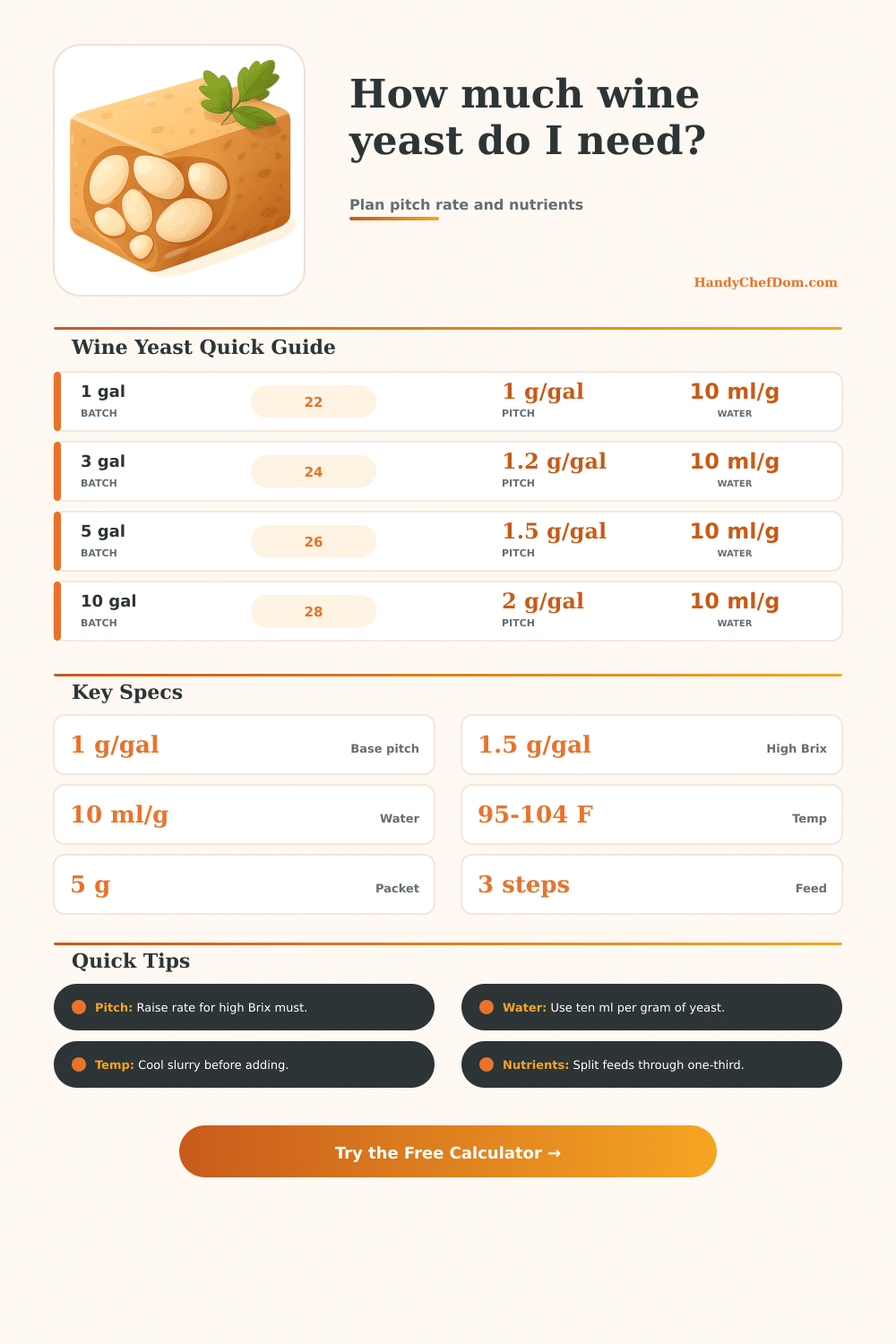
Use the target pitch rate as your starting point. The calculator adjusts upward for high Brix or SG, temperature mismatch, yeast age, and restart-style stress.
| Wine Situation | Dry Yeast Pitch | Typical Batch | Planning Note |
|---|---|---|---|
| Low sugar white wine | 0.75-1.0 g/gal | 18-21 Brix | Use when must is clean, cool, and moderate gravity. |
| Standard red or white | 1.0 g/gal | 21-24 Brix | One 5 g packet is commonly sized for about 5 gallons. |
| Fruit wine or mead | 1.25-1.5 g/gal | 22-26 Brix | Extra yeast helps non-grape must with lower native nutrients. |
| High sugar must | 1.5-2.0 g/gal | 26-30 Brix | Higher osmotic pressure calls for a stronger initial population. |
| Restart culture | 2.0-3.0 g/gal | Variable | Use more yeast when alcohol, sulfite, or nutrient limits add stress. |
| Brix Or SG Range | Stress Level | Pitch Adjustment | Nutrient Attention |
|---|---|---|---|
| 18-21 Brix / 1.074-1.087 SG | Low | 1.00x | Standard nutrient plan is usually enough. |
| 22-24 Brix / 1.092-1.101 SG | Moderate | 1.10x | Use at least one early nutrient addition. |
| 25-26 Brix / 1.106-1.111 SG | Elevated | 1.25x | Split nutrients through the one-third sugar break. |
| 27-30 Brix / 1.116-1.129 SG | High | 1.50x | Stagger nutrients and avoid under-pitching. |
| Over 30 Brix / over 1.129 SG | Very high | 1.75x | Plan careful acclimation and staged feeding. |
| Yeast Style | Comfort Range | When To Adjust | Calculator Use |
|---|---|---|---|
| Standard wine yeast | 60-75 F | Below 58 F or above 78 F | Balanced default for most home wine batches. |
| Low-foam white yeast | 55-72 F | Warm rooms or very cool starts | Useful for aromatic whites and low foam headspace. |
| Killer factor red yeast | 60-82 F | Cold soak or hot ferment | Fits red must with stronger yeast competition. |
| High-alcohol tolerant yeast | 62-86 F | Very cool starts | Pairs with dessert wine and high Brix must. |
| Mead yeast | 60-78 F | Honey must above 26 Brix | Combine with a staggered nutrient plan. |
| Restart culture | 65-80 F | Outside the acclimation range | Use conservative rehydration and extra cell count. |
| Nutrient Plan | Feed Count | Timing | Best Fit |
|---|---|---|---|
| No planned nutrient | 0 | None | Only for proven nutrient-rich musts. |
| Light | 1 | At pitch | Low sugar grape must and small clean batches. |
| Standard | 2 | At pitch, then one-third sugar break | Most table wines and moderate Brix fruit wines. |
| Staggered | 3 | At pitch, 24 hr, one-third sugar break | Mead, fruit wine, and high starting gravity. |
| High stress | 4 | At pitch, 24 hr, 48 hr, one-third sugar break | Dessert wine, mead, or restart conditions. |
This calculator is for home wine batch planning. Always follow the specific yeast producer label when it gives a narrower rehydration temperature, nutrient, or inoculation instruction.
When you make wine at home, the yeast that you use can have a huge impact on your batch. The yeast choice will impact the way that the fermentation portion of winemaking function. Factors like the pitch rate of the yeast, the way in which the yeast is rehydrated, and the timing of the yeast nutrients can all impact how “clean” the fermentation process runs.
The wine yeast calculator help provide you with the numbers that you need to prepare the yeast before you open the packet of yeast that you purchase. While many winemakers start with the batch size and the rate at which they need to pitch the yeast into there must, variables like sugar content, the type of must that will be used, and the fermentation temperature will impact those initial calculations for the amount of yeast that should of been used in the winemaking process. The wine yeast calculator allow for adjustments to account for these different variable, using different multipliers for each of the factors that can impact the yeast batch.
How to Use a Wine Yeast Calculator
For example, the amount of yeast that will be used for a batch of high-Brix dessert wine will be different then the amount of yeast that is required for a batch of white wine. Yeast will need to survive the extra osmotic pressure that high Brix values create before the yeast begins to produce alcohol. The amount of water that will be used to rehydrate the yeast is another of the variables that will impact the batch.
The wine yeast calculator will allow you to determine the proper amount of water for rehydration for your batch size. If the yeast is placed into a batch of must that is much colder than the water in which it was rehydrated, the yeast may stall in its fermentation process. Thus, the wine yeast calculator does not replace the information on the yeast packet itself, but provides a way of determining the impact of various parameter on the yeast.
Another of the calculations that the wine yeast calculator can determine is the amount of nutrients that should be fed to the yeast during fermentation. Different types of must require different amounts of nutrients for the yeast to successfully complete fermentation. For example, a mead or an wine made from a fruit must will require more nutrients than a batch of grape must of the same volume.
The schedule for feeding these nutrients can also be set in the wine yeast calculator. For example, it can calculate the amount of nutrients that will be fed to the yeast at the 24-hour and 48-hour marks of fermentation. If the yeast schedule does not mesh with your own weekly schedule, the wine yeast calculator can alter the yeast schedule.
Another of the tables within this article is a grid that compares the amount of yeast that will need to be pitched according to the type of wine that will be made. Low-sugar white wines will require less yeast than those high-alcohol wines that are to be restarted in the winemaking process. The reference tables that are provided beneath the grid indicate the stress that will be placed upon the yeast according to the Brix levels of the must that is to be used.
These number do not need to be memorized, but can be referenced when you prepare your must to determine into what category your must falls. Another of the factors that should be checked alongside the wine yeast calculator are the fermentation temperature and the age of the yeast packet. Yeast packets that are exposed to warm temperatures for long periods of time will contain lower quality yeast than yeast packets that are stored in areas that are cooler.
Thus, additional yeast will be required for the low-quality packet. Additionally, if the temperature at which the wine ferments is near the limits of the ability of the yeast strain to ferment to alcohol, more yeast will be required for the fermentation process to begin and to continue without developing off-flavor to the wine. Another of the factors for which the yeast calculator may be used is to determine the need for nutrients for must that is not grape must.
Yeast that is applied to wines made with apple cider, for example, will have different nutrient requirement than the yeast that is used with grape must. The wine yeast calculator applies modest multipliers to these types of wines, recognizing that the yeast has been tested for these types of musts. Thus, you will be able to make a determination of whether adding the nutrients that are calculated will be worth the effort that go into adding them.
Many of the mistakes that can occur in winemaking are due to the consideration of only a few of the many variables of winemaking. For instance, the amount of yeast that is added is often ignored in favor of using a single packet of yeast regardless of the batch size of the wines that are to be made. The wine yeast calculator does not prevent these mistakes, but it does make the trade-offs that result from these ignored variables visible to the winemaker.
The same is true of the nutrient schedule for the yeast. Any nutrient schedule for the yeast will require memory of when to add the nutrients. The wine yeast calculator will provide a count of the nutrients that are to be fed to the yeast, and the gram of that nutrient that are to be added at each stage in the schedule.
If the schedule does not appear to match your own weekly schedule, the schedule can be altered according to the wine yeast calculator. The goal in using the wine yeast calculator is to make sure that the fermentation begins promptly and that it completes its process of producing alcohol from the must without stalling. Should fermentation be successful, the wine will contain the flavors that are desired, and will not contain flavors that are often produced by stressed yeast.
Thus, the wine yeast calculator can handle the math for you, but you must use your own judgment to decide which of the adjustments to the yeast that are calculated are worth making.