🧀 Protein in Cheese Calculator
Estimate total protein, protein per serving, cheese weight, and protein target progress from cheese type, slices, ounces, grams, shredded cups, or cubed cups.
Choose the exact cheese and how you measured it. Cups use shredded or cubed density, slices use the cheese style, and moisture class adjusts protein density for dry or fresh packages.
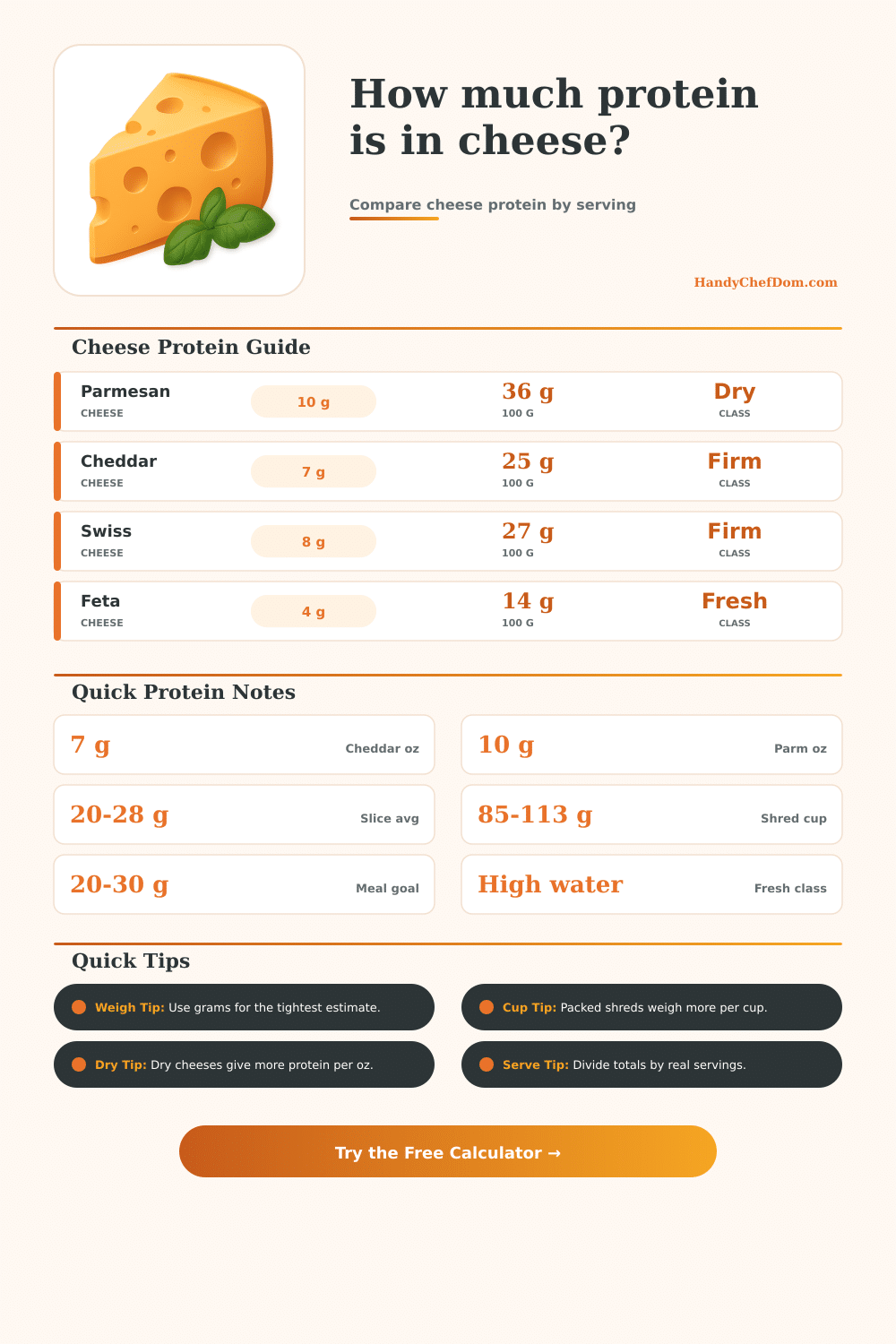
Sharp cheddar: about 24.9 g protein per 100 g.
| Cheese | Protein per 1 oz | Protein per 100 g | Moisture class | Best calculator use |
|---|---|---|---|---|
| Aged parmesan | 10.1 g | 35.8 g | Dry aged | Fine grated cups, pasta finish, salads |
| Gruyere | 8.4 g | 29.8 g | Firm aged | Gratin tops, melts, cubes, shreds |
| Swiss | 7.6 g | 26.9 g | Semi-firm | Sandwich slices, melts, snack plates |
| Sharp cheddar | 7.1 g | 24.9 g | Semi-firm | Shredded cups, blocks, slices, boards |
| Gouda | 7.0 g | 24.9 g | Semi-firm | Cubes, boards, melts, snack servings |
| Part-skim mozzarella | 6.9 g | 24.3 g | Medium moisture | Pizza, lasagna, flatbread, shreds |
| Soft goat cheese | 6.1 g | 21.6 g | Soft fresh | Toast, salads, bowls, crumbles |
| Cottage cheese | 3.1 g | 11.1 g | Fresh curd | Meal prep bowls, breakfast, snacks |
| Feta | 4.0 g | 14.2 g | Brined fresh | Salads, bowls, crumbles, wraps |
| Whole milk ricotta | 3.2 g | 11.3 g | High moisture | Bakes, fillings, pasta layers, dips |
| Serving situation | Typical cheese per serving | Protein range | Good cheese fit | Planning note |
|---|---|---|---|---|
| Snack plate | 1 to 1.5 oz | 4 to 15 g | Cheddar, gouda, Swiss | Count cheese as the main protein if portions are generous. |
| Sandwich or melt | 1 to 2 slices | 5 to 15 g | Swiss, cheddar, mozzarella | Slice weights vary, so use the package grams when possible. |
| Salad topping | 0.5 to 1 oz | 2 to 8 g | Feta, goat cheese, parmesan | Crumbled cheeses look large but can weigh less per spoonful. |
| Pasta or gratin | 0.75 to 1.5 oz | 5 to 15 g | Parmesan, Gruyere, mozzarella | Dry aged cheeses raise protein faster than fresh cheeses. |
| Pizza or flatbread | 1 to 2 oz | 6 to 14 g | Mozzarella, cheddar, gouda | Use shredded cups only after selecting loose or packed density. |
| Meal prep bowl | 0.5 to 1 cup fresh | 7 to 18 g | Cottage, ricotta, feta | Fresh cheeses need larger servings for the same protein target. |
| Measured form | Typical weight | Cheddar protein | Parmesan protein | When to use |
|---|---|---|---|---|
| 1 oz block weight | 28.35 g | 7.1 g | 10.1 g | Best for weighed recipes and exact portions. |
| 1 standard slice | 28 g | 7.0 g | 10.0 g | Use for sandwich slices and deli portions. |
| 1 thin slice | 18 g | 4.5 g | 6.4 g | Use for small deli slices and folded omelets. |
| 1 cup loose shreds | 85 g | 21.2 g | 30.4 g | Use for lightly filled shredded measuring cups. |
| 1 cup packed shreds | 113 g | 28.1 g | 40.5 g | Use when cheese is pressed into the cup. |
| 1 cup small cubes | 132 g | 32.9 g | 47.3 g | Use for snack boards and diced casserole cheese. |
| 1 cup large cubes | 115 g | 28.6 g | 41.2 g | Use for loose cubes with more air gaps. |
| 1 cup crumbled fresh | 150 g | 37.4 g | 53.7 g | Use only if substituting a firm cheese estimate. |
| Cheese | Reference serving | Protein | Calories | Fat | Carbs |
|---|---|---|---|---|---|
| Sharp cheddar | 1 oz | 7.1 g | 115 kcal | 9.4 g | 0.4 g |
| Part-skim mozzarella | 1 oz | 6.9 g | 72 kcal | 4.5 g | 0.8 g |
| Aged parmesan | 1 oz | 10.1 g | 119 kcal | 8.2 g | 1.1 g |
| Swiss | 1 oz | 7.6 g | 111 kcal | 8.8 g | 0.4 g |
| Feta | 1 oz | 4.0 g | 75 kcal | 6.0 g | 1.2 g |
| Ricotta | 0.5 cup | 7.9 g | 216 kcal | 16.1 g | 6.2 g |
| Cottage cheese | 0.5 cup | 12.5 g | 111 kcal | 4.9 g | 4.1 g |
| Soft goat cheese | 1 oz | 6.1 g | 103 kcal | 8.5 g | 0.1 g |
Cheese contain protein, but the amount of protein in cheese is dependent upon the type of cheeses. Many peoples do not realize that the moisture content of the cheese affects protein content of cheese. Cheese lose moisture over time as it ages.
As a result of the loss of moisture, the protein of aged cheese become more concentrated. Consequently, an ounce of aged cheese like parmesan will contain more protein then an ounce of fresh cheese like mozzarella. Fresh cheese have more water to begin with since the water is not pressed out of the fresh cheese.
Why Some Cheeses Have More Protein Than Others
Therefore, to obtain the same amount of protein from fresh cheese as from aged cheese, you must consume more of the fresh cheese. For example, since cottage cheese and ricotta are fresh cheese products, a serving of cottage cheese or ricotta may be large in size but contain a modest amount of protein. Another factor that may impact the amount of protein from cheese are the way in which the cheese is measured.
A cup of loosely packed cheese shred will weigh less than a cup of cheese shreds that is tightly packed. The weight of the cheese shreds will determine the protein content of the cheese shreds. The same is true of cheese slice; a thin deli slice of cheese contains less protein than a standard sandwich slice of cheese.
If you measure the cheese in slices rather than weighing the amount of cheese that is consume, the protein content of the cheese may be incorrectly estimate. The calculator can assist in performing the math necessary to determine protein content if you select the type of cheese and the measurement of that cheese in the calculator. The loss of cheese during preparation can also impact the amount of protein that is consume.
Cheese that is shaved off of a block of cheese, trimmings of cheese that is wasted during cutting of the cheese, or cheese that is left on a cutting board will result in the loss of cheese. The loss of cheese will impact the total amount of protein that is consume. This loss of protein can amount to a significant reduction in the total amount of protein consumed over time.
The calculator also allow for the amount of cheese loss to be entered in the calculator so that the final protein number reflect the actual amount of cheese that the individual eater consumed. The way in which cheese is used in a recipe will impact the amount of protein that is obtain from that cheese. If the cheese is to be the main source of protein in the recipe, then high density cheese should be used and you should weigh the cheese to ensure that enough protein is consume from that food item.
If the cheese is to be used as a topping to food items like salads or pizzas, however, the use of lower density cheese is acceptable to the recipe. The calculator also allow for the type of use of the cheese to be selected so that the calculator can reflect how close the amount of protein consumed from the cheese is to the protein target that is consume. It may appear that the more cheese that is consume, the more protein will be consume from that food item.
This is not always true. For instance, a large portion of feta cheese may contain less protein than a small portion of gruyere cheese. This is due to the moisture content of the feta cheese; the water in which the cheese is brined spreads the protein content of feta thin.
A small amount of aged parmesan cheese, on the other hand, can dramatically increase the amount of protein contained in a meal. Consequently, the type of cheese and the protein goals of the individual should be match to one another. If high protein intake from a small amount of food is desire, dry cheese should be select and weighed.
If a high volume of food is desire to be consume, however, fresh cheese products may be incorporated into the diet. The protein calculator remove the guesswork of protein content from cheese products by providing a way to measure the protein that will be obtain from consuming cheese.