🥘 Protein in Hummus Calculator
Estimate hummus protein from tablespoons, grams, cups, or ounces with hummus type, chickpea share, tahini level, servings, and target protein built in.
Choose whether your amount is one serving, a whole bowl, or a target-protein plan. The calculator converts the portion and adjusts protein for hummus style, chickpea ratio, and tahini level.
| Hummus Type | Protein Per 100 g | Typical Chickpea Share | Best Calculator Use |
|---|---|---|---|
| Classic chickpea | 7.9 g | 60-65% | Everyday dip portions |
| Roasted garlic | 7.6 g | 58-63% | Pita and vegetable trays |
| Roasted red pepper | 6.8 g | 52-58% | Lighter party spreads |
| Lemon herb | 7.2 g | 55-60% | Wrap spreads and mezze plates |
| Beet blend | 6.4 g | 48-55% | Colorful appetizer scoops |
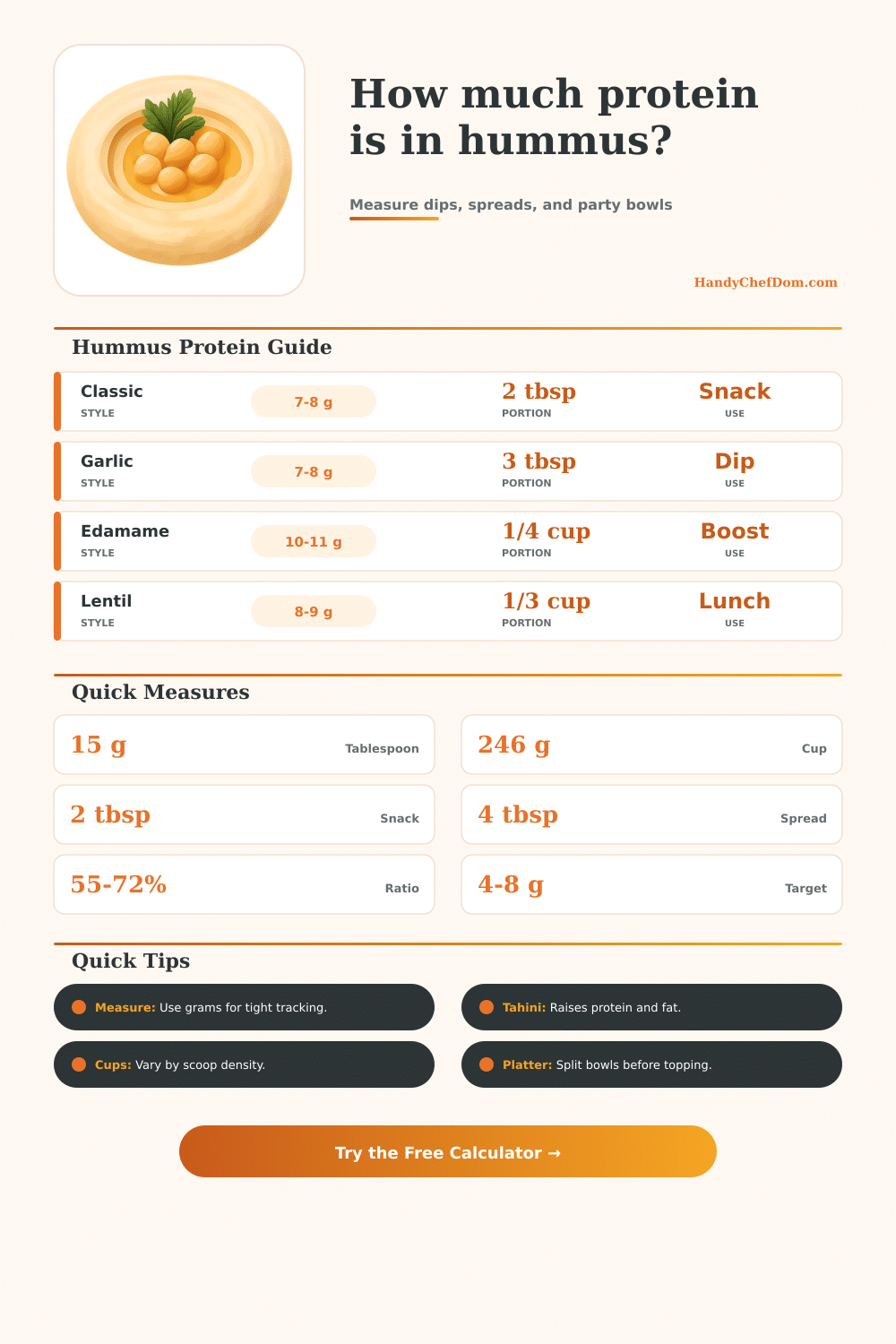
| Edamame | 10.6 g | 35-45% | Higher protein snack bowls |
| White bean | 7.0 g | 0-20% | Smooth sandwich spreads |
| Lentil | 8.5 g | 0-20% | Lunch plates and prep tubs |
| High-protein deli | 11.2 g | 62-72% | Protein-focused portions |
| Serving Style | Typical Portion | Approx Grams | Classic Protein |
|---|---|---|---|
| Vegetable snack cup | 2 tbsp | 30 g | 2.4 g |
| Pita dip serving | 3 tbsp | 45 g | 3.6 g |
| Wrap spread | 4 tbsp | 60 g | 4.7 g |
| Lunch side scoop | 5 tbsp | 75 g | 5.9 g |
| Protein bowl anchor | 6 tbsp | 90 g | 7.1 g |
| Party grazing taste | 2.5 tbsp | 38 g | 3.0 g |
| Kitchen Measure | Hummus Grams | Cups Equivalent | Classic Protein |
|---|---|---|---|
| 1 tablespoon | 15 g | 0.06 cup | 1.2 g |
| 2 tablespoons | 30 g | 0.12 cup | 2.4 g |
| 1/4 cup | 62 g | 0.25 cup | 4.9 g |
| 1/3 cup | 82 g | 0.33 cup | 6.5 g |
| 1/2 cup | 123 g | 0.50 cup | 9.7 g |
| 1 cup | 246 g | 1.00 cup | 19.4 g |
| Platter Count | Snack Cups | Dip Servings | Lunch Scoops |
|---|---|---|---|
| 4 people | 120 g | 180 g | 300 g |
| 6 people | 180 g | 270 g | 450 g |
| 10 people | 300 g | 450 g | 750 g |
| 16 people | 480 g | 720 g | 1200 g |
| 24 people | 720 g | 1080 g | 1800 g |
| 36 people | 1080 g | 1620 g | 2700 g |
Hummus can be eaten as a snack or as an ingredient in many differents meals. One of the factor that you may want to know about hummus is the amount of protein that is in hummus. The amount of protein in hummus can change depending on several different factor.
The amount of protein in hummus depend upon the portion size of the hummus that is being measured, the ratio of chickpea to other ingredients in the hummus, and the amount of tahini that is included in the hummus. Thus, if either the ratio of the chickpeas or the amount of tahini change, the amount of protein that is in the hummus will change as well. Hummus can be measured in two different ways: with a tablespoon or with a scale to measure the weight of the hummus in grams.
How Much Protein Is in Hummus
Using a tablespoon to measure hummus is somewhat difficult due to the different densities of hummus depending upon the recipe. If the hummus contain more lemon juice than other hummus recipes, the product will be more lighter in weight than hummus that contains more chickpeas. Thus, one tablespoon of light hummus may contain less protein than one tablespoon of thick hummus.
Using a scale, on the other hand, to measure hummus in gram will provide a more accurate measurement of the protein in the hummus because grams will eliminate the variable of the amount of air in the hummus and the amount of pressure that is used to scoop the hummus into the measuring cup. Thus, if hummus is measured in grams, the variable of protein in hummus will be more consistent. The protein content of hummus is mainly dependent upon the amount of chickpeas that are contain in the hummus.
The more chickpeas that are used in the hummus, the more protein will be contained in the hummus. Tahini also contains protein, but tahini also contains extra fat and extra calorie. You can use the calculator to determine how much protein will be in the hummus if you change the amount of chickpeas or the amount of tahini.
Additionally, if you are preparing hummus for others, the number of people that will be eating the hummus will help determine the total amount of hummus that will be needed. Hummus is often eaten along with other foods, such as vegetables, pita bread, or crackers. Vegetables will add fiber to the meal, but they will not add much protein to the meal.
Pita bread and crackers will add carbohydrates to the meal, but they will not add much protein to the meal. The calculator can be used to determine the amount of hummus that should of being eaten to provide the amount of protein that is desired for the meal. It is possible for a person to underestimate the amount of protein that is contained in a small serving of hummus.
The following tables provides references for the amount of protein that is in different types of hummus. These tables provide information regarding the amount of protein that is in a light snack of hummus versus a large portion of hummus. You can use these tables to determine if more chickpeas should be added to the hummus to increase the protein content of the hummus.
Additionally, these tables can also be used to determine how much hummus should be eaten to reach the protein goals that a person establish for themselves. Using the calculator will help a person to understand the protein content of hummus over time. If used regularly, the calculator will help a person to understand how portion size, style of hummus, and the number of people will effect the protein content of the hummus.