🥣 Cornstarch to Thicken Soup Calculator
Size the starch, cold slurry liquid, simmer window, and per-serving thickening for brothy, creamy, dairy-rich, or acidic soup pots.
Cold slurryStarch strengthAcid and dairy Enter the finished soup volume, then choose the texture you want. The calculator adjusts the cornstarch equivalent for soup style, starch type, and simmer hold.
| Soup Finish | Cornstarch Rate | Best Slurry | Texture Cue |
|---|---|---|---|
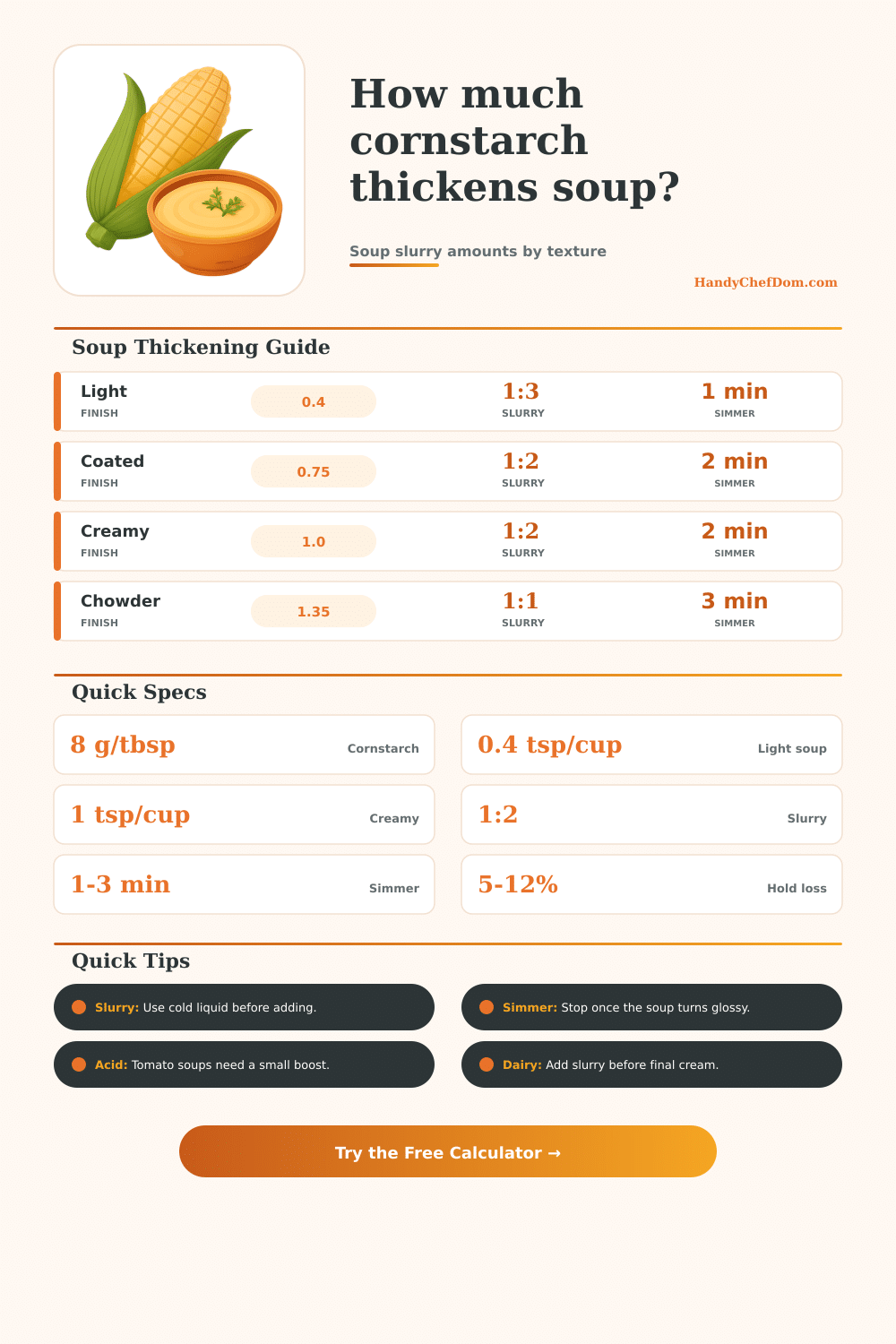
| Silky broth body | 0.4 tsp per cup | 1:3 loose stream | Broth clings lightly to a spoon. |
| Spoon-coating soup | 0.75 tsp per cup | 1:2 smooth pour | A thin glossy film coats the spoon. |
| Creamy lunch soup | 1 tsp per cup | 1:2 smooth pour | Soup falls in a soft ribbon. |
| Chowder-style body | 1.35 tsp per cup | 1:1 compact paste | Chunks suspend without a floury feel. |
| Stew-like glossy finish | 1.7 tsp per cup | 2:3 thick pot slurry | Liquid pools slowly around the ladle. |
| Thickener | Weight Per Tbsp | Use Multiplier | Soup Character |
|---|---|---|---|
| Cornstarch | 8 g | 1.00x | Clean, glossy, reliable for most soups. |
| Arrowroot starch | 9 g | 1.10x | Clearer finish, best with shorter heat. |
| Potato starch | 10 g | 0.80x | Very strong set, add near the end. |
| Tapioca starch | 9 g | 1.20x | Glossy and slightly elastic in hearty soups. |
| Rice starch | 9 g | 1.35x | Soft cloudy body for delicate broths. |
| All-purpose flour slurry | 8 g | 2.10x | More opaque and less glossy than cornstarch. |
| Soup Base | Adjustment | Why It Changes | Practical Note |
|---|---|---|---|
| Neutral stock | 1.00x | Standard thickening response. | Add slurry at a steady simmer. |
| Tomato or wine-bright | 1.12x | Acidity can weaken starch gel slightly. | Hold back a reserve spoonful. |
| Lemon, vinegar, or pickle | 1.18x | Sharp acid finishes can thin the texture. | Add acid after the starch blooms when possible. |
| Cream, milk, or cheese | 1.07x | Fat and proteins soften the thickening feel. | Whisk before final dairy adjustment. |
| Coconut or nut cream | 1.04x | Natural solids help, but fat softens the set. | Use a smooth pour slurry. |
| Vegetable puree support | 0.82x | Pureed vegetables already add body. | Start with less and reassess. |
| Batch Size | Light Body | Spoon Coat | Chowder Body |
|---|---|---|---|
| 4 cups / 1 qt | 1.6 tsp | 3 tsp | 5.4 tsp |
| 8 cups / 2 qt | 3.2 tsp | 6 tsp | 10.8 tsp |
| 12 cups / 3 qt | 4.8 tsp | 9 tsp | 16.2 tsp |
| 16 cups / 1 gal | 6.4 tsp | 12 tsp | 21.6 tsp |
| 24 cups / 6 qt | 9.6 tsp | 18 tsp | 32.4 tsp |
| 32 cups / 2 gal | 12.8 tsp | 24 tsp | 43.2 tsp |
Achieving the correct thickness of a pot of soups involves three main factors: starch, liquid, and temperature. You must consider the amounts of starch to add to the liquid and the other ingredients that is within the pot of soup. If you add too much starch to the liquid, the resulting soup will be too thick.
However, if you add too little starch, the soup will be too thin. The thickness of the soup depend on the starch that you use. Additionally, the thickness of the soup also depends on the other ingredient in the pot.
How to Make Soup the Right Thickness
Cornstarch is a common ingredient that can be used to thicken soups. Cornstarch works because the ingredient swell within the soup when it reaches a certain temperature. However, you must also consider the ingredients that is already in the soup.
For instance, if the broth contain ingredients like potatoes or beans that contain starch, that starch will contribute to the thickness of the broth. Additionally, ingredients like tomatoes or wine contain acid that can loosen the gel structure of the cornstarch. Ingredients like cream or coconut milk contain fat that can soften the texture of the soup when soups contains cornstarch.
To find the correct amount of starch to add to your pot of soup, you can use a calculator. This calculator will account for the volume of the soup and the characteristics of the broth in the soup to provide a correctly measurement. The slurry method is a way to add starch to the liquid in the soup.
Additionally, using the slurry method is important because it will prevent the formation of lumps within the soup. If you dump starch direct into the soup, it will create lumps in the liquid. Instead, mix the starch with a cold liquid to create a slurry.
By mixing the starch with a cold liquid, you will allow the starch to separate. When you add the slurry to the soup, the granule of starch will bloom evenly throughout the soup. The ratio of starch to cold liquid will affect how fast the thickener will work.
Additionally, the ratio will also affect how much starch is taste in the soup. If you make a loose slurry by mixing the starch with the cold liquid, it will spread gradual throughout the soup. If you create a thick slurry, the thickener will dissolve sudden in the soup.
The time that you simmer the soup after adding the slurry is another important factor that will affect the thickness of the soup. Cornstarch will reach it’s full thickening potential quickly. However, if you simmer the soup with the cornstarch for too long, the cornstarch will begin to break down.
Different starches will behave differently. For instance, arrowroot and potato starch will reach their thickening potential quick but will thin out if simmermed for too long. Flour will take longer to reach its thickening strength.
The calculator account for this because it knows the different types of starches and how long they take to thicken. Another important factor that will affect the thickness of the soup is how the soup will be stored or held. For instance, soup that is allowed to sit on a buffet or stored in the fridge for the next day will lose some of its thickness.
Adding a small amount of extra slurry to the pot while the soup is cooking will ensure that the soup retain its thickness. You can also lose thickness by adding chunky vegetable or noodles to the soup. These ingredients will take up the space within the soup that the thickener need to coat the liquid.
The texture of the broth will determine the amount of starch needed for the liquid. Broths that is considered light only need a small amount of starch to allow the broth to create a slight sheen on the surface of the soup. Medium-thickness soups, such as spoon-coating soups, need enough starch to create a thin film on the spoon when the soup is removed.
For thick soups, such as chowders, more starch are needed for the solid ingredients to remain suspended throughout the liquid. You can use the calculator to determine the texture of the broth, and it will account for the volume of the soup and the number of serving it will provide.