🍅 Tomato Paste to Make Tomato Sauce Calculator
Convert concentrated tomato paste into sauce by target cups, paste on hand, thickness, water or broth ratio, seasoning level, simmer reduction, recipe use, and can size.
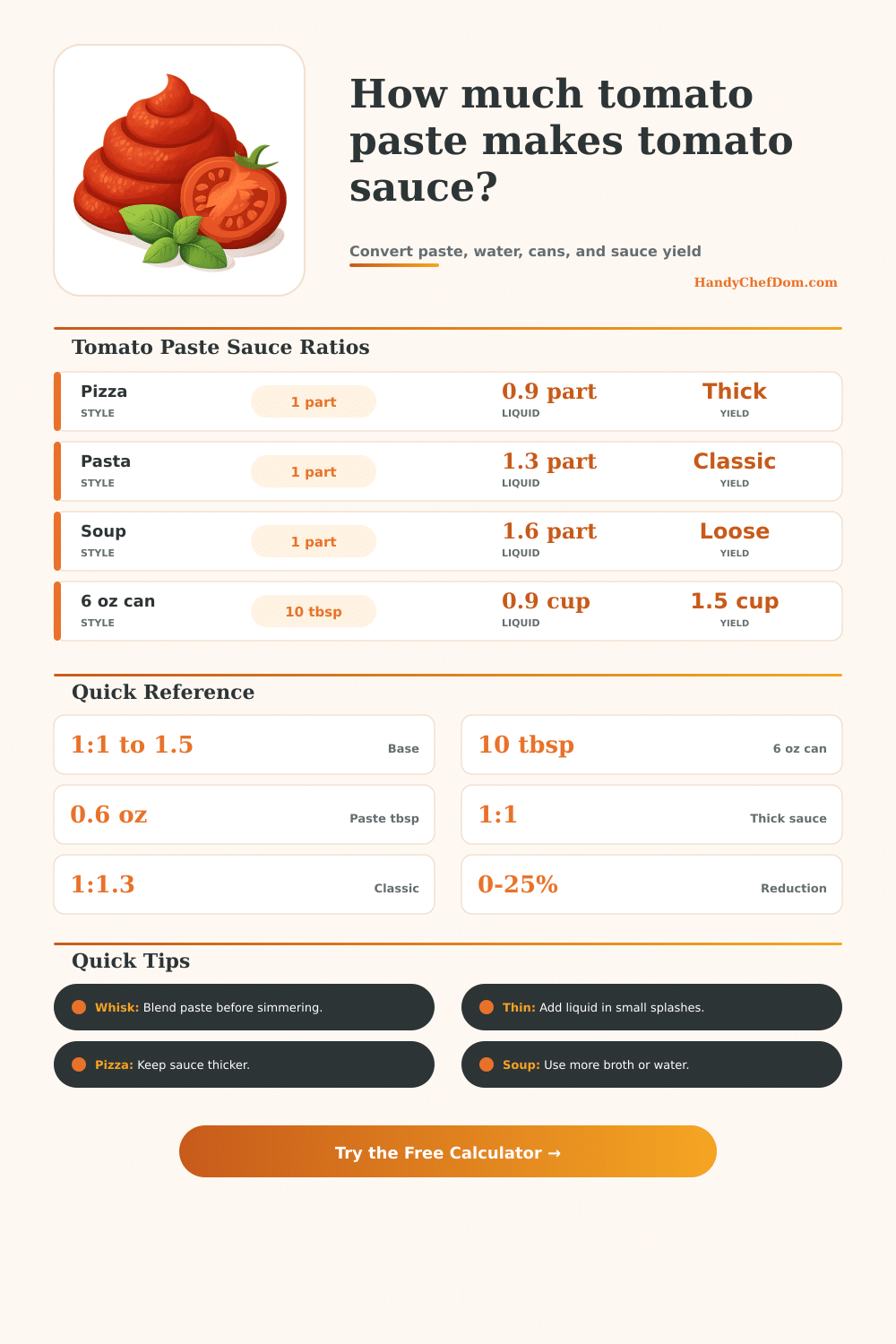
A practical tomato paste conversion starts around 1 part paste plus 1 to 1.5 parts water or broth. A 6 oz can of tomato paste is about 10 tablespoons and can make roughly 1.5 cups of finished sauce depending on thickness and simmer reduction.
| Ratio Style | Paste | Liquid To Add | Best Use |
|---|---|---|---|
| Extra thick | 1 part tomato paste | 0.8 to 0.9 part liquid | Pizza, flatbread, calzone filling |
| Thick sauce | 1 part tomato paste | 1 part liquid | Marinara-style base, casserole layers |
| Classic sauce | 1 part tomato paste | 1.25 to 1.35 parts liquid | Pasta sauce, skillet sauces, baked pasta |
| Loose sauce | 1 part tomato paste | 1.5 parts liquid | Enchiladas, braises, simmer sauces |
| Soup base | 1 part tomato paste | 1.6 to 1.8 parts liquid | Tomato soup starter, stew base, chili base |
| Paste Package | Approx Tbsp | Classic Liquid | Approx Sauce Yield |
|---|---|---|---|
| 4.5 oz tube | 7.5 tablespoons | 0.6 cup liquid | About 1.1 cups sauce |
| 6 oz can | 10 tablespoons | 0.8 to 0.9 cup liquid | About 1.5 cups sauce |
| 12 oz can | 20 tablespoons | 1.6 to 1.7 cups liquid | About 3 cups sauce |
| 130 g tube | 7.6 tablespoons | 0.6 cup liquid | About 1.1 cups sauce |
| 200 g tube | 11.8 tablespoons | 1 cup liquid | About 1.8 cups sauce |
| Recipe Use | Calculator Ratio | Seasoning Direction | Texture Goal |
|---|---|---|---|
| Pizza | Lower liquid and less simmer loss | Moderate herbs, little sugar if needed | Thick enough to spread without soaking dough |
| Pasta | Classic liquid with standard reduction | Balanced garlic, onion, basil, oregano | Coats noodles but still moves in the pan |
| Enchilada | Loose liquid with warm spices | Cumin, chile powder, garlic, oregano | Pourable sauce that covers tortillas evenly |
| Soup base | Higher liquid with broth option | Gentle herbs and extra salt check at the end | Thin enough to build into soup or stew |
| Marinara | Thick liquid with stronger reduction | Garlic-forward with bright acidity | Spoonable sauce with concentrated tomato body |
| Thickness Choice | Water Per Paste Cup | 6 oz Can Liquid | Finished Character |
|---|---|---|---|
| Extra thick pizza style | 0.85 cup | About 1/2 cup plus 1 tablespoon | Dense, spreadable, very tomato-forward |
| Thick spoonable sauce | 1 cup | About 5/8 cup | Rich, rounded, good for dipping or baking |
| Classic tomato sauce | 1.32 cups | About 0.8 cup | Close to everyday canned tomato sauce |
| Loose simmering sauce | 1.5 cups | About 0.95 cup | Good for enchiladas, braises, and skillets |
| Thin soup base sauce | 1.7 cups | About 1.05 cups | Brothy tomato base for soups and stews |
Tomato paste contain highly concentrated tomatoes and is created by removing most of the water from tomatoes. Tomato paste can be used to create many differents types of sauces. The thickness of the sauce that is created from tomato paste is dependent upon an amount of liquid that you add to the tomato paste.
If you add a small amount of liquid to the tomato paste, the resulting sauce will be thick. If you add a larger amount of liquid to the tomato paste, the resulting sauce will be thin. Thick sauces will stay on top of the pizza dough; thin sauces may soak into the pizza dough.
How to Make Sauce from Tomato Paste
Thin sauces can be used to create soups or stew, but they may not coat the pasta noodles effectivly. The amount of liquid that evaporates while simmerming sauces will have an impact on the thickness of the sauce. As sauce simmers, the water in the sauce will evaporate, which will make the sauce more thicker.
Simmering sauce for a longer period of time will create a thicker sauce that is more concentrated with flavor. In order to calculate how much liquid to add to the tomato paste to create sauce of a certain thickness, sauce makers can use a calculator. The calculator allow them to input the amount of the tomato paste that they have.
Additionally, the calculator also allow the user to input the thickness of the sauce that they would like to make. Based off these two measurement, the calculator will provide the user with a measurement of the amount of liquid that the user needs to add to the tomato paste. In addition to the amount of liquid that is added to the tomato paste, the types of seasonings that is added are another factor to consider when using tomato paste.
Tomato paste have a neutral flavor; it can take on various flavor. For instance, you can add Italian herbs to create a pasta sauce, or you can add warm spice to create an enchilada sauce. Because tomato paste is so highly concentrated, any seasoning that is added should be added carefuly.
Adding too much of any seasoning to the tomato paste will be challenging to correct. The size of the container of tomato paste is another factor to consider when using the product. For example, a 6-ounce container of tomato paste contain approximately ten tablespoons of the paste.
It is important to know the amount of tomato paste that you have access to in order to effectively calculate the amount of liquid that you will need to add. If you are doubling the recipe, you will need to use the multiplier field in the calculator to adjust for the double amount of tomato paste. Simply doubling the recipe will not necessarily double the amount of time that the sauce must simmer in order to reach the desired thickness.
The surface area of the pan in which the sauce simmer will also affect how much of the liquid evaporates from the sauce. Finally, the tables that are provided as a reference allow the cook to compare the options available to them with common cooking practice. These tables indicate the ratio of tomato paste to liquid for various sauce.
The tables also indicate how much sauce can be made from various size of containers of tomato paste. These tables help to indicate when it is better for the cook to purchase small tube of tomato paste versus larger cans of the ingredient. When cooks understands how to add liquid to tomato paste to create desired types of sauces, they can begin to effectively create sauces according to the requirements of their recipe.