🌿 Dried Rosemary To Fresh Calculator
Convert a recipe's fresh rosemary amount into dried whole needles, crushed dried rosemary, or rosemary powder with adjustments for recipe type, cooking time, herb age, intensity, batch size, and garnish versus cooked use.
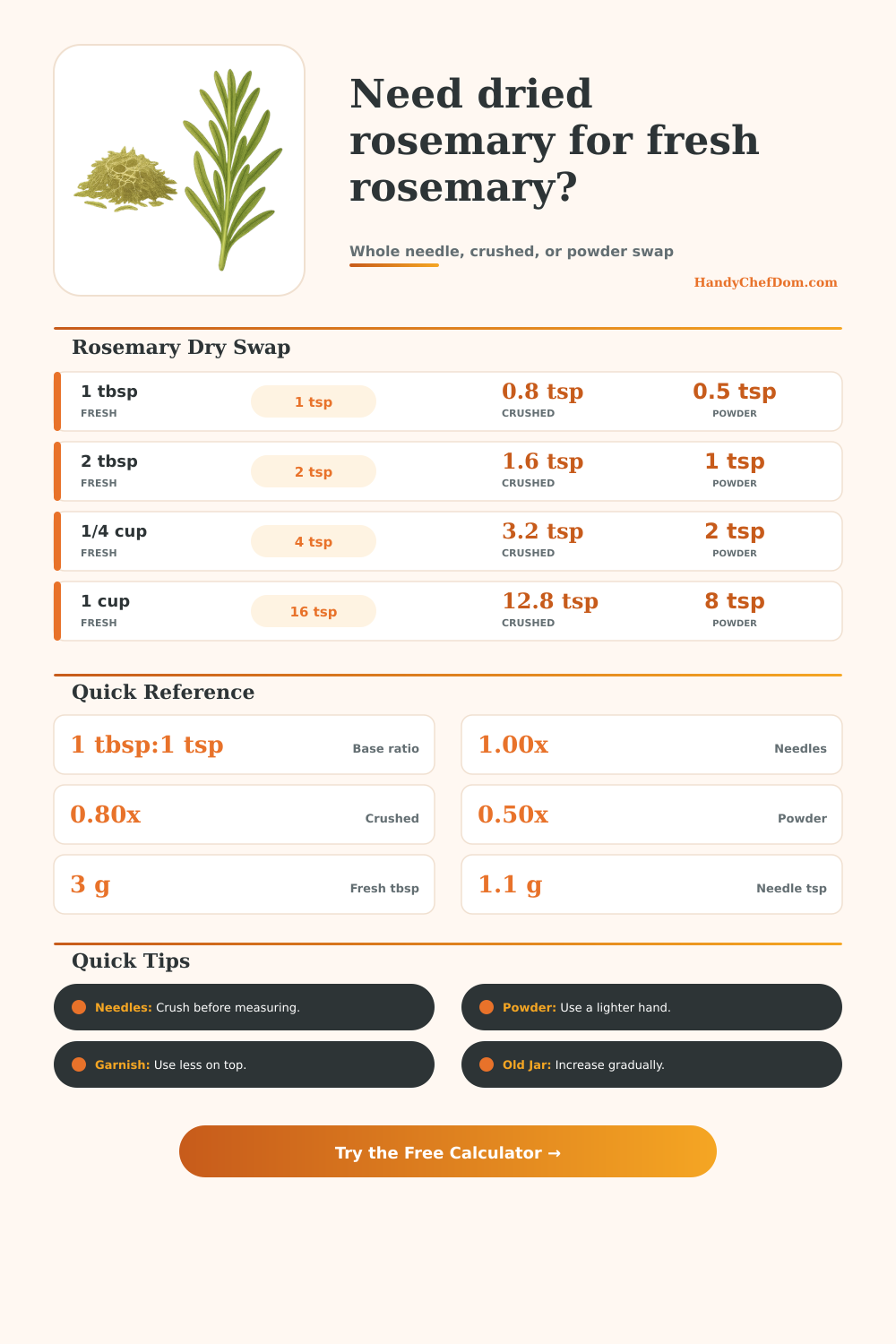
The base culinary swap is 1 tablespoon chopped fresh rosemary equals 1 teaspoon dried whole rosemary. Crushed dried rosemary and powder release flavor faster, so this calculator reduces spoon volume before applying recipe and potency adjustments.
| Fresh herb amount | Whole dried needles | Crushed dried rosemary | Fine rosemary powder |
|---|---|---|---|
| 1 teaspoon chopped fresh rosemary | 0.33 teaspoon | 0.27 teaspoon | 0.17 teaspoon |
| 1 tablespoon chopped fresh rosemary | 1 teaspoon | 0.8 teaspoon | 0.5 teaspoon |
| 2 tablespoons chopped fresh rosemary | 2 teaspoons | 1.6 teaspoons | 1 teaspoon |
| 1/4 cup chopped fresh rosemary | 4 teaspoons | 3.2 teaspoons | 2 teaspoons |
| 1/2 cup chopped fresh rosemary | 8 teaspoons | 6.4 teaspoons | 4 teaspoons |
| 1 cup chopped fresh rosemary | 16 teaspoons | 12.8 teaspoons | 8 teaspoons |
| Rosemary form | Working density | Flavor strength | Measuring note |
|---|---|---|---|
| Whole dried rosemary needles | About 1.1 g per teaspoon | 1.00x baseline spoon | Crush lightly before cooking if the needles are long or stiff. |
| Crushed dried rosemary | About 1.2 g per teaspoon | 0.80x spoon volume | Releases flavor faster and spreads more evenly than whole needles. |
| Fine rosemary powder | About 1.5 g per teaspoon | 0.50x spoon volume | Very concentrated and best measured in small increments. |
| Fresh chopped rosemary | About 3 g per tablespoon | Fresh baseline | Measure after stripping woody stems and chopping leaves. |
| Average rosemary sprig | About 1 g fresh leaves | About 0.33 tbsp fresh | Sprigs vary, so chopped tablespoons are more dependable. |
| Loose rosemary bunch | About 60 g fresh leaves | About 20 tbsp fresh | Useful for big roasts, trays, and catering batches. |
| Recipe type | Adjustment | Why it changes | Best dried form |
|---|---|---|---|
| Roasted vegetables or potatoes | 1.00x | Oven heat softens the dried herb while browning carries the aroma. | Whole needles or crushed rosemary |
| Meat, poultry, or fish | 0.95x | Protein surfaces can make rosemary taste direct and piney. | Crushed rosemary |
| Soup, stew, beans, or braise | 1.10x | Liquid volume and long cooking spread the flavor through the pot. | Whole needles or crushed rosemary |
| Bread, focaccia, or crackers | 0.90x | Dry rosemary on dough surfaces tastes stronger after baking. | Crushed rosemary |
| Sauce, gravy, butter, or oil | 0.88x | Fat carries rosemary quickly, especially when finely ground. | Crushed rosemary or powder |
| Salad, garnish, or finish | 0.65x | Uncooked dried rosemary tastes sharper than fresh leaves. | Very lightly crushed needles |
| Dry rub or seasoning blend | 0.82x | Direct contact and salt intensify dried rosemary. | Crushed rosemary or powder |
| Form | Per 1 tbsp fresh | Texture | Best use |
|---|---|---|---|
| Fresh chopped rosemary | 1 tablespoon | Tender pieces with green aroma | Finishing, quick sauces, and dishes where texture matters. |
| Whole dried needles | 1 teaspoon | Needle-like unless crushed | Roasts, braises, soups, and potatoes with enough cooking time. |
| Crushed dried rosemary | 0.8 teaspoon | Smaller flakes that disperse well | Marinades, rubs, breads, sauces, and most substitutions. |
| Fine rosemary powder | 0.5 teaspoon | Smooth but easy to overdo | Seasoning blends, smooth sauces, gravies, and dry rubs. |
When you replace fresh rosemary for dried rosemary in a recipe, you must first understands that dried and fresh rosemary do not behave in the same way. The essential oils within the fresh herb provides the herb with it’s characteristic brightly flavor. In contrast, dried rosemary has a woody texture and provides a different flavor altogether.
Because dried and fresh rosemary behave differently, the amounts of dried rosemary you use isnt the same as the amount of fresh rosemary called for in the recipe. The conversion of fresh rosemary to dried rosemary depends on a few different variables. For starters, the cooking time will play a role in the conversion.
How to Use Dried Rosemary Instead of Fresh
For instance, long cooking times, such as roasting or braising, allows the rosemary to soften. On the other hand, recipes that require a short cooking time, such as pan sauces, will allow the dried rosemary to retain its woody texture. The type of recipe you use are another variable.
For instance, dry rubs requires the rosemary to have a strong flavor, whereas rosemary added to soups or stews may have a less important flavor contribution than the other ingredient in the recipe. The age of the dried rosemary also affects the flavor of the dish. If the dried rosemary was opened more recently than the recipe that calls for the herb, the dried rosemary will have a stronger scent.
If the dried rosemary is old, it will have less flavor than fresh rosemary. In this case, you will need to use more dried rosemary to achieve the same flavor as fresh rosemary. The intensity target for dried rosemary allow you to decide whether you would like the rosemary to be a background flavor or a primary flavor in the recipe.
This setting will tell you if the dried rosemary should be too weak or too strong in the dish. The physical form of the dried rosemary will also impact the amount you use in the recipe. Whole rosemary needles takes longer to release the essential oils and have a woody texture that stands out in the mouth.
Crushed rosemary will break into smaller piece, making it easier for the rosemary to release its flavor. Rosemary powder has the most greatest surface area of all forms of dried rosemary, so it is the most intense flavor. Youll have to use less rosemary powder in your recipes than crushed or whole rosemary.
Another variable that impacts the amount of rosemary that you use is the batch size and how you intend to use the rosemary in your recipe. If you are doubling a recipe, the amount of rosemary will not necessarily have to be doubled. This is because cooking large batches of food alter the way the flavor of the rosemary travels within the food.
Additionally, if you are using rosemary as a garnish, the rosemary will not have time to soften in the recipe. In this case, you would of had to use less rosemary. There are a few other factors that may impact the flavor of the rosemary that a conversion tool cannot account for but that will still have an impact on the flavor of the rosemary in your recipe.
For instance, the way in which the rosemary was grown and stored will affect the potency of the rosemary. Rosemary stored in a warm cabinet will lose its aroma more faster than rosemary stored in the refrigerator in a cool drawer. These factors will impact the flavor of your recipe, so it is best to use the calculated amount of dried rosemary as a starting point.
Additionally, you should taste the dish as it is being cooked. If the flavor of the rosemary is too weak, add more rosemary to the dish.