🍛 Curry Paste Per Can of Coconut Milk Calculator
Calculate Thai curry paste tablespoons and grams from coconut milk cans, can size, paste style, heat level, add-in load, servings, paste strength, broth dilution, intensity, and batch multiplier.
📌Curry Batch Presets
⚙Curry Paste Inputs
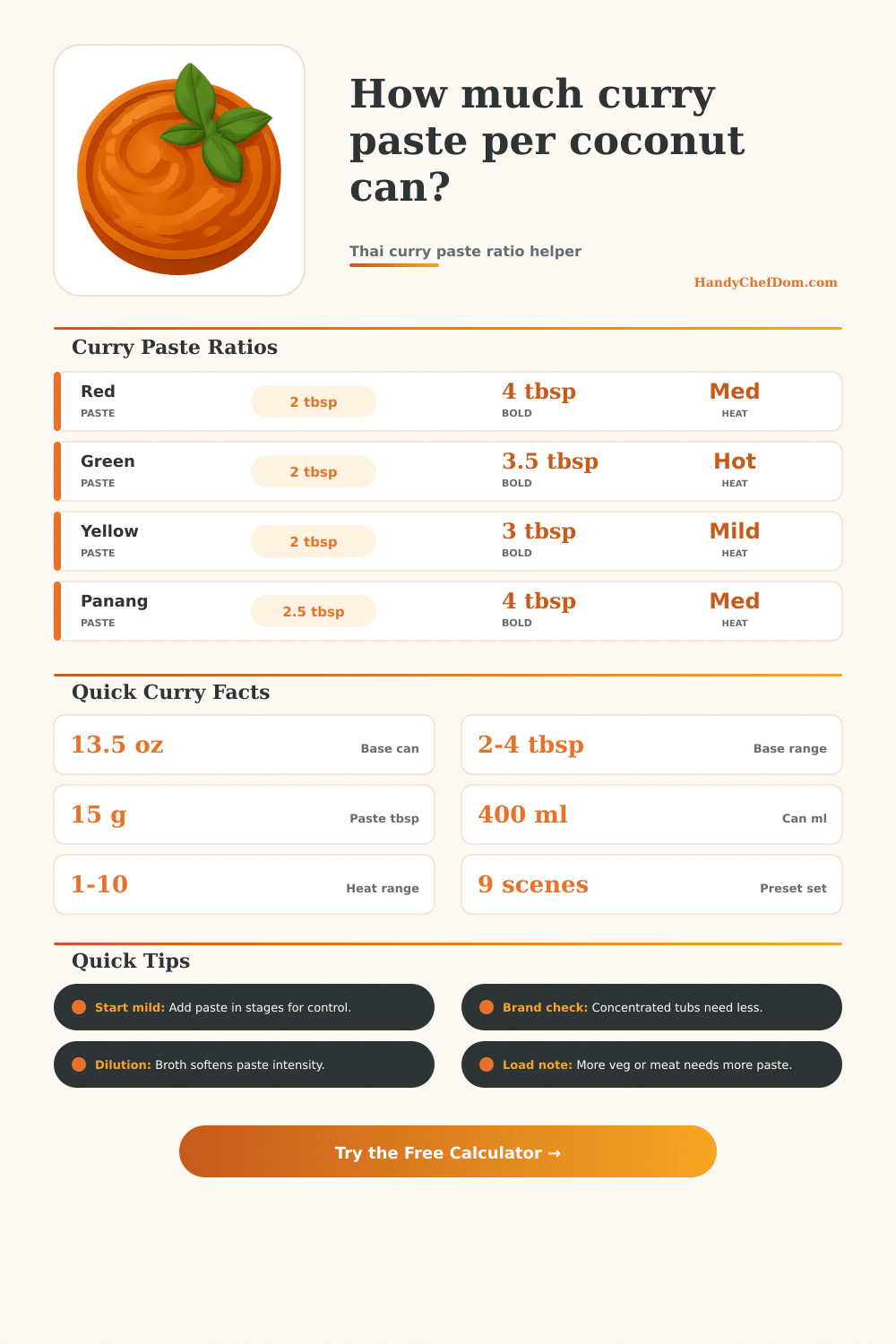
Many Thai curry bases start around 2-4 tablespoons curry paste per 13.5 oz or 400 ml can of coconut milk. This calculator adjusts that base for paste type, brand strength, dilution, heat target, and how much protein or vegetables the sauce must season.
📐Quick Ratio Cards
📊Reference Tables
| Paste Style | Base Tbsp Per 13.5 oz Can | Natural Heat | Best Adjustment |
|---|---|---|---|
| Thai red curry paste | 2.5 to 4 tablespoons | Medium | Works well at the classic 3 tablespoon midpoint |
| Thai green curry paste | 2 to 3.5 tablespoons | Hot | Use less for concentrated pastes or sensitive eaters |
| Thai yellow curry paste | 2 to 3 tablespoons | Mild | Raise intensity before raising heat too far |
| Panang curry paste | 2.5 to 4 tablespoons | Medium | Richer sauces often taste right at a higher ratio |
| Massaman curry paste | 2.5 to 4 tablespoons | Warm | Spice depth can handle heavier protein loads |
| Can Size | Approx Volume | 2 Tbsp Rule | 4 Tbsp Rule |
|---|---|---|---|
| 5.4 oz mini can | 160 ml | 0.8 tablespoon | 1.6 tablespoons |
| 8.5 oz small carton | 250 ml | 1.3 tablespoons | 2.5 tablespoons |
| 13.5 oz standard can | 400 ml | 2 tablespoons | 4 tablespoons |
| 13.66 oz import can | 404 ml | 2 tablespoons | 4 tablespoons |
| 14 oz large can | 414 ml | 2.1 tablespoons | 4.1 tablespoons |
| Heat Or Intensity Choice | Paste Factor | Flavor Cue | Use When |
|---|---|---|---|
| Gentle heat or soft intensity | 0.70 to 0.85x | Coconut-forward and mild | Family dinner or first test with a new paste |
| Mild to balanced | 0.90 to 1.00x | Classic creamy curry | Most weeknight Thai curry batches |
| Medium and bold | 1.05 to 1.20x | Noticeable chile and aromatics | Heavy add-ins or stronger restaurant-style sauce |
| Hot and restaurant strong | 1.25 to 1.40x | Paste-forward heat | Chili lovers and sturdy proteins |
| Maximum intense base | 1.45x plus | Very strong paste character | Only when paste strength is known |
| Add-In Load | Adjustment | Serving Cue | Practical Note |
|---|---|---|---|
| Light add-ins | 0.92x | Saucy curry | Less paste keeps coconut milk round and smooth |
| Normal dinner load | 1.00x | About 4 servings per can | Default for chicken, tofu, or mixed vegetables |
| Heavy protein or vegetables | 1.12x | Dense skillet | Extra paste seasons more surface area |
| Very heavy add-ins | 1.22x | Meal prep thick curry | Add a reserve splash of coconut milk if too strong |
| Brothy noodle bowl | 1.18x | More liquid overall | Broth dilutes salt, chile, and aromatics |
🔍Paste Style Snapshot
💡Curry Ratio Tips
This one small kitchen decision affects the whole meal. Use too little paste, and your sauce is a whisper of spiciness in a sea of coconut soup. Too much paste, and salt and heat dominate the dish before protein and vegetables can have their say.
Somewhere in-between these two extremes lies the proper curry paste to sauce ratio. But this balance varys according to the type of paste you’re working with, the amount of liquid you’re adding, and other ingredient going into the pot. Depending on style and brand, most Thai curry pastes shares a similar foundation of aromatics, but they will be heavier or lighter on salt and concentration.
How to Get the Right Curry Taste
You’ll typically need about three tablespoons of curry paste for each can of coconut milk to get a well-balanced dinner-level amount of heat. If you use too little red curry paste, the sauce can ends up tasting more like coconut soup with just a whisper of spice; green curry tends to run hotter, so the same amount can feel more aggressive. Yellow is milder. It often has better results with a bit of a higher ratio if you want the aromatics and turmeric to shine through. Massaman and panang pastes falls somewhere in a richer middle ground that can hold up to a bit more paste before getting too harsh.
It also depends on what you’re cooking, i.e., how much food you’re making. Less paste is fine if you’ve made a light vegetable curry with a generous dollop of sauce that will carry the flavors. With denser vegetables, meat (beef or chicken), or anything else that packs the pan, you want a little hit of seasoning in every bite, so you increase the amount when there is more food to season.
Should you add extra water or broth? It has the opposite effect. Softening the punch and stretching your sauce means that by the time it’s all mixed together, you often need a bolder base to keep the taste.
Most surprisingly: This isn’t as complicated as it seems; brand strength counts for more then you might think. A concentrated jarred import might require just a small spoonful to equal the impact of a bigger scoop of a milder, more Americanized jarred variety. Homemade fresh paste lies somewhere in-between, brighter with herb flavors, yet potentially not as salty.
Once you know what kind of paste you’ve got, how hot you want things, how much stuff you’ll add, and whether you’re going to dilute it with broth, the calculator up top takes care of the rest. It transforms those details into a total volume, a per-can number, and an initial target scoop that allows for tweaking before tasting.
Most errors arise from thinking of the first number that seems right as the last one. You pour all of it in, only to find that your vegetables is releasing liquid and making the sauce too hot or salty. More control and time comes from starting lower and frying the paste in a bit of oil/coconut cream before adding the bulk of the liquid. You can also judge the true heat level after opening up the aromatics, instead of basing it just on the raw paste on a spoon.
On the page, there are some handy reference tables that lay out the base ratio with adjustments for add-in loadings, different can sizes, and target heats. So if you have a full can but have only gotten halfway through the bag, or vice versa, these help you adjust the proportions so you’re not throwing off too much else in the process.
The tool’s heat score isn’t an exact number. Instead, it gives you a quick sense of whether the batch will be on the gentle side or pushing into the upper range of what most people consider comfortabley. The point isn’t to get it right on your first attempt: the point is to arrive in the vicinity of that correct number, so that your curry tastes curried, rather than seasoned coconut milk, and there’s some wiggle room left after all ingredents are simmered together. That’s what the calculator takes out of guessing about scale and volumes, but it leaves the final decision to the cook tasting the food at the stovetop.