🍰 Gelatin to Stabilize Whipped Cream Calculator
Size gelatin, bloom water, whipped yield, and hold risk for cream that needs to pipe, fill, travel, or sit before serving.
Enter the cream batch and serving conditions. The calculator adjusts powdered or sheet gelatin for bloom strength, hold time, room exposure, piping detail, sugar level, and chilling.
| Gelatin Type | Bloom Strength | Typical Weight | Calculator Use |
|---|---|---|---|
| Powdered gelatin | 200 bloom | 3.1 g per tsp | Standard home pastry baseline. |
| Powdered high bloom | 225 bloom | 3.1 g per tsp | Uses a little less weight for the same set. |
| Bronze sheet | 140 bloom | 3.3 g per sheet | Needs more weight because the bloom is lower. |
| Silver sheet | 160 bloom | 2.5 g per sheet | Reliable for fillings and soft dessert service. |
| Gold sheet | 200 bloom | 2.0 g per sheet | Clean conversion from the powder baseline. |
| Platinum sheet | 230 bloom | 1.7 g per sheet | Strongest listed sheet with lighter weight. |
| Cream Fat | Whip Expansion | Texture | Stabilizer Note |
|---|---|---|---|
| 30% whipping cream | 1.8x to 2.0x | Light and softer | Add structure for piping or longer holds. |
| 36% heavy cream | 2.0x to 2.3x | Classic fluffy peaks | Best all-purpose calculator baseline. |
| 40% heavy cream | 2.1x to 2.4x | Full and rounded | Usually holds with moderate gelatin. |
| 48% double cream | 1.7x to 2.0x | Very rich and dense | Needs less gelatin but can turn firm fast. |
| Sweetened cream | 2.0x to 2.2x | Smooth and glossy | Sugar softens peaks but reduces weeping. |
| Cocoa cream | 1.8x to 2.1x | Denser finish | Powder absorbs moisture and sharpens texture. |
| Service Goal | Gelatin per Cup | Best For | Watch For |
|---|---|---|---|
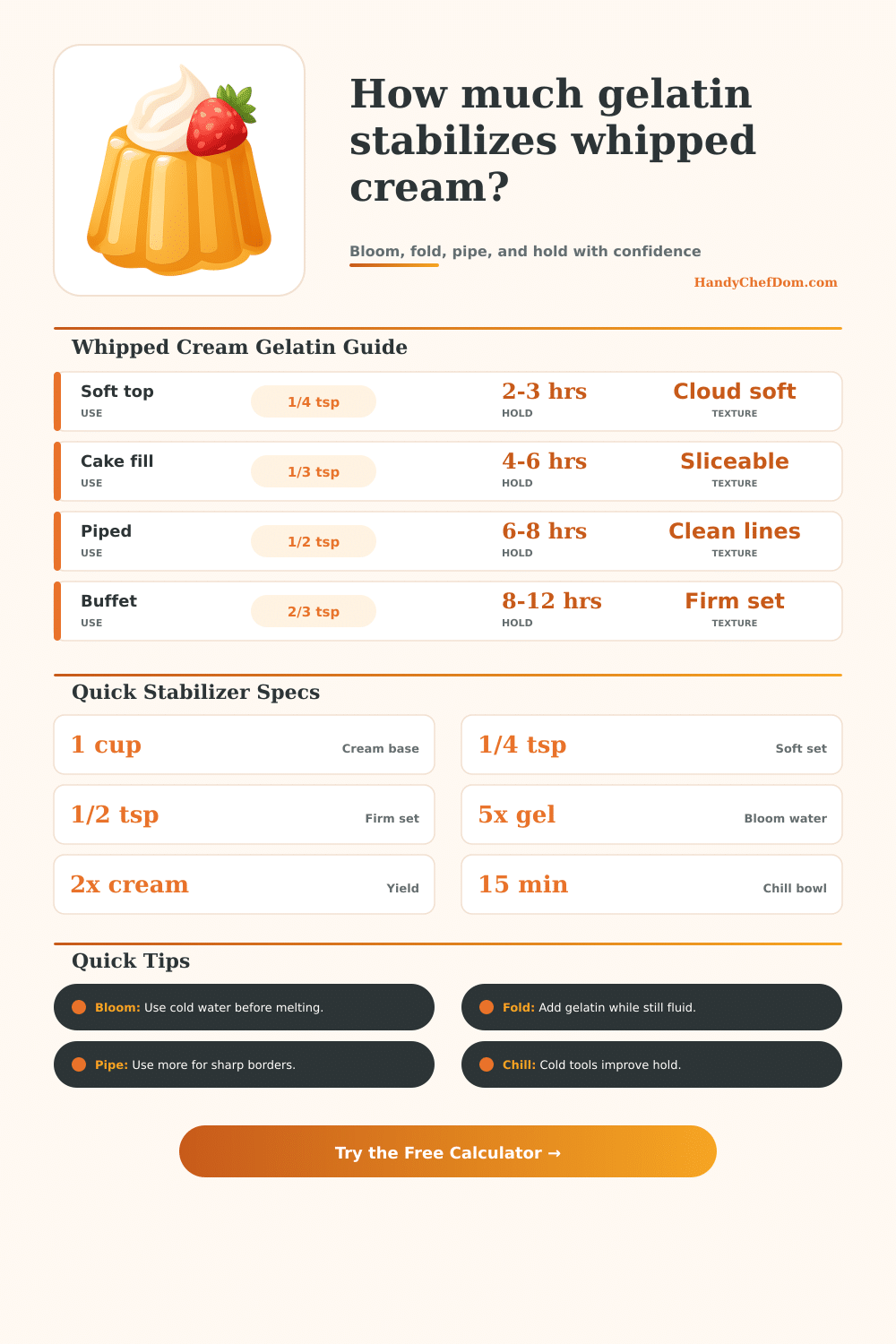
| Soft spooned topping | 0.20 to 0.28 tsp | Pavlova, berries, cocoa dusted desserts | Not enough for tall piping. |
| Classic rosettes | 0.28 to 0.38 tsp | Cupcakes, pie borders, short display | Keep gelatin fluid before folding. |
| Cake filling | 0.35 to 0.48 tsp | Layer cakes and chilled slices | Spread before it sets too much. |
| Sharp piping | 0.45 to 0.60 tsp | Stars, shells, tall swirls, fine ridges | Overmixing can make the finish grainy. |
| Buffet service | 0.55 to 0.75 tsp | Long holds and warm rooms | Risk of bouncy texture rises quickly. |
| Make-ahead filling | 0.42 to 0.58 tsp | Overnight chilled desserts | Cover well to avoid drying. |
| Piping Detail | Chilled Hold | Room Display | Texture Target |
|---|---|---|---|
| Spooned dollops | 2 to 4 hours | 15 to 25 minutes | Soft, creamy, cloud-like. |
| Simple rosettes | 4 to 6 hours | 25 to 45 minutes | Fluffy with visible curves. |
| Sharp borders | 6 to 8 hours | 30 to 60 minutes | Defined shells and stars. |
| Fine ridges | 6 to 10 hours | 20 to 50 minutes | Firm edges without bounce. |
| Cake filling | 8 to 12 hours | Brief plating only | Sliceable but still creamy. |
| Buffet minis | 8 to 12 hours | 45 to 75 minutes | Firm enough to transport. |
Is it warm weather? Forget it: Fat’s delicate makeup crumbles out of the chilly bowl, causing whipped cream to slump or collapse from its own weight.
Gelatin alters this scenario by providing the whipped concoction with something to rest against, but again. Too much or too little, and you have a problem. Too little, and the cream slumps or weeps within a few hours. Too much, and what should of been creamy becomes bouncy. This is where the distinction comes in clearest, in a layer cake that needs to stand for slicing several hours later; or in rosettes piped onto cupcakes that must wait out a brunch-service morning.
How to Use Gelatin for Stable Cream
For example, how much gelatin do you need? It depends on the temperature of your space (how hot or cold) and how long the cream is exposed before being piped. It also depends on what kind of details you are piping, such as lots of peaks and swirls versus just lines, and even how cold your piping tools remain when whipped. Is your cream high-fat? Higher-fat creams have natural stability, so you can reduce some gelatin; lower fat require stronger support for an equivalent length of time holding. Sugar content also factors in quietly: It slows weep, but going overboard with sugar can cause softened peaks, requiring the stabilizer to step up.
Once you plug all these realistic conditions into the calculator above, it do the math, and its results reflect your actual service window instead of a one-size-fits-all rule of thumb.
Then there’s getting the gelatin to bloom properly, which is where most home cooks lose the plot on the finished texture. Water should be cold so it will hydrate uniformly; a little gentle heat makes it fluid but doesn’t cook out the strength. Then add that liquid to cream that’s just barely up to soft peaks, when the fat isn’t yet locked in a network that would trap gelatin beads and create tiny rubbery spots. That happens if you wait till the cream has gotten realy stiff… Then the gelatin just streaks through.
The calculator monitors bloom strength, as not all powders and sheet gelatins sets at identical rates. It also controls the amount of liquid used for blooming so nobody accidently dilutes anything.
The trick for most people is the hidden variable of room display time. A cream that stays perfect for eight hours in your fridge might run all over itself in just half an hour on a buffet table. That’s why the texture risk number change as you add more minutes to the room, because the tool includes exposure time in its final recommendation. And it’s also why chilling your bowl and beaters for a few minutes beforehand (if only!) will pay off in spades: cooler tools make more volume in less time, so you may not need as much stabilizer after all.
What’s the actual practicality of such a calculator? It takes all these tiny tradeoffs and condenses them down into one decision. See how choosing simple rosettes instead of complex piping details adds X amount of gelatin, and see how extending your make-ahead period by an hour increases your chance of getting a certain type of texture. When you’re making a dessert meant to be prepared beforehand and then transported or sat out for a while, those things count.
Finally, once you understand how each ingredient affects the end result, the numbers aren’t just random; they become a list of factors you can actualy control.