🥔 Sour Cream to Add to Mashed Potatoes Calculator
Estimate sour cream for mashed potatoes from potato pounds, servings, mash style, sour cream richness, butter, milk, starchiness, texture goal, tang target, and holding time.
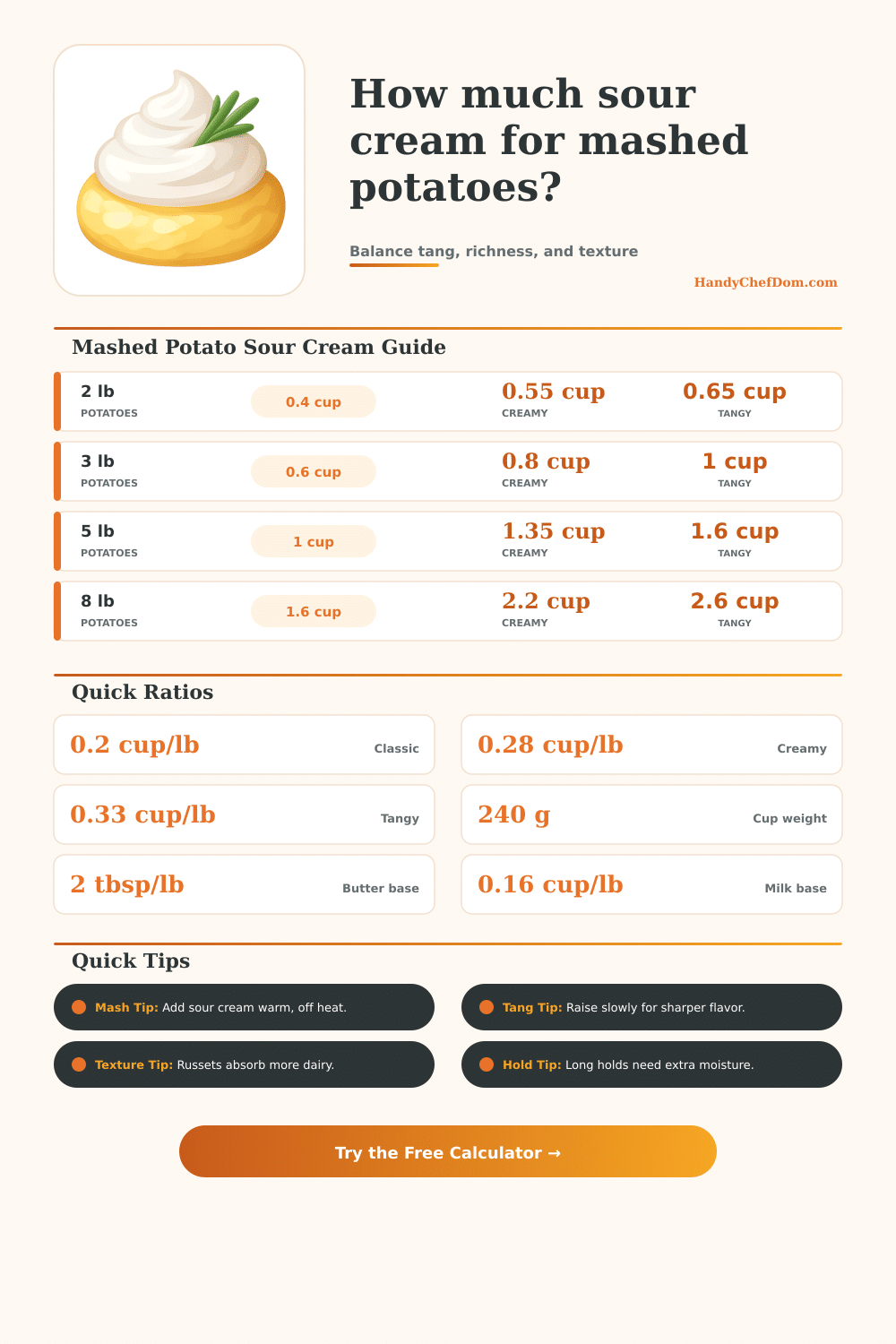
Start from cooked, drained potatoes before final dairy. A classic sour cream mash often uses about 0.20 cup sour cream per pound of potatoes, then shifts for starch, butter, milk, tang, texture, and holding time.
| Mash Style | Starting Sour Cream | Best Texture | Flavor Lean | Formula Note |
|---|---|---|---|---|
| Classic family mash | 0.20 cup per lb | Creamy but not loose | Mild tang | Good default with milk and butter |
| Creamy restaurant style | 0.28 cup per lb | Very smooth spoonable mash | Rounded dairy | Back down if cream is already high |
| Tang-forward mash | 0.33 cup per lb | Soft, bright finish | Noticeable sour cream | Works well with steakhouse sides |
| Light weeknight mash | 0.15 cup per lb | Fluffy and less rich | Gentle tang | Better when butter is moderate |
| Loaded potato bar | 0.30 cup per lb | Thick and rich | Bold dairy | Offsets cheese, chive, and bacon mix-ins |
| Make-ahead casserole | 0.30 cup per lb | Moist after holding | Balanced after reheat | Extra dairy covers absorption |
| Potato Type | Starch Behavior | Sour Cream Shift | Texture Cue | Best Use |
|---|---|---|---|---|
| Russet or Idaho | High starch, fluffy | Add about 8% | Absorbs dairy quickly | Classic smooth mash |
| Yukon Gold | Medium starch, buttery | No change | Holds creamy body | Rich holiday sides |
| White potatoes | Medium waxy | Reduce about 4% | Less thirsty than russets | Everyday mash |
| Red potatoes | Waxy, skin-on friendly | Reduce about 10% | Can turn loose if overmixed | Rustic mash |
| Instant flakes | Very absorbent | Add about 15% | Needs added moisture | Quick refresh batches |
| Sweet potatoes | Moist and dense | Reduce about 16% | Use sour cream for tang | Sweet-savory mash |
| Butter and Milk Balance | Typical Amount | Effect on Sour Cream | Calculator Response | Practical Cue |
|---|---|---|---|---|
| Butter baseline | 2 tbsp per lb | Neutral richness | No major shift | Classic buttery mash |
| High butter | 3 to 4 tbsp per lb | More richness | Slightly less sour cream | Add tang in smaller spoonfuls |
| Low butter | 0 to 1 tbsp per lb | Less cushion | Slightly more sour cream | Sour cream supplies body |
| Milk baseline | 0.16 cup per lb | Neutral looseness | No major shift | Soft but moundable mash |
| High milk or cream | 0.25 cup per lb or more | Looser texture | Less sour cream | Stop before it turns soupy |
| No milk yet | 0 cup per lb | Dryer mash | More sour cream allowed | Add gradually while mashing |
| Holding Plan | Moisture Change | Sour Cream Shift | Texture Goal | Serving Note |
|---|---|---|---|---|
| Serve right away | Minimal absorption | No extra needed | Match final plate texture | Fold in off heat |
| 30 to 60 minutes | Small thickening | Add about 1% to 2% | Slightly softer than final | Cover tightly |
| 2 to 3 hours | Noticeable drying | Add about 4% to 6% | Soft spoonable mash | Stir gently before serving |
| 4 to 6 hours | Buffet absorption | Add about 8% to 11% | Loose but not soupy | Use covered warm holding |
| Make ahead overnight | Chill and reheat thickening | Add about 10% to 14% | Moist reheat texture | Reserve a splash of milk |
Mashed potatoes with sour cream are a no-brainer, and yet they transform dish without requiring much focus. The sour cream give them a subtle tanginess; they’re never flat-flavored. Also, it gives them body, a quality that can’t be had with butter alone. Even when they cool down a little, they remain velvety.
Getting the amount right depend on more than just scooping from tub until it looks about right. After entering your weight, planned servings, and other factors like texture and tang targets, this potato-sour-cream-calculator take over and does all the figuring for you.
Why You Need This Calculator
It’s important to note that different varieties of potatoes soak up dairy products at different rates: Russet potatoes tend to take in dairy more readily then Yukon golds and other waxy red potatoes. Depending on which potatoes you’re using, the same amount of sour cream will create a completely differnt consistency.
Then there’s the question of whether you’ve already used any milk or butter. If you have and your spuds is somewhat runny from the addition of cream, the calculator lower its sour cream suggestion. This ensures that your dish doesn’t get overly goopy when served.
Another variable is holding time. This is one people tend not to think about. If the potatoes is going on a buffet table or being kept warm in a slow cooker (or anywhere else!), they will still be absorbing water as they stand. Tell the calculator how long you want the mash to hold. It increases amount of sour cream to match, so you avoid the stiff, dry outcome you get when someone forget to plan ahead.
Flavor target and texture preference works similarly: Even if both versions start out with exact same weight of potatoes, a looser steakhouse-style mash require more sour cream than the fluffier version served at holiday meal. More importantly, you see the tradeoffs between those decisions, and I think that’s where this is realy useful.
You might decide to raise the tang target and get more sour cream, but not too much because it will push up against existing milk level or the texture target. Instead of having to guess multiple changes all at once, the tool demonstrates that balance in just one result.
On page are also reference tables that lay out same relationships in broad strokes so you can test your intuition before (or after) running any particular batch. The numbers don’t represent one variable: how the rest of the meal will influence the choice. A little less sour cream balance the potatoes against a saucy, rich main course. A bit more allow starchy part to take center stage if the other parts is simple.
Other ingredients can change the equation, too… Roasted garlic or cheese will both contribute moisture and salt. The recipe accounts for them.
My advice: Use top result as a jumping-off point, not an order from Mount Olympus. Add most of suggested sour cream once potatoes are still warm but not too hot; then taste and adjust as needed.
The very last, tiny call is yours alone, how much to add and how it tastes, and that’s why the calculator should of stopped there.