🍰 Cocoa Powder in Red Velvet Cake Calculator
Scale cocoa powder, cake acid, red color, batter volume, pan fit, and servings from flour cups and layer style.
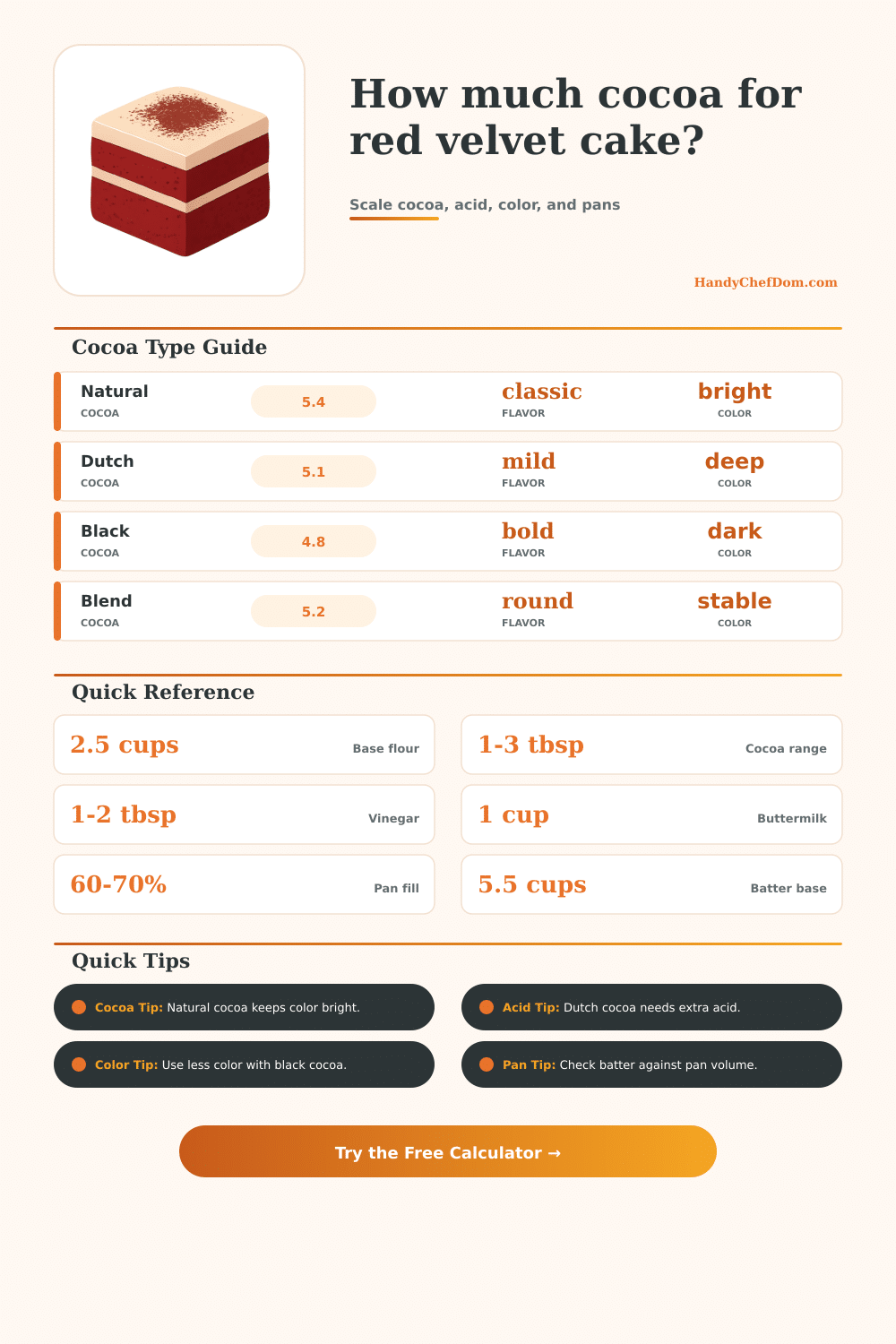
| Cocoa Type | Approx g/Tbsp | Acid Adjustment | Color Effect | Best Red Velvet Use |
|---|---|---|---|---|
| Natural cocoa | 5.4 g | Baseline acid | Brightest red | Classic red velvet crumb |
| Dutch-process cocoa | 5.1 g | Add more acid | Deeper brown-red | Milder cocoa taste |
| Black cocoa | 4.8 g | Moderate acid | Very dark red | Small accent amount |
| Natural and Dutch blend | 5.2 g | Slight acid lift | Stable red | Balanced color and flavor |
| Natural and black blend | 5.0 g | Slight acid lift | Burgundy tone | Deep color without all black cocoa |
| Red cocoa powder | 5.3 g | Baseline acid | Warm red-brown | Lower dye style |
| High-fat cocoa | 5.6 g | Baseline acid | Softer red | Moist, round flavor |
| Flour Cups | Classic Cocoa | Rich Cocoa | Buttermilk Guide | Vinegar Guide |
|---|---|---|---|---|
| 1 cup | 0.8 tbsp | 1 tbsp | 0.4 cup | 0.4 tbsp |
| 2.5 cups | 2 tbsp | 2.5 tbsp | 1 cup | 1 tbsp |
| 5 cups | 4 tbsp | 5 tbsp | 2 cups | 2 tbsp |
| 7.5 cups | 6 tbsp | 7.5 tbsp | 3 cups | 3 tbsp |
| 10 cups | 8 tbsp | 10 tbsp | 4 cups | 4 tbsp |
| Pan Style | Typical Size | Usable Batter | Good Fill | Serving Cue |
|---|---|---|---|---|
| Round layer | 8 x 2 in | 3.5 to 4 cups | 60 to 67% | 10 to 12 slices |
| Round layer | 9 x 2 in | 4.8 to 5.5 cups | 60 to 67% | 12 to 16 slices |
| Square pan | 8 x 8 x 2 in | 4.5 to 5 cups | 60 to 67% | 9 to 12 squares |
| Sheet pan | 9 x 13 x 2 in | 8 to 9 cups | 55 to 65% | 20 to 24 pieces |
| Cupcakes | Standard cavity | 0.22 cup each | 62 to 70% | 1 serving each |
| Color Target | Gel Color Base | Cocoa Strategy | Acid Focus | Result Cue |
|---|---|---|---|---|
| Soft bakery red | 0.9 tsp | Natural cocoa | Normal buttermilk | Light red crumb |
| Classic red velvet | 1.5 tsp | Natural or blend | Buttermilk plus vinegar | Clear red slice |
| Vivid celebration red | 2.2 tsp | Keep cocoa classic | Full acid balance | Bright party red |
| Lower dye, cocoa-led red | 0.6 tsp | Red cocoa or blend | Do not skip acid | Muted red-brown |
| Deep burgundy red | 1.3 tsp | Blend with dark cocoa | Slight vinegar lift | Wine-red crumb |
There’s an in-between place where red velvet cake resides: on the surface, it appears to be chocolate cake, yet it taste more like a tender buttermilk cake with cocoa added. Use just enough of the cocoa to make the batter change color and adjust its acid level; but not so much as to overpower flavor. That relationship, nailed down, makes for a vibrant, slicey cake rather than a heavy-handed, muddy one.
A few things is altered by the kind of cocoa you’re using. Because natural cocoa retains its acidity, it’ll react to the baking soda and keeping the usual red. Dutch-process cocoa are neutralized, which gives it a more muted flavor and slightly darker hue (unless you throw in some more acid). Too much black cocoa will mute or even eliminate the red altogether, pushing the color as dark as possible.
How the Red Velvet Cake Calculator Works
Once you put in your desired color, flour quantity and cocoa style, the calculator do the math for you. No more guessing at how any type of cocoa will alter the finished crumb.
Red velvet requires buttermilk (or lemon juice/vinegar), baking soda, and a bit of cocoa powder to achieve its softness and rise. Too little acid make the cake flat and weakens the color change; too much can makes the batter overly puffy and collapse in the middle. With this tool, you’ll know how much buttermilk and vinegar you should of use based off the cocoa type you chose. It will also show you if you’re hitting the right amount. Adjust those ingredients ahead of time, before mixing up the batter instead of after baking cake.
Another variable are pan size and layer count. For example, a three-layer cake on 8-inch pans will require less total batter then a two-layer cake on 9-inch pans. However, there is no difference in the ratio of cocoa to flour (or acid to flour) for each cup of flour. When you modify your pan sizes or layers, the calculator automatically scales the cocoa load and acid target so flavor and color remains consistent, even as total batch size varies.
It turns out that most people adjust the color intensity by eye, meaning they might be sorry later. If the cocoa is too dark, well, you can always add more gel color…but there’s such a thing as to much dye. It will leave a bitter taste afterward and your cake will look like it was dyed when you cut into it.
The tool’s lower-dye option encourages making a cake with either red cocoa or a mix of natural cocoa and black. This use less dye in the cocoa, which helps create a more stable red that won’t dissapears as fast after baking.
The most common errors involve cooking with red velvet as though it were a simple chocolate cake. People adds more cocoa to boost the chocolate flavor and wonder why the cake turns out brown instead of red. You might also cut back on the buttermilk because you fear too much acidity, which ends up making the cake dull and heavy.
The calculator flags those trade-offs, such as acid coverage percentage and cocoa load per cup of flour. It is a fast double-check before committing to ingredients.
What about expected trim loss & pan fill? That scales as well. A bigger batch gives you more leeway when cutting batter into pieces. Deeper pans also needs to be filled less to prevent overfilling. The tool accounts for those percent fills and volumes so that you do not have leftover batter or run out before the final layer. Many people has this issue.
This is all well and good, but once you grasp that color target, acid level, and cocoa amount aren’t three separate variables, everything else falls into place. It’s just a matter of seeing how they relate to one another. And that’s where the calculator comes in.